 IndustryInsights

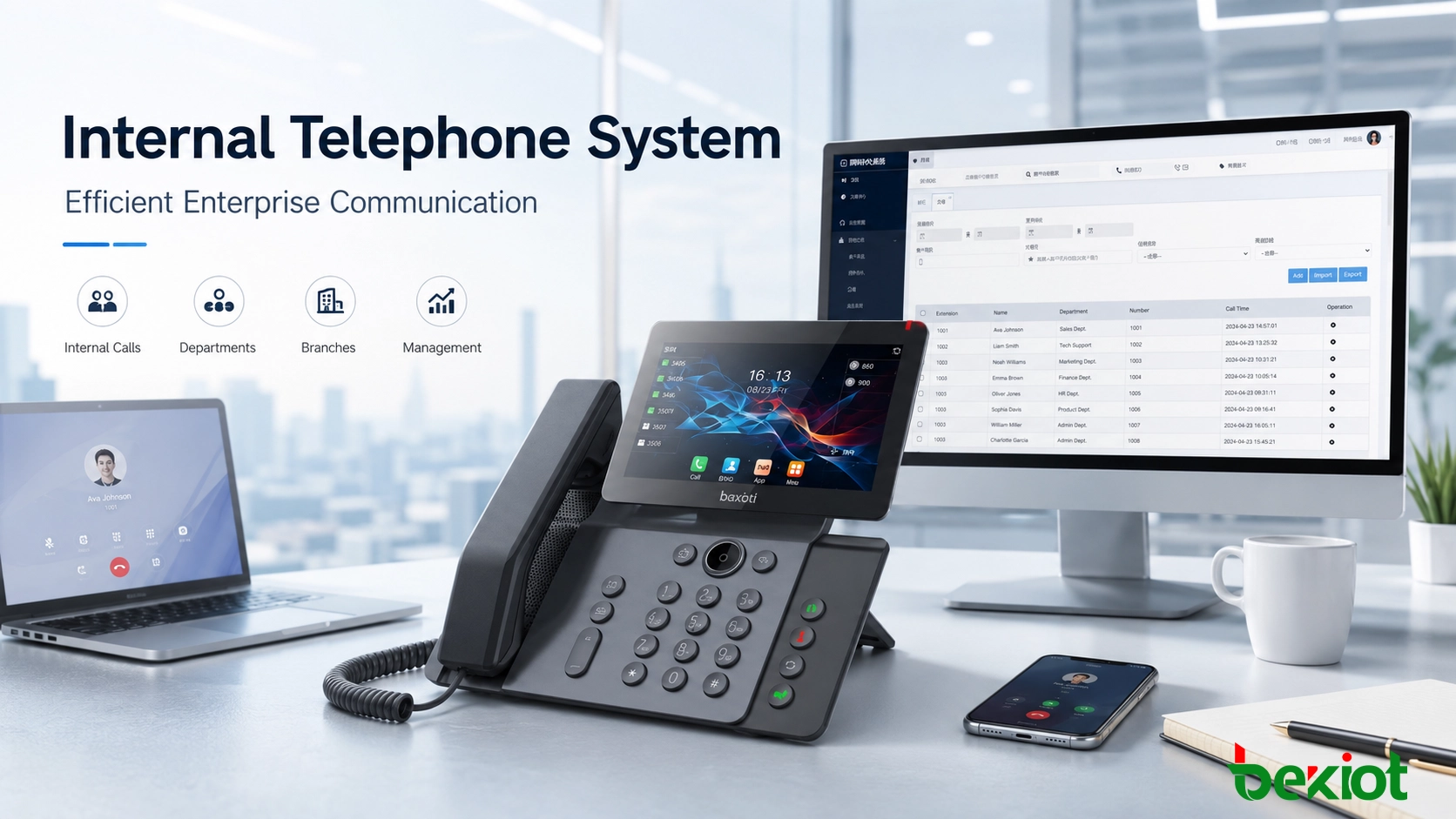
In a modern business environment, communication speed and clarity still have a direct impact on daily efficiency. Email, chat, and video meetings are useful, but voice communication remains one of the fastest ways to solve urgent issues, coordinate teams, transfer enquiries, and keep work moving. For this reason, an internal telephone system continues to play an important role in enterprise communication.
At Becke Telcom, an internal telephone system is not simply a group of desk phones. It is a structured communication framework that connects employees, departments, front desks, branch offices, remote users, and business workflows through one organized platform. When the system is planned correctly, it helps companies communicate more professionally, respond more quickly, and manage calls with greater consistency.
For growing businesses, this structure matters. A company may start with a few extensions, but later need department routing, reception handling, branch connectivity, softphone access, or integration with wider communication systems. A well-designed internal telephone system gives the organization a practical foundation for both current operations and future expansion.
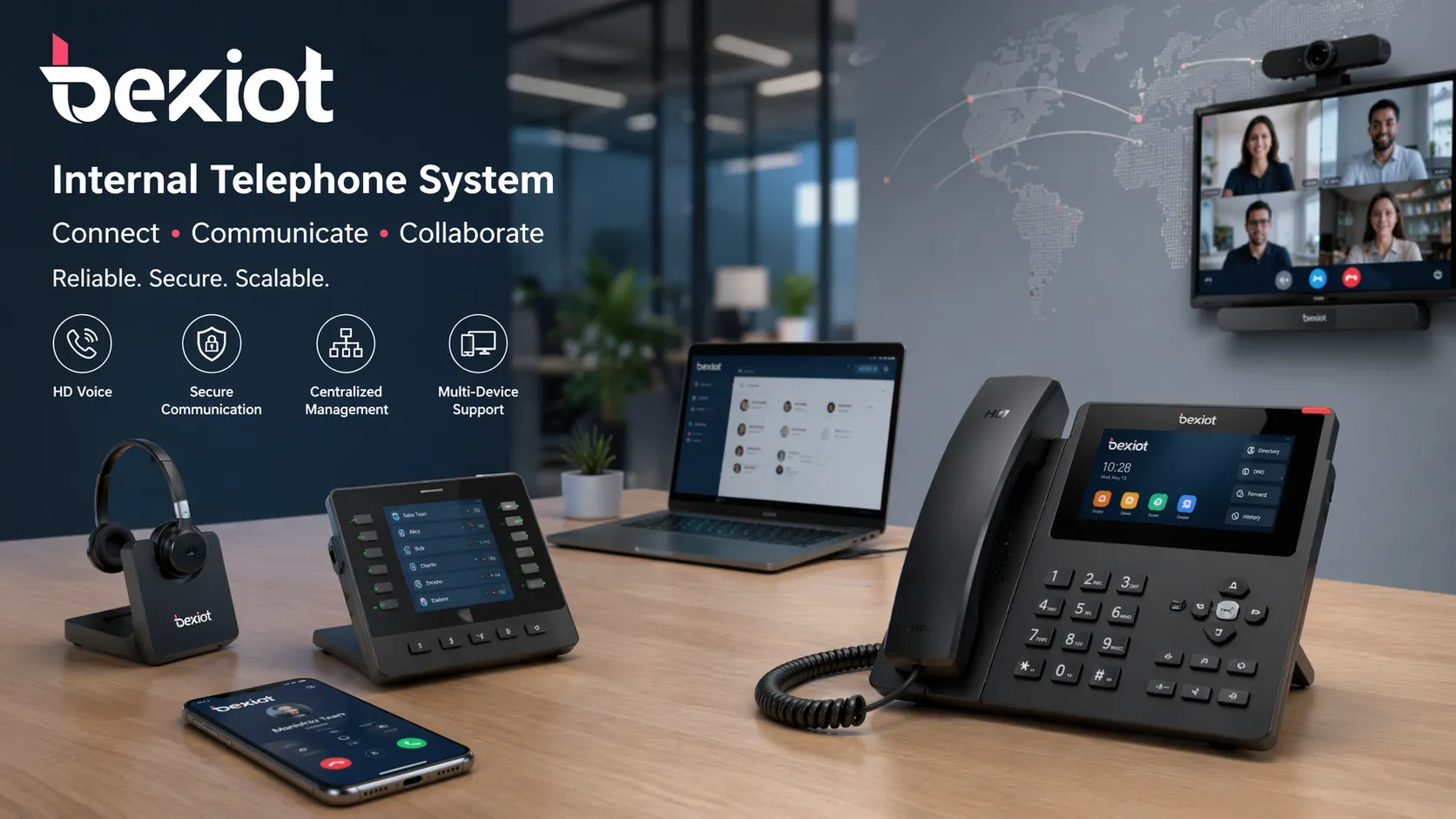
An internal telephone system is a business voice network that allows people inside an organization to call each other through extensions. Instead of relying on personal mobile numbers, scattered outside lines, or unmanaged communication habits, the company builds a unified internal calling environment.
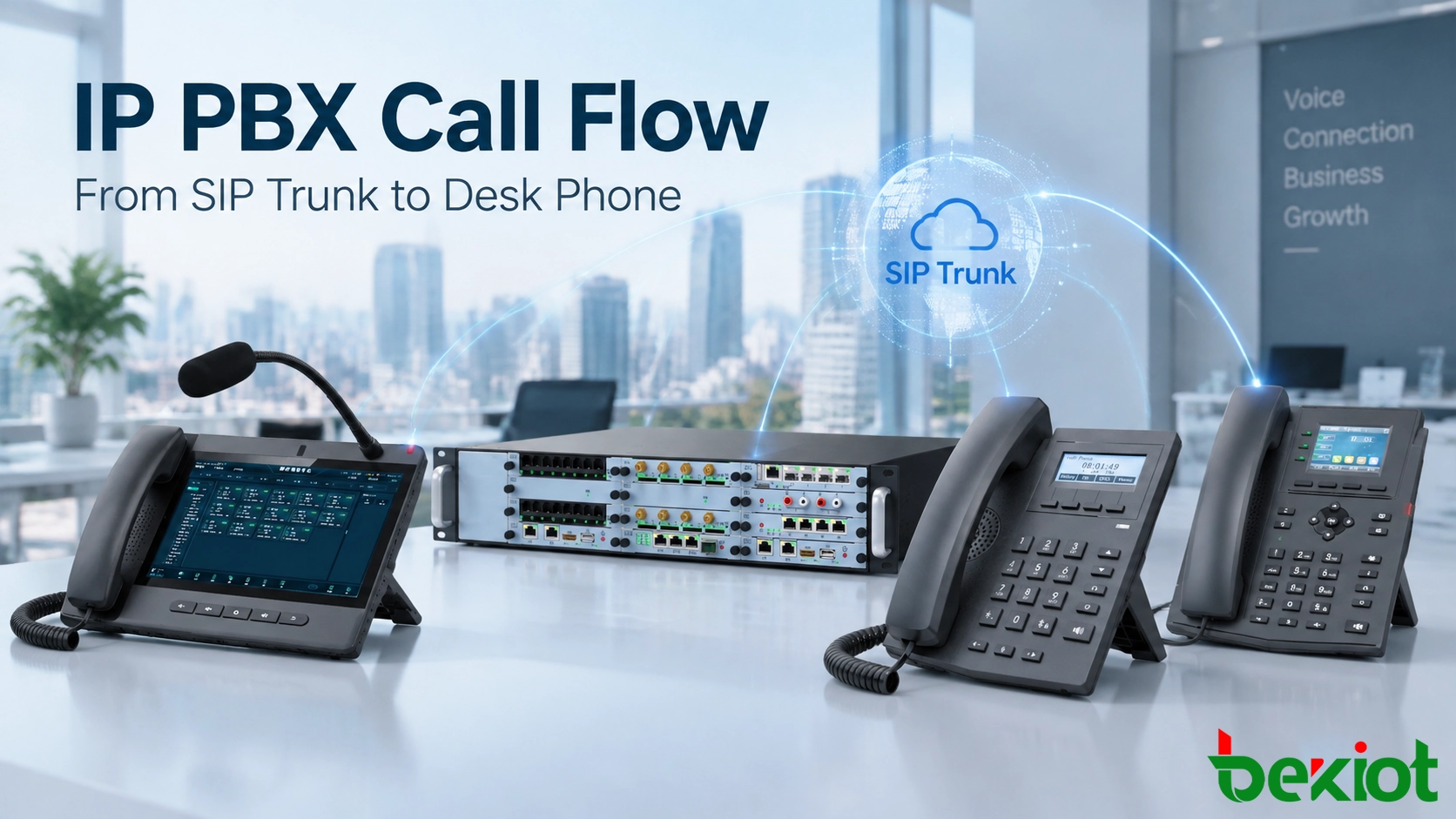
Most systems are built around a PBX, IP PBX, or cloud telephony platform. These platforms can support extension dialing, call transfer, call forwarding, voicemail, ring groups, conference calling, receptionist handling, and call routing. In daily use, this helps a receptionist transfer calls faster, allows departments to reach each other directly, and gives managers better control over how calls move through the organization.
The value is not only technical. A clear telephone structure helps employees know who to call, how to reach a department, and how to handle incoming enquiries. This reduces confusion and makes office communication more predictable.
Many companies now use messaging platforms, shared documents, and video meetings every day. These tools are useful, but they do not replace the need for quick voice contact. When an issue needs an immediate answer, a direct call is often faster than waiting for a message reply.
Internal calling is especially important for front desks, service teams, finance departments, HR offices, operations teams, and management roles. These teams often need to coordinate quickly across departments. A structured telephone system allows users to reach the right person or group without searching through personal contact lists.
Voice also creates a more professional experience for customers and partners. Incoming calls can be answered, transferred, routed, and managed through a defined process rather than handled randomly. This makes the company appear more organized and reliable.
Enterprise communication becomes more efficient when people can reach the right person at the right time without unnecessary delay.
In everyday office work, speed often affects productivity. Employees may need quick confirmation from a manager, urgent support from IT, approval from finance, or coordination with operations. An internal telephone system makes this easier by allowing users to call extensions directly.
This is useful in companies where work depends on continuous communication. Customer service, administration, logistics, property management, healthcare offices, education services, and multi-department enterprises can all benefit from faster internal response.
A business telephone system helps companies organize how calls are answered and transferred. Reception desks can route callers to the right department. Departments can use ring groups. Missed calls can go to voicemail or another extension. These features create a smoother communication experience for both employees and outside callers.
Professional call handling is not only about convenience. It also affects how customers and partners view the company. A well-managed call flow shows that the business is structured, responsive, and easier to work with.
As a business grows, unmanaged communication becomes harder to maintain. A centralized system allows administrators to manage extensions, users, devices, call routes, permissions, and department rules from one platform. This helps reduce confusion and makes future changes easier.
When a new employee joins, a department changes, or a branch office is added, the company can update the telephone system without rebuilding the whole communication structure. This creates better control and supports long-term scalability.
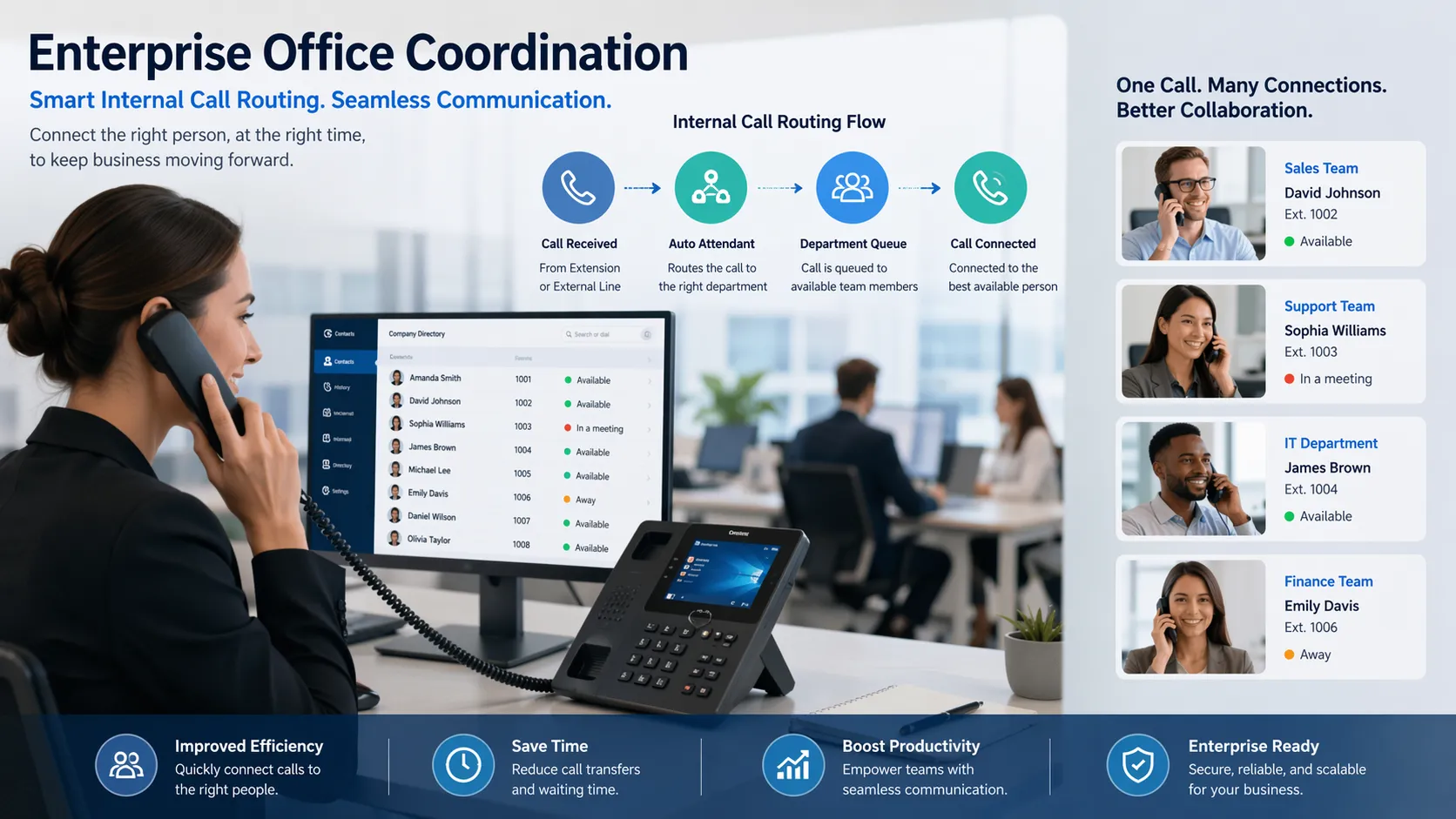
A modern internal telephone system should do more than connect basic calls. It should support the communication habits of the business and make daily call handling easier for users. The exact feature set depends on company size, workflow, and deployment model, but several functions are commonly required.
Extension-to-extension calling
Call transfer and call forwarding
Voicemail and missed call handling
Ring groups and department routing
Conference calling and group communication
Receptionist and auto attendant functions
Call permissions and user management
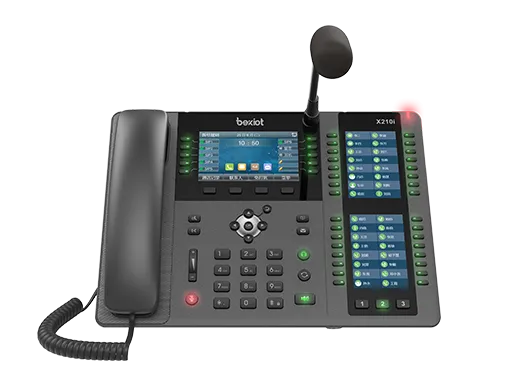
Support for desk phones, softphones, and mobile users
For many enterprises, these functions are part of the daily operating structure. They help keep employees reachable, departments connected, and customer calls properly handled during working hours.
A small company may only need a simple extension system at first. Over time, it may add more users, more departments, more office areas, or branch locations. The internal telephone system should be able to grow with the business instead of becoming a limitation.
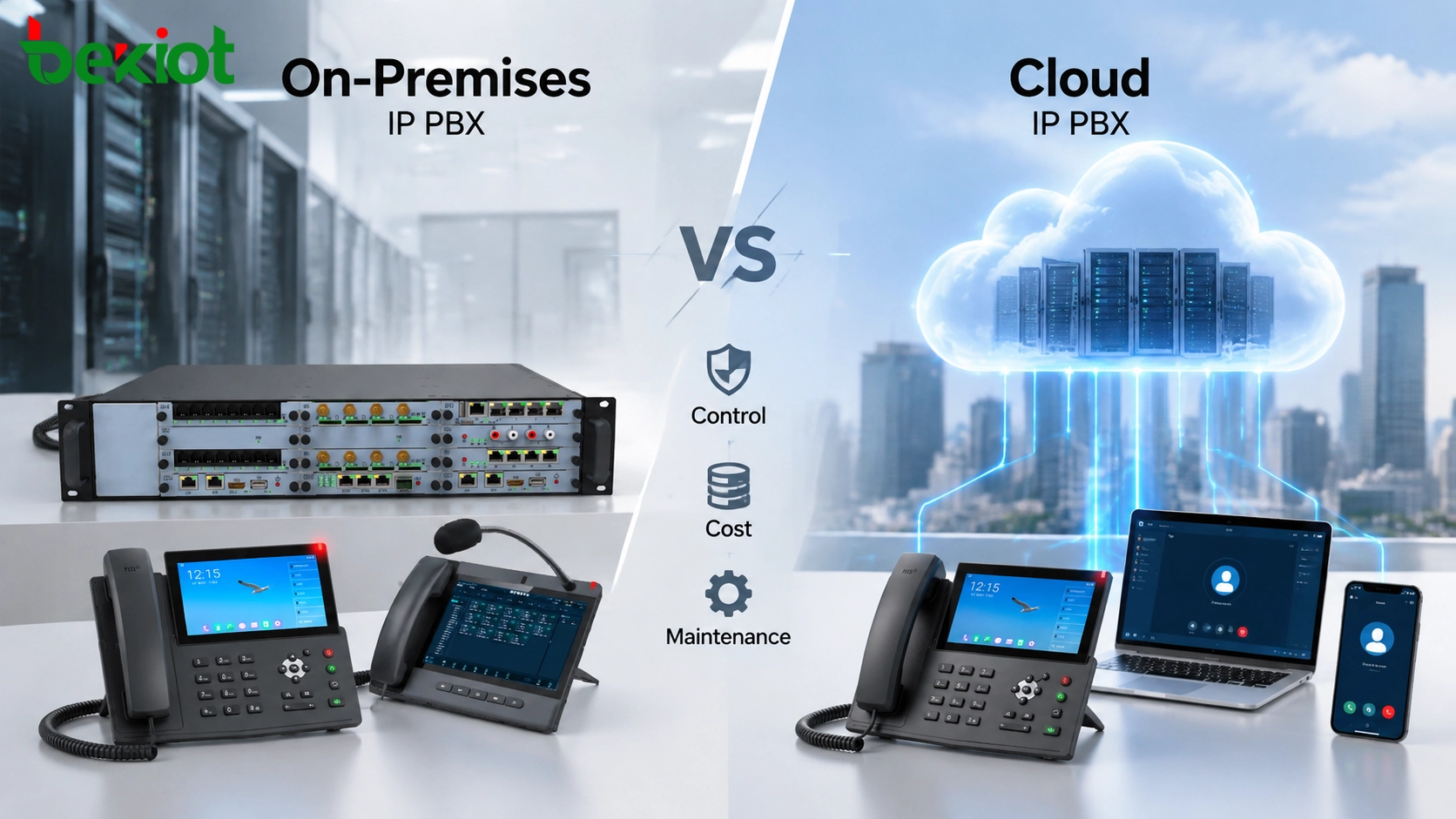
IP-based systems are often suitable for this type of growth. A well-planned IP PBX or enterprise telephony platform can support more users, more endpoints, multi-site deployment, remote extensions, and flexible call rules. This makes it easier for the business to expand without replacing the entire communication environment.
Scalability is also important for administration. When the system supports centralized management, IT teams can adjust extensions, add devices, change routing rules, and maintain users more efficiently. This reduces the workload that often appears when companies manage communication through disconnected tools.
Many enterprises no longer operate from one fixed office only. Staff may work across headquarters, branch offices, home offices, service points, and mobile locations. A modern internal telephone system should support this reality while keeping communication structured.
Desk phones, softphones, video phones, and mobile endpoints can work under the same communication environment when the system is properly designed. Employees can keep a consistent business identity, departments remain reachable, and managers can maintain control over call routing and user access.
This is especially useful for hybrid teams and distributed organizations. The business can support flexible work without losing the benefits of a managed internal communication structure.
Internal telephone systems are widely used in offices where departments need to communicate frequently. Reception desks, executive offices, finance teams, HR departments, service groups, and operations teams can all benefit from a clear extension structure.
In these environments, the system improves both internal coordination and external call handling. Employees can reach each other quickly, incoming enquiries can be transferred more accurately, and daily office communication becomes more organized.
For organizations with multiple locations, an internal telephone system can connect users across sites through one unified platform. Branch staff, support teams, and managers can communicate through extensions as if they were in the same building.
This reduces barriers between offices and helps the enterprise operate as one connected organization. It also simplifies management because extensions, routing rules, and users can be planned under one communication structure rather than separated by location.
Businesses that deal with customer enquiries, appointments, service requests, or operational coordination often need reliable voice communication. An internal telephone system helps route calls to the right team and supports faster response during busy periods.
This can apply to professional offices, clinics, schools, hotels, property management companies, customer service teams, and other environments where organized communication affects service quality.
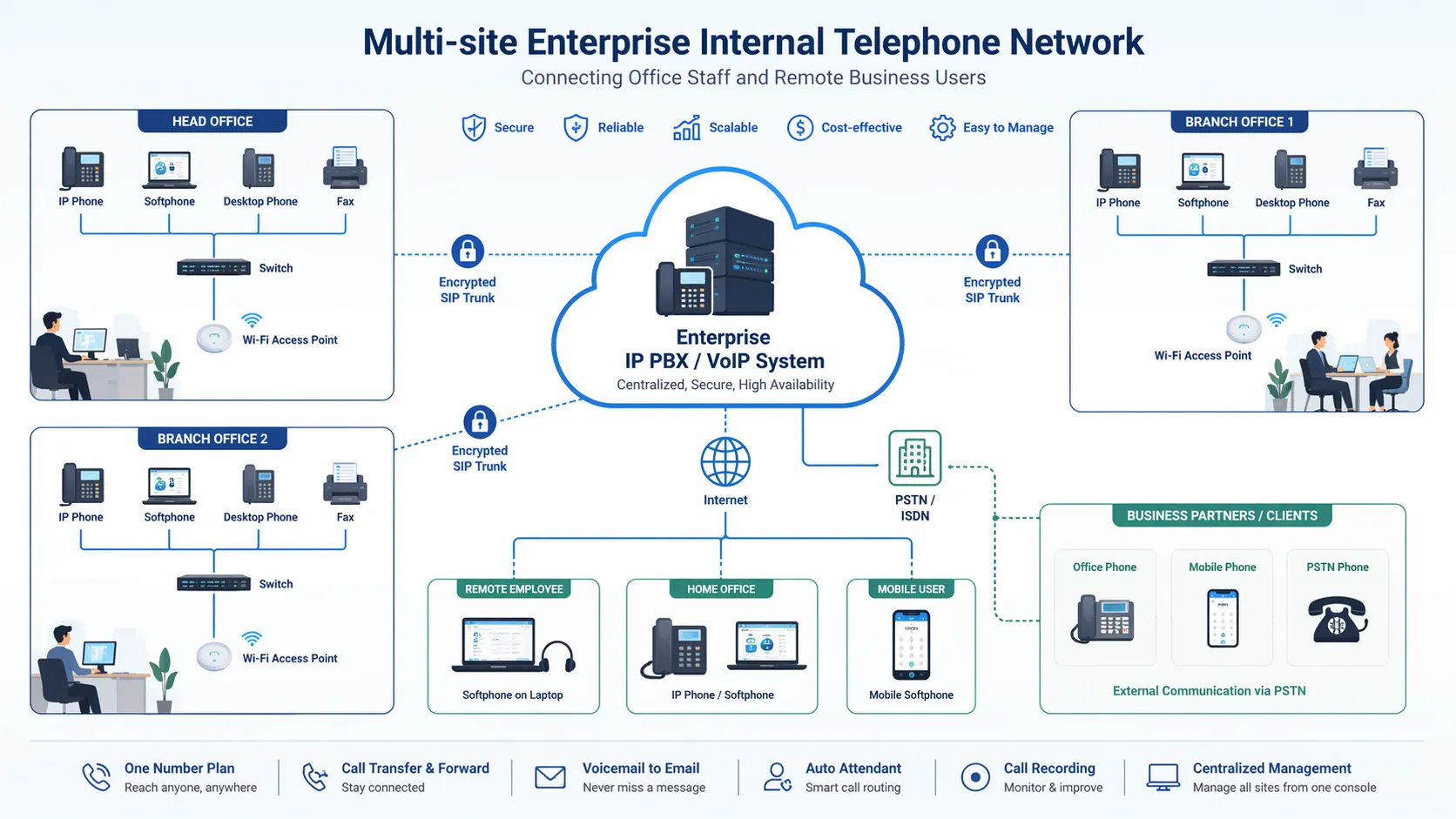
Choosing an internal telephone system should not start with the handset alone. The more important question is how the system will support the way the business communicates. A company should consider user capacity, department structure, reception needs, branch connectivity, remote access, call volume, and future expansion.
A simple office may only need extension dialing, call transfer, and voicemail. A larger enterprise may need IP PBX features, multi-site support, softphone access, ring groups, auto attendants, reporting, and integration with other communication systems.
Before deployment, it is also important to evaluate reliability, audio quality, ease of management, endpoint compatibility, and network readiness. A good system should not only solve current office communication needs. It should also provide a stable foundation for future business development.
A well-chosen internal telephone system is not just an office utility. It is part of the enterprise communication infrastructure that supports growth, service quality, and operational efficiency.
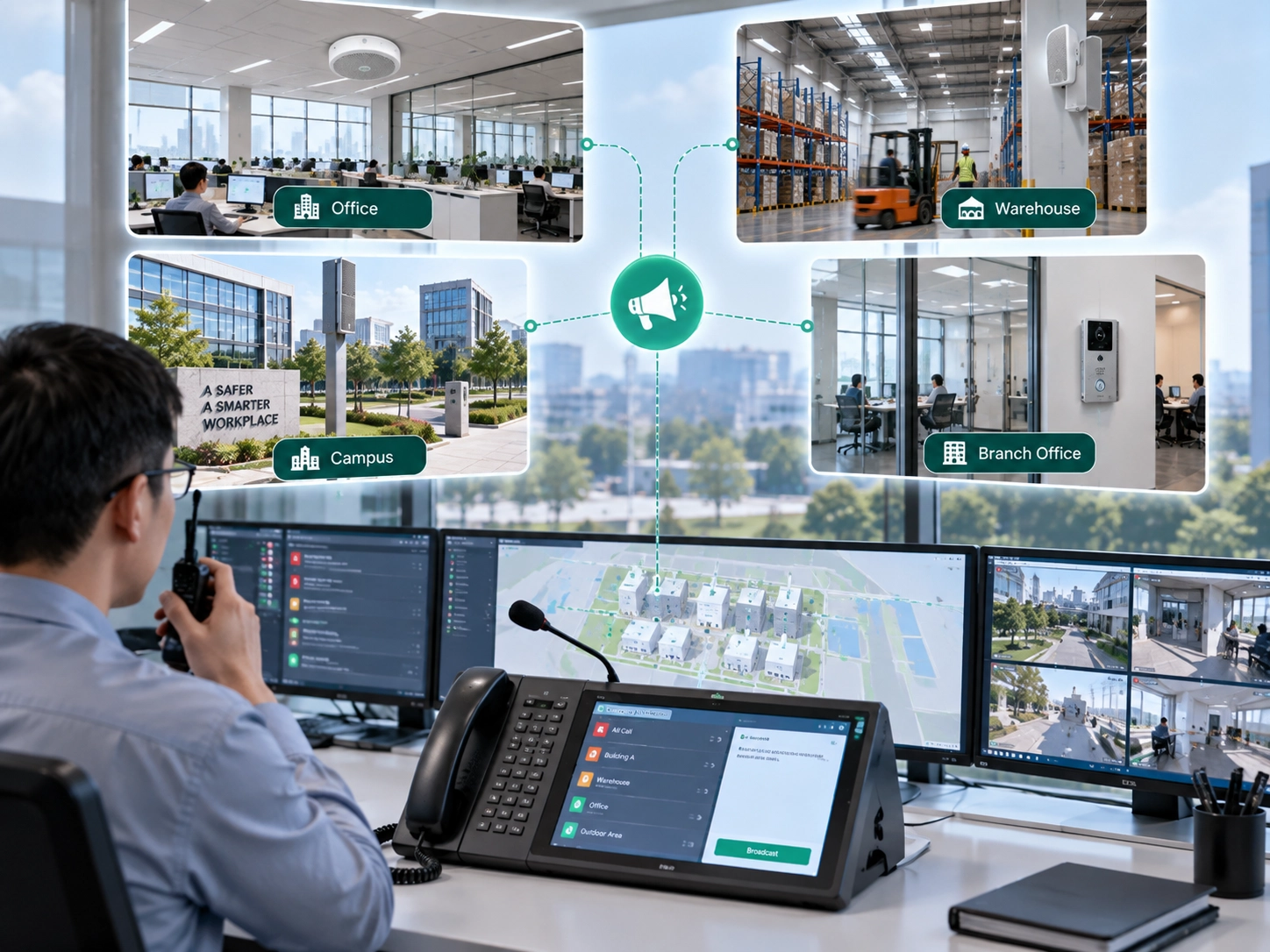
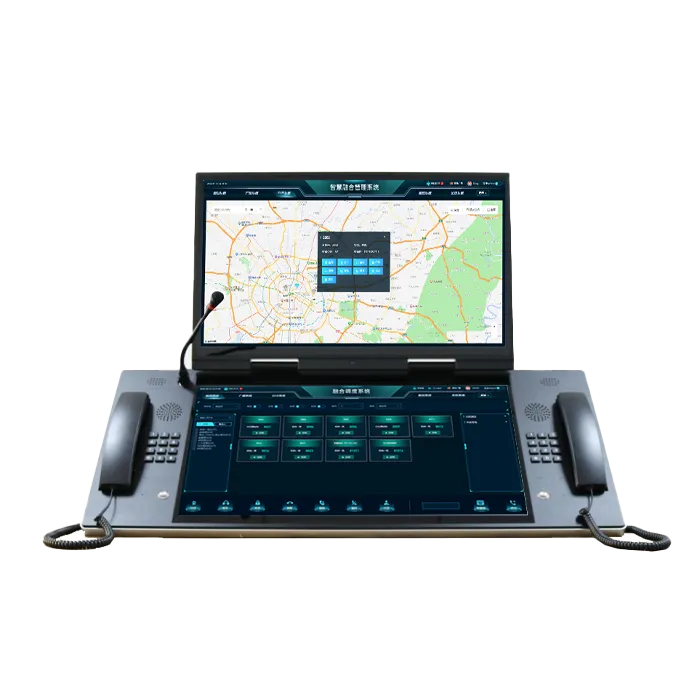
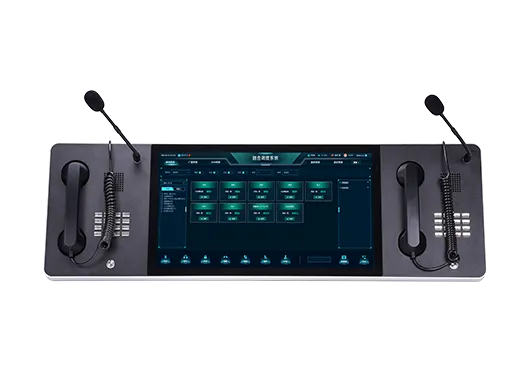
Becke Telcom focuses on professional business and industrial communication solutions that go beyond basic office calling. In many modern environments, internal telephony may need to work together with IP phones, IP PBX platforms, paging systems, intercom terminals, dispatch consoles, and multi-site communication networks.
This is where an internal telephone system becomes more valuable. It can serve as the starting point for a broader communication environment that supports not only office calls, but also operational coordination, centralized management, and future system integration.
For enterprises that want a more capable communication platform, the goal is not to add more isolated tools. The goal is to create a communication structure that is easier to manage, easier to expand, and more useful in real business workflows.
An internal telephone system remains an important part of enterprise communication because it solves a simple but essential need: helping people communicate quickly, clearly, and professionally. It supports faster internal response, better reception handling, clearer department coordination, and scalable communication management.
In a modern workplace, communication efficiency is not only about using more tools. It is about building the right structure behind those tools. A strong internal telephone system gives enterprises that structure and helps turn daily voice communication into a reliable business advantage.
For businesses planning to upgrade from basic office telephony to a more professional and scalable communication environment, Becke Telcom can support the design of a stronger enterprise communication foundation.
It is used to connect employees, departments, reception desks, branch offices, and business users through extensions and managed call routing. It helps offices communicate faster and handle incoming calls more professionally.
Yes. Even with chat, email, and video tools, voice communication is still one of the fastest ways to coordinate work, transfer calls, and respond to urgent issues. A telephone system keeps that communication organized.
An internal telephone system is the overall business calling environment. An IP PBX is one common platform used to manage extensions, routing, call features, and endpoints over an IP network.
Yes. Modern systems can connect users across multiple sites, allowing branches and headquarters to work under one extension structure and communication platform.
Yes. With the right platform, remote users can connect through softphones, mobile apps, or supported endpoints while keeping the same business communication identity.
底部简介