Throughput in Networks, Platforms, and Communication Systems: Meaning, Benefits, and Real-World Performance
Throughput measures how much useful data, traffic, or completed work a system can successfully deliver over time, making it essential for networks, cloud platforms, communication systems, and business performance.
Becke Telcom
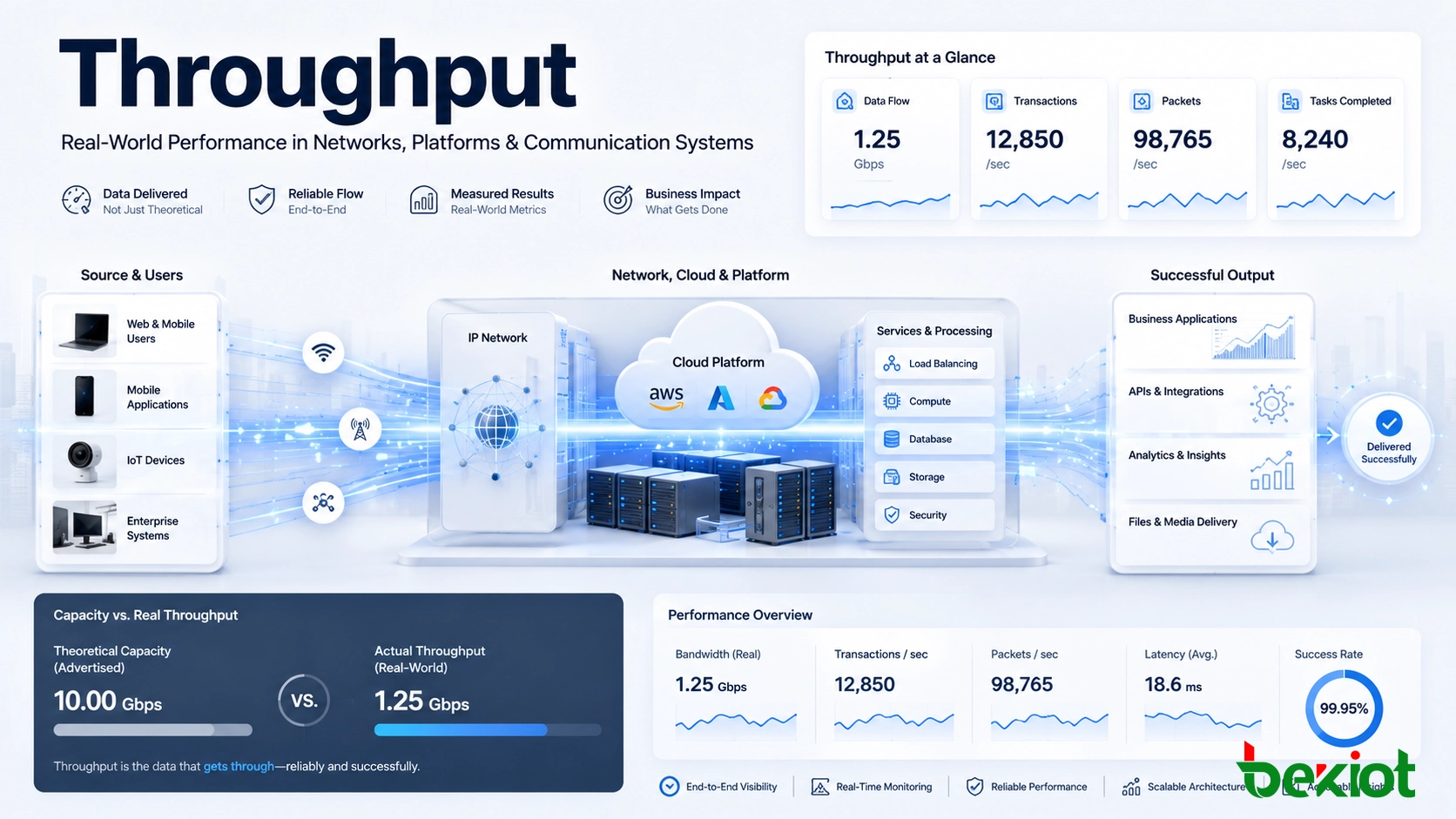
Throughput is a practical performance measurement that describes how much useful data, traffic, processing output, or completed work a system can successfully handle within a specific period of time. In simple terms, it answers a direct question: how much can actually get through?
This makes throughput important in networking, cloud platforms, software systems, storage environments, communication infrastructure, industrial control systems, and business applications. A system may look powerful on paper, but its real value depends on how much work it can complete under actual operating conditions.
In many technical discussions, throughput is often linked with network speed. However, the concept is broader than that. It can describe data delivered over a network, transactions completed by a platform, requests handled by an application, messages processed by a communication server, or jobs completed by an industrial system. What matters is not only theoretical capacity, but successful output in real use.
What Throughput Means in Practical Terms
Throughput refers to the amount of successful work or data transfer completed during a measured time interval. In a network, it may be expressed as bits per second, packets per second, or data volume delivered over time. In software and business systems, it may refer to requests per second, transactions per minute, messages processed per hour, or completed jobs during a production cycle.
The key word is successful. Throughput is not the same as the maximum speed printed on a product datasheet. It reflects the usable output that a system actually delivers after real-world factors such as congestion, protocol overhead, packet loss, endpoint limits, retransmission, processing delays, and resource constraints are considered.
Throughput is the performance that users and applications actually experience, not only the capacity that appears in technical specifications.
This is why throughput is often more useful than theoretical capacity alone. It helps engineers, operators, and business decision-makers understand whether a system can truly support the workload it is expected to handle.
Throughput reflects how much useful data or completed work a system can deliver in real operating conditions.
Why Throughput Matters
Throughput matters because business value depends on successful delivery. A high-speed network link is not useful if real traffic moves slowly during busy hours. A powerful server is not valuable if it cannot complete enough requests under load. A communication platform is not reliable if it cannot sustain voice, video, signaling, and user sessions when demand increases.
Poor throughput can create slow file transfers, delayed dashboards, unstable media streams, long application response times, interrupted workflows, and reduced service capacity. Users may not describe the problem as “low throughput,” but they will experience it as lag, waiting, failure, or unreliable performance.
Strong throughput, by contrast, helps systems remain useful under real demand. It supports better user experience, smoother workflow, higher service capacity, and more efficient use of infrastructure investment.
How Throughput Works
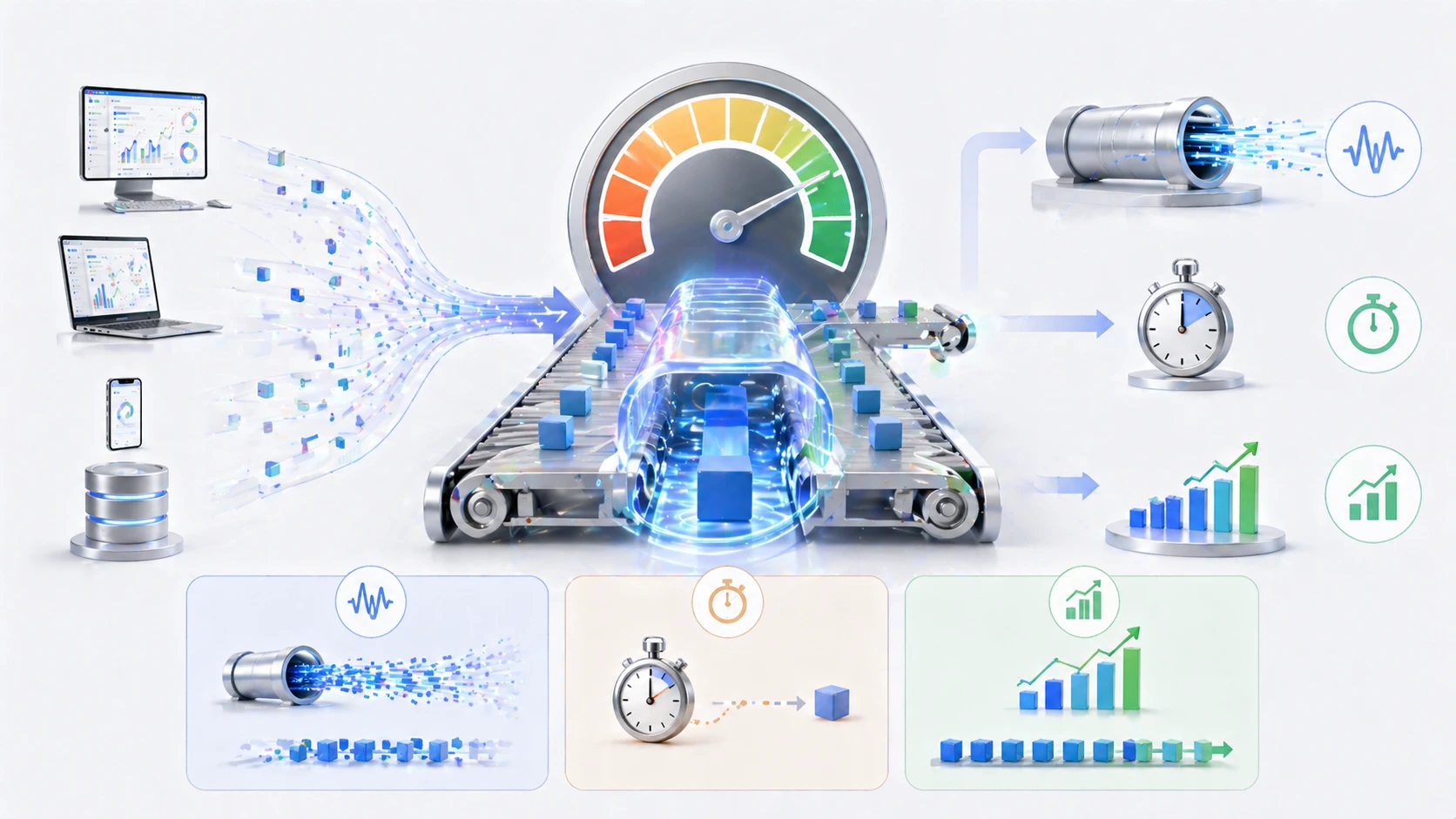
Throughput is created by the full path from input to successful output. Data, requests, or tasks enter the system. The system transports, processes, stores, or routes them. Then usable output is delivered to the destination. If any part of this path becomes slow or overloaded, total throughput can fall.
A fast network interface alone does not guarantee high throughput. The CPU, memory, storage, database, operating system, application logic, encryption layer, protocol stack, endpoint device, or upstream service may become the real bottleneck. In many cases, the weakest part of the service path determines the final performance.
Time is also central to throughput. The measurement always depends on a period: per second, per minute, per hour, or another defined interval. A system that completes more useful work in the same time has higher throughput.
Strong throughput is not created by speed alone. It depends on how efficiently the full system turns available capacity into successful output.
Throughput, Bandwidth, and Latency
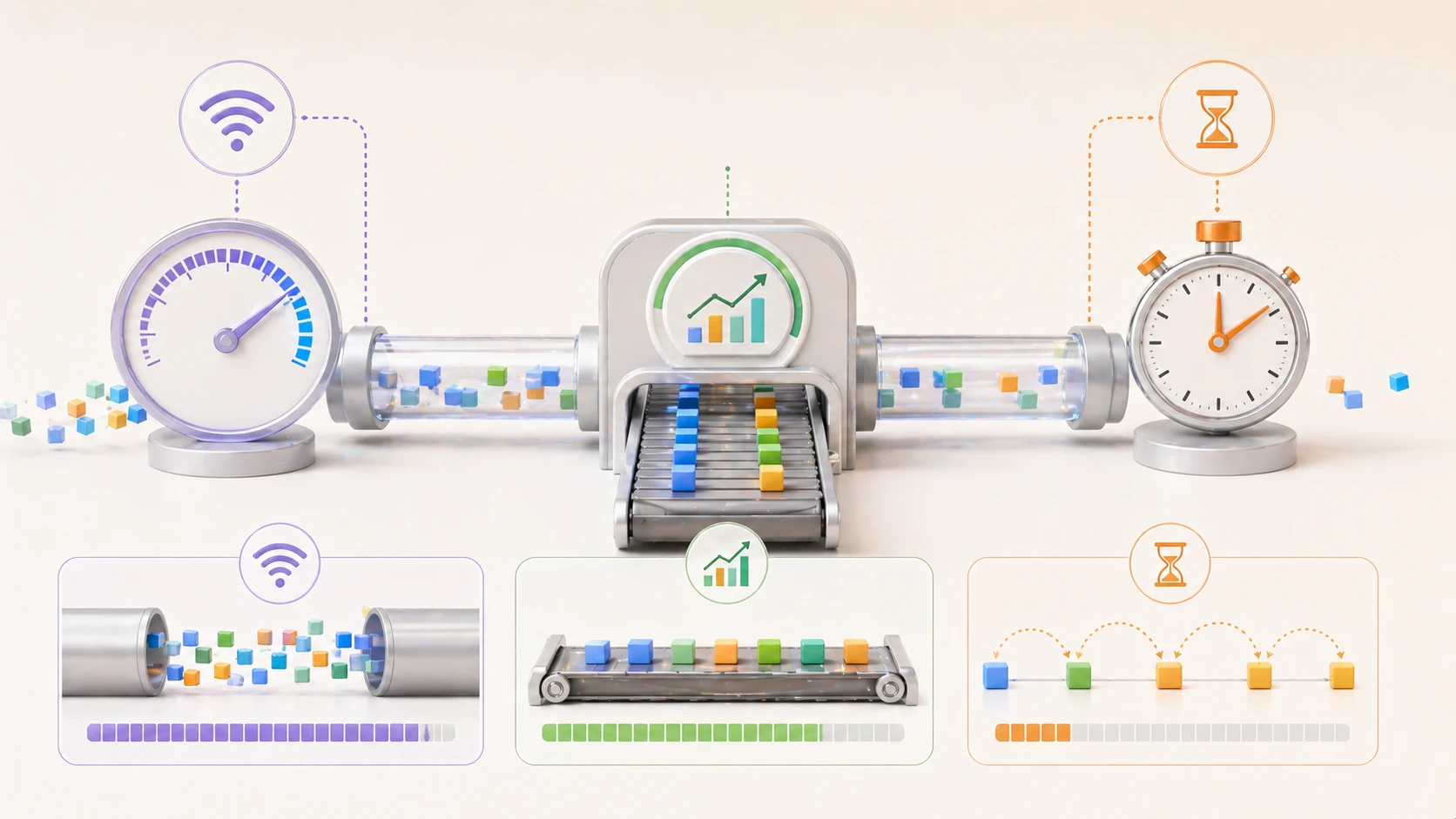
Throughput is often confused with bandwidth and latency, but these terms describe different parts of performance.
Throughput vs. Bandwidth
Bandwidth usually describes the theoretical maximum capacity of a link or channel. For example, a network connection may be rated for a certain number of megabits or gigabits per second. That number describes what the link could carry under ideal or specified conditions.
Throughput describes what is actually delivered successfully in practice. A network may have high bandwidth but lower throughput because of congestion, packet loss, protocol overhead, poor routing, weak hardware, or endpoint limitations.
A simple way to understand the difference is this: bandwidth is the size of the road, while throughput is how much traffic successfully reaches the destination.
Throughput vs. Latency
Latency measures delay. It answers how long it takes for data or a request to travel from one point to another. Throughput measures quantity of successful output over time.
A system can have low latency but limited throughput, such as when it responds quickly to small requests but cannot move large amounts of data efficiently. Another system may have strong throughput but higher latency, especially when large batches or buffered workloads are involved.
For reliable performance analysis, throughput and latency should be evaluated together. Throughput shows volume. Latency shows delay. Both affect user experience and system behavior.
Throughput differs from bandwidth and latency because it measures successful output rather than theoretical capacity or delay alone.
Main Factors That Influence Throughput
Throughput is affected by many technical and operational conditions. Because it reflects real output, it is rarely determined by one component alone.
Network Quality and Congestion
In network environments, throughput depends on link quality, packet loss, congestion, routing stability, retransmission behavior, and contention between applications. Even if the nominal link speed is high, real throughput may fall when multiple users, services, or traffic types compete for the same path.
This is especially important in WAN connections, cloud access, remote offices, video communication, VoIP systems, and distributed applications where traffic must travel across multiple network segments.
Protocol Efficiency
Different protocols handle acknowledgments, retransmissions, session control, overhead, and error recovery in different ways. Some protocols perform well under stable conditions but lose efficiency when latency or packet loss increases.
This means a throughput issue is not always caused by raw bandwidth. Sometimes the protocol behavior and application design determine how much usable traffic can actually move through the system.
Endpoint and Server Performance
Throughput also depends on the devices doing the sending, receiving, and processing. A weak endpoint, overloaded server, slow storage system, inefficient application, or limited CPU resource can reduce throughput even when the network itself is healthy.
For example, a communication server may have enough network capacity, but if it cannot process enough sessions, recordings, media streams, or database writes, the practical system throughput will still be limited.
Storage and Database Limits
Storage speed and database performance can strongly affect throughput in applications that create, read, write, or synchronize large amounts of data. If storage cannot keep up with the workload, queues build up and completed output falls.
This is why throughput analysis often requires a full-system review instead of a narrow network test.
Advantages of Strong Throughput
Strong throughput brings practical value because it allows systems to keep working effectively under real demand. It is especially important when workload increases, traffic becomes less predictable, or many users depend on the same platform.
Better Performance Under Real Load
A system with healthy throughput can move more data, support more users, process more requests, or complete more tasks without becoming unstable too quickly. This improves service consistency during peak hours and operational spikes.
In business environments, strong throughput helps file transfers complete faster, dashboards update more smoothly, cloud applications respond more reliably, and communication systems maintain better voice or video quality.
More Efficient Infrastructure Use
Strong throughput also means the organization is getting more value from existing infrastructure. Poor throughput often indicates that available capacity is being wasted because of bottlenecks, inefficient configuration, weak endpoints, or poor system design.
Before buying more bandwidth, servers, or storage, organizations should check whether current resources are being converted effectively into completed work. Throughput analysis can help reveal whether the problem is lack of capacity or poor efficiency.
Better User Experience
Users feel throughput problems directly. They may experience slow downloads, delayed uploads, lagging applications, interrupted calls, poor video quality, or long processing times. Strong throughput reduces these problems and makes systems feel more responsive and dependable.
For service teams and operational departments, this can improve daily productivity without changing the business process itself.
Stronger Scalability Foundation
A platform that already delivers strong throughput is usually better prepared for growth. It can support more users, devices, sessions, files, transactions, or services before major redesign becomes necessary.
Throughput alone does not guarantee scalability, but it provides an important foundation for expansion. If a system struggles with current workload, adding more users or services will only make the bottleneck more visible.
High throughput is not only about pushing more output. It is about making the system deliver the value it was designed to provide.
Where Throughput Analysis Is Used
Throughput analysis is useful across many technical and business environments. It helps teams understand whether a system performs well in practice and where hidden limits may exist.
Networks and Data Services
In network design, throughput analysis helps evaluate whether LAN, WAN, internet, VPN, or cloud connections can support real traffic demand. It is useful for bandwidth planning, congestion troubleshooting, application delivery, remote office connectivity, and service quality evaluation.
Cloud Platforms and Applications
Cloud platforms, SaaS systems, databases, APIs, and enterprise applications all rely on successful output over time. Throughput analysis can reveal whether services are completing enough requests, transactions, synchronizations, or data operations under actual load.
Communication Systems and Media Traffic
Throughput is highly relevant in communication environments. Voice, video, messaging, SIP signaling, paging traffic, intercom calls, recordings, remote access, and monitoring data all depend on real throughput rather than theoretical link speed.
If a communication platform has weak throughput, users may experience unstable sessions, delayed call handling, poor media quality, slow recording access, or reduced service capacity during busy periods.
Industrial and Operational Systems
Industrial systems may use throughput to evaluate telemetry collection, alarm reporting, production data processing, remote monitoring, control platform performance, and data exchange between field devices and control centers.
In these environments, throughput is not only a convenience metric. It can affect operational visibility, response speed, and system coordination.
How to Maintain Good Throughput
Maintaining throughput requires more than checking hardware specifications. Real performance should be monitored and reviewed under normal and peak operating conditions.
Monitor Real Operating Conditions
Teams should monitor real data movement, session behavior, application response, transaction completion, and peak-period performance. A link rating or datasheet value does not prove that the system is performing well in live use.
Regular monitoring can reveal congestion, overloaded servers, slow storage, protocol inefficiency, or application bottlenecks before they become serious service problems.
Check the Full Service Path
When throughput drops, the network is often blamed first. However, the cause may be the endpoint device, server, database, storage layer, encryption process, queue design, application logic, or upstream service.
A good troubleshooting process reviews the full delivery path from source to destination. This avoids replacing the wrong component and helps identify the real constraint.
Test Under Realistic Load
A system may perform well during light testing but struggle when real users, media traffic, background synchronization, monitoring data, and application sessions are active. Throughput testing should reflect realistic usage patterns whenever possible.
Review Configuration and Resource Allocation
Router settings, server resource limits, QoS policies, database tuning, storage configuration, application threads, and queue behavior can all influence throughput. Regular review helps ensure that the environment is not artificially limiting its own output.
Throughput maintenance works best when teams examine the whole path instead of assuming one layer is always responsible.
Limitations and Design Trade-Offs
Throughput is important, but it should not be treated as the only performance target. A system can show high throughput while still having poor latency, weak resilience, unstable control behavior, or security limitations.
In communication and business systems, real experience depends on a combination of throughput, latency, reliability, continuity, security, and manageability. Optimizing only for maximum output may create an unbalanced design if other performance requirements are ignored.
Some throughput improvements also require trade-offs. Larger buffers, batching, aggressive tuning, additional hardware, or specialized scaling may improve output but also increase complexity, cost, or delay. The goal should be practical, sustainable throughput that fits the real operating environment.
Conclusion
Throughput is a practical measure of how much useful data, traffic, or completed work a system can deliver over time. It is important because real performance depends on successful output, not only theoretical capacity.
In networks, applications, cloud services, communication platforms, and industrial systems, strong throughput supports better user experience, smoother workflows, higher efficiency, and stronger scalability. Weak throughput often exposes hidden bottlenecks that reduce the value of otherwise capable infrastructure.
For organizations evaluating system performance, throughput is one of the most revealing metrics available. It helps show what a system can truly deliver when work must be completed under real operating conditions.
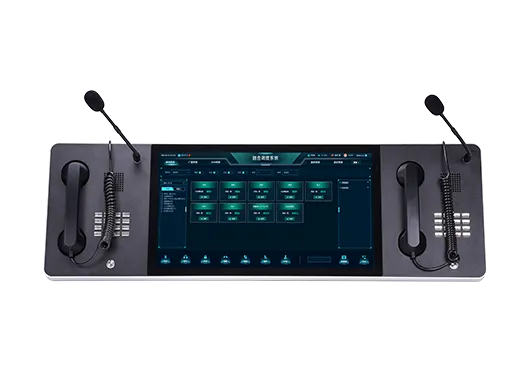
Becke Telcom provides communication products and solutions for IP PBX, SIP telephony, dispatch communication, industrial voice systems, paging platforms, gateways, and enterprise communication scenarios. For projects involving voice, video, intercom, emergency communication, or multi-site system design, throughput should be considered together with reliability, latency, redundancy, and operational control.
FAQ
What is throughput in simple terms?
Throughput means how much useful data or completed work a system can successfully deliver in a certain amount of time. It shows what the system actually gets done in practice.
What is the difference between throughput and bandwidth?
Bandwidth is the theoretical maximum capacity of a link or channel. Throughput is the amount of data or work that is actually delivered successfully under real conditions.
Is throughput the same as speed?
Not exactly. Speed is often used as a general term, while throughput specifically measures successful output over time. A system may have a high rated speed but lower real throughput because of congestion, overhead, or bottlenecks.
Why is throughput important for communication systems?
Communication systems need enough throughput to support voice, video, SIP signaling, paging traffic, recordings, monitoring data, and user sessions. Weak throughput can cause poor media quality, delays, or reduced service capacity.
How can throughput be improved?
Throughput can be improved by identifying bottlenecks, reducing congestion, optimizing protocols, upgrading weak endpoints, improving server or storage performance, tuning applications, and monitoring real traffic under live conditions.