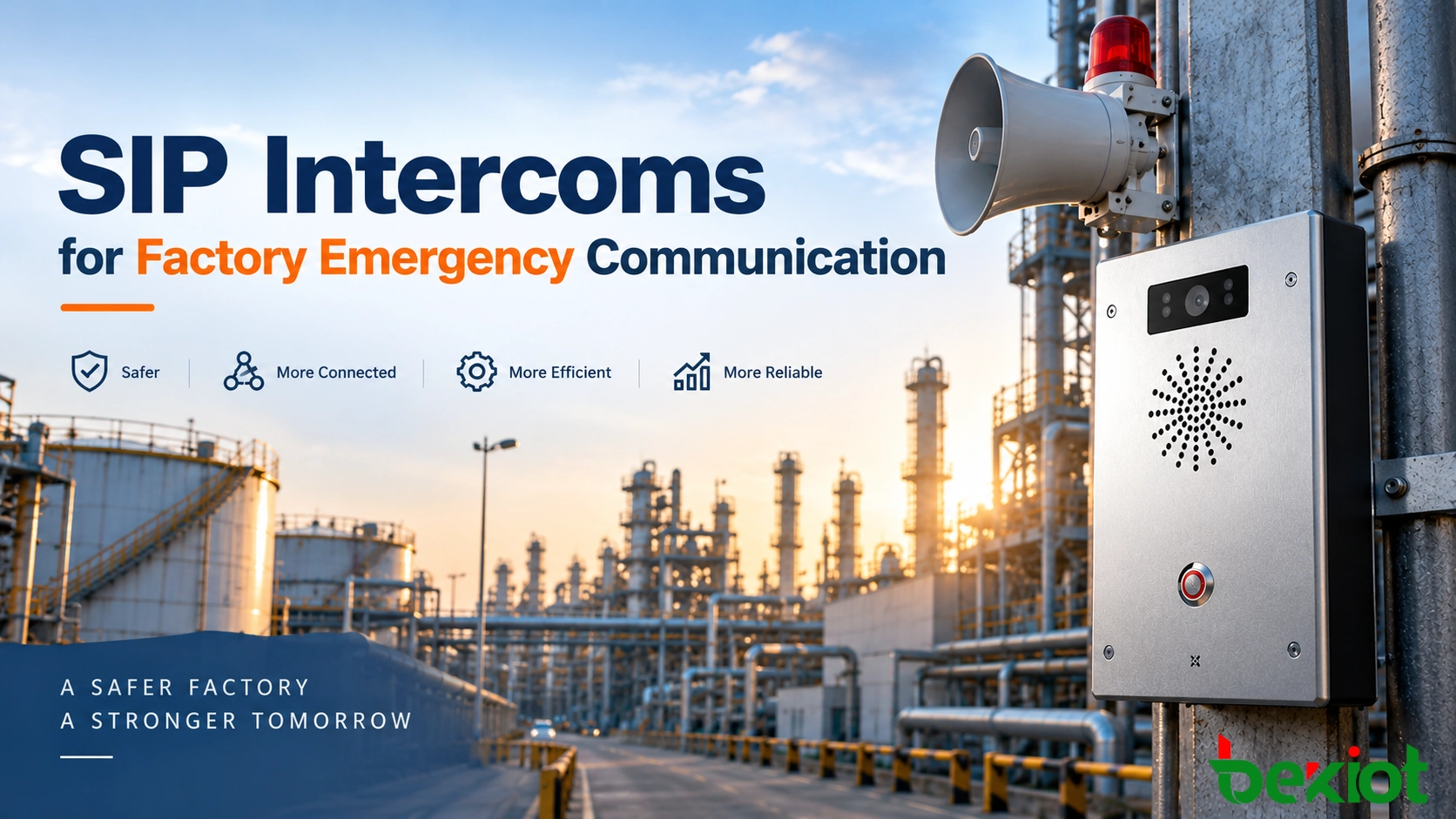
PoC and SIP-Based IP Intercom in Network Intercom Projects
PoC and SIP-based IP intercom are both called network intercom in some projects, but they serve different use cases. This article explains mobile PTT, fixed SIP calling, terminal selection, and mixed communication design.
Becke Telcom
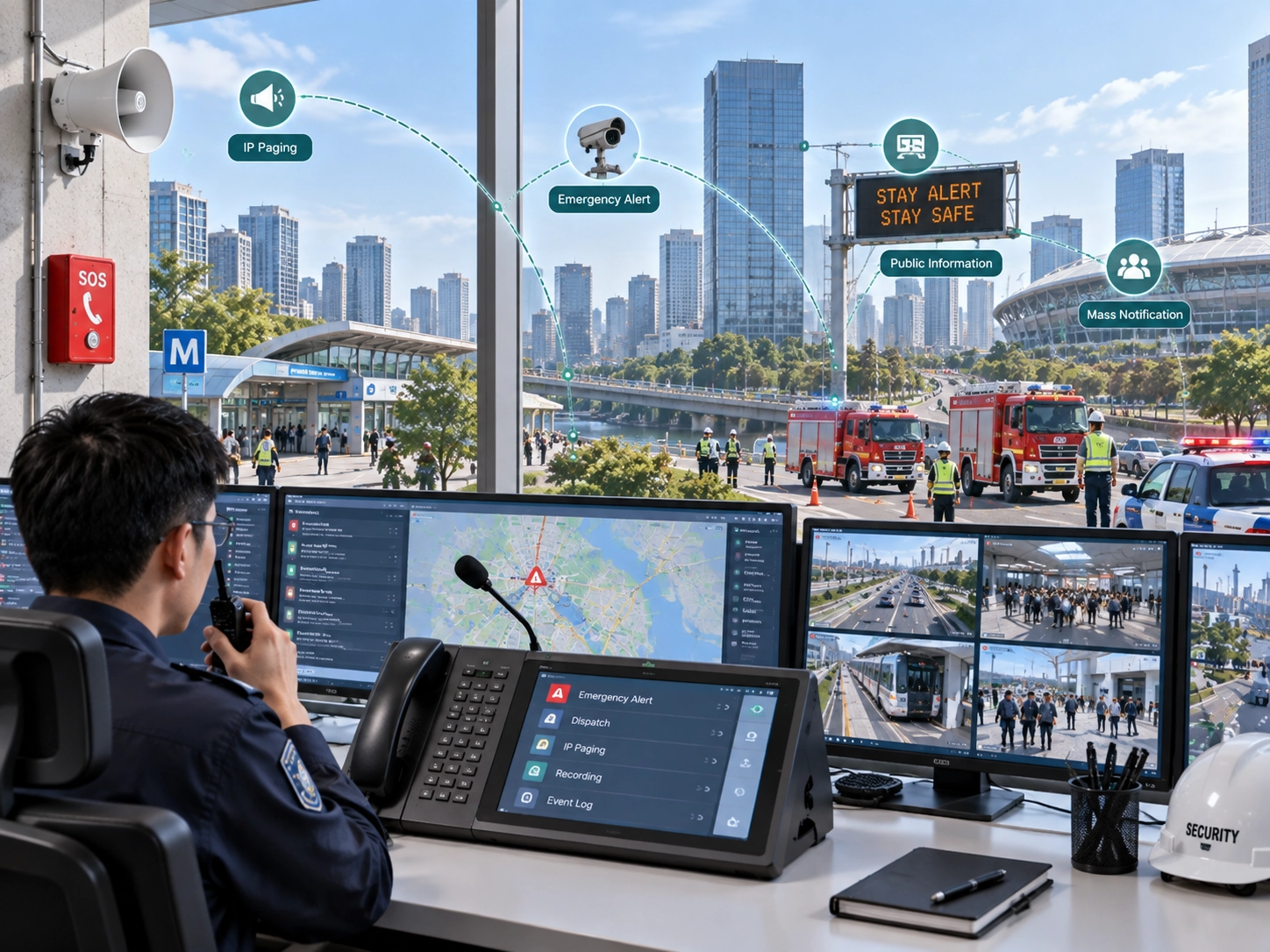
In communication system integration projects, the term “network intercom” is often used too broadly. A customer may say they need a network intercom system, but that phrase alone does not tell the integrator enough. It may refer to mobile push-to-talk communication for workers, or it may refer to fixed SIP intercom terminals installed at help points, gates, platforms, workshops, parking areas, or emergency call locations.
This difference matters from the first step of system design. PoC, or Push to Talk over Cellular, extends the traditional walkie-talkie model through public mobile networks. SIP-based IP intercom is closer to a simplified VoIP calling system, usually designed for one-button help, access communication, industrial call points, building entrances, transport facilities, and control-room response.
Both systems use IP networks in some form, so both may be described as network intercom. But their working logic, terminal type, deployment method, duplex mode, and project application are very different. Before choosing products, the project team should first confirm whether the real requirement is mobile group PTT or fixed SIP calling.
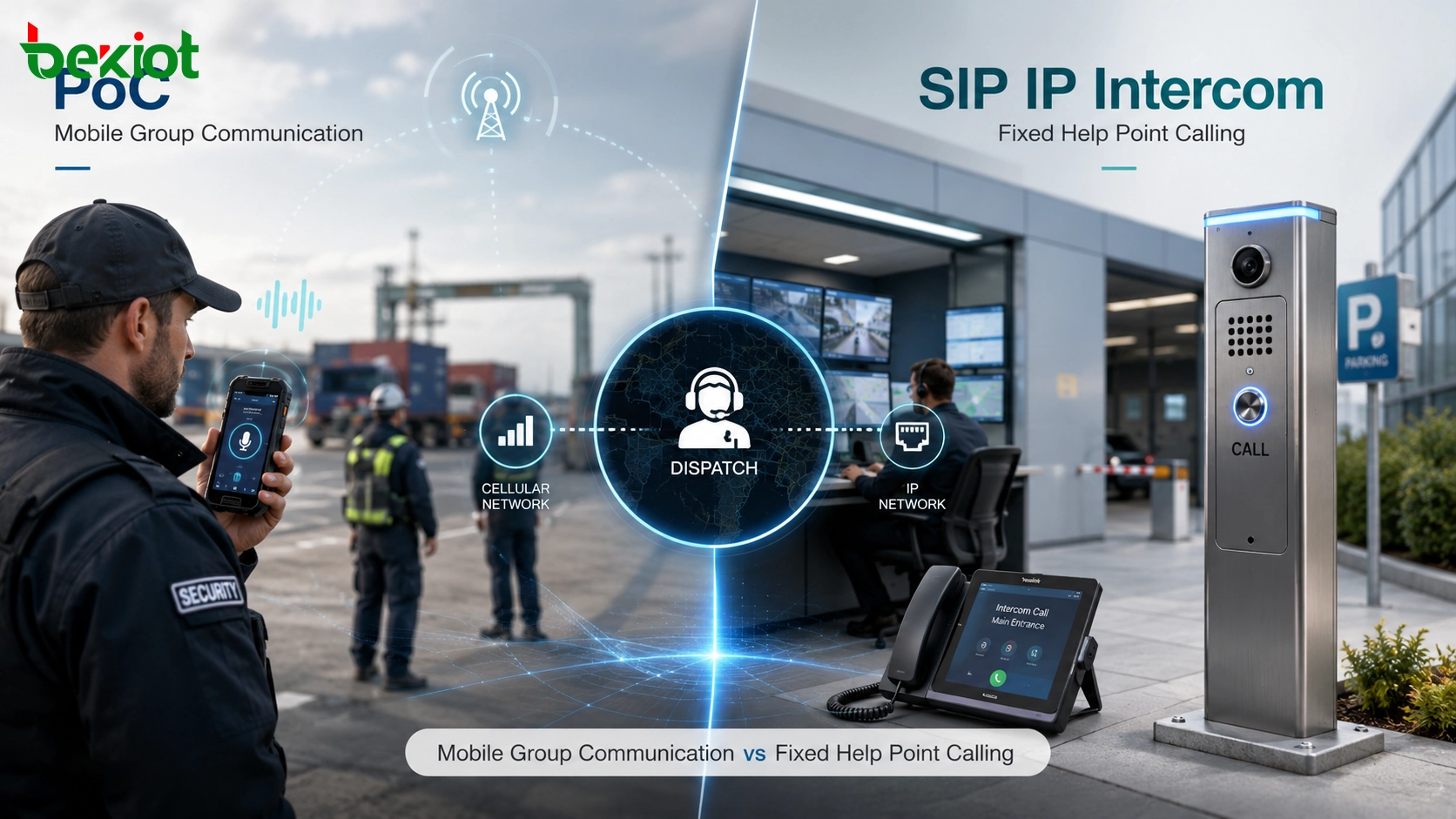
PoC and SIP-based IP intercom are both network communication systems, but their devices, working modes, and project applications are very different.
Why the same name causes confusion
The phrase “network intercom” sounds simple, but it can point to two technical routes. In one project, the customer may expect workers to use handheld smart terminals and communicate through group push-to-talk. In another project, the customer may need wall-mounted IP intercoms installed at fixed service points so users can press a button and call a duty center.
PoC focuses on mobile group communication. It follows the radio communication habit: press the PTT key, speak to the group, and let other group members listen immediately. SIP intercom follows the phone communication logic: press a call button, establish a SIP call, and speak with an answering endpoint such as an IP phone, softphone, duty desk, or dispatch console.
So the most useful question is not simply “Do you need a network intercom?” A better question is: “Do users need mobile group push-to-talk, or do they need fixed one-button SIP calling?” Once this is clear, terminal selection, server configuration, network planning, installation method, and dispatch integration become much easier.
PoC is mobile push-to-talk over cellular
PoC stands for Push to Talk over Cellular. It is a mobile-network-based communication system that provides a walkie-talkie-like experience over public mobile data networks or other IP connections. Users press and hold the PTT button to speak, and other users in the same group receive the voice message in real time.
The main value of PoC is that it keeps the familiar radio-style operating habit while expanding coverage through mobile networks. As long as the terminal has operator network coverage or usable internet access, users can join group communication without building a dedicated private radio network.
This makes PoC suitable for mobile teams, field workers, logistics users, security patrols, public service teams, construction crews, property management staff, temporary event support, and wide-area emergency coordination. In these scenarios, users move across different areas and need fast group communication rather than fixed-point calling.
How PoC works in real deployments
A typical PoC system includes a PoC server platform, mobile network access, dedicated smart PTT terminals, and sometimes a PoC application installed on ordinary smartphones. The platform manages user accounts, groups, permissions, voice sessions, positioning, dispatch control, and sometimes video or multimedia functions.
PoC is usually half-duplex. In the same group, one user speaks while other users listen. This is similar to traditional two-way radio communication and helps avoid voice collision in group coordination. For work teams, this mode is often faster than making individual phone calls.
Depending on the platform and terminal capability, PoC may support group talk, individual call, GPS positioning, track playback, video call, live video return, multimedia messages, emergency alarm, and dispatch console management. In many projects, it is used as a wide-area supplement to private radio systems or as a lower-cost alternative when dedicated radio deployment is not practical.
SIP-based IP intercom is fixed voice and video calling
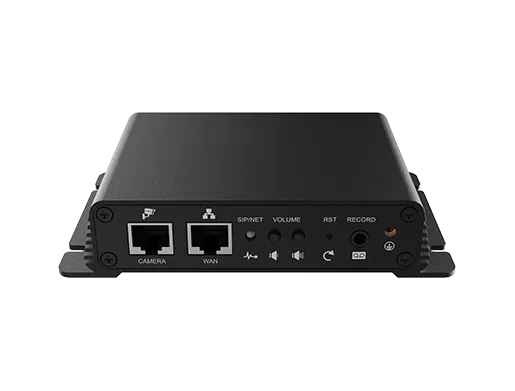
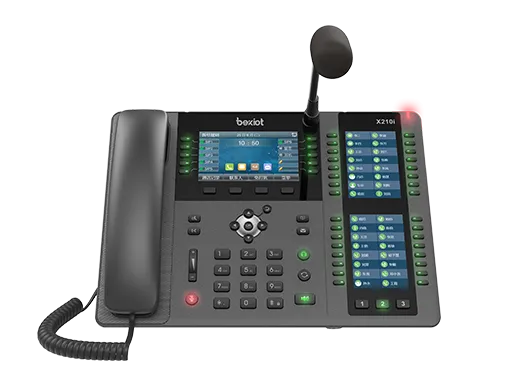
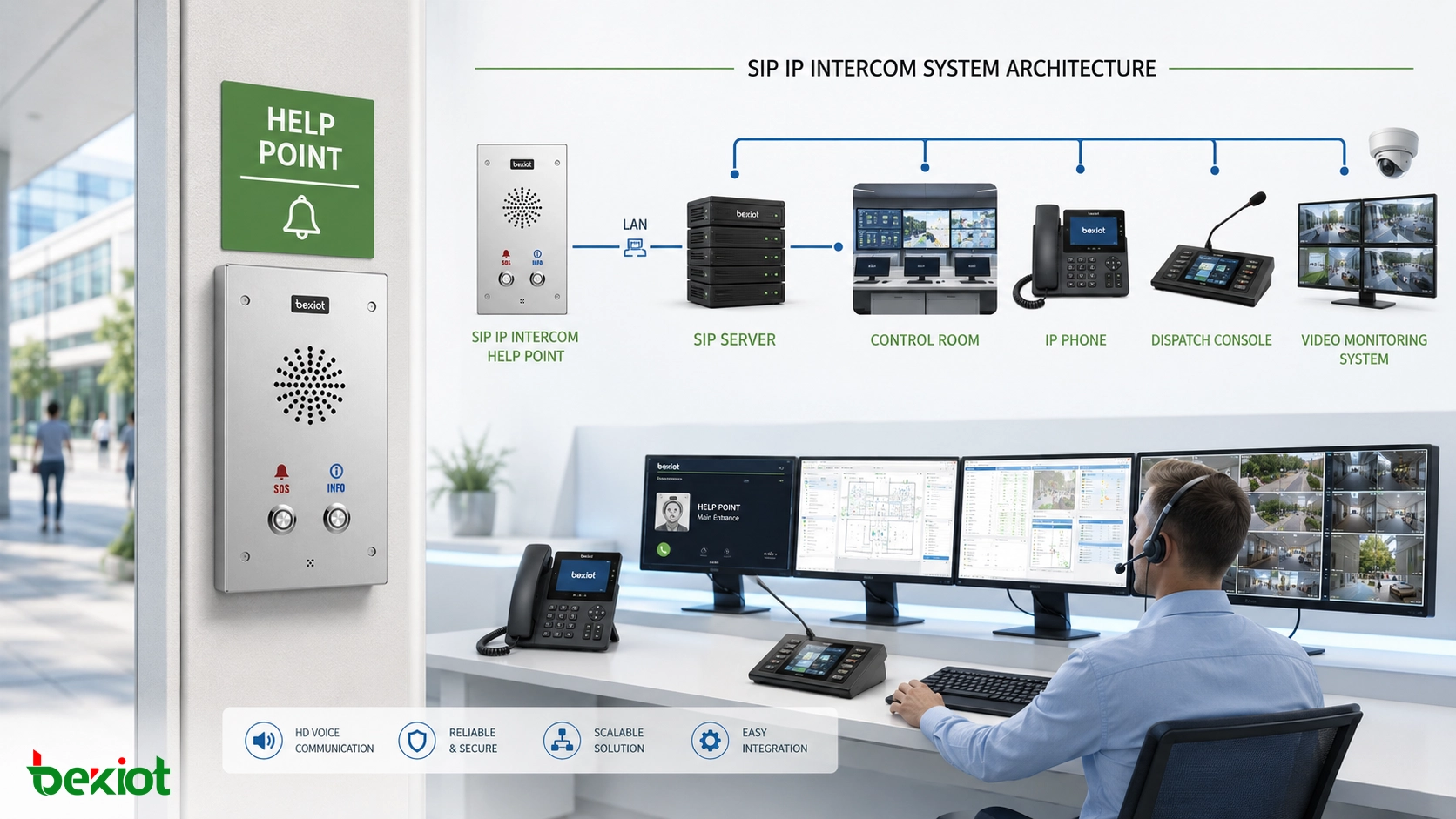
SIP-based IP intercom, also called IP intercom or SIP intercom, is built on VoIP communication principles. It usually uses dedicated IP intercom terminals, a SIP server or IP PBX, and answering endpoints such as IP phones, softphones, video phones, duty desks, or dispatch consoles.
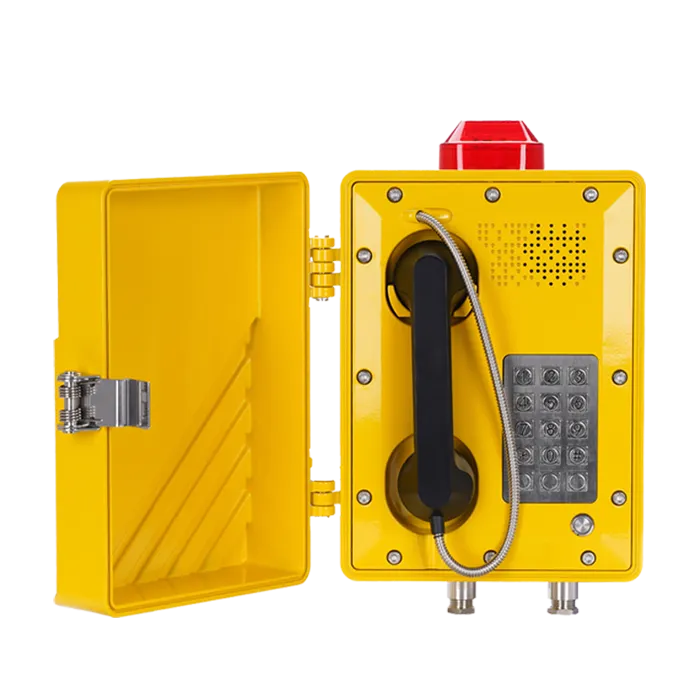
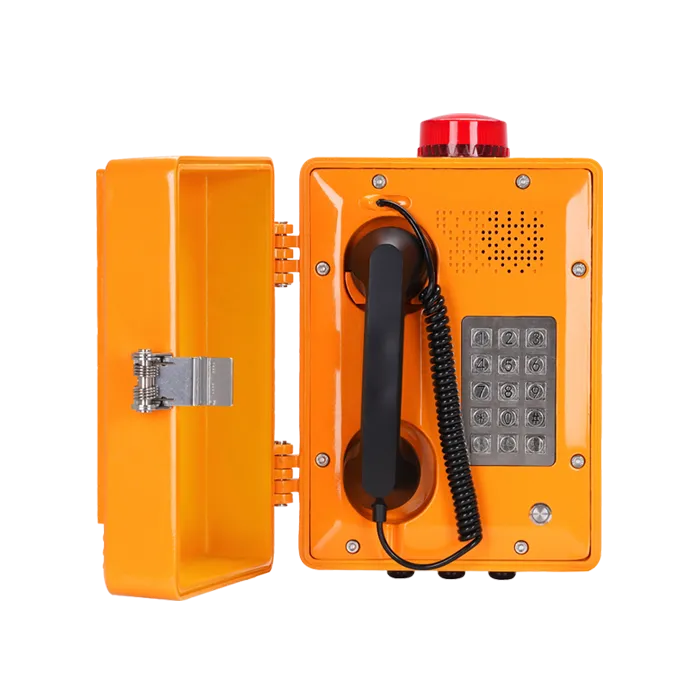
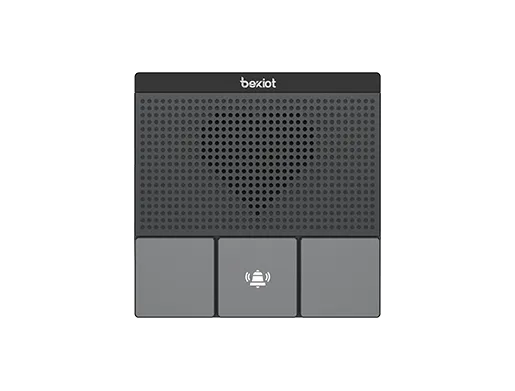
Compared with PoC, SIP intercom is less like a walkie-talkie and more like a simplified telephone. The terminal may have one call button, several speed-dial buttons, a speaker, microphone, camera, relay output, or alarm input. When the user presses the button, the terminal calls a preset SIP extension, control room, duty phone, or dispatch seat.
This design is useful when the user may not know whom to call, may not be trained to operate a complex terminal, or may be under pressure during an emergency. Instead of dialing numbers, the user presses one help button and reaches the correct answering position according to the preset call strategy.
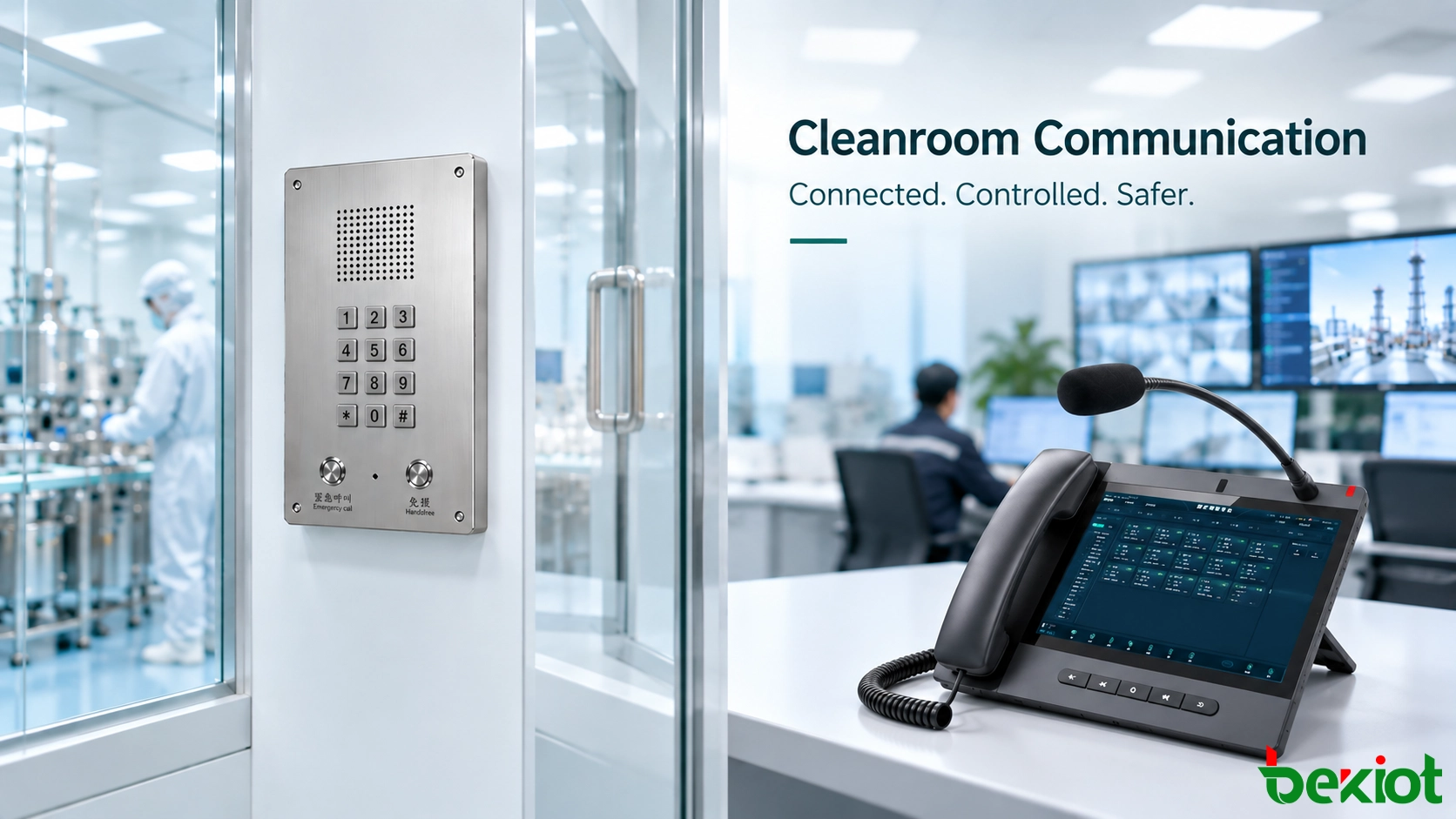
SIP intercom terminals are commonly installed at help points, factory entrances, transport stations, parking areas, building doors, campuses, industrial plants, elevators, outdoor service points, security checkpoints, tunnel emergency points, and control-room access points. The terminal is usually fixed on a wall, column, cabinet, panel, or outdoor enclosure.
A basic SIP intercom may support audio calling only. A more advanced terminal may include video, access control relay output, dry contact input, alarm linkage, noise suppression, echo cancellation, recording support, and integration with monitoring platforms. For example, a video intercom allows the control room to see the caller and surrounding environment before deciding how to respond.
Unlike PoC, SIP intercom is usually full-duplex. Both parties can speak and listen at the same time, just like a normal phone call. This is important for emergency assistance, visitor communication, industrial operation support, elevator help points, and command-center response because both sides can exchange information naturally without waiting for a PTT turn.
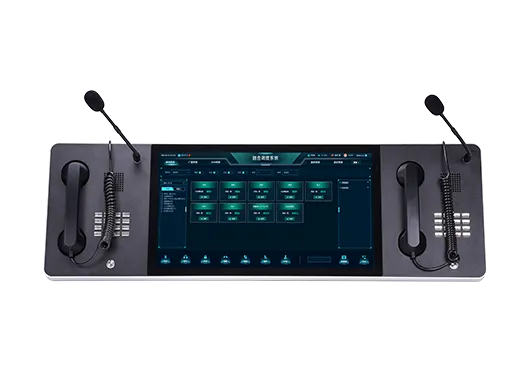
SIP intercom uses fixed IP terminals, SIP servers, and answering endpoints such as IP phones, duty desks, or dispatch consoles.
Deployment logic of SIP intercom
A SIP intercom project is usually built around a SIP server or IP PBX, IP intercom terminals, network switches, SIP extension numbers, and call routing rules. After each terminal registers to the SIP server, the engineer configures what number or group should be called when the button is pressed.
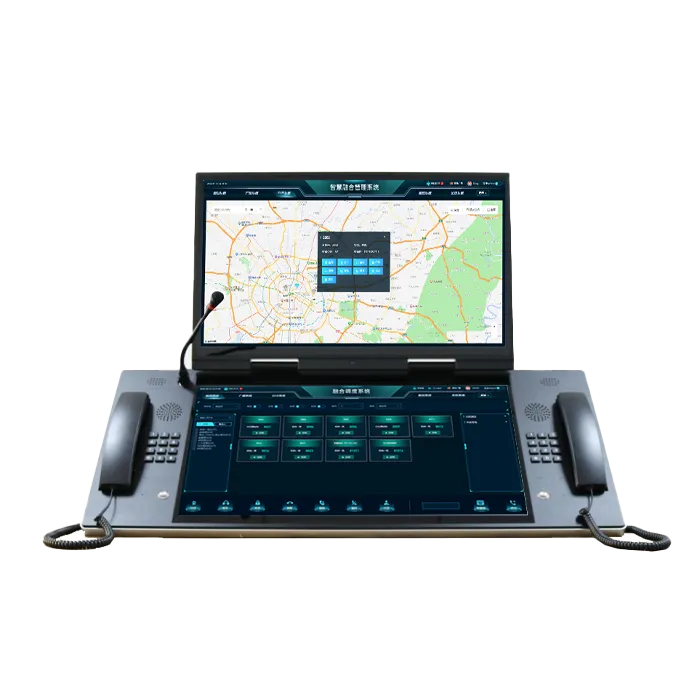
For a small site, one intercom button may call one duty phone. For a larger facility, the call may ring multiple phones, forward to a dispatch console, trigger video pop-up, start recording, create an alarm event, or escalate to another team when no one answers.
This flexibility makes SIP intercom suitable for structured projects where communication needs to work with security, emergency response, access control, video monitoring, public address, and operation management. Becke Telcom can be considered in projects that require SIP endpoints, industrial intercom terminals, dispatch integration, and unified communication design.
Core differences between PoC and SIP intercom
Comparison Item
PoC System
SIP-Based IP Intercom
Full name
Push to Talk over Cellular
Session Initiation Protocol based IP intercom
Main logic
Mobile group push-to-talk communication
Fixed or semi-fixed VoIP calling
Communication mode
Usually half-duplex, one speaker at a time
Usually full-duplex, both sides can speak naturally
Typical terminals
Smart PTT terminals, rugged handhelds, smartphone apps
Wall-mounted intercoms, help points, video door phones, industrial call stations
Network requirement
Mobile internet or public data network
IP network, LAN/WAN, SIP server, or IP PBX
Best-fit scenario
Mobile teams, patrols, logistics, wide-area field coordination
Emergency help points, access communication, fixed service points, control-room calling
Choosing the right system
The selection should start from user behavior. If users need to move across a large area and communicate with a group by pressing a PTT key, PoC is usually more suitable. It offers a familiar walkie-talkie experience and can be expanded with dispatch, positioning, video, and multimedia functions.
If users need to press a fixed button and call a duty center, SIP intercom is usually the better choice. It connects easily with IP phones, SIP servers, dispatch consoles, video systems, access control devices, and emergency response workflows. It also provides a more natural conversation because of full-duplex calling.
The working environment should also be considered. PoC depends heavily on mobile network coverage and platform capacity. SIP intercom depends on the stability of the IP network, SIP registration, power supply, terminal installation, and answering strategy. The right choice is not based on which system sounds more advanced, but on which one matches the real workflow.
Mixed communication sites may need both
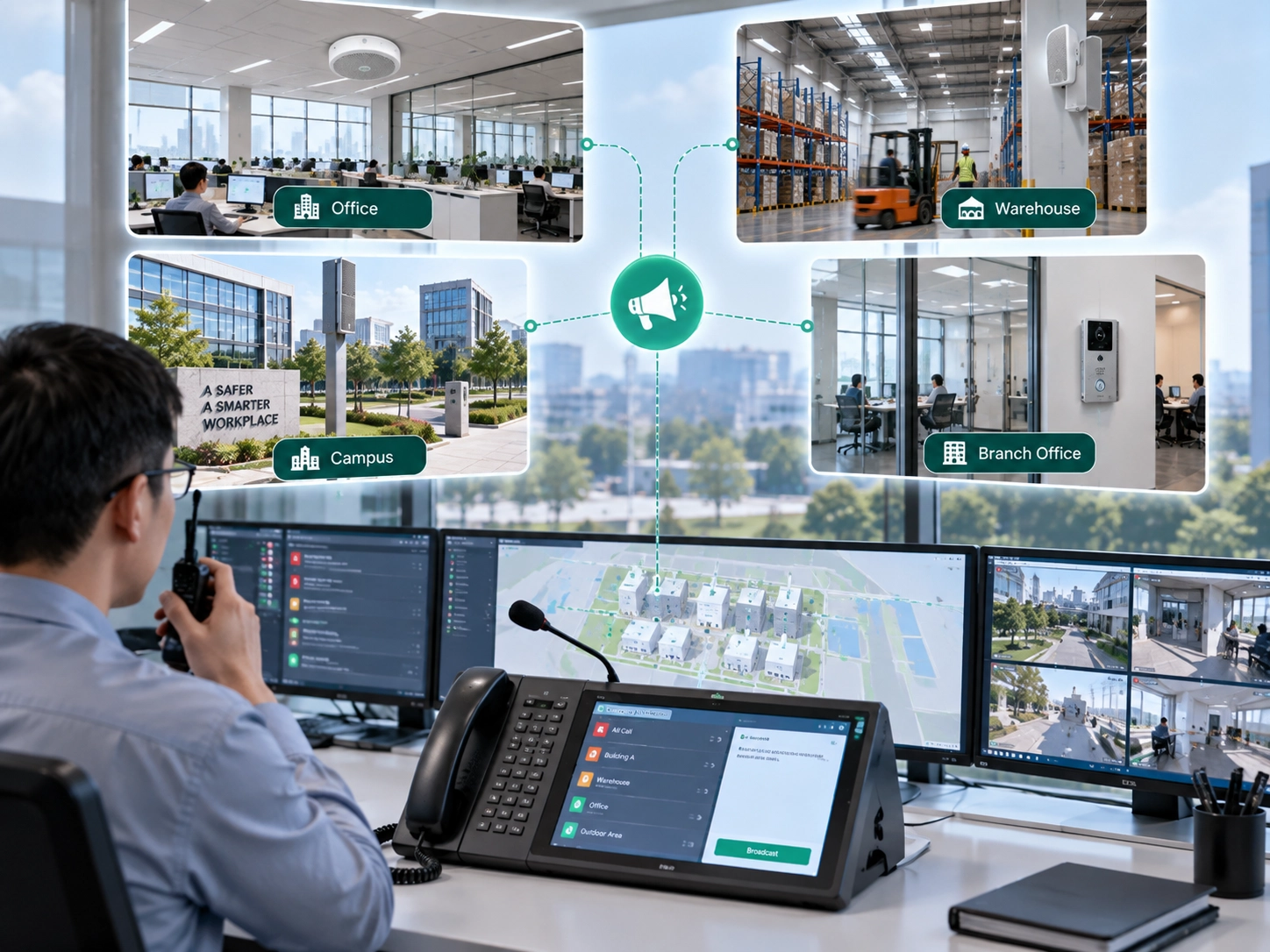
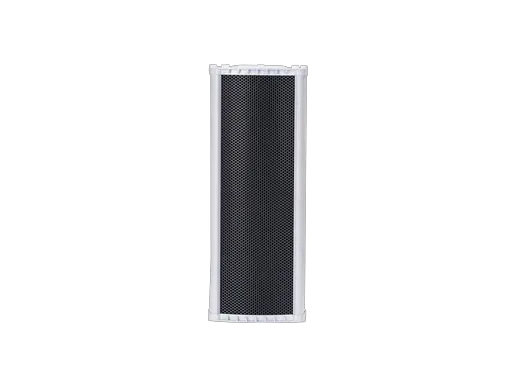
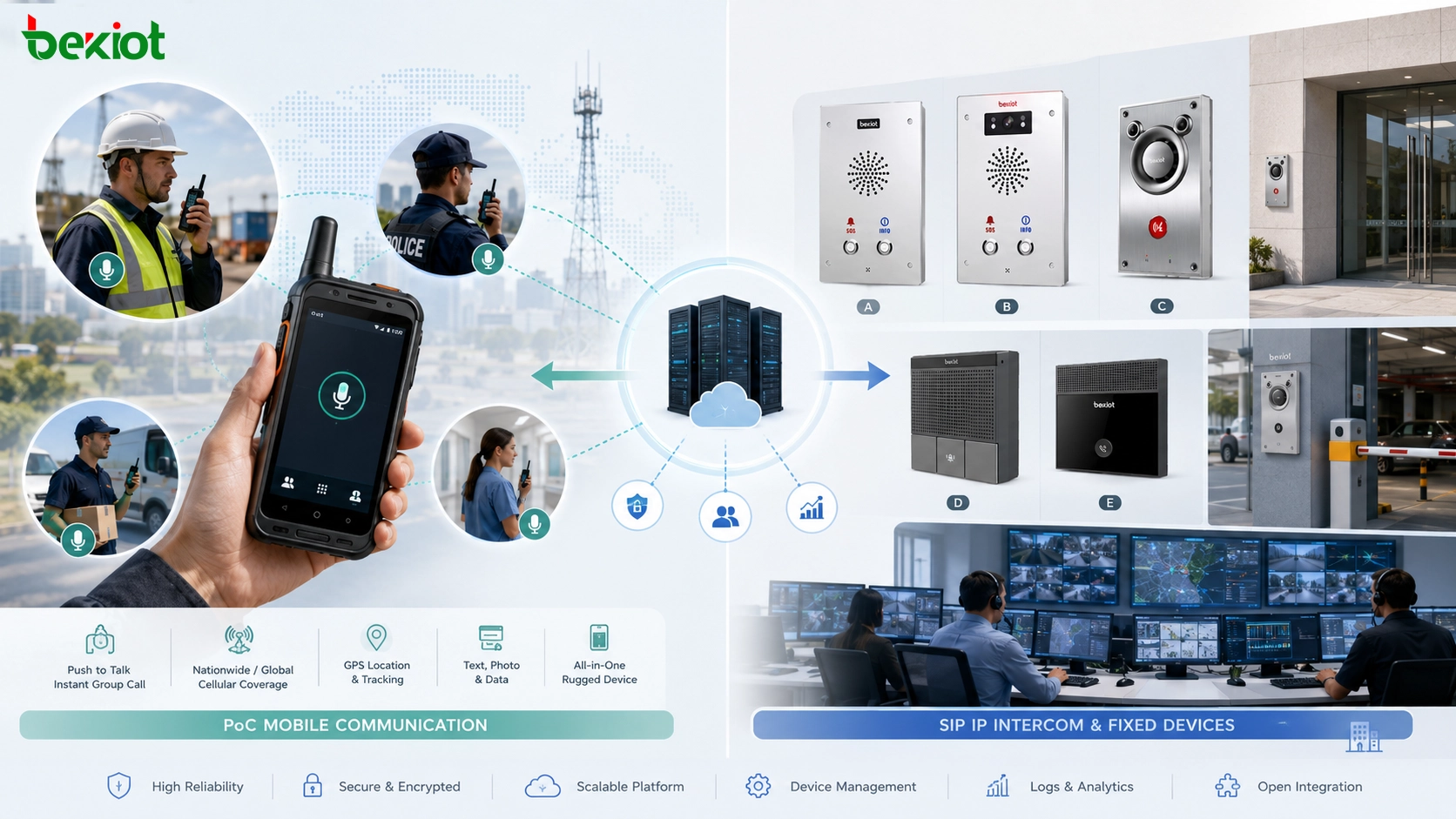
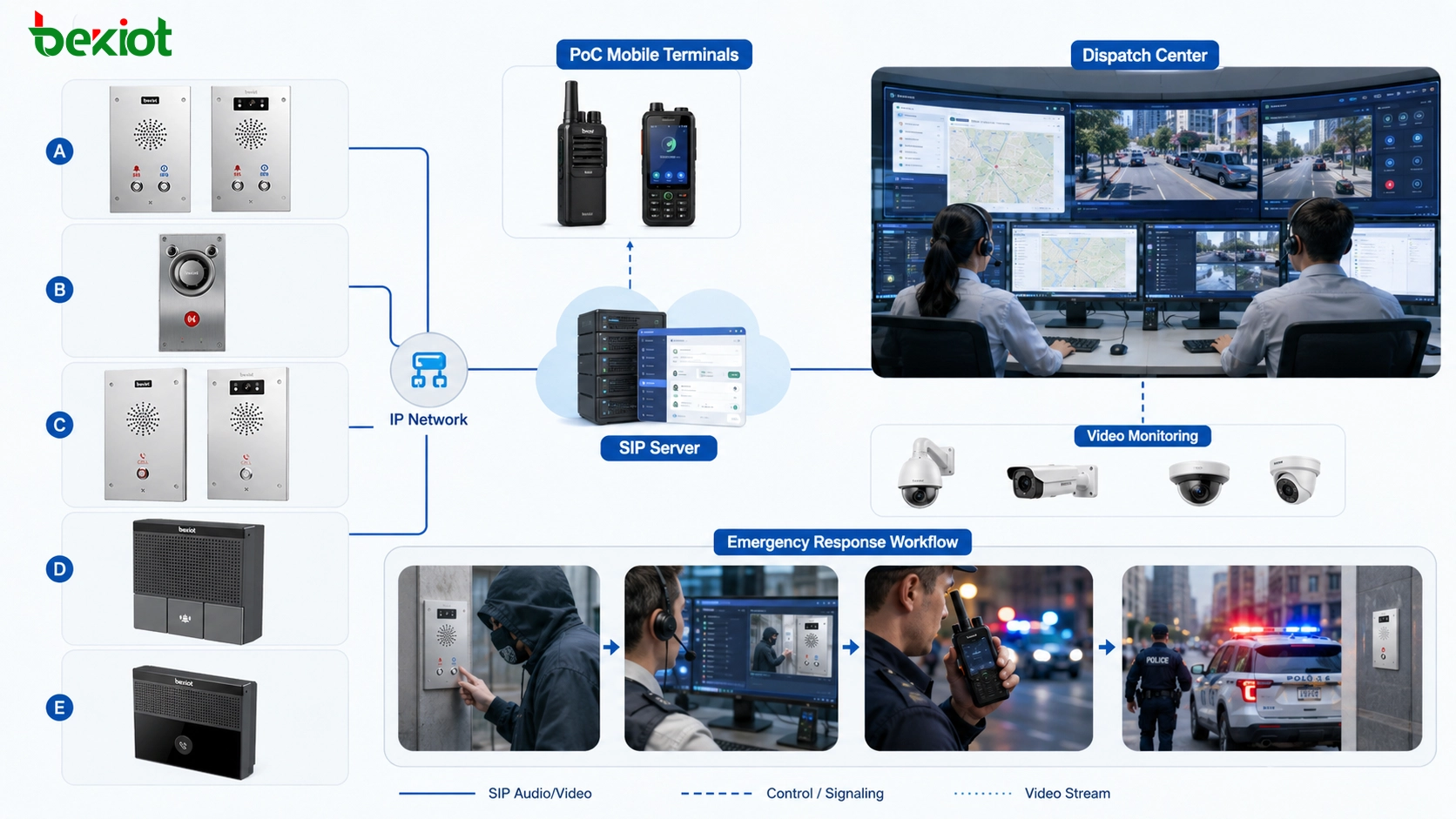
In larger projects, PoC and SIP intercom may appear together. Mobile personnel may use PoC terminals, while fixed locations use SIP intercom devices. The project may also include IP phones, video cameras, alarm systems, access control, public address equipment, and a dispatch center.
For example, in a transport hub, staff may use PoC terminals during patrol. At the same time, passengers may use SIP help points installed on platforms, corridors, parking areas, or entrances. When a help button is pressed, the SIP intercom calls the station duty desk or command center. If field response is needed, the dispatcher can notify mobile staff through the PoC group.
This architecture shows why the two systems should not be confused. They solve different problems, but they can complement each other when a project needs both mobile coordination and fixed emergency communication.
PoC and SIP intercom can be combined in larger projects to support both mobile group communication and fixed emergency calling.
Implementation notes for engineers
Before selecting products, engineers should confirm the communication distance, user mobility, answering location, call workflow, network environment, power supply condition, installation method, and integration requirement. These details are more important than the general name of the system.
For PoC projects, attention should be given to mobile network coverage, data traffic, terminal ruggedness, battery life, group management, dispatch permissions, positioning accuracy, emergency priority, and platform capacity. If the site has weak mobile signal, the user experience may be affected even when the PoC platform is configured correctly.
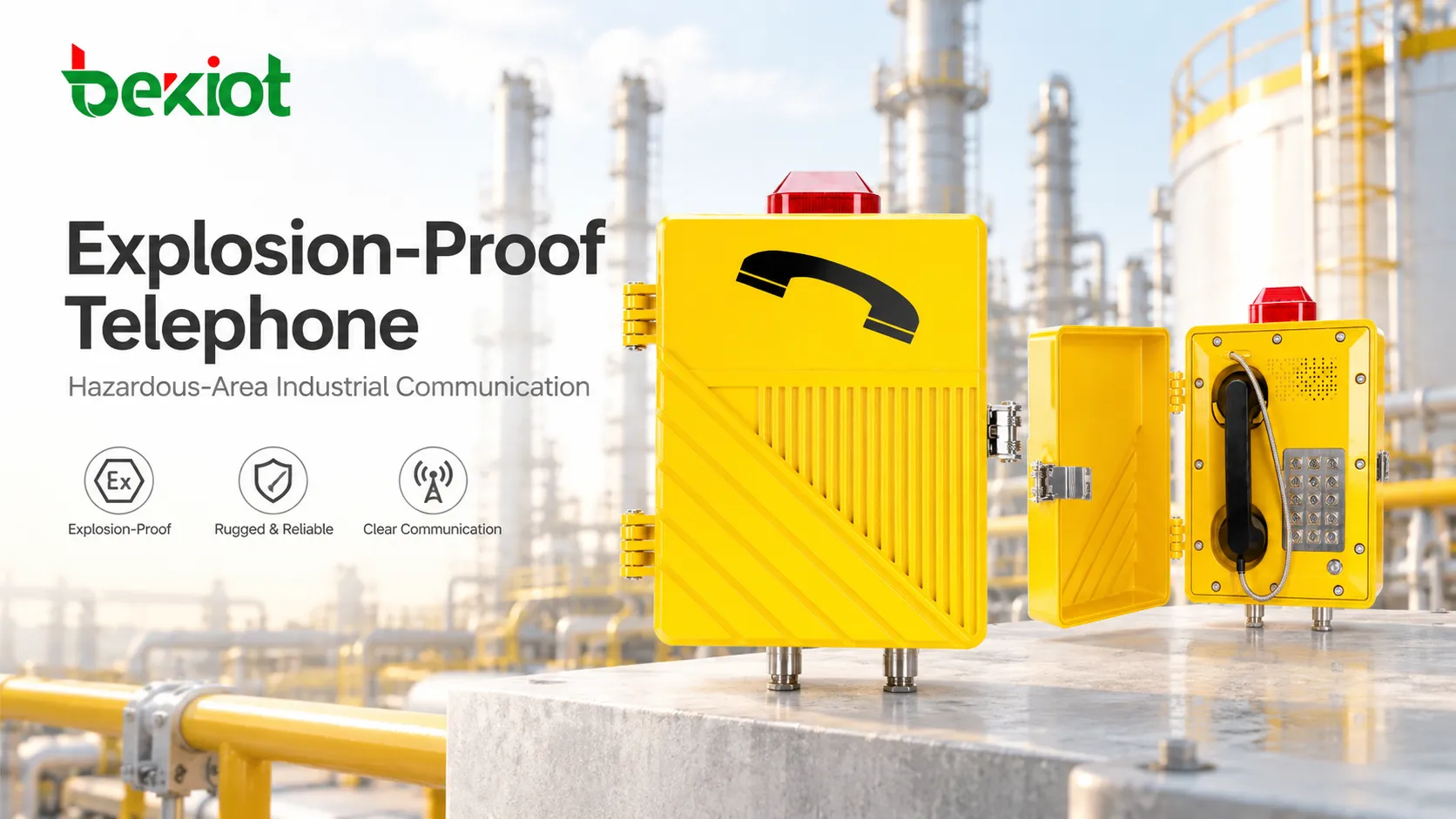
For SIP intercom projects, attention should be given to SIP registration stability, echo cancellation, speaker volume, microphone pickup, waterproof design, vandal-resistant enclosure, PoE power supply, call routing, video compatibility, recording, and emergency escalation. In industrial and outdoor environments, enclosure protection and installation reliability are especially important.
From generic naming to accurate project design
Using the term “network intercom” without definition can create project risk. One team may prepare mobile PTT terminals, while another expects wall-mounted SIP help points. One system may require mobile data service, while the other may need LAN wiring, PoE switches, SIP registration, and call routing. These are very different engineering tasks.
A clearer requirement description should include the terminal type, communication mode, user location, answering workflow, duplex mode, network environment, integration requirement, and emergency behavior. Once these details are defined, product selection becomes much more accurate.
For projects involving fixed SIP help points, industrial intercom terminals, dispatch consoles, video linkage, PoC users, and mixed communication endpoints, Becke Telcom can provide practical reference for unified communication planning and SIP intercom integration.
Summary
PoC and SIP-based IP intercom may both be called network intercom, but they are not the same type of system. PoC is a mobile push-to-talk communication model based on public mobile data networks. It is suitable for group communication, field teams, patrols, logistics, public service, and mobile dispatch.
SIP intercom is a VoIP-based calling model using fixed IP terminals, SIP servers, and preset call strategies. It is suitable for help points, access communication, industrial sites, buildings, transport facilities, parking areas, elevators, and emergency communication points.
The most practical way to avoid misunderstanding is to describe the use case clearly. If the requirement is mobile group PTT, choose PoC. If the requirement is fixed one-button calling, voice or video help, or SIP platform integration, choose SIP intercom. Once the working mode is clear, the right terminal, server, network, and dispatch design can be selected with much higher accuracy.
FAQ
Can PoC replace a private radio system completely?
Not always. PoC is useful when mobile network coverage is available, but private radio may still be preferred in areas requiring independent radio infrastructure, very low latency, or communication continuity during public network failure.
Can a SIP intercom call a normal IP phone?
Yes. If both devices are registered to the same SIP server or routed through compatible SIP infrastructure, a SIP intercom can call an IP phone, softphone, dispatch console, or other SIP endpoint.
Is video necessary for every IP intercom project?
No. Audio-only intercom is enough for many help points and industrial communication locations. Video becomes more valuable when the control room needs visual confirmation, visitor identification, scene verification, or security linkage.
What network should be prepared for SIP intercom terminals?
A stable IP network is required. PoE switches are often used because they provide power and data through one cable. For outdoor or industrial sites, surge protection, waterproof cabling, and network isolation should also be considered.
How can a project avoid choosing the wrong network intercom product?
The project team should define whether users need mobile group PTT or fixed SIP calling. Then they should confirm terminal type, duplex mode, server platform, answering workflow, installation location, and integration requirements before product selection.