Wall Intercom Systems for Modern Access Control and Visitor Communication
Wall intercom systems now support visitor verification, access control, video communication, mobile unlocking, and site security for homes, apartments, offices, campuses, healthcare buildings, and industrial facilities.
Becke Telcom
A wall intercom system is no longer just a simple buzzer installed beside a door. In many homes, apartment buildings, offices, schools, hospitals, and industrial sites, it has become an important access control and communication point. A well-designed system helps users identify visitors, speak with them clearly, open doors remotely, and keep a record of entry activity when needed.
The right system depends on the building type, wiring conditions, number of users, security requirements, and whether mobile access or video monitoring is required. For a single-family home, a compact video intercom may be enough. For a multi-tenant apartment or commercial building, the system may need directories, access cards, remote management, and integration with property systems.
How a Wall Intercom Works Behind the Panel
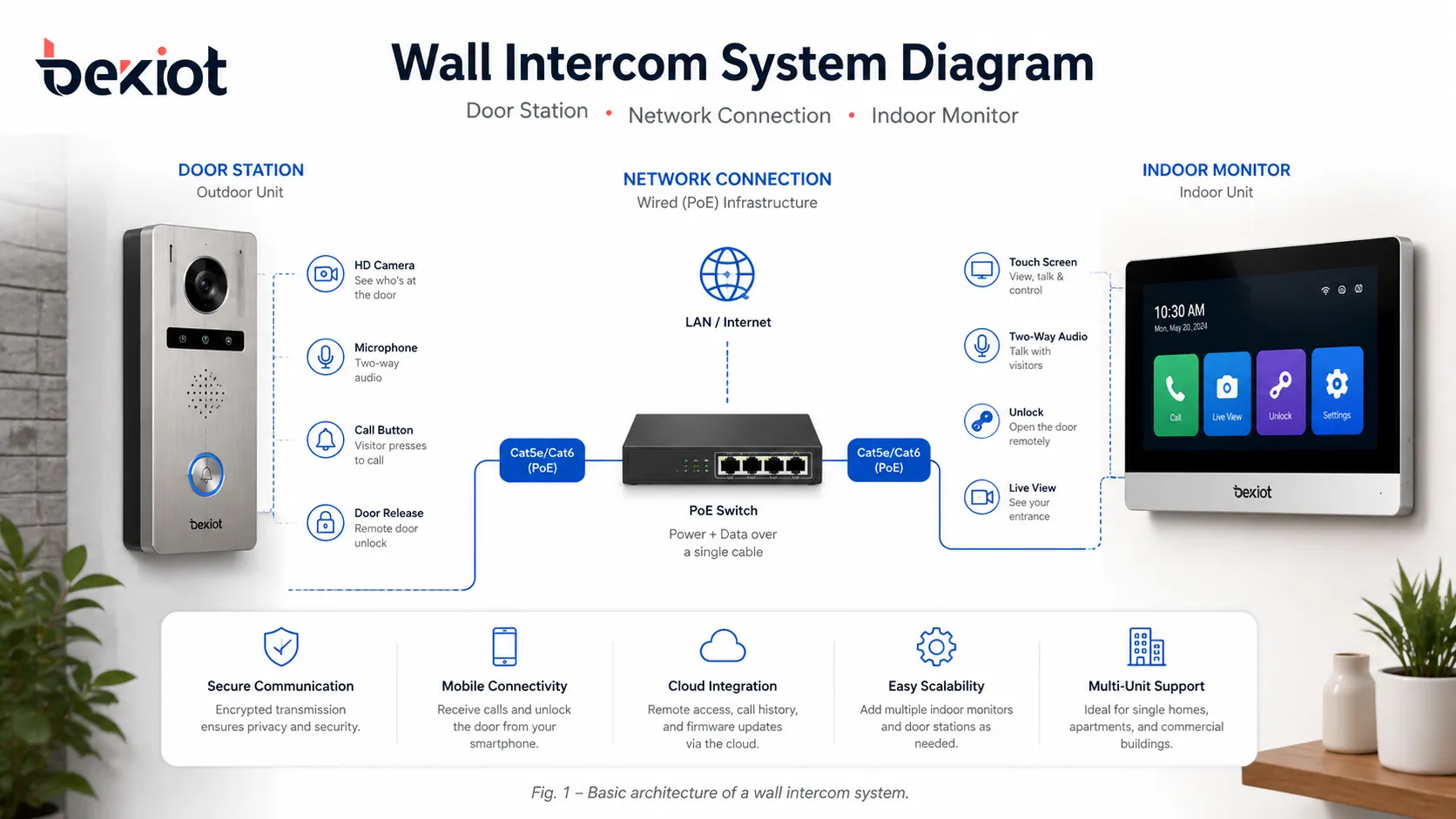
A typical wall intercom system includes an outdoor station and one or more indoor answering units. The outdoor station is usually installed at a gate, entrance door, lobby, reception point, or service access area. When a visitor presses the call button, the system sends audio, video, or both to the indoor monitor, wall station, mobile app, or management platform.
Although the user experience looks simple, the technology behind the system can vary. Some systems use traditional analog wiring, while newer solutions use IP networks, SIP communication, PoE power supply, mobile apps, and integration with cameras or access control devices.
Fig. 1 – Basic architecture of a wall intercom system.
Wired and Wireless Connection Methods
Wired wall intercom systems are commonly used in new buildings, commercial projects, apartment entrances, and sites that require stable long-term operation. They may use Cat5e, Cat6, 2-wire cabling, or dedicated signal wiring. In IP-based systems, Power over Ethernet can deliver both network data and power through one cable, which makes installation cleaner and easier to maintain.
Wireless intercom systems are more suitable for retrofit projects where running new cables is difficult or expensive. They may use Wi-Fi or other wireless communication methods to connect the outdoor unit with the indoor monitor or mobile app. The advantage is easier installation, while the main limitation is that performance depends on network signal quality, distance, and power stability.
Audio and Video Communication
Basic audio intercoms allow the user to speak with a visitor before opening the door. They are simple, cost-effective, and still useful in service entrances, small offices, utility rooms, and industrial access points where video is not essential.
IP video intercom systems add a camera, digital audio processing, and network transmission. When the visitor presses the call button, the outdoor station sends video and two-way voice to an indoor screen, management client, or smartphone. Compared with older analog systems, IP video intercoms usually support clearer images, full-duplex conversation, remote unlocking, access logs, and easier integration with other security systems.
Mobile Access and Smart Building Integration
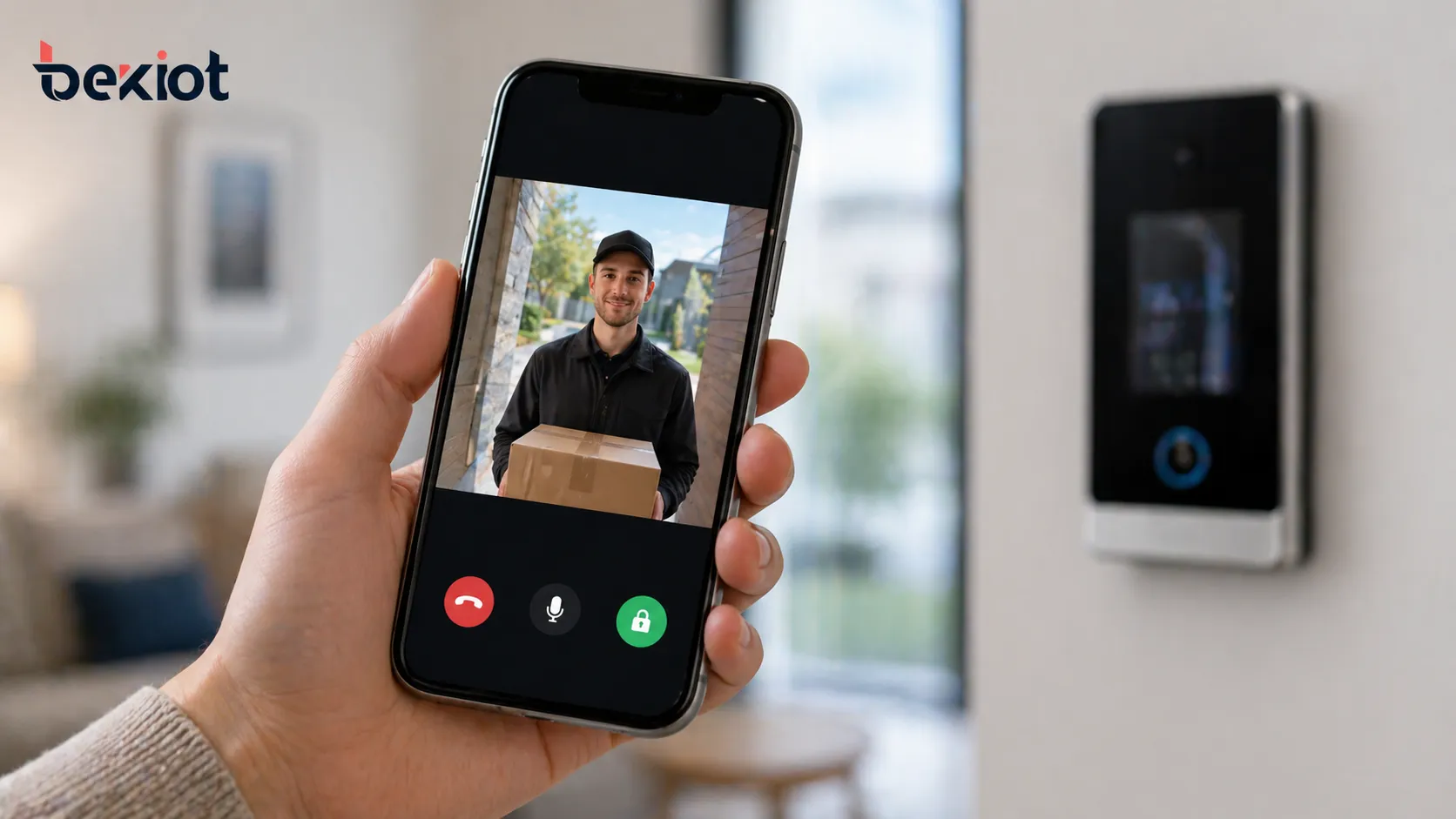
Modern wall intercoms often work as part of a larger building communication and security system. When connected to the network, the intercom can send call notifications to a mobile phone, allow remote answering, and open the door through an authorized app. This is useful for property managers, homeowners, security teams, and unmanned reception points.
In more advanced projects, IP intercoms may also connect with access control systems, NVR platforms, security cameras, SIP servers, property management software, and emergency communication systems. Support for protocols such as SIP or ONVIF can make system integration easier, especially in commercial, campus, and industrial environments.
Common Places Where Wall Intercoms Are Installed
Different sites use wall intercoms for different reasons. Some projects focus on visitor convenience, while others focus on access control, emergency response, vandal resistance, or centralized management. Understanding the actual site requirement is more useful than choosing a device only by appearance.
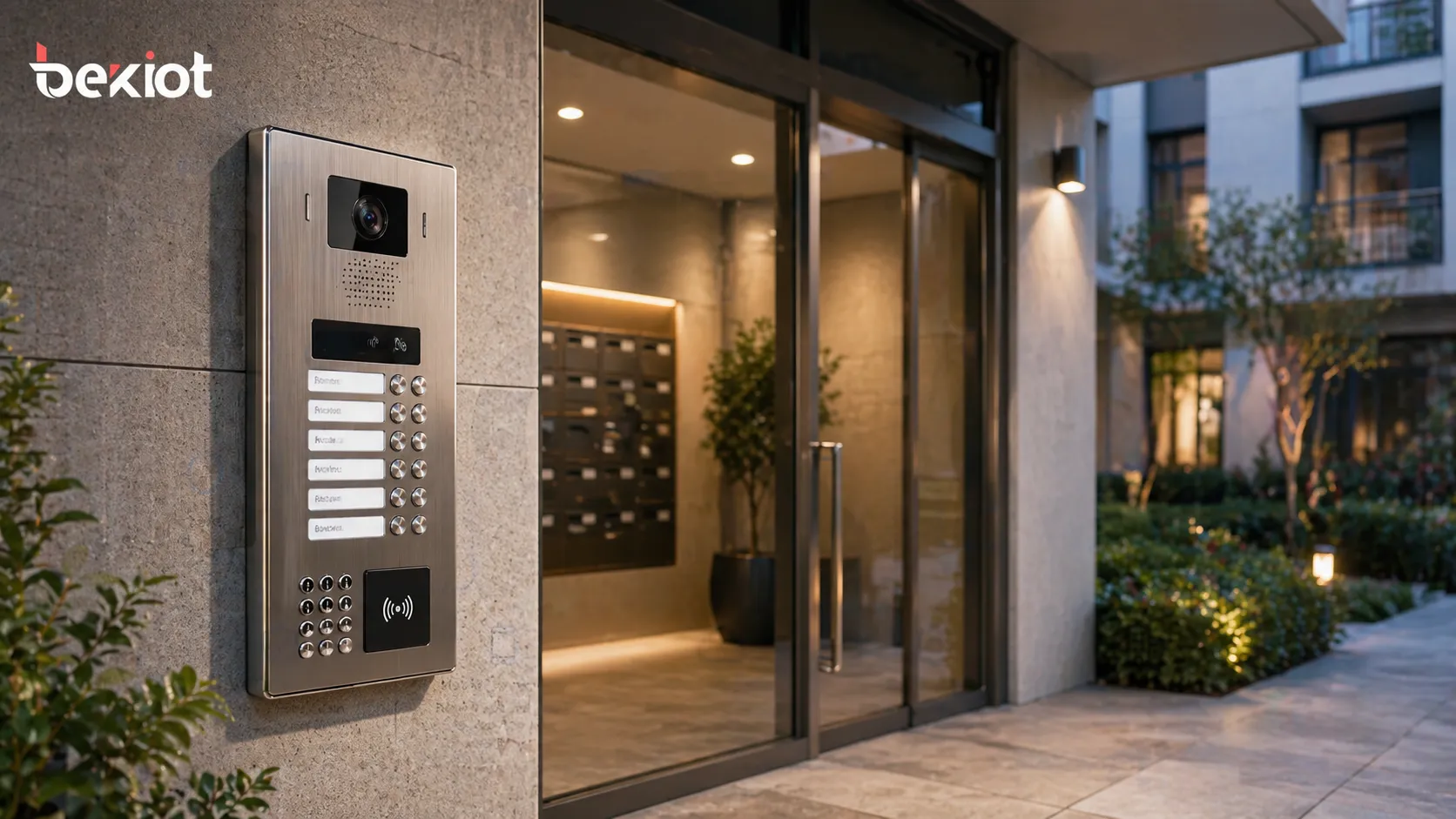
Fig. 2 – Multi-tenant entrance intercom for visitor calling and remote door release.
Apartment Buildings and Residential Communities
Apartment entrances are one of the most common application scenarios for wall intercom systems. A visitor can search the tenant directory, press the call button, speak with the resident, and wait for remote door release. For property managers, a digital system can also simplify tenant updates, entry records, and building access management.
In large residential communities, the system may include lobby stations, gate stations, indoor monitors, guard room terminals, mobile app access, and centralized management software. This helps residents communicate with visitors while giving property teams better control over entrance points.
Single-Family Homes and Villas
For private homes, the main value of a wall-mounted video intercom is convenience and security. Homeowners can check who is at the gate, talk to delivery workers, monitor visitors, and unlock the entrance without walking to the door. Some systems can also work with smart lighting, door locks, alarms, and home automation scenes.
A villa or gated house may need one outdoor station at the main gate, one station near the front door, and several indoor monitors in living areas or bedrooms. Mobile answering is especially useful when the homeowner is away from the property.
Offices and Co-Working Spaces
In offices, wall intercoms help control visitor flow without requiring a full-time receptionist at every entrance. Visitors can call the office manager, front desk, or security team directly from the entrance station. Employees may use RFID cards, NFC, QR codes, PIN codes, or mobile credentials for daily access.
Co-working spaces often need more flexible access rules because users may enter the building outside normal business hours. In this case, a video intercom with cloud management, temporary access codes, and entry logs can reduce manual work while keeping the entrance controlled.
Industrial Sites and High-Security Facilities
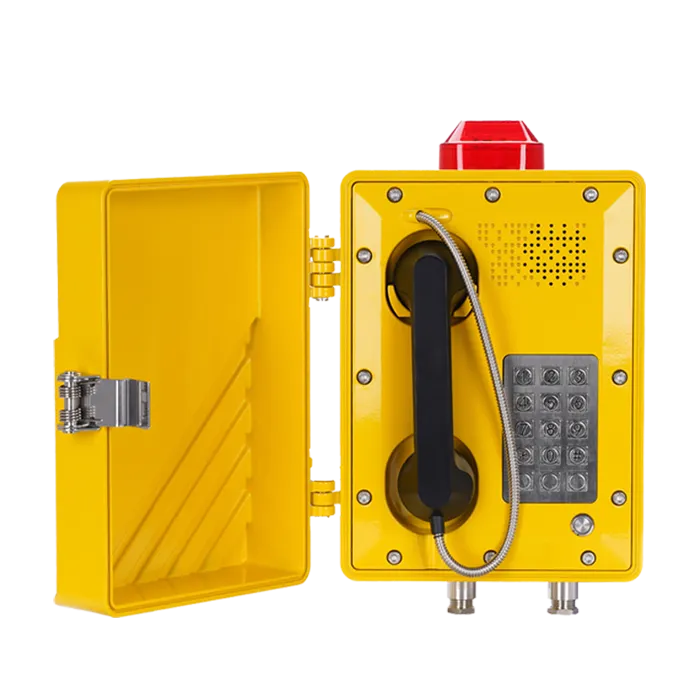
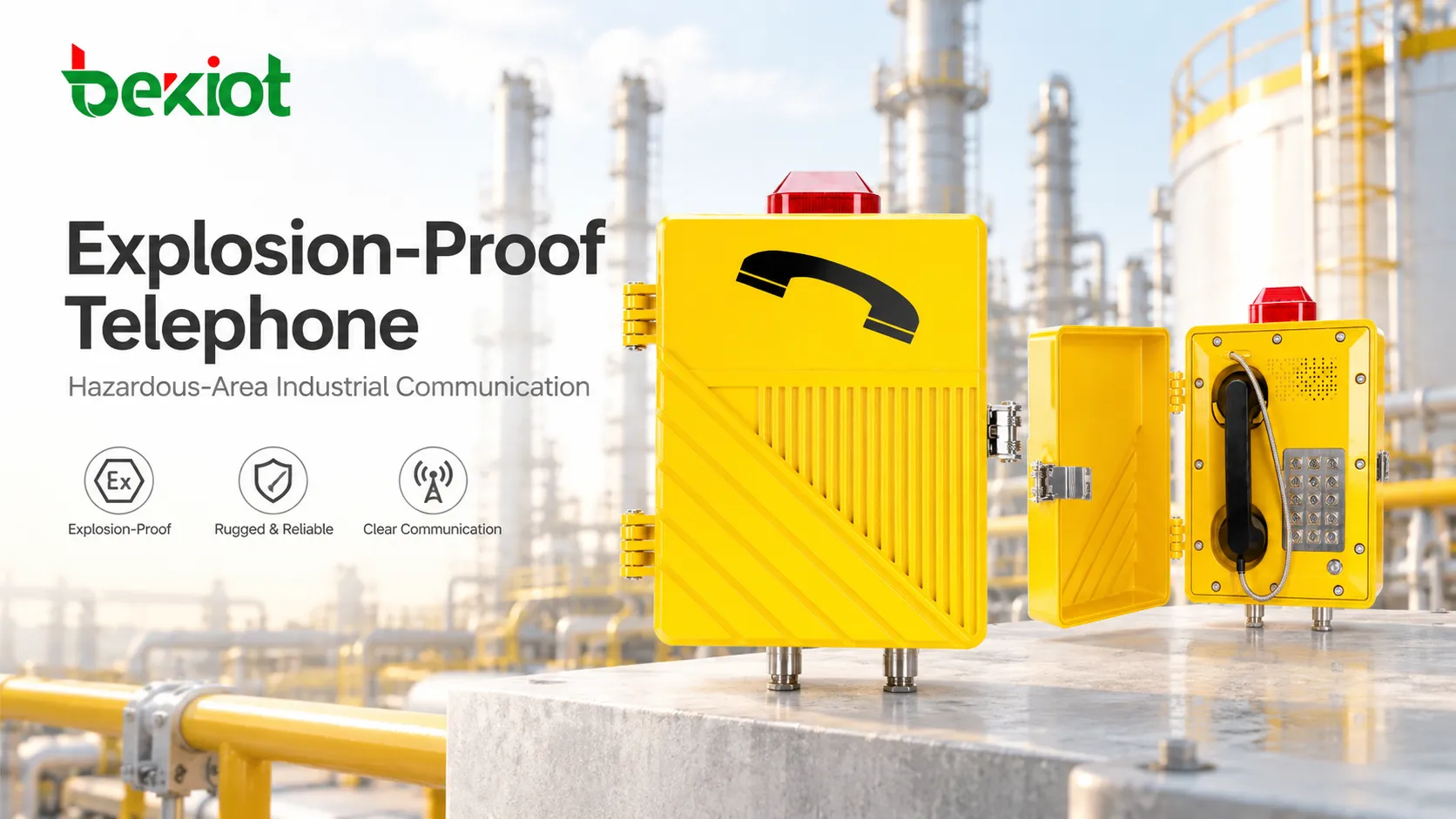
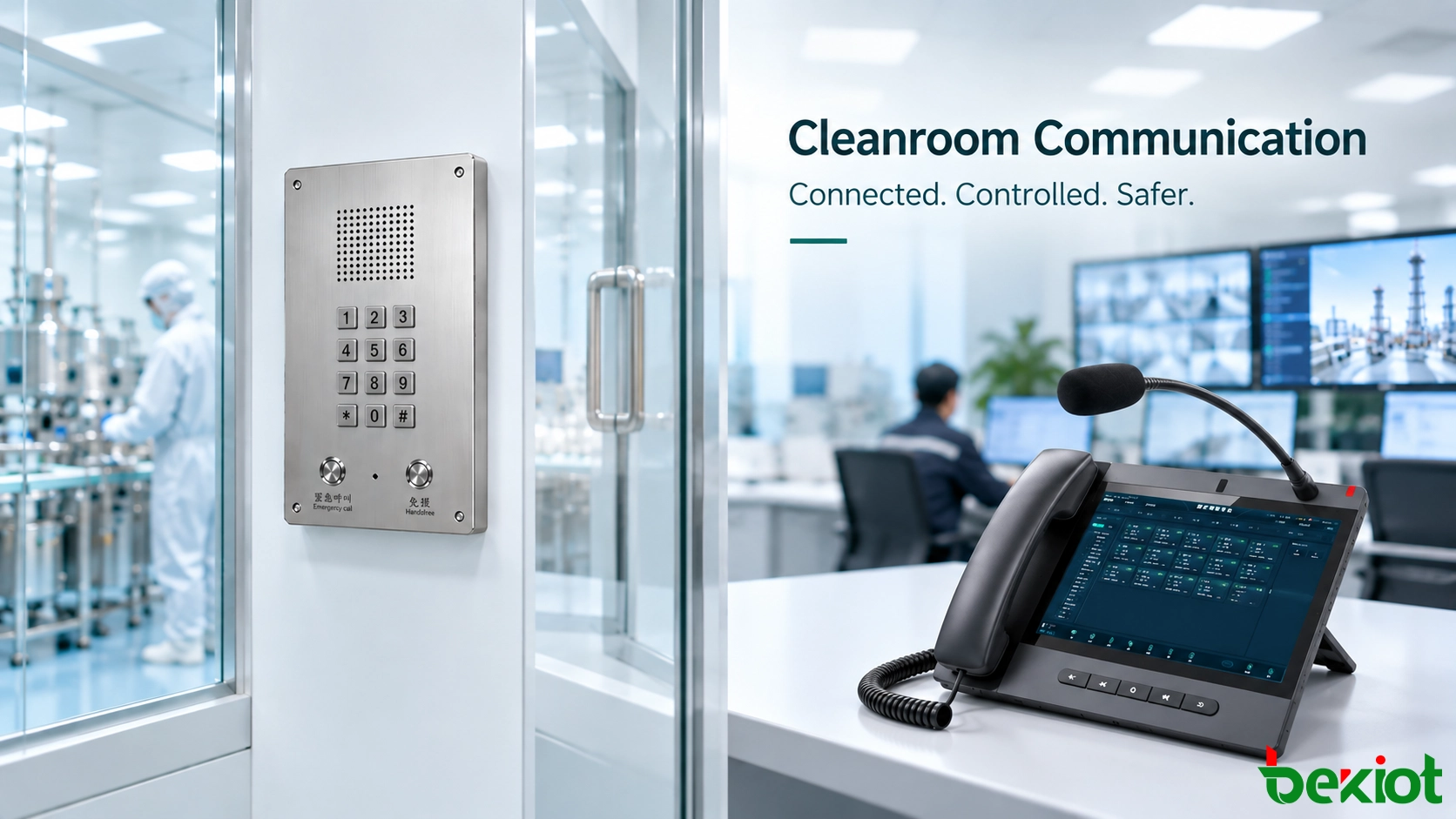
Warehouses, factories, logistics centers, clean rooms, service gates, and restricted production areas often require stronger wall intercom devices. These environments may involve dust, moisture, noise, vibration, vehicle traffic, and frequent public contact. A standard indoor-style intercom may not be durable enough for this type of use.
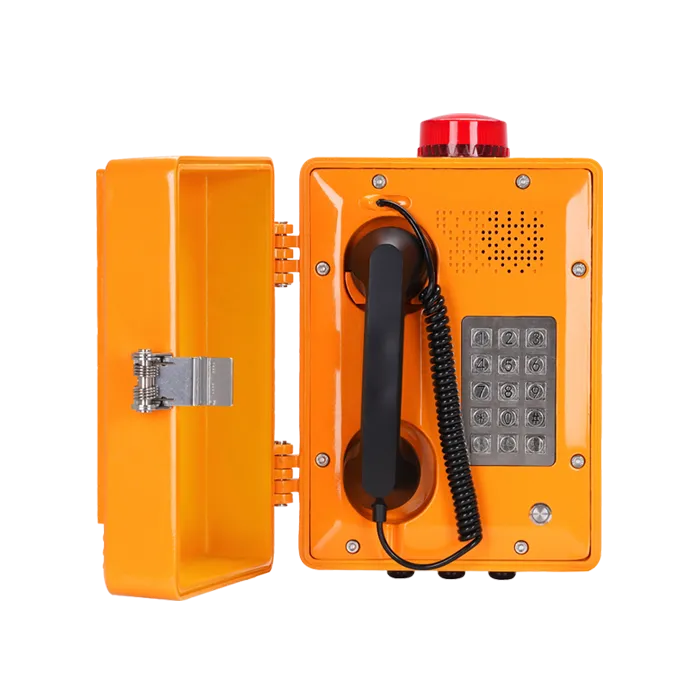
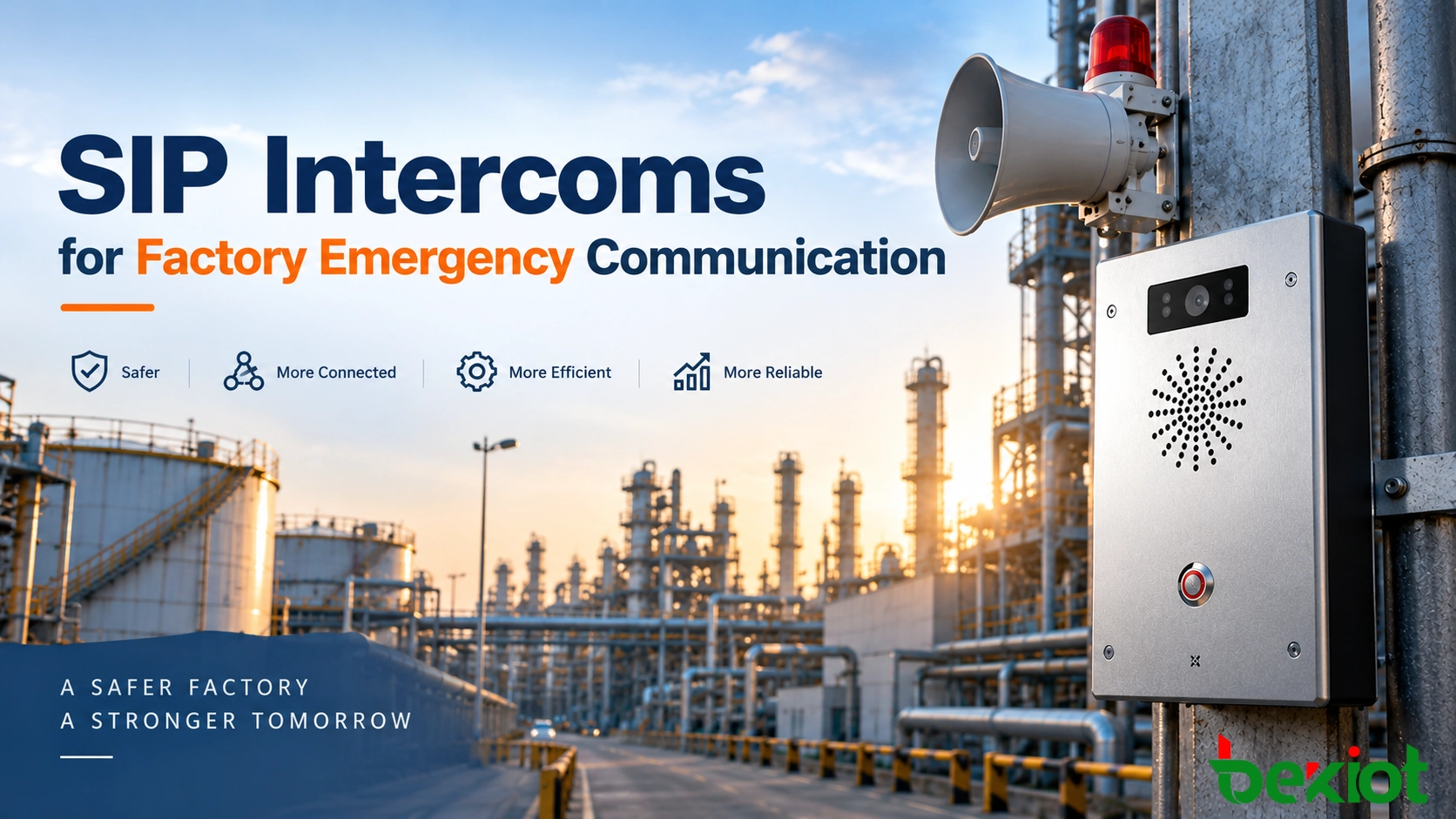
Industrial wall intercoms are often built with stainless steel panels, vandal-resistant buttons, sealed housings, loud speakers, hands-free calling, and SIP network support. In some facilities, the intercom may connect to a control room, dispatch system, access gate, camera system, or emergency response platform.
Healthcare, Schools, and Public Service Buildings
Hospitals, clinics, schools, and public buildings use wall intercoms for both access control and operational communication. A school may place intercoms at entrances, classrooms, security offices, and service gates. A hospital may use them near controlled doors, nurse stations, emergency entrances, laboratories, and restricted areas.
In these environments, fast response is important. The intercom should be easy to use, clearly labeled, reliable during daily operation, and able to connect the caller to the right staff member or control center.
Main Benefits of Installing a Wall Intercom System
A properly selected wall intercom system improves more than door answering. It can support safer visitor management, faster internal communication, and better control over building access points.
Visitor verification: Users can see or speak with a visitor before allowing entry, reducing the risk of unauthorized access.
Remote unlocking: Doors, gates, or electric locks can be released from an indoor monitor, management station, or mobile app.
Better daily convenience: Residents, staff, and security teams do not need to walk to the entrance for every visitor call.
Access records: IP-based systems can keep call records, unlock logs, and event history for later review.
System integration: Many modern intercoms can work with door locks, access control, CCTV, SIP phone systems, and building management platforms.
Fig. 3 – Remote visitor answering and door control through a mobile app.
What to Check Before Choosing a System
Before selecting a wall intercom, it is important to look at the site condition first. A system that works well for a villa may not be suitable for an apartment building, and a residential video doorbell may not survive in an industrial entrance environment.
Building Wiring and Installation Conditions
If the building already has usable network cabling or 2-wire infrastructure, a wired solution may be more reliable and easier to manage over time. For renovation projects where cabling is difficult, a wireless or hybrid solution may reduce installation cost. However, wireless systems should be checked carefully for signal coverage and power supply stability.
Number of Users and Access Points
A small home may only need one outdoor station and one indoor monitor. A commercial building or residential block may require multiple entrances, hundreds of users, directory management, elevator control, and centralized software. The system should be selected based on current needs and future expansion.
Video, Mobile App, and Remote Management
If users need to answer calls when away from the building, an IP intercom with mobile app support is necessary. If property managers need to update names, credentials, and permissions remotely, the system should include a management platform. For higher security projects, access logs, video snapshots, and integration with CCTV may also be required.
Environmental Durability
Outdoor and industrial installations require stronger protection than indoor residential projects. The device should be selected according to weather exposure, sunlight, rain, dust, cleaning chemicals, vandal risk, and background noise. In harsh environments, stainless steel construction, sealed buttons, waterproof design, and high-volume audio may be more important than a decorative appearance.
Summary
Wall intercom systems have developed from basic door buzzers into smart access control and communication terminals. They can support audio calling, video verification, remote unlocking, mobile answering, access logs, and integration with security platforms.
The best solution should match the real application environment. Homes and villas may focus on convenience and mobile control. Apartment buildings need directory management and multi-user access. Offices need visitor screening and staff entry control. Industrial and high-security sites need durable devices, reliable communication, and integration with control rooms or dispatch systems.
For projects that require SIP-based communication, rugged wall-mounted terminals, access control integration, or industrial intercom deployment, Becke Telcom can provide suitable communication devices and project-level support for residential, commercial, public, and industrial environments.
FAQ
What is a wall intercom system?
A wall intercom system is a fixed communication device installed on a wall, gate, lobby, entrance, or service point. It allows visitors to call the occupant, security staff, reception team, or control room before access is granted.
Is a wired wall intercom better than a wireless one?
A wired system is usually more stable and suitable for long-term building projects. A wireless system is easier to install in existing properties, but its performance depends on Wi-Fi signal quality, power supply, and network stability.
Can a wall intercom open a door remotely?
Yes. Many wall intercom systems can connect with electric locks, magnetic locks, or gate controllers. Authorized users can unlock the entrance from an indoor monitor, management station, or mobile app.
Where are IP wall intercom systems commonly used?
IP wall intercoms are widely used in apartment buildings, villas, offices, schools, hospitals, factories, warehouses, gated communities, parking entrances, and public service buildings.
How should I choose a wall intercom for an industrial site?
For industrial sites, focus on durability, waterproof protection, vandal resistance, loud audio, hands-free operation, SIP compatibility, and integration with control rooms, access gates, or security systems.