Call Queue Systems for Organized Business Communication and Service Flow
A call queue helps businesses manage incoming calls through ordered waiting, smart distribution, announcements, overflow rules, and IP PBX integration for better service continuity.
Becke Telcom
A call queue is a call management function that places incoming callers into an organized waiting line when the right person, team, department, or service point is not immediately available. Instead of letting calls ring endlessly, return a busy tone, or fail without control, the phone system keeps the caller inside a managed process until an available agent or endpoint can answer.
For businesses, this function is more than a technical setting inside a phone system. It is a practical way to handle real call pressure. Customer service teams, reception desks, technical support groups, healthcare administration offices, hotel front desks, enterprise departments, and SIP-based communication systems all use call queues to keep high call volumes under control.
Incoming demand rarely arrives in a perfect, evenly spaced pattern. Calls often increase during business opening hours, service incidents, marketing campaigns, shift changes, seasonal peaks, or emergency periods. Without a queue, callers may face missed calls, repeated redialing, or inconsistent routing. With a queue, the communication system can maintain order, visibility, and a more predictable service experience.
What a Call Queue Means
A call queue is a structured waiting mechanism inside a business phone system or IP PBX platform. When a caller reaches a queue-enabled number, department line, IVR option, ring group, or service extension, the system checks whether someone is available to answer. If all suitable agents or endpoints are busy, the caller is placed into the queue instead of being disconnected.
The main purpose is not simply to make callers wait. The real purpose is to make waiting controlled, visible, and connected to the next available service resource. This allows the organization to manage delay instead of allowing delay to become communication failure.
A call queue turns temporary unavailability into a managed service flow instead of a lost call.
In a modern communication environment, the queue may work together with routing rules, announcements, hold music, agent status, overflow paths, voicemail, reporting tools, and supervisor dashboards. This makes it an active part of the service workflow rather than a simple waiting list.
Call queues organize incoming demand by keeping callers in a managed waiting flow until the right answering resource becomes available.
Why Call Queues Are Important
In many organizations, call demand is unpredictable. A department may be quiet for half an hour and then suddenly receive several calls at the same time. If the system depends only on direct ringing, some callers may reach staff immediately while others hear busy tones, get transferred repeatedly, or abandon the call.
A queue provides a more disciplined response model. It gives every caller a defined entry point, keeps them inside the communication process, and distributes calls according to configured rules. For callers, this creates a more professional experience. For internal teams, it reduces confusion and helps them handle pressure in a more organized way.
This is why call queues are widely used in service-oriented telephony. They help an organization remain reachable even when staff capacity is temporarily limited.
How a Call Queue Works
A call queue usually begins when a caller dials a service number, department extension, hotline, reception number, or IVR menu option. The phone system checks the status of the assigned agents, phones, softphones, or service endpoints. If someone is available, the call can be connected directly. If no one is ready, the caller enters the queue.
While waiting, the caller may hear music on hold, a greeting message, estimated wait information, queue position announcements, service notices, or custom instructions. At the same time, the system continues to monitor agent availability in real time.
Once the conditions are met, the next call is released from the queue and sent to the appropriate answering resource. This process helps the system absorb short-term call spikes without turning every busy moment into a failed call attempt.
Call Distribution Logic
A queue is not only a passive holding area. Most call queue systems include distribution logic that decides how incoming calls should be assigned once someone becomes available. Different organizations may use different strategies depending on staff structure and service goals.
Common distribution methods include fixed order, round robin, longest idle agent, simultaneous ringing, least recent call, skills-based routing, priority routing, or overflow to another team. For example, a technical support queue may send calls to staff with the right skill group, while a reception queue may route the next call to the staff member who has been idle the longest.
This distribution logic is one of the main reasons call queues are useful. They do not only hold callers; they help decide how limited answering resources should be used.
The value of a call queue is not only in waiting. It is in how the system releases callers into the right service path.
Main Characteristics of a Call Queue
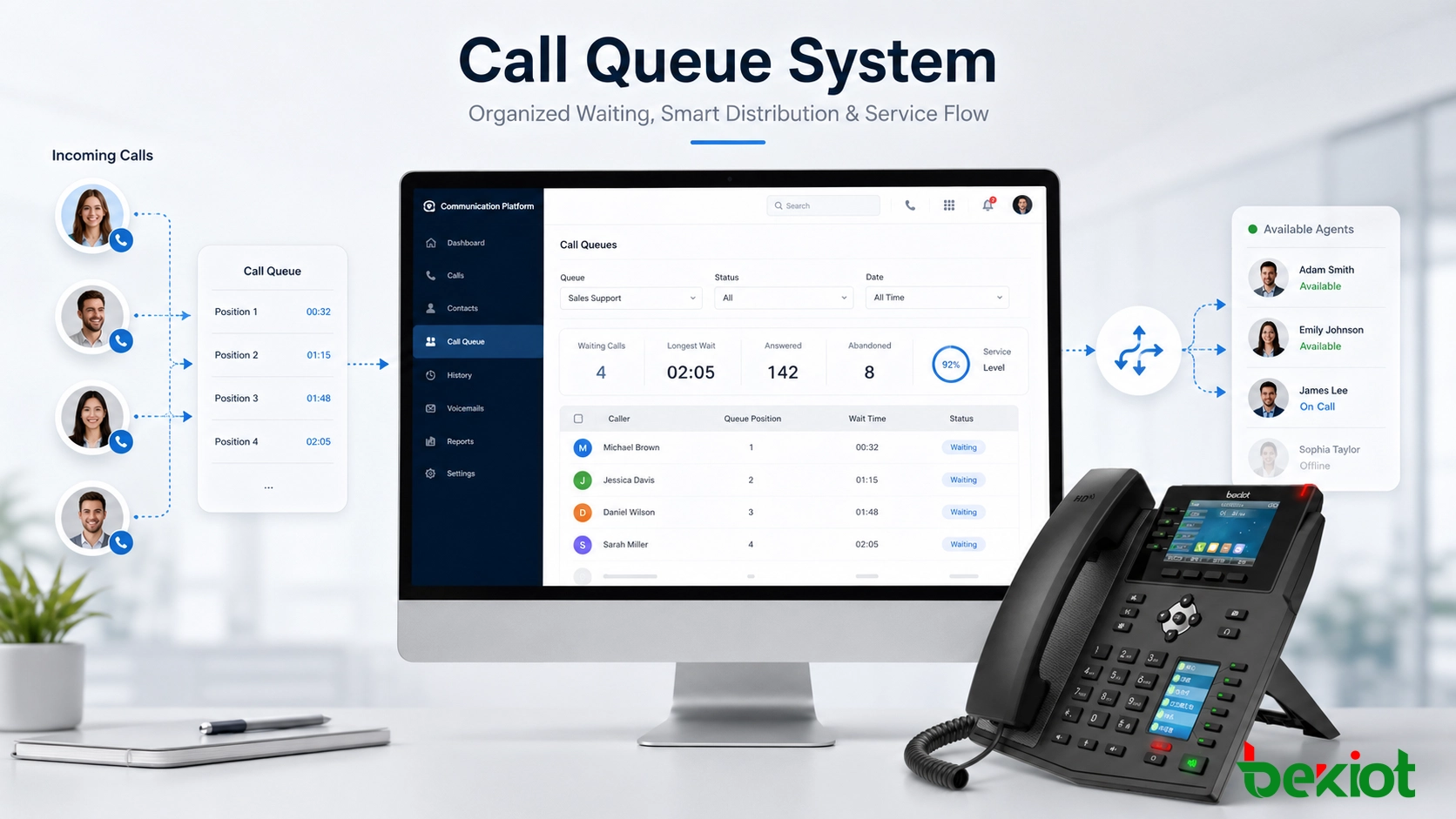
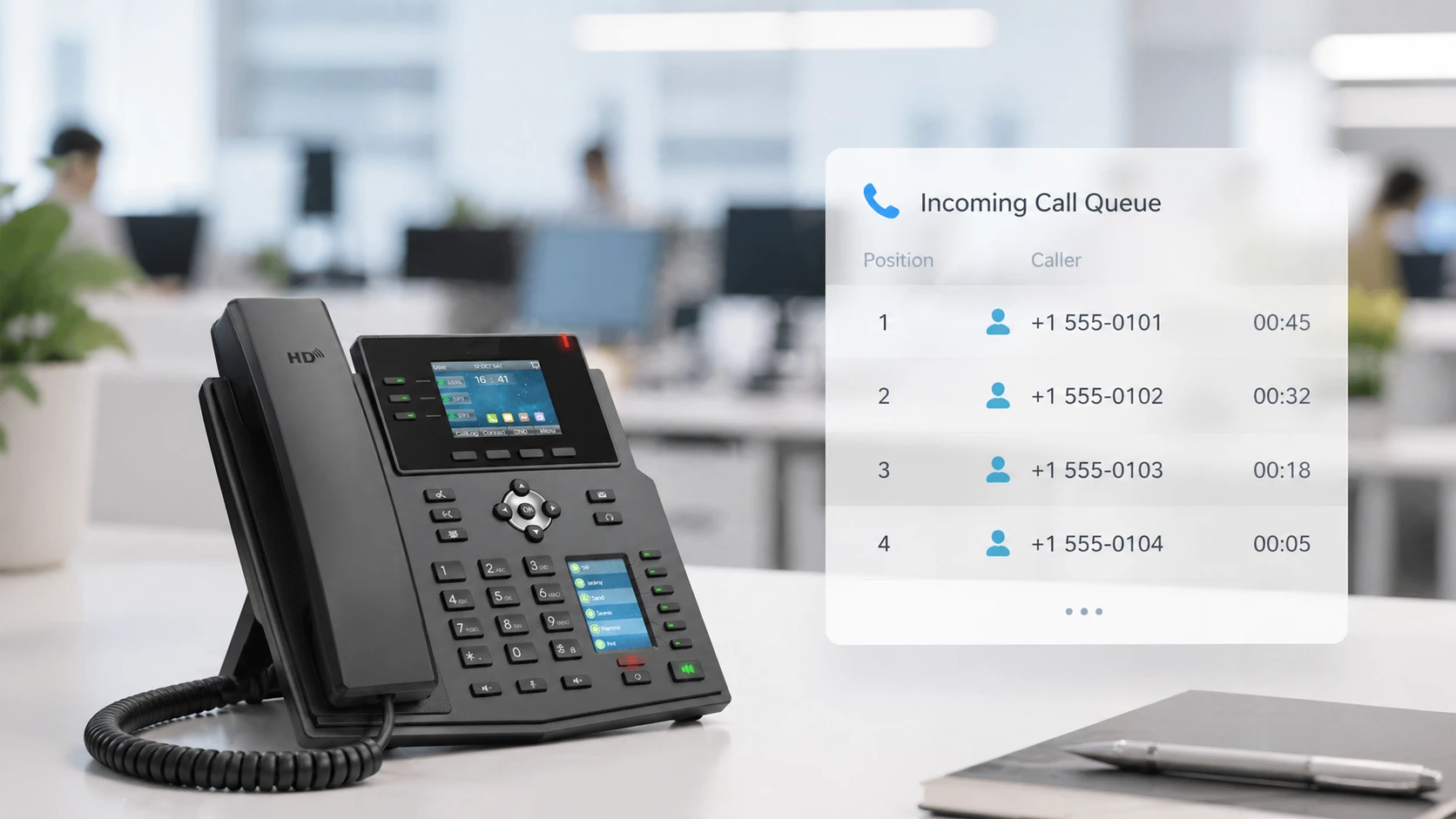
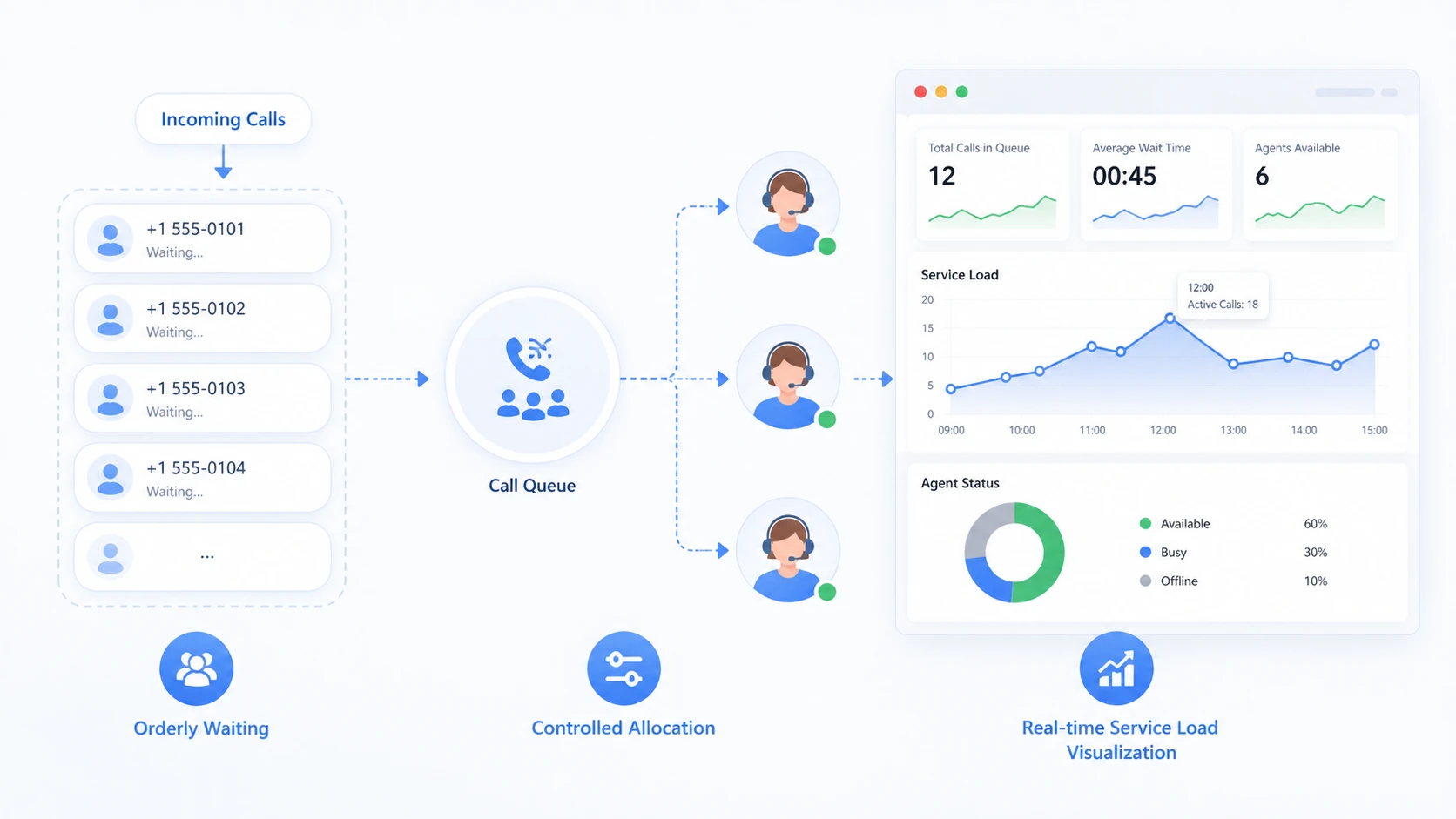
The first key characteristic is ordered waiting. Callers are not left in random ringing conditions. The system knows who is waiting, how long they have waited, and which call should be handled next according to the configured rule.
The second characteristic is controlled distribution. Calls are not pushed blindly to any phone. They are delivered based on agent status, queue policy, priority, skill group, or availability. This helps make call handling more predictable and measurable.
The third characteristic is visibility. Many modern systems allow supervisors or operators to view waiting callers, active agents, answered calls, abandoned calls, wait time, and service load. This information helps managers understand the real pressure on the communication team.
A call queue provides ordered waiting, controlled call distribution, and real-time visibility into service load.
Common Features in Call Queue Systems
A complete call queue system normally includes several features that improve both caller experience and internal management. These features may vary by IP PBX, cloud phone system, contact center platform, or SIP communication solution, but the working logic is often similar.
Announcements and Music on Hold
Callers should not be left in silence. Music on hold, welcome messages, service prompts, and periodic announcements help reassure callers that the system is still handling their call. Even a short message can make waiting feel more intentional and professional.
Some systems also provide queue position or estimated wait messages. These features are useful when callers need to understand whether they should continue waiting or choose another service option.
Overflow and Timeout Rules
A queue should never become a dead end. If the wait time becomes too long, if the queue reaches a maximum size, or if no agents are available, the system should have a next-step rule. The call may be sent to voicemail, another department, a backup team, a mobile duty number, an external branch, or an emergency contact path.
Good overflow design prevents the queue from becoming a source of frustration. It gives the organization a way to keep service moving even when the primary answering group is overloaded.
Agent Status and Availability Control
In many queue systems, agents can log in, log out, pause, or change status. This prevents calls from being sent to someone who is unavailable, on break, already on another call, or not responsible for that queue.
When agent status is managed correctly, the queue becomes more accurate. Calls are distributed to real available resources instead of being routed to phones that cannot answer.
Advantages of Using Call Queues
The most direct advantage of a call queue is better organization of incoming demand. When several callers reach the same service point, the queue creates order and helps the team respond without chaos.
Another advantage is improved caller retention. Without a queue, callers who cannot reach anyone may hang up and call a competitor, redial repeatedly, or give up completely. A queue keeps the caller inside the process and preserves the opportunity to serve them.
Call queues can also support fairer workload distribution. Instead of one phone or agent receiving too much pressure, the system can spread calls across the team according to defined rules. This improves both service consistency and staff experience.
A well-designed queue helps a team stay reachable, even when demand temporarily exceeds immediate answering capacity.
Operational Value for Supervisors
Call queues are also useful for management. Because the system tracks call flow, wait times, answer activity, and queue load, supervisors can see when service is healthy and when action is needed.
For example, if the queue grows every morning between 9:00 and 10:00, the business may need to adjust staffing. If many callers abandon the queue after two minutes, announcements or overflow rules may need improvement. If one department is overloaded while another has available staff, routing logic may need to be redesigned.
In this way, a call queue becomes a source of operational insight. It helps organizations move from reactive call handling to more active communication management.
Where Call Queues Are Commonly Used
Call queues are useful in any environment where many callers may try to reach the same limited answering resources. They are not limited to large contact centers. Many small and medium-sized businesses also use queues to improve daily communication.
Customer Service and Help Desks
Customer service teams and technical support desks often receive several calls at once. A queue helps maintain order, reduce missed calls, and route callers to the next available agent. For support teams, queue rules may also help direct calls based on service type or technical skill.
Reception and Front Desk Teams
Reception desks use queues to manage incoming calls when staff are already speaking with visitors, transferring calls, or handling internal requests. This is especially useful for offices, clinics, schools, hotels, residential communities, and service centers.
Healthcare and Administrative Offices
Clinics, hospitals, and healthcare administration teams may experience call peaks during appointment hours, morning registration, or service updates. A queue helps callers stay in the process instead of repeatedly redialing or failing to reach the office.
Hospitality and Property Services
Hotels, resorts, serviced apartments, and property management offices often receive clustered guest requests. A call queue helps front office teams manage room inquiries, housekeeping requests, maintenance calls, and reception traffic in a more organized way.
Call queues are used in customer service, reception, help desks, healthcare, hospitality, and other shared-answer communication environments.
Call Queues in IP PBX and SIP Communication Systems
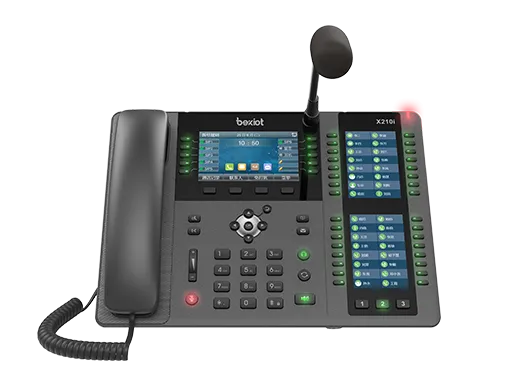
In modern IP PBX and SIP communication environments, call queues are often part of a wider call management architecture. They may work with IVR menus, ring groups, voicemail, SIP desk phones, softphones, operator consoles, mobile extensions, recording, and reporting tools.
This makes the queue especially useful for distributed teams. Staff may answer calls from desk phones, branch offices, home offices, mobile clients, or remote SIP endpoints, while callers still reach one unified service number. The system manages the service entry point even when the answering team is not in one physical location.
For organizations with multiple branches or hybrid work models, this flexibility is important. A queue can support one consistent service flow while distributing calls across different users, sites, or devices.
Good Design Practices for Call Queues
A call queue should be designed carefully. If it is configured poorly, it may hide service problems instead of solving them. A healthy queue should move callers toward real service within a reasonable time.
Avoid Endless Waiting
A queue should not become a permanent parking place. If callers wait too long without progress, the queue becomes a barrier rather than a service tool. Businesses should define maximum wait times, overflow destinations, and alternative service options.
Keep Announcements Useful
Announcements should be clear and relevant. Repeating the same message too often can annoy callers, while silence may make them think the call has failed. Good queue messaging gives callers confidence and provides practical guidance.
Review Real Queue Data
Queue performance should be reviewed regularly. Managers should check average wait time, abandoned calls, peak periods, agent availability, overflow behavior, and caller patterns. These details help improve staffing, routing, and service rules.
Match Routing to Real Staff Structure
Distribution rules should match how the team actually works. A sales queue, support queue, emergency duty queue, and reception queue may all need different routing logic. Copying the same rule everywhere often creates poor results.
A good call queue is judged by how effectively it moves callers toward service, not simply by whether the function is turned on.
Conclusion
A call queue is a practical call management function that organizes incoming voice demand when immediate answering is not possible. It provides ordered waiting, controlled distribution, announcements, overflow logic, agent visibility, and reporting support.
Its main value is service continuity. Instead of losing callers during busy periods, the organization can keep them inside a structured communication flow and connect them when the right resource becomes available. This improves caller experience, reduces missed opportunities, and gives supervisors better visibility into real call demand.
For businesses using IP PBX, SIP phones, reception systems, help desks, customer service lines, or multi-branch communication platforms, call queues are an essential feature for building a more reliable and professional voice service process.
Becke Telcom provides communication products and solutions for IP PBX, SIP telephony, dispatch communication, industrial voice systems, and enterprise call management scenarios. For projects that need reliable call routing, queue handling, and centralized voice communication, Becke Telcom can support practical system planning and deployment.
FAQ
What is a call queue in simple words?
A call queue is a phone system feature that keeps callers in an organized waiting line when the team or person they are trying to reach is busy. The system connects them when an available agent or endpoint is ready.
What are the main features of a call queue?
Common features include ordered waiting, call distribution rules, music on hold, recorded announcements, agent status control, overflow routing, timeout handling, and queue performance reporting.
Where are call queues most useful?
Call queues are useful in customer service, reception desks, help desks, healthcare offices, hotel front desks, administrative departments, IP PBX systems, and SIP-based business communication platforms.
How does a call queue improve customer experience?
It prevents callers from being dropped immediately when staff are busy. Instead, callers hear messages or music, remain inside the service flow, and are connected according to the queue rules when someone becomes available.
Can call queues work with IP PBX and SIP phones?
Yes. In an IP PBX or SIP communication system, call queues can work with desk phones, softphones, operator consoles, remote extensions, IVR menus, ring groups, voicemail, and reporting tools.