Drone Video Integration for Converged Communication and Dispatch Systems
Drone video can be integrated into converged communication systems through media servers, front-end gateways, SIP mapping, 4G/5G links and video distribution for dispatch, emergency response and field coordination.
Becke Telcom
Converged communication systems are increasingly used in emergency response, command dispatch, industrial supervision, transportation management, public safety, field inspection and mobile coordination. Their value comes from connecting voice, video, intercom, conferencing, recording, dispatch and collaboration tools into one communication environment.
As drones become common in real field work, many projects now need to bring live aerial video into the same platform. If drone footage stays only inside a controller, mobile app or vendor-specific cloud platform, the command center cannot use it efficiently during voice dispatch, video meetings or emergency coordination.
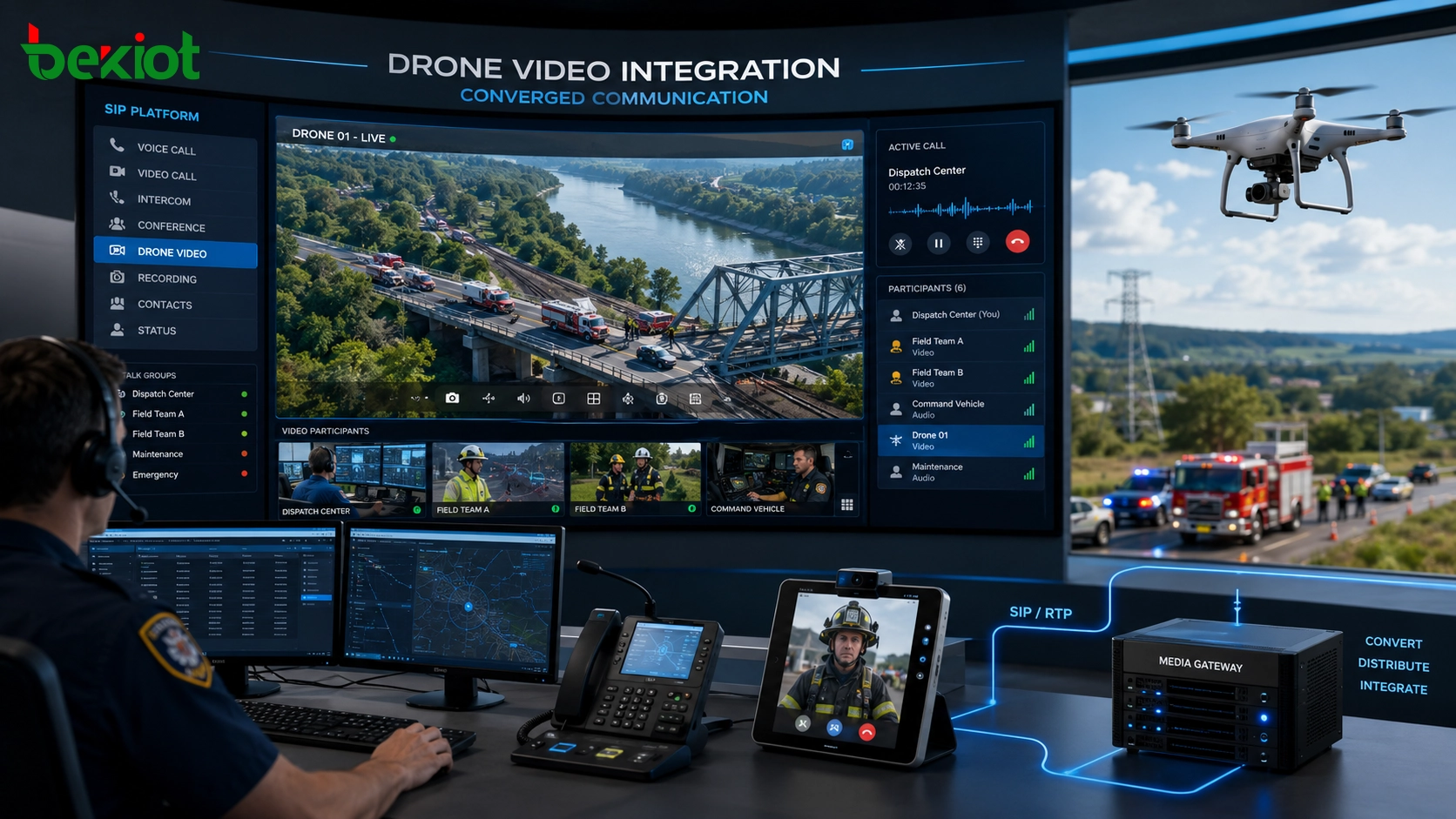
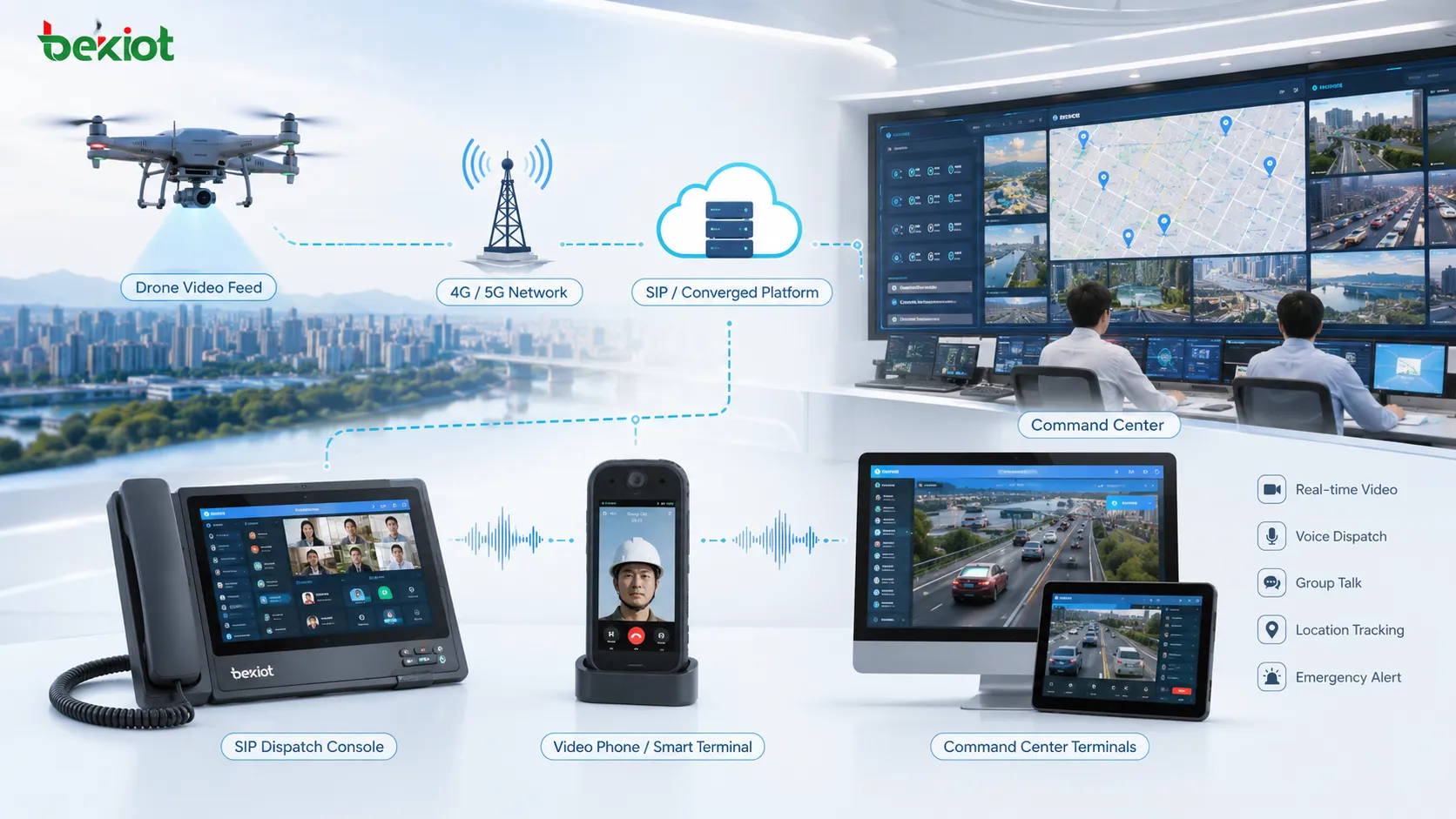
A more practical approach is to use a drone video gateway or media server. The gateway receives, converts, forwards and maps drone streams into the converged communication system. Dispatchers, video phones, smart terminals and command center screens can then call, view, share and coordinate around live aerial images through existing communication workflows.
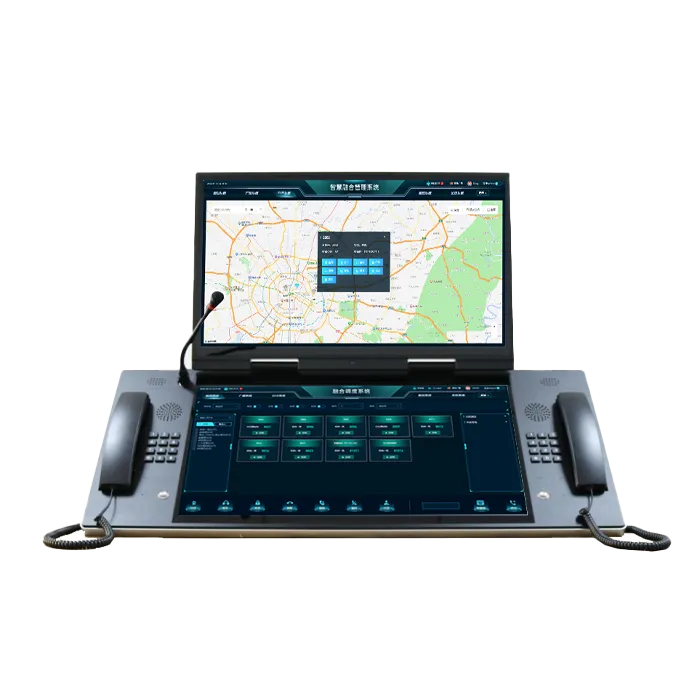
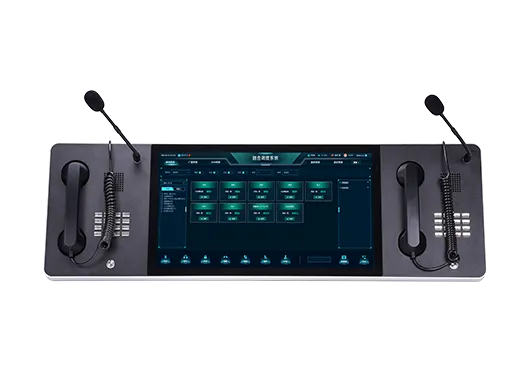
Drone video can be connected to a converged communication system so dispatch consoles, video phones, smart terminals and command centers can access live aerial footage.
Why Drone Video Needs a Unified Access Layer
Drone footage should not stay isolated
Drones are widely used for fire rescue, traffic monitoring, power line inspection, water conservancy supervision, industrial patrol, public safety, large event security and disaster reconnaissance. They can quickly provide an overhead view that fixed cameras and ground teams cannot always capture.
The problem is that drone video is often isolated. It may only be visible on the drone controller, a mobile application, a dock platform or a manufacturer’s cloud system. When the dispatch platform, SIP terminal or command center cannot directly access the stream, operators may rely on screen sharing, temporary software or manual forwarding. These methods are hard to standardize and may not be reliable during urgent operations.
A gateway makes the workflow more stable
A dedicated drone video gateway or drone media server provides a controlled access layer. It handles stream receiving, protocol conversion, media forwarding, SIP mapping and multi-terminal distribution. The existing converged communication platform does not need to be rebuilt; it only needs to connect with the media layer through a planned architecture.
This design improves deployment speed and system reliability. It can support different drone brands, controller output methods, mobile network conditions and display terminals. Depending on the project, the gateway can be deployed at the system center, at the field side or in a combined architecture.
System-Side Server Deployment
Public IP and private APN options
One common method is to deploy a drone video server in the command center, data center or cloud environment. Because drones usually work outdoors, their video often needs to be transmitted back through 4G, 5G or other mobile networks. In many deployments, the media server needs a public IP address so the drone controller or drone platform can push live streams back to the center.
In projects with higher security requirements, a private APN network may also be used. APN access can provide stronger control over mobile communication paths, but it may increase cost, planning complexity and operator coordination. The final network model should be selected according to security level, bandwidth demand, latency, operator resources and project budget.
Drone controllers push video to the media server
Many drone controllers support 4G or 5G access and can push video through protocols such as RTMP or GB/T28181. If the project uses a drone management platform, drone dock or airport system, that platform may also forward the video stream to the media server.
Once the drone video reaches the server, it becomes a reusable media resource. The command center can view it, the dispatch system can distribute it, a conference system can share it, and the converged communication platform can map it to a SIP number for easier access.
Turning Drone Streams into SIP Resources
Mapping drone video to SIP numbers
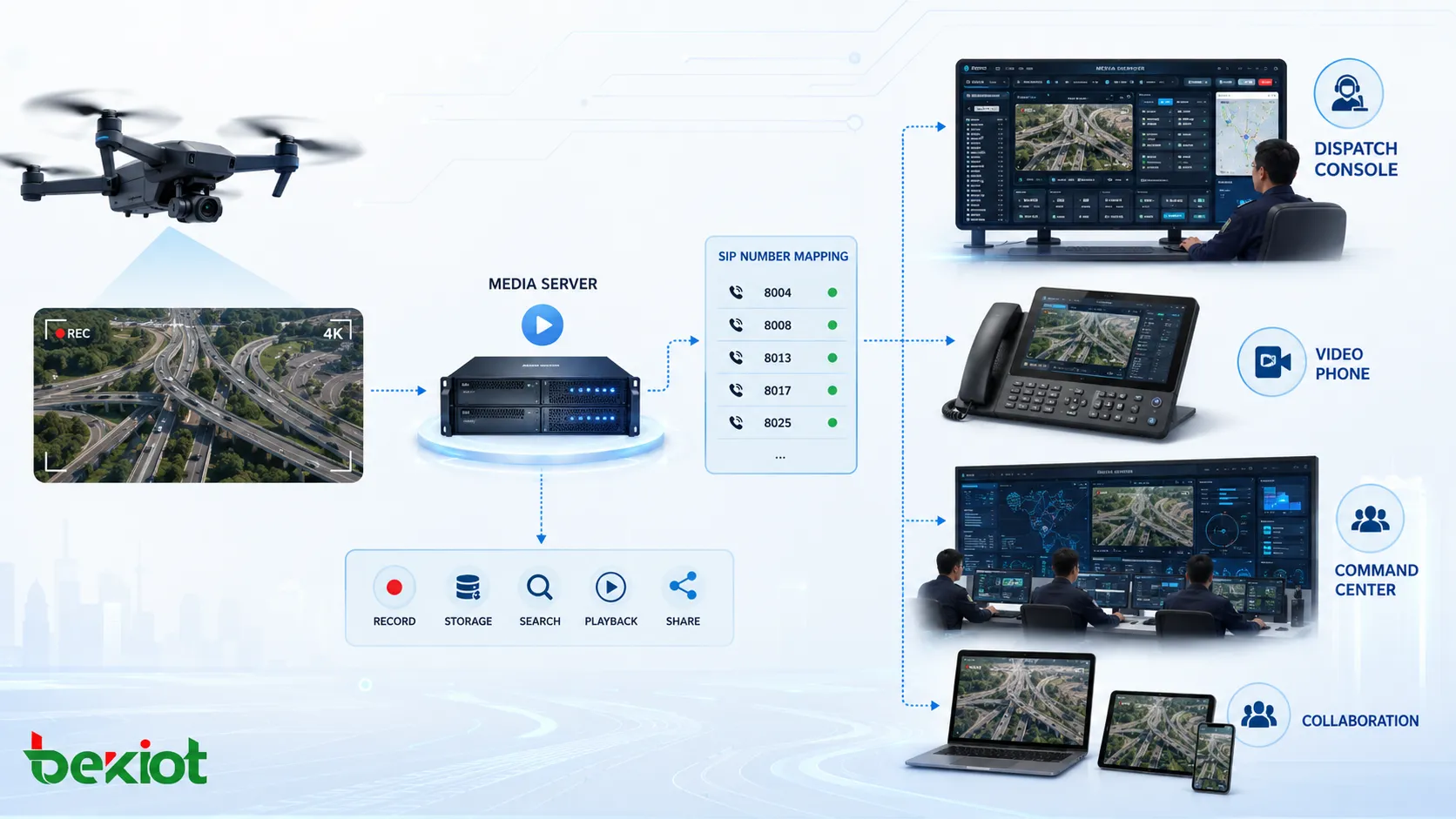
SIP integration is one of the most useful methods for bringing drone video into a converged communication system. A drone media server can register or connect with the communication server through SIP, and each drone stream can be mapped to a SIP number.
This makes drone video easy to call from existing terminals. A dispatcher can select a drone video number from the dispatch console. A video phone can dial the number to view the drone return image. A smart terminal can access the stream through the communication platform. The drone feed becomes part of the communication workflow instead of a separate video-only tool.
Configuration can replace heavy development
In many projects, SIP-based access reduces the need for deep API development. The project team can complete integration through SIP registration, number planning, stream mapping, routing configuration and media server settings. This is especially useful when the customer already has a converged communication platform and wants to add drone video without a long development cycle.
API integration can still be used when deeper functions are required. For example, a business platform may need map linkage, event binding, resource scheduling, recording retrieval or custom web display. The media layer can support these functions later without changing the basic drone access architecture.
Front-End Gateway Deployment
When field-side access is more practical
In some environments, the drone cannot push video directly to the central platform. The field team may also need local viewing, vehicle-mounted display, temporary site sharing or local distribution before sending the video back to the command center. In this situation, a front-end drone video gateway can be installed near the drone operation area.
The front-end gateway receives drone video at the field side and sends it upstream through available network links. This model is suitable for mobile command vehicles, portable command boxes, emergency backpacks, temporary field stations, rescue sites and remote inspection points.
Wi-Fi, HDMI, RTMP, RTSP and GB/T28181 access
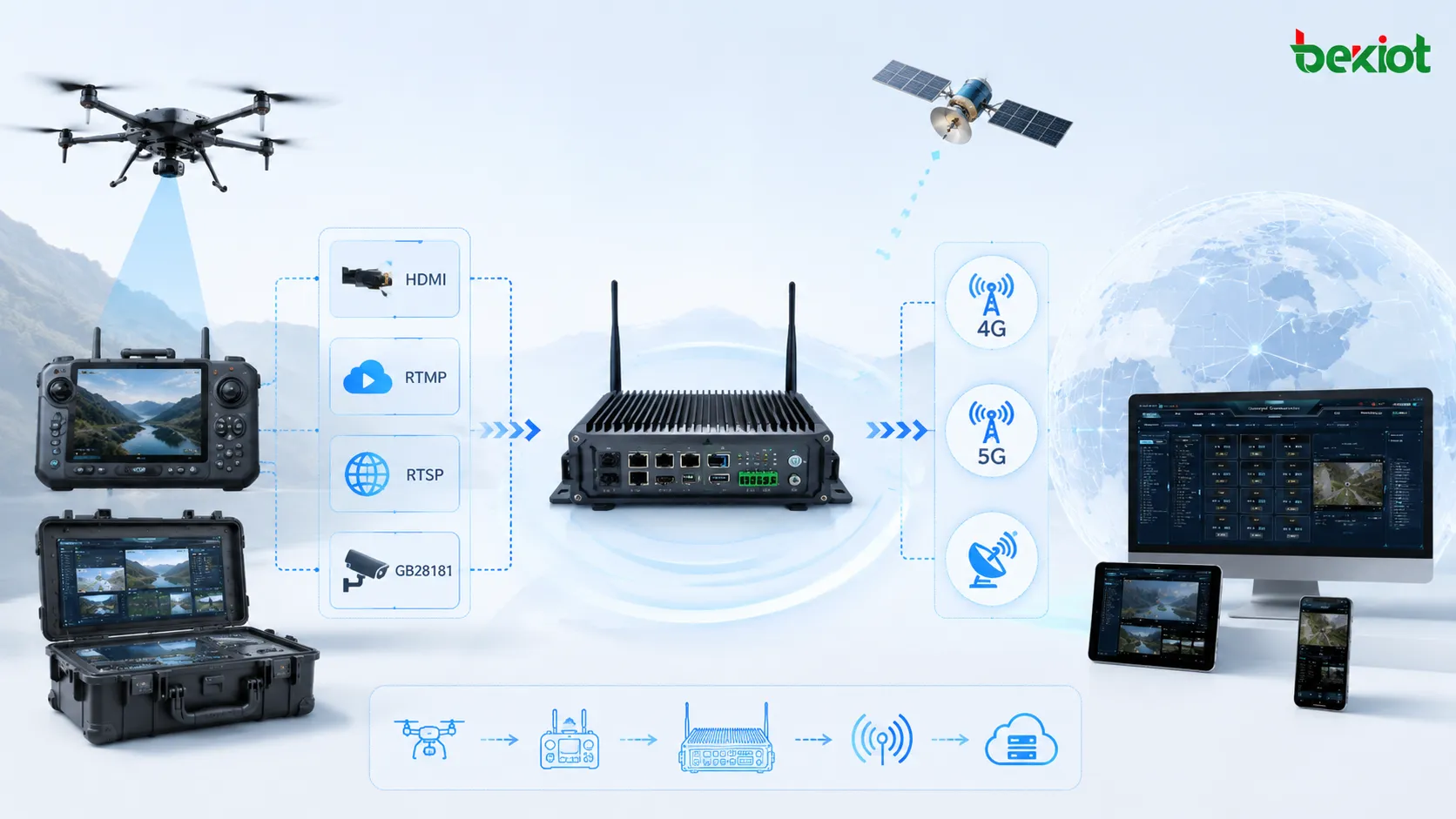
A front-end drone video gateway can receive signals in different ways depending on the drone model and field conditions. Common access methods include Wi-Fi, ad hoc network, HDMI input, RTMP, RTSP and GB/T28181. This allows one gateway architecture to support drones from different brands and application platforms.
After receiving the stream, the gateway can transmit it back through 4G, 5G, satellite, wired network or private wireless links. If the gateway uses registration-based networking, it only needs outbound network access and does not require a fixed public IP address. The connected drone stream can still be mapped into a SIP resource and accessed from the converged communication platform.
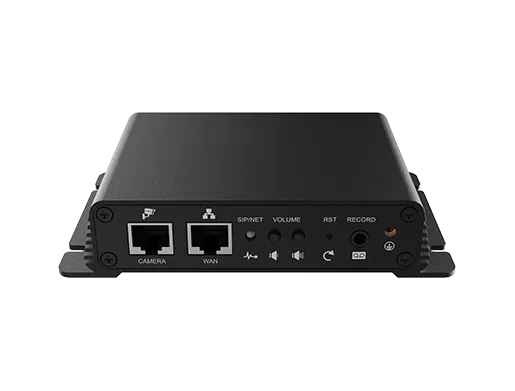
A front-end drone video gateway can receive local drone video and send it back to the communication platform through 4G, 5G, satellite or private network links.
Combined Server and Gateway Architecture
Center-side stability with field-side flexibility
For larger projects, the best design is often a combined deployment. A front-end gateway is used at the drone operation site, while a media server is deployed in the command center or data center. The front-end gateway handles local access, local output and upstream transmission. The media server manages platform-side distribution, SIP mapping, stream forwarding and multi-terminal access.
This architecture is useful when the system needs both field-side flexibility and center-side stability. The field team can view or output drone video locally, while the command center receives optimized streams for dispatch, recording, conferencing and cross-department collaboration.
Adapting to changing network conditions
Drone video often depends on unstable field networks. Bandwidth may change, latency may increase and signal quality may fluctuate during movement. A gateway and server combination can adjust codec, frame rate, bitrate and resolution according to actual transmission conditions.
For example, the system may use H.265 during uplink transmission to reduce bandwidth usage, then convert the stream to H.264 before delivering it to a SIP video phone, dispatch console, browser client or older terminal. This reduces playback failure caused by codec mismatch and improves system adaptability.
Practical Functions for Command and Dispatch
Multi-drone access and unified management
Emergency response teams, inspection companies, public safety departments and industrial operators may use different drone models for different tasks. A dedicated drone video server or gateway can support multiple drones, multiple brands and different output methods.
Instead of managing each stream separately, the platform can organize drone resources in a unified way. Operators can assign names, SIP numbers, permissions, locations and usage rules. This makes drone video easier to call, share, record and distribute during command operations.
Sharing aerial video with existing terminals
Once drone video enters the converged communication system, it can be used by existing terminals. Dispatch consoles can open drone video during an incident. Video phones can call a drone stream for live viewing. Smart terminals can access the feed in the field. Conference systems can bring the aerial image into a meeting for joint decision-making.
This avoids repeated system construction. The customer can reuse existing SIP terminals, dispatch functions and communication platform resources instead of building a separate drone viewing system for every project. For emergency communication projects, Becke Telcom can support scenarios where drone video, SIP dispatch, voice intercom, video collaboration and command coordination need to work together.
Deployment Planning Notes
Confirm the drone output method first
Before implementation, the project team should confirm how the drone outputs video. Some drones can push RTMP through the controller. Some support GB/T28181. Some require HDMI output from the controller. Some need a manufacturer platform, drone dock or airport system to forward the stream.
This step determines whether the project should use a system-side media server, a front-end gateway or a combined deployment. It also affects bandwidth planning, codec selection, public IP requirements, APN design and field-side equipment selection.
Plan SIP numbers and access permissions
When drone video is mapped into a SIP-based communication system, number planning becomes important. Each drone stream should have a clear SIP number, resource name, location, permission rule and use scenario. Dispatchers should know which number corresponds to which drone or field team.
Access permission should also be controlled. Not every terminal needs to view every drone stream. Command center users, field supervisors, emergency teams and maintenance personnel may require different permissions. Proper permission design improves security and reduces confusion during urgent operations.
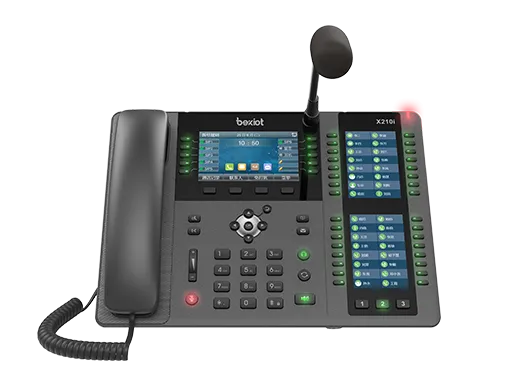
After drone streams are mapped into SIP resources, operators can call, view, share and coordinate around live aerial video through existing communication terminals.
Network and Media Considerations
Bandwidth and latency affect viewing quality
Drone video is sensitive to network quality. If upstream bandwidth is unstable, the video may freeze, delay or disconnect. The project team should evaluate resolution, bitrate, frame rate, uplink bandwidth, network redundancy and target terminals before deployment.
For long-distance or remote environments, 4G/5G and satellite links can be used together with adaptive bitrate control. The system should avoid sending unnecessarily high-resolution video to every user. A command center screen may require a higher-quality stream, while a mobile terminal may only need a lower-resolution image for situational awareness.
Codec compatibility should be checked early
Different terminals may support different codecs. Some drone systems prefer H.265 for efficient transmission, while older SIP video devices or browser clients may require H.264 or specific web streaming formats. If codec compatibility is ignored, the stream may reach the platform but fail to display on the final terminal.
A practical media gateway should support format conversion, stream forwarding and parameter adjustment. The ability to adjust codec, bitrate, resolution and frame rate makes drone video integration more reliable in mixed terminal environments.
Project Architecture Checklist
Planning Item
What to Confirm
Design Purpose
Drone output
RTMP, RTSP, GB/T28181, HDMI, dock platform or manufacturer cloud
Defines gateway or server access method
Network path
Public IP, APN, 4G/5G, satellite, VPN, private network or wired access
Ensures stable upstream transmission
SIP mapping
SIP number, resource name, routing rule and call permission
Makes drone video easy to call and manage
Media adaptation
Codec, bitrate, resolution, frame rate and output format
Improves terminal playback compatibility
Application workflow
Dispatch viewing, conference sharing, recording, field command or emergency response
Connects drone video with real operation needs
Operational Value
Better situational awareness for field command
Drone video gives dispatchers an overhead view that fixed cameras and ground users cannot always provide. When integrated with a converged communication system, the aerial view becomes part of the command workflow. Operators can talk to field teams, view drone footage, join a conference, issue instructions and record the response process in one system.
This is valuable for fire rescue, traffic accident handling, flood control, power inspection, industrial emergency response, border patrol, large event security and disaster coordination. Live drone video helps decision makers understand the scene faster and coordinate resources more accurately.
Faster delivery with less platform modification
A dedicated drone media gateway reduces the need to modify the original communication platform. Instead of rebuilding the entire video system, the project can add a gateway or server layer that adapts drone video into SIP and streaming resources.
For system integrators, the value is not only video access. The real value is turning drone video into a standardized communication resource that can be called, viewed, shared, routed, recorded and extended according to the project requirement.
Final Notes
Drone video integration is becoming an important part of converged communication systems. A practical solution should not leave drone footage isolated in a controller, mobile app or separate vendor platform. It should bring live aerial video into the same communication workflow used by dispatchers, field teams, video phones, smart terminals and command centers.
System-side media servers, front-end drone video gateways and combined architectures each have their own value. The right choice depends on drone output method, network environment, security requirements, terminal capability and command workflow. With proper SIP mapping, media conversion and permission control, drone video can become a reliable resource for emergency response, inspection, public safety and field coordination.
FAQ
Can drone video be recorded after it enters the communication system?
Yes. Recording can be implemented at the media server, dispatch platform or video management layer. The project should define whether recording is continuous, event-based, manually triggered or linked with dispatch incidents.
Can one drone stream be viewed by several departments at the same time?
Yes. The media server can distribute one incoming drone stream to multiple terminals or platforms. Permission control and bandwidth planning should be configured so multi-user viewing does not overload the field network.
Does integration require changing the original drone system?
Not always. If the drone controller, platform or dock can output RTMP, RTSP, GB/T28181 or HDMI, the gateway can often receive the video without changing the drone itself. The integration mainly happens at the media access and communication platform layer.
What is the difference between pushing and pulling a drone stream?
Pushing means the drone controller or platform actively sends video to the media server. Pulling means the server or gateway obtains the stream from an available address or device. The best method depends on network topology, public IP availability, firewall rules and device capability.
Can the system work in a mobile command vehicle?
Yes. A front-end gateway can be installed in a mobile command vehicle to receive local drone video and send it back through 4G/5G, satellite or private network links. It can also provide local viewing or HDMI output for vehicle-mounted displays.