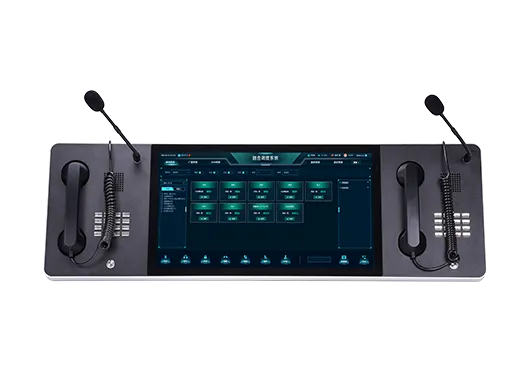
Enterprise Phone System Integration for Wireless PTT and Mobile Field Communication
Enterprise phone systems can extend beyond IP phones by integrating wireless PTT, smart mobile terminals, SIP trunks, radio access and dispatch workflows for flexible field communication.
Becke Telcom
Enterprise phone systems used to be built mainly around IP-PBX platforms, softswitch systems, telephone gateways and desktop IP phones. This structure is still useful because it supports internal extensions, call routing, external calling, transfer, conference calls and daily office communication. For office buildings, service desks, control rooms and branch offices, it remains a stable and practical voice communication architecture.
But many organizations now need communication that goes beyond the desk. Industrial plants, mines, logistics parks, property operations, utilities, security teams, construction sites and multi-site enterprises often have mobile workers who cannot stay near a fixed phone. These users need push-to-talk groups, mobile extension calling, video interaction and a way to stay connected with office users and dispatch centers.
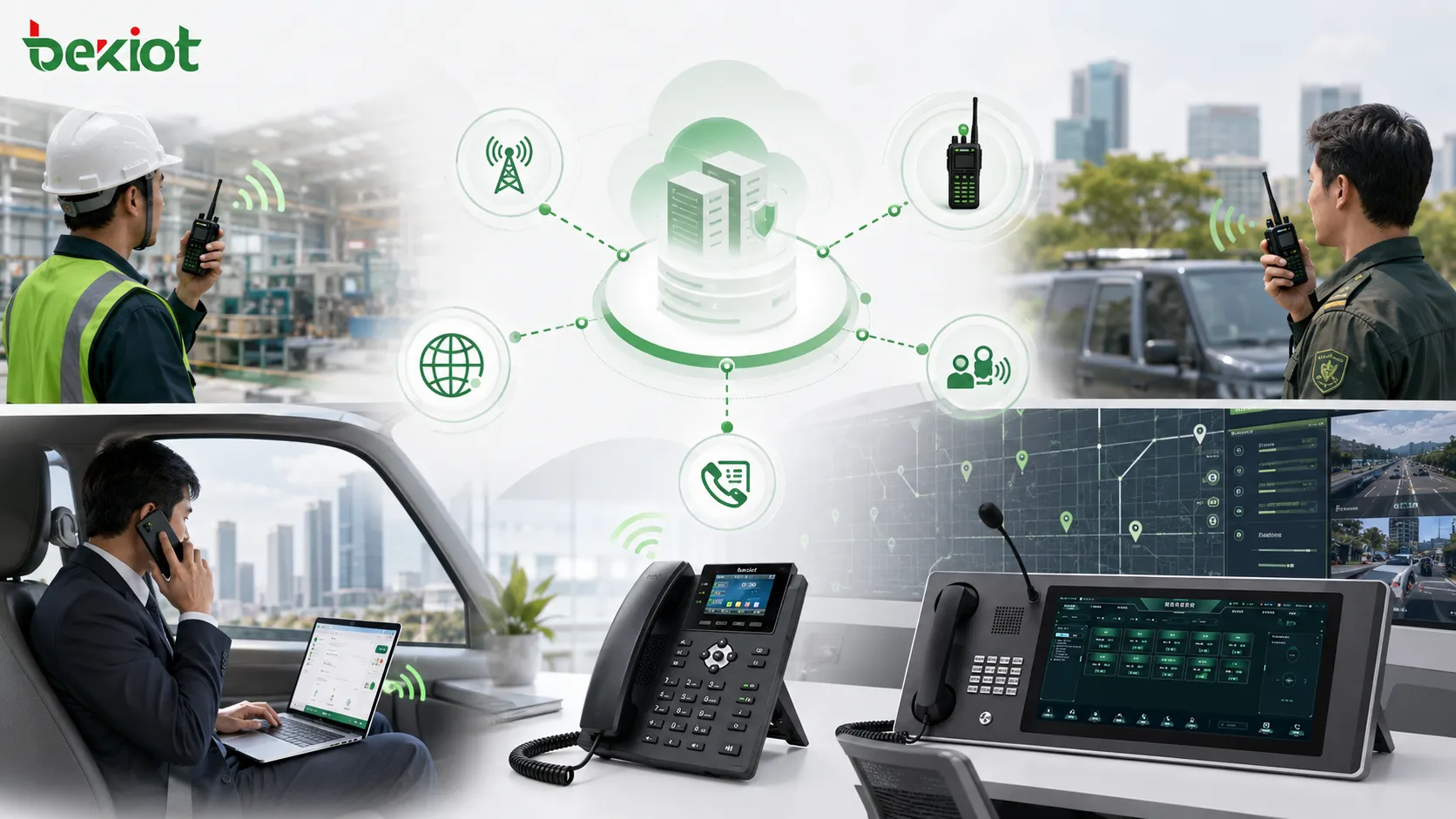
A modern enterprise phone system can meet this requirement by integrating public-network intercom servers, smart mobile terminals, SIP trunks, existing IP-PBX platforms and, when needed, private radio systems. The goal is not to replace every existing system. The practical goal is to connect office phones, mobile workers, wireless PTT users and dispatch operators into one manageable communication workflow.
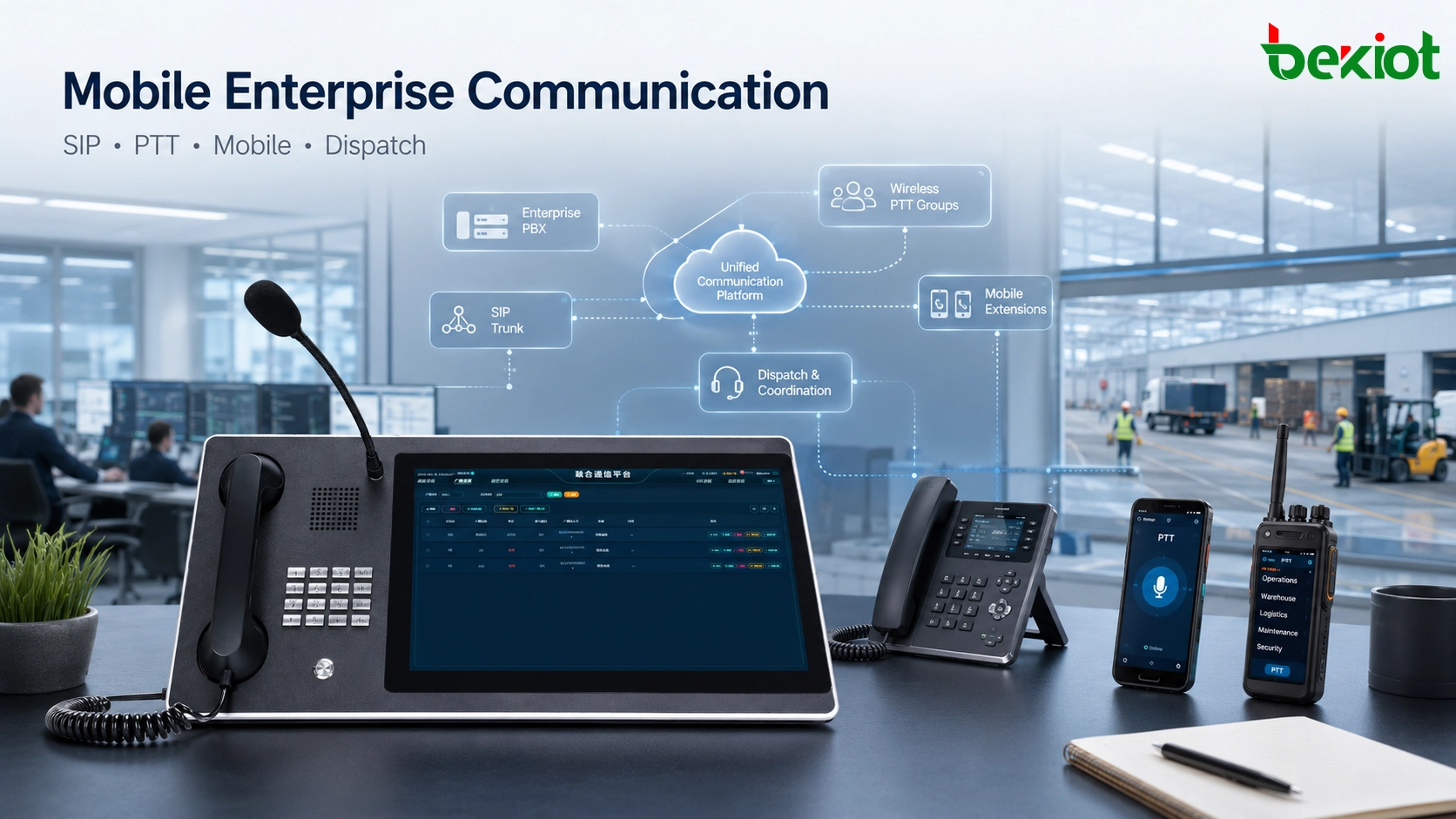
Enterprise phone systems can extend from fixed IP phones to wireless PTT, smart mobile terminals, SIP routing and public-network intercom services.
Why Fixed Office Telephony Is No Longer Enough
Traditional IP telephony works well when most users are in offices, reception areas, meeting rooms or service departments. Employees can dial extensions, transfer calls and reach external numbers through a gateway or SIP trunk. The system is familiar, easy to manage and cost-effective for daily business communication.
The limitation appears when users move into the field. Workers may be spread across workshops, storage yards, patrol routes, production lines, tunnels, substations, machine rooms or outdoor service areas. A desk phone cannot follow them, and a normal mobile phone may not support instant group communication, dispatch control or enterprise numbering.
Field teams usually need two types of communication at the same time. They need fast group coordination through push-to-talk, and they also need number-based calling for private communication, office contact, video support or customer-related tasks. A phone system that only supports fixed extensions cannot cover these working conditions by itself.
How Wireless Enterprise Communication Has Evolved
Older wireless office systems are harder to maintain
Some enterprises once used DECT, PHS or other wireless office systems to extend voice communication away from desks. These technologies solved certain problems at the time, but in many markets they are now difficult to expand or maintain. Device supply is limited, technical support is weaker than before, and long-term platform development is no longer as active.
For organizations planning new projects, continuing to rely on outdated wireless office technology can create problems in spare parts, capacity expansion, compatibility and system lifecycle management. Modern IP-based and public-network communication options are usually more flexible for mobile users and distributed sites.
Private trunking is powerful but not always economical
Large enterprises, public safety departments and government-related organizations may build private trunked radio systems based on technologies such as DMR or TETRA. These systems are valuable when dedicated radio coverage, controlled channels and professional dispatch are required.
However, a dedicated trunking system usually needs higher investment, radio planning, base station deployment, licensed spectrum consideration and specialized maintenance. It is excellent for group dispatch, but it may not be the most economical choice for every enterprise that simply needs mobile PTT, office extension access and wide-area field communication.
A practical direction is to keep the strengths of the existing phone system while adding mobile PTT, smart terminals and radio-style group communication where they are needed.
A Flexible Architecture for Mobile Voice and PTT
Public-network intercom server as the service core
A public-network intercom server can extend enterprise voice communication without building a complete private trunking network. It manages users, smart terminals, groups, numbers, permissions, voice services and push-to-talk behavior. Through SIP trunk networking, it can also connect with the existing IP-PBX or softswitch platform.
In a typical deployment, the enterprise assigns a dedicated number range to mobile smart terminals and configures routing between the intercom server and the IP-PBX. Office extensions can call mobile terminals, and terminal users can call office extensions according to the permission plan. This creates a unified communication structure instead of two separate systems.
Smart terminals support more than PTT
Smart mobile terminals can use mobile data, Wi-Fi or other IP access methods. They are managed by the public-network intercom server and can be grouped by department, site, role or operation task. Users can press to talk, join group communication and coordinate work in a familiar radio-like way.
At the same time, each terminal can also have an internal number. Depending on system design, it may support one-to-one voice calls, video calls, internal extension calls and external calling through the enterprise phone system. This gives field users a mobile office communication tool rather than a single-purpose intercom device.
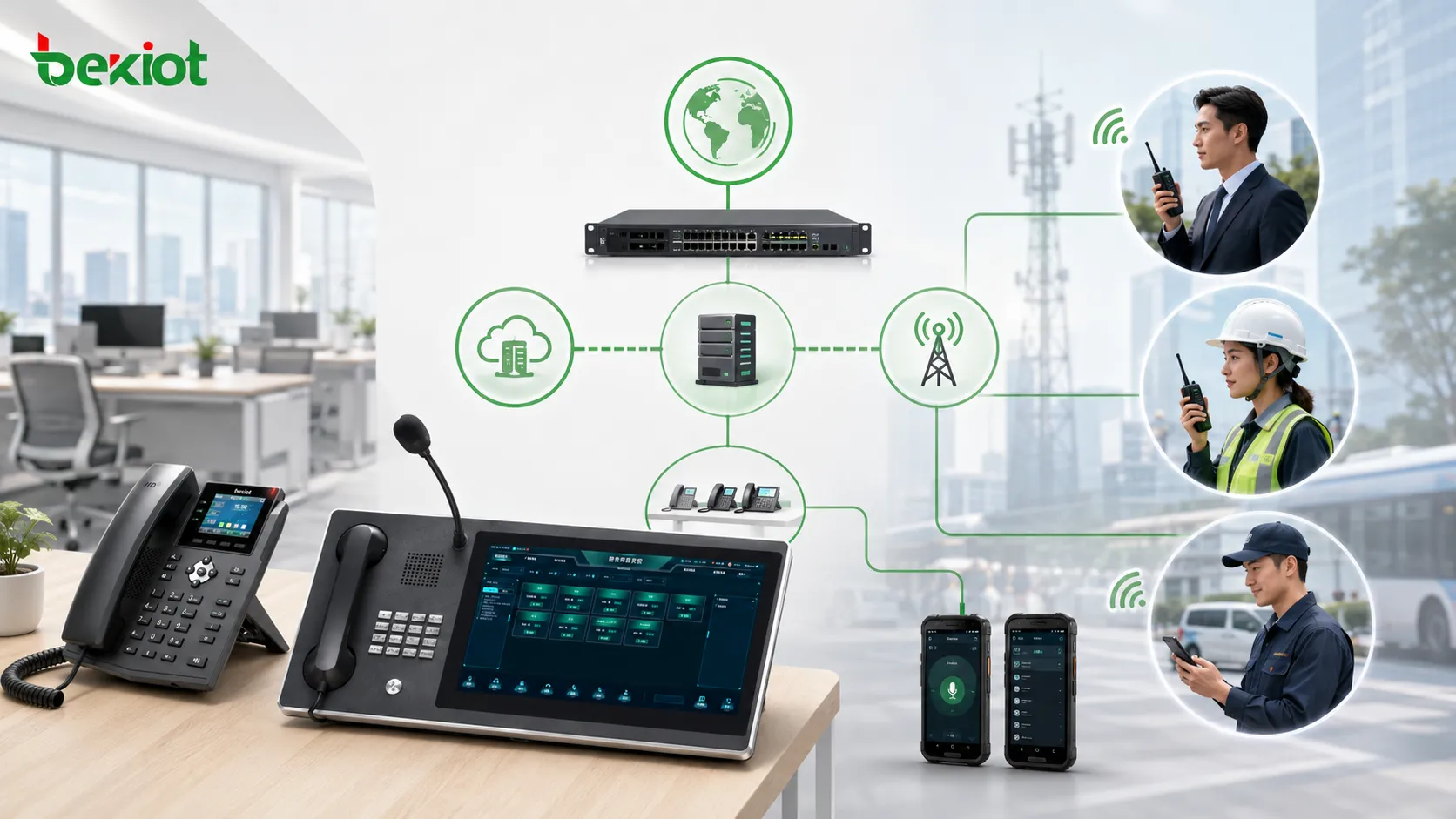
A public-network intercom server can connect smart mobile terminals with an existing IP-PBX through SIP trunks and call routing.
Communication Between Office Phones and Mobile Terminals
Office users can dial field users directly
When an office employee needs to contact a field worker, the process can be as simple as dialing an internal number. The call is routed from the IP phone to the IP-PBX, then to the public-network intercom server, and finally to the smart terminal. The office user does not need to change calling habits or open a separate application.
This is useful for production coordination, maintenance support, security management, customer service follow-up and emergency communication. The field worker can answer through a mobile terminal, and in supported systems the call may also include video communication or dispatch-related functions.
Mobile users can reach office and external numbers
The communication path can also work in the opposite direction. A smart terminal user can call an office extension, another mobile terminal or an external phone number if routing rules and permissions allow it. This prevents field workers from becoming isolated from the enterprise phone system.
For mobile office scenarios, this is important. A technician in a plant area, a patrol worker in a logistics park or a service engineer at a remote site can still contact supervisors, dispatchers, support teams or other departments through the same enterprise communication plan.
Group PTT and private calling can coexist
Public-network intercom does not simply copy ordinary phone calling. Its core value still includes fast group communication. Teams can be placed into work groups, and users can talk instantly by pressing a PTT button. This is more efficient than dialing one person at a time when the message is meant for a team.
Number-based calling and group PTT serve different purposes. Group PTT is suitable for quick coordination, patrol communication, loading supervision and incident response. Private calling is better for detailed discussion, office contact, customer-related work or cross-department coordination. A well-designed system supports both.
Connecting Existing Radio Systems
Many enterprises already have analog two-way radios, digital radio systems or dedicated trunking networks. These systems may still be useful for security patrols, production command, emergency response or high-reliability local communication. Replacing them immediately is not always necessary or economical.
With suitable gateways and interface planning, existing radio systems can be connected with public-network PTT terminals and enterprise phone systems. This allows radio users, mobile terminal users and office phone users to communicate across different device types when the workflow requires it.
Interconnection also reduces communication islands. If radio users, mobile PTT users and office users operate on separate systems, dispatchers may have to repeat the same message manually. That creates delay and increases the risk of missed information. A connected architecture helps managers and operators coordinate teams more efficiently.
Network Planning and Numbering Strategy
SIP trunking connects the platforms
SIP trunking is the key interface between the existing phone system and the public-network intercom server. Through SIP trunks, the IP-PBX can route calls to mobile smart terminals, and the intercom server can route calls back to office extensions or external phone networks.
The project team should define extension ranges, dialing prefixes, call permissions, emergency numbers and external call rules before deployment. A clear numbering plan makes the system easier for users to understand and easier for administrators to maintain.
Access design depends on security and coverage
The public-network intercom server may be deployed with a public IP address, VPN, private network mapping, dedicated line, cloud server or hybrid access model. Smart terminals may connect through mobile operator networks, Wi-Fi or other IP networks. The right design depends on site coverage, security requirements and maintenance capability.
For organizations with stricter information security requirements, authentication, account control, encrypted transmission, firewall policy, server availability and permission management should be planned early. Mobile convenience should not come at the cost of uncontrolled access.
Business Value for Enterprise Communication
Lower cost than building a full trunking system
Public-network intercom and SIP integration can often reduce deployment cost compared with building a complete dedicated trunking network. Enterprises may reuse existing IP-PBX platforms, IP phones, internal numbers, gateways and network resources. This shortens implementation time and reduces the amount of new infrastructure required.
For many organizations, this is a practical balance. They can add mobile PTT and field communication without discarding the phone system that already supports daily office work.
Better connection between office and field teams
The solution extends the enterprise phone system to mobile workers. Field staff can join PTT groups, make internal calls, receive calls from office users and communicate with other terminals. Office users can reach mobile personnel by extension dialing instead of relying on personal phone numbers or separate radio channels.
This improves collaboration between control rooms, warehouses, production sites, patrol teams, service departments, branch offices and maintenance groups. It also makes communication easier to document and manage.
Centralized management and easier integration
A server-based architecture helps centralize user accounts, group settings, numbering, routing, permissions and service rules. It can also connect with dispatch platforms, recording systems, emergency notification systems and broader enterprise communication platforms.
For projects that require SIP telephony, mobile intercom, radio gateway access and dispatch coordination, Becke Telcom can be considered as a lightweight integration option for connecting voice endpoints, gateways and command communication workflows.
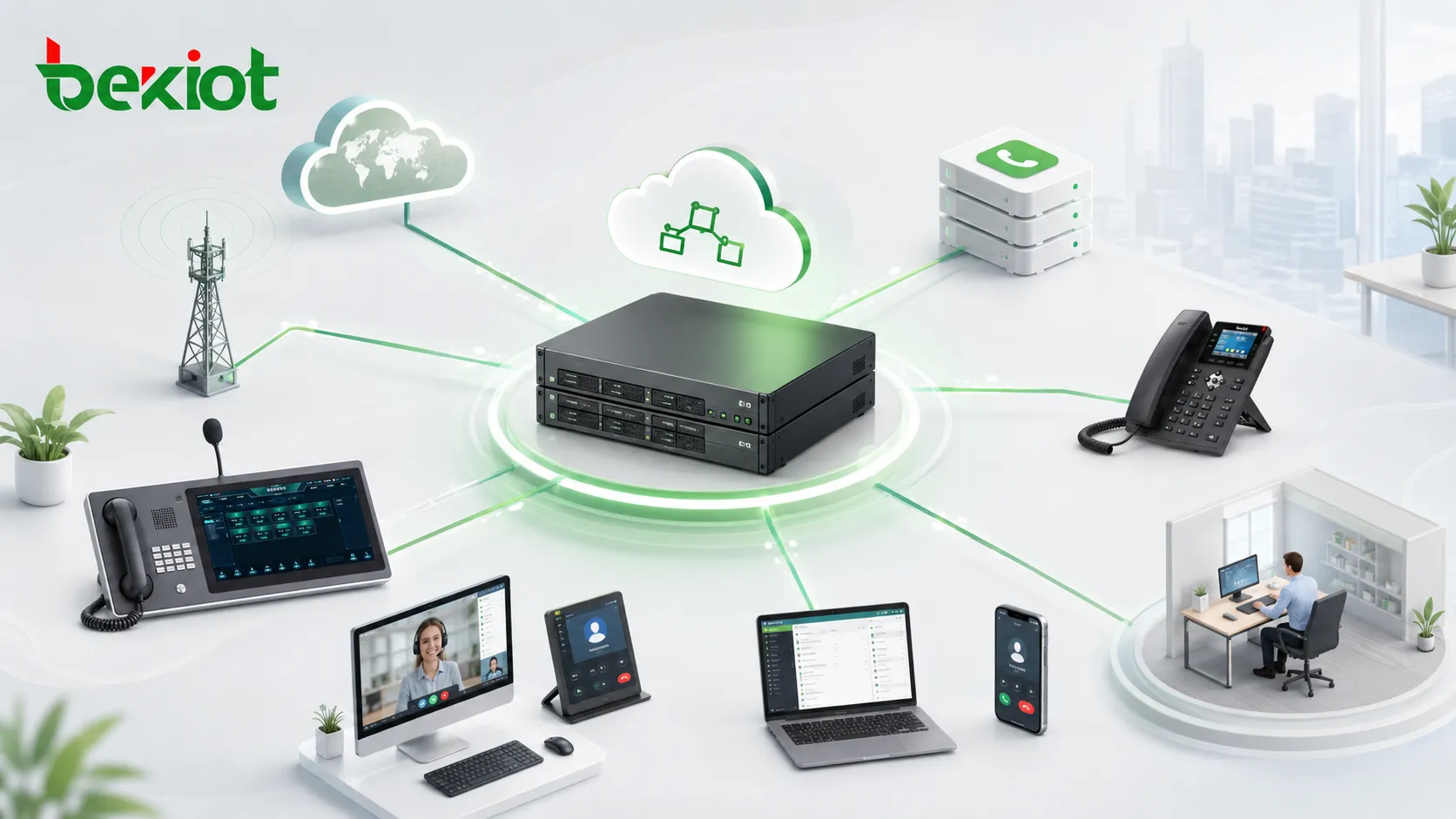
Wireless PTT, mobile terminals, private radio systems, IP phones and dispatch centers can be integrated into a unified enterprise communication solution.
Where This Architecture Fits Best
Industrial and mining enterprises
Industrial and mining sites often have strong mobile communication requirements. Workers may move across workshops, underground areas, storage yards, inspection routes and equipment rooms. Group intercom supports fast team coordination, while SIP integration keeps field users connected with office phones and control rooms.
Logistics parks and property operations
Logistics parks, industrial parks, campuses, commercial buildings and property management teams often need wireless communication for patrol, maintenance, delivery coordination, visitor handling and emergency response. Smart terminals can provide PTT groups and internal calling without requiring every worker to stay near a desk phone.
Utilities and distributed service teams
Power, water, gas, transportation and field service teams often work across many locations. Public-network intercom can connect mobile staff over wide areas, while SIP integration keeps communication linked to office dispatch, customer service and technical support teams.
Deployment Notes Before Implementation
Check the existing phone system first
Before deployment, the organization should confirm whether the current IP-PBX or softswitch supports SIP trunking, extension routing, codec negotiation, permission control and external line access. These functions affect how smoothly the public-network intercom server can be connected.
Plan terminal types and user groups
The project should define who needs a smart terminal, which departments require group PTT, which users need video calling and which users only need voice communication. Group design should follow real work processes rather than simply copying the company organization chart.
Test coverage and call quality in real locations
Because mobile terminals depend on wireless IP access, coverage quality must be tested in real working areas. Workshops, basements, tunnels, warehouses, outdoor yards, machine rooms and weak-signal corners should all be included in the test plan.
Call quality, group call delay, video performance, battery life, roaming behavior and handover experience should be verified before large-scale rollout. A small pilot project can reduce deployment risk and help users adapt to the new workflow.
Implementation Checklist
Planning Item
Key Question
Design Result
Communication workflow
Is the main goal PTT, mobile office, video, dispatch or radio interconnection?
Clear system architecture and function priority
Numbering plan
How should smart terminals be numbered by department, site or role?
Easier dialing, routing and maintenance
User permission
Who can make external calls, video calls or emergency calls?
Controlled cost and safer system operation
Network access
Will terminals use mobile data, Wi-Fi, VPN, cloud access or private network access?
Reliable coverage and secure connection
Daily operation
Can users operate the system without understanding SIP routing or server logic?
Simple use and easier training
Final Notes
Enterprise phone systems can now extend far beyond desktop IP phones. By connecting an IP-PBX or softswitch with a public-network intercom server and smart mobile terminals, organizations can add wireless push-to-talk, mobile extension calling, video communication and flexible routing to their existing communication infrastructure.
This approach is especially valuable for enterprises that need mobility but do not want to build a costly dedicated trunking system. It keeps the familiar strengths of the office phone system, adds radio-style group intercom, supports mobile workers and can also integrate existing private radio networks when needed.
The result is a more practical communication architecture for modern operations: office users, field workers, mobile teams, radio users and dispatch centers can work through one coordinated communication workflow.
FAQ
Can smart terminals work outside the company network?
Yes, if the system is designed for public-network or cloud access and the terminal has authorized mobile data connectivity. Account control, authentication and permission management should be configured to protect the enterprise communication system.
Does every employee need a smart intercom terminal?
No. Terminals should be assigned according to mobility needs, job role, emergency responsibility and group communication requirements. Office-only users may continue using IP phones or softphones.
How should external calling permission be managed?
External calling should be role-based. Supervisors, dispatchers or maintenance leaders may need external calls, while ordinary group users may only need internal calls and PTT. This helps control telecom cost and security risk.
Can video calling work in industrial environments?
Yes, but the device, network and working process should be tested. In noisy or harsh areas, headsets, noise-reduction microphones or visual confirmation workflows may be needed.
What is the most common deployment mistake?
The most common mistake is treating mobile intercom as a separate tool instead of integrating it with the phone system, numbering plan, user permissions and dispatch workflow. Without integration planning, it may create another communication island.