Emergency Command Vehicle Configuration Guide for Field Response Projects
Emergency command vehicle configuration depends on mission profile, vehicle platform, satellite or 5G backhaul, field radio access, onboard dispatch, video systems, power design, and integration with rear command centers.
Becke Telcom
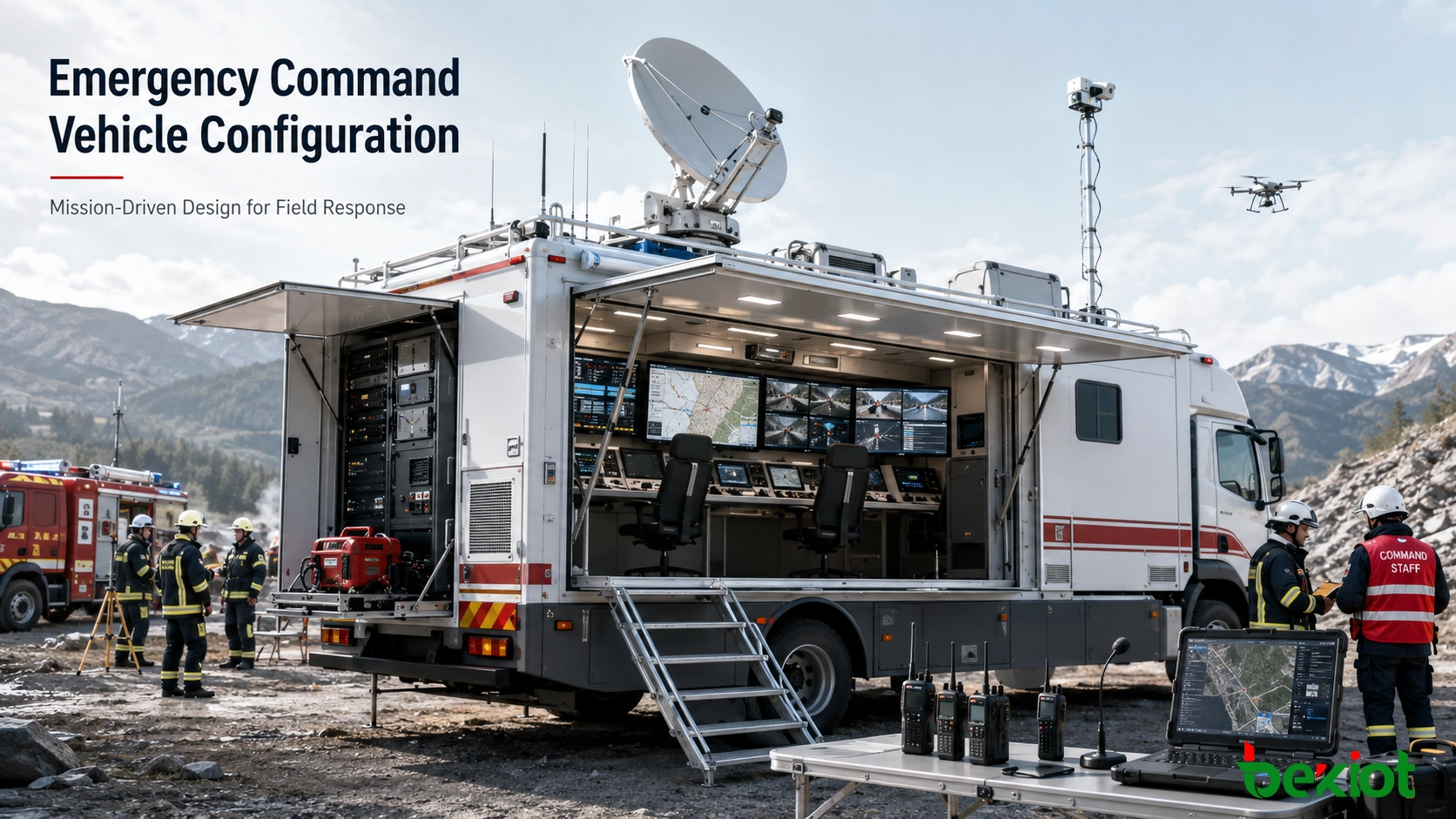
An emergency command vehicle is not simply a standard vehicle with several communication devices installed inside. It is a mobile command system that brings transport, communication, dispatch, video, power supply, and field coordination into one working platform. For disaster response, public safety operations, industrial rescue, flood control, transportation incidents, and large outdoor events, the vehicle must support fast deployment and stable communication under uncertain conditions.
Many buyers first ask how much an emergency command vehicle costs. That question is understandable, but it is difficult to answer with one fixed number. The final cost depends on the vehicle chassis, satellite or 4G/5G backhaul, field communication access, onboard command system, audio and video equipment, auxiliary devices, power design, and the level of integration required by the project.
A practical configuration should begin with the mission, not with the device list. Before purchasing or modifying a vehicle, the project team needs to define where the vehicle will operate, how many field teams it must support, which communication systems must be connected, how long it should work independently, and how it will cooperate with the rear command center.
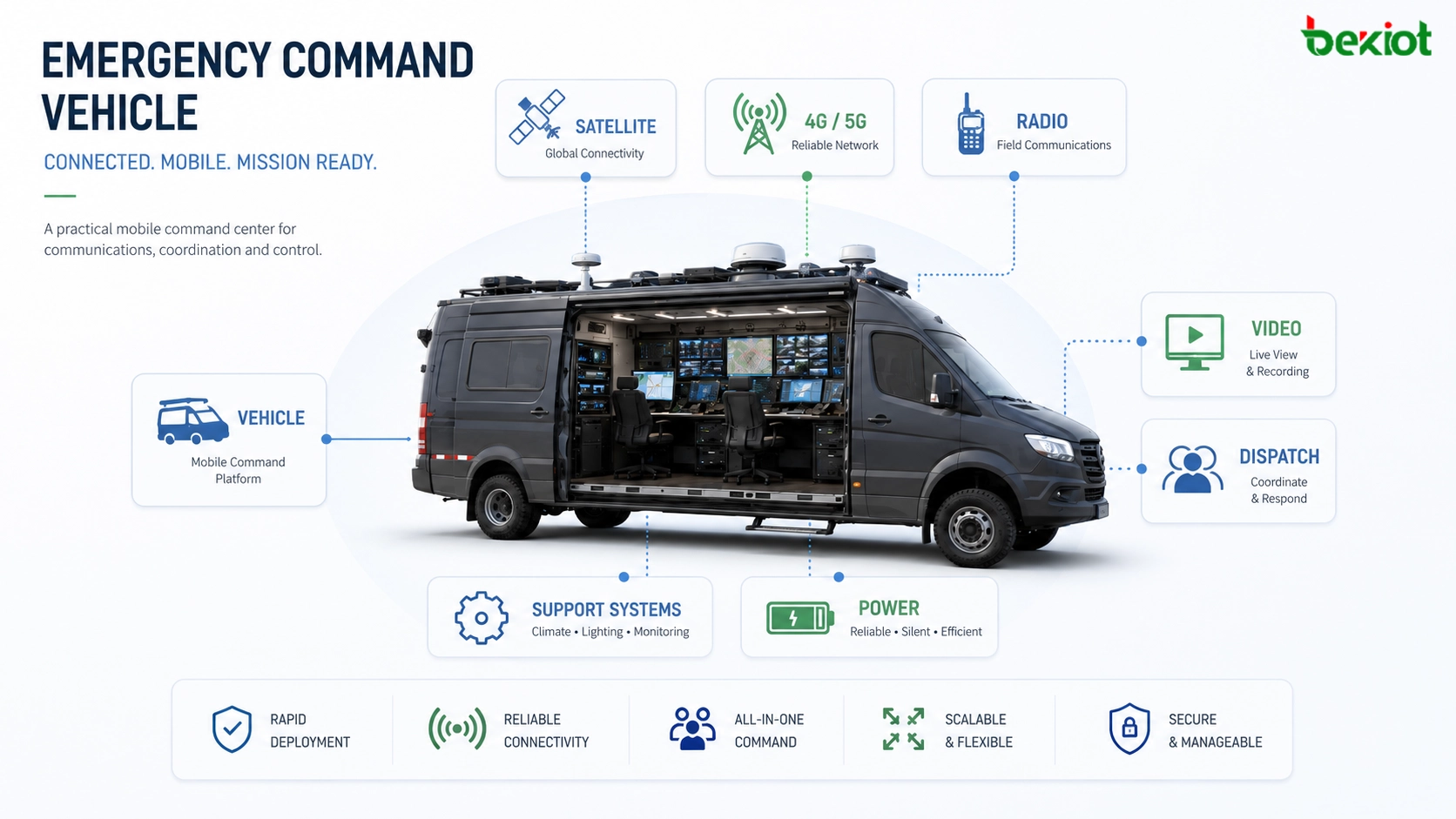
A complete emergency command vehicle configuration should combine the vehicle platform, communication links, field access, dispatch, video, power, and support systems.
Choose the Vehicle Platform Around the Mission
The first decision is the vehicle platform. Emergency command vehicles are highly customized, so there is no single chassis that fits every project. Common base vehicles include four-wheel-drive SUVs, pickup trucks, minibuses, buses, box trucks, and container-style vehicles. Each option offers a different balance between mobility, space, payload, modification cost, and working comfort.
Small command vehicles are usually modified from SUVs or pickup trucks. They are suitable for forward command, rapid arrival, mountain roads, rural areas, construction sites, flood response, and other scenarios where mobility is more important than internal working space. These vehicles can carry core communication equipment, compact displays, radios, routers, batteries, and basic dispatch terminals.
Medium command vehicles are often based on minibuses or similar platforms. They provide more interior room for operators, communication racks, display screens, audio and video devices, dispatch consoles, and temporary meeting areas. This type is often used for general emergency support, urban field command, transportation response, public safety duty, and regional coordination.
Large command vehicles normally use buses, heavy-duty trucks, or container platforms. They can carry more complete systems, including video walls, conference systems, satellite antennas, multi-channel radio access, power units, lifting masts, and expandable cabins. Some container-style command vehicles may also include electromagnetic shielding, biochemical protection, dedicated equipment rooms, or special environmental features. Their capability is stronger, but the design cycle, modification cost, and operating requirements are also higher.
Build Reliable Backhaul to the Command Center
After the vehicle platform is selected, the next key question is how the vehicle connects back to the rear command center. This external communication link determines whether the mobile command post can exchange voice, video, data, and dispatch information with a government emergency center, enterprise control room, police command center, transportation command platform, or regional response headquarters.
Satellite communication is often required when the vehicle must work in remote areas, disaster zones, mountains, coastal regions, forests, highways, or places where public communication networks may be damaged or overloaded. Vehicle-mounted satellite systems may use communication-on-the-move antennas, fixed-position satellite antennas, or phased-array satellite terminals. The cost difference can be large because antenna type, bandwidth, mobility, stabilization method, and satellite service plan all affect the final budget.
If the project mainly operates in areas with stable public network coverage, 4G or 5G transmission may be enough for many tasks. Typical configurations include 5G CPE devices, industrial routers, and multi-SIM bonding routers. A simple 5G CPE may only cost several thousand, while a multi-card bonding device with stronger bandwidth aggregation and link redundancy can cost much more.
In many real projects, satellite and cellular communication should not be treated as alternatives. A more resilient design uses 4G/5G as the daily high-bandwidth link and satellite as a backup or remote-area link. When public networks are available, the vehicle can transmit video and data through cellular bonding. When coverage becomes weak, damaged, or congested, satellite communication can keep critical command traffic online.
Plan Field Communication Access Early
External backhaul connects the command vehicle to the rear center, but the vehicle must also communicate with people and devices at the incident site. This field access layer is often the most important part of emergency command vehicle design because rescue teams may use different communication tools at the same time.
Field teams may carry handheld walkie-talkies, vehicle radios, body cameras, broadband mesh radios, individual terminals, drone video systems, mobile video terminals, portable cameras, or private network devices. If these systems cannot be connected into the command vehicle, operators may need to switch between isolated devices and manual message forwarding, which slows down response.
Broadband ad hoc network equipment is useful when the site needs video, data, and voice transmission without relying fully on public infrastructure. A vehicle-mounted broadband mesh radio can connect with backpack radios, handheld radios, airborne radios, or temporary relay nodes. This type of equipment can support field video return, mobile monitoring, voice communication, and temporary network extension. Depending on bandwidth, distance, number of nodes, and frequency resources, the cost may range from tens of thousands to more than one hundred thousand.
Narrowband radios and walkie-talkies remain essential in many emergency operations. They are simple, fast, and familiar to field teams. A basic system may include a vehicle-mounted radio in the command vehicle and handheld radios for front-line personnel. If wider coverage is required, the project may add repeaters, trunking base stations, backpack repeaters, or drone-mounted relay stations.
Some emergency communication vehicles also need to provide public 5G signal reinforcement or private 5G coverage at the incident site. This is a much more specialized configuration. A private 5G system may involve base stations, core network design, spectrum planning, user terminals, security policies, and system integration. For this reason, the budget can reach hundreds of thousands or even millions depending on the required capacity and deployment scope.
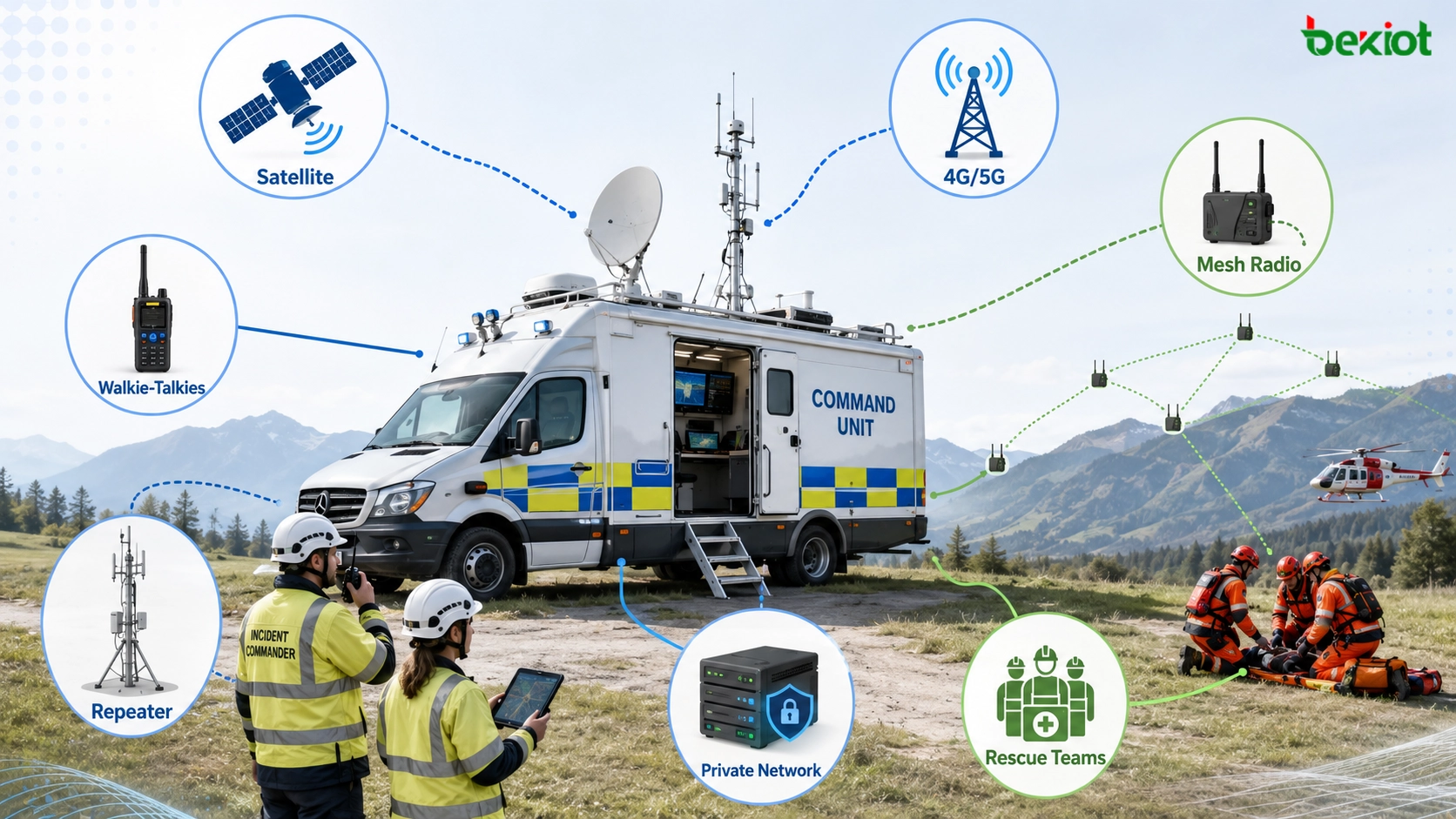
Field communication design may include satellite, 4G/5G bonding, broadband mesh radios, walkie-talkies, repeaters, and private network access.
A Command Vehicle Should Not Become a Simple Meeting Room
Onboard command systems are often underestimated. In some projects, a large budget is spent on vehicle modification, decoration, and display equipment, but operators later find that the vehicle is difficult to use in real emergencies. One common reason is that the vehicle was designed like a mobile meeting room instead of a field command platform.
A good emergency command vehicle should help operators organize information quickly, dispatch teams clearly, manage audio and video sources, and communicate with both front-line personnel and the rear command center. It should not simply copy every device from a fixed command center into a smaller vehicle space.
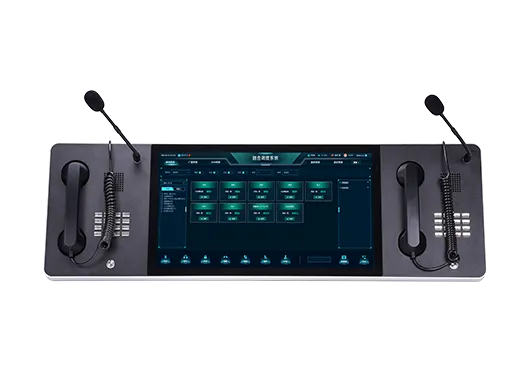
If the onboard system contains too many independent screens, separate control panels, unrelated software interfaces, and manual switching steps, operators may lose time when pressure is high. A better approach is to build an integrated audio-video command system that brings cameras, radios, phones, computers, drones, recorders, conference systems, speakers, and displays into a more unified workflow.
The system should support fast video source switching, screen splitting, enlarged display, video return, audio routing, and command center conferencing. When drone video, surveillance cameras, field body cameras, GIS maps, and remote conference feeds are active at the same time, operators should be able to manage them without complicated manual wiring or repeated device switching.
Integrate With Existing Platforms and Remote Centers
An emergency command vehicle should not operate as an isolated island. It needs to communicate with the rear command center, nearby field teams, other command vehicles, and existing emergency platforms. This makes protocol compatibility and system openness very important.
A practical vehicle-mounted command system may need to support SIP voice communication, RTMP video streams, GB/T 28181 video access, conferencing terminals, video streaming protocols, dispatch platforms, and recording systems. The exact protocol set depends on the user’s existing platform and the systems that need to be connected.
Bandwidth control should also be considered. Satellite links and mobile networks may not always provide stable high bandwidth. The system should be able to display high-definition original video inside the vehicle while sending compressed single-channel or multi-channel video back to the command center according to available link conditions. This helps maintain communication when network capacity is limited.
Voice interconnection is another important part of system integration. Through radio gateways or RoIP gateways, the command vehicle can connect on-site walkie-talkies, vehicle radios, and different radio systems into the dispatch platform. Telephone line interfaces can connect satellite phones, 4G telephone lines, or PSTN resources. For projects that require SIP dispatch, radio access, or industrial communication endpoints, Becke Telcom gateway and communication solutions can be used as part of the access layer.
Multi-vehicle collaboration should also be planned when the project involves several command vehicles. Different vehicles may need to share audio-video conferences, low-bandwidth video return, dispatch voice, field reports, and command instructions. A well-designed platform should allow them to work together rather than treating each vehicle as a separate system.
Select Audio and Video Equipment by Vehicle Size
Audio and video equipment should match the actual vehicle space and operating workflow. Common devices include conference displays, video walls, microphones, speakers, audio processors, amplifiers, mixers, PTZ cameras, conference cameras, display controllers, and recording devices.
A small forward command vehicle may only need a compact display, one or two cameras, a microphone, a small speaker system, and basic audio processing. The priority is fast deployment and simple operation. Too many displays or large equipment racks may reduce mobility and make the interior difficult to use.
A medium or large command vehicle may require a large conference display, multiple monitoring screens, professional microphones, distributed audio processing, video matrix control, and more advanced camera systems. If the vehicle is used for multi-agency command or long-duration operations, the comfort of the operator area and the clarity of audio-video interaction become more important.
The cost of audio and video systems can vary widely. Screen size, number of displays, camera quality, microphone type, sound coverage, recording requirements, control system, domestic or imported brands, and installation complexity can all affect the final quotation. For this reason, the equipment list should be reviewed together with the workflow, not only by comparing device quantities.
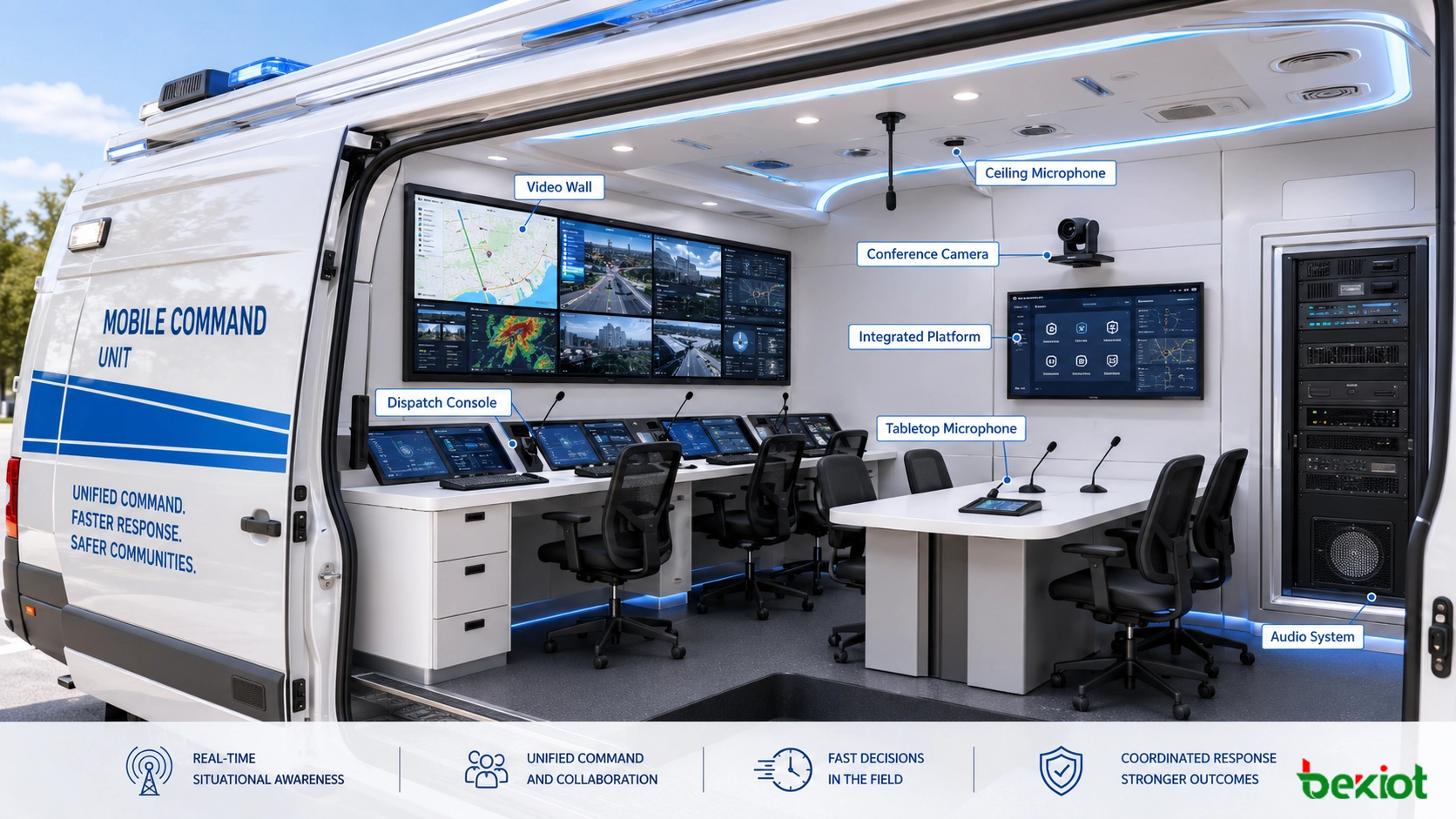
Onboard command systems should integrate video display, conferencing, dispatch consoles, cameras, microphones, and audio processing for fast field operations.
Plan Auxiliary Equipment Before Vehicle Modification
Emergency command vehicles often require auxiliary equipment for field operations. Common options include roof-mounted lifting masts, PTZ cameras, searchlights, warning lights, loudspeakers, drone docks, roof platforms, mobile monitoring balls, portable power stations, and field deployment kits.
These devices should be planned before the vehicle body modification is finalized. Many auxiliary devices need fixed mounting points, cable routing, power supply, roof load calculation, weather protection, wind resistance, and safe storage. If they are added after the vehicle structure is completed, the project may require extra rework and higher cost.
Drones, mobile cameras, portable batteries, temporary terminals, and field toolkits should also be considered from a storage and workflow perspective. The vehicle should provide enough space to store, charge, deploy, and recover these devices. Otherwise, the equipment may look complete on the configuration list but remain inconvenient during real field use.
Design Power Supply and Environmental Control as Core Systems
Power supply is one of the foundations of a reliable emergency command vehicle. The system must provide stable electricity for satellite terminals, routers, radios, computers, displays, cameras, audio devices, lighting, air conditioning, charging stations, and auxiliary equipment.
A complete power design should include onboard battery capacity, external power input, inverter capacity, generator configuration, charging method, power distribution, grounding, overload protection, and switching between internal and external power sources. If the power system is underestimated, the vehicle may not support long-duration missions even when all communication devices are installed correctly.
Environmental control is also part of operational reliability. Air conditioning, lighting, curtains, sound control, seat adjustment, display lifting mechanisms, cabinet ventilation, and centralized control panels may seem secondary, but they directly affect operator comfort and equipment stability. In hot, cold, dusty, humid, or long-duration operations, these details can influence whether the command team can work efficiently.
Match the Configuration to Real Scenarios
The best emergency command vehicle is not the one with the most equipment. It is the one that fits the mission. Public safety, fire rescue, transportation management, energy operations, industrial parks, flood control, forestry protection, emergency management, and large-event security all require different communication and command capabilities.
Before requesting a quotation, the project team should prepare a requirement list. This list should include the vehicle size, operating environment, number of operators, communication distance, backhaul method, field team devices, video sources, radio systems, command center interface, expected working time, power demand, storage requirements, and optional field equipment.
With clear requirements, vehicle modification companies and communication system providers can design a more accurate solution. Without this step, a quotation may appear attractive but fail to support real emergency operations. A low-cost configuration may miss key communication functions, while an over-configured vehicle may waste budget on systems that are rarely used.
What Mainly Affects the Final Cost
The cost of an emergency command vehicle is shaped by several major factors. The first is the base vehicle and modification level. A small off-road command vehicle is very different from a large expandable command vehicle in terms of chassis cost, body structure, space design, and installation complexity.
The second factor is the communication link. Satellite communication, 5G bonding, private networks, broadband mesh radios, and private 5G systems can create very different budgets. The third factor is the onboard command platform, including dispatch software, video management, audio routing, recording, conferencing, and system integration.
The fourth factor is audio-video equipment and auxiliary devices. Video walls, PTZ cameras, lifting masts, drone docks, warning systems, speakers, microphones, and professional control systems can increase the overall price quickly. The fifth factor is power and environmental design, which determines how long and how reliably the vehicle can work in the field.
For this reason, price comparison should be based on the complete mission requirement, not only on the vehicle appearance or the number of devices listed in the quotation.
Conclusion
Configuring an emergency command vehicle usually involves six main tasks: selecting the vehicle platform, choosing external backhaul, planning field communication access, building the onboard command system, configuring audio-video and auxiliary equipment, and designing power supply and environmental control.
The final configuration should be guided by field scenarios. A vehicle for urban public safety may focus on 4G/5G bonding, video dispatch, and radio access. A vehicle for remote disaster response may need satellite communication, broadband mesh networking, stronger power endurance, and more field deployment equipment. A vehicle for industrial emergency response may require radio interconnection, SIP communication, public address access, and integration with the enterprise command center.
A successful command vehicle should not be judged by how many devices it carries. It should be judged by whether it can arrive quickly, connect reliably, display field information clearly, support direct dispatch, work with the rear command center, and keep operating when conditions become difficult.
FAQ
Should every emergency command vehicle include satellite communication?
Not every project needs satellite communication. It is important for remote areas, disaster zones, mountain rescue, flood response, and scenarios where public networks may fail. For urban operations with stable 4G/5G coverage, cellular bonding may be enough, while satellite can be added as a backup link.
How can buyers avoid over-configuring a command vehicle?
The most practical method is to define the operating scenarios before selecting devices. If the vehicle only supports local field coordination, it may not need a large number of high-end systems. If it supports regional emergency command, more advanced backhaul, video, dispatch, and power capabilities may be required.
Why is workflow more important than equipment quantity?
During emergencies, operators need fast switching, clear communication, and simple control. Too many independent devices may slow down operation if they are not integrated well. A unified workflow is often more valuable than a longer equipment list.
What should be tested before final delivery?
Final testing should include power endurance, satellite or 4G/5G link stability, radio communication, video return, audio quality, display control, vehicle grounding, cooling performance, equipment fixation, emergency lighting, and coordination with the rear command center.