Hospital Call System Installation for Safer Patient Response and Clinical Communication
Hospital call system installation connects patient call points, nurse stations, emergency alerts, corridor indicators, and SIP communication devices to improve response, safety, and healthcare workflow.
Becke Telcom
In a hospital, communication is part of care. A patient may need help from a bed, a bathroom, a treatment room, or an observation area. A nurse may need support from another staff member. A duty room may need to receive alerts from several wards at the same time. When these requests are not delivered clearly, response can slow down and daily care becomes harder to manage.
A hospital call system is designed to solve this problem. It creates a structured communication path between patients, nurses, doctors, support staff, duty rooms, and nurse stations. In practical use, it allows a person to trigger a call request, sends that request to the right staff location, and helps the care team respond with better visibility and less confusion.
Modern hospital call system installation is no longer only about placing a button beside each bed. Many projects now include emergency pull cords, corridor indicator lights, nurse station consoles, SIP intercom devices, duty-room phones, call logging, IP network communication, and possible integration with paging or security systems. This makes the system part of the hospital’s internal communication infrastructure, not just a simple alarm circuit.
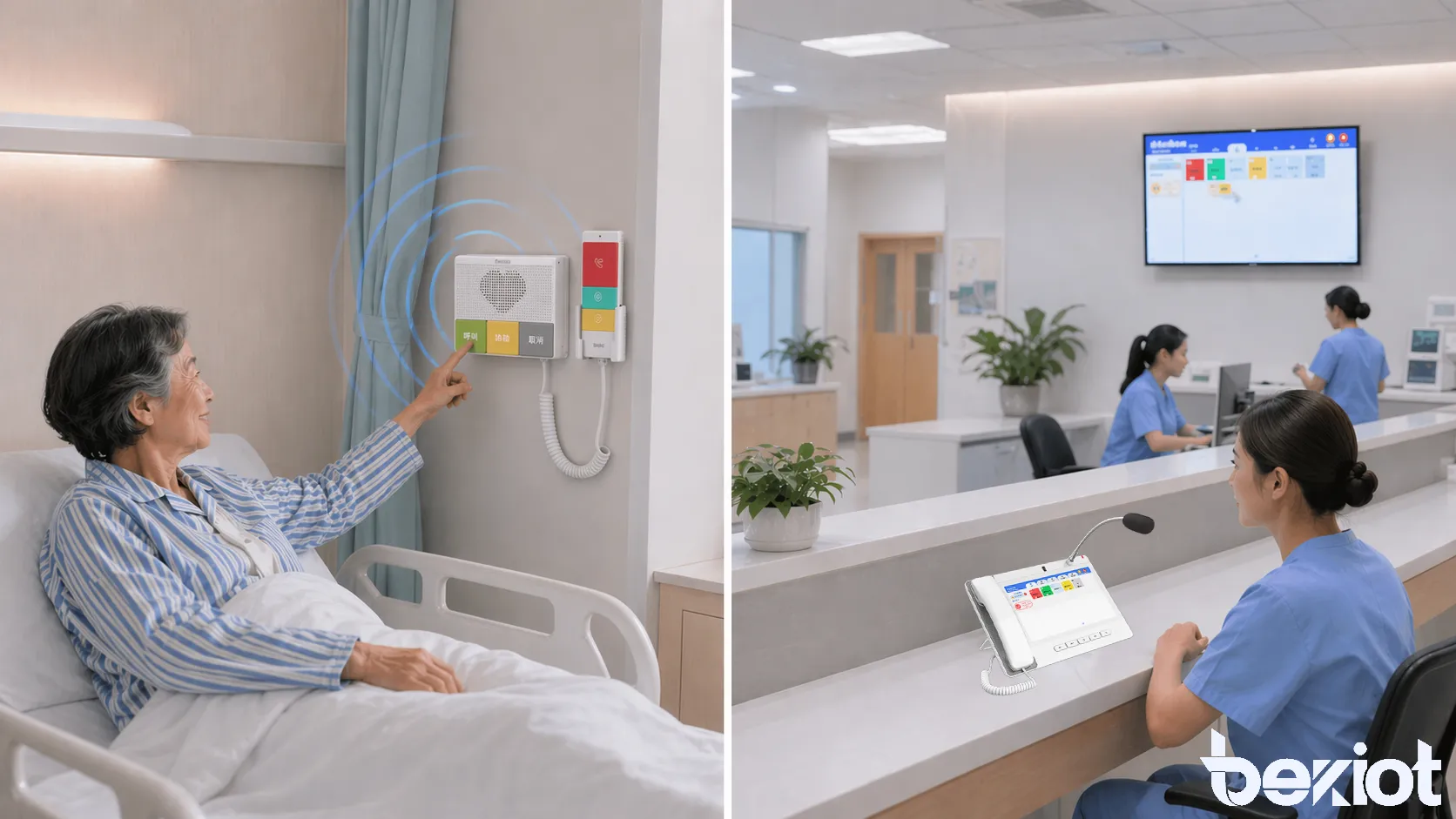
A modern hospital call system connects patient rooms, nurse stations, corridor indicators, and internal communication devices into one organized response workflow.
What a Hospital Call System Does
A hospital call system is a communication platform that allows patients and staff to request assistance and route that request to the correct caregiver or duty point. The most familiar device is the patient bedside call button, but a complete system usually includes more than one type of endpoint.
Depending on the hospital layout, the system may include bedside call units, bathroom emergency pull cords, wall-mounted room terminals, corridor lights, nurse station consoles, duty-room endpoints, mobile notifications, and management software. In more advanced designs, the system may also support two-way audio, SIP communication, call escalation, call logging, and integration with other hospital communication systems.
The core purpose is simple: when someone needs help, the request should reach the responsible team quickly and clearly. The patient should not need to shout, walk out of the room, or wait until staff happen to pass by. The care team should be able to see where the call came from, understand the call type, and respond in the right order.
A hospital call system is not only a convenience device. It is a response infrastructure that turns patient and staff requests into organized action.
Why It Is Different from a Basic Nurse Call Button
A basic nurse call button can send an alert from a patient bed to a nurse station. That function is still important, but it does not cover all communication needs inside a hospital. Real clinical environments include patient assistance calls, bathroom emergencies, staff assist calls, duty-room alerts, corridor indications, department routing, and in some cases voice confirmation before staff arrive.
A modern hospital call system can separate these request types. For example, a normal bedside request should not be treated the same as a bathroom emergency pull-cord alert. A staff assist request in a treatment room may need different handling from a routine patient request. This priority logic helps staff recognize urgency more accurately.
The difference is therefore not only technical. It is also about workflow. A useful hospital call system should fit how nurses, doctors, patients, and support staff actually move through the hospital every day.
Main Functions of a Hospital Call System
Patient call and nurse notification
The most basic function is patient-to-staff communication. A patient presses a call button or activates a bedside terminal, and the system sends the request to the nurse station or assigned duty point. The alert may show the ward, room number, bed number, and call type.
This helps nurses identify where help is needed without unnecessary searching. In multi-bed rooms or busy wards, accurate room and bed information is especially important because staff may be handling several requests at the same time.
Bathroom emergency alerting
Bathrooms, wash areas, and assisted-care spaces often require emergency pull cords or emergency buttons. These locations are important because a patient may fall, become weak, or need help while away from the bed.
Bathroom emergency devices should be installed where they can be reached from normal standing positions and from lower positions if a patient falls. The system should also present these calls with stronger priority through visual indicators, tones, or escalation rules.
Corridor indicators and room visibility
Corridor indicator lights give staff a quick visual signal outside the room. A light can show which room has an active call, whether it is a routine request or an emergency, and sometimes whether the call has already been acknowledged.
This is useful because nurses and support staff are often moving through corridors instead of sitting at one station all the time. A visible corridor signal helps them respond faster even before checking the console.
Two-way audio communication
Some hospital call systems support two-way audio between the nurse station and the patient room. This allows staff to confirm what the patient needs before walking to the room. A nurse may learn whether the request is urgent, whether special equipment is needed, or whether another team member should respond.
Two-way communication can reduce unnecessary movement and improve response quality. It can also reassure patients because they know their request has been heard.
Call acknowledgement, escalation, and logging
A professional call system should not allow requests to disappear unnoticed. Calls can be acknowledged, escalated if unanswered, transferred to another duty point, and recorded for later review. This is important during shift changes, high-activity periods, and departments where staff may be temporarily away from the station.
Call logs can also help hospital managers review response patterns, identify weak areas, and understand whether additional devices or workflow changes are needed.
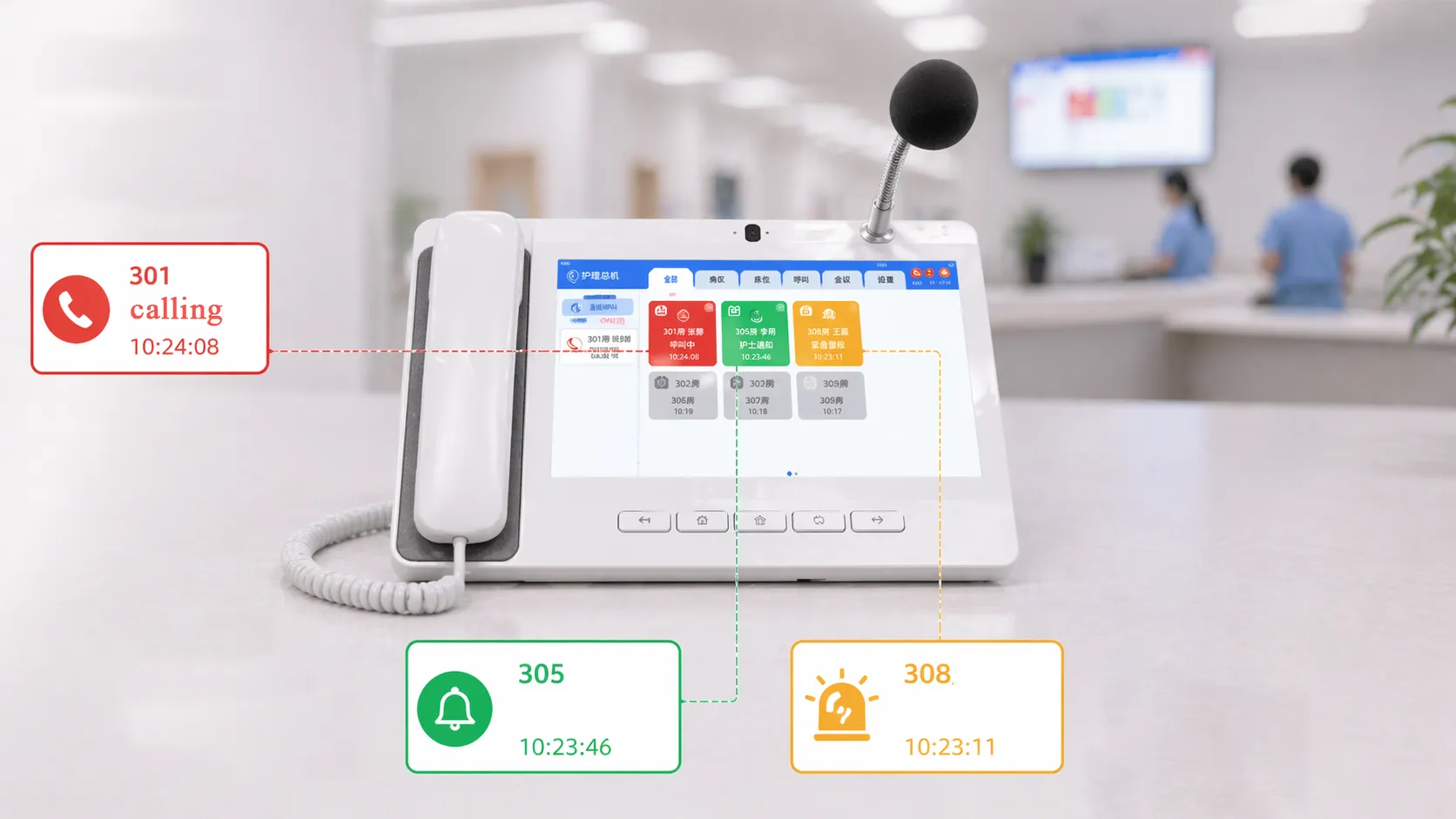
Nurse station visibility helps staff identify call location, call type, response status, and urgency more clearly.
Benefits of Proper Installation
Faster patient response
A well-installed hospital call system reduces the time between a request and staff awareness. When alerts are routed to the right station and displayed clearly, nurses do not need to guess where the request came from. This improves response speed and reduces uncertainty.
Faster response is especially valuable for elderly patients, post-operative patients, rehabilitation patients, mobility-limited patients, and patients under observation. These groups may not be able to leave the bed or room safely to ask for help.
Better patient safety
Patient safety improves when help is easier to request. Bedside buttons, emergency pull cords, room terminals, and visible indicators all help create a more dependable assistance path. The patient has a clear way to call, and the staff have a clearer way to prioritize.
Emergency differentiation is also important. If a bathroom pull cord, staff assist button, or urgent room call is displayed differently from a routine request, staff can respond with the correct level of urgency.
More organized nursing workflow
Hospital wards can become busy very quickly. Without a structured call system, staff may rely too much on verbal messages, walking checks, or informal reminders. This creates the risk of missed requests or repeated work.
A call system gives the team a shared view of active requests. Staff can see what has been called, what has been acknowledged, and what may need escalation. This supports more organized care coordination, especially in larger wards.
Stronger long-term communication infrastructure
Modern hospitals increasingly need communication systems that can grow with the facility. An IP-based or SIP-compatible approach can make it easier to connect nurse stations, duty-room phones, intercom devices, paging systems, and internal voice communication resources.
This does not mean every hospital needs the same level of integration. It means installation should consider future needs instead of only meeting the minimum function required today.
Key Devices in a Hospital Call System
Patient room units
Patient room units may include bedside call buttons, wall-mounted terminals, pull switches, or room communication panels. They should be installed in locations that patients can reach easily from the bed or care position.
In multi-bed rooms, device labeling and bed identification must be clear. Staff should be able to know not only which room called, but also which bed or care point needs attention.
Bathroom emergency points
Bathroom emergency devices are usually designed as pull cords or emergency push buttons. Their placement should reflect real patient risk. A device installed too high, too far away, or behind an obstacle may not help during a fall or sudden weakness.
Installation should consider reachability, moisture conditions, cable protection, cleaning requirements, and clear identification.
Corridor lights
Corridor indicators help staff identify call locations while moving through the ward. Different colors or flashing patterns may be used to show different call types. This visual layer is simple, but it is very useful in daily hospital operation.
Nurse station consoles
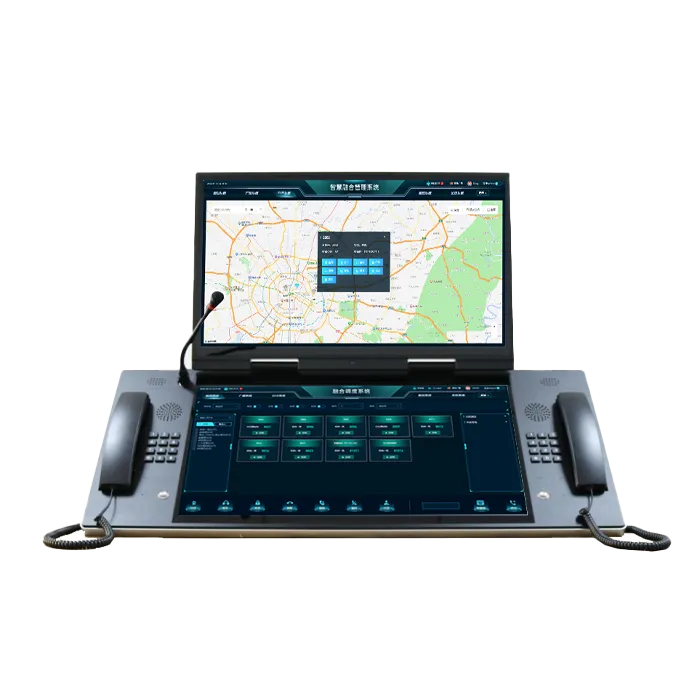
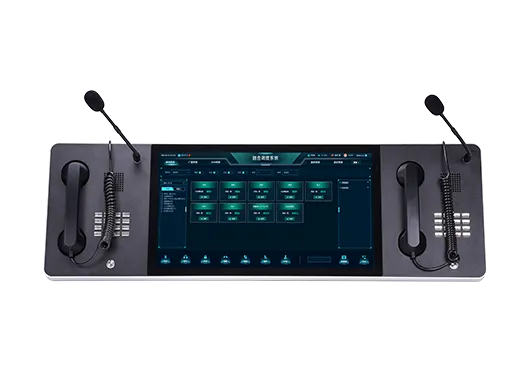
The nurse station console is the main management point for many installations. It receives calls, displays room information, supports acknowledgement, and may allow voice communication with rooms or duty endpoints.
The console should be placed where nurses can monitor it easily without interfering with normal care tasks. The screen, tone, and operation method should be clear enough for fast use during busy shifts.
SIP intercom and duty-room endpoints
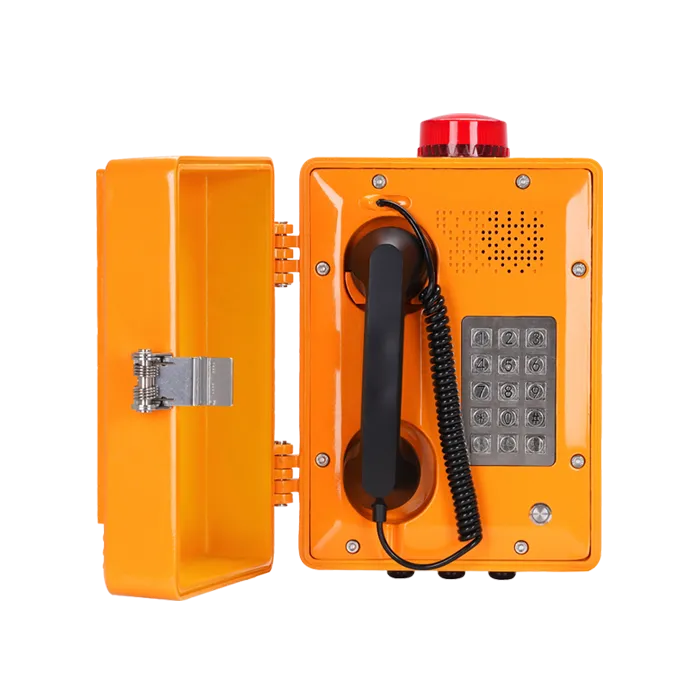
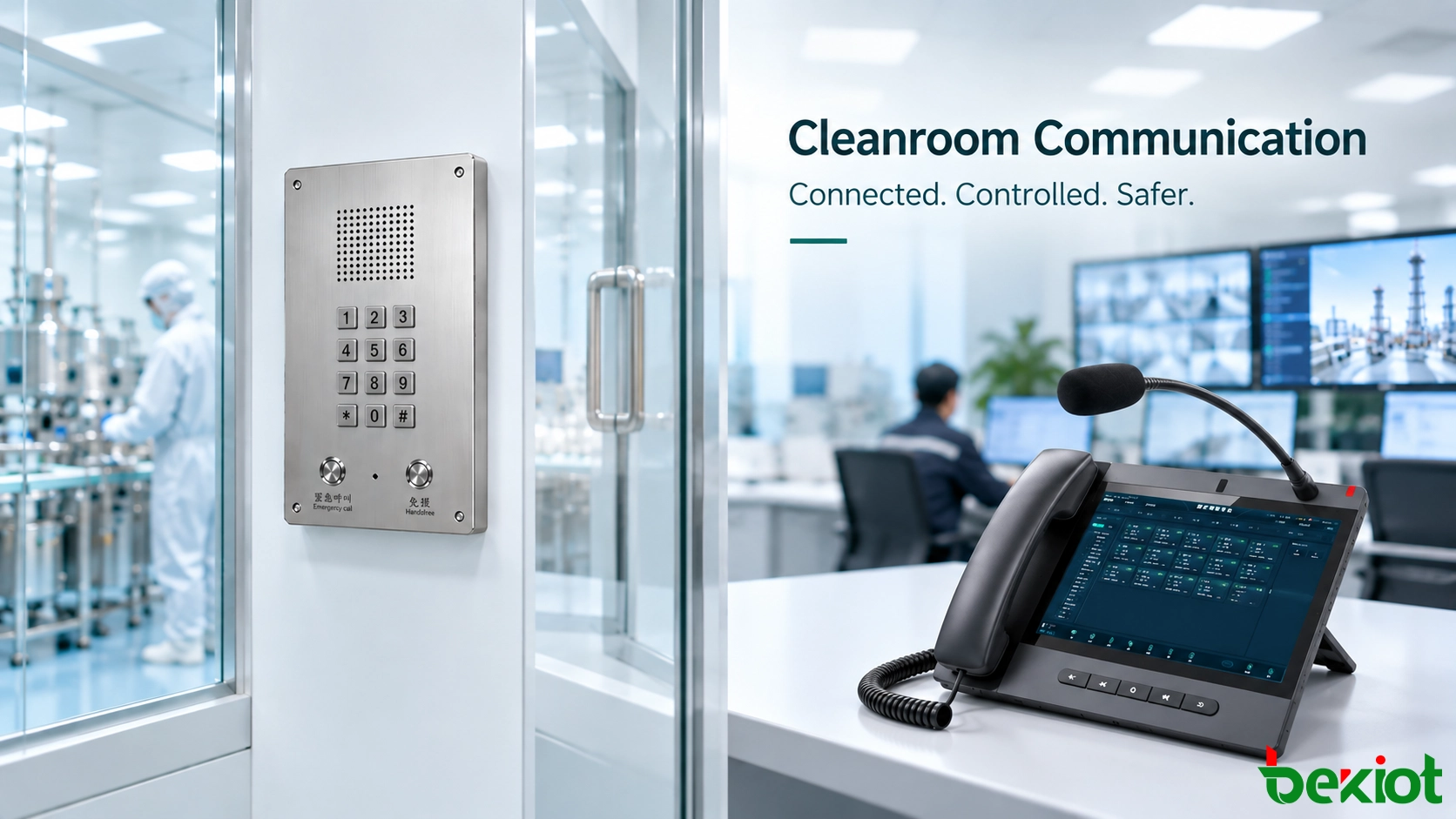
In hospitals that use IP-based communication, SIP endpoints can support internal voice coordination. A nurse station may use a SIP desk terminal. A duty room may receive routed calls. A compact SIP intercom may be installed at a help point, treatment support space, controlled entrance, or service counter.
Becke Telcom products can fit into this type of deployment when the project requires SIP voice communication, duty-room coordination, help-point intercom, or future connection with a wider hospital communication system.
How the System Works in Daily Operation
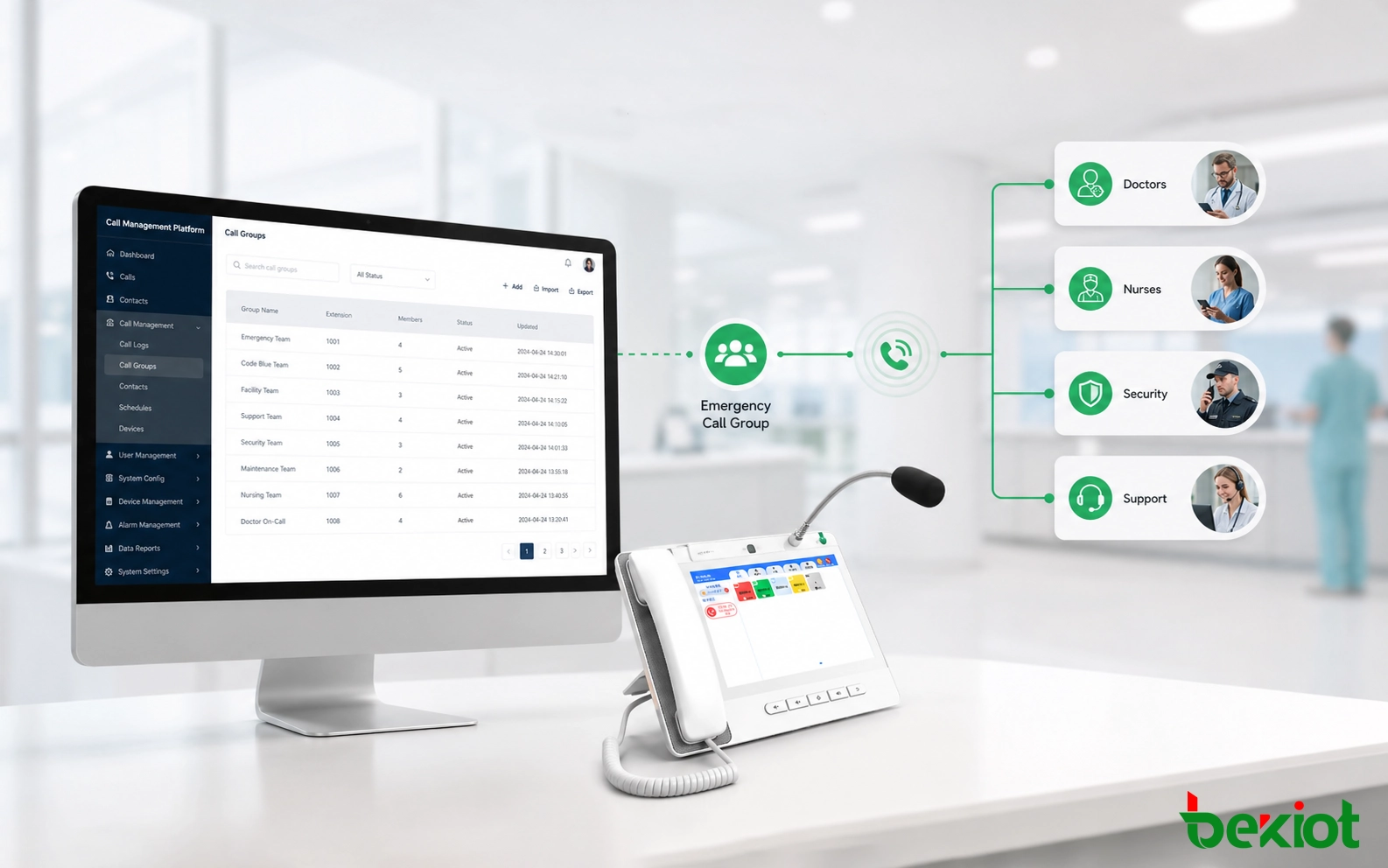
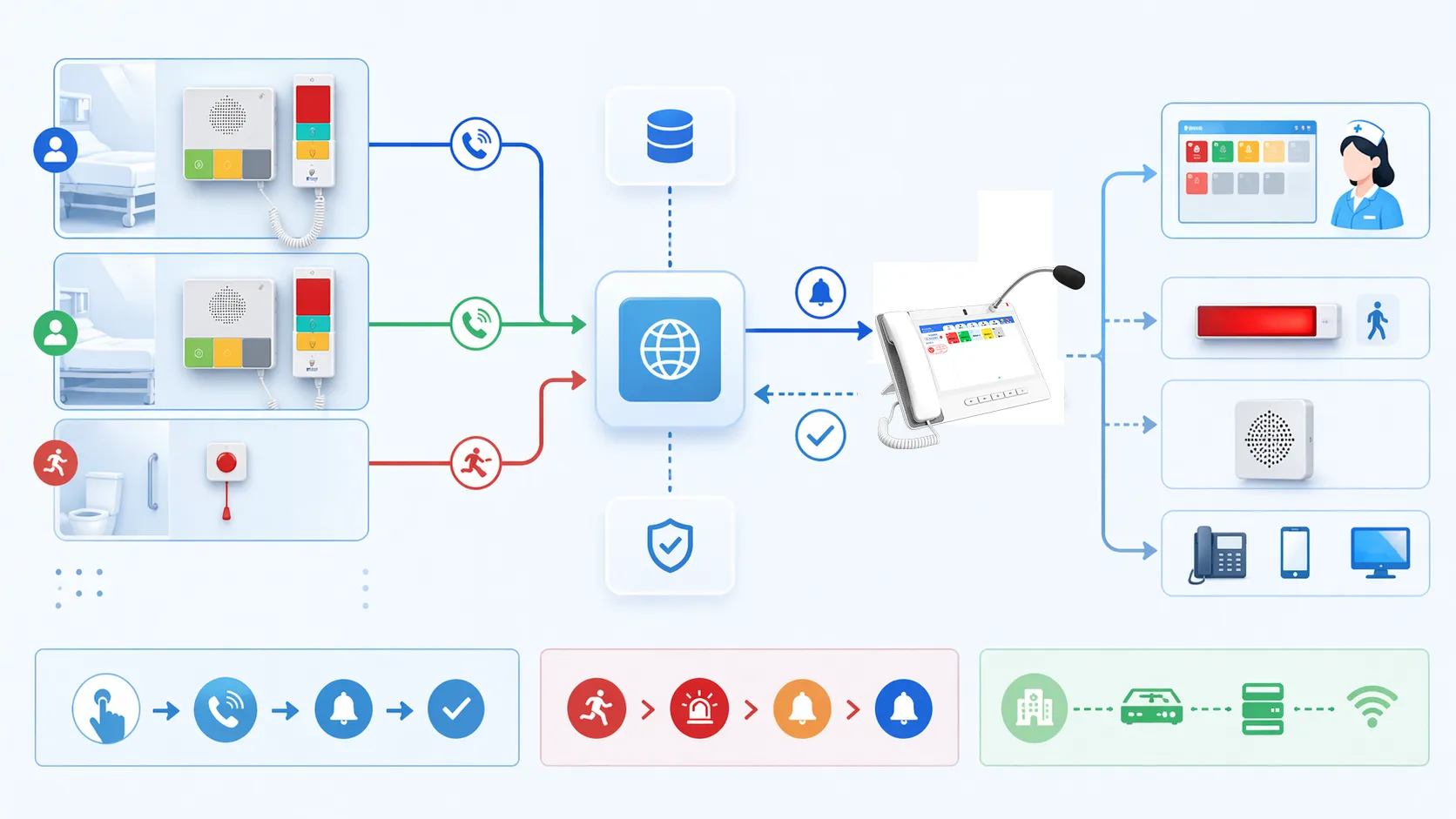
A typical workflow starts when a patient or staff member activates a call point. The signal is sent through the system and appears at the nurse station, duty desk, corridor indicator, or assigned communication endpoint. Staff can then acknowledge the call and respond according to the call type.
If the system supports audio, the nurse station may speak with the patient or room before sending someone. This helps confirm whether the request is routine, urgent, or related to a specific care task. If the call is not answered within a set time, escalation can send it to another station, duty phone, or supervisor point.
In a more integrated installation, call events may work together with SIP phones, paging, security desks, or internal communication platforms. This can help larger hospitals manage calls across departments, buildings, and duty teams more effectively.
IP-based hospital call system design can connect patient call devices, nurse station consoles, corridor indicators, and SIP communication endpoints through a more flexible network architecture.
Installation Planning Should Start with Workflow
Good installation starts before hardware is mounted. The project team should first understand where calls will originate, who should receive them, which calls need priority, and what should happen if the first response point is busy.
Different hospital areas have different needs. A general ward may focus on bedside call buttons, corridor lights, and nurse station displays. A rehabilitation unit may require more bathroom emergency coverage. An emergency observation area may need faster escalation and clearer duty-room alerts. A treatment area may need staff assist functions and two-way voice communication.
If workflow is not mapped first, the system may work technically but still feel awkward for staff. In healthcare communication, usability is just as important as device specification.
Wiring, Network, and Placement Considerations
The installation method depends on the system architecture. Traditional systems may use dedicated wiring, while modern IP-based systems may use structured cabling, network switches, and PoE where supported. Network design should consider stability, power, addressing, VLAN, QoS, and future expansion.
Device placement should follow clinical use. Bedside controls must be reachable. Bathroom pull cords should be accessible in realistic emergency positions. Corridor indicators should be visible from normal staff movement paths. Nurse station terminals should be placed where they can be monitored consistently.
Audio devices also require careful planning. Speaker and microphone placement should consider privacy, ambient noise, and room layout. A voice-enabled system is only useful when staff and patients can understand each other clearly.
Testing, Training, and Maintenance
Installation is not complete when the devices are powered on. Every call point, emergency trigger, indicator light, nurse station console, duty endpoint, and escalation path should be tested under real workflow conditions. Room names, bed labels, priority levels, and response rules must be checked carefully.
Staff training is equally important. Nurses, duty staff, supervisors, and maintenance teams should know how to identify call types, acknowledge calls, respond to emergency alerts, clear events, and report device problems. Without training, even a well-designed system may not deliver its full value.
Ongoing maintenance should include routine function checks, device cleaning review, cable inspection, power and network checks, software or firmware updates where applicable, and periodic review of routing logic. Hospitals change over time, and the call system should continue to match actual care workflows.
A hospital call system is successful only when installation quality, response logic, staff training, and maintenance all work together.
Where Becke Telcom Fits in Hospital Call Projects
Becke Telcom can support hospital call projects where the requirement extends beyond a basic buzzer-and-light system. In installations that need SIP-based voice communication, nurse station duty endpoints, help-point intercoms, internal coordination, or future IP integration, communication-oriented devices can add practical value.
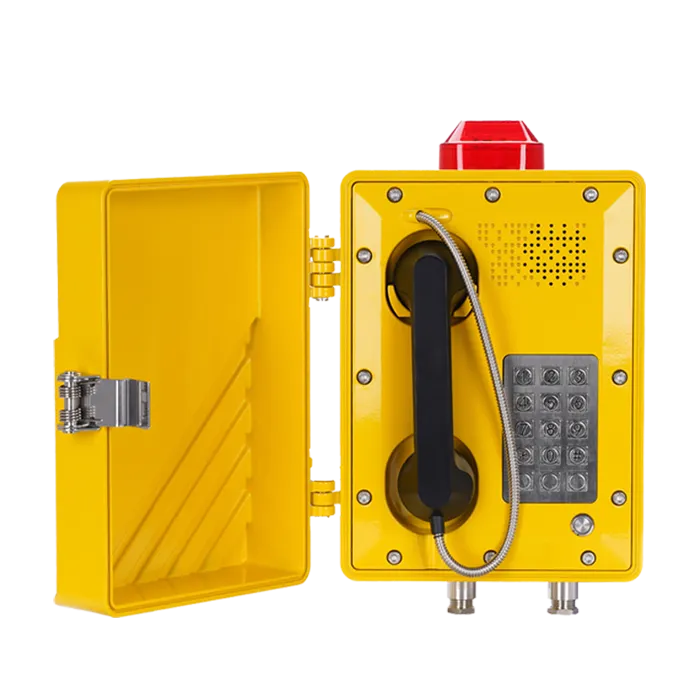
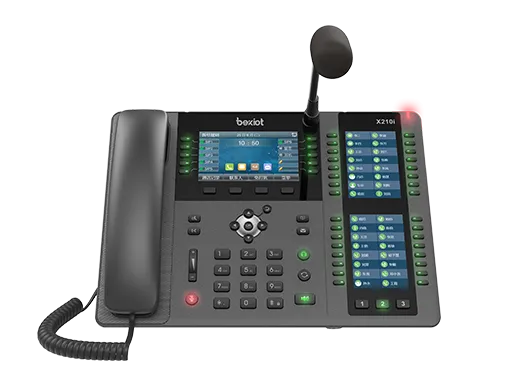
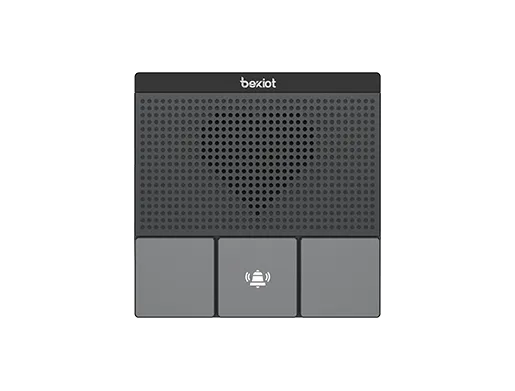
For example, the Becke Telcom GP320i can be used as a practical desk communication endpoint for nurse stations, duty rooms, or internal coordination points. The Becke Telcom BHP-SOS10 SIP mini intercom can be considered for compact help-point or emergency communication applications in treatment support spaces, service counters, controlled access areas, or public-facing healthcare zones.
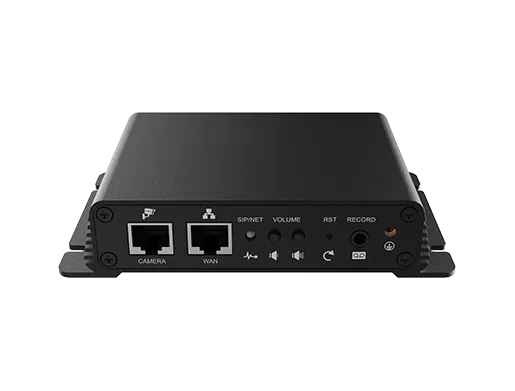
Becke Telcom SIP gateways, intercom devices, and server platforms may also support projects where hospital call functions need to connect with internal voice systems, paging, duty rooms, or multi-building communication. The goal is not to replace clinical workflow planning, but to help build a communication layer that is more flexible and easier to expand.
Choosing the Right Hospital Call System
The right system should be selected according to care workflow, department layout, patient risk, response procedure, and future integration needs. A small clinic may not need the same design as a large inpatient ward. An emergency department has different priorities from a rehabilitation area. A new hospital building may benefit from IP-based planning, while an older ward renovation may need a phased approach.
Buyers should consider call types, device placement, nurse station visibility, emergency priority, two-way audio, corridor indication, call logging, network reliability, maintenance access, and compatibility with existing communication systems. A hospital call system should be evaluated as a complete response workflow, not only as a list of devices.
Final Notes
Hospital call system installation is about more than putting buttons beside beds. It is a structured communication project that affects patient safety, staff response, daily workflow, and care coordination. A good system helps people request help clearly, helps staff recognize urgency, and helps the hospital organize response more reliably.
The best installations begin with workflow analysis, continue through careful device placement and network planning, and finish with testing, staff training, and long-term maintenance. As healthcare communication becomes more IP-based, SIP integration and internal voice coordination are also becoming more relevant.
Becke Telcom can support hospital communication projects where nurse stations, duty rooms, help points, SIP intercom, paging, and future system integration need to work together in a practical architecture.
FAQ
What is the main purpose of a hospital call system?
The main purpose is to allow patients or staff to request assistance and route that request to the correct nurse station, duty room, or response team quickly and reliably.
What devices are usually included in a hospital call system?
Common devices include bedside call buttons, bathroom emergency pull cords, room terminals, corridor indicator lights, nurse station consoles, duty-room endpoints, and in some projects SIP intercom or IP communication devices.
Can a hospital call system support two-way voice communication?
Yes. More advanced systems can support two-way audio between patient rooms, nurse stations, duty rooms, or SIP endpoints, helping staff confirm the request before responding.
Why is installation planning important?
Installation planning determines whether call points are reachable, alerts are routed correctly, emergency calls are prioritized, and staff can use the system naturally during real care work.
How can Becke Telcom support hospital call system projects?
Becke Telcom can provide SIP communication terminals, intercom devices, gateways, and related communication solutions for projects that need nurse station voice coordination, help-point communication, paging linkage, or wider IP-based integration.