Industrial Telephones for Harsh Environments and Critical Communication
Industrial telephones help harsh environments maintain clear, fast, and reliable communication for tunnels, highways, wind farms, utility corridors, factories, and other critical infrastructure sites.
Becke Telcom
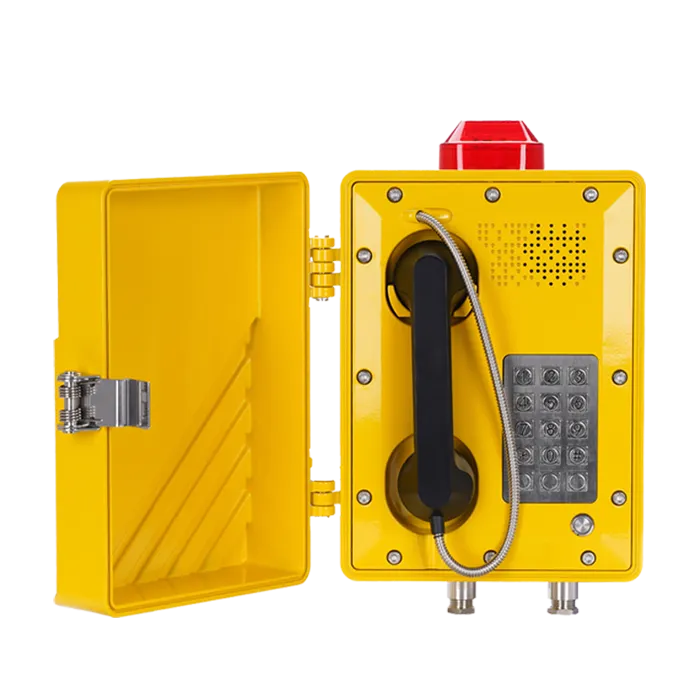
In harsh industrial environments, communication equipment must do more than support a basic voice call. It needs to remain reliable in noise, dust, moisture, vibration, temperature changes, and physically demanding operating conditions. This is why industrial telephones are widely used in tunnels, highways, wind farms, utility corridors, factories, and other critical sites where fast and clear communication directly affects safety and operational continuity.
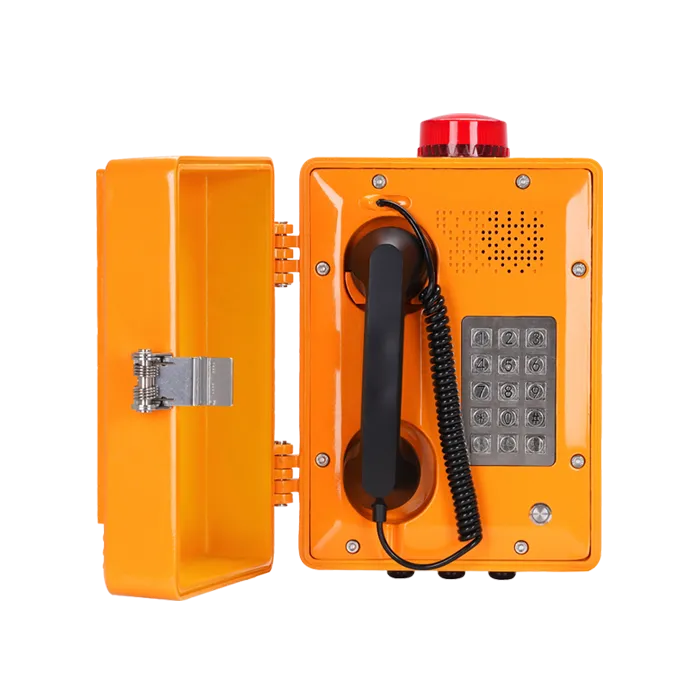
At Becke Telcom, an industrial telephone is viewed as a field-ready communication endpoint built for real industrial use. It is not an ordinary office phone placed inside a stronger housing. It is a purpose-designed device for emergency assistance, routine coordination, centralized management, and integrated communication workflows in locations where standard telephony equipment is not suitable.
In demanding environments, reliable communication is part of the infrastructure, not an optional convenience.
Why Harsh Environments Need Industrial Telephones
Ordinary communication devices are not enough
Industrial and infrastructure sites create communication challenges that normal commercial phones are not designed to handle. Wind farms may face strong wind, sand, humidity, lightning exposure, and large temperature differences. Highways and tunnels often involve high noise, long coverage distances, and urgent response needs. Utility corridors may include narrow spaces, distributed equipment, echo, and limited access for maintenance.
In these environments, communication failure can create more than inconvenience. It can delay emergency response, slow down maintenance, increase risk for field personnel, and reduce the control room’s ability to understand what is happening on site. Industrial telephones are selected because the environment is difficult, the communication task is important, and the cost of poor communication can be high.
A suitable industrial telephone should therefore provide more than a stable call path. It should support faster reporting, clearer coordination, and stronger connection between field personnel and the control center.
Fast voice access supports safety and operation
In many harsh environments, the communication point is part of the site’s response process. A worker may need immediate assistance from a remote position. A driver may need roadside help. A maintenance team may need to report equipment status from a tunnel or utility corridor. A control room operator may need to speak to a field point while checking video or dispatching additional staff.
This is why one-touch calling, hands-free operation, clear audio, and direct routing to a monitoring or dispatch center are important. The same endpoint may support routine maintenance communication during normal operation and urgent incident handling when abnormal conditions occur.
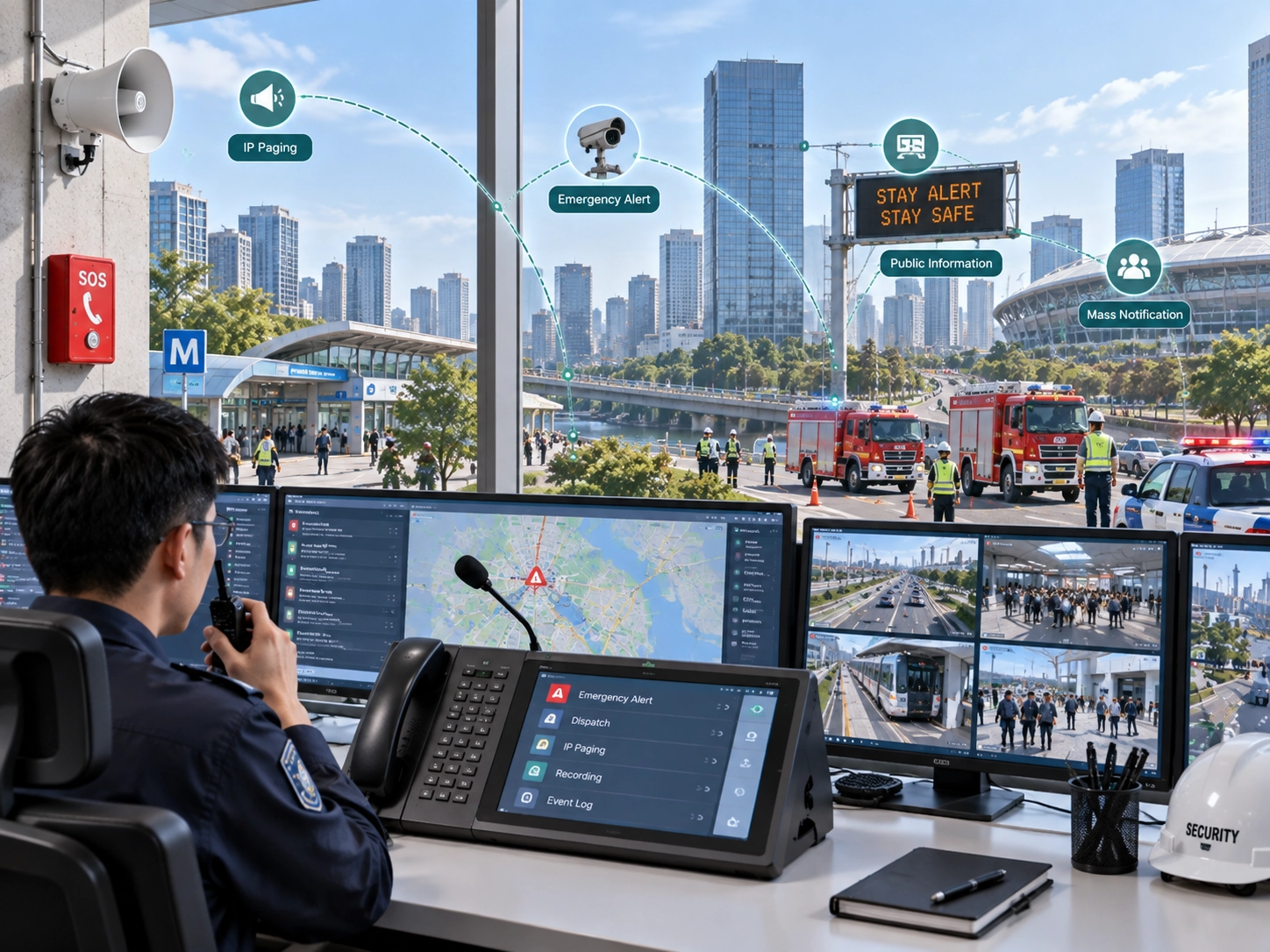
When industrial telephones are deployed as part of a wider communication solution, they can also work with paging, video monitoring, wireless radio coordination, SIP platforms, and dispatch systems. This turns a single field device into part of a complete communication workflow.
Becke Telcom industrial telephones are designed for infrastructure environments where reliable field communication is essential.
What Makes a Good Industrial Telephone
Clear audio in noisy and echo-prone spaces
Audio performance is one of the most important factors when selecting an industrial telephone. Harsh environments are often noisy, and some enclosed infrastructure areas create echo or reverberation that makes speech harder to understand. Tunnels, highways, wind power sites, and utility corridors all require stronger voice clarity than a normal office environment.
Wideband voice, echo cancellation, hands-free stability, and background noise reduction can all improve real communication quality. These functions should not be treated only as product specifications. In actual use, they help operators understand speech with fewer repetitions, make faster decisions, and communicate more confidently under stress.
For industrial communication, clear audio is not a decorative feature. It directly affects whether field staff and control room operators can communicate effectively when the environment is already working against them.
Stable performance in distributed installations
Harsh industrial sites are often spread across large areas. Communication endpoints may be installed along highways, inside tunnel sections, across utility corridors, near wind turbines, in plant zones, or at unmanned outdoor access points. The device must operate reliably not only at one location, but across the full site layout.
This makes durability, stable operation, environmental suitability, and serviceability essential. A strong industrial telephone should reduce weak points in the communication system instead of becoming a maintenance burden. For remote or distributed infrastructure, dependable field equipment can also reduce unnecessary site visits and improve overall communication availability.
Becke Telcom recommends selecting industrial telephones based on real field conditions rather than applying office telephony assumptions to industrial projects.
Integration with SIP, dispatch, paging, and video
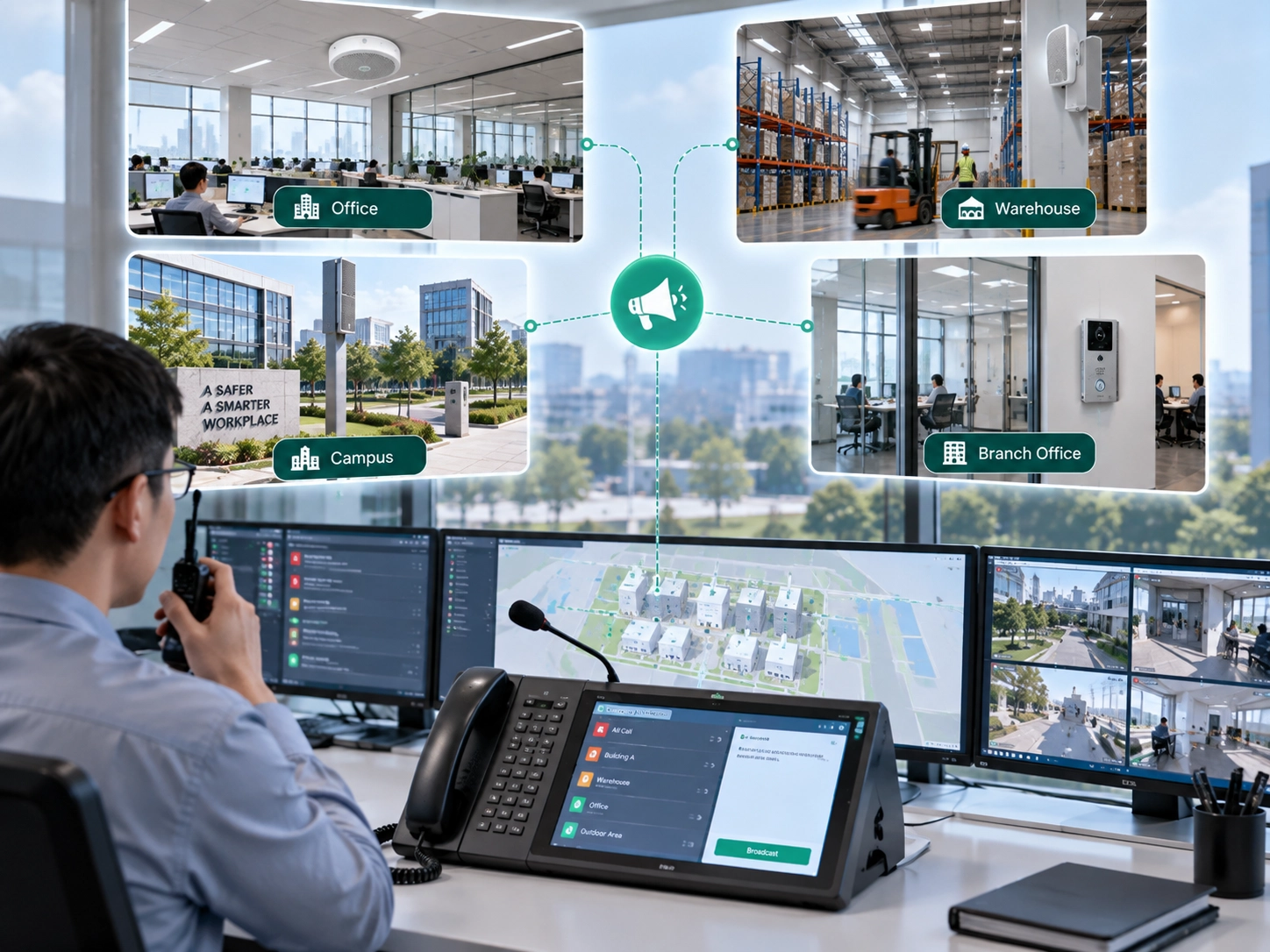
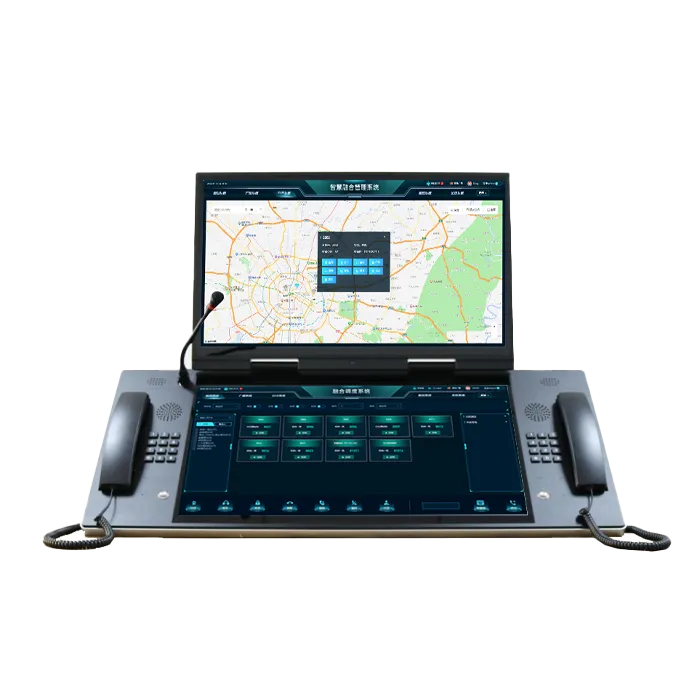
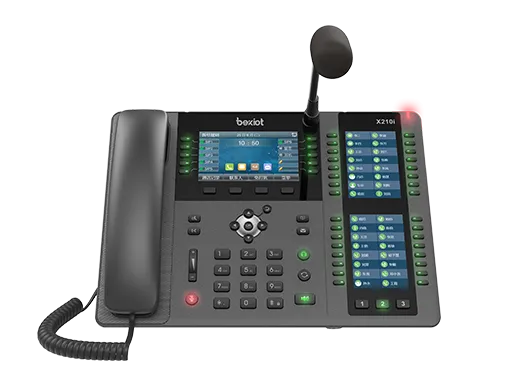
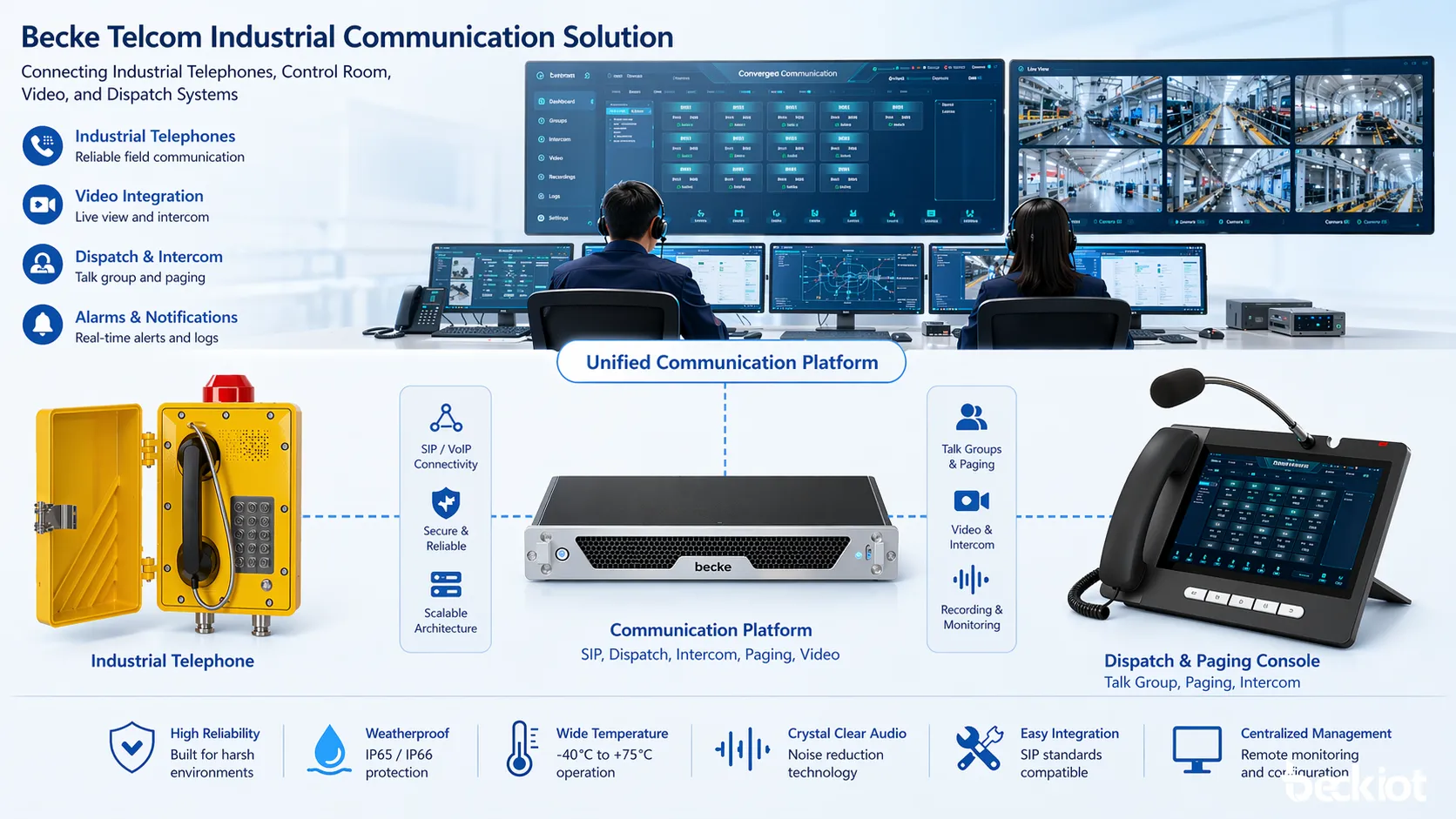
Modern industrial telephones create greater value when they are integrated into a larger communication architecture. In many projects, the field endpoint needs to connect with SIP servers, IP PBX platforms, dispatch consoles, paging systems, CCTV linkage, mobile staff, alarm inputs, and radio interoperability.
A well-designed solution should therefore support more than a basic call. A field call may trigger a control room response, camera verification, group notification, paging broadcast, or escalation to mobile teams. This is especially important in industrial and public infrastructure projects where communication rarely happens in isolation.
Becke Telcom focuses not only on endpoint products, but also on how those products work inside integrated industrial communication systems. This helps customers build solutions that are easier to manage, easier to expand, and more practical for real operating environments.
Industrial telephones become more effective when integrated with SIP, dispatch, video, paging, and centralized management systems.
Typical Applications
Tunnels, highways, and roadside emergency points
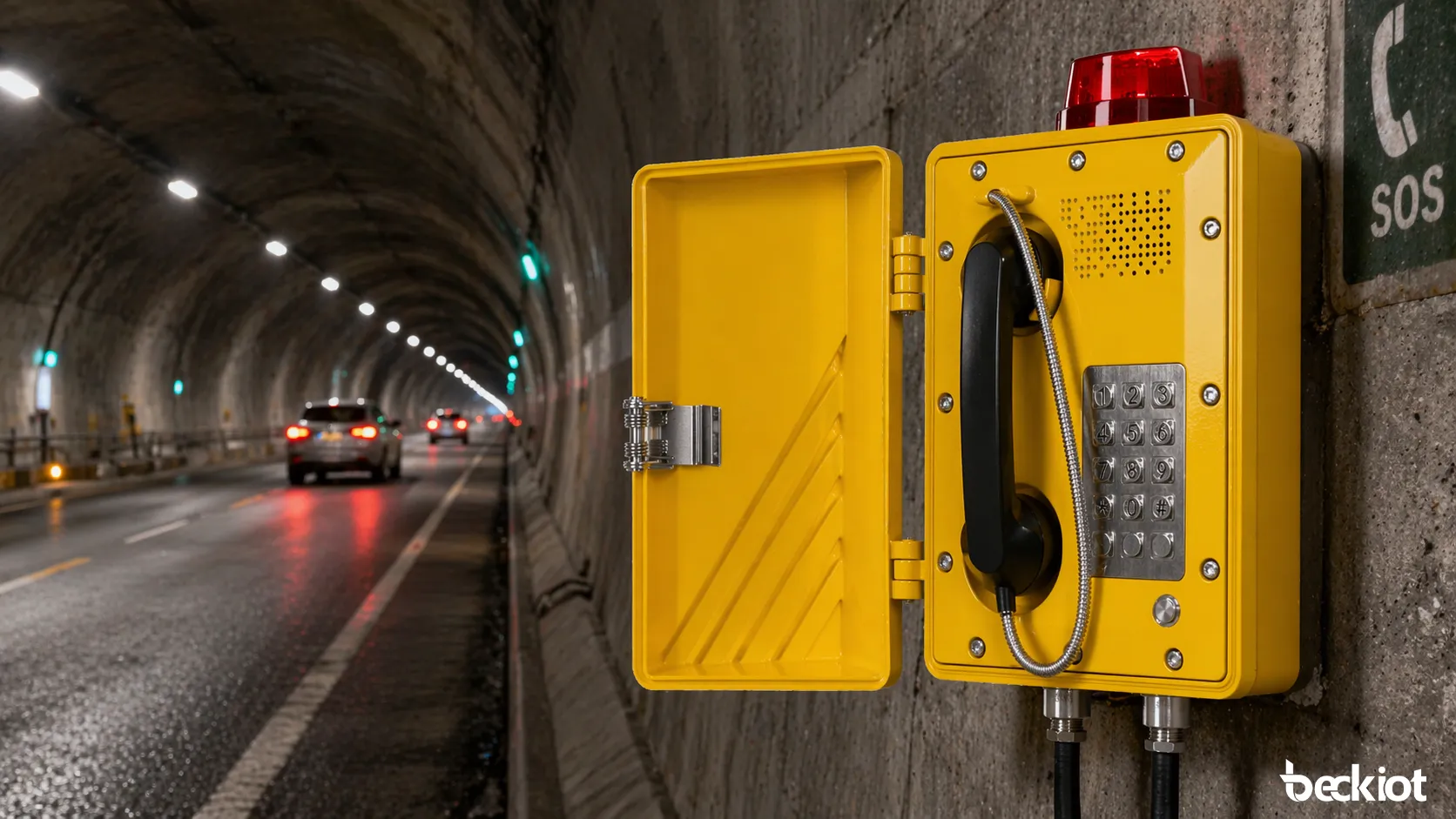
Tunnels and highways are typical applications for industrial telephones. These environments combine high noise, long distances, exposure to weather or operational stress, and a clear need for immediate communication. When an incident occurs, users need a direct way to reach the control room or monitoring center.
Industrial telephones can support one-touch help requests, two-way conversation, roadside assistance, staff communication, and coordinated response through centralized platforms. In tunnel applications, reliable communication is especially important because incidents can escalate quickly and operators need clear information from the scene.
For these projects, the industrial telephone is not only a call device. It is a visible and dependable access point between the field and the response center.
Utility corridors and underground infrastructure
Utility corridors require communication points that can operate across long and distributed installations. These environments may include narrow spaces, many connected devices, limited access, echo, and complex infrastructure layouts. Ordinary hands-free communication can become difficult if the device is not designed for the acoustic and operational conditions.
An industrial telephone provides a fixed and reliable communication point near critical infrastructure. It can support maintenance reporting, emergency escalation, fault response, and real-time coordination with the monitoring center.
When connected with video and dispatch tools, the telephone becomes more than a voice endpoint. It becomes part of a practical infrastructure communication node that helps operators manage events more efficiently.
Wind farms and remote energy facilities
Wind farms and remote energy sites bring together distributed geography, environmental exposure, and operational distance. Strong wind, humidity, sand, lightning, and temperature changes can all place pressure on communication equipment. In these projects, reliability and environmental suitability are essential.
Industrial telephones help connect turbine areas, field staff, offices, and monitoring centers. They can also work as part of a wider system that includes video, wireless personnel coordination, SIP communication, and centralized call handling.
For large-area energy projects, field teams may be far from the office or control room. A dependable industrial telephone helps keep communication efficient even when the site is remote and operating conditions are difficult.
The right industrial telephone should do more than survive the environment. It should improve how the site communicates every day.
Remote energy sites need industrial telephones that support dependable communication in exposed and demanding conditions.
How to Choose the Right Industrial Telephone
Start with the real site conditions
The best selection process begins with the site itself. Is the location noisy, remote, exposed, or echo-prone? Will the endpoint be used for emergency calling, routine coordination, or both? Does the user need hands-free communication, fast access, or centralized control room integration? Is the telephone part of a single point deployment or a wider multi-point system?
Different sites create different priorities. Highway and tunnel projects may focus on immediate assistance and control room linkage. Utility corridors may require clarity in confined spaces and reliable long-distance deployment. Wind farms may prioritize stable operation in exposed environments and coordination across remote field points.
A good industrial telephone choice should match the real communication pattern of the site, not just the general product category.
Plan integration from the beginning
Industrial communication systems increasingly depend on integration. A telephone that works as a standalone device but does not fit well with SIP platforms, IP PBX systems, dispatch software, paging, video, or radio coordination may limit the value of the whole project.
Open architecture and system compatibility should therefore be considered early. This makes the system easier to scale, easier to manage, and easier to connect with broader workflows such as alarm response, video verification, paging announcements, and mobile team coordination.
Becke Telcom recommends selecting industrial telephones as part of a complete communication solution strategy rather than treating them as isolated hardware items.
Focus on clarity, speed, and manageability
In harsh environments, the most valuable features are often the most practical ones. Clear speech, fast call access, dependable routing, centralized management, and smooth integration usually matter more than unnecessary feature lists.
A strong industrial telephone should help users communicate faster, help operators understand the situation more clearly, and keep the site reachable when communication matters most. It should also be easy to deploy, maintain, and integrate into the site’s actual operating environment.
Why Becke Telcom Fits Harsh-Environment Projects
Becke Telcom provides industrial communication products and integrated solutions for demanding applications. The company focuses on field communication endpoints, SIP-based system integration, paging, dispatch, video linkage, and centralized management for critical infrastructure and industrial environments.
This approach is useful for customers who need more than a single rugged phone. In tunnels, highways, wind farms, utility corridors, factories, and other critical sites, communication devices should work together with the wider system to support safer, faster, and more organized response.
By combining industrial telephone hardware with system-level communication design, Becke Telcom helps customers build more reliable and practical communication environments for real-world operations.
Conclusion
An industrial telephone for harsh environments should be understood as a critical communication endpoint for infrastructure and industrial operations. It supports safety, improves coordination, and helps maintain reliable voice access where ordinary devices fall short.
Whether the application is a tunnel, highway, wind farm, utility corridor, factory, or exposed outdoor facility, the communication requirement is the same: dependable voice access when the environment is difficult and the task matters.
Looking for the right industrial telephone solution for your site? Contact Becke Telcom to discuss your application, deployment environment, and communication requirements.
FAQ
What is an industrial telephone used for?
An industrial telephone is used for reliable voice communication in harsh or critical environments such as tunnels, highways, factories, utility corridors, wind farms, and outdoor infrastructure sites.
How is an industrial telephone different from an office phone?
An industrial telephone is designed for field conditions such as noise, dust, moisture, vibration, temperature changes, and emergency use. It is built for operational reliability rather than normal desk communication.
Why is audio quality important in harsh environments?
Noise, echo, wind, machinery, and confined spaces can make speech difficult to understand. Clear audio helps users communicate faster and reduces mistakes during maintenance or emergency response.
Can industrial telephones connect with SIP and dispatch systems?
Yes. Modern industrial telephones can be integrated with SIP platforms, IP PBX systems, dispatch consoles, paging systems, video monitoring, alarm linkage, and mobile communication workflows.
What should be considered before choosing an industrial telephone?
Key factors include site environment, noise level, emergency workflow, mounting method, SIP compatibility, integration needs, audio clarity, manageability, and long-term maintenance requirements.