Shipborne Audio-Video Command Systems for Maritime Operations
A practical guide to shipborne audio-video command systems for maritime rescue, patrol vessels, offshore platforms, and fleet operations, covering SIP dispatch, video meetings, onboard surveillance, satellite links, HDMI access, radio gateways, broadcasting, and vessel-to-shore coordination.
Becke Telcom
Large vessels, emergency rescue ships, offshore platforms, patrol boats, port operation vessels, and marine fleets often carry many independent communication and information systems. Onboard cameras, radios, satellite phones, radar displays, weather systems, public address equipment, vessel operation data, drones, underwater robots, video meeting terminals, and shore-side command platforms may all work separately.
When these resources are isolated, the command team has to switch between different devices and screens during daily operation or emergency response. This slows down decision-making and makes it harder to share information between the bridge, engine room, deck teams, rescue units, nearby vessels, and shore-side command centers.
A shipborne audio-video command system is designed to solve this problem. It connects voice, video, monitoring, display, recording, satellite communication, radio access, broadcasting, and vessel-to-shore collaboration into one coordinated maritime command workflow. The goal is not simply to install a land-based command platform on a ship. A practical solution must match maritime network conditions, limited onboard space, satellite bandwidth, vessel movement, multi-vessel cooperation, and real-time command requirements.
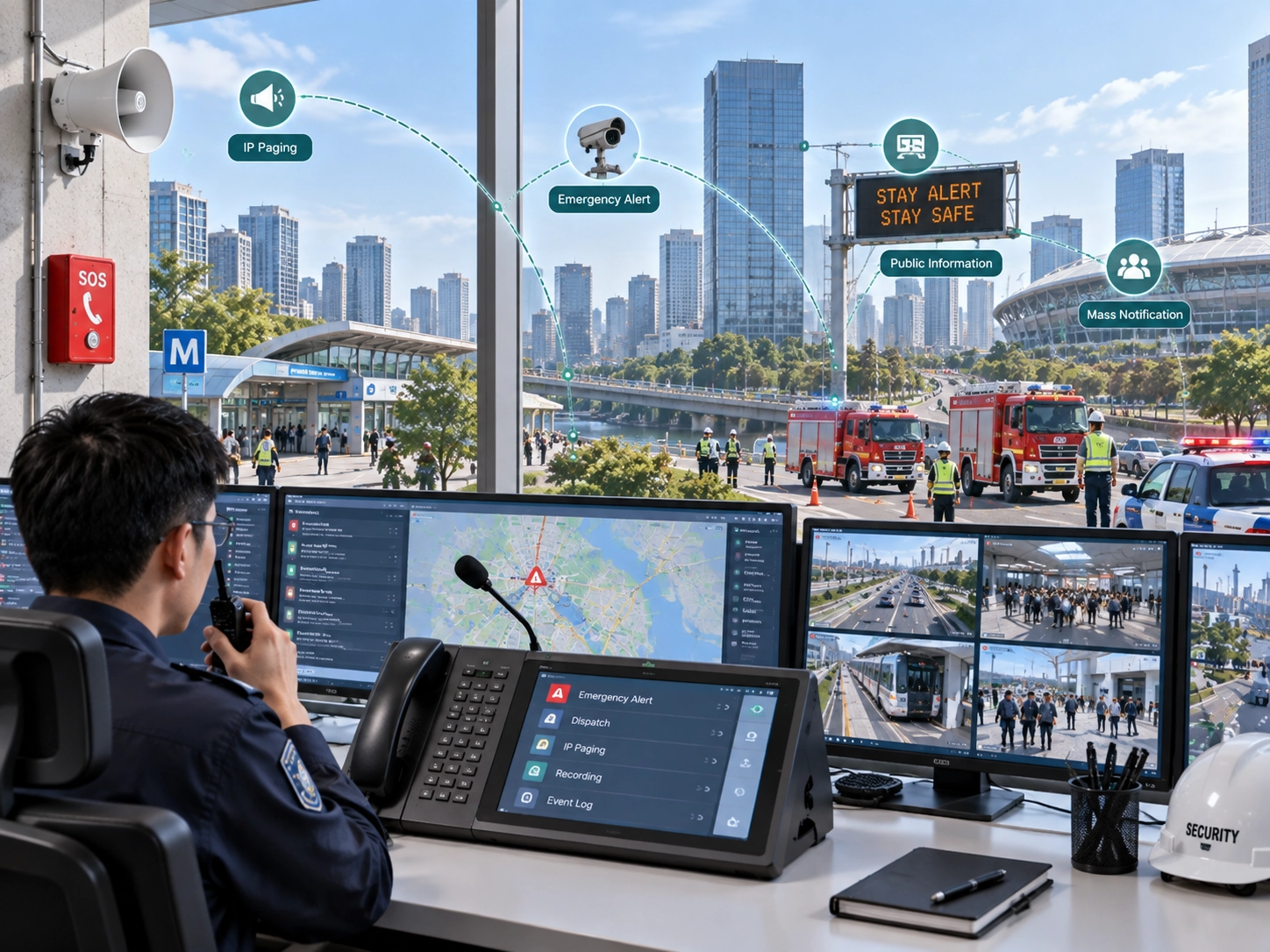
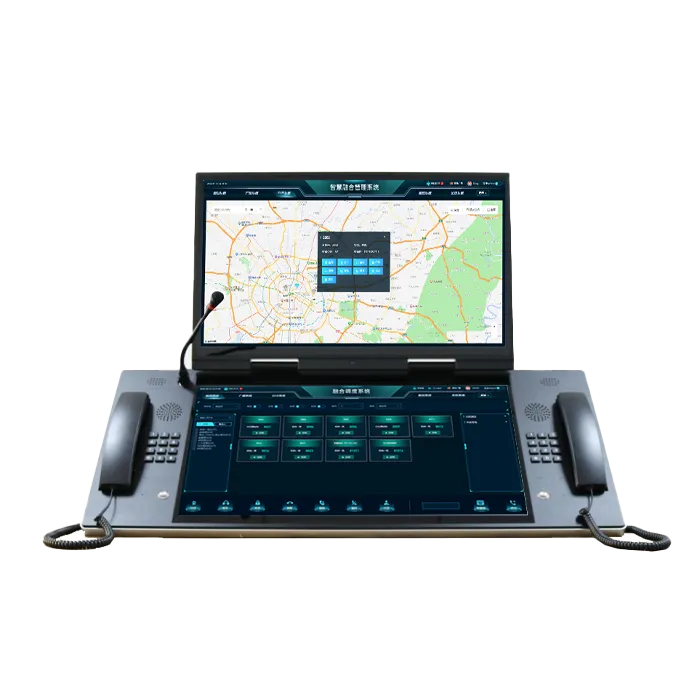
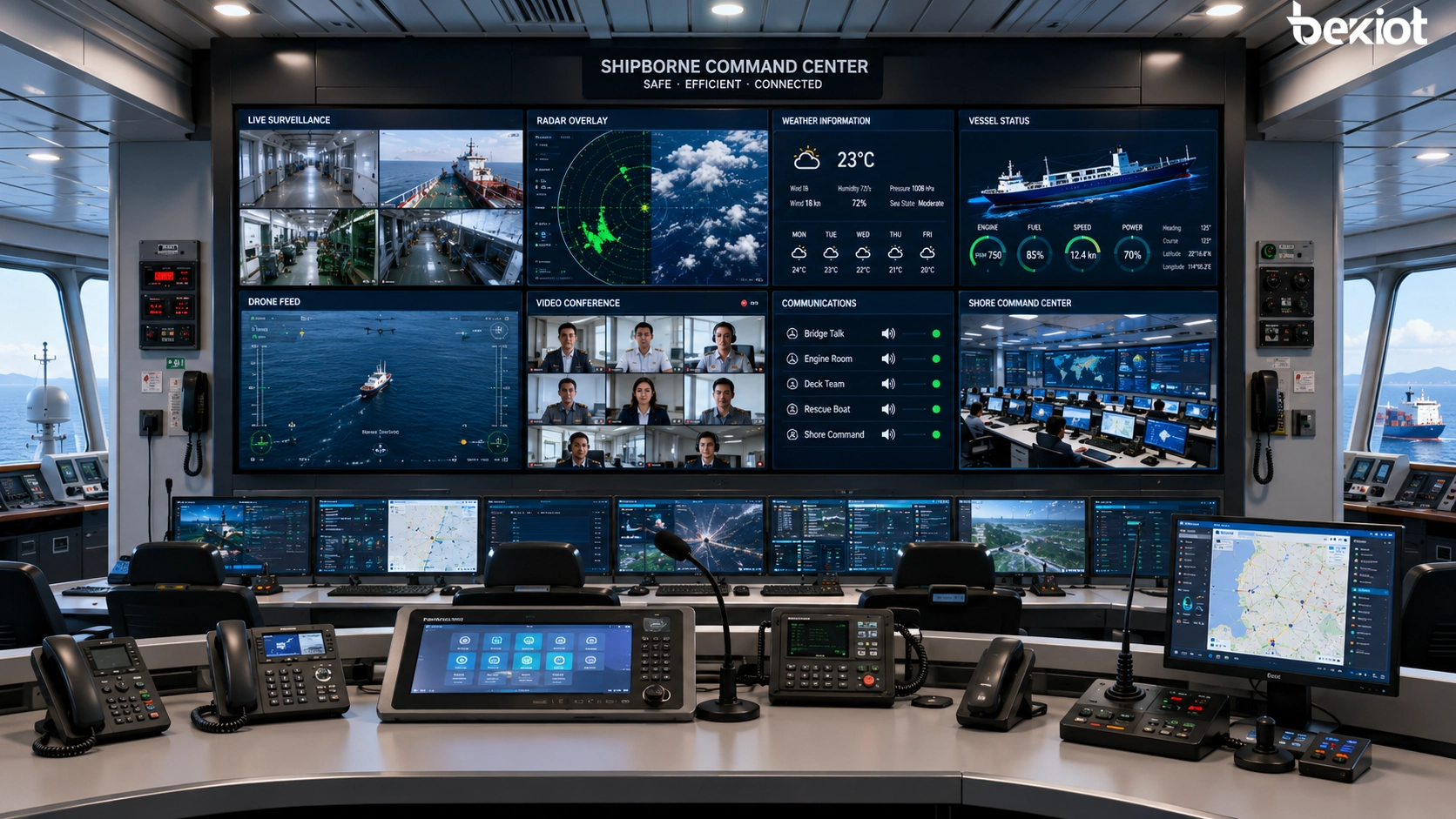
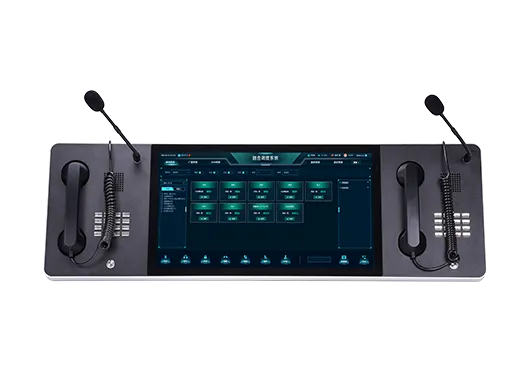
A shipborne command center brings onboard communication, video resources, data displays, satellite links, and shore-side coordination into one operational workflow.
From Separate Devices to an Onboard Command Hub
A vessel is a mobile and space-limited operating environment. Compared with a fixed building, it has more restrictions in equipment layout, cabling, maintenance access, power supply, network stability, and environmental protection. Different departments on board may also have different communication needs, from bridge command and deck operations to machinery monitoring and emergency response.
In a traditional setup, one vessel may use an IP PBX for voice, a video conference terminal for meetings, an NVR for surveillance, a decoder or matrix for display walls, a recorder for evidence storage, satellite phones for external communication, and separate gateways for radio or PA broadcasting. Each subsystem may work, but the overall structure becomes heavy and difficult to operate.
An integrated audio-video command platform reduces this fragmentation. It can combine SIP communication, dispatch control, video meetings, monitoring access, HDMI input and output, recording, streaming media processing, large-screen display, satellite phone access, radio gateway access, and broadcast linkage in a more compact architecture. This makes the onboard command room easier to build, operate, and maintain.
SIP Communication for Onboard Dispatch
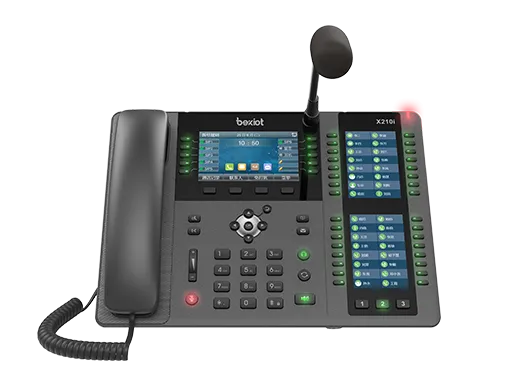
SIP is an important foundation for modern shipborne command systems. When the platform includes a built-in SIP server, it can support onboard voice communication without always requiring a separate IP PBX. IP phones, industrial telephone stations, emergency call terminals, video phones, intercom devices, and dispatch consoles can register to the same system.
This allows operators in the bridge or command room to call cabins, engine spaces, deck work areas, duty rooms, technical rooms, and field positions from one dispatch environment. During an emergency, SIP communication can also work with paging, video dispatch, recording, and shore-side collaboration.
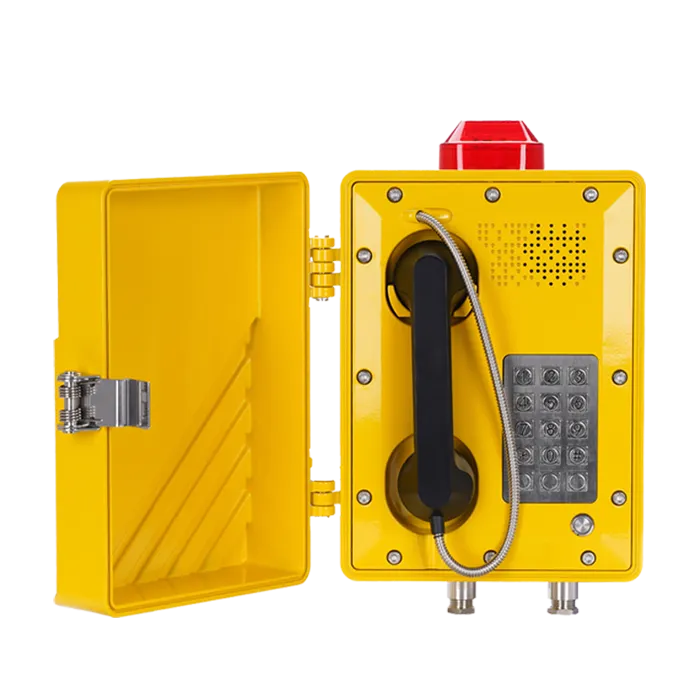
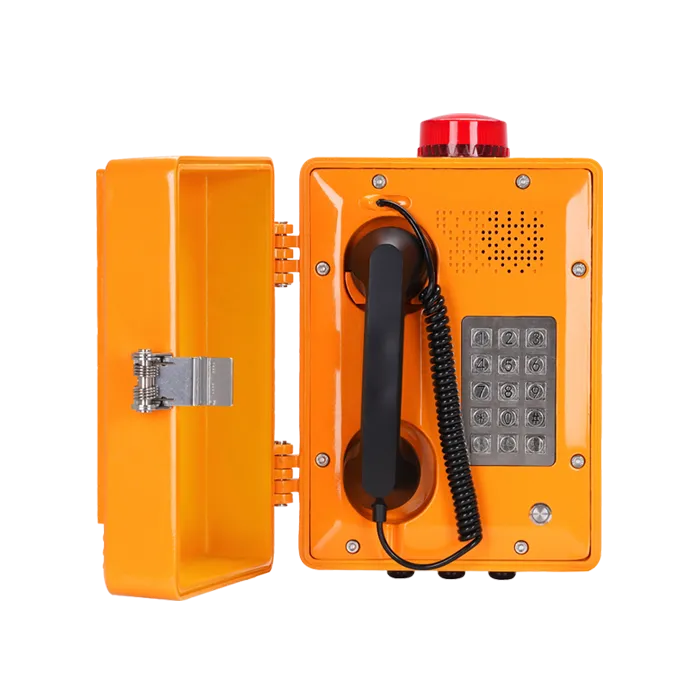
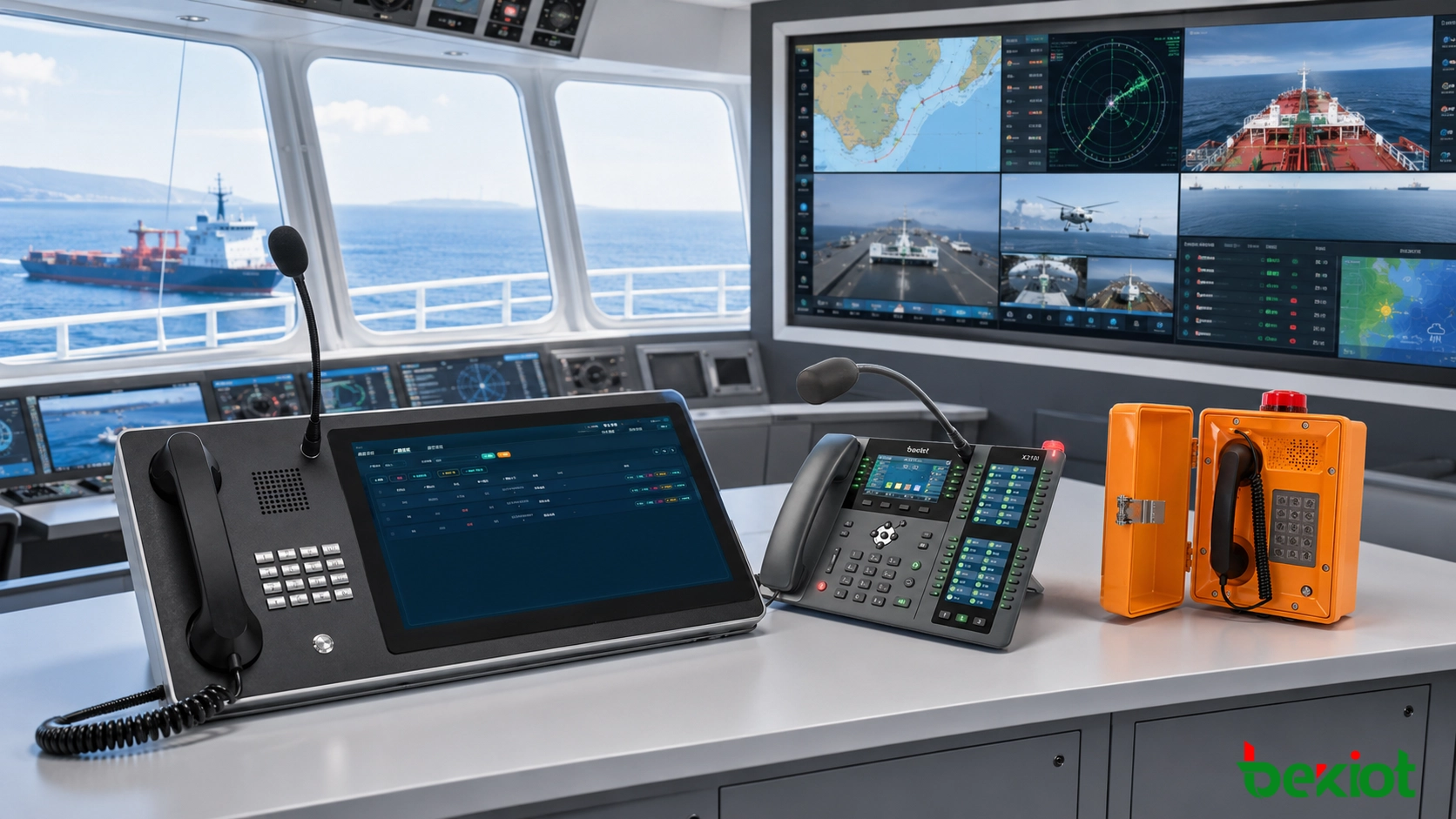
For marine and industrial environments that need rugged endpoints, Becke Telcom SIP phones, industrial telephones, emergency call stations, VoIP gateways, and broadcast-related terminals can be used as part of the endpoint layer. This helps extend the command system from the control room to harsh onboard, dockside, or offshore environments.
Video Meetings for Vessel-to-Shore Collaboration
Maritime command often requires collaboration beyond the vessel itself. Rescue ships may need to connect with shore-side command centers. Patrol boats may need support from headquarters. Offshore platforms may need remote expert consultation. Fleet operations may require communication between multiple vessels and land-based operation centers.
A conventional video conference terminal can support meetings, but it is usually limited when the command team needs to combine meeting video with surveillance images, drone feeds, SIP video calls, radar data, or onboard operation screens. A shipborne command platform with built-in MCU capability can organize video meetings while also bringing selected visual sources into the same collaboration session.
During maritime rescue, inspection, emergency repair, patrol enforcement, offshore construction, or disaster response, this capability is valuable. Shore-side personnel can see live images from the vessel instead of relying only on verbal reports, which improves situation assessment and command accuracy.
Surveillance Access and Visual Awareness
Video surveillance is one of the most important onboard information sources. Cameras may cover decks, cabins, passageways, machinery spaces, loading areas, control rooms, external work zones, and emergency response points. A practical command system should connect existing cameras, NVRs, and monitoring platforms from different brands instead of forcing the vessel to rebuild the whole surveillance network.
An integrated monitoring module can support live preview, PTZ control, focus adjustment, camera intercom, recording, and video distribution. Once surveillance video is connected with the command platform, it becomes more than passive monitoring. Operators can push selected images to video meetings, display them on a large screen, record them for review, or share them with shore-side command centers.
This improves maritime situational awareness. During an incident, the command team can check the relevant camera, speak with the crew, view deck conditions, contact shore-side teams, and coordinate response actions without jumping between disconnected systems.
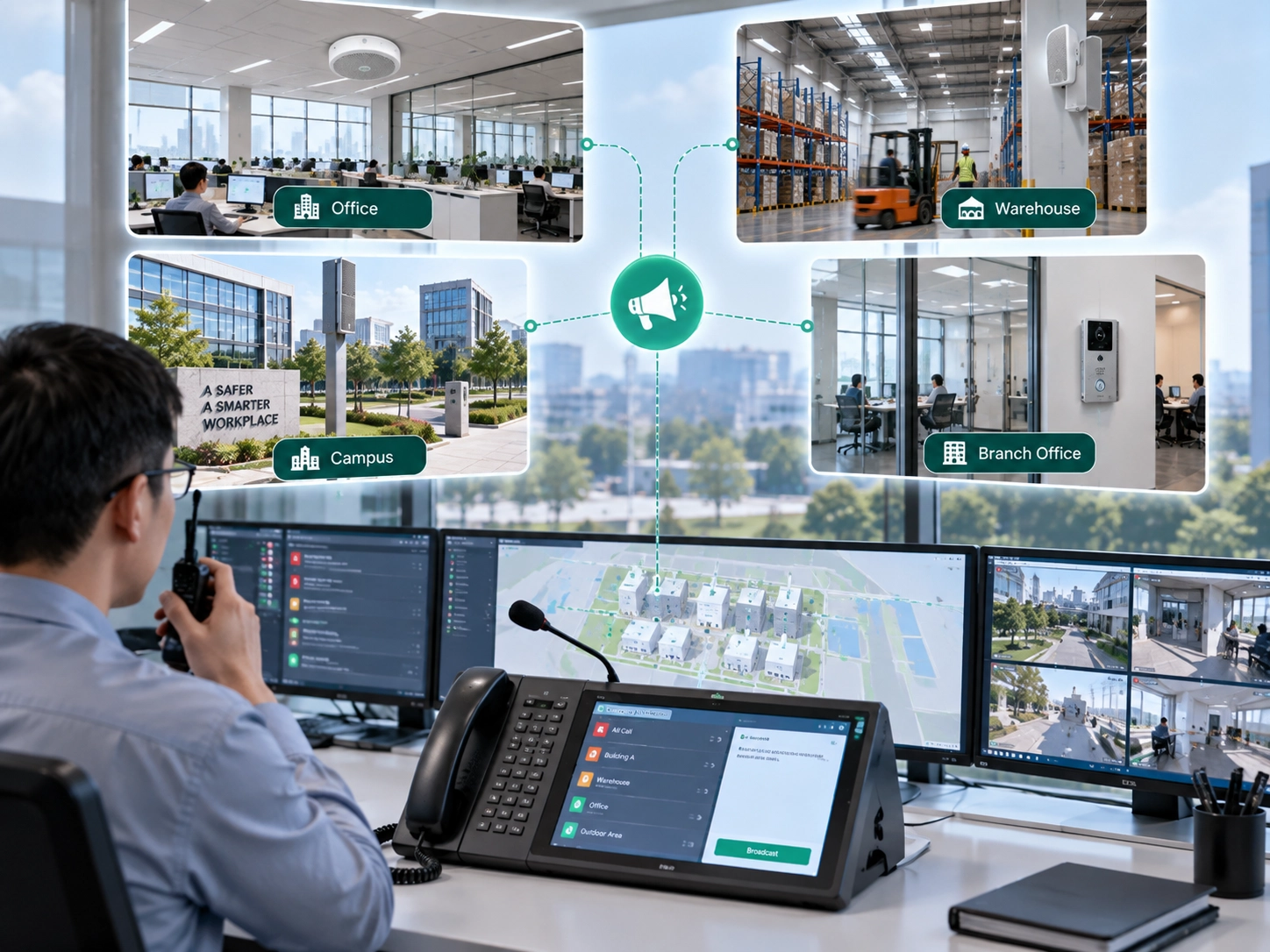
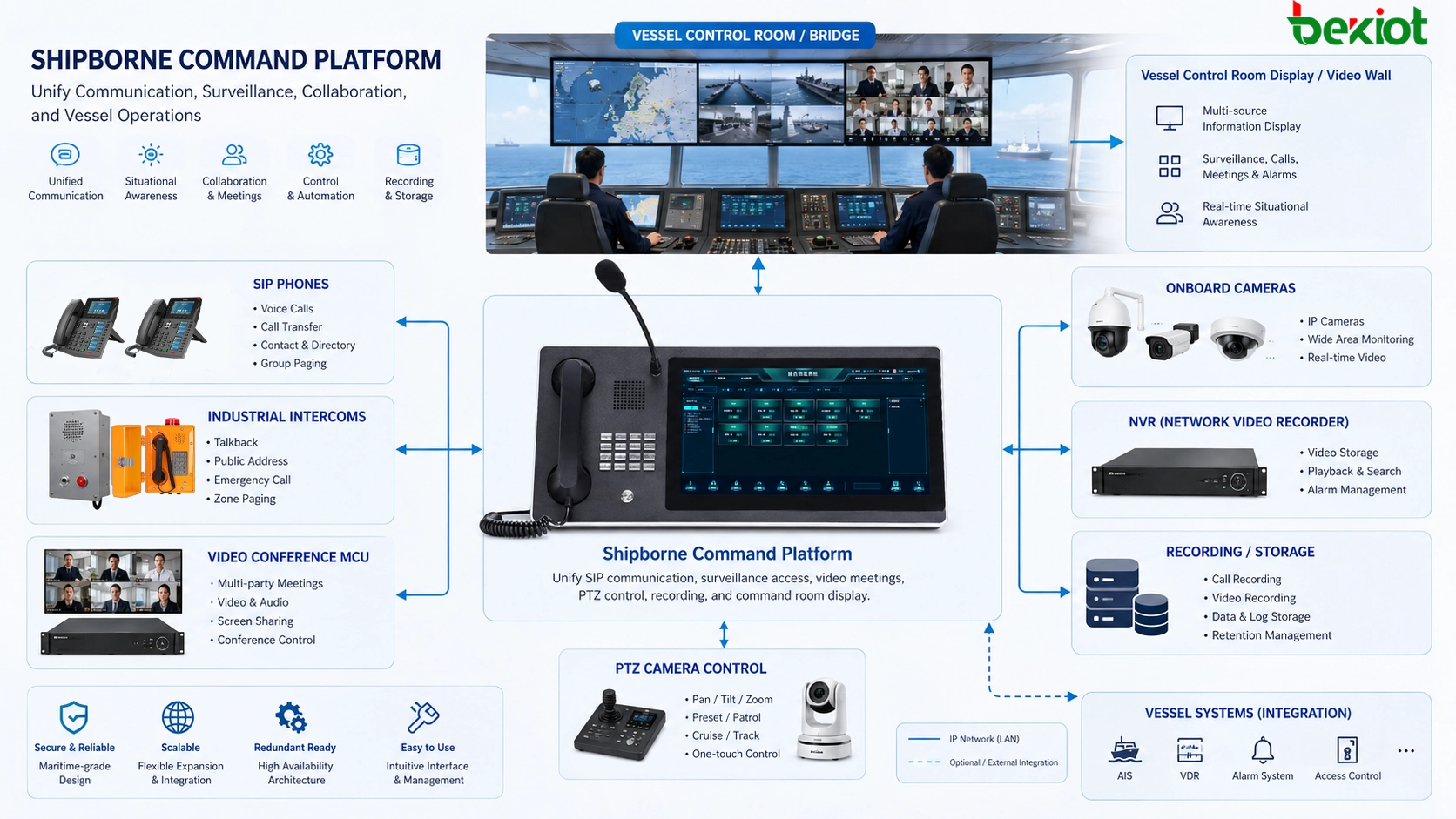
The onboard platform can unify SIP communication, surveillance access, video meetings, PTZ control, recording, and command room display.
Drones, Underwater Robots, and Mobile Video Sources
Modern maritime work increasingly depends on mobile visual resources. Drones can provide aerial inspection, search-and-rescue images, oil spill observation, or deck operation views. Underwater robots can return video from hull inspections, underwater facilities, rescue zones, or offshore structures. Portable encoders, handheld cameras, and vehicle-mounted devices may also be used in temporary operations.
These video sources often use different stream formats, resolutions, network paths, and transmission conditions. Built-in streaming media processing allows the shipborne command platform to receive, manage, route, record, and distribute these feeds according to the mission requirement.
For example, drone video can be displayed in the onboard command room, shared with a shore-side command center, sent into a video meeting, or recorded as part of an incident file. This helps the command team decide which source should stay local, which should be transmitted, and which should be stored for review.
Large-Screen Display Without Heavy Matrix Equipment
Many ship command rooms require a large display or video wall. Traditional video wall deployment may require matrix equipment, decoders, additional controllers, and complex cabling. On vessels, this can increase hardware quantity, installation workload, maintenance difficulty, and space pressure.
An integrated shipborne command platform can provide HDMI output and video splicing capability. It can send surveillance feeds, video conference images, SIP video calls, drone video, vessel operation data, weather information, and other visual sources to a large display.
This lighter architecture reduces equipment layers and makes command room operation more direct. Operators can combine different images for real-time monitoring, incident review, or command decision-making without relying on many separate display subsystems.
HDMI Inputs for Vessel Data and Auxiliary Systems
Ships often depend on radar displays, navigation data, weather systems, engine monitoring, vessel status screens, mission terminals, security platforms, and other auxiliary systems. Not all of these systems provide standard network video streams, but many can output display signals.
With multiple HDMI input interfaces, the command platform can collect these screens and bring them into the onboard command workflow. Radar information, weather data, vessel operation status, mission system images, or emergency information screens can be displayed locally and shared with shore-side teams when necessary.
This is important because maritime decisions are rarely based on one type of information. Command staff may need to compare live video, navigation data, weather changes, voice reports, equipment status, and emergency messages at the same time.
Lightweight Video Processing for Satellite Links
Maritime communication often depends on satellite links, private wireless networks, broadband ad hoc networks, or other long-distance transmission paths. These links may have limited bandwidth, higher latency, or unstable availability. Sending high-definition video without processing may cause delay, stuttering, frame loss, black screens, or failed transmission.
Video lightweight processing is therefore a key part of shipborne command deployment. Instead of adding a separate compression device beside the command system, an integrated platform can process video directly. Surveillance streams, meeting video, HDMI data, drone feeds, video phone images, and other sources can be optimized according to available bandwidth.
When combined with satellite communication equipment, this helps transmit smoother video with lower bandwidth requirements. For vessels that frequently report to shore-side command centers, this improves both communication reliability and operational efficiency.
Audio, Satellite Phone, Radio, and Broadcast Integration
Voice remains essential in maritime command. A shipborne platform should connect meeting room microphones, speakers, intercom endpoints, dispatch phones, and other audio-capable devices so that the command room can communicate clearly during daily operation and emergency response.
Satellite phone access is also important. A practical command platform can support satellite phone integration through an RJ11 interface, allowing the dispatch system to use the satellite phone line to call external numbers when ordinary terrestrial networks are unavailable.
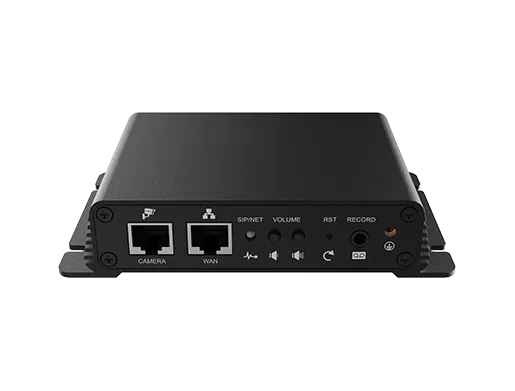
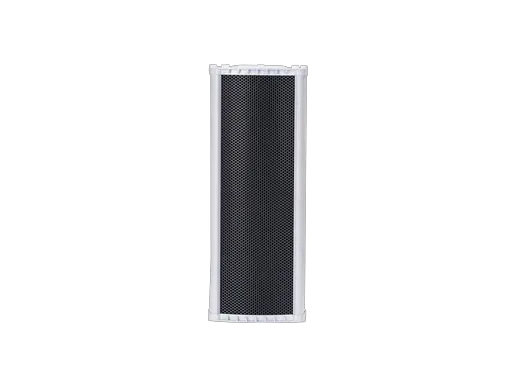
Radio and PA systems can be connected through radio gateways and broadcast gateways. This allows onboard radios, paging speakers, public address systems, and command dispatch functions to work together. The shipboard command team and shore-side operators can coordinate calls, announcements, and emergency instructions through a more unified system.
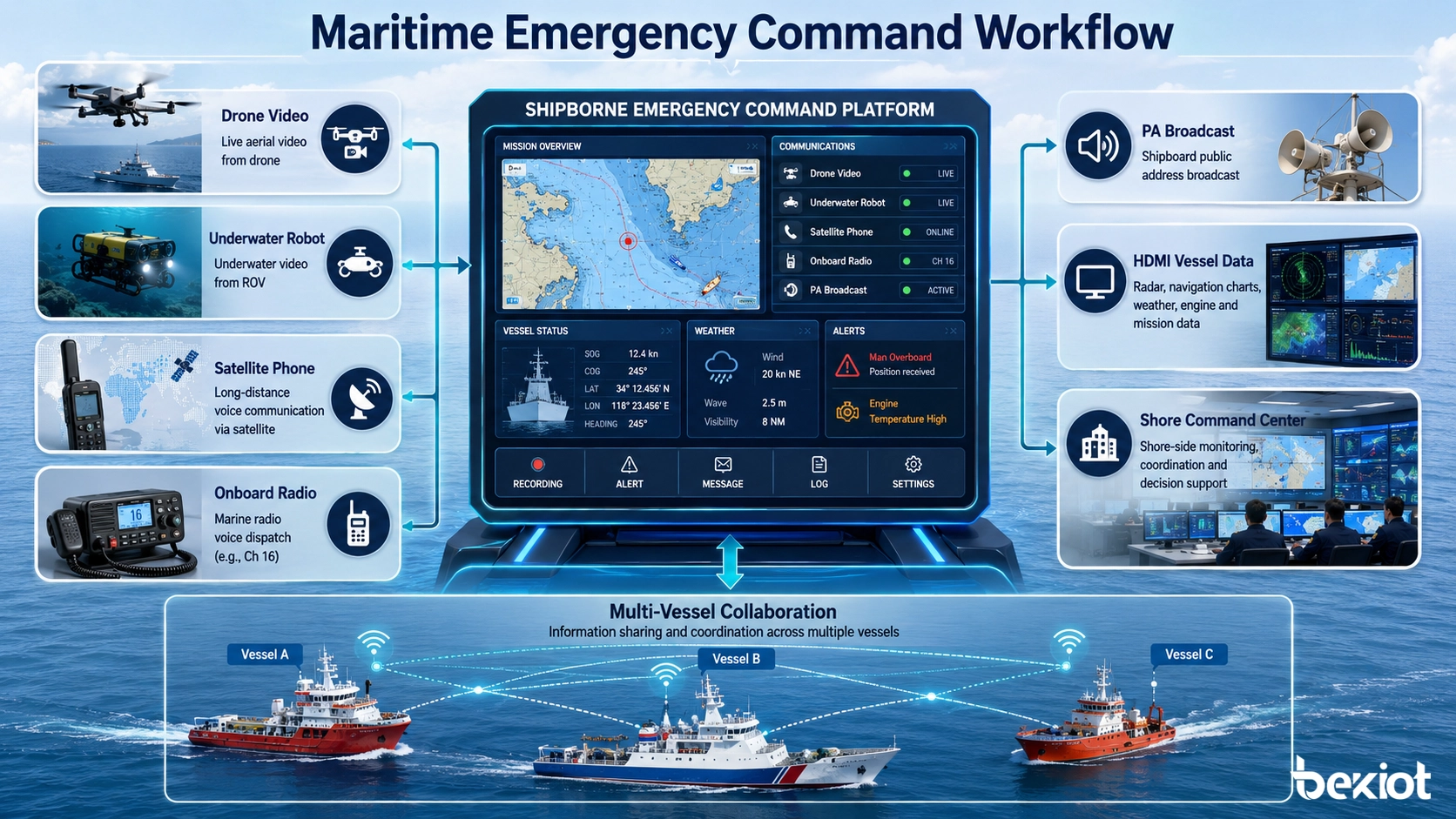
A maritime workflow can connect field video, satellite calling, radio dispatch, onboard broadcasting, vessel data, and shore-side coordination.
Multi-Vessel Coordination Across Difficult Links
Multi-vessel collaboration is more complex than a single ship-to-shore call. Different vessels may use different communication paths, including satellite data, private broadband, wireless mesh, temporary maritime networks, and shore-side access platforms. If every ship sends unprocessed audio and video freely, the network can become unstable.
A shipborne command system should process audio and video locally, adapt streams for the available link, and coordinate sharing between vessels and shore platforms. With streaming gateways and a shore-side audio-video access platform, multiple ships can form a more reliable collaborative command network.
This is valuable for rescue fleets, maritime patrol teams, offshore engineering groups, port operation vessels, research ships, emergency communication vessels, and multi-ship response formations. Each vessel becomes a connected command node rather than an isolated unit.
Recommended Deployment Architecture
A complete shipborne audio-video command solution can be divided into several layers. The exact configuration should depend on vessel size, mission type, communication link, existing equipment, and command workflow.
Layer
Typical Components
Role in the System
Command Room
Large display, operator console, microphones, speakers, dispatch screen, local control workstation
Provides centralized visual command, audio communication, and daily dispatch operation
Integrated Platform
SIP server, video conference MCU, streaming media processing, recording, HDMI input/output, video splicing, lightweight video processing
Unifies voice, video, display, media routing, recording, and command workflows
Onboard Endpoints
IP phones, industrial intercoms, emergency call stations, cameras, NVR, PA speakers, radio gateways, broadcast gateways
Connects cabins, decks, technical areas, field teams, and onboard notification systems
Brings mission, navigation, environmental, and field video data into command decisions
Wide-Area Links
Satellite phone, satellite data link, broadband ad hoc network, shore-side command platform, multi-vessel access gateway
Supports vessel-to-shore and vessel-to-vessel coordination under maritime network conditions
Practical Value in Maritime Operations
A shipborne audio-video command system is suitable for rescue ships, patrol vessels, offshore engineering ships, port operation vessels, maritime law enforcement boats, emergency communication ships, research vessels, large transport vessels, and fleet coordination platforms.
Its value is not only reducing hardware quantity. More importantly, it improves situational awareness, shortens response time, reduces operator switching, simplifies command room deployment, and supports real-time collaboration between ship and shore.
When rugged communication endpoints are needed in deck areas, machinery spaces, dockside locations, or harsh industrial zones, Becke Telcom can provide compatible SIP phones, industrial telephones, emergency stations, paging devices, and gateway products as part of the extended communication layer. This supports a more complete maritime command and emergency communication solution without adding unnecessary platform complexity.
Summary
Shipborne audio-video command is not only about placing more equipment on a vessel. It is about integrating voice, video, monitoring, satellite communication, radio access, broadcasting, vessel data, and shore-side collaboration into a reliable maritime workflow.
A good system should support onboard SIP communication, video meetings, camera access, drone and underwater robot video, HDMI input and output, lightweight video processing for satellite links, recording, large-screen display, radio gateway integration, broadcast linkage, and multi-vessel coordination.
For vessels that operate in rescue, patrol, offshore engineering, port service, marine research, and emergency response, this unified command architecture helps teams see more clearly, communicate faster, and coordinate more effectively across shipboard and shore-side environments.
FAQ
How should a shipborne command system be tested before delivery?
Testing should include SIP calls, video meetings, camera preview, PTZ control, HDMI input and output, satellite phone calling, radio gateway access, broadcast linkage, recording, video wall display, and weak-link video transmission. A sea-trial or simulated maritime network test is also recommended.
Can existing onboard cameras and phones be reused?
In many projects, existing cameras, NVRs, IP phones, analog phones, radios, and PA systems can be reused through standard protocols or gateway devices. Compatibility should be checked during system design.
What matters most when satellite bandwidth is limited?
The system should support video compression, stream priority, resolution control, frame rate adjustment, and selective forwarding. Not every video source needs to be sent to shore at full quality all the time.
Is a shore-side platform necessary for multi-vessel coordination?
For a single vessel, a shore-side platform may not be mandatory. For fleet coordination, rescue operations, or multi-ship collaboration, a shore-side platform helps manage voice, video, permissions, recording, and resource sharing more effectively.
How can the system support future expansion?
The design should reserve SIP endpoint capacity, network bandwidth, camera channels, HDMI access, storage resources, and gateway integration options. Open interfaces and standard protocols make later expansion easier.