Field Video Backhaul Protocols for Emergency Command and Mobile Operations
A practical guide to field video backhaul protocols for emergency command, drone video return, portable cameras, robot devices, RTSP streams, RTMP push, GB/T28181 access, SIP video calls, and multi-protocol gateway integration.
Becke Telcom
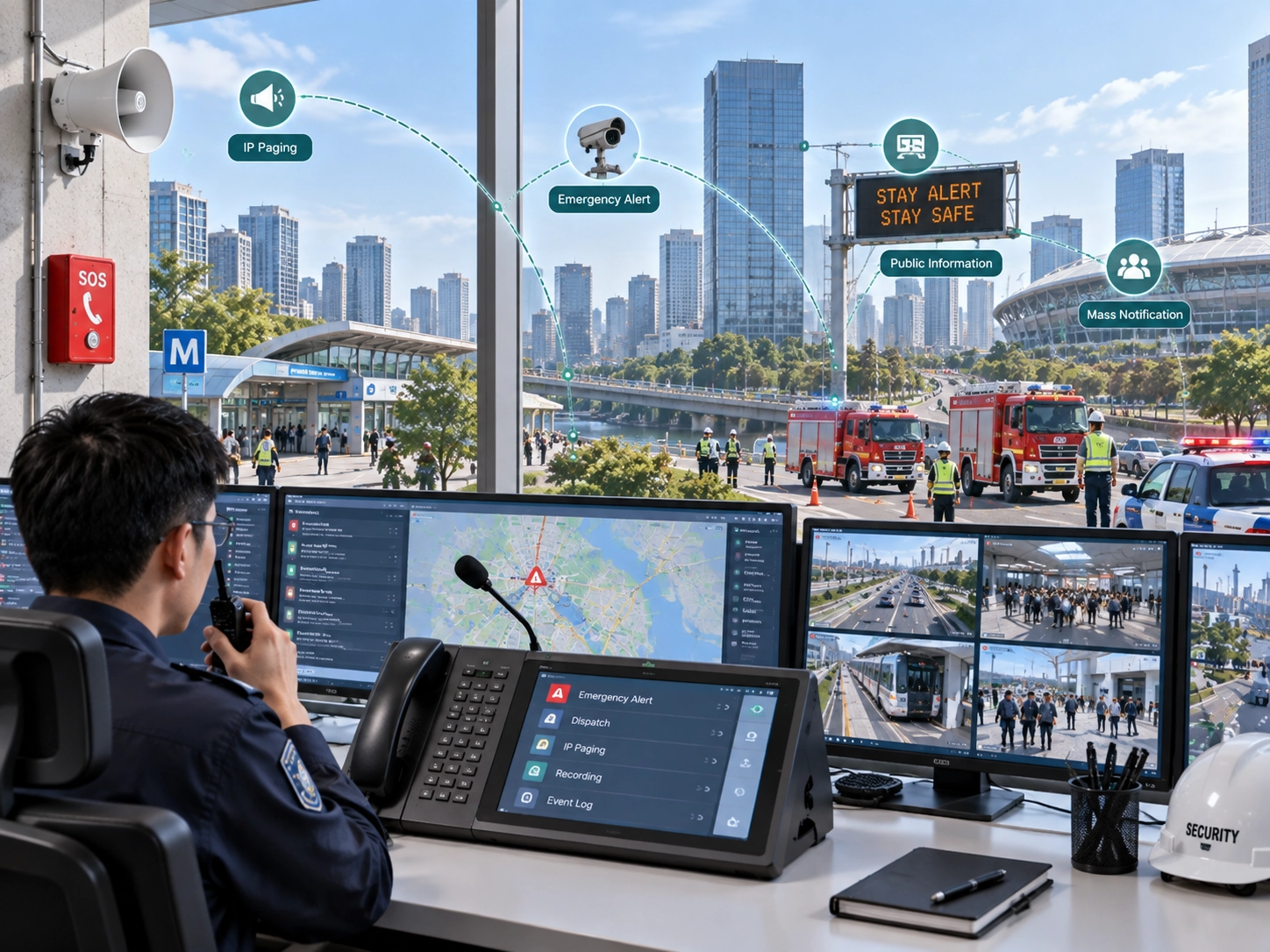
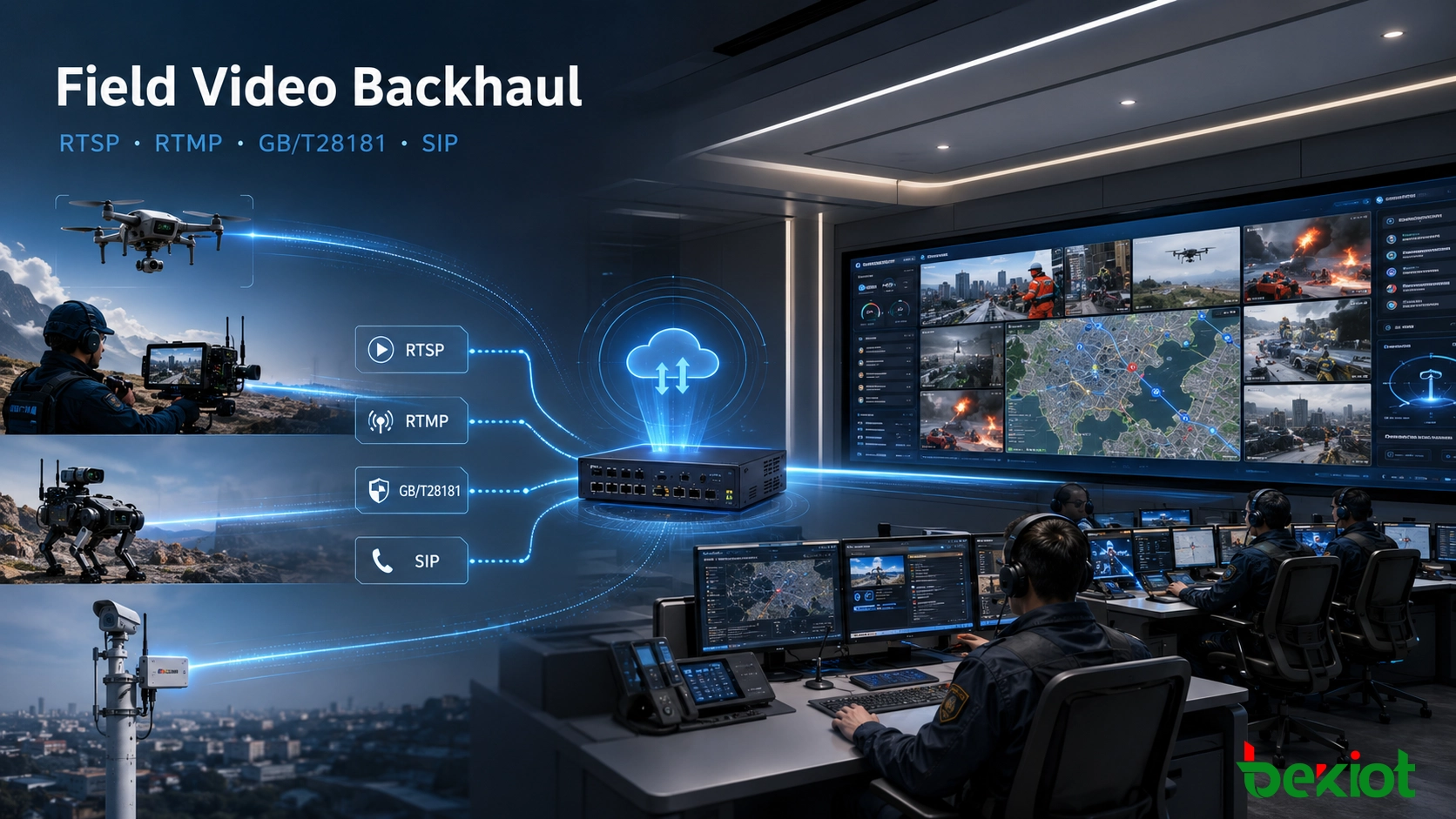
Field video backhaul is a key requirement in emergency response, mobile command, public safety, traffic control, drone operation, industrial inspection, temporary event security, and remote field coordination. A command center may need live video from drones, portable cameras, body-worn devices, robot dogs, mobile encoders, visual intercoms, surveillance cameras, or field gateways. In these projects, the video protocol is not a small technical detail. It affects latency, bandwidth usage, device control, deployment difficulty, platform compatibility, and the reliability of the whole command workflow.
GB/T28181, RTSP, RTMP, and SIP can all be used in field video return projects, but they are not designed for the same purpose. GB/T28181 is more suitable for surveillance-style access and command platform management. RTSP is common for local stream pulling. RTMP is convenient for simple Internet push streaming. SIP is better suited to real-time two-way audio-video command communication. A professional solution should not simply ask which protocol is “best.” It should match the protocol to the device type, field network, command platform, and actual response process.
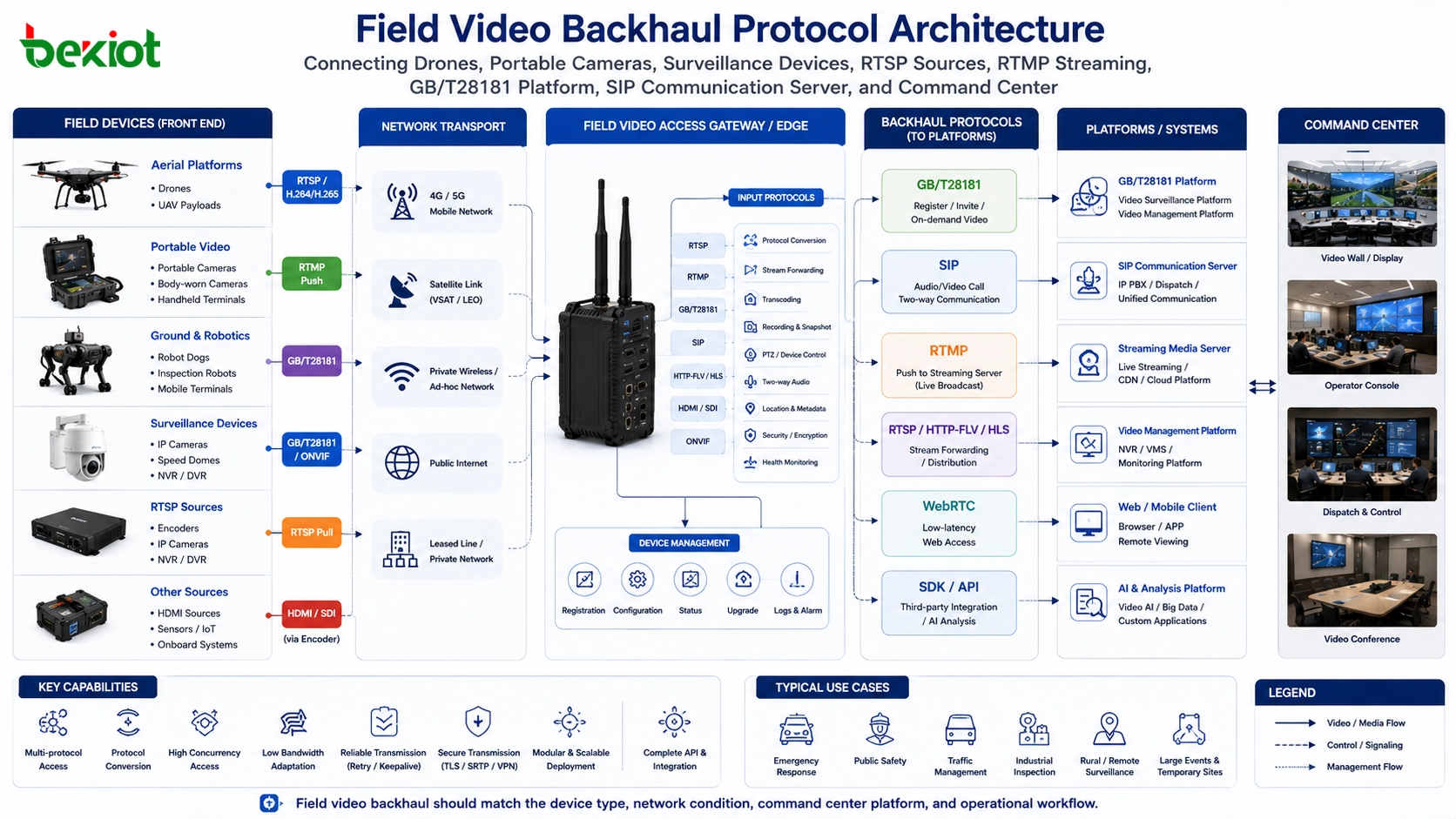
Field video backhaul should be planned around device capability, network conditions, command platform access, and real operational workflow.
Why Protocol Choice Changes the Whole System
Video access inside a fixed building is usually easier to control. Cameras, switches, servers, recorders, and monitoring platforms often stay in the same private network. Field operations are very different. Emergency sites may depend on 4G, 5G, temporary broadband, satellite links, public Internet, private wireless networks, mesh networks, or mixed transmission paths. Many front-end devices do not have a public IP address, and the command center may not be able to reach them directly.
This means a protocol cannot be selected only because the device can “output video.” A stream that works well inside a LAN may fail when the device is behind NAT or a mobile router. A live streaming protocol may be easy to deploy but may waste bandwidth if it keeps pushing video when no operator is watching. A protocol that displays video may not support PTZ control, two-way audio, alarm reporting, location upload, or recording retrieval.
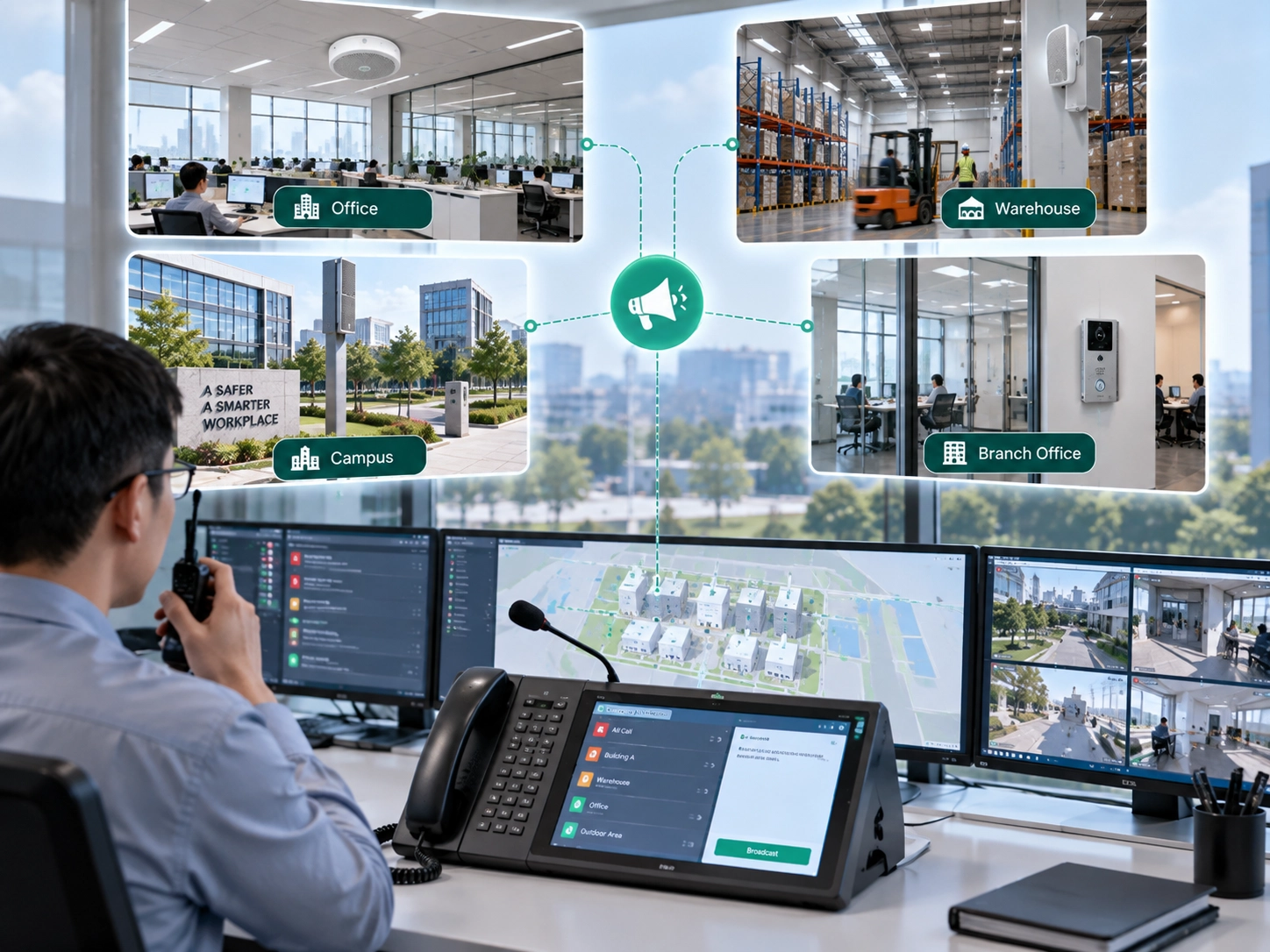
Command center compatibility is another factor. If every drone, camera, encoder, robot, and mobile device requires its own software platform, the operator has to switch between many screens. This weakens the value of a unified command center. A better architecture uses a video access gateway or media platform to receive different protocol inputs, process the streams, and distribute them to emergency command platforms, surveillance systems, unified communication platforms, AI analysis systems, web clients, or upper-level platforms.
A Gateway Layer Makes Field Access More Practical
Field devices are rarely standardized. One drone may provide RTSP, another device may support GB/T28181, a mobile encoder may push RTMP, and a video terminal may use SIP calling. If the command center tries to connect each device directly, integration becomes scattered and hard to maintain.
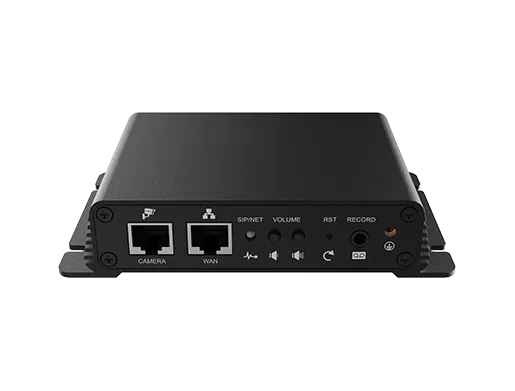
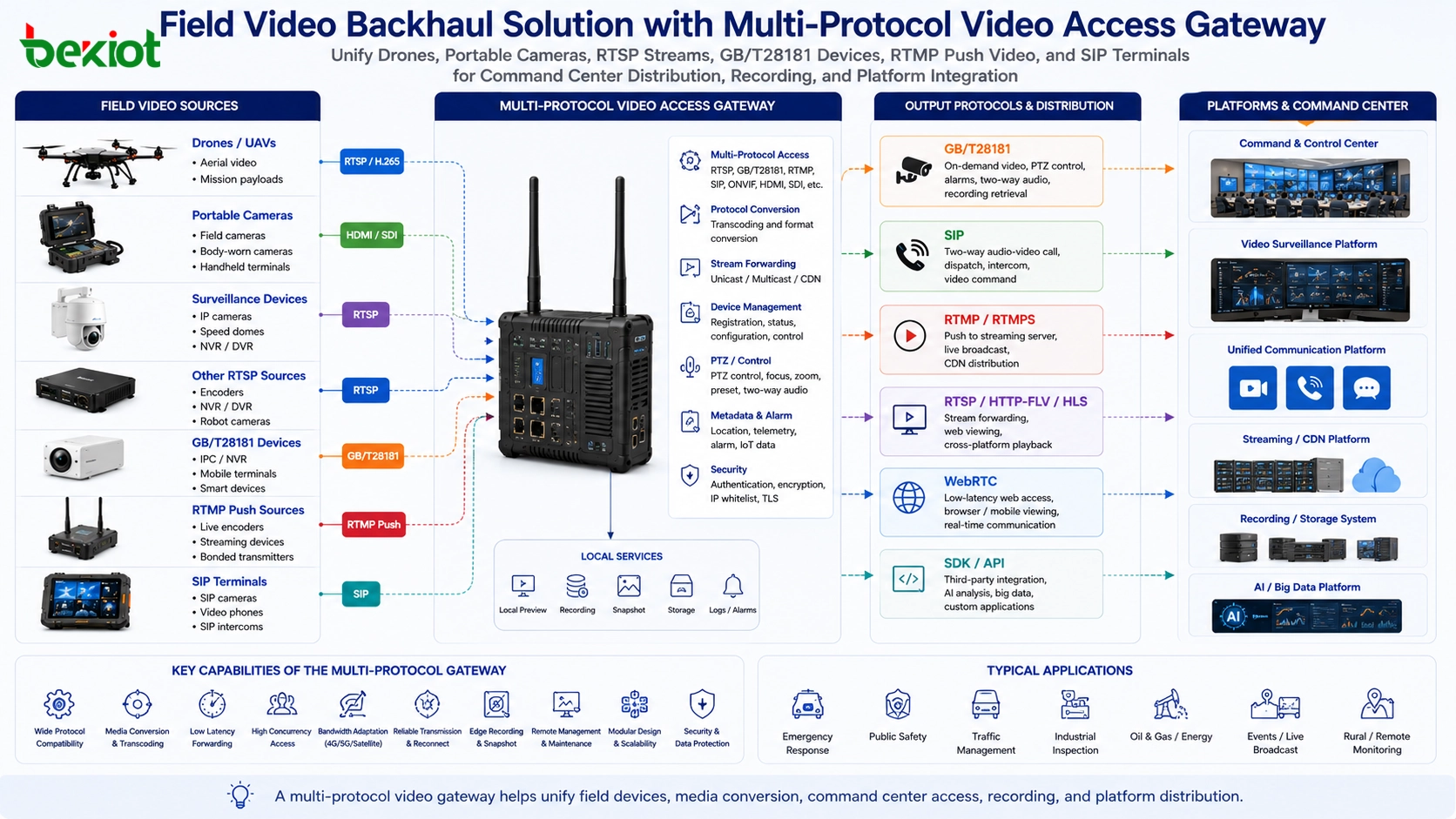
A field video gateway creates a more stable access layer. It can receive video from different front-end devices, convert protocols, transcode media, forward streams, preview video, manage control commands, and distribute video to different platforms. In practical projects, a capable gateway may need to support input or output methods such as SIP, GB/T28181, RTSP, RTMP, HLS, FLV, MP4, WebRTC, HDMI, and other media formats.
This design gives the project more flexibility. Fixed surveillance cameras, portable camera kits, mobile command terminals, visual phones, encoders, drones, drone platforms, robot dogs, vehicle-mounted cameras, and temporary video collection devices can all be brought into a more unified video return architecture.
GB/T28181 for Surveillance-Style Command Access
GB/T28181 is widely used in China as a national-standard video networking protocol. It is based on SIP but adds video surveillance functions such as device registration, catalog management, stream request, PTZ control, alarm reporting, and recording retrieval. For field video backhaul, it is a strong option when both the front-end device and the command platform support it.
Many field video devices already support GB/T28181, including surveillance cameras, portable monitoring stations, industry drones, law enforcement terminals, recorders, and mobile video devices. In a typical deployment, the command center provides a GB/T28181 platform with a reachable public IP address or stable network address. The field device only needs Internet access, platform parameters, authentication information, and correct registration settings.
This is useful in 4G or 5G field environments. Even if the front-end device is behind a mobile router and has only a private IP address, it can register to the platform and wait for the command center to request video. The command platform does not need to directly pull a private device address from the public network.
Another advantage is on-demand video access. When the command center does not request the stream, the device does not need to push video continuously. This saves bandwidth and data traffic, which is very important for emergency sites, temporary deployments, mobile links, and satellite-supported operations.
GB/T28181 also supports more operational functions than a basic stream URL. Depending on device capability, the command center may control PTZ movement, adjust focus, start live preview, use two-way audio, receive alarm events, obtain device location, and retrieve local recordings. For command platforms that need surveillance-style management, this makes GB/T28181 a practical primary protocol.
RTSP for Local Stream Collection
RTSP is one of the most widely supported video streaming protocols. Many cameras, NVRs, encoders, drone payloads, robot systems, and robot dogs can provide RTSP streams. For manufacturers, RTSP is often easy to provide because many imaging modules already include RTSP output.
The limitation is that RTSP is usually a pull-based method. The platform must be able to reach the device IP address and pull the stream from it. This works well inside a local network, but it becomes difficult when the device is behind NAT, a 4G/5G router, a temporary network, or a private mobile network.
In many field operations, the command center cannot directly access the device’s real IP address. To pull RTSP across networks, the project may need VPN access, port mapping, private APN, relay servers, or a field gateway. These methods add cost and deployment complexity.
For this reason, RTSP is often best used as a local acquisition protocol. A field gateway can pull RTSP from local cameras, drones, encoders, or robot devices, then forward the video to the command center through GB/T28181, SIP, RTMP, WebRTC, or another suitable method. In this architecture, RTSP remains useful, but it does not carry the full wide-area backhaul responsibility by itself.
RTMP for Simple Internet Push Streaming
RTMP is common in live streaming and online broadcasting. Its workflow is easy to understand: the server provides a streaming address, and the field device pushes video to that address. If the device can access the Internet, it can usually push video without the command center needing to know the device’s IP address.
This makes RTMP attractive for simple field video return. A drone, encoder, portable camera terminal, or mobile video device can push live video to a media server, and the command center can open the stream for viewing. Compared with RTSP pulling, RTMP is often easier to use across public networks because the field side initiates the connection.
The weakness is that RTMP follows a live broadcast model. Once the stream starts, the device often pushes video continuously whether anyone is watching or not. In emergency sites, where bandwidth may be limited or data traffic may be costly, continuous pushing can waste valuable network resources.
RTMP also provides limited device control. It is mainly used for one-way live video and audio. It normally does not provide rich PTZ control, focus adjustment, location reporting, alarm reporting, recording retrieval, or two-way command interaction. It is suitable when the goal is simply to send a live image to a platform, but it is not ideal as the only command and control protocol.
GB/T28181, RTSP, RTMP, and SIP solve different field video return problems and should be selected according to workflow.
SIP for Interactive Command Communication
SIP is not just a video streaming protocol. It is a real-time communication protocol widely used in voice calls, video calls, video conferencing, dispatch systems, IP PBX platforms, and unified communication systems. For emergency command, this makes SIP especially useful because it supports two-way interaction rather than only one-way video return.
A SIP-based field video workflow can use a SIP server with a fixed public address or reachable network address. Field terminals register to the server through the Internet or a private network, and the command center can establish audio or video sessions with them. The operator may call the field terminal, or the field device may call the command center.
The user experience is intuitive because SIP uses a calling model. A dispatcher can call a field terminal, video phone, mobile gateway, or video endpoint. Once the session is connected, the command center can receive live video and send voice instructions back to the field. In some scenarios, the command center can also push its own video or screen content to the front end.
SIP is also easier to integrate when the command center already uses SIP-based video conferencing, dispatch communication, unified communication, or IP PBX systems. It can connect video return with voice dispatch, emergency calls, meetings, recording, and field collaboration.
The main limitation is device support. Some drones, cameras, and specialized field devices do not support SIP directly. In these cases, a field video gateway can receive HDMI, RTSP, GB/T28181, or other video sources locally, then convert them into SIP-based audio-video communication for the command platform.
Protocol Comparison for Field Projects
Protocol
Best Use
Main Advantage
Main Limitation
Recommended Role
GB/T28181
Surveillance-style field access and command platform integration
Requires compatible platform, device registration, and correct configuration
Primary choice when emergency video devices support national-standard access
RTSP
Local video pulling from cameras, drones, encoders, robots, and NVRs
Very common across video devices
Difficult across NAT, mobile routers, and public networks without VPN or relay
Best used as a local acquisition protocol before gateway forwarding
RTMP
Internet-based push streaming and simple live video return
Easy public-network push when the server has a reachable address
Continuous push may waste bandwidth and provides limited device control
Useful for simple live backhaul when control is not required
SIP
Real-time video calls, voice talkback, dispatch, conferencing, and UC integration
Low-latency two-way communication and natural calling workflow
Many cameras and drones do not support SIP directly
Best for interactive command communication and dispatch workflows
Match the Protocol to the Network
Network conditions often decide which protocol is practical. If the field device and command center are inside the same private network, RTSP may be simple and efficient. If the field device is behind a 4G or 5G router, GB/T28181, RTMP, or SIP is usually easier because the field side can register or push to a reachable server.
For emergency sites using mobile networks, GB/T28181 is often a strong choice because the platform can request video only when needed. RTMP can also work, but continuous pushing should be managed carefully. SIP is suitable when the command center needs real-time conversation, two-way video, voice instructions, or integration with dispatch and video conferencing systems.
For satellite links or weak wireless networks, bandwidth control becomes critical. Resolution, frame rate, bitrate, stream priority, and continuous push behavior should all be evaluated. A gateway with transcoding and protocol conversion can adapt the same video source to different network paths and command platforms.
Match the Protocol to the Device
Surveillance cameras and portable monitoring terminals are often better suited to GB/T28181 when the project requires platform registration, on-demand preview, PTZ operation, alarm linkage, location information, and recording management. This is especially useful when the command center already uses a surveillance-style platform.
Drone payloads, robot dogs, and mobile inspection devices often expose RTSP streams because RTSP is common in imaging systems. If the command center cannot pull those streams directly, a local field gateway can collect them and forward them through another protocol.
Streaming encoders and live production devices may support RTMP because it is widely used in live broadcast workflows. RTMP is convenient when the main requirement is continuous live video to a remote server. If the project also needs device control, on-demand viewing, two-way audio, or dispatch interaction, another protocol should be added.
Visual intercoms, video phones, dispatch terminals, SIP cameras, and communication gateways are better candidates for SIP integration. SIP fits scenarios where the operator thinks in terms of calling, answering, conferencing, dispatching, and speaking back to the field.
Build a Multi-Protocol Access Architecture
A professional field video backhaul system should not depend on one protocol only. In real emergency projects, one site may include drones, cameras, portable command devices, encoders, recorders, vehicle-mounted systems, robot devices, visual phones, and external monitoring platforms. These devices rarely support the same access method.
The practical solution is to build a multi-protocol access layer. The front end can use RTSP, HDMI, GB/T28181, RTMP, SIP, or device-specific methods. The gateway or media platform then processes the stream and outputs it in the format required by the command center. This may include GB/T28181 for surveillance platforms, SIP for command communication, RTMP for streaming servers, WebRTC for browser viewing, or dedicated interfaces for AI analysis and video service platforms.
This architecture reduces fragmentation. The command center does not need separate software for every device type. Operators can view, call, control, record, forward, and distribute field video through a more consistent workflow.
Practical Selection Guide
If the field device supports GB/T28181 and the command center needs surveillance-style control, GB/T28181 should be prioritized. It supports on-demand viewing and can provide PTZ control, focus adjustment, two-way audio, location access, alarm reception, and recording retrieval when the device and platform support these functions.
If the device only provides RTSP, use RTSP inside the local field network and add a gateway for wide-area backhaul. Do not assume that a command center can pull RTSP directly from a 4G or 5G field device across the public Internet without extra network design.
If the project only needs live video pushing and does not require device control, RTMP is simple and practical. However, it should be managed carefully because it may occupy bandwidth continuously even when no one is watching.
If the project requires real-time dispatch, two-way audio, video calls, video conferencing, or unified communication, SIP is often the best fit. When devices do not support SIP natively, a gateway can convert HDMI, RTSP, GB/T28181, or other sources into a SIP communication workflow.
Summary
Field video backhaul is not only about sending images from the front end to the command center. It is about choosing a protocol and architecture that match real field conditions. GB/T28181 is strong for surveillance-style command access and on-demand retrieval. RTSP is widely supported but better suited to local stream collection. RTMP is simple for Internet push streaming but limited in control. SIP is valuable for real-time two-way command communication.
In many projects, the best answer is not one protocol, but a multi-protocol gateway architecture. By collecting local streams, converting protocols, adapting bandwidth, and outputting video to different platforms, the system can support drones, cameras, robot devices, mobile terminals, surveillance platforms, dispatch systems, and command centers through one more manageable workflow.
FAQ
Can one field device use more than one video protocol?
Yes. Some devices can output RTSP, RTMP, GB/T28181, HDMI, or other formats at the same time. The best choice depends on whether the project needs local preview, public-network backhaul, platform control, recording, or two-way command communication.
How should unstable 4G or 5G links be handled?
The system should control bitrate, resolution, frame rate, and stream priority. It is also better to avoid unnecessary continuous streaming. On-demand access, transcoding, and adaptive forwarding can reduce pressure on field networks.
Is a public IP required at the command center?
For many registration or push workflows, the command center platform or media server should have a reachable public IP address, cloud address, or private network access point so field devices know where to register or push video.
Can RTSP be used for drone video return?
Yes, but usually inside a local network or through a field gateway. If the drone or payload is behind a mobile network, the command center may not be able to pull RTSP directly without VPN, relay, or gateway forwarding.
What should be checked before choosing a video access gateway?
Check input protocols, output protocols, transcoding capability, concurrent stream capacity, PTZ control, SIP compatibility, GB/T28181 compatibility, recording options, network adaptation, and whether it can connect to the required command platform.