PAGA Systems for Industrial Safety Communication and Emergency Response
PAGA systems combine public address, general alarm, zoning, live paging, and emergency voice control to help industrial sites deliver clear instructions during routine work and critical events.
Becke Telcom
A PAGA system is designed for sites where voice communication must remain clear, immediate, and reliable even under pressure. PAGA stands for Public Address and General Alarm, but in industrial environments it is much more than a loudspeaker system. It becomes a structured communication platform for routine announcements, zone paging, emergency warnings, live operator instructions, and coordinated site-wide response.
This is why PAGA systems are commonly used in harsh, noisy, and safety-critical environments. Refineries, offshore platforms, marine vessels, power plants, utility tunnels, transport infrastructure, and large industrial facilities often need a communication system that can cover wide areas, divide messages by zone, handle high background noise, and support both daily operations and emergency action.
For Becke Telcom, a PAGA solution should not be planned as a simple audio distribution project. It should be treated as part of the site’s safety communication architecture. When the system is designed around real operating conditions, it can help personnel receive the right instruction, in the right area, at the right time.
What a PAGA System Means in Practice
Public address and general alarm in one platform
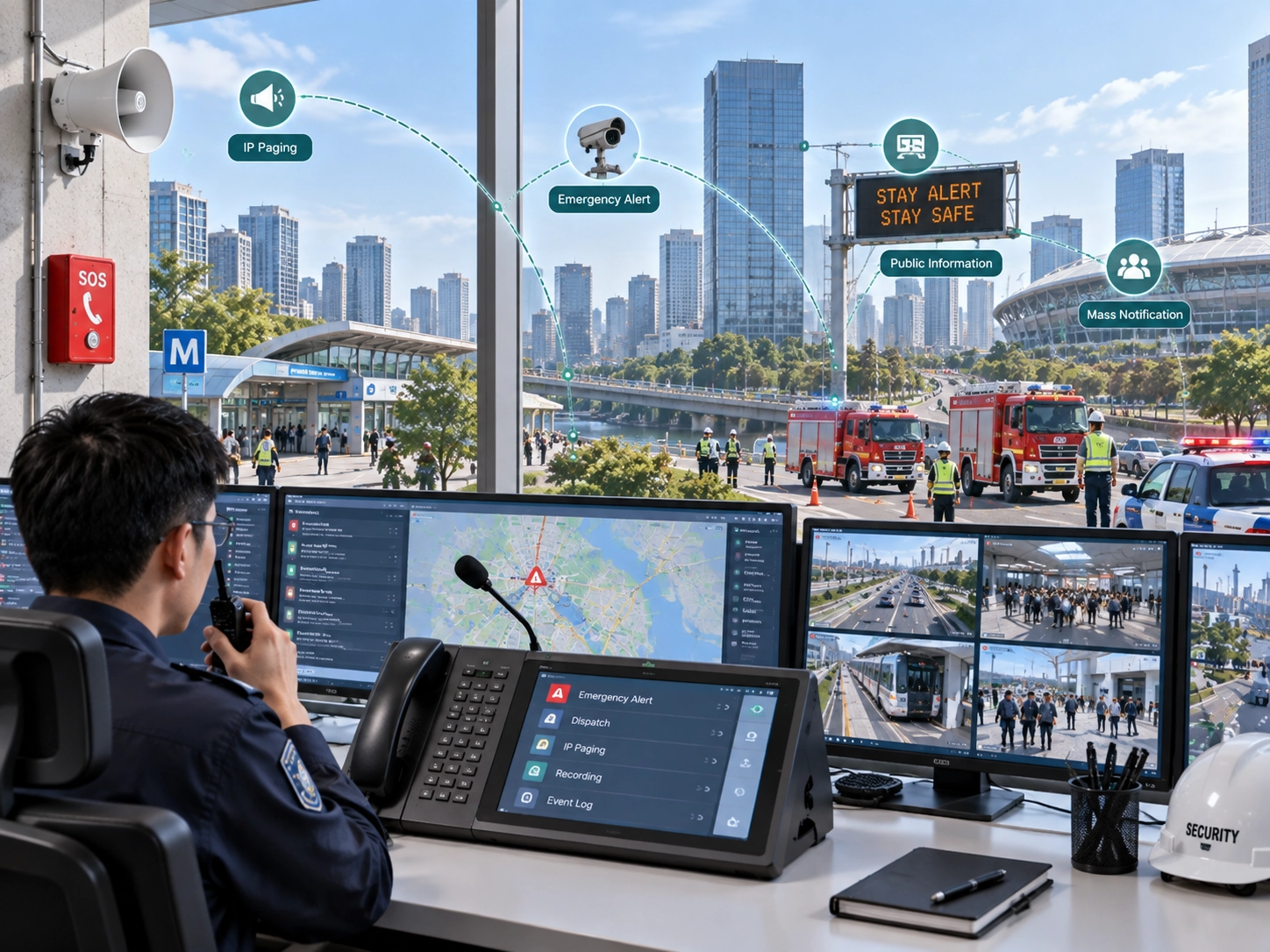
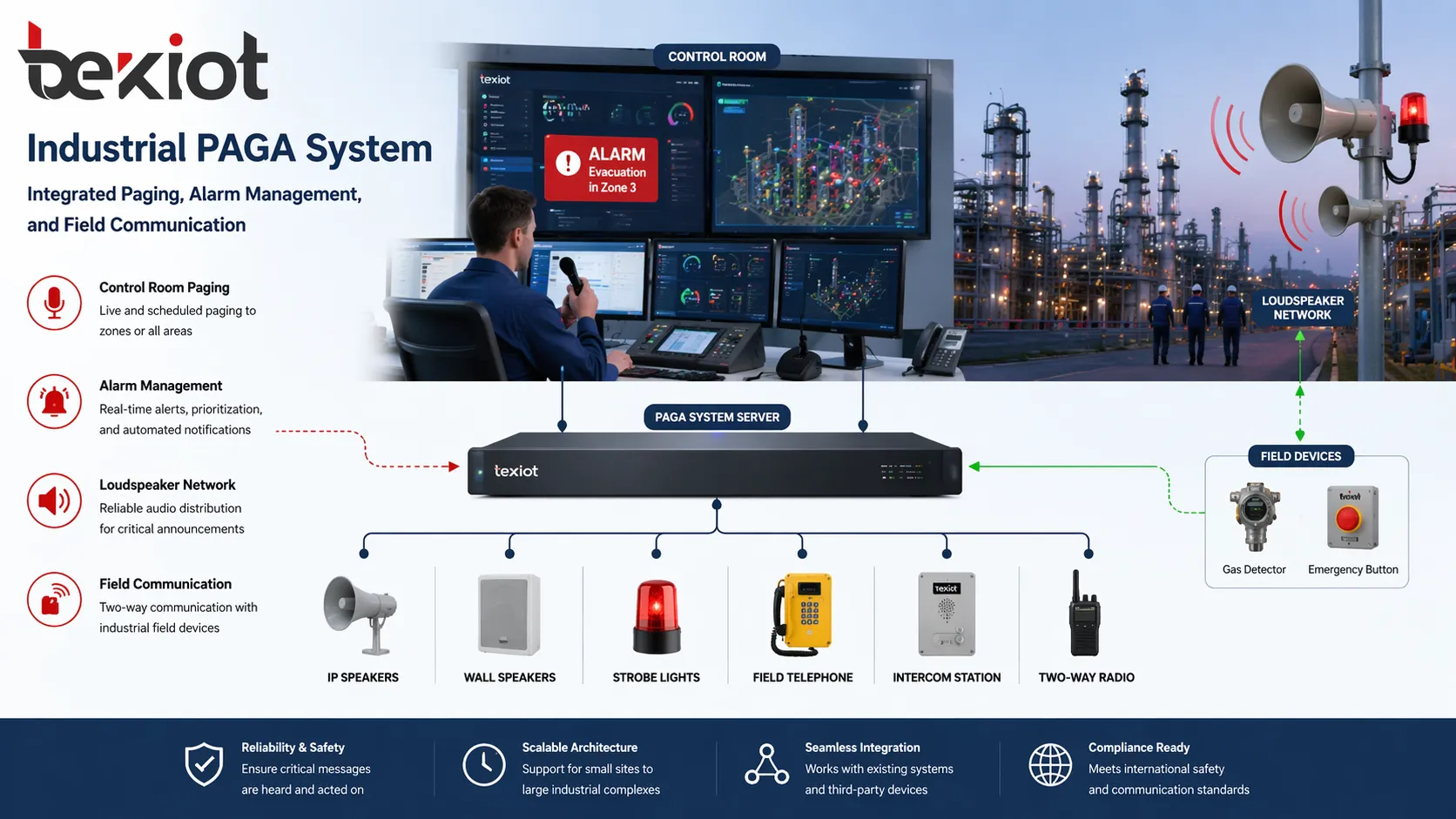
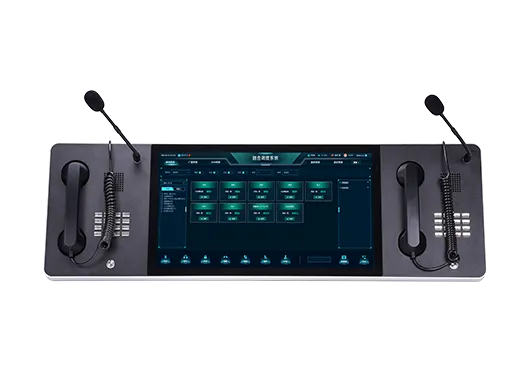
A PAGA system combines public address, paging, and general alarm functions into one controlled platform. Authorized operators can use it to send routine announcements, area-specific instructions, alarm tones, prerecorded emergency messages, and live voice commands from a control room, dispatch station, bridge, or duty office.
The key difference is control. A proper PAGA platform manages who can broadcast, which zones receive the message, what priority the message has, how alarms are triggered, and how events are recorded or supervised. In industrial projects, this control logic is often as important as the loudspeakers and amplifiers.
How it differs from a standard PA system
A standard PA system is mainly used for routine sound distribution. It may handle background music, simple announcements, or general notices in a commercial building. However, it is not always designed for emergency priority, fault supervision, alarm activation, or strict zone control.
A PAGA system is built for more serious operational conditions. It must support all-call broadcasting, zone paging, general alarm activation, live voice override, predefined emergency messages, and integration with wider plant communication or safety systems. In a safety-critical site, these differences directly affect response quality.
A strong PAGA system is not defined by the number of speakers installed. It is defined by how reliably it delivers the correct message to the correct area when people need it most.
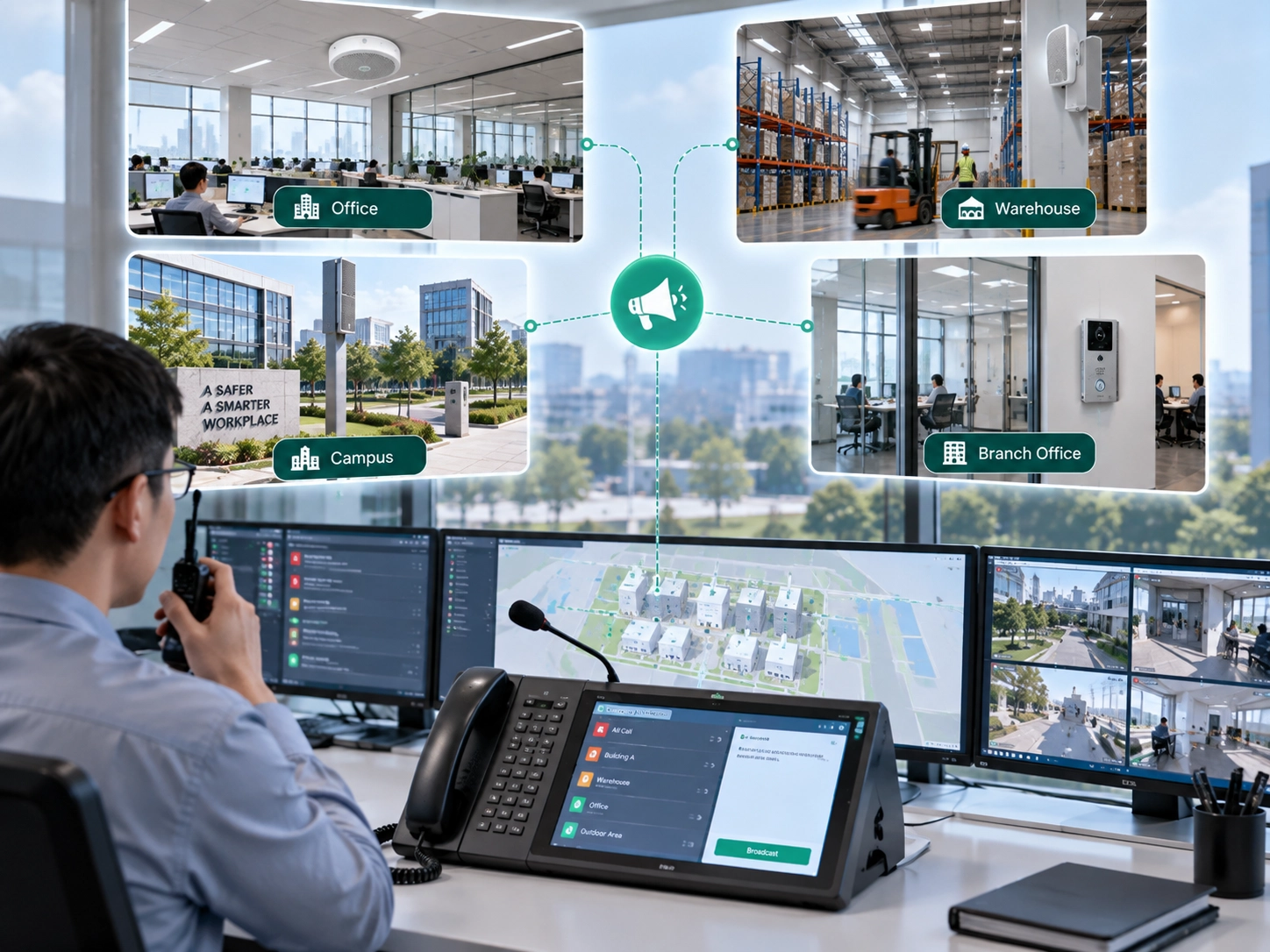
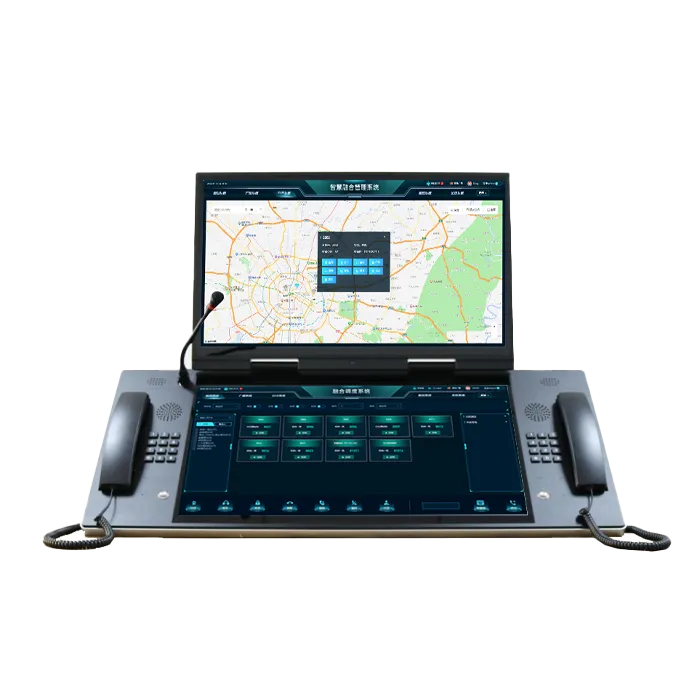
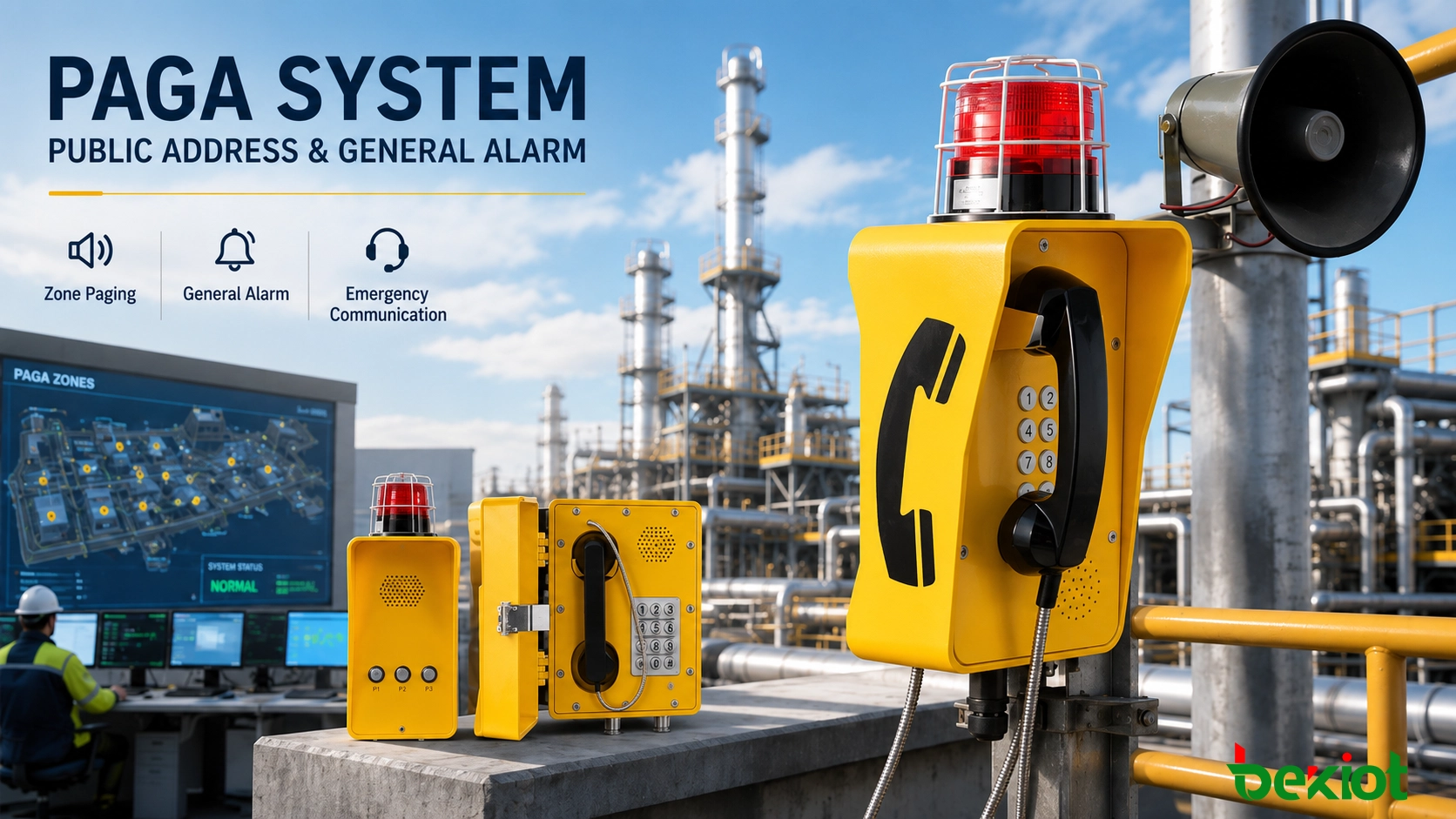
A modern PAGA architecture connects operators, alarm logic, zone control, and field audio devices into one coordinated communication framework.
Core Functions of a Modern PAGA System
Zone paging and all-call broadcasting
Zoning is one of the most important functions in a PAGA system. Large industrial sites are rarely uniform. A process area, tunnel section, loading zone, utility room, offshore deck, power generation area, or control building may each require different instructions during normal operation or emergency response.
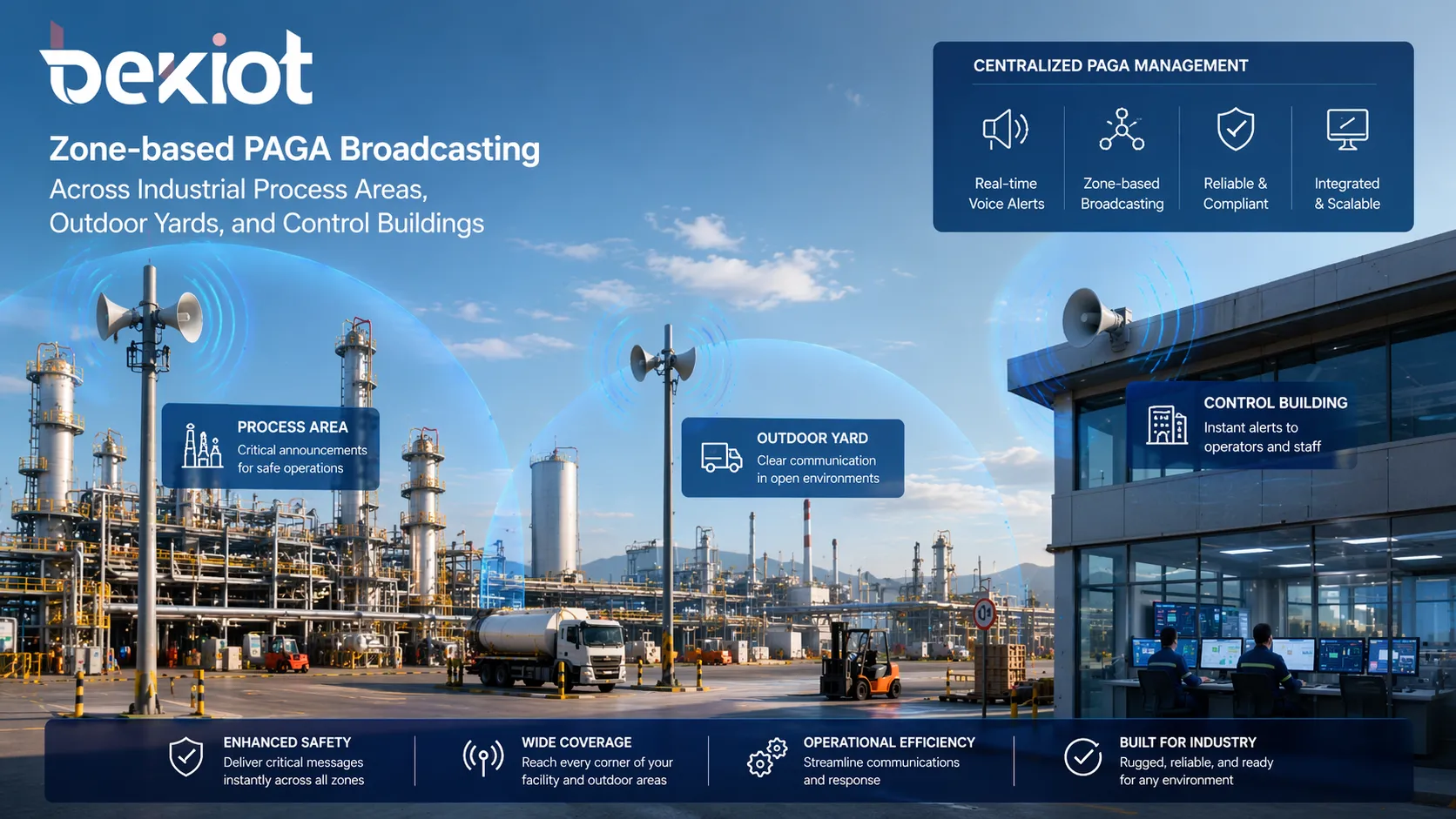
Zone-based paging allows operators to broadcast only to the affected area when the incident is local. At the same time, the system should support all-call broadcasting when a major event requires immediate site-wide notification. This balance helps avoid unnecessary interruption while still ensuring full coverage when the risk level increases.
General alarm and emergency voice messages
General alarm capability is one of the main reasons industrial sites choose PAGA instead of a basic PA system. The platform can trigger alarm tones, evacuation messages, muster instructions, shelter-in-place notices, and other priority warnings during abnormal events.
Prerecorded emergency messages are often used because they provide consistency and speed. During a fire, gas leak, equipment trip, flooding event, or other safety incident, personnel need short and clear instructions. A PAGA system helps deliver those instructions through the right zones with the proper priority.
Live paging and priority control
Automatic alarms and prerecorded messages are useful, but real emergencies can change quickly. Operators may need to provide live instructions as the situation develops. A modern PAGA system should allow authorized personnel to make live announcements from paging consoles, dispatch points, or control-room stations.
Priority control prevents confusion. Emergency broadcasts should override routine announcements, and higher-priority messages should take precedence over lower-priority content. In a well-designed system, operators can move from routine paging to emergency command communication without losing control of the audio path.
Event recording and supervision
PAGA systems are often required to support event records, fault reporting, and system supervision. These functions help operators review alarm actions, paging activity, device status, and maintenance needs. For industrial sites, this is valuable for audit, training, incident analysis, and long-term reliability management.
Supervision is especially important because a communication system should not reveal a failure only during an emergency. Amplifiers, network paths, speaker circuits, power supply, and field devices should be monitored where project requirements demand higher availability.
Integration with Safety and Communication Systems
A modern PAGA system should not operate as an isolated subsystem. Its value increases when it works with fire detection, gas detection, CCTV, industrial telephones, SIP intercoms, IP PBX platforms, dispatch systems, and wider control-room workflows.
For example, a gas detection alarm can trigger a predefined PAGA warning in the affected area. Operators can then verify the situation through CCTV and issue live voice instructions from a control room or dispatch console. This type of integration reduces communication delay and helps teams respond with better coordination.
In industrial communication design, integration also helps reduce system silos. Instead of separate alarms, separate intercoms, separate telephones, and separate paging tools, the site can build a more unified response process.
Routine public address and operational paging
Zone-based warning and all-call broadcasting
General alarm tones and emergency voice messages
Live voice override from control or command points
Priority handling, supervision, and event recording
Integration with telephony, intercom, CCTV, dispatch, and safety platforms
Zone logic allows industrial sites to broadcast to one area, selected groups, or the entire facility according to incident severity and operating need.
Why Industrial Facilities Need PAGA
Faster emergency warning
Speed is one of the biggest advantages of PAGA. When an incident occurs, the system can deliver alarm tones and voice instructions immediately to the affected zone or the whole site. This shortens the time between incident detection and personnel action.
Clear instruction is just as important as speed. Personnel should not only know that something has happened; they should understand what to do next, where to go, which area to avoid, or whether to wait for further instructions. In industrial safety communication, an alarm without clear guidance is often not enough.
Better daily communication discipline
A PAGA system is useful even when no emergency exists. It can support maintenance notices, shift-change announcements, access reminders, inspection updates, process coordination, and area-specific operating instructions.
Over time, this creates better communication discipline. Teams rely less on informal shouting, scattered devices, or inconsistent manual communication habits. Instead, the site uses one structured platform for routine paging and abnormal-event communication.
Higher reliability in difficult environments
Industrial communication must work where conditions are not ideal. Noise, humidity, corrosion, dust, vibration, heat, wind, and wide coverage areas can all affect how messages are delivered. A purpose-built PAGA design addresses these conditions through acoustic planning, suitable field devices, supervised circuits, power continuity, and resilient architecture.
In critical projects, reliability is not only about whether the system can broadcast a message. It is about whether the system can remain available when normal conditions break down. Redundant hosts, backup amplifiers, monitored speaker lines, and resilient network paths can all improve confidence in long-term operation.
The practical value of PAGA is that it turns voice communication into an organized safety resource for routine work, abnormal events, and emergency response.
Typical PAGA Application Scenarios
Oil, gas, and petrochemical facilities
Refineries, chemical plants, tank farms, loading areas, and oil and gas facilities often require controlled voice warning across hazardous or process-intensive zones. These environments need more than general announcements. They need plant-wide alarm logic, evacuation messaging, zone instructions, and dependable operator intervention.
In these projects, PAGA is usually part of a broader safety communication architecture. It connects public address, general alarm, field communication, control-room operation, and safety system linkage into one coordinated framework.
Offshore platforms and marine vessels
Offshore and marine environments place heavy demands on communication equipment. Wind, salt spray, vibration, engine noise, deck machinery, and wide operating areas make voice delivery difficult. A PAGA system helps manage routine paging, emergency alarms, muster instructions, and live command communication across production modules, cargo decks, engine rooms, accommodation areas, and muster stations.
In these environments, PAGA often becomes a central alarm and communication platform rather than a simple audio network. Zoning, priority handling, redundancy, and integration with telephony and safety systems are especially important.
Power plants and utility facilities
Power generation sites, substations, renewable energy facilities, and utility plants often include distributed assets and remote work areas. Maintenance teams, control-room staff, and field technicians need fast communication when equipment status changes or an incident occurs.
A PAGA system can support operational broadcasts, emergency notification, and communication linkage with industrial phones, SIP intercoms, dispatch platforms, and monitoring systems. This helps improve both daily coordination and incident handling.
Tunnels, corridors, and large infrastructure
Long and segmented environments such as tunnels, utility corridors, highway sections, industrial parks, and transport infrastructure require careful zone planning. Operators may need to send a message to one section, several sections, or the full facility depending on the event.
In these scenarios, a PAGA-oriented design can unify broadcasting, emergency instruction, field intercom, and control-room coordination. It is especially useful where equipment is distributed and operators need to combine voice warning with monitoring and dispatch workflows.
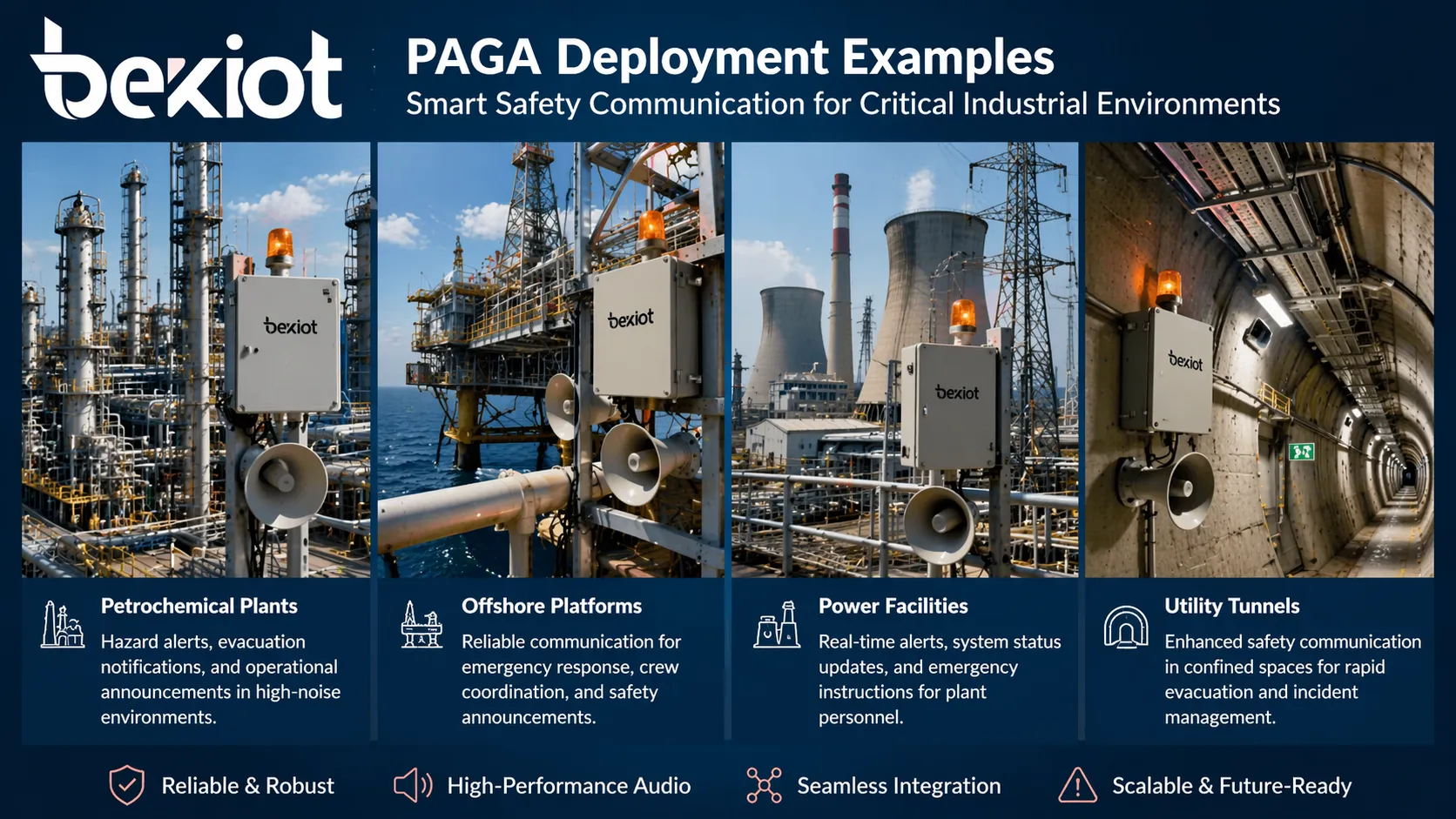
PAGA is widely used in high-risk and large-scale environments where clear voice instruction supports both routine operation and emergency control.
How to Choose the Right PAGA System
Start with coverage and acoustic conditions
A good PAGA design starts with the site itself. Project teams should review site geography, noise level, personnel flow, hazard distribution, emergency routes, and daily operating patterns. The correct design for a refinery process unit will not be the same as the correct design for a marine vessel, wind farm, tunnel, or utility corridor.
Acoustic planning should be done early. The goal is not simply to install enough loudspeakers. The goal is to make sure messages can be heard and understood in the areas where personnel need them. Speaker placement, power, direction, background noise, reverberation, and zoning logic all affect the final result.
Review redundancy and fault supervision
For safety-critical projects, maintainability is part of system performance. A PAGA platform should help operators discover faults, test alarm paths, monitor field device status, and document maintenance actions. If faults are not visible until an emergency occurs, the design is already too weak.
Redundancy should match project risk. Depending on the site, this may include backup amplification, dual power design, resilient network paths, supervised speaker circuits, standby controllers, and clear fault reporting. These choices improve system availability and reduce operational risk.
Plan for integration and future expansion
Industrial facilities rarely stay unchanged. New process areas may be added, safety policies may evolve, and other communication systems may need to be connected later. A PAGA platform should therefore support open integration and scalable expansion.
IP-based architecture, SIP compatibility, dispatch linkage, safety system interfaces, and flexible zone management can help protect the long-term value of the system. A scalable design allows the site to expand communication capability without rebuilding everything from the beginning.
Building a Practical Industrial Communication Framework
Becke Telcom focuses on industrial communication solutions for harsh and mission-critical environments. In PAGA-related projects, the goal is not only to provide loudspeaker coverage, but to build a communication framework that supports routine operation, emergency warning, voice coordination, and system linkage in one practical architecture.
This approach is especially important in petrochemical, offshore, marine, utility, renewable energy, and infrastructure projects. These sites often need public address, general alarm, industrial telephones, SIP communication, dispatch capability, and alarm linkage to work together rather than as separate systems.
For a refinery, offshore asset, power facility, tunnel, industrial park, or other critical site, a PAGA project should be planned around real site conditions, zoning logic, acoustic requirements, integration needs, and long-term maintenance strategy.
Conclusion
A PAGA system is far more than an industrial loudspeaker network. It is a structured platform for public address, zone paging, general alarm, emergency voice instruction, and coordinated site communication. When designed correctly, it improves emergency readiness and daily communication discipline across complex industrial environments.
For organizations operating in noisy, harsh, high-risk, or widely distributed facilities, PAGA provides a practical way to deliver timely instructions, support controlled response, and connect voice communication with the wider safety and operational ecosystem.
FAQ
What does PAGA stand for?
PAGA stands for Public Address and General Alarm. It refers to a system that combines routine broadcasting, zone paging, alarm tones, emergency voice messages, and live operator announcements in one platform.
How is a PAGA system different from a PA system?
A PA system is usually used for general announcements or audio distribution. A PAGA system adds emergency alarm functions, priority control, zone logic, supervision, and integration with safety or operational systems.
Where are PAGA systems commonly used?
PAGA systems are commonly used in oil and gas facilities, petrochemical plants, offshore platforms, marine vessels, power plants, utility sites, tunnels, corridors, transport infrastructure, and large industrial facilities.
Can PAGA work with fire alarm, gas detection, and CCTV systems?
Yes. A modern PAGA solution can integrate with fire detection, gas detection, CCTV, industrial telephones, SIP intercom, IP PBX, dispatch platforms, and other safety or communication systems.
What should be considered before choosing a PAGA system?
Key considerations include site coverage, acoustic conditions, zoning logic, emergency workflow, redundancy, supervision, integration requirements, maintainability, and future expansion plans.