What Makes an Explosion-Proof PA System Reliable for High-Risk Industrial Sites?
A practical guide to explosion-proof PA systems for high-risk industrial sites, covering emergency paging, hazardous-area communication, SIP integration, intercom, dispatch, alarm linkage, and solution planning.
Becke Telcom
In hazardous industrial environments, a public address system is not only used to make announcements. It must help operators deliver clear instructions during alarms, guide workers during emergencies, and support daily coordination in areas where noise, distance, weather, dust, gas, vibration, and harsh site conditions can all affect communication.
Oil and gas facilities, chemical plants, utility tunnels, energy sites, refineries, storage areas, and heavy industrial zones often need more than a loudspeaker or a local amplifier. They need a communication system that can connect paging, intercom, emergency telephones, alarm linkage, dispatch consoles, and mobile response teams into one coordinated workflow.
This article explains what matters when selecting an explosion-proof PA system, why hazardous-area communication should be planned as a complete architecture, and how Becke Telcom supports industrial users with integrated paging, intercom, dispatch, radio interworking, and SIP-based communication solutions.
Why Basic PA Equipment Is Not Enough
Emergency messages must be understood, not just heard
High-risk industrial sites are rarely quiet. Machinery, ventilation, pumps, vehicles, wind, metal structures, and large open spaces can make speech difficult to understand. In this kind of environment, the real performance of a PA system is measured by voice intelligibility, not only by output power.
A suitable industrial PA solution should support clear routine announcements, alarm messages, evacuation instructions, safety reminders, and live operator paging. When an incident changes quickly, operators must be able to move from automatic broadcast to manual voice intervention without delay.
Industrial response depends on connected systems
A gas alarm, equipment fault, perimeter event, fire warning, or worker distress call may require several actions at once. The control room may need to broadcast a zone-specific message, open a two-way talkback channel, check video, notify supervisors, and coordinate field teams.
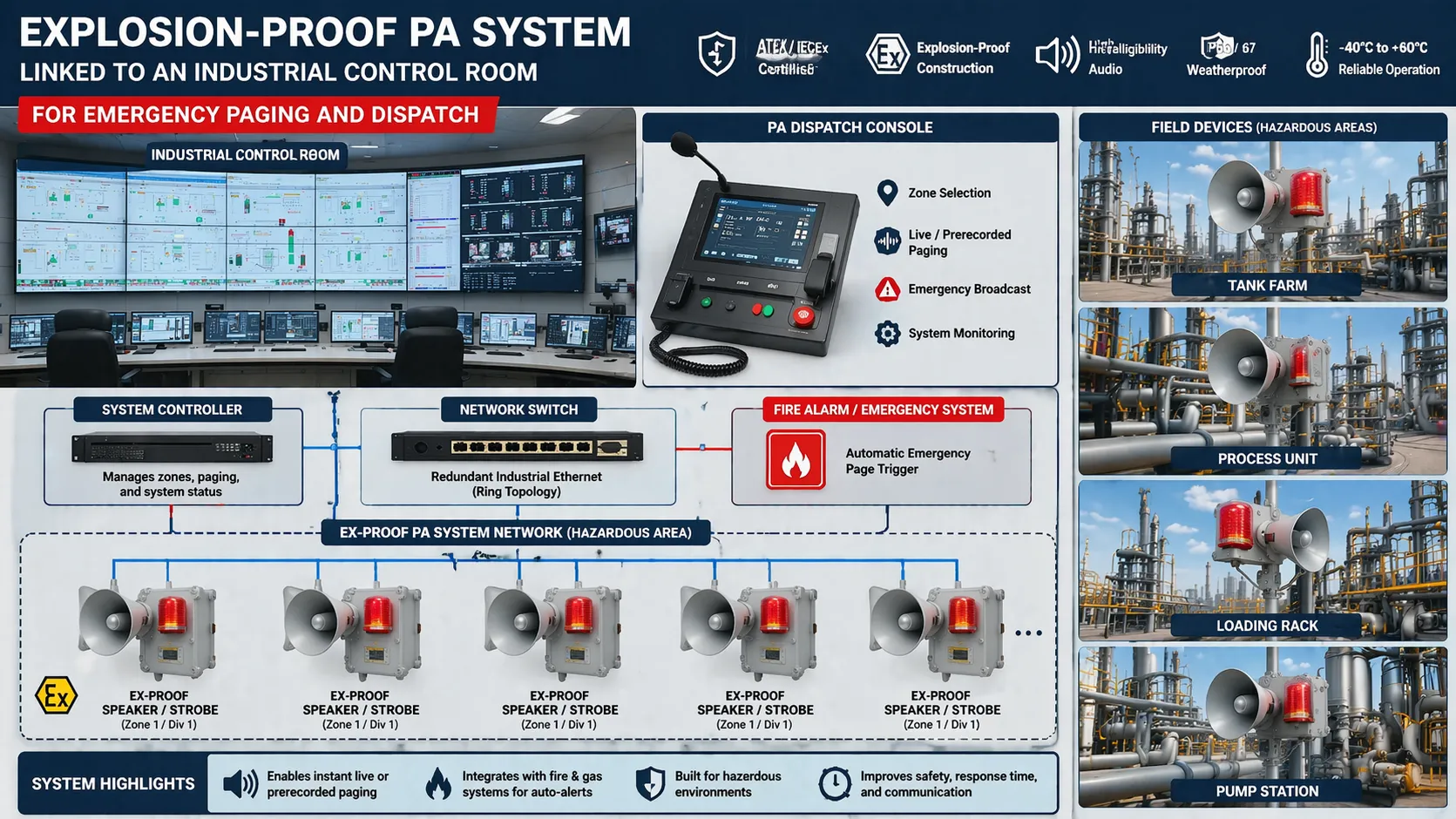
A standalone horn speaker cannot handle that response chain by itself. A modern hazardous-area communication system should connect public address with intercom, alarm events, dispatch, telephony, and field communication tools, so operators can act through one coordinated process.
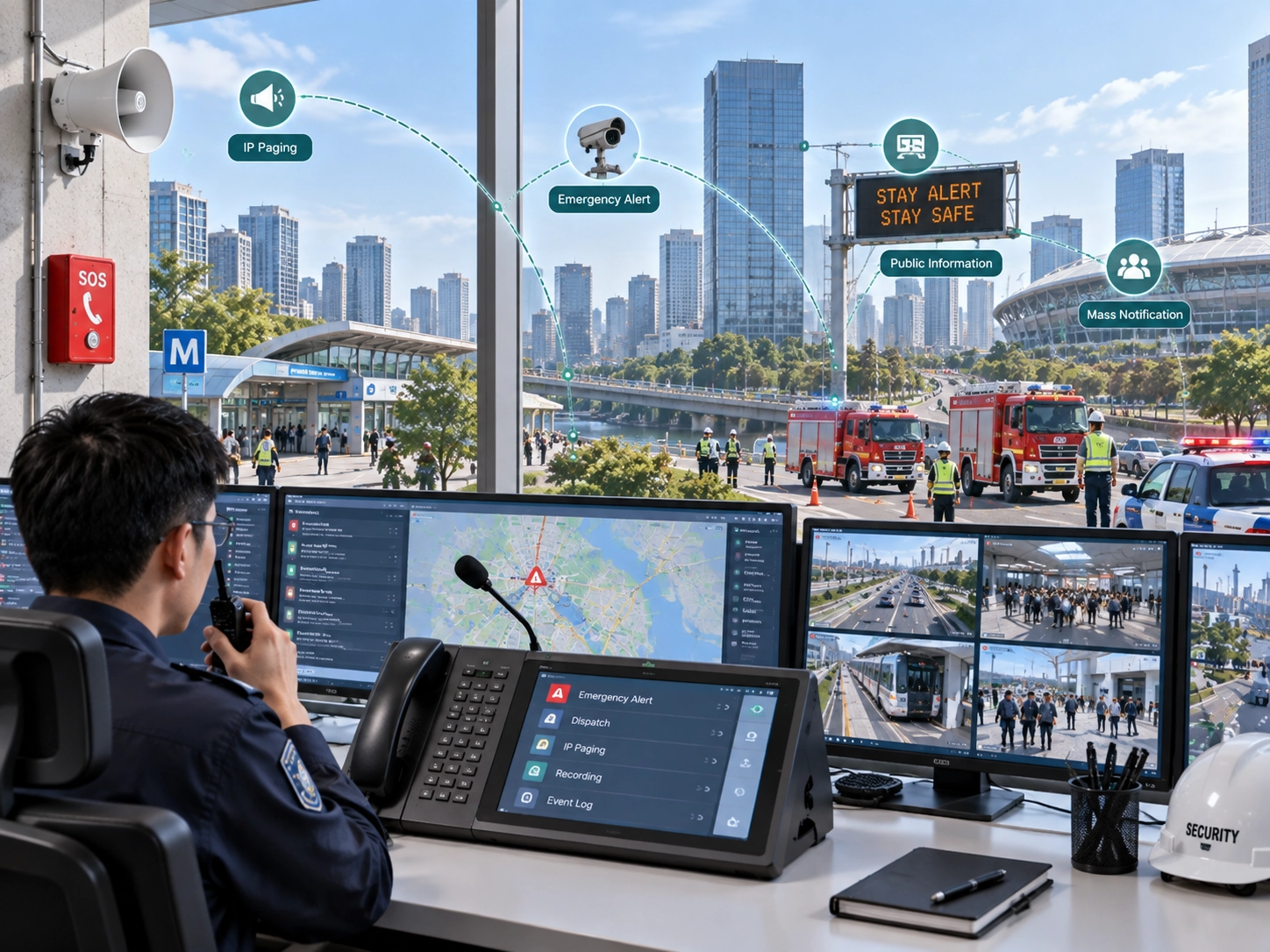
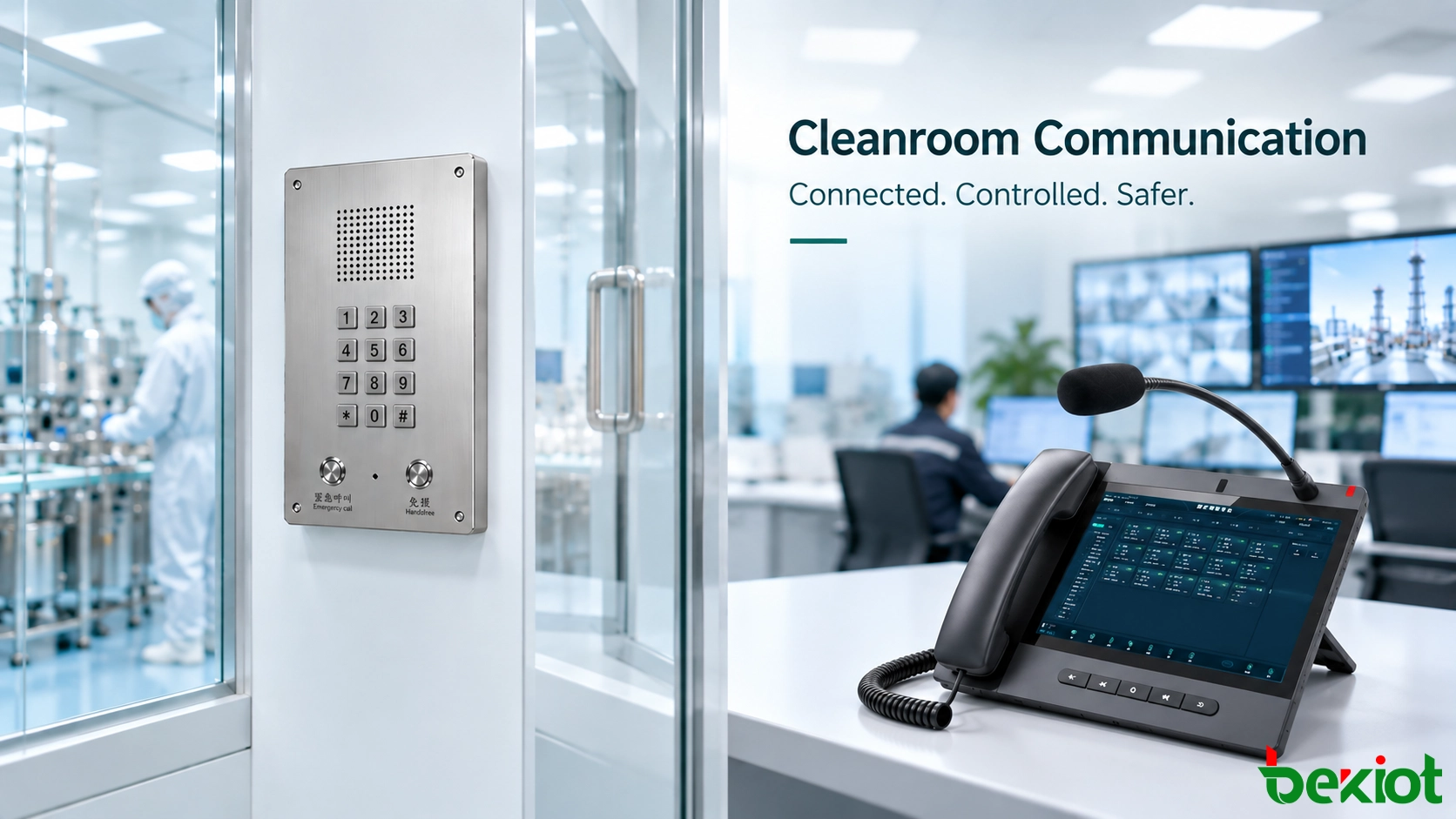
High-risk sites need centralized control when paging, intercom, alarms, and field response must work together.
Key Requirements for Hazardous-Area Paging
Industrial-grade field equipment
The field layer must match the operating environment. Depending on the site, this may include explosion-proof telephones, rugged paging horns, industrial intercom terminals, SIP broadcast gateways, protected speakers, visual alarms, and communication endpoints designed for harsh outdoor or process-area conditions.
Buyers should look beyond the basic product label. The more important question is whether the system can maintain communication in hazardous zones, remote assets, utility corridors, tunnel sections, tank farms, compressor areas, and other locations where communication failure can create safety risk.
Zone-based broadcast control
Industrial facilities are usually divided into different areas, and each area may need different communication rules. A loading zone, process unit, tunnel section, warehouse, substation, control room, and maintenance area should not always receive the same announcement.
A strong PA design should support zone paging, group paging, scheduled broadcasts, emergency priority, and all-call override. This allows operators to send targeted instructions when only one area is affected while still supporting site-wide emergency messages when required.
Priority handling for urgent events
Emergency communication must have priority over routine audio. Background music, scheduled messages, normal paging, and local announcements should be overridden when a safety message or evacuation instruction needs immediate attention.
Priority logic is especially important in industrial sites where different systems may trigger messages at the same time. The design should define which events take priority, how lower-priority audio is interrupted, and how operators regain control after the event is handled.
Integration with alarms, video, and dispatch
The best PA system for high-risk operations is rarely a speaker-only design. It should be able to work with alarm inputs, intercom calls, CCTV review, operator consoles, emergency telephones, radio gateways, and management platforms.
This integration helps the control room respond faster. Instead of manually switching between isolated tools, operators can receive an event, confirm the location, broadcast instructions, contact field personnel, and escalate the response from a more unified communication environment.
A Converged Architecture for Industrial Communication
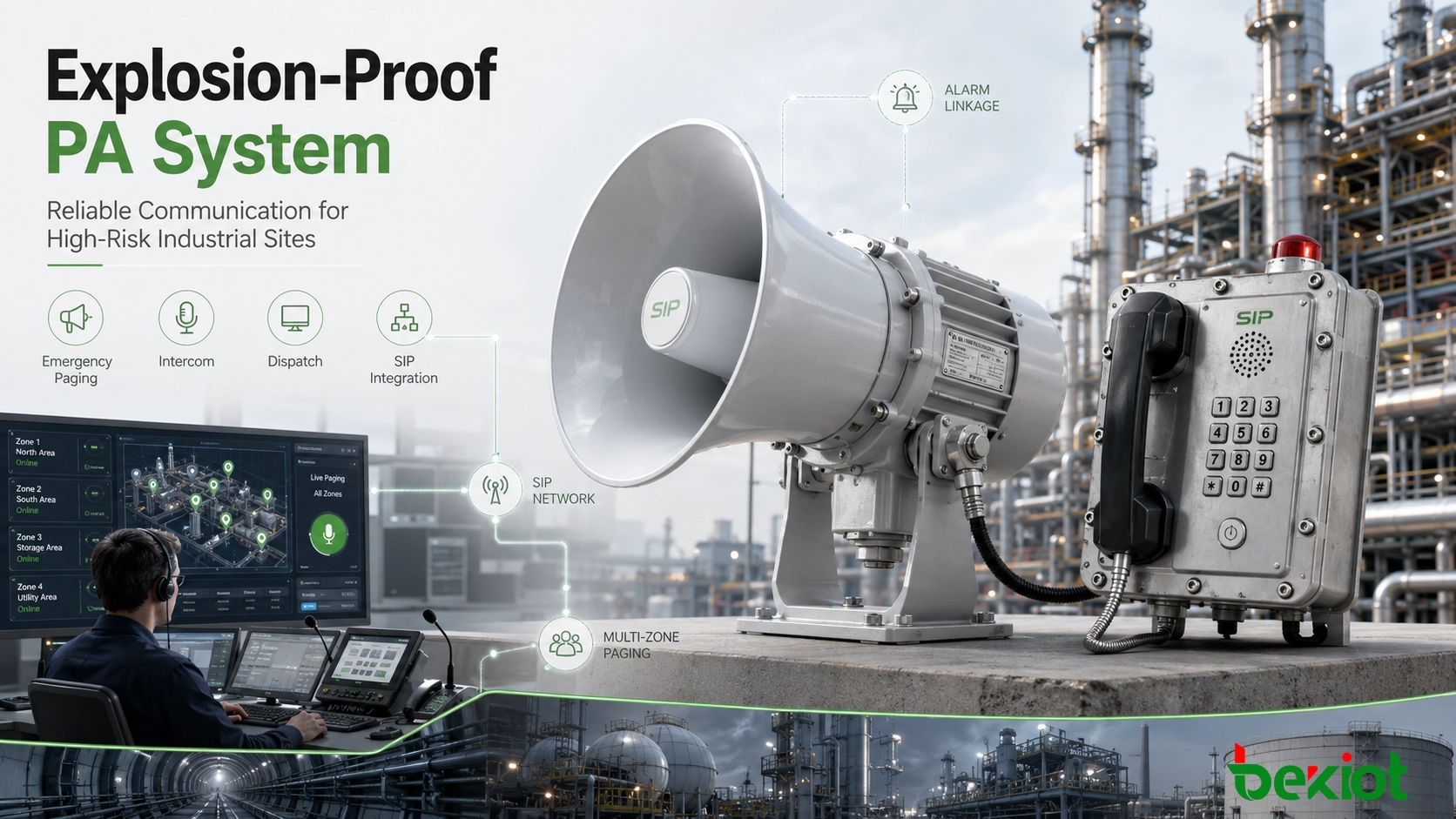
Becke Telcom approaches industrial PA projects as part of a broader communication system rather than a single-function broadcast installation. The solution can combine public address, SIP paging, emergency intercom, industrial telephony, RoIP radio interworking, dispatch consoles, and centralized management.
This kind of architecture is useful because emergency response is rarely linear. A control room may need to move from alarm notification to live voice paging, then to field talkback, then to mobile team coordination, and finally to management escalation. When these tools are connected, the response process becomes faster and easier to manage.
SIP-based architecture also helps with long-term expansion. Paging gateways, intercom devices, industrial phones, operator consoles, and other compatible endpoints can be added more flexibly than in a closed or isolated PA design.
A reliable industrial PA system should not work as an audio island. It should become part of the site’s wider emergency communication and operational response network.
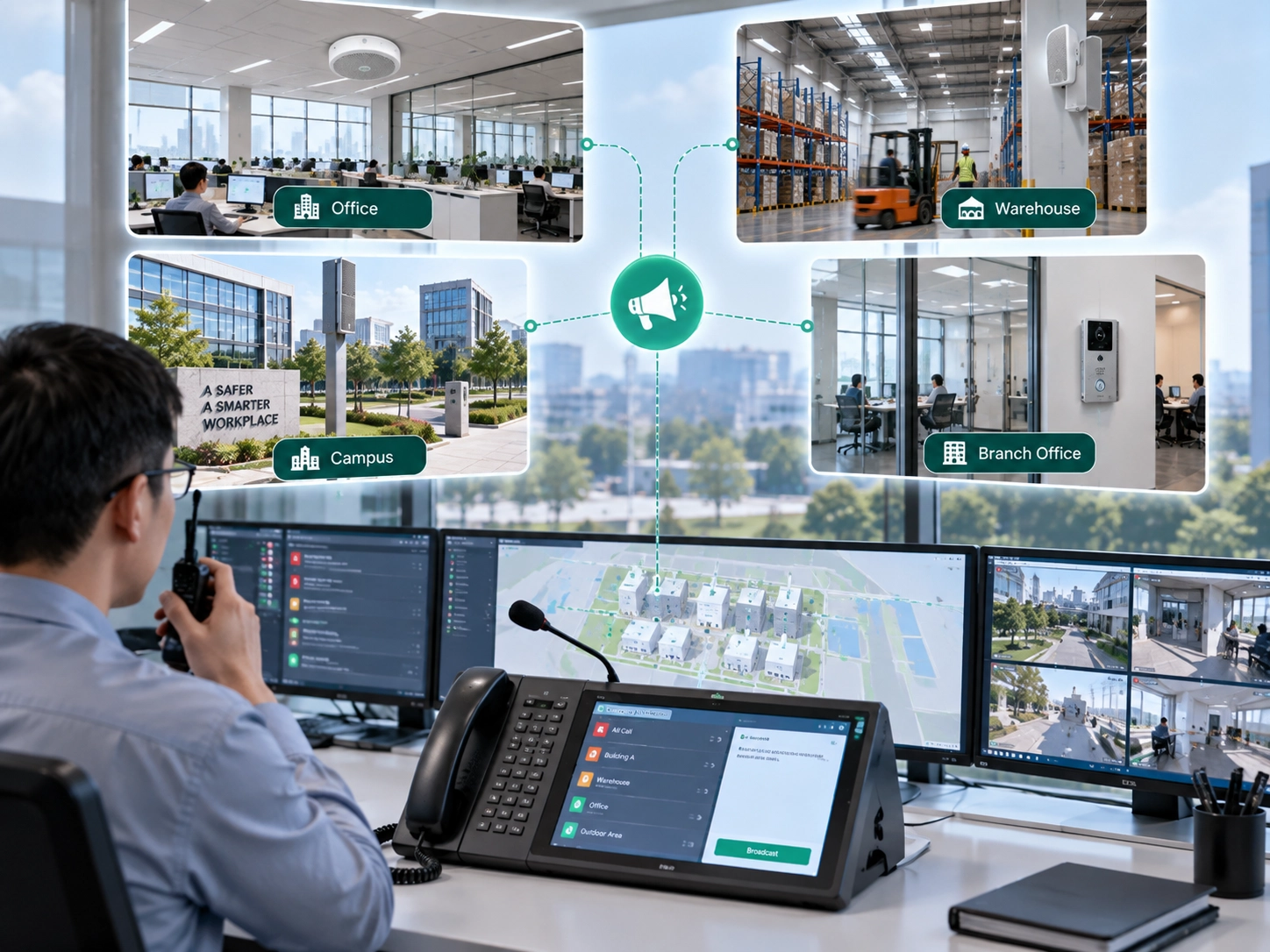
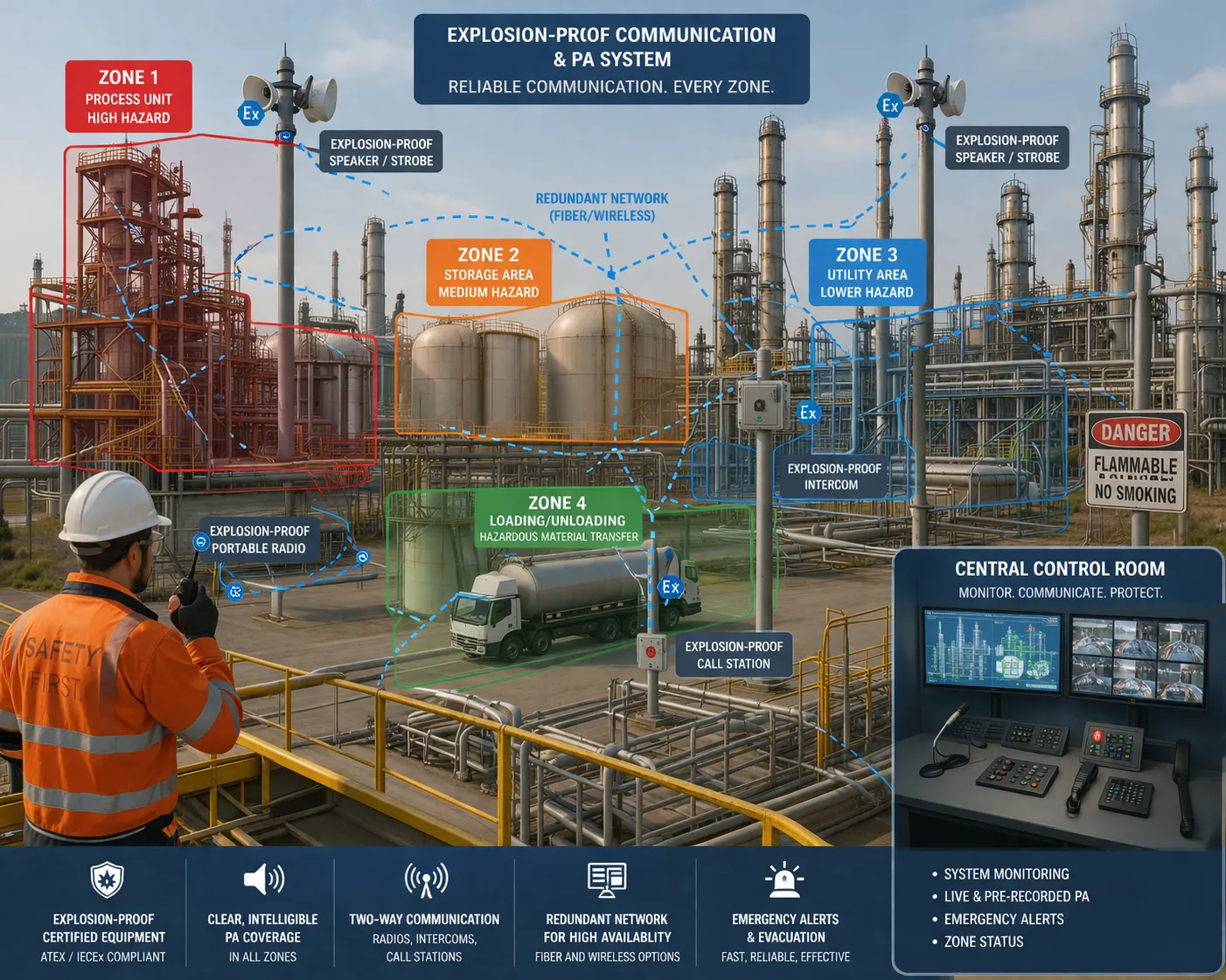
Multi-zone communication helps operators deliver the right message to the right area without disturbing unrelated sections of the site.
Recommended Components for a Complete Solution
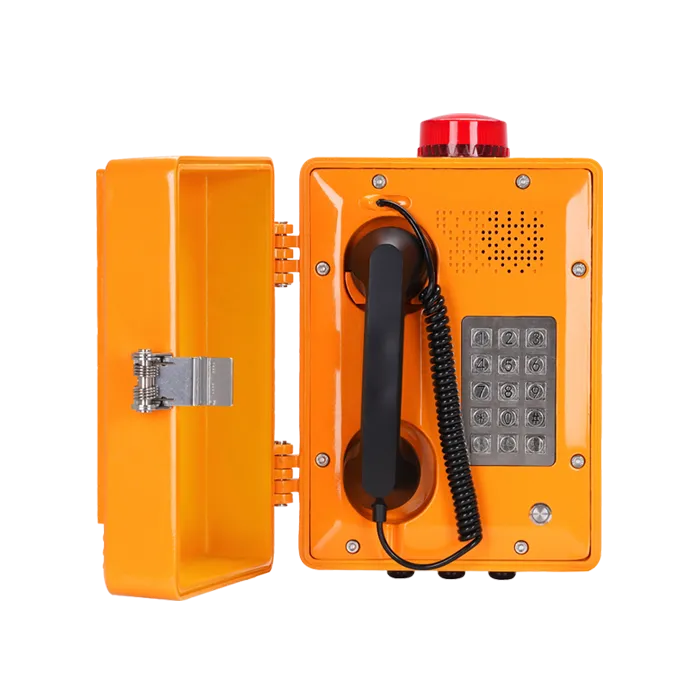
EX-BH621 explosion-proof telephone for field voice communication
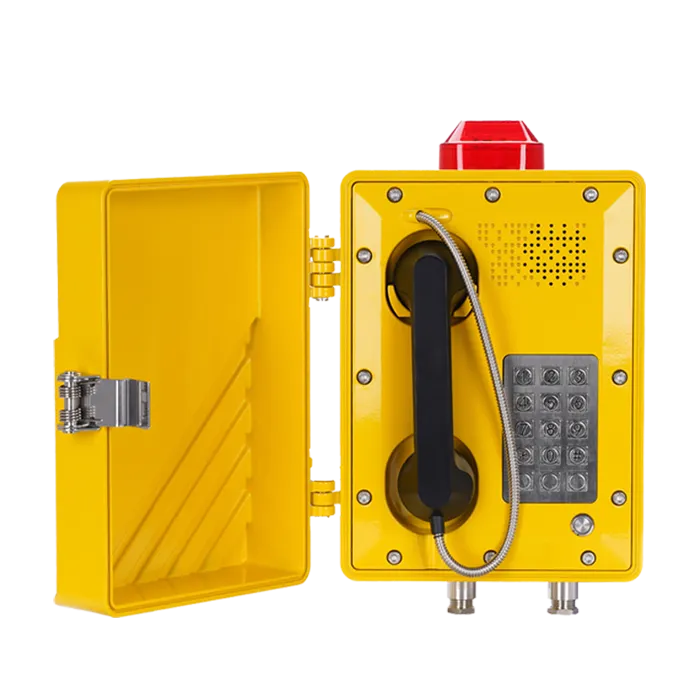
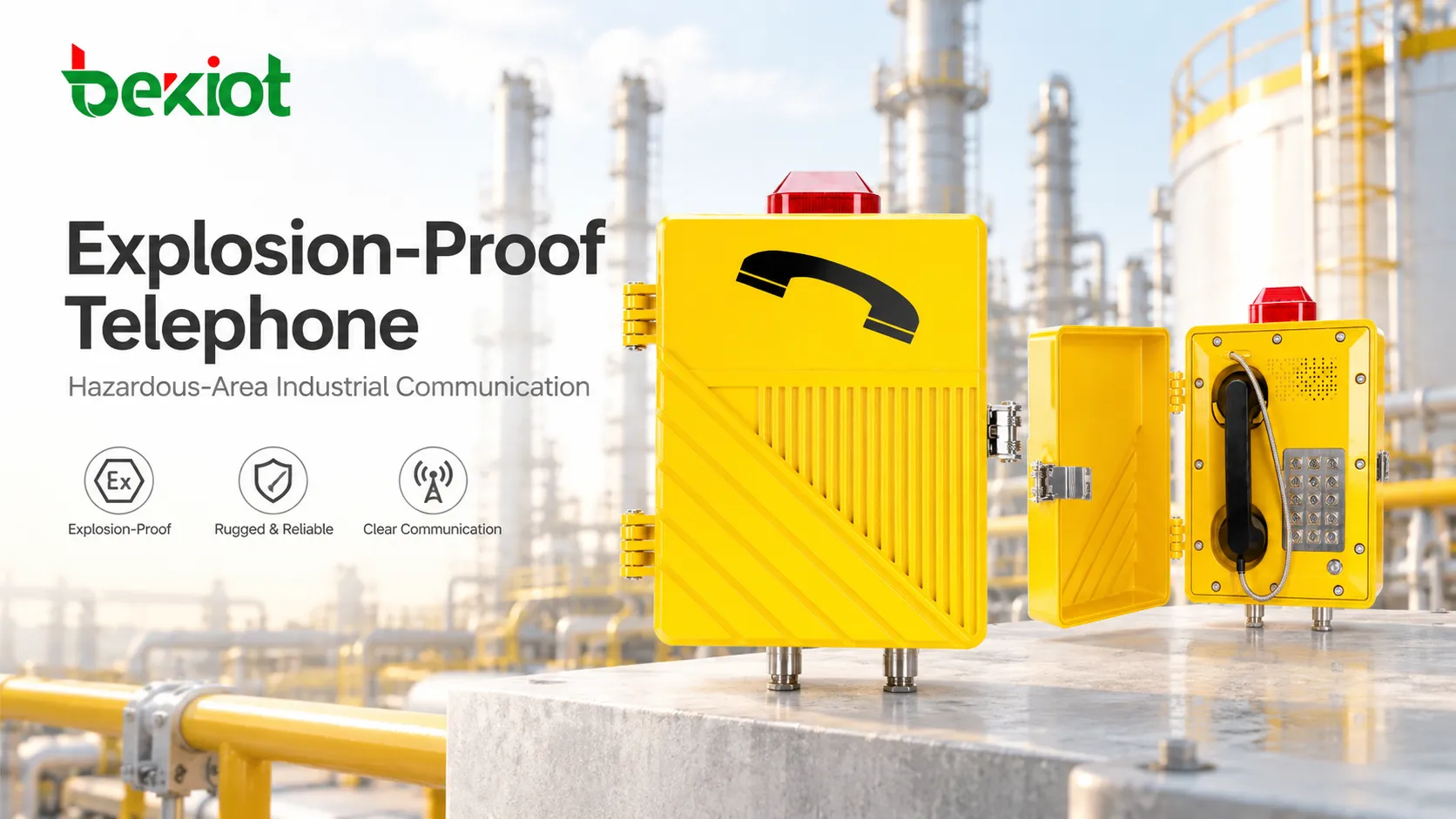
The EX-BH621 Explosion-proof Telephone is suitable for hazardous areas where workers need direct voice contact with the control room. In many industrial sites, one-way paging is not enough. Field personnel may need to report an incident, confirm instructions, request support, or communicate from a dangerous zone during abnormal conditions.
The product supports standard SIP protocol and can work with commonly used IP PBX and network dispatching platforms. It is designed for environments involving flammable or explosive gas and dust, including oil fields, gas stations, hydrogen stations, chemical plants, underground pipe galleries, and gas compartments.
For an explosion-proof PA architecture, the EX-BH621 extends the system from area-wide broadcast to direct two-way communication. This makes it useful when operators need both emergency notification and accountable field response.
The product is also positioned for harsh conditions such as water, moisture, dust, cold, frost, high temperature, oxidation, corrosion, and impact. It can support emergency linkage expansion with alarm equipment such as explosion-proof speakers and alarm lights, and it can trigger prerecorded emergency broadcasts as part of a wider response workflow.
PA3 SIP Broadcast Gateway for zone paging and emergency audio
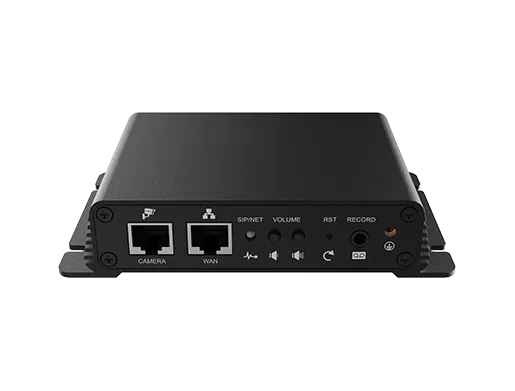
The PA3 SIP Broadcast Gateway is suitable for industrial sites that need centrally controlled broadcast functions. It can support zone paging, emergency announcements, scheduled playback, and IP-based audio distribution.
In a hazardous-area solution, the value of this gateway is not only audio output. It helps build a managed paging layer that can work with operator consoles, SIP systems, intercom devices, and emergency workflows.
PA2S gateway for intercom and event linkage
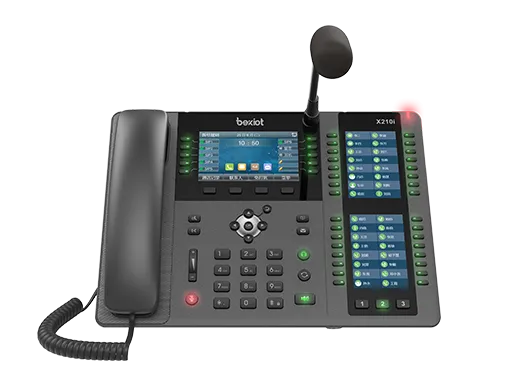
The PA2S gateway is useful where the site needs both broadcast and interactive communication. It can support intercom and paging functions together, making it suitable for machine rooms, utility spaces, service points, access areas, and monitored field locations.
In a complete system, this type of gateway can help connect speakers, alarm inputs, sensors, and talkback paths so that field communication is not limited to one-way sound.
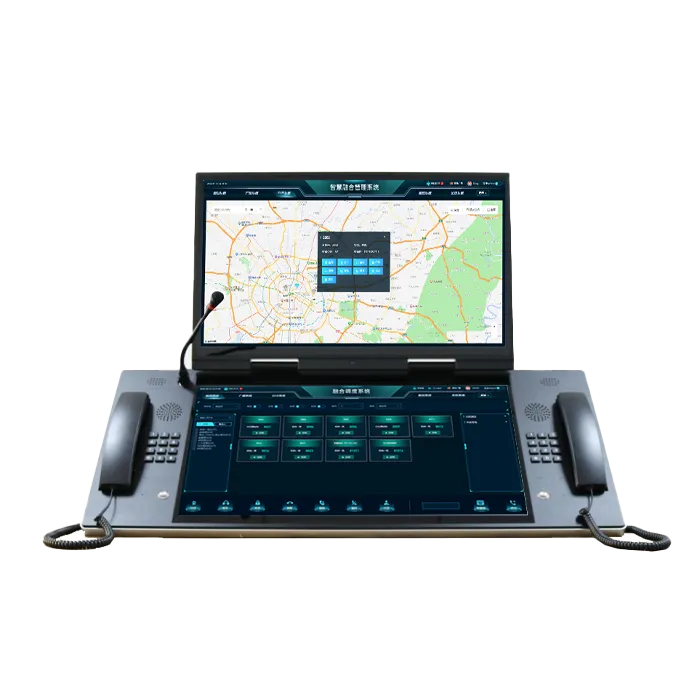
gp320i visual paging console for control room operators
A PA system becomes more useful when operators can control it clearly. The gp320i visual paging console gives dispatch or control room staff a more direct way to initiate announcements, manage paging, monitor activity, and coordinate voice communication.
For sites with a central security room, emergency command room, or industrial control center, a visual console helps turn the PA system from a passive broadcast tool into an active operational interface.
W712 RoIP gateway for radio-linked response teams
Many industrial sites still depend on radio users for patrol, maintenance, safety inspection, and emergency response. The W712 RoIP gateway helps connect radio users with the IP communication environment.
This is valuable when an incident requires both fixed-site paging and mobile team coordination. Operators can combine public address, intercom, and radio-linked field communication instead of managing them as separate systems.
Best-Fit Industrial Applications
Oil, gas, and chemical facilities
Oil, gas, and chemical environments require communication systems that remain dependable during alarms, maintenance, production changes, and emergency response. Hazardous process areas often need both explosion-proof field endpoints and centralized operator control.
A solution that combines paging, intercom, dispatch, and field communication can improve response discipline and help operators deliver clear instructions across high-risk zones.
Utility tunnels and underground corridors
Utility tunnels and underground infrastructure create difficult acoustic and communication conditions. Long corridors, segmented spaces, concrete surfaces, cable routes, ventilation noise, and limited access points all affect voice communication.
A zoned PA and intercom design allows operators to send targeted instructions, support worker distress communication, and coordinate tunnel activity from a central location.
Energy sites and remote industrial assets
Wind farms, substations, power infrastructure, remote pump stations, and distributed energy sites often need communication across large areas. These locations may combine outdoor paging, field intercom, radio communication, and control room coordination.
An IP-based PA solution linked with dispatch, RoIP, and industrial endpoints helps reduce gaps between remote structures, mobile staff, and the main control point.
Heavy industry and large production areas
Metallurgy, mining support areas, manufacturing plants, logistics yards, and heavy industrial workshops need paging systems that can handle high noise and wide coverage. In these environments, clear voice delivery and fast operator intervention are essential.
A complete industrial communication system can help connect production zones, maintenance teams, safety staff, and management users through one structured communication path.
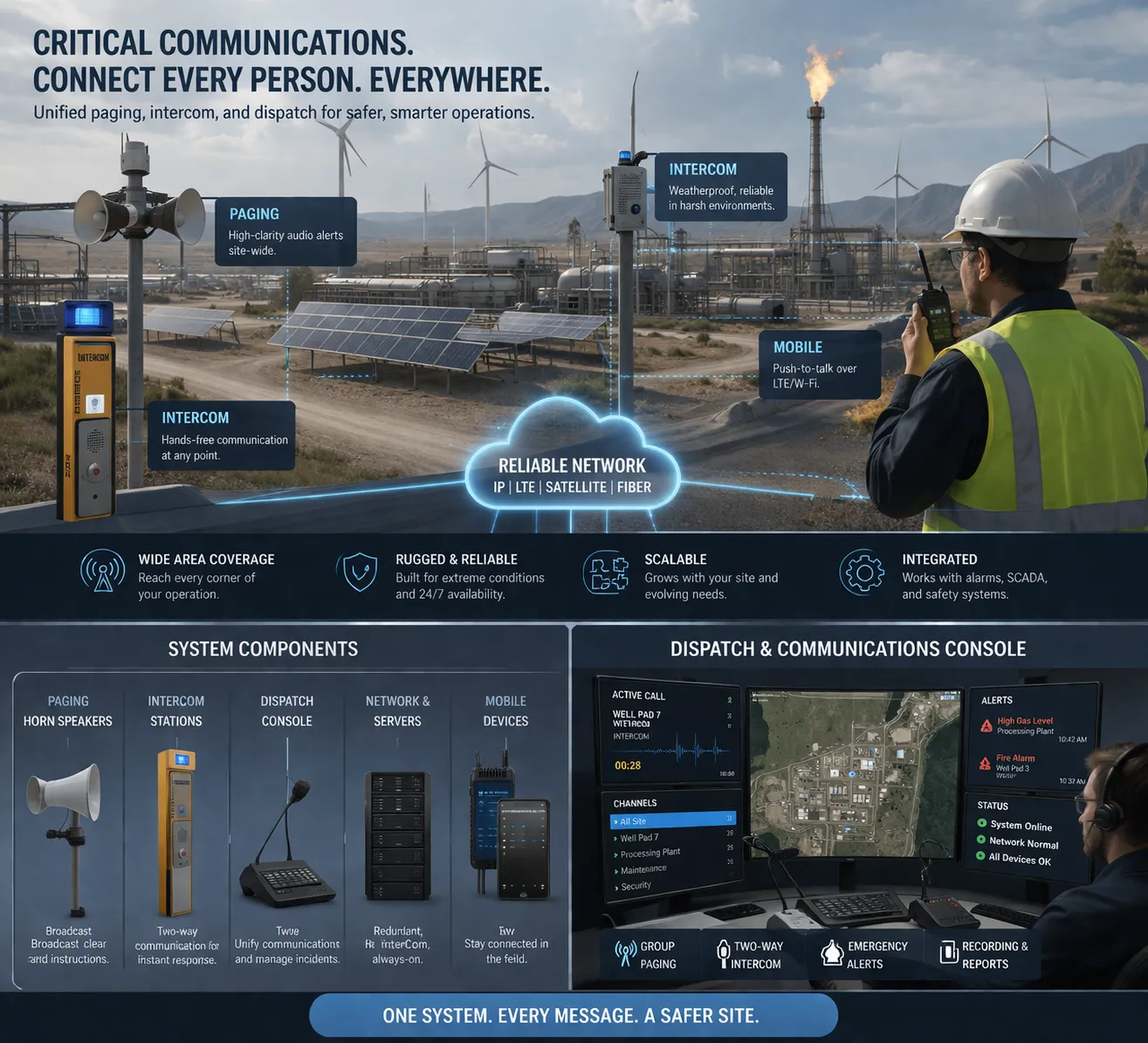
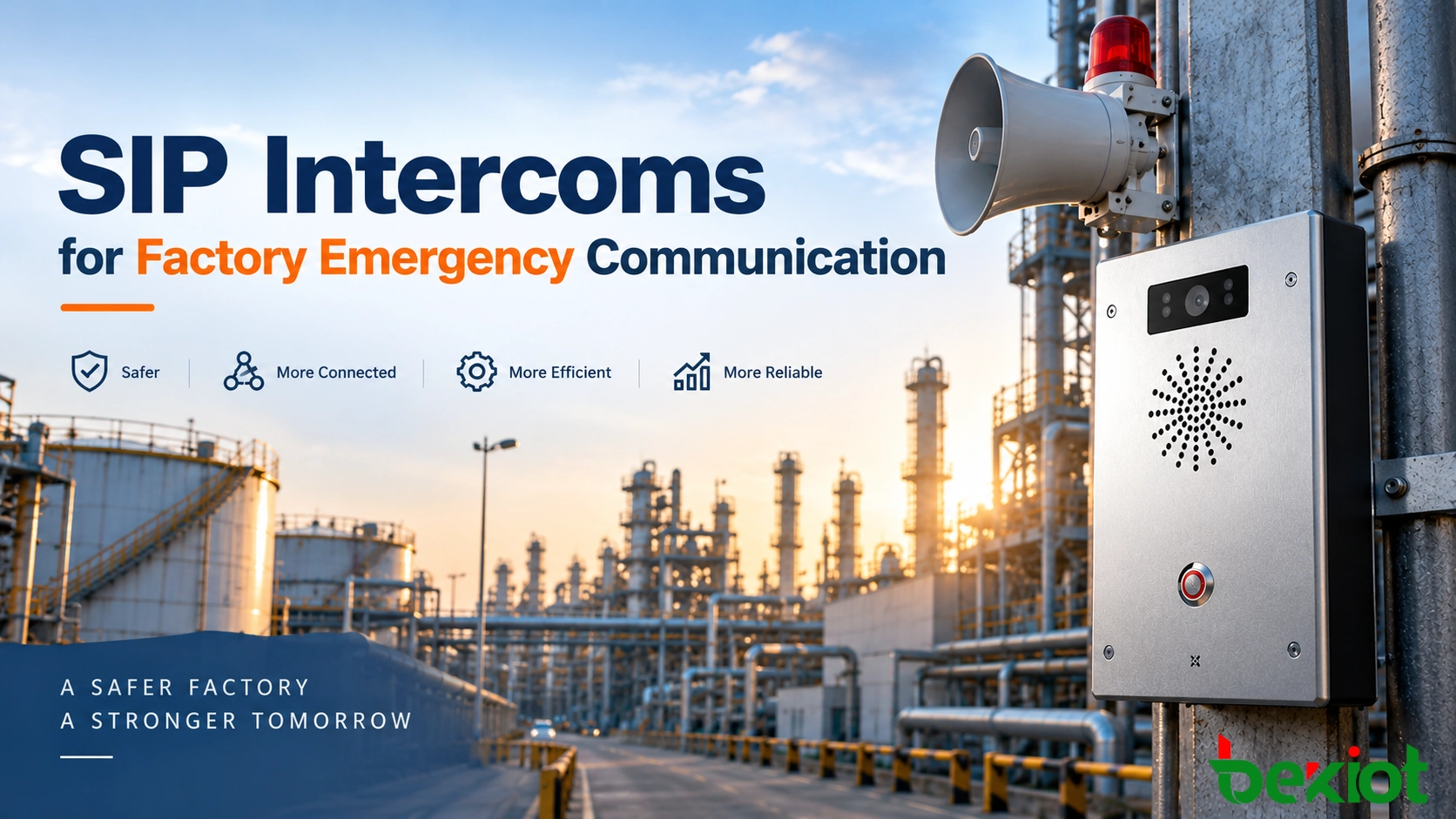
Remote and high-risk industrial sites benefit from PA systems that work together with intercom, dispatch, and mobile response communication.
How to Evaluate the Right System
Look at the full communication path
Many projects begin by comparing speaker power, enclosure material, mounting style, or product appearance. These details matter, but they do not define whether the site will communicate effectively during a real incident.
The better approach is to evaluate the full communication path: how an alarm is triggered, who receives it, which area hears the message, whether the operator can speak live, how field staff respond, and how the event is logged or escalated.
Match the design to site zoning
A hazardous industrial site should not be treated as one single broadcast area. Each zone should be evaluated by risk level, noise level, worker presence, emergency route, and operating function.
Proper zoning helps operators avoid unnecessary disturbance while still supporting fast site-wide override when a major emergency occurs.
Plan for expansion and modernization
Industrial sites change over time. New process units may be added. Monitoring systems may be upgraded. Safety rules may become stricter. Remote assets may need to be connected later.
An open SIP-based communication architecture gives the site a better path for future expansion. It can start with paging and intercom, then grow toward a more complete dispatch, telephony, radio, and management platform.
Test under real operating conditions
Hazardous-area communication should be tested in the real environment, not only reviewed on a drawing. Noise, echo, cable routes, weather exposure, network conditions, and operator workflow can all affect the final result.
Testing should confirm voice clarity, zone behavior, alarm priority, live paging, device linkage, field talkback, power backup, and recovery behavior after faults.
Why an Integrated Approach Delivers More Value
The strongest explosion-proof PA system is not simply the loudest system. It is the system that helps people understand what is happening, receive the right instruction, and coordinate response actions quickly.
Becke Telcom’s solution direction fits this requirement by connecting industrial paging, SIP intercom, explosion-proof telephones, visual dispatch, radio interworking, centralized control, and emergency linkage into one communication framework.
This makes the system suitable for operators who need a practical balance of safety communication, daily operation, phased expansion, and long-term manageability.
Talk to Becke Telcom
If your project involves hazardous-area paging, explosion-proof communication, emergency intercom, alarm linkage, or multi-zone site coordination, Becke Telcom can help evaluate the operating environment and design a communication solution around the real response requirements.
From explosion-proof telephones and SIP gateways to paging consoles, RoIP integration, and centralized dispatch architecture, Becke Telcom supports industrial users that need reliable communication across critical sites.
Conclusion
A reliable explosion-proof PA system for high-risk industrial applications should do more than broadcast sound. It should deliver intelligible voice, support priority paging, connect with alarms, enable two-way communication, and help operators coordinate response across hazardous areas.
For oil and gas, chemical processing, utility tunnels, energy infrastructure, heavy industry, and remote industrial sites, the best result comes from a complete communication architecture rather than isolated audio devices.
Becke Telcom provides a strong solution approach by combining PA, intercom, explosion-proof telephony, dispatch consoles, radio interworking, and SIP-based integration. For industrial operators building a safer and more connected communication environment, this creates a practical path from daily paging to emergency response coordination.
FAQ
What is an explosion-proof PA system used for?
An explosion-proof PA system is used to broadcast announcements, alarms, safety messages, and emergency instructions in hazardous or high-risk industrial environments such as oil and gas sites, chemical plants, tunnels, utilities, and energy facilities.
Is a horn speaker alone enough for a hazardous industrial site?
Usually not. A horn speaker can provide sound output, but a serious industrial site often needs zone control, live paging, alarm linkage, operator management, intercom, and dispatch coordination. A complete system is more reliable than isolated audio endpoints.
Why is SIP useful in an industrial PA solution?
SIP helps connect different communication devices under one architecture, including paging gateways, intercom terminals, industrial telephones, operator consoles, IP PBX systems, and dispatch platforms. This improves flexibility and makes future expansion easier.
Can an explosion-proof PA system support two-way communication?
Yes. When combined with explosion-proof telephones, SIP intercoms, gateways, and dispatch consoles, the system can support both area-wide broadcast and direct two-way voice communication between field users and the control room.
Which industries need explosion-proof PA and communication systems?
Common applications include oil and gas, petrochemical plants, refineries, utility tunnels, underground corridors, power sites, wind farms, storage terminals, heavy industry, ports, and other sites where hazardous conditions and emergency response requirements are present.
How should I choose the right industrial PA solution?
Start by evaluating hazardous areas, noise levels, paging zones, alarm events, field communication needs, control room workflow, network conditions, and future expansion plans. The best solution should cover the full communication path from alarm trigger to operator response and field confirmation.