Emergency Communication Systems for Energy and Critical Infrastructure
Emergency communication systems for energy and critical infrastructure, covering industrial telephones, SIP intercoms, PAGA, IP PBX, dispatch consoles, system integration, resilience planning and harsh-site deployment.
Becke Telcom
Energy and critical infrastructure sites depend on communication every day, but its real value becomes clear when something abnormal happens. A gas alarm, equipment failure, process upset, fire risk, security incident, logistics delay, or weather-related disruption can quickly affect personnel safety and operational continuity if field teams and control rooms cannot communicate clearly.
In power plants, substations, oil and gas sites, tank farms, terminals, tunnels, ports, and utility networks, communication should not be treated as a background service. It is part of the site’s safety readiness. Workers need a dependable way to report problems, hear emergency messages, contact supervisors, and receive instructions even when the environment is noisy, exposed, or under pressure.
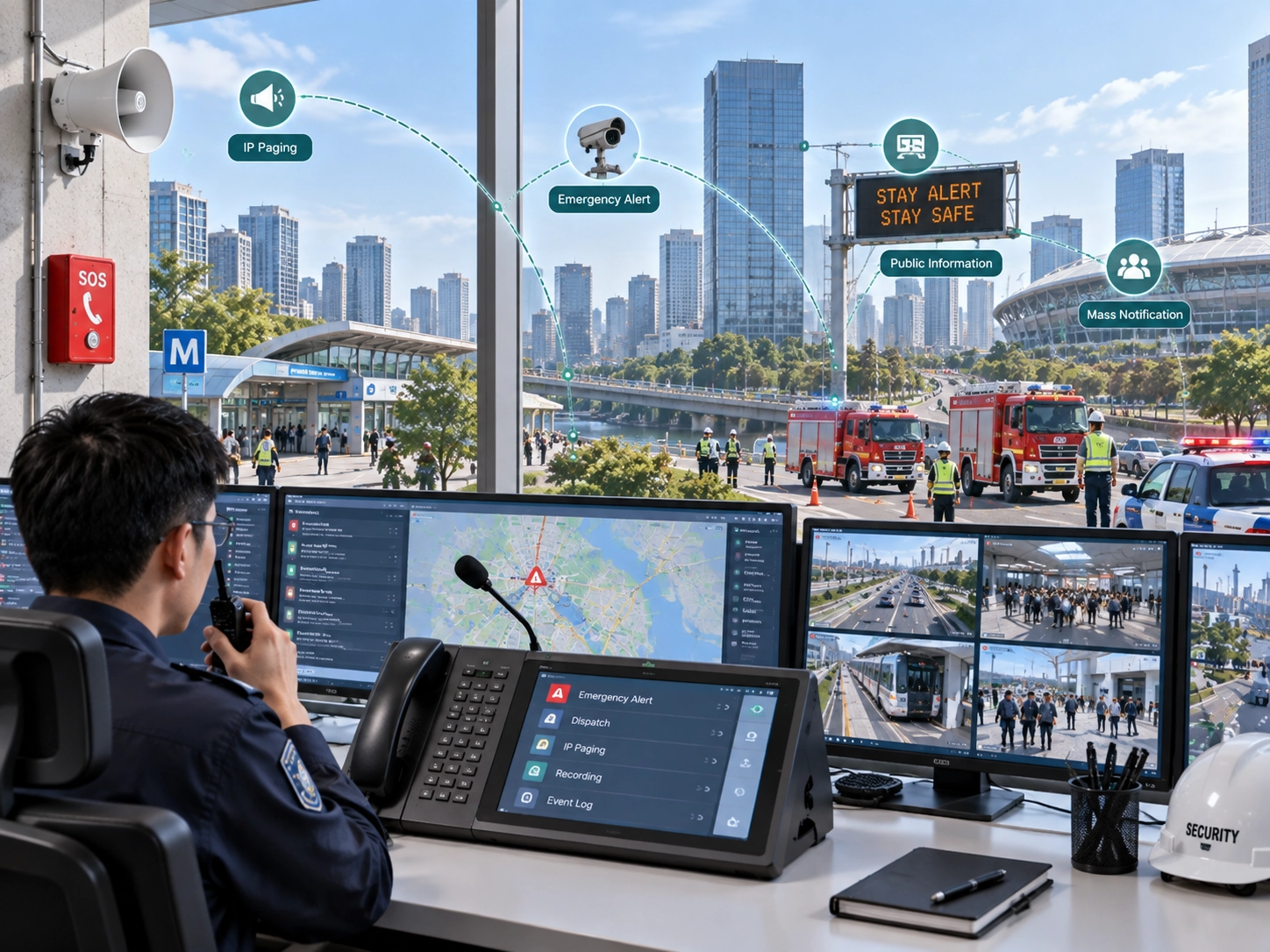
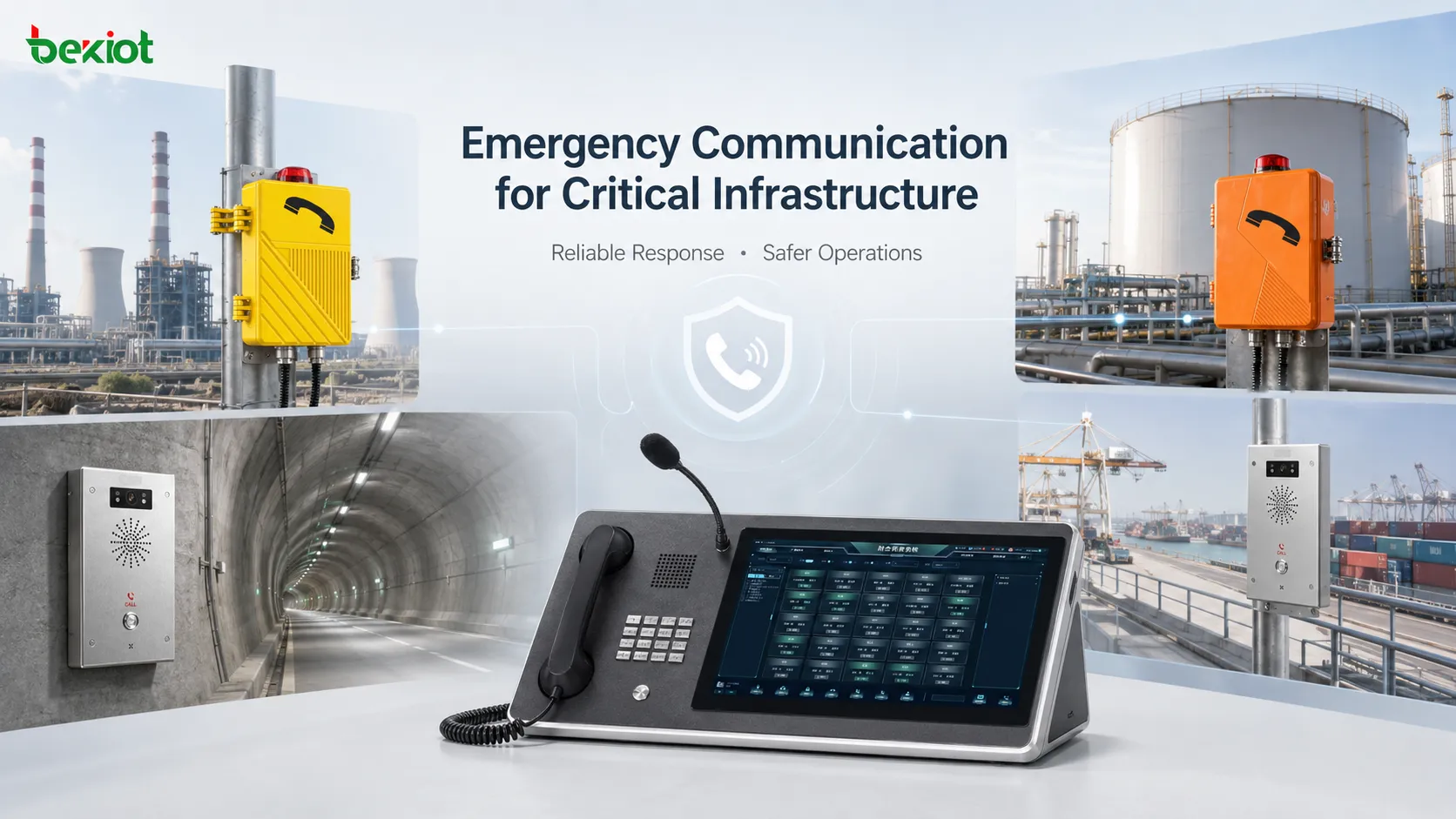
A modern emergency communication system usually combines industrial telephones, SIP intercoms, PAGA systems, IP PBX platforms, dispatch consoles, recording, and integration with alarms or monitoring systems. The goal is not simply to install more devices, but to create a communication layer that helps people respond faster and coordinate more accurately during abnormal events.
In critical infrastructure, communication reliability is not only an operational convenience. It is part of the protection strategy.
Why energy sites need stronger communication planning
Energy and industrial operators face a wider set of risks than before. Traditional hazards such as equipment failure, electrical faults, hazardous material exposure, fire, gas leakage, and emergency shutdown events remain important. At the same time, facilities must also manage remote assets, contractor coordination, cybersecurity awareness, staffing pressure, supply uncertainty, and stricter continuity requirements.
This changes how communication systems should be planned. A site may have strong process equipment and written safety procedures, but if personnel cannot reach the control room quickly, if emergency broadcasts cannot be heard in noisy areas, or if operators must switch between disconnected systems during an incident, response quality can fall at the moment when clarity matters most.
Communication design therefore needs to support both routine work and emergency response. It should help teams handle maintenance coordination, lone-worker support, alarm escalation, evacuation messaging, contractor access, security events, and after-action review.
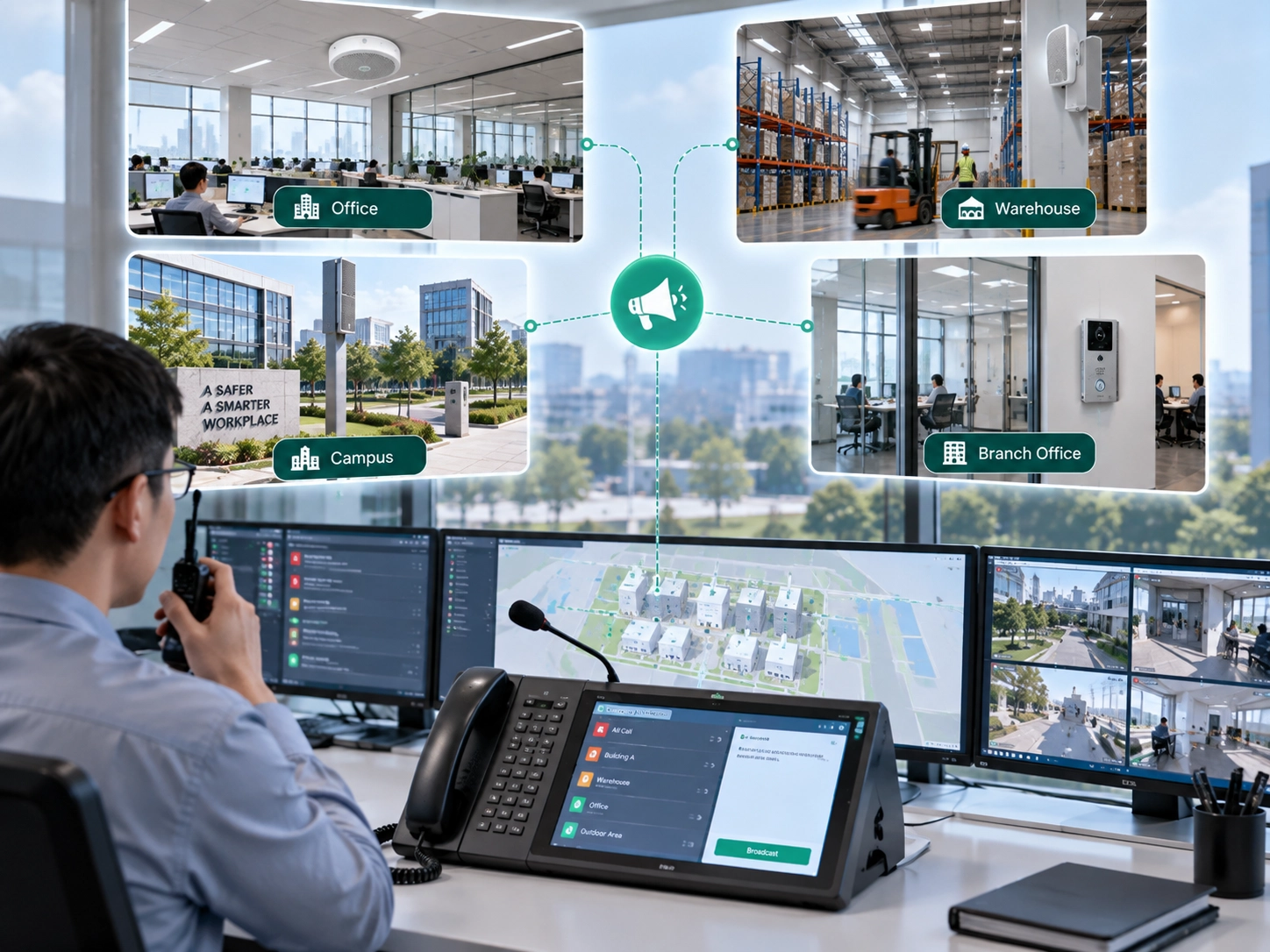
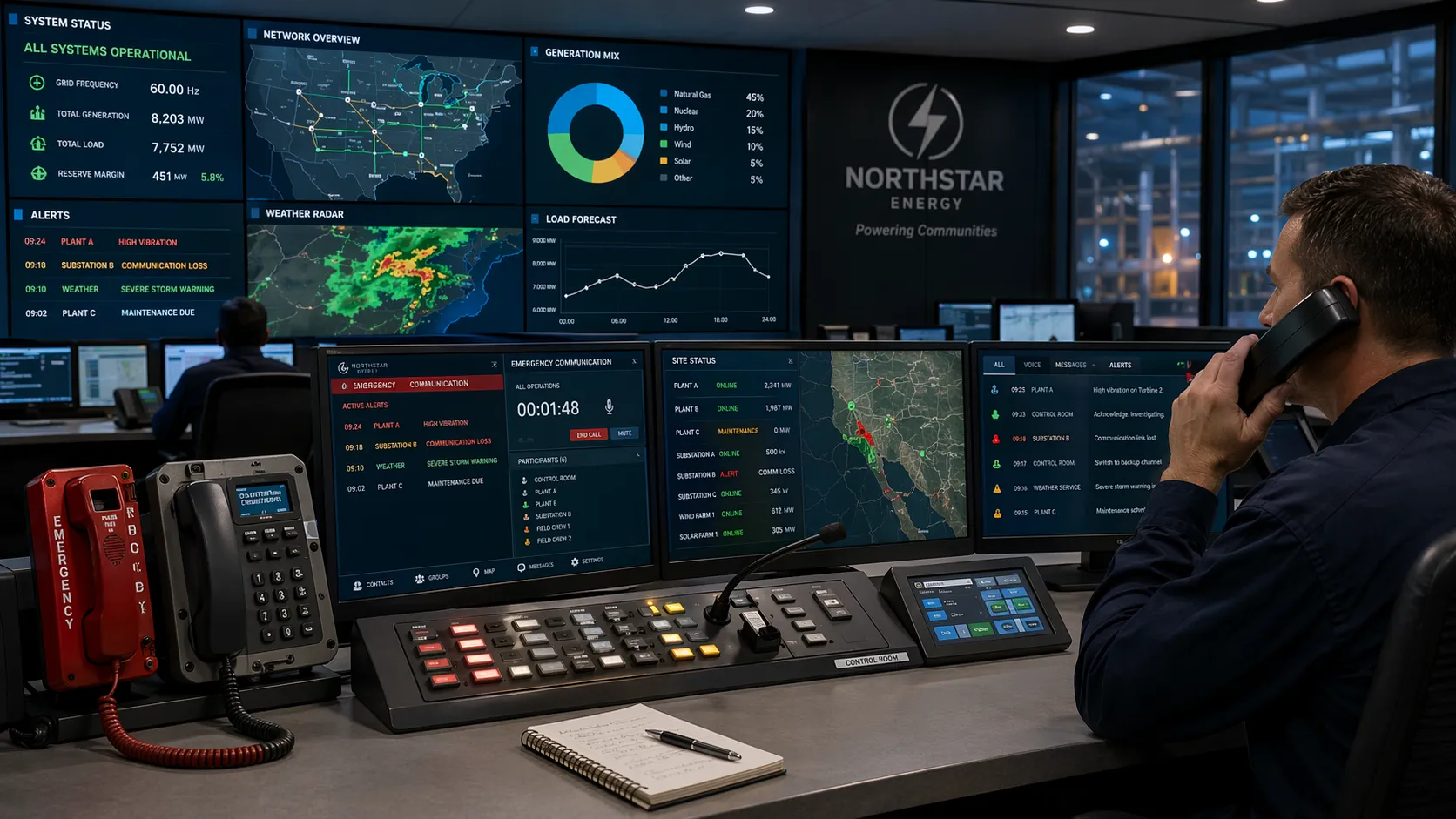
Energy and utility operations need reliable voice communication between field devices, control rooms, dispatch teams, and remote support personnel.
How communication failure affects safety and operations
Communication failure does not always appear as a complete outage. More often, it appears as a delayed call, an unclear broadcast, a missed alarm escalation, a misunderstood instruction, or a field report that reaches the wrong person. In a high-risk environment, these small failures can create safety, business, and reputational exposure.
A technician may need immediate confirmation before working on isolated equipment. A loading area may need a fast security response. A substation may need direct voice contact with the control room during a fault. A tank farm may require a zoned evacuation message. Each situation depends on communication endpoints that are visible, simple, and reliable.
The most effective systems reduce manual steps during an incident. They help operators reach the right person, send the right message to the right zone, record the event, and coordinate follow-up actions from a central point.
Harsh environments require purpose-built devices
Energy and industrial facilities are rarely quiet or controlled environments. Wind, machinery, compressors, pumps, vehicles, protective clothing, humidity, dust, rain, corrosion, vibration, and distance can all affect communication quality. Standard office phones or consumer devices are not designed for this type of use.
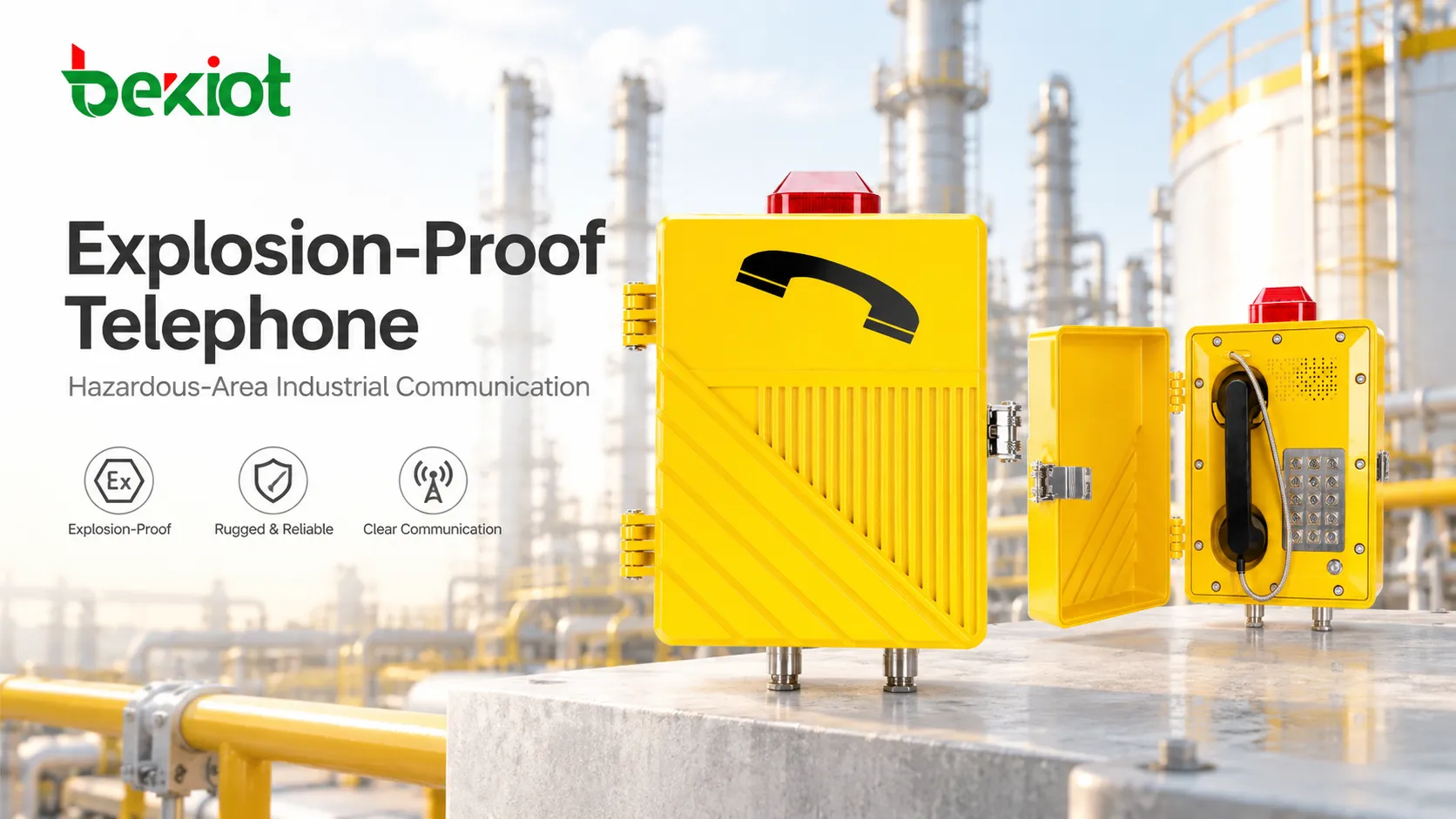
Industrial communication endpoints should be selected according to the actual site condition. Outdoor areas may require weather-resistant housings. Noisy process zones may require stronger acoustic output and clear microphone pickup. Exposed locations may need impact resistance, corrosion protection, simple physical operation, and visible labeling. In hazardous areas, equipment suitability must also follow the required protection classification and installation rules.
Good endpoint design is practical. A worker under pressure should not need to unlock a personal phone, search for a contact, or remember a long number. A fixed emergency telephone, SIP intercom, or help point should provide an obvious and dependable voice path.
Core systems in a resilient communication architecture
A reliable emergency communication solution usually combines several technologies. No single product can cover every operational need across a large industrial site. The right design depends on site size, hazard level, acoustic environment, network availability, response procedure, and integration requirements.
Industrial telephones
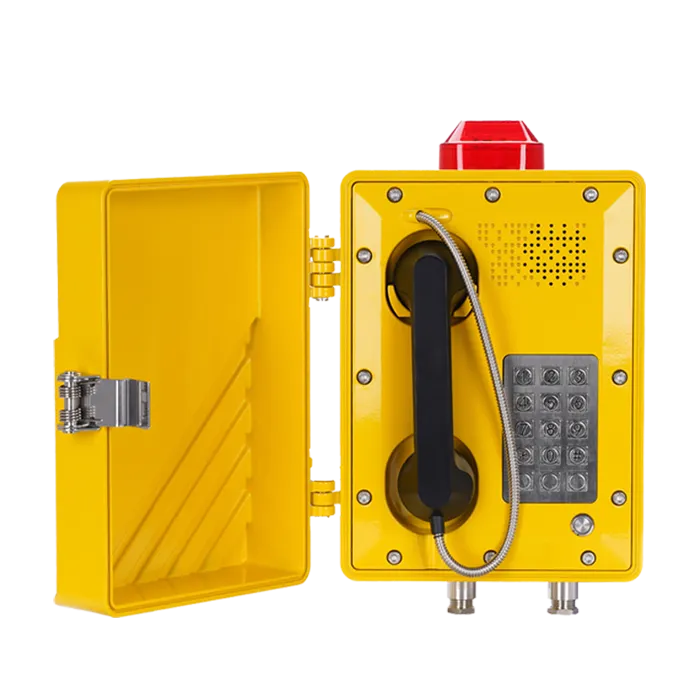
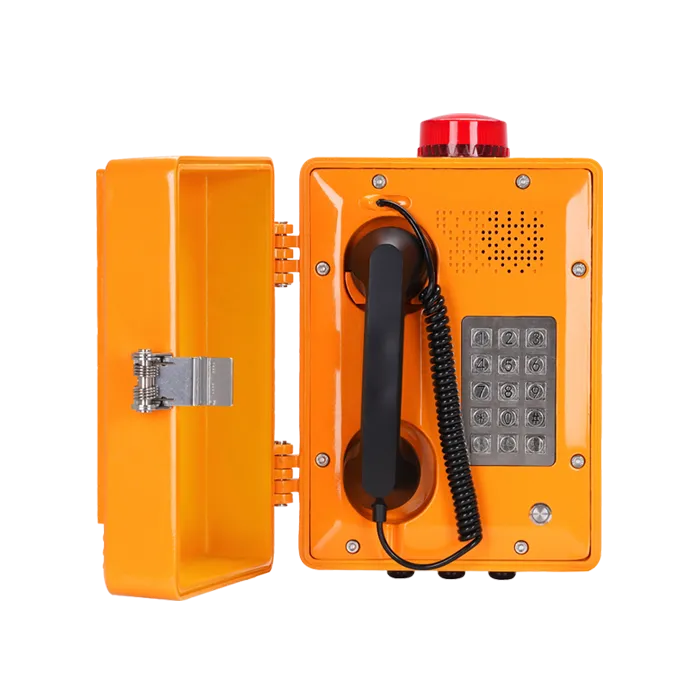
Industrial telephones provide a fixed voice channel between field personnel and the control room, gatehouse, maintenance office, or emergency desk. They are useful at loading points, process areas, substations, tunnels, outdoor corridors, perimeter zones, equipment rooms, and other locations where workers may need immediate assistance.
Their value comes from availability. They are visible, fixed in place, and designed for long-term use in demanding environments. Depending on the site, they may support one-touch dialing, hands-free mode, handset operation, loud ringing, weather protection, vandal resistance, or integration with a central call platform.
SIP intercoms
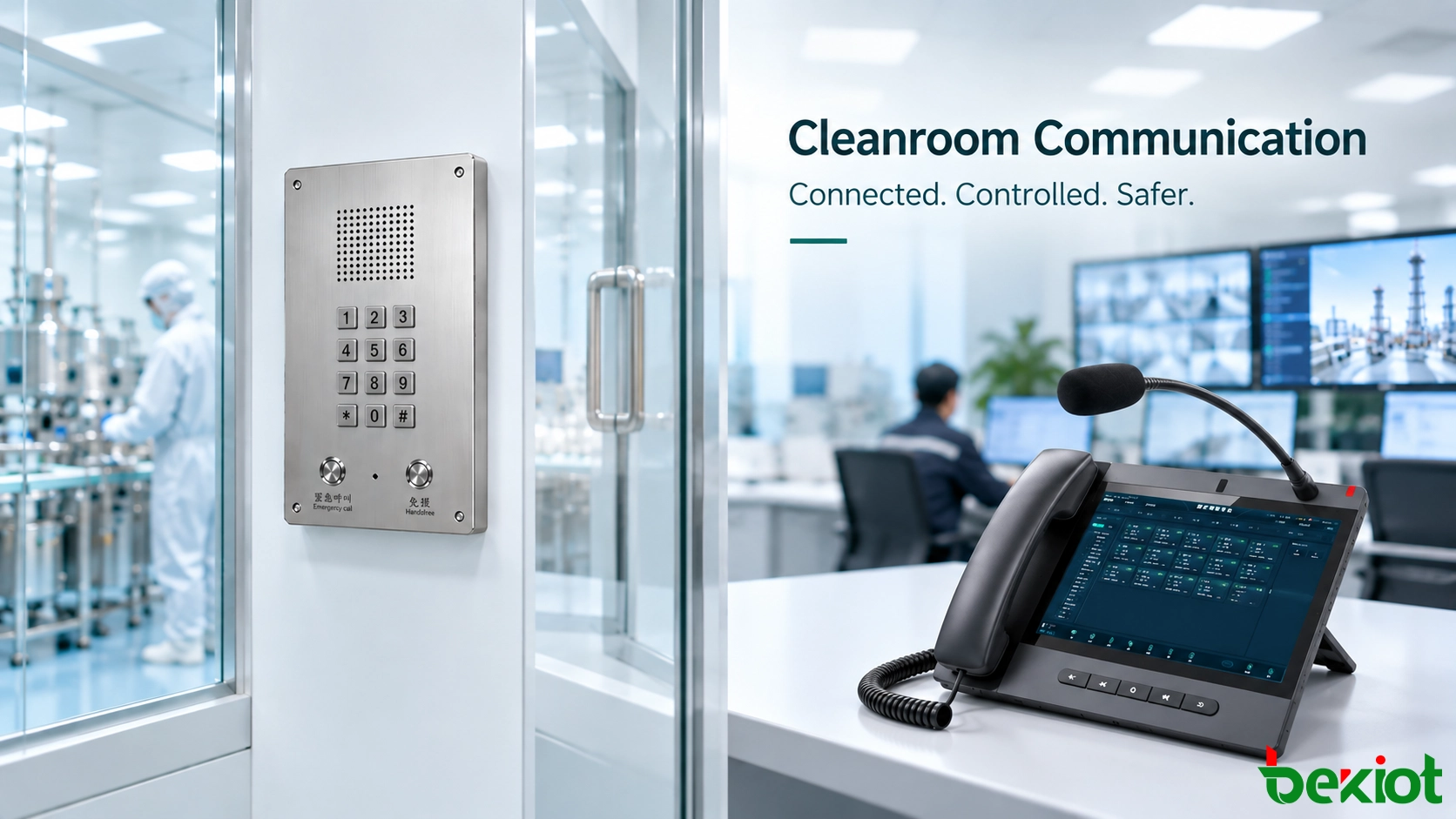
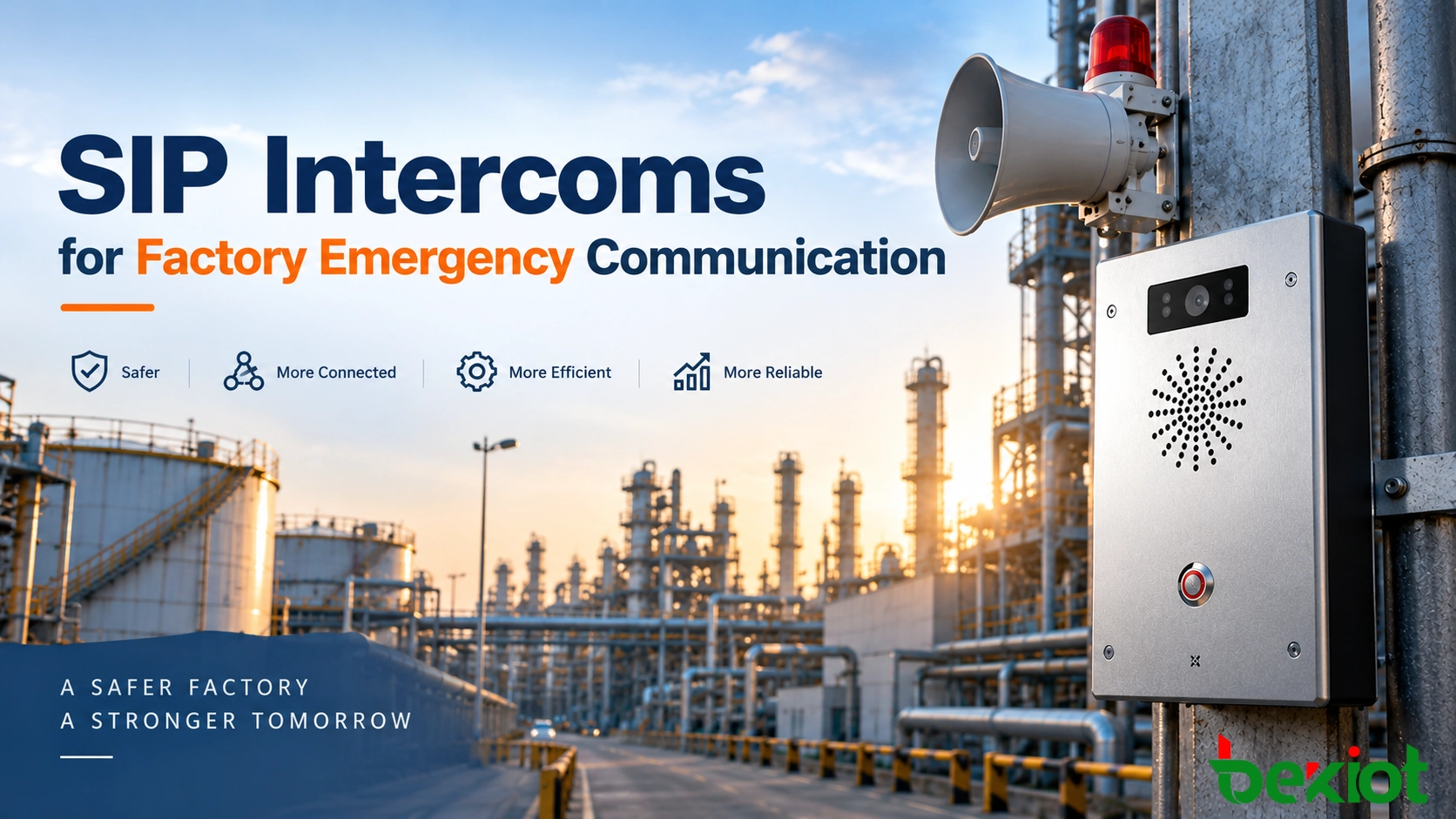
SIP intercoms are suitable for access points, unmanned facilities, restricted zones, service gates, remote equipment areas, and emergency assistance points. They provide fast two-way communication without requiring a full telephone station at every location.
In a modern system, SIP intercoms can be connected to IP PBX, dispatch software, recording platforms, access control, and video systems. This makes them useful not only for emergency calls, but also for visitor verification, remote guidance, maintenance support, and security coordination.
PAGA systems
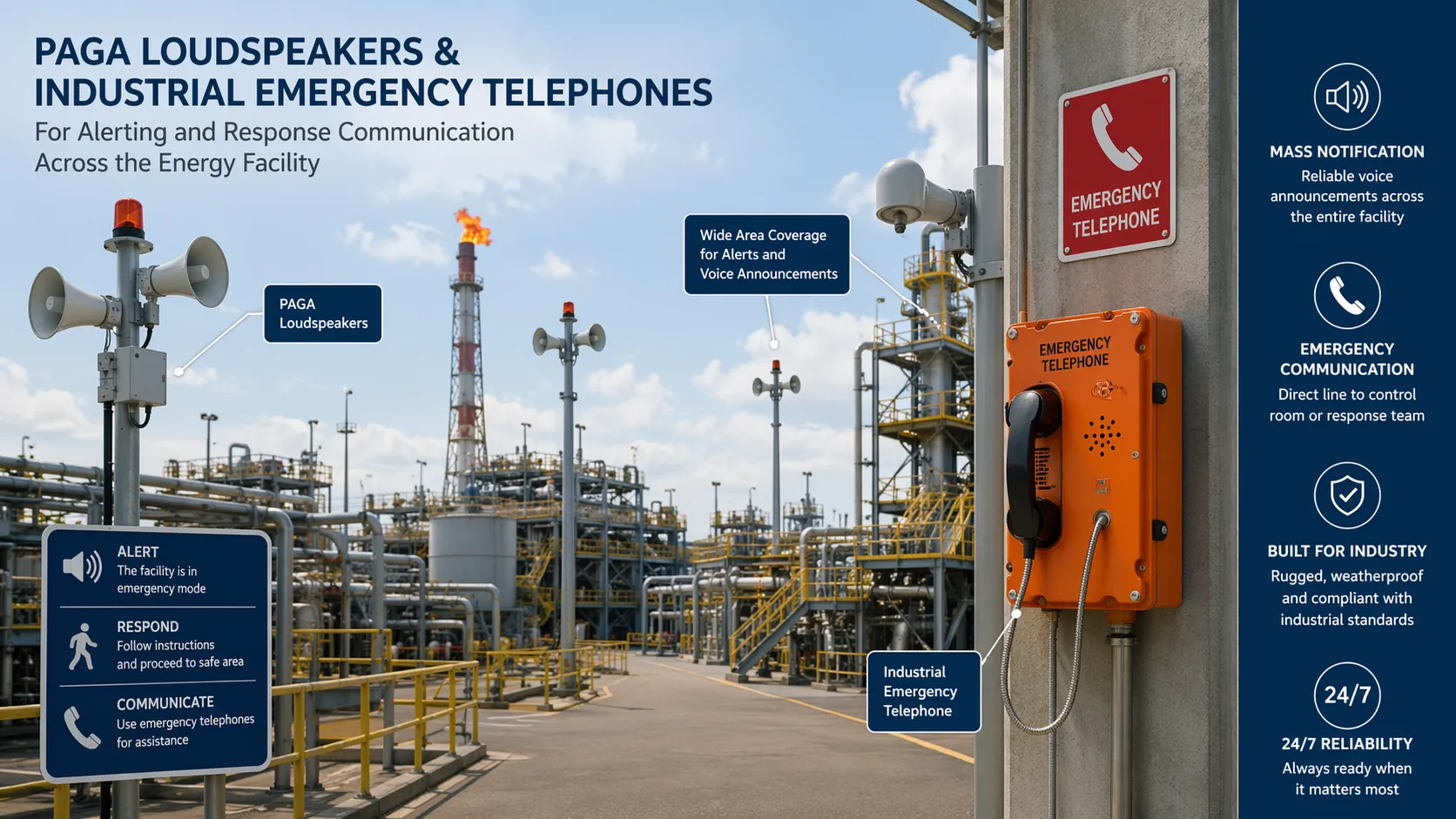
Public Address and General Alarm systems remain essential in large industrial and energy sites because they deliver information to many people at once. During abnormal events, a clear broadcast can help personnel evacuate, move to assembly points, avoid dangerous zones, or follow site instructions.
PAGA systems are also useful during routine operation. They can support area paging, shift messages, safety reminders, equipment notices, and pre-recorded announcements. Their value increases when they are integrated with alarms, dispatch workflows, telephony, and zone control.
PAGA loudspeakers, emergency telephones, intercoms, and dispatch tools help facilities coordinate alerts and response across wide operating areas.
IP PBX and unified call control
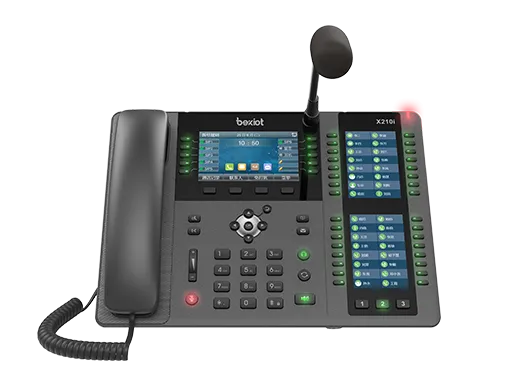
IP PBX platforms form the voice backbone for many modern industrial facilities. They manage extensions, groups, call routing, recording, trunk connections, redundancy options, and SIP endpoint registration across one or multiple sites.
For emergency communication, IP PBX is valuable because it provides centralized call control. Calls can be routed according to role, location, priority, time condition, or escalation rule. This makes voice communication easier to manage than isolated analog lines or scattered standalone devices.
Dispatch consoles
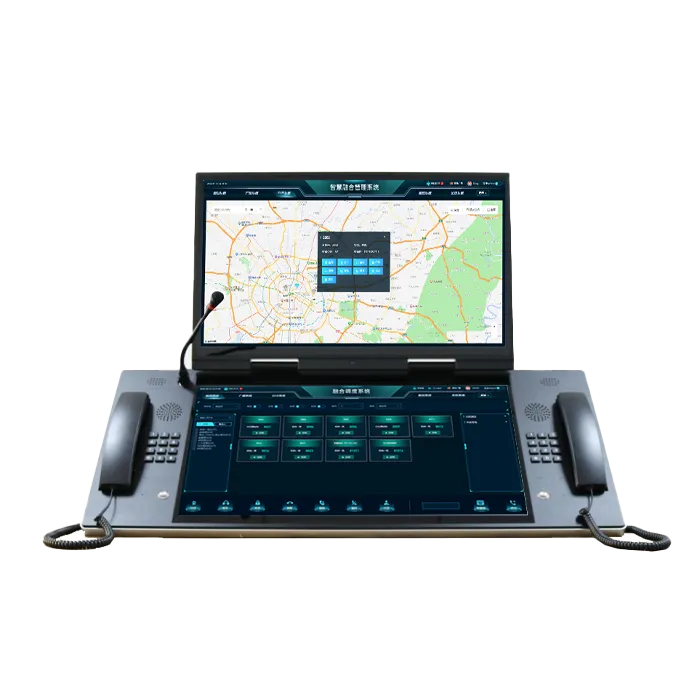
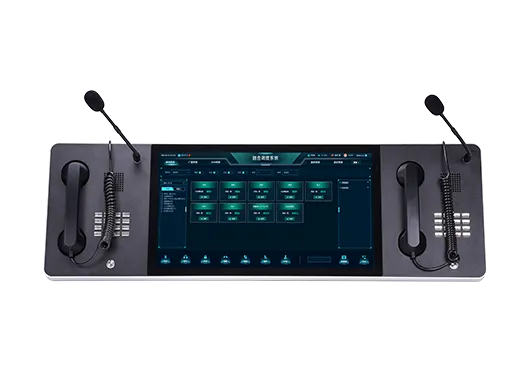
Dispatch consoles bring communication actions into one operational interface. Operators can answer emergency calls, view endpoint status, manage paging, transfer calls, coordinate teams, monitor active events, and connect communication with alarms or maps.
This matters because emergency response usually involves several conversations at the same time. A control room may need to speak with field workers, notify supervisors, page a zone, check video, and record the event. A good dispatch environment reduces switching between disconnected systems.
Where these systems are commonly used
The need for reliable communication is broad, but some environments benefit especially strongly from integrated emergency communication design. These are usually locations where hazards are high, staff are distributed, operations are continuous, or response workflows depend on fast escalation.
Oil and gas facilities
Refineries, tank farms, pipeline stations, terminals, offshore platforms, and processing plants require communication systems that support both routine operations and emergency events. Fixed voice points, PAGA, emergency call stations, and centralized dispatch help teams coordinate under time pressure.
These sites often need equipment that can handle outdoor exposure, corrosive environments, high noise, and strict safety requirements. Communication infrastructure contributes directly to personnel safety, process continuity, contractor control, and emergency readiness.
Utilities and power infrastructure
Power plants, substations, water treatment facilities, grid operation sites, and utility networks may cover large areas with a mix of indoor and outdoor assets. Some locations operate with limited staffing, which makes fixed communication points and remote coordination especially important.
Reliable voice systems help operators respond to alarms, coordinate switching activities, dispatch technicians, support maintenance work, and manage faults or public safety incidents. Because these assets are infrastructure-critical, resilience and recoverability should be part of the design.
Ports, terminals, and transport corridors
Ports, rail yards, tunnels, marine terminals, and logistics corridors are noisy, distributed, and busy. Personnel may move between outdoor yards, gatehouses, loading areas, control rooms, utility spaces, and maintenance zones.
Industrial telephones, SIP intercoms, paging systems, and dispatch consoles help connect these zones into a more manageable communication structure. This is more reliable than relying only on personal devices or informal communication during busy operations.
Integration with safety and operational platforms
Emergency communication becomes more effective when it is connected to the wider site ecosystem. Voice calls, alarms, CCTV, access control, radio systems, fire detection, gas detection, public address, and dispatch software should not remain completely separate if they are part of the same response process.
Integration can shorten response time. A help call can bring up nearby video. A gas alarm can trigger a zone announcement. A dispatch console can call field phones and radio users from the same workflow. A control room can record the communication and review it later with the alarm timeline.
The goal is not to connect every system for appearance. The goal is to connect the systems that help operators make decisions faster and reduce manual work during pressure.
What buyers should evaluate before selection
Choosing an emergency communication solution should start from the site’s actual response workflow. Buyers should understand who needs to communicate, where communication is needed, which alarms require voice response, which areas need public address coverage, and which systems must be integrated.
Selection Area
What to Check
Why It Matters
Site environment
Noise, weather, dust, corrosion, vibration, temperature, hazardous area needs.
Ensures endpoints remain usable in real conditions.
Protects communication availability during abnormal events.
Reliability and lifecycle value
A low-cost communication system can become expensive if it is hard to maintain, difficult to integrate, or unreliable during demanding conditions. Critical infrastructure buyers should look beyond initial device cost and evaluate lifecycle value.
Important factors include remote management, spare parts availability, configuration backup, firmware maintenance, modular expansion, system monitoring, and compatibility with open standards. A stable architecture makes it easier to maintain the system as the site grows or as response procedures change.
Reliability should also be tested. Broadcast audibility, call routing, emergency priority, network failover, UPS runtime, endpoint status monitoring, and recording retrieval should be verified under realistic operating conditions.
Common mistakes and better fixes
Mistake
Typical Problem
Better Fix
Choosing devices before defining response workflows
The system may not match real emergency procedures.
Map alarms, calls, paging zones, dispatch roles, and escalation rules before product selection.
Using office-grade equipment in harsh areas
Devices may fail, be hard to hear, or become unusable outdoors.
Select industrial endpoints according to noise, weather, dust, corrosion, and mounting conditions.
Keeping voice, alarm, video, and paging isolated
Operators must switch between systems during incidents.
Integrate the systems that directly support faster response and better situational awareness.
Ignoring audibility testing
Emergency broadcasts may be loud but not understandable.
Test speaker placement, sound pressure, message clarity, and coverage in real site conditions.
No redundancy planning
Communication may fail during power, network, or equipment disruption.
Use backup power, redundant paths, failover design, monitoring, and recovery procedures.
How Becke Telcom supports resilient critical-site communications
Becke Telcom provides industrial communication solutions for sites where reliability, clarity, and integration are important. Its solution approach can support industrial telephones, SIP intercoms, emergency assistance points, PAGA integration, IP PBX communication, and dispatch workflows for demanding environments.
These solutions are suitable for energy infrastructure, petrochemical operations, transportation systems, tunnels, utilities, ports, and other critical locations that require dependable communication during both routine work and abnormal events.
Conclusion
Emergency communication systems for energy and critical infrastructure are becoming more important as sites face higher safety expectations, wider operational complexity, and stronger resilience requirements. Industrial telephones, SIP intercoms, PAGA systems, IP PBX platforms, dispatch consoles, and integrated workflows all play a role in building a dependable response layer.
The best system is not necessarily the one with the longest feature list. It is the one that remains clear for users, manageable for operators, reliable in harsh environments, and adaptable as the site grows. When communication is planned around real risks and real workflows, it becomes a practical part of safer and more resilient infrastructure operation.
FAQ
Why are emergency communication systems important for energy infrastructure?
They help facilities respond quickly to alarms, incidents, maintenance issues, safety events, and operational disruptions by connecting field personnel, control rooms, dispatch teams, and management users through reliable voice and alerting workflows.
What devices are commonly used in industrial emergency communication?
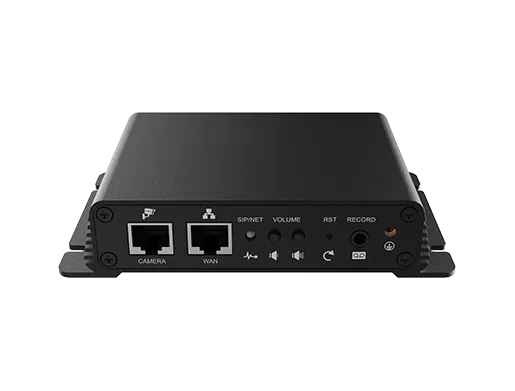
Common devices include industrial telephones, SIP intercoms, emergency call stations, PAGA loudspeakers, IP phones, IP PBX platforms, dispatch consoles, paging gateways, and recording systems.
How does a PAGA system support emergency response?
A PAGA system allows operators to broadcast live or pre-recorded messages to selected zones or entire facilities. It supports alerting, evacuation guidance, routine announcements, and area-wide coordination.
Why is SIP-based communication useful in critical sites?
SIP-based communication improves scalability, interoperability, centralized management, and integration with IP PBX, intercoms, paging systems, dispatch software, and remote communication endpoints.
What should buyers check before selecting a solution?
Buyers should check site environment, endpoint durability, audio clarity, SIP compatibility, paging coverage, alarm integration, redundancy, network reliability, maintenance tools, and long-term expansion needs.