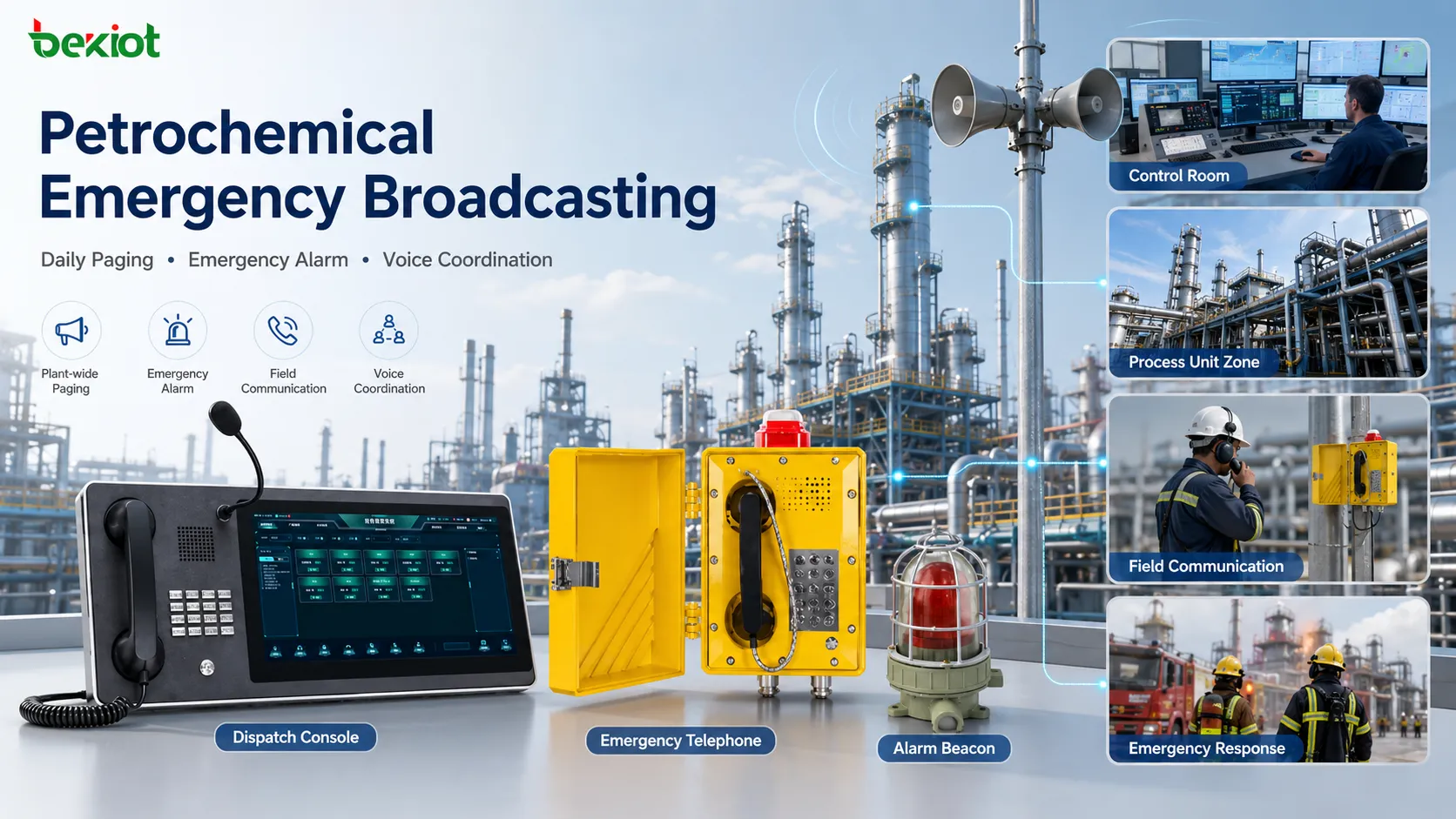
Petrochemical production sites operate in some of the most demanding environments for industrial voice communication. Process units, tank farms, loading and unloading areas, pipe racks, utility corridors, pump stations, workshops, substations, and control-related zones often face high noise, corrosive atmospheres, heat, humidity, vibration, and hazardous gas exposure at the same time.
In these conditions, communication is not a supporting convenience. It is directly connected to personnel safety, incident response, process coordination, evacuation efficiency, and plant-wide operational discipline. During normal operation, managers, operators, maintenance teams, contractors, and field staff need clear instructions across a large and segmented site. During abnormal events, alarm information and emergency guidance must reach the right area immediately and remain intelligible under pressure.
A dedicated PAGA system, meaning Public Address and General Alarm, is designed for this role. It combines routine broadcasting, zone paging, plant-wide alarm, emergency evacuation messaging, prerecorded voice release, and live command broadcasting into one controlled safety communication platform. For petrochemical plants, it should not be treated as an ordinary speaker system. It is a core voice layer for daily coordination and emergency response.
Becke Telcom provides industrial communication solutions for harsh and safety-critical environments. Its petrochemical PAGA solution is designed to support structured broadcasting, alarm priority, field-zone communication, system integration, redundancy, and centralized supervision across complex petrochemical facilities.
Why petrochemical sites need dedicated PAGA
Petrochemical sites are very different from offices, campuses, or light industrial facilities. Sound coverage is affected by mechanical equipment, steel structures, process installations, open-air spaces, long pipe corridors, local high-noise areas, and safety zoning requirements. Compressors, pumps, turbines, blowers, transfer systems, and loading equipment can create continuous background noise that makes ordinary voice delivery unreliable.
The real question is not whether a message can be broadcast. The more important question is whether people can understand the message quickly enough to act correctly. A message that is loud but unclear may still fail in an emergency. For this reason, petrochemical PAGA design must consider audibility, intelligibility, zone coverage, alarm priority, field equipment suitability, and fault monitoring together.
The environment adds another layer of difficulty. Equipment may be exposed to corrosive atmospheres, humid outdoor areas, hot process sections, dust, vibration, and hazardous locations. In some areas, communication devices and related equipment must also align with explosion-proof or intrinsically safe requirements according to the site’s hazardous area classification.
In petrochemical environments, communication performance is defined by message clarity, delivery speed, and operational reliability under pressure, not by basic audio coverage alone.
System role in plant safety communication
A petrochemical PAGA platform is both an everyday operational broadcasting tool and a safety-critical emergency communication resource. Under normal conditions, it supports production notices, maintenance instructions, access reminders, shift announcements, and field coordination. Under abnormal conditions, it becomes the voice channel for alarm release, incident escalation, evacuation instruction, and emergency command.
This dual role is important. When staff hear routine messages from the same system that later delivers emergency instructions, they become familiar with the system’s coverage, tone, and authority. That familiarity can reduce hesitation during abnormal events. At the same time, emergency functions must remain protected by priority logic so that urgent warnings and evacuation messages override lower-level broadcasts.
A mature PAGA system should not operate as a disconnected audio island. It should work with the plant’s fire alarm, gas detection, ESD, SIS, DCS/SCADA, industrial telephones, SIP intercom systems, dispatch platforms, and control room workflows. In this architecture, the PAGA system becomes the voice execution layer of plant safety communication.
Petrochemical PAGA should function as a unified platform for operational broadcasting, alarm delivery, and incident-time voice coordination.
Typical deployment areas
PAGA deployment should follow the plant’s physical layout, process risk, operating workflow, background noise, and emergency route design. It is not enough to divide zones only by geography. In many petrochemical projects, zones should also reflect hazard relationships, evacuation logic, maintenance responsibility, and control-room command structure.
Core process and storage areas usually require the highest attention. These include production units, reactor sections, utility blocks, pump stations, storage tank farms, blending areas, and nearby field operating points. Messages in these areas may involve process coordination, maintenance warning, local hazard notification, restricted access, or evacuation guidance.
Tank farms are especially important because they often require wide-area warning, flexible zone grouping, and clear evacuation communication. Depending on the event, operators may need to release local hazard alerts, traffic instructions, access restrictions, or warning messages affecting several adjacent storage sections.
Loading and unloading zones, truck transfer points, rail interfaces, pipe racks, and utility corridors create another communication challenge. These locations are often elongated, open, noisy, and operationally active. Voice delivery should remain clear without creating unnecessary overlap or confusion between neighboring areas.
Deployment Area
Main Communication Need
Typical PAGA Role
Process Units
Production coordination, hazard warning, emergency instruction
A petrochemical PAGA solution should support both routine communication and emergency response. If the system only works for daily announcements, it may not meet safety requirements. If it is designed only for alarm tones, it may not support practical plant coordination. The stronger design combines public address, zone paging, general alarm, prerecorded messages, live command, recording, supervision, and integration into one priority-controlled platform.
Routine public address
Routine public address includes general announcements, shift-change information, production notices, work coordination, local operating reminders, maintenance schedules, and access instructions. In large petrochemical plants, these messages occur frequently across multiple departments and sections.
A structured public address layer reduces manual relay errors and improves communication consistency. Operators can send messages to the right area instead of relying only on direct calls, informal relay chains, or scattered local devices. The system should support daily use without weakening the authority of emergency alarms.
Zone paging and selective communication
Zone paging is one of the most practical functions in petrochemical communication. Many messages are relevant only to a specific production block, loading area, maintenance section, or field zone. Broadcasting every message plant-wide creates noise, reduces attention, and weakens communication discipline.
Becke Telcom’s petrochemical PAGA solution supports single-zone paging, multi-zone broadcasting, grouped-area communication, and plant-wide release. A maintenance instruction can remain local. A restricted-area warning can affect only the correct section. A cross-zone coordination message can be sent to all related units without disturbing unrelated operations.
Single-zone voice paging for local operations
Multi-zone broadcasting for linked plant sections
Area grouping for emergency coordination
Plant-wide paging for broad operational or safety events
General alarm and evacuation broadcasting
General alarm is the core emergency function of a petrochemical PAGA solution. When a major event occurs, the system must release alarm tones, emergency voice instructions, and evacuation guidance with immediate priority. This may be required for fire, flammable gas release, toxic gas leakage, process upset, utility failure, or site-wide emergency coordination.
The system should support both zone-based and plant-wide alarm broadcasting. A local incident may require warning only in the affected section, while a larger incident may require broader evacuation or muster instruction. Alarm tones should be followed by clear voice messages that tell personnel where to go, what to avoid, and how to respond.
In a petrochemical emergency, alarm audio must do more than indicate danger. It must deliver understandable guidance that helps people move, respond, and coordinate correctly.
Prerecorded messages and standard scenarios
Prerecorded voice messages improve speed and consistency during high-pressure events. Manual announcements may vary by operator, shift, stress level, or language habit. Standard message libraries help ensure that important warnings and instructions are delivered in a clear and repeatable way.
Typical message scenarios may include fire warning, gas release alert, restricted access notice, muster instruction, evacuation guidance, local hazard notification, and recovery-stage announcement. Messages can be mapped to individual zones, grouped sections, or wider plant areas according to the emergency communication strategy.
Live paging for command and escalation
Prerecorded messages are useful, but real incidents often require direct human judgment. Live paging allows authorized supervisors, control-room personnel, or emergency managers to issue real-time instructions based on current conditions.
This function is especially important when an event develops beyond the standard scenario. A plant may begin with a predefined alarm message, then require updated evacuation routes, access restrictions, equipment instructions, or response-team coordination. Live paging gives the control room flexibility without breaking the system’s priority structure.
Recording and event traceability
Modern petrochemical projects often expect PAGA systems to provide records of important communication actions. Recording can preserve operator paging activity, emergency message release, alarm sequences, and communication timelines for later review.
These records support incident investigation, response analysis, training improvement, internal audit, and management review. Traceability helps the plant understand what message was issued, when it was issued, which area received it, and how operators followed the communication procedure.
Integration with safety and communication systems
Integration capability is one of the key differences between a professional petrochemical PAGA platform and a simple broadcasting system. In real plant operation, alarms, process events, video observation, two-way communication, and command instructions often need to work together.
Becke Telcom’s petrochemical PAGA solution can be connected with fire alarm systems, gas detection platforms, ESD logic, SIS frameworks, and DCS/SCADA systems. When a configured event is triggered, the system can release corresponding alarm tones, warning messages, or selective zone instructions. A fire event in one area may activate local evacuation communication. A gas detection event may trigger restricted movement instructions or expanded zone warning.
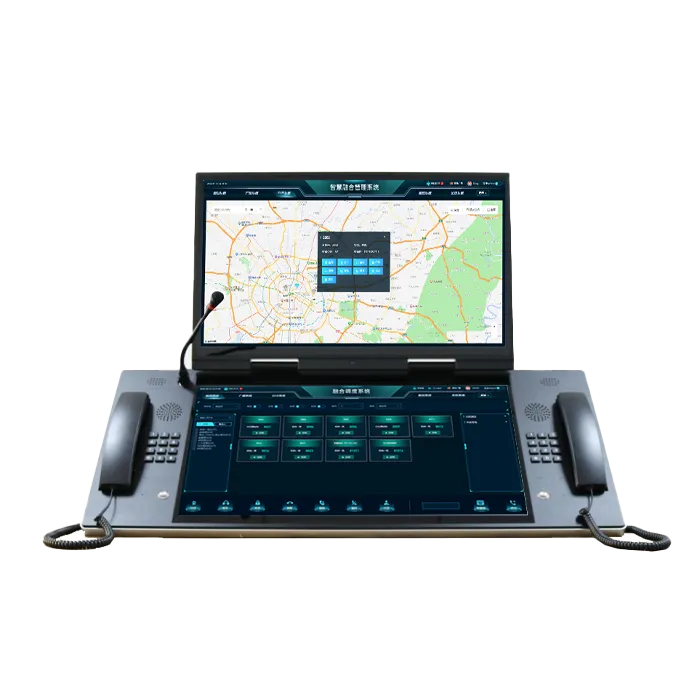
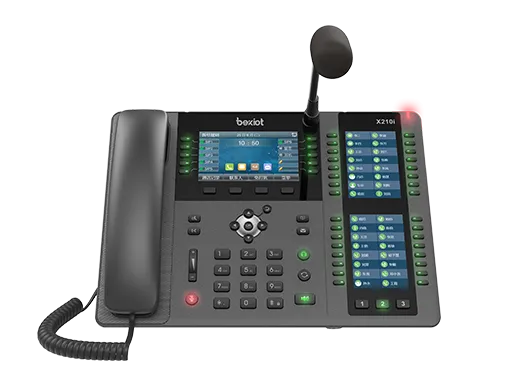
Petrochemical plants also rely on industrial telephones, SIP intercom endpoints, dispatch consoles, and control-room communication systems. By integrating PAGA with these resources, operators can combine wide-area warning with targeted calls, intercom interaction, and response-team coordination from one connected framework.
Video linkage can also support situational awareness. Alarm zones or voice events may be associated with relevant CCTV views so that control-room personnel can verify field conditions while issuing instructions. The PAGA system remains a voice communication platform, but integration with video resources improves decision context.
System integration helps petrochemical PAGA serve as a coordinated voice layer across plant safety and industrial communication systems.
Reliability architecture and supervision
Reliability design is central to petrochemical PAGA engineering because the system is often needed most when plant conditions are unstable. A single equipment fault should not easily interrupt critical alarm delivery or emergency voice communication.
Amplifier backup helps maintain audio output if a primary amplifier channel becomes unavailable. Main controller redundancy reduces dependence on one central control point. Dual power supply, protected transmission paths, monitored speaker lines, and distributed system architecture can further reduce single points of failure.
Large petrochemical facilities often cover multiple production, storage, logistics, and utility sections. A distributed architecture can improve coverage alignment, support scalable expansion, isolate local faults, and reduce the impact of a single node problem. Instead of concentrating all communication dependence in one location, distributed design helps the system adapt to wide-area plant layouts.
Automatic monitoring and fault supervision are equally important. A mature PAGA system should report line abnormalities, amplifier faults, device status changes, network issues, or power problems. Remote visibility allows maintenance teams to identify abnormal conditions earlier, isolate faults more accurately, and maintain higher communication availability.
Reliability Design
Operational Value
Amplifier Backup
Maintains audio output when a primary amplifier channel fails
Main Controller Redundancy
Reduces dependence on one central control point
Distributed Architecture
Improves coverage alignment and supports large plant expansion
Automatic Fault Supervision
Detects abnormal status before hidden faults affect emergency performance
Remote Visibility
Improves maintenance efficiency and lifecycle manageability
Design considerations for petrochemical projects
A strong PAGA design should begin with the plant’s actual operating environment rather than a generic equipment list. Acoustic conditions, hazardous area classification, zone layout, safety workflow, integration requirements, and maintenance access should all be reviewed before final system configuration.
Audio intelligibility in high-noise zones
Speaker design should focus on intelligibility, not only volume. Sound pressure level, speaker type, installation angle, background noise, echo conditions, and coverage overlap all affect whether personnel can understand instructions. High-noise areas may require careful acoustic planning and suitable field devices.
Hazardous area suitability
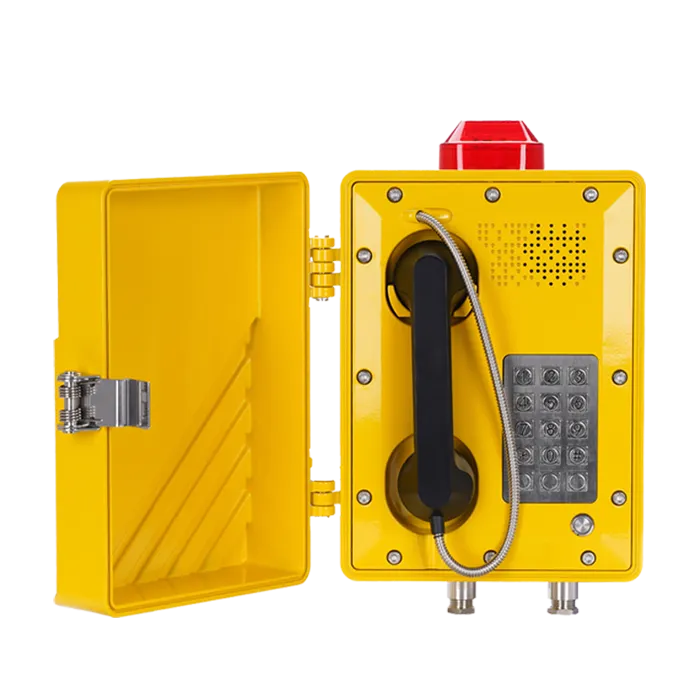
Some petrochemical zones may require explosion-proof or intrinsically safe equipment depending on the site classification. Field loudspeakers, telephones, junction boxes, terminals, and related accessories should be selected according to hazardous area requirements and installation conditions.
Corrosion and environmental adaptation
Outdoor and process-area equipment may face humidity, corrosive gases, dust, vibration, heat, and mechanical stress. Enclosure material, sealing level, cable entry method, mounting structure, and maintenance accessibility should match the environment.
Priority and permission control
Emergency alarm and evacuation messages should override routine broadcasting. Authorized users, control-room roles, alarm activation rights, and manual paging permissions should be clearly defined. This prevents both delayed emergency communication and unauthorized broadcast actions.
Lifecycle maintenance
Petrochemical communication systems must remain reliable over long operating periods. The design should support fault monitoring, event records, spare-part planning, regular testing, and convenient inspection. A system that cannot be maintained clearly will gradually become harder to trust.
Common mistakes and better fixes
Mistake
Typical Result
Better Fix
Treating PAGA as only a loudspeaker system
The design may miss alarm priority, recording, monitoring, and safety integration
Design it as a safety communication platform with paging, alarm, supervision, and linkage functions
Using one broad zone for too many areas
Messages may disturb unrelated sections or fail to match emergency routes
Plan zones according to process layout, risk relationship, noise level, and evacuation logic
Ignoring intelligibility in noisy areas
Personnel may hear audio but fail to understand the instruction
Fire, gas, SCADA, telephony, dispatch, and video linkage may become incomplete
Define interface logic, alarm triggers, priority rules, and test procedures during design
Neglecting supervision and maintenance
Hidden line faults or device failures may affect emergency readiness
Use automatic monitoring, fault reporting, remote visibility, and regular test procedures
Project value for petrochemical enterprises
The most direct value of a petrochemical PAGA solution is faster and clearer communication during abnormal conditions. When an incident occurs, alarm tones, warning messages, and voice instructions should reach the right areas quickly and remain understandable. This shortens decision time in the field and supports more coordinated action between the control center and on-site personnel.
Evacuation management is one of the clearest examples. Personnel do not only need to know that something is wrong. They need understandable instructions on where to move, what to avoid, and how to respond as the situation develops. A PAGA platform that combines area warning, prerecorded guidance, live command, and plant-wide coordination helps create a safer evacuation process.
Beyond emergencies, the system improves routine communication governance. Maintenance announcements, access notices, production coordination, local area instructions, and operating guidance can all be delivered through one structured platform. This reduces dependence on fragmented communication practices and strengthens plant-wide consistency.
Improved speed of warning release and incident communication
Clearer coordination between field teams and control-room personnel
Higher communication reliability in harsh and distributed environments
Safer and more organized evacuation management
Stronger supervision, maintenance efficiency, and communication governance
How to judge whether the design is effective
An effective petrochemical PAGA design should be judged by real operating performance, not only by equipment quantity. The first question is whether field personnel can hear and understand messages in high-noise areas. A system that is loud but unclear is not enough for safety communication.
The second question is whether zone and priority logic match the plant’s actual workflow. Operators should be able to release local messages, grouped-zone instructions, plant-wide alarms, prerecorded warnings, and live emergency commands without confusion.
The third question is whether integration works under realistic incident scenarios. Fire alarm, gas detection, DCS/SCADA, ESD, SIS, industrial telephones, SIP intercom, dispatch platforms, and video linkage should support the response process where required by the project.
The fourth question is whether the system can be supervised and maintained over time. Fault reports, device status, amplifier health, line monitoring, remote visibility, and event records help ensure that the system remains ready before emergencies occur.
Final view
A petrochemical PAGA solution is a safety communication platform for hazardous process environments where communication clarity, alarm integrity, and coordinated response are essential. It must address high noise, corrosive conditions, humidity, heat, wide-area deployment, hazardous location requirements, and operational complexity.
By combining routine public address, zone paging, plant-wide general alarm, emergency evacuation messaging, prerecorded voice release, live paging, recording, supervision, redundancy, and system integration, the PAGA platform supports both daily operation and emergency response.
For petrochemical enterprises, this means faster abnormal-event response, clearer field coordination, stronger evacuation safety, and more dependable communication continuity. With its industrial communication background and harsh-environment focus, Becke Telcom can position petrochemical PAGA as an important part of plant safety communication and emergency command infrastructure.
FAQ
What does a petrochemical PAGA solution mainly provide?
It mainly provides routine public address, zone paging, general alarm, emergency evacuation communication, prerecorded messages, live paging, recording, supervision, and integration with plant safety and industrial communication systems.
Why is a dedicated PAGA system important in petrochemical facilities?
Petrochemical facilities operate in harsh acoustic and environmental conditions, often with hazardous materials and large distributed areas. A dedicated PAGA system helps ensure that critical warnings and instructions are delivered clearly, quickly, and reliably.
Which systems can a petrochemical PAGA platform integrate with?
It can integrate with fire alarm systems, gas detection, ESD, SIS, DCS/SCADA, industrial telephones, SIP intercom platforms, dispatch systems, and video resources to support coordinated plant-wide communication.
What reliability features are especially valuable?
Important reliability features include amplifier backup, controller redundancy, automatic fault supervision, remote monitoring visibility, distributed architecture, and monitored speaker or line status for large and complex petrochemical deployments.
How does PAGA improve emergency response?
It improves emergency response by combining fast alarm release, area-specific warning, plant-wide broadcasting, live voice command, and safety system integration so that personnel receive clearer instructions and response teams can coordinate more effectively.