How Can Cleanroom Telephones Be Integrated with an IP PBX System?
Connect cleanroom telephones to an IP PBX as SIP extensions for room-based calling, control-room communication and call routing across pharmaceutical, semiconductor, laboratory and other controlled production areas.
Becke Telcom
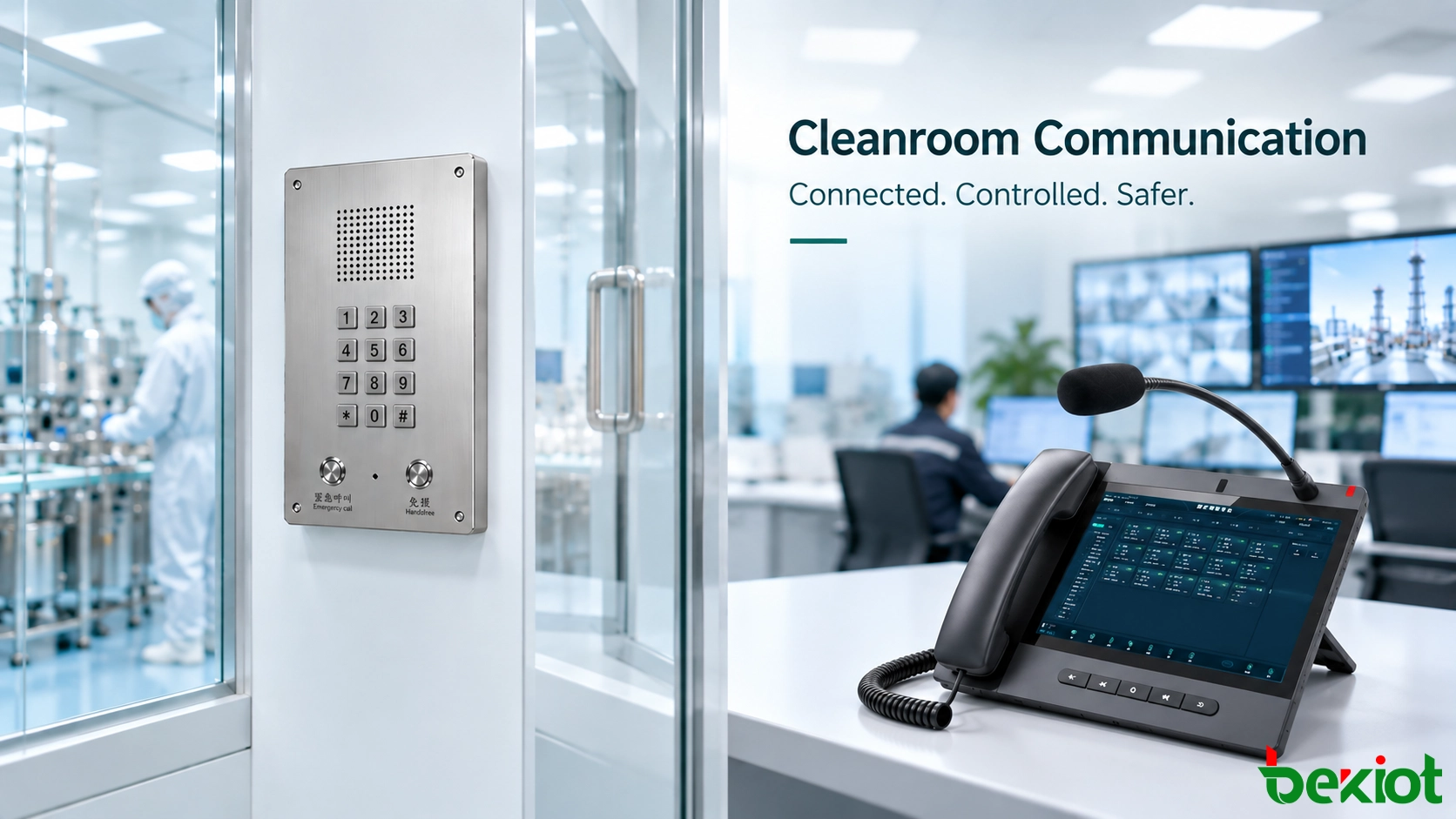
A cleanroom telephone does not have to operate as an isolated point-to-point device. When it supports SIP communication, it can become an extension of the same IP PBX used by control-room telephones, office phones and other authorized communication endpoints across a facility.
This changes the role of the telephone inside the clean area. Instead of providing only one permanently wired connection to one destination, the terminal can be assigned an extension, included in the facility numbering plan and routed to different communication positions through the IP PBX.
For pharmaceutical production, semiconductor manufacturing, laboratories and other controlled environments, this creates a structured voice path between personnel inside the clean area and the teams responsible for production, maintenance and coordination outside it.
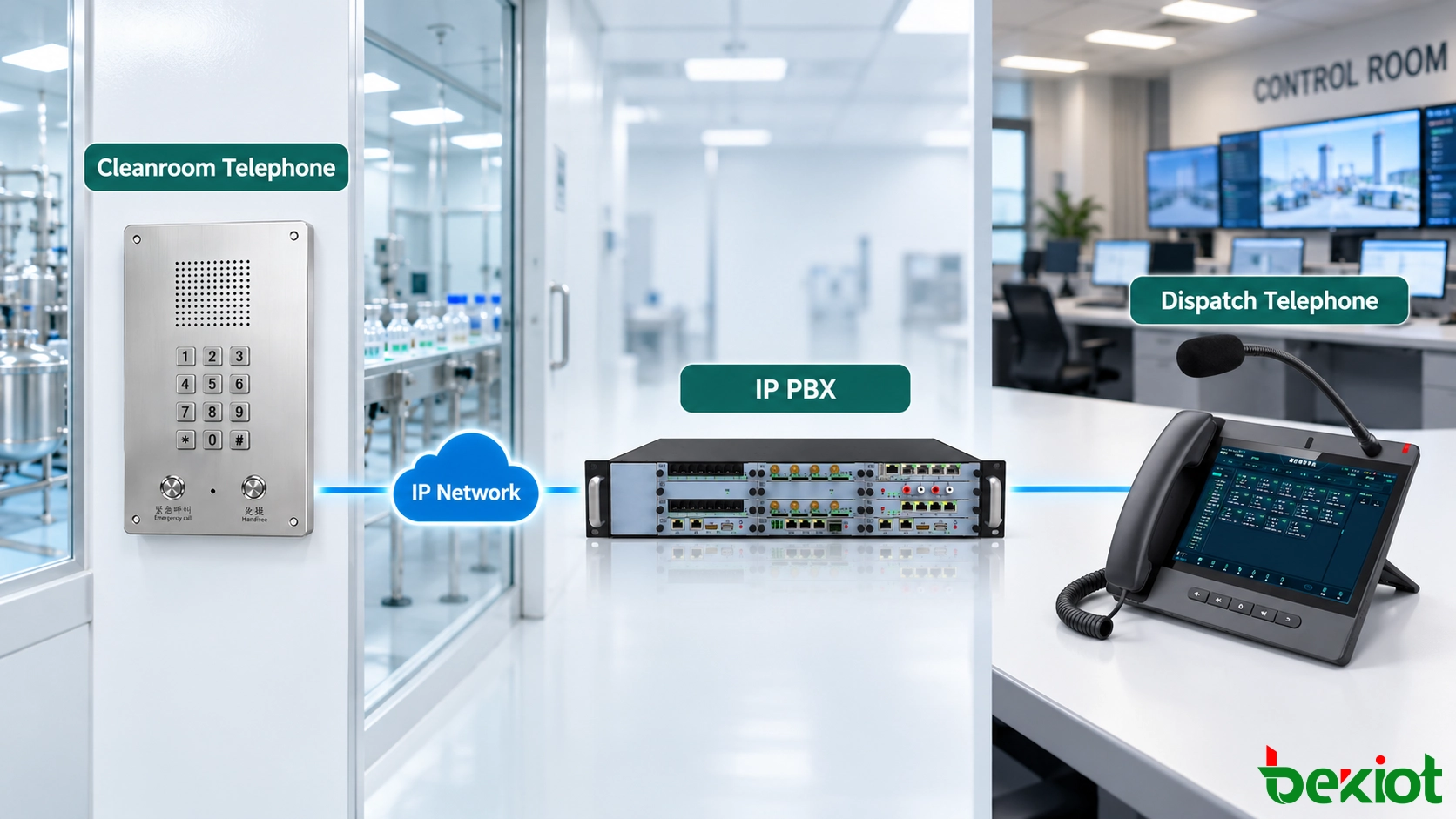
The cleanroom telephone remains the local point of communication, while extension registration, destination selection and call routing are handled centrally. A typical architecture can be represented as:
Cleanroom Telephone → IP Network → IP PBX → Control Room / Authorized SIP Extension
This architecture becomes particularly useful when a facility contains multiple controlled rooms. Each telephone can retain a clear relationship with its physical location while sharing the same central communication platform.
Cleanroom Extensions on the IP PBX
The basic principle is to treat each cleanroom telephone as an identifiable SIP extension rather than as an independent communication device.
In an office, an extension is often associated with an employee or workstation. In a production facility, the same numbering concept can represent a physical room, process area or operating position.
For example:
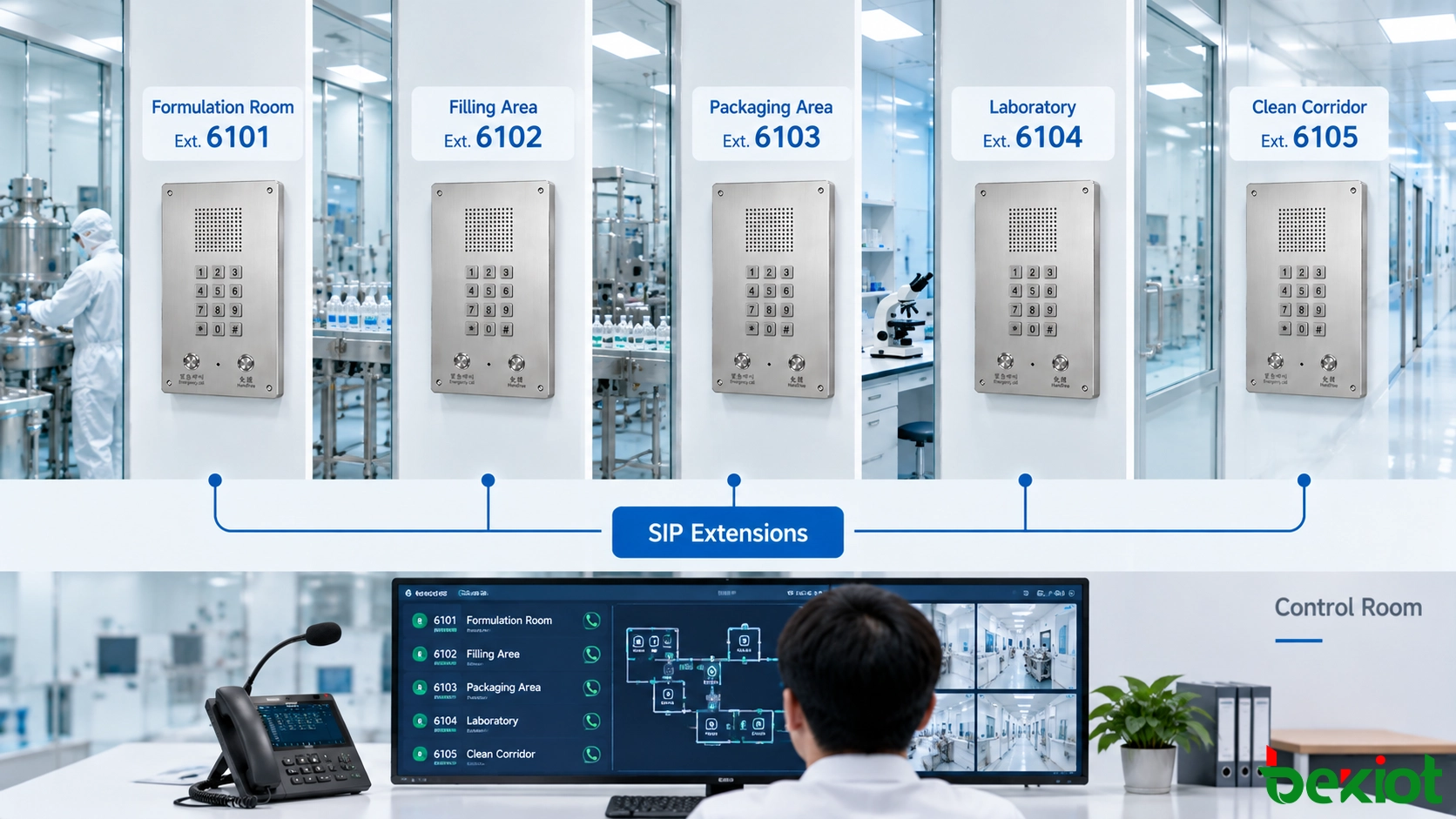
Extension 6101 — Formulation Room;
Extension 6102 — Filling Area;
Extension 6103 — Packaging Clean Area;
Extension 6104 — Laboratory;
Extension 6105 — Clean Corridor.
Each cleanroom telephone can use a dedicated SIP extension so the IP PBX and control-room operator can identify the room or production area associated with a call.
This creates a direct relationship between the IP PBX numbering plan and the physical layout of the controlled areas.
If extension 6102 calls the control room, the operator can identify the call as originating from the Filling Area. When the control room needs to contact personnel in that area, it can call the same extension without first identifying which individual employee is currently working there.
This approach is particularly useful in facilities operating multiple shifts. Personnel may change throughout the day, but the communication identity associated with the room remains consistent.
Extension naming can reinforce this relationship. Instead of displaying only “6102,” the communication platform can use a recognizable location name such as “Filling Area 2” or “Lab A,” depending on the capabilities and configuration of the system.
A structured numbering plan becomes increasingly important as the number of cleanroom telephones grows. If extensions are assigned randomly, operators may eventually need a separate directory simply to determine which number belongs to which room. Grouping extensions by building, production line or area can make the system easier to understand and maintain.
The extension should therefore reflect the operational role of the telephone. A cleanroom terminal is usually most useful when its identity remains tied to the location where personnel expect to find it.
Calls Between Clean Areas and Control Rooms
Registering the cleanroom telephone to the IP PBX creates a two-way communication relationship between the controlled area and the rest of the facility.
Consider a production operator who notices an abnormal equipment condition. The operator calls the control room from the cleanroom telephone. The terminal sends a SIP call request through the local IP network to the IP PBX.
The IP PBX identifies the called extension and applies the routing configured for that destination. The call can then be presented to a dispatch telephone or another designated control-room position.
Once the operator answers, the required voice session is established and personnel inside the cleanroom can explain the situation directly.
The basic path is:
Cleanroom Telephone → LAN → IP PBX → Dispatch Telephone
The cleanroom telephone registers as a SIP extension through the IP network, while the IP PBX routes calls between the controlled area and the control-room dispatch telephone.
The same architecture supports communication in the opposite direction. A control-room operator can call a specific cleanroom extension when production instructions need to be confirmed, an operating condition needs to be checked or personnel in a particular area need to be contacted.
This creates an important distinction between a room-based telephone and a personal mobile device. The IP PBX does not need to determine which individual is currently inside the room. It routes the call to the communication point associated with that location.
In a facility with several controlled areas, one control-room position can therefore communicate with multiple cleanroom extensions through a common numbering structure.
The arrangement can also work with several control-room positions. Calls from different clean areas may be directed to different operating desks according to production responsibility, or several positions may participate in the same call-handling arrangement where the platform supports it.
This separates the communication relationship from dedicated point-to-point wiring. If responsibility for a production area moves to another control-room position, the call route can be changed through system configuration without replacing or physically rewiring the cleanroom telephone.
Call Routing Across the Facility
Connecting a cleanroom telephone to an IP PBX means that the destination of a call can be determined by the communication configuration rather than only by a dedicated physical connection.
This matters because personnel inside a controlled area may need to reach different departments during the same production shift.
Production issue: contact the production control room or supervisor;
Equipment fault: reach maintenance or engineering;
Routine coordination: call another authorized internal extension;
Urgent assistance: reach a designated duty or response position.
A keypad-equipped cleanroom telephone can use the internal numbering plan to reach different authorized destinations. Where the endpoint supports programmable keys, frequently used destinations can also be assigned to dedicated controls.
The IP PBX then determines what happens after the number is dialed. Depending on the system design, the destination may be one telephone, an operating position or a group configured to handle a particular type of call.
For example, personnel inside the clean area may dial one internal number for production support. During a staffed shift, that number can be directed to the active production-control position. If the facility uses a different duty arrangement at another time, the route may be changed at the platform level where the deployed IP PBX supports that function.
This allows the dialing procedure inside the cleanroom to remain consistent even when responsibility behind the destination changes.
Routing can also separate different communication purposes. A maintenance request does not necessarily need to reach the same position as a routine production call. Different extensions or predefined destinations can reflect the facility's existing division of responsibilities.
The exact functions depend on the IP PBX and project configuration, but the underlying principle remains the same: the cleanroom telephone identifies where the call begins, while the communication platform determines where it is delivered.
Connecting Other SIP Endpoints
A cleanroom telephone may need to communicate with several types of users outside the controlled area. These users do not necessarily work with the same type of terminal.
A typical facility may combine:
Cleanroom IP telephones in controlled production areas;
Dispatch telephones in central control rooms;
Desktop SIP phones in maintenance and engineering offices;
SIP intercom terminals at entrances or restricted areas;
Other authorized SIP extensions connected to the IP PBX.
The physical design of these devices reflects where and how they are used. A cleanroom may require a fixed hands-free terminal, while a control-room operator may use a dispatch telephone with a display, physical keys and a microphone. Maintenance personnel may work with conventional desktop SIP phones.
They do not need to share the same enclosure or user interface. When the endpoints, network and platform configurations are compatible, the IP PBX can provide the numbering and call relationships between them.
A production issue might therefore begin as:
Cleanroom → IP PBX → Control Room
After confirming the situation, the control-room operator may contact the relevant technical position:
Control Room → IP PBX → Maintenance
Communication can also begin outside the clean area. A supervisor can call the extension assigned to a production room, while the cleanroom telephone remains the local interface used by personnel working inside.
The purpose of this integration is not to make every terminal perform the same job. It allows specialized devices to retain their own operating roles while participating in a common extension and routing structure.
Managing Multiple Clean Areas
One cleanroom telephone requires relatively little administration. A production site with dozens of cleanrooms, laboratories and controlled process areas requires a more structured approach.
Extension planning becomes the foundation. Numbers can be grouped according to building, floor, production line or room function so that operators and administrators can understand how an extension relates to the physical site.
For example:
61xx — Production clean areas;
62xx — Laboratories;
63xx — Packaging and support areas;
70xx — Control-room and supervisory positions.
The specific numbering scheme is project-dependent. What matters is maintaining a consistent relationship between the extension, its displayed name and the physical location.
A room-to-extension record can become part of the facility's communication documentation. It may identify the room name, telephone extension, terminal location and the position normally responsible for receiving calls from that area.
This becomes useful when the facility expands. If another cleanroom is added, its telephone can be placed within the existing numbering structure rather than creating an unrelated communication path.
Centralized routing also simplifies organizational changes. If responsibility for one production area moves from one control-room position to another, the destination can be adjusted at the communication-platform level without changing the physical telephone inside the cleanroom.
The same principle applies when a terminal is replaced. Once the replacement device is configured with the required account and network parameters, the logical extension can continue to represent the same room.
Where supported by the deployed system, call records and communication logs can provide additional operational information. They may help administrators confirm whether a call reached the expected destination or investigate a reported calling problem.
For a multi-room facility, the IP PBX therefore provides more than connectivity. It creates a common structure for organizing room identities, extensions and call relationships across controlled areas.
Communication During an Incident
The relationship between a cleanroom telephone and the IP PBX becomes particularly useful when an event requires communication beyond a routine conversation.
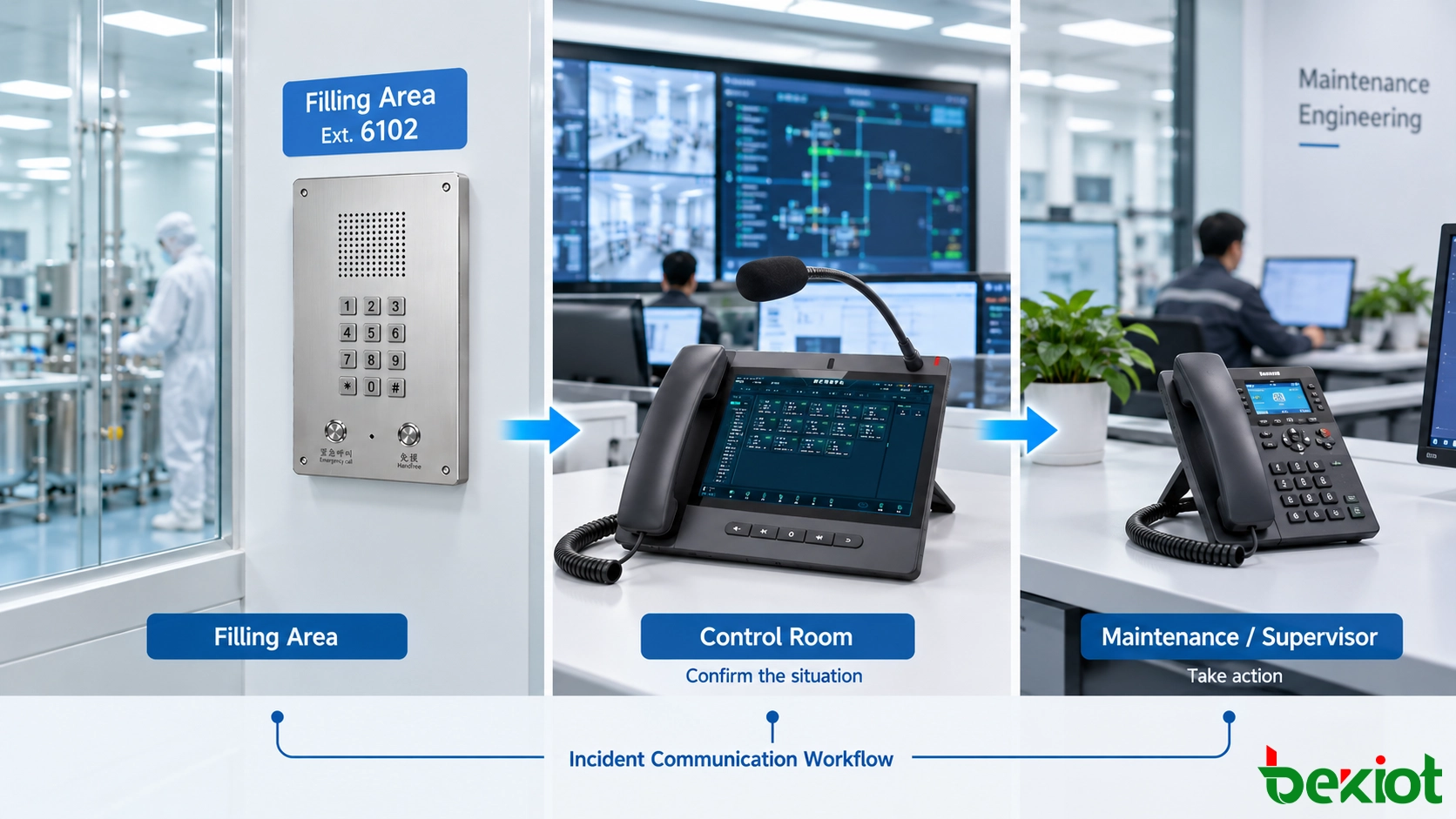
Consider an operator in a filling area who notices an equipment fault. The first action may be a simple voice call from the cleanroom to the control room.
Because the telephone has an extension associated with the Filling Area, the control-room operator can identify where the call originated and confirm the situation directly with the person on site.
The initial conversation can establish several basic facts: what happened, which area is affected, whether production has stopped and what type of support is required.
If technical assistance is needed, maintenance or engineering can then be contacted through the facility communication system. If a supervisor needs to participate, the operator can reach the appropriate internal extension according to the site's normal communication procedure.
A simplified workflow is:
Filling Area → Control Room → Maintenance / Supervisor → Response
A call from a clean production area can first reach the control room, where the situation is confirmed before maintenance, supervision or another responsible position is contacted.
The cleanroom telephone provides the first voice path. The IP PBX provides the call relationships needed to move communication from the originating room to the people responsible for the next action.
Routine production communication, equipment support and urgent assistance may all begin at the same telephone, but they do not necessarily need to follow the same destination or operating procedure.
The routing structure should therefore reflect the site's actual workflow rather than treating every call from a clean area as the same type of event.
If a project also requires wider notification, paging, alarms or other communication services, those functions should be considered at the complete-system level. They should not be assumed to be functions of the cleanroom telephone simply because the telephone is connected to the IP PBX.
A Cleanroom Endpoint in the IP PBX Architecture
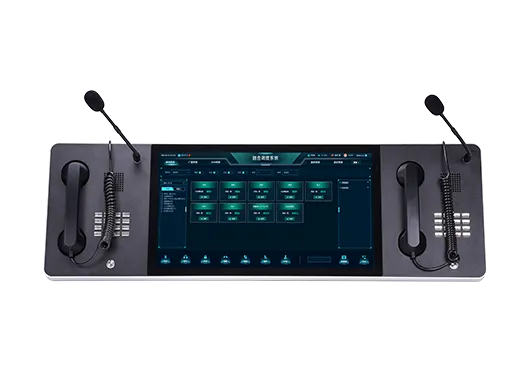
The BT26 Cleanroom IP Handsfree Telephone can serve as the cleanroom-side SIP terminal in this architecture. A typical control-room arrangement can combine it with an IP PBX and a GP320i dispatch telephone.
The roles are separated clearly. The BT26 provides the local voice interface inside the controlled area, the IP PBX manages extension registration and call routing, and the GP320i provides the control-room position for receiving and initiating calls.
A typical connection can be represented as:
BT26 → IP Network → IP PBX → GP320i / Other Authorized SIP Extensions
The BT26 can be assigned an extension associated with its room or production zone. Calls from that location can then be routed to the appropriate control-room or departmental destination according to the system configuration.
The same architecture allows the GP320i or another authorized SIP telephone to call the cleanroom extension directly. The specialized terminal remains at the point where it is required, while numbering and communication relationships are managed centrally.
When additional clean areas are introduced, more SIP extensions can be added without changing the basic relationship between the cleanroom terminals, IP PBX and control-room positions.
Frequently Asked Questions
Can cleanroom and office phones share the same IP PBX?
Yes, when the endpoints are SIP-compatible and the network design permits them to use the same communication platform.
Does each cleanroom need its own SIP extension?
Not always, but individual extensions make different rooms easier to identify, call and manage.
Can several cleanrooms call one control room?
Yes. Multiple cleanroom extensions can route to the same control-room position while retaining their individual identities.
Can call routes change by time?
They can, if the deployed IP PBX supports time-based routing and the facility requires different destinations for different operating periods.
What if the IP PBX is unavailable?
Calls that depend on the platform may be affected. Critical projects should address network, power and communication-server resilience at the system level.