Forced Release in Communication and Control Systems
A practical guide to forced release in dispatch communication, telephony, intercom, software, access control, and command systems, covering resource recovery, priority control, permissions, audit logs, risks, and best practices.
Becke Telcom
Forced release is a system control function used to terminate, clear, or release an occupied session, call, channel, connection, task, device state, or shared resource. It is usually applied when a normal release process fails, when a resource is stuck, or when a higher-priority operation needs immediate access.
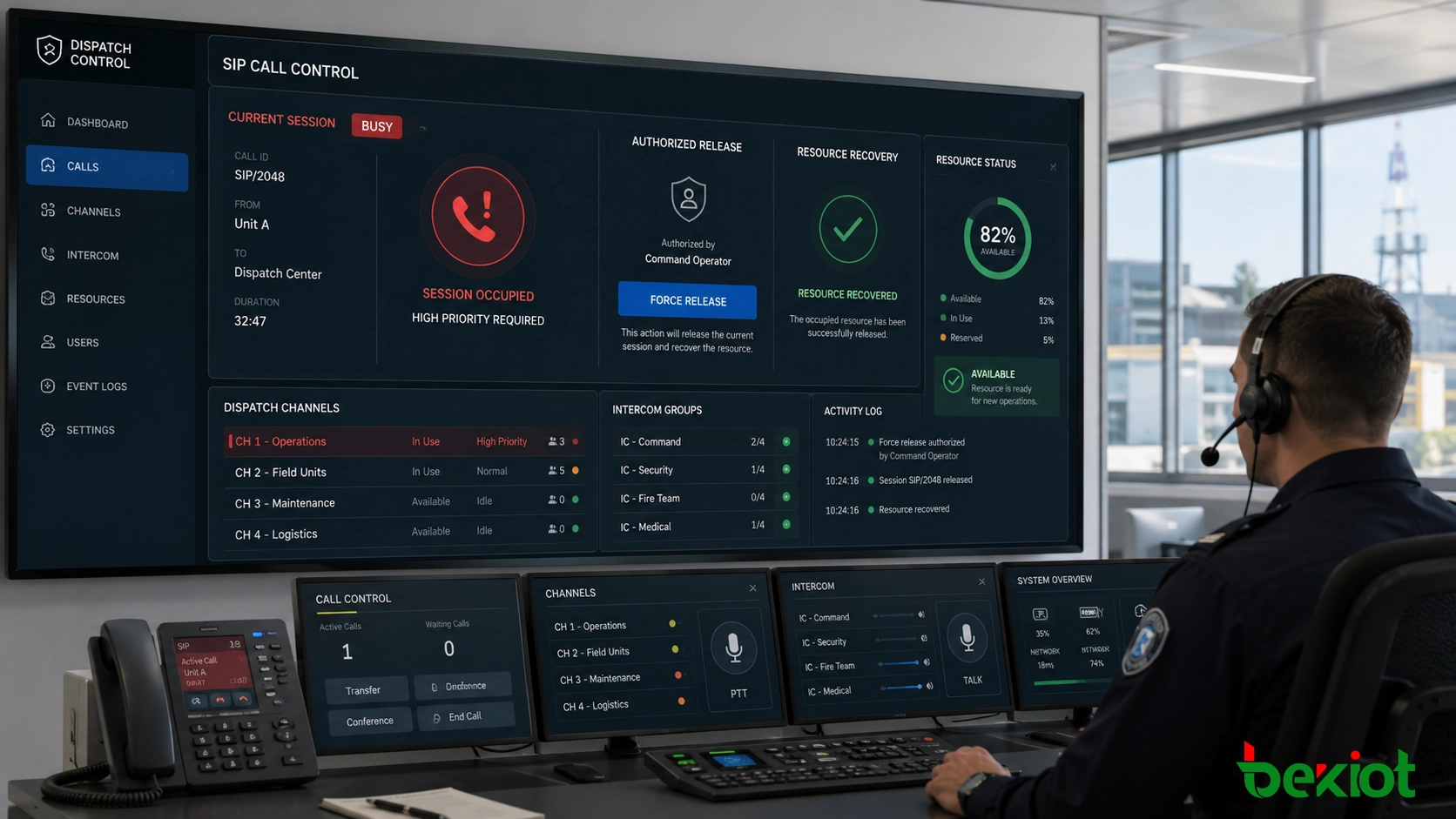
In a busy communication or control environment, some resources cannot wait for users, devices, or software processes to release them naturally. A dispatch channel may remain busy, a SIP call may stay active after signaling failure, an intercom session may not hang up correctly, or a software task may hold a resource for too long. Forced release gives authorized operators or system logic a controlled way to recover those resources.
Forced release is not designed for random interruption. Its value is to restore control when a resource is blocked, abnormal, misused, or required for a more important operation.
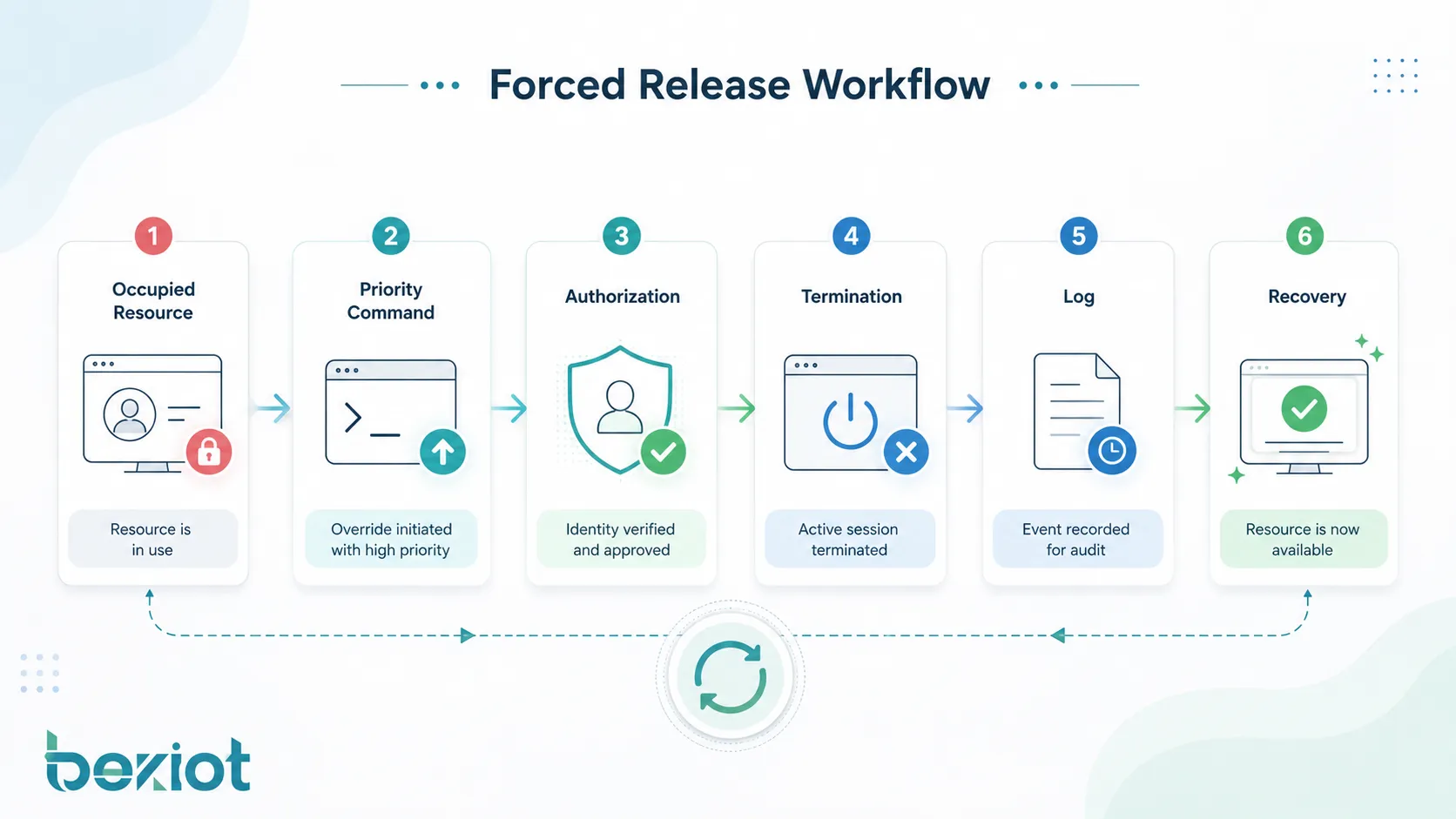
Forced release clears an occupied session, channel, or resource through authorization, priority logic, termination control, and event logging.
What Forced Release Means in Practice
The meaning of forced release changes slightly by industry. In communication systems, it may refer to forced call release, dispatch channel clearing, trunk recovery, intercom session termination, or emergency priority control. In software systems, it may refer to releasing a locked task, waiting process, database connection, session token, or file handle. In access control and facility systems, it may mean clearing an occupied door, turnstile, device command, or abnormal control state.
The common idea is the same: a resource is occupied, and the system needs a safe way to make it available again. This action may be triggered manually by an authorized operator or automatically by system rules such as timeout, fault detection, overload protection, alarm linkage, or priority escalation.
Because forced release can interrupt active work, it should always be managed with permissions, priority rules, confirmation steps, audit logs, and clear operating procedures. Without these controls, the function can create service disruption instead of solving a resource problem.
Normal Release and Forced Release Are Different
A normal release follows the expected end of a session or process. A user hangs up a phone call, a task finishes and returns a resource, a device completes its command, or a communication channel becomes free after the transmission ends. The system state changes naturally according to the normal workflow.
Forced release bypasses that normal ending path. It may be used when a user forgets to disconnect, a device fails to respond, a session remains locked, a channel is occupied too long, or a higher-priority event requires immediate resource access.
This difference matters in system design. A normal disconnect is routine. A forced release is an intervention. It should be visible to the operator, recorded by the system, and protected by role-based control so that important sessions are not interrupted by mistake.
Who Can Trigger the Function
Forced release may be triggered manually by an authorized dispatcher, administrator, supervisor, maintenance engineer, control-room operator, or emergency commander. In dispatch and command systems, this permission is often reserved for users who have operational responsibility for shared communication resources.
It may also be triggered automatically. A platform can clear inactive sessions after a defined timeout, release blocked resources after fault detection, or clear lower-priority sessions when an emergency event requires access. Automatic forced release can improve reliability, but it must be designed carefully so it does not terminate important services incorrectly.
In critical environments, both manual and automatic forced release should be tested before deployment. Operators should know when the function is allowed, what it affects, and how to verify whether the release was successful.
How the Process Works
A forced release process usually begins with state detection. The system identifies that a resource is active, occupied, locked, abnormal, or unavailable. This may be shown as a busy call, active SIP session, allocated radio channel, occupied queue, locked device, blocked task, or unavailable service connection.
The next step is authorization and priority checking. The platform should verify whether the user, system rule, or event source is allowed to perform the operation. Priority rules should also confirm whether the target resource can be released. For example, a routine user request should not terminate an emergency call or a protected command session.
After approval, the system sends a release instruction to the relevant module. This may terminate a call, clear a channel, close a connection, unlock a port, release a task, reset a device state, or remove a blocked session. Once the action is complete, the system updates the status and records the event for later review.
Main Functions in System Operation
Forced release is useful because shared resources are not always released cleanly. Users may forget to disconnect. Devices may hang. Network sessions may remain open after failure. Software processes may wait indefinitely. Without a controlled release function, operators may need to restart equipment, disconnect cables, or wait for long timeout periods.
Clearing Occupied Channels
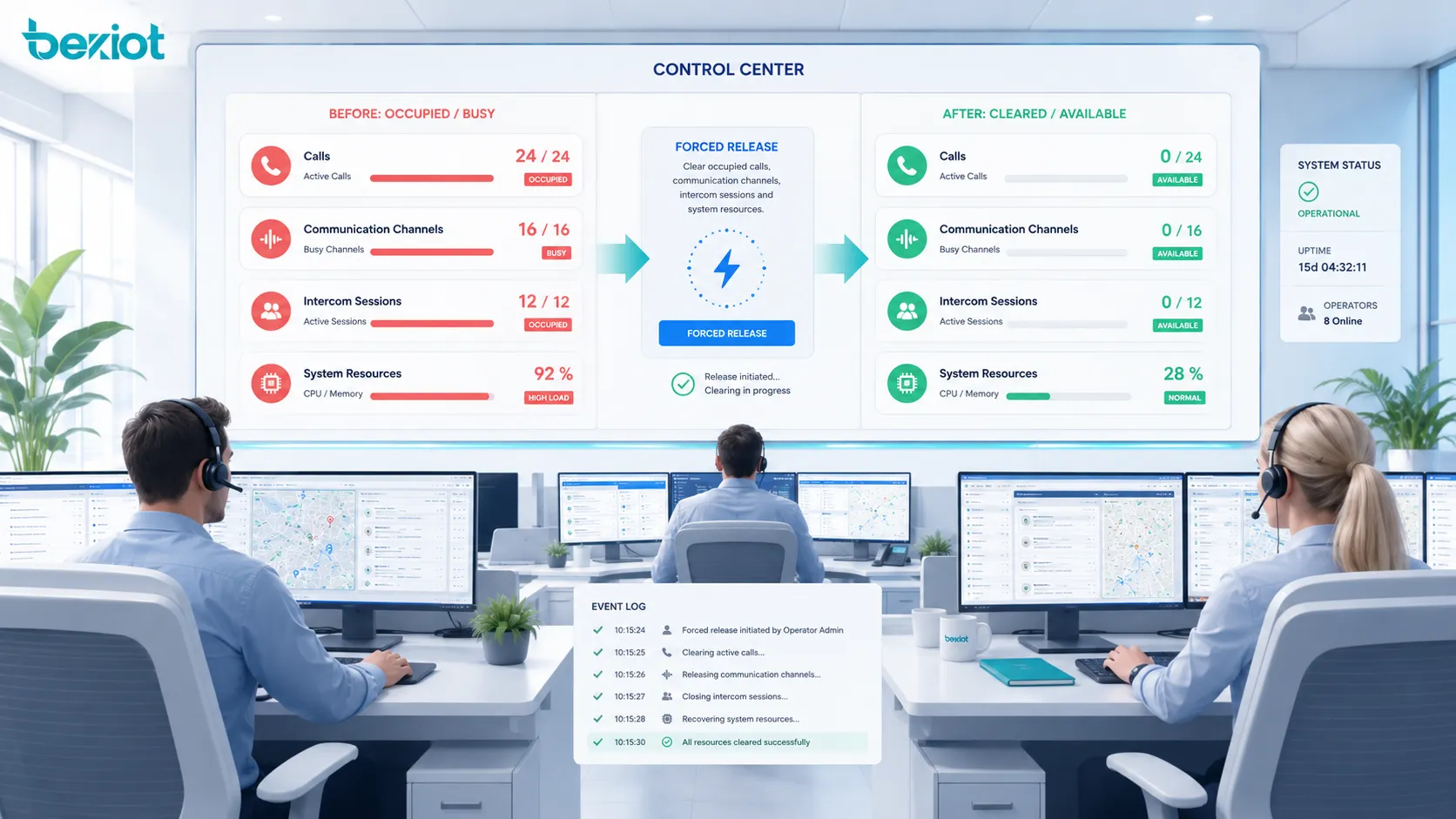
In communication systems, channels and sessions are limited resources. If a dispatch line, radio channel, intercom session, or SIP call remains occupied unnecessarily, other users may be blocked. Forced release allows an authorized user or system rule to clear the state and restore the channel for normal or emergency use.
Ending Abnormal Sessions
Some sessions do not end correctly because of signaling failure, network interruption, device crash, software error, or user inactivity. The platform may still show the session as active even though real communication has ended. Forced release helps remove these ghost sessions and keeps system status accurate.
Supporting Priority Override
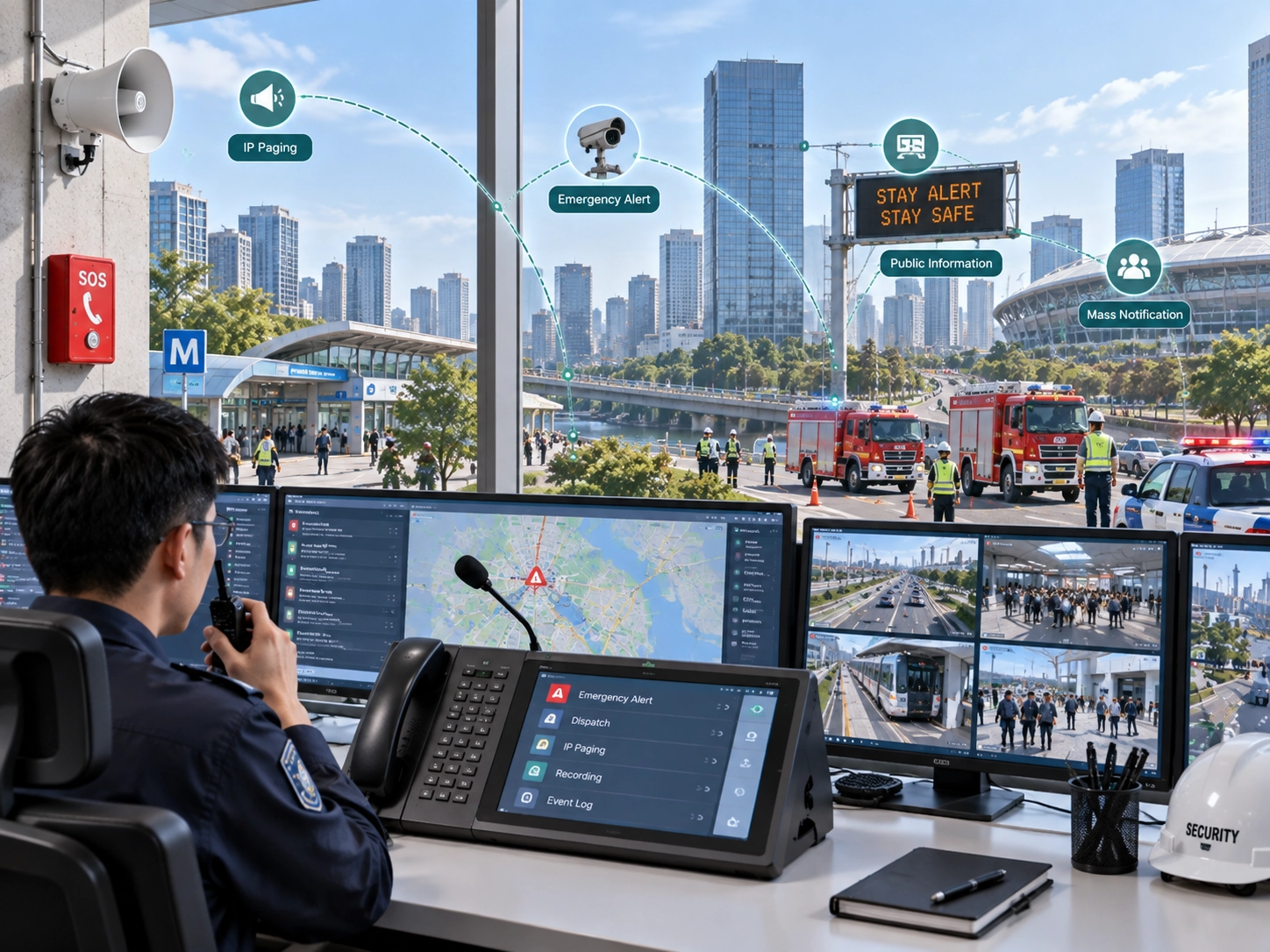
In command and dispatch systems, priority control is important. Emergency communication, public safety response, industrial command, and control-room instructions may need to override lower-priority activity. Forced release can support priority override by clearing lower-priority resources when a higher-priority event must take control.
Recovering Software Resources
In software platforms, forced release may be used to recover database connections, locks, semaphores, sessions, memory objects, file handles, connection pools, or thread resources. If these resources are not released properly, system performance and availability can decline over time.
Operational Benefits
A well-designed forced release function improves availability. Instead of waiting for a timeout or restarting a larger system, operators can clear a specific blocked resource and restore service faster. This is especially useful when the affected resource is limited or shared by many users.
It also supports emergency response. If a low-priority session occupies a required communication path, a command center may need to clear it so that emergency instructions, alarm handling, or dispatch coordination can continue without delay.
Forced release can reduce the maintenance burden as well. A targeted release is usually less disruptive than rebooting equipment or restarting a service. It gives maintenance teams a precise recovery method while preserving the rest of the system operation.
In control rooms, dispatch centers, industrial sites, transport operations, utilities, and public safety environments, this function strengthens command authority. It allows authorized roles to manage resource conflicts, restore communication order, and maintain operational continuity.
Typical Application Scenarios
Forced release appears in many systems that manage active sessions or shared resources. Its exact behavior depends on the platform, but the purpose is usually to clear an occupied state and make the resource usable again.
Dispatch Communication Systems
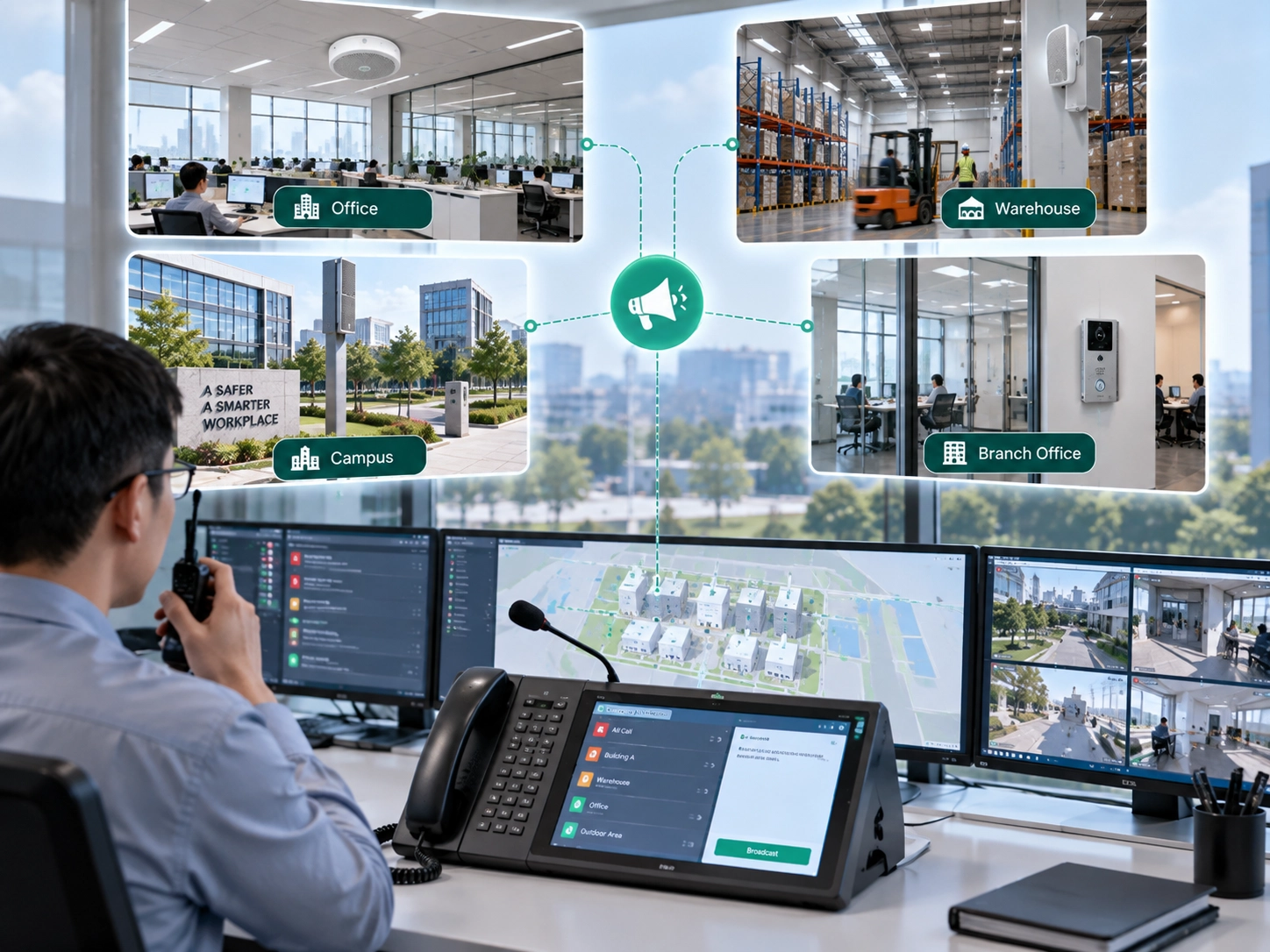
In dispatch platforms, forced release may terminate a lower-priority call, clear an occupied dispatch line, recover a stuck session, or free a channel for emergency command. It is common in transportation, energy, industrial parks, airports, ports, emergency services, utilities, and security command centers where communication priority affects response efficiency.
Intercom and Paging Systems
In intercom and paging systems, a terminal or line may stay occupied when a user does not hang up or when a device fails to release the session. Forced release can clear the line and restore normal operation. It can also support emergency paging by releasing lower-priority audio activity when urgent notification must take over.
Telephony and SIP Call Control
In PBX, SIP, trunk gateway, call center, and carrier interconnection environments, forced release can clear stuck calls, release busy trunks, terminate abnormal sessions, and recover signaling resources. Accurate session state is important because improperly released calls can consume channels, affect routing, or create billing confusion.
Software and Operating Systems
In software systems, forced release may apply to locks, tasks, sessions, file handles, connection pools, or device handles. It should be combined with timeout rules, rollback handling, error reporting, and recovery procedures so that resource cleanup does not create data inconsistency.
Access Control and Facility Systems
In access control or facility management, forced release may clear a door lock state, release an occupied device command, reset a turnstile status, or restore a control point after abnormal operation. Because these actions may affect security and safety, permission and logging are essential.
Forced release is used in dispatch, telephony, intercom, software, access control, and facility systems where occupied resources must be recovered quickly.
Permission, Priority, and Traceability
Forced release should never be available to every user without control. The function can interrupt active communication or clear important system states, so the platform should include role-based access control. Normal users may end their own sessions, while supervisors, dispatchers, administrators, or emergency commanders may have wider release authority.
Priority rules should define which sessions can be released and which must be protected. Emergency calls, safety alarms, fire communication, security command sessions, and critical control operations may require higher protection than routine conversations or ordinary tasks.
Every forced release action should be logged. A useful audit record includes operator identity, target resource, release time, reason, command source, result, and related event information. Logs support accountability, troubleshooting, procedure review, and future system optimization.
Related Functions and Key Differences
Forced release is often confused with normal disconnect, timeout, reset, and preemption. These functions can overlap, but they should not be treated as the same operation.
Function
Main Meaning
Typical Use
Forced Release
Forcibly clears an occupied session, channel, task, or resource
Recover stuck states or free resources for priority operations
Normal Disconnect
Ends a session through the standard user or system procedure
User hangs up, task completes, or service closes normally
Timeout
Automatically ends a state after a defined waiting period
Clear inactive sessions or expired connections
Reset
Restarts a device, module, service, or state machine
Recover from abnormal hardware or software behavior
Preemption
A higher-priority operation takes control from a lower-priority one
Emergency command, priority dispatch, and critical resource access
Timeout is usually automatic and works after a configured waiting period. Forced release may happen immediately when an authorized command or priority event requires action. Reset often affects a whole device or service, while forced release is usually more targeted and less disruptive.
Implementation Design Considerations
Implementing forced release requires more than adding a button to the interface. The function must be connected with accurate state management, user permissions, priority logic, event logs, operator prompts, and recovery procedures.
The user interface should show exactly what will be released. Operators should be able to see the target session, channel, device, user, location, status, and priority before confirming the action. In critical systems, a confirmation step can reduce accidental interruption.
Some systems require a reason code before execution. Common reason codes may include stuck session, emergency priority, maintenance test, abnormal signaling, user request, or supervisor instruction. Reason codes make audit records more meaningful and help managers understand how the function is being used.
Event notification should also be considered. In some systems, affected users may need to know that their session was forcibly released. In emergency command systems, notification behavior may depend on operational policy. The key is to define the behavior clearly rather than leaving it inconsistent.
Risks and Misuse to Avoid
The biggest risk is interrupting a critical session by mistake. If an emergency call, safety command, medical communication, or operational control session is released incorrectly, the result may be serious. This risk can be reduced with priority protection, role-based permissions, warning prompts, and clear operating procedures.
Another risk is using forced release as a shortcut instead of solving the root cause. If the same line, device, channel, or software module frequently needs forced release, the system may have an underlying issue such as signaling instability, poor network quality, software defects, wrong timeout settings, device failure, or user training problems.
Lack of logging is also dangerous. Without audit records, it is difficult to know who released a session, why it was released, and whether the action followed procedure. Logging is not only for accountability; it also helps engineers improve system reliability.
Best Practices for Deployment
A strong forced release design should be controlled, traceable, targeted, and easy to understand. Organizations should define when the function may be used. Typical conditions include stuck calls, inactive sessions, emergency priority needs, maintenance operations, abnormal device states, blocked tasks, and resource exhaustion.
High-priority operations should be protected. The system can use priority levels, protected states, supervisor approval, and confirmation prompts to prevent accidental release. In emergency environments, the protection model should be tested through drills so operators understand which sessions can be cleared and which must remain active.
Forced release records should be reviewed regularly. Frequent use on the same resource may indicate a technical fault or workflow problem. If operators use forced release for routine cases that should be handled by normal disconnect or timeout, training and procedures may need improvement.
Summary
Forced release is an important resource recovery and priority control function in communication, dispatch, telephony, intercom, software, access control, and facility systems. It allows authorized users or system rules to clear occupied sessions, abnormal states, locked resources, and lower-priority activities when normal release is not enough.
A reliable forced release design should include accurate state detection, role-based permission, priority protection, reason codes, confirmation, audit logs, fail-safe results, and regular review. Used correctly, it improves availability, emergency response, maintenance efficiency, and command control. Used carelessly, it can interrupt critical services and create operational risk.
FAQ
What does forced release mean?
Forced release means forcibly clearing or terminating an occupied session, call, channel, connection, task, or system resource. It is used when normal release fails, when a resource is stuck, or when a higher-priority operation needs access.
Is forced release the same as hanging up a call?
No. Hanging up is a normal disconnect initiated through the standard call-ending process. Forced release is an authorized control action that clears the session even when the normal release process has not completed.
Why is forced release important in dispatch systems?
Dispatch systems often manage limited communication channels and priority operations. Forced release helps clear stuck or lower-priority sessions so emergency communication, command instructions, and critical coordination can continue.
Can forced release be automatic?
Yes. It can be triggered automatically by timeout rules, fault detection, alarm linkage, overload protection, or priority escalation. Automatic logic should be tested carefully to avoid releasing important sessions incorrectly.
What controls should be included?
Important controls include role-based access, priority rules, confirmation prompts, reason codes, protected states, clear result feedback, audit logs, operator training, and regular review of release records.