GOIP gateways can convert cellular SIM channels into SIP voice resources, but enterprise projects must consider telecom compliance, SIM ownership, fraud prevention, routing control and safer alternatives such as FXO, E1, IMS and SIP trunks.
Becke Telcom
Gateway devices play an important role in SIP-based communication systems. They allow VoIP platforms, IP-PBX systems, softswitches, dispatch platforms and enterprise communication networks to connect with external voice resources. Depending on the project, a gateway may connect analog telephone lines, digital trunks, public telephone networks, radio systems, mobile networks or carrier voice services.
GOIP gateways were once a common way to convert cellular SIM card channels into SIP-based calling resources. After a SIM card is inserted into the device and the gateway is connected to the IP network, mobile calls can be routed into a VoIP or IP-PBX environment. Technically, the idea is not complicated. In real enterprise projects, however, GOIP has become more sensitive than before.
In recent years, many communication equipment vendors have reduced, restricted or removed this product category from standard sales channels. Some buyers may even need to provide additional usage proof before purchasing. This change is not only a product trend. It is closely related to telecom fraud prevention, SIM card regulation, operator risk control, project ownership and long-term responsibility.
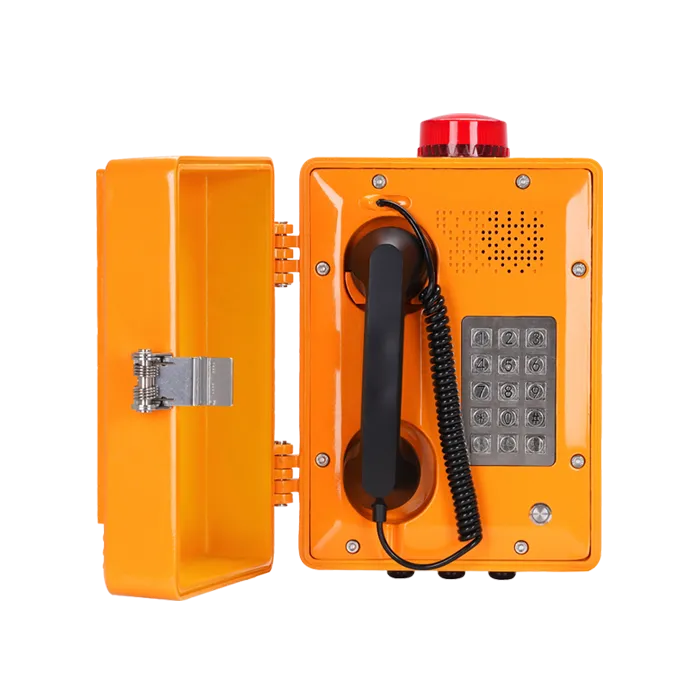
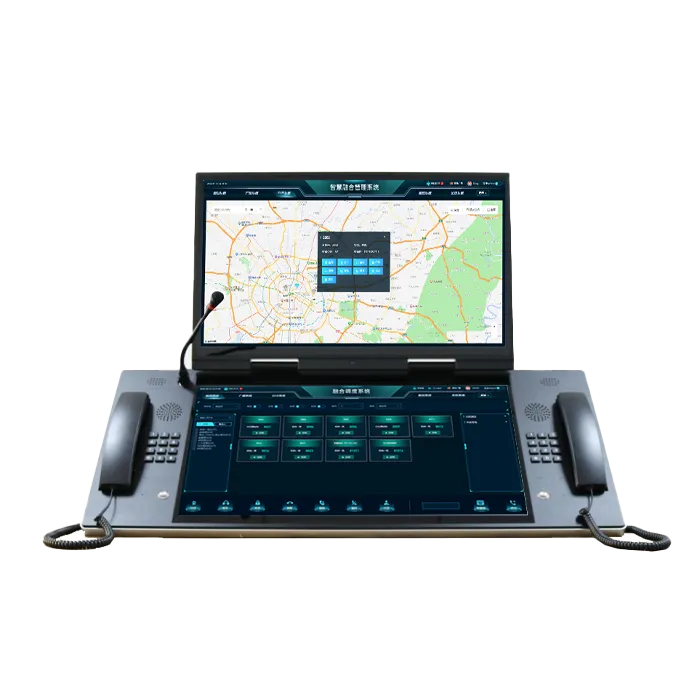
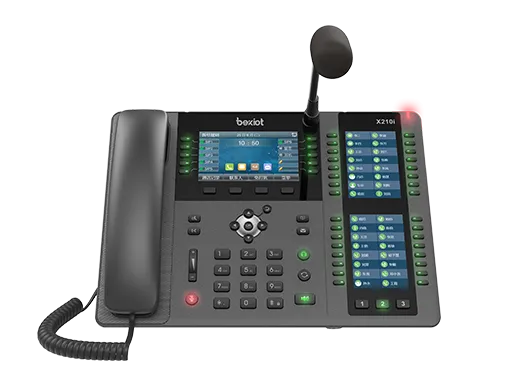
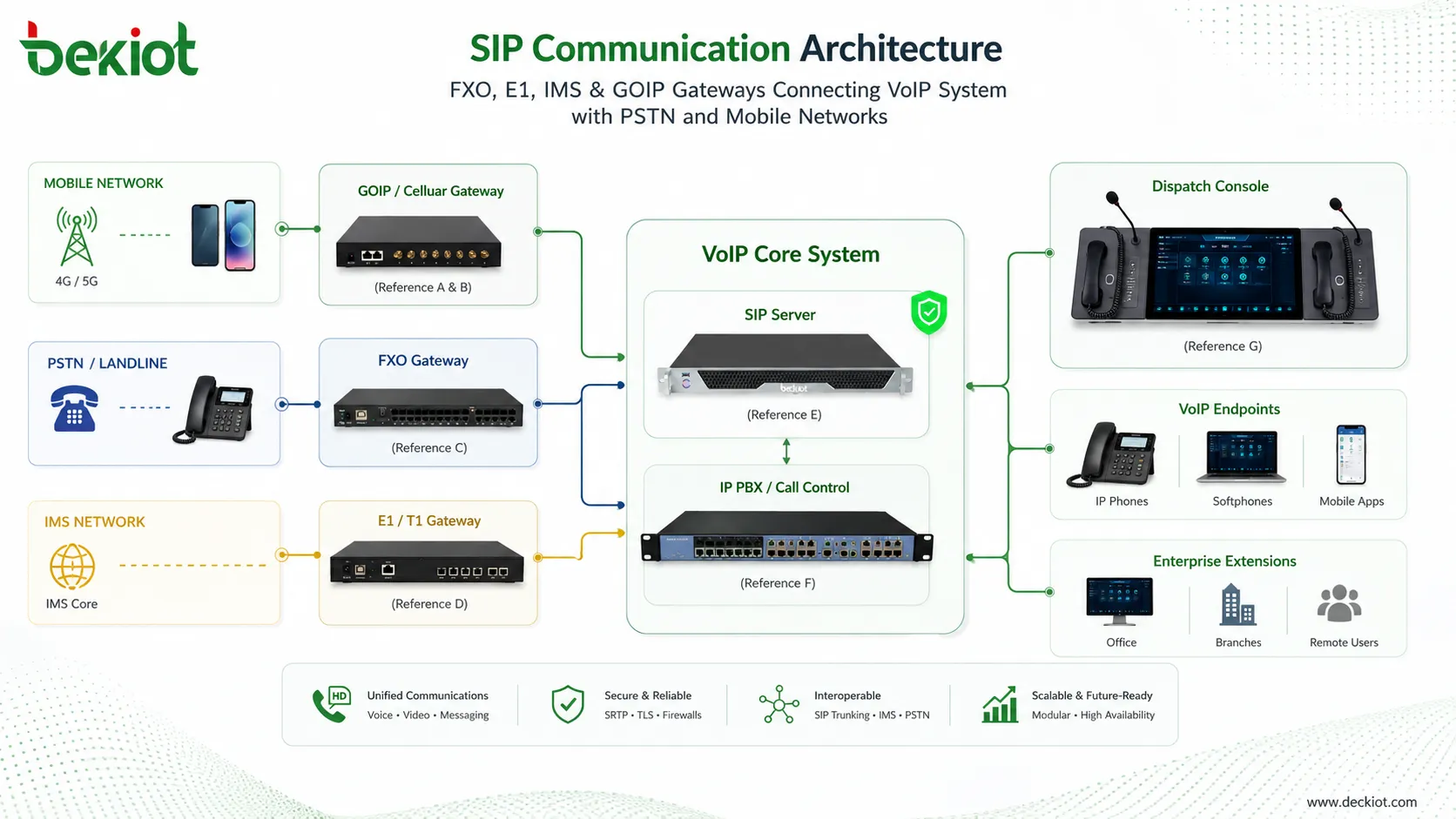
SIP communication systems can use different gateway types to connect VoIP platforms with PSTN lines, digital trunks, IMS access and cellular mobile networks.
How Gateways Connect Different Voice Networks
SIP makes network integration easier
SIP has made voice network integration more flexible. When different devices and platforms support SIP, they can be connected into a unified VoIP architecture. An enterprise phone system may use SIP phones internally, SIP trunks for external calls, and gateways for access to older or non-IP networks.
For example, an FXO gateway connects analog telephone lines and converts them into SIP calls. An E1 gateway connects digital trunk lines and turns trunk-side voice channels into SIP resources. These gateway types allow an IP-PBX, softswitch or dispatch platform to communicate with landline phones, mobile phones and public telephone networks.
Where GOIP gateways fit in
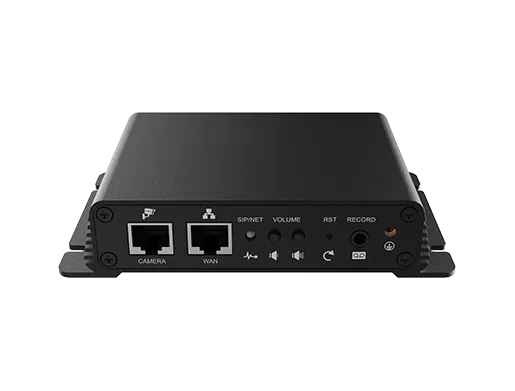
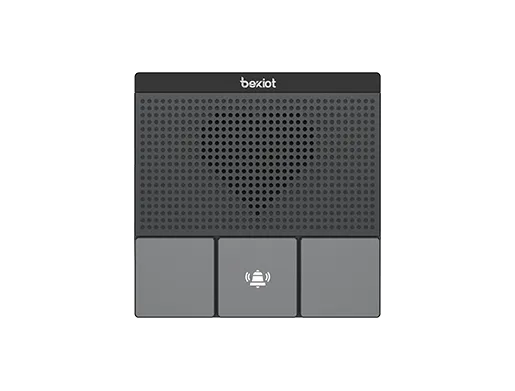
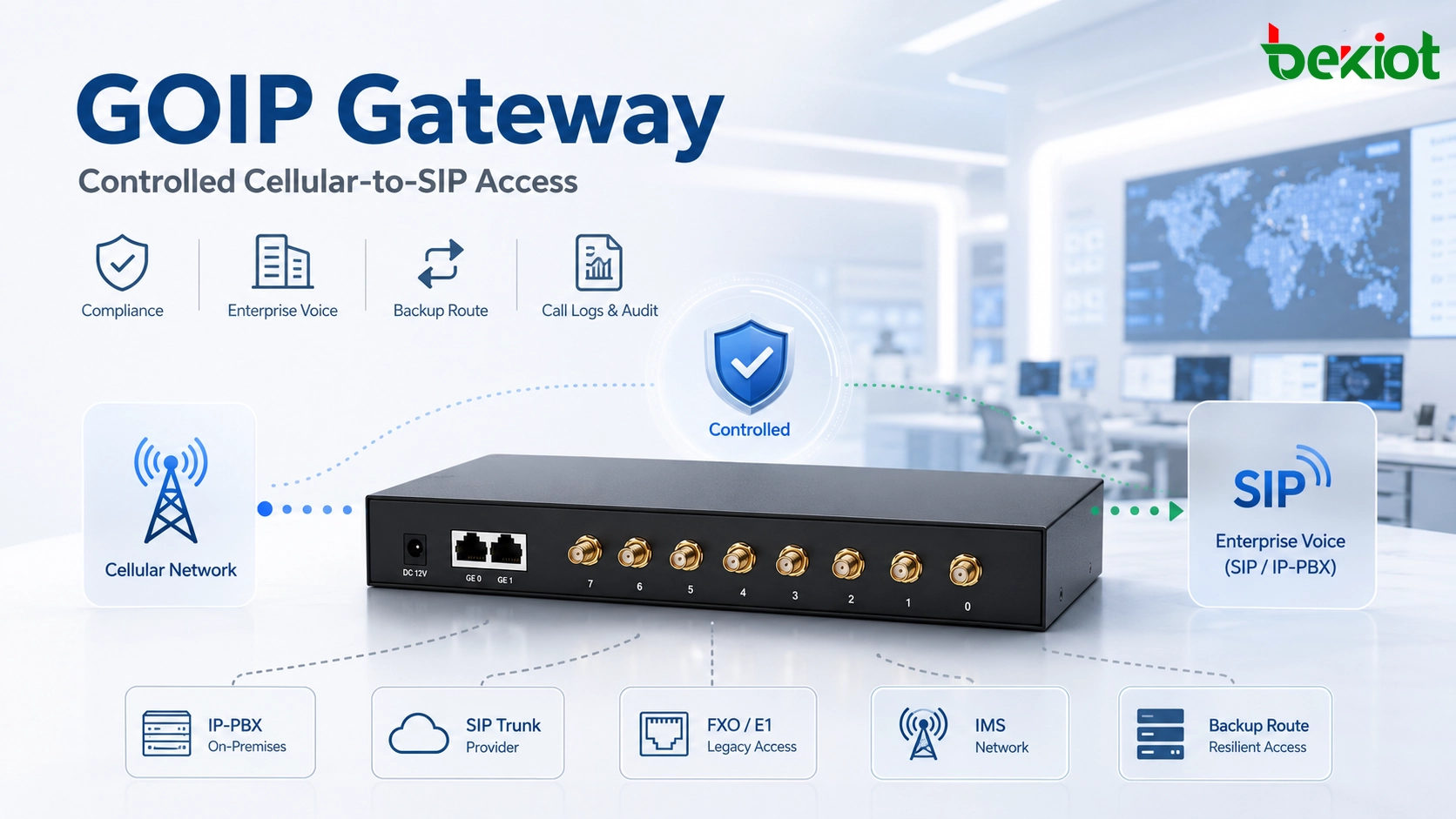
A GOIP gateway works differently from an FXO or E1 gateway. It does not connect to a physical analog telephone line or a digital trunk cable. Instead, it uses mobile SIM cards as the voice access resource. Each SIM channel can be mapped into the SIP-based calling environment according to the gateway configuration and PBX routing rules.
This type of device is also called a wireless access gateway, GSM gateway or cellular-to-SIP gateway in some projects. Small models may support only a few SIM slots, while larger models can support many channels. The technical appeal is clear: cellular voice resources can be brought into an IP voice system without laying fixed telephone lines.
Why GOIP Gateway Availability Has Changed
Telecom fraud control is the main pressure
The most important reason for reduced GOIP availability is misuse risk. Because a GOIP gateway can bridge mobile SIM card calls with IP networks, it may be abused to make remotely controlled calls appear as local mobile calls. This creates serious regulatory pressure for manufacturers, telecom operators, integrators and project owners.
In illegal use, the physical device may be placed in one region while call control happens from another network location. The gateway may only act as a cellular access bridge, but the calling behavior can create problems in tracking, identity verification and legal responsibility. As telecom fraud prevention becomes stricter, vendors have become more cautious about selling this product category.
High-channel devices are more sensitive
Multi-slot GOIP gateways are especially sensitive because they concentrate many SIM cards in one device. A large deployment may generate high call volume through multiple mobile numbers. Even when the buyer has a legitimate technical need, abnormal traffic patterns can trigger carrier risk control.
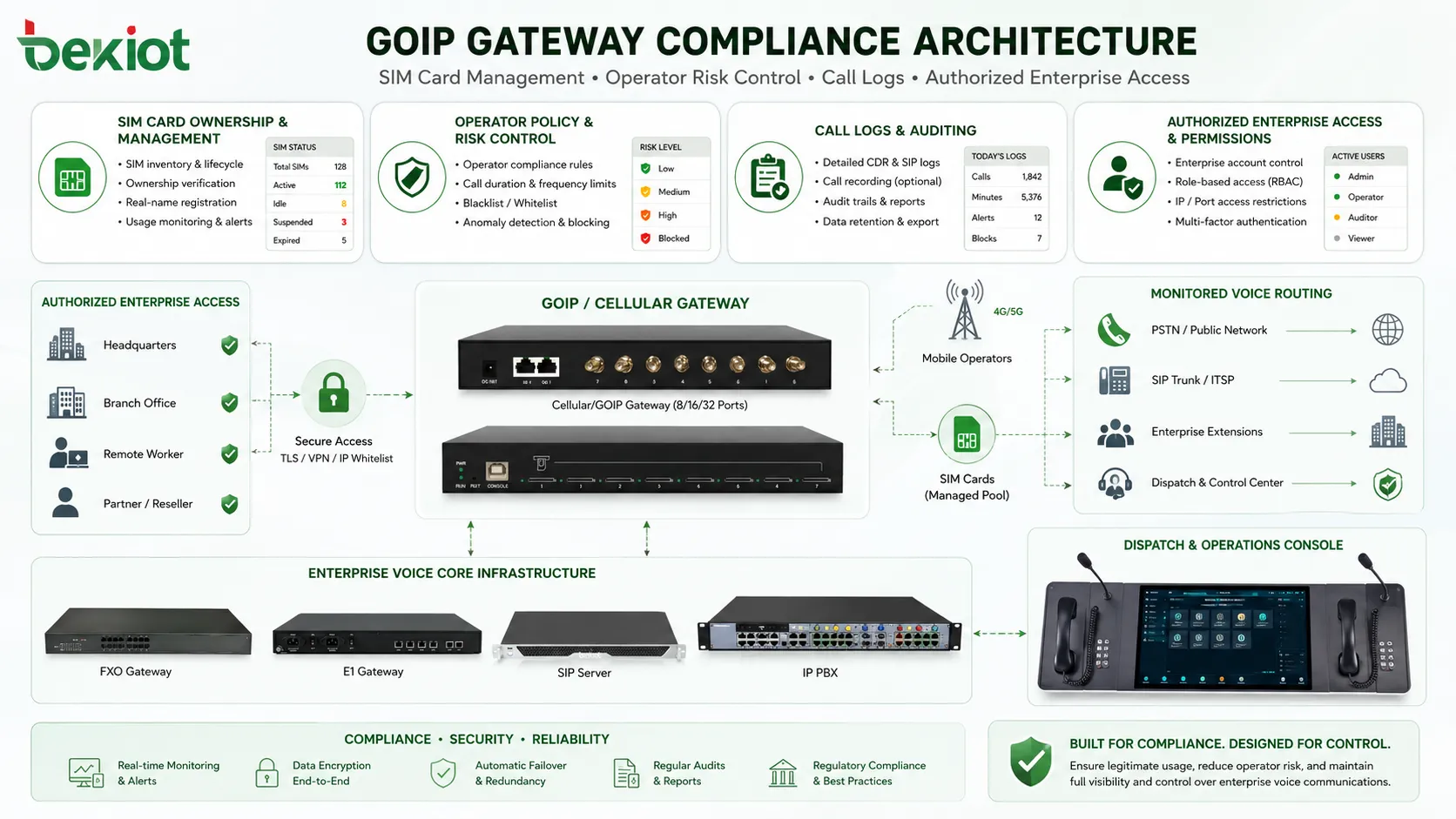
Operators in many regions have strengthened SIM card control, real-name registration, abnormal call detection, high-frequency calling restrictions and cross-region communication monitoring. If a GOIP system is configured poorly or used in a way that resembles suspicious behavior, SIM cards may be limited, locked, suspended or investigated.
GOIP gateway deployment should consider SIM ownership, operator policy, call behavior monitoring, compliance documentation and project responsibility.
Ownership and Responsibility Are Often the Hidden Problems
Personal SIM cards may not match enterprise projects
GOIP gateways depend on SIM cards, and SIM cards are usually tied to a registered person or a legal entity. This creates a practical issue in enterprise communication projects. If the project belongs to a company but the SIM cards are opened under personal names or unclear accounts, responsibility becomes difficult to define.
When call disputes, abnormal usage, carrier restrictions or compliance inspections happen, the enterprise may need to prove who owns the numbers, who controls the gateway, who approved the routing policy and who is responsible for operation. Without clear ownership, the project becomes harder to manage.
Acceptance and maintenance can become difficult
A formal communication project is not judged only by whether it can make calls. Buyers, system integrators and maintenance teams also need documentation, routing rules, operation logs, number ownership records, administrator responsibility and compliance proof.
If a system depends on many SIM cards with unclear ownership, project acceptance may become difficult. Long-term maintenance also becomes harder when SIM cards expire, are replaced, lose service, trigger risk control or are restricted by the operator. This is one reason GOIP gateways are less common in standard enterprise procurement than before.
Enterprise Alternatives Are Easier to Standardize
FXO, E1, IMS and SIP trunks provide clearer access
For many enterprise phone system projects, FXO gateways, E1 gateways, IMS access and SIP trunks are easier to standardize. These access methods are usually based on fixed lines, digital trunks or carrier-approved enterprise voice services. They provide a clearer relationship between the telecom operator, the enterprise user and the communication platform.
An FXO gateway may be suitable for a small number of analog lines. An E1 gateway can support digital trunk access in larger traditional telephony environments. IMS access can connect with operator-side voice services. SIP trunks provide IP-based external calling for modern VoIP systems, call centers, command platforms and enterprise phone networks.
Standard access is better for long-term operation
Long-term communication projects need stability, traceability, maintainability and clear accountability. A gateway that depends on many SIM cards may work during testing, but operation can become unstable if SIM cards are suspended, replaced, restricted or flagged by the carrier.
Carrier-approved trunks and enterprise-level voice access services usually provide clearer contracts, number ownership, service continuity and maintenance support. This is why many integrators now recommend standardized access models for government, transportation, energy, industrial, campus and public safety communication systems.
When Cellular-to-SIP Access Still Makes Sense
Legitimate use cases still exist
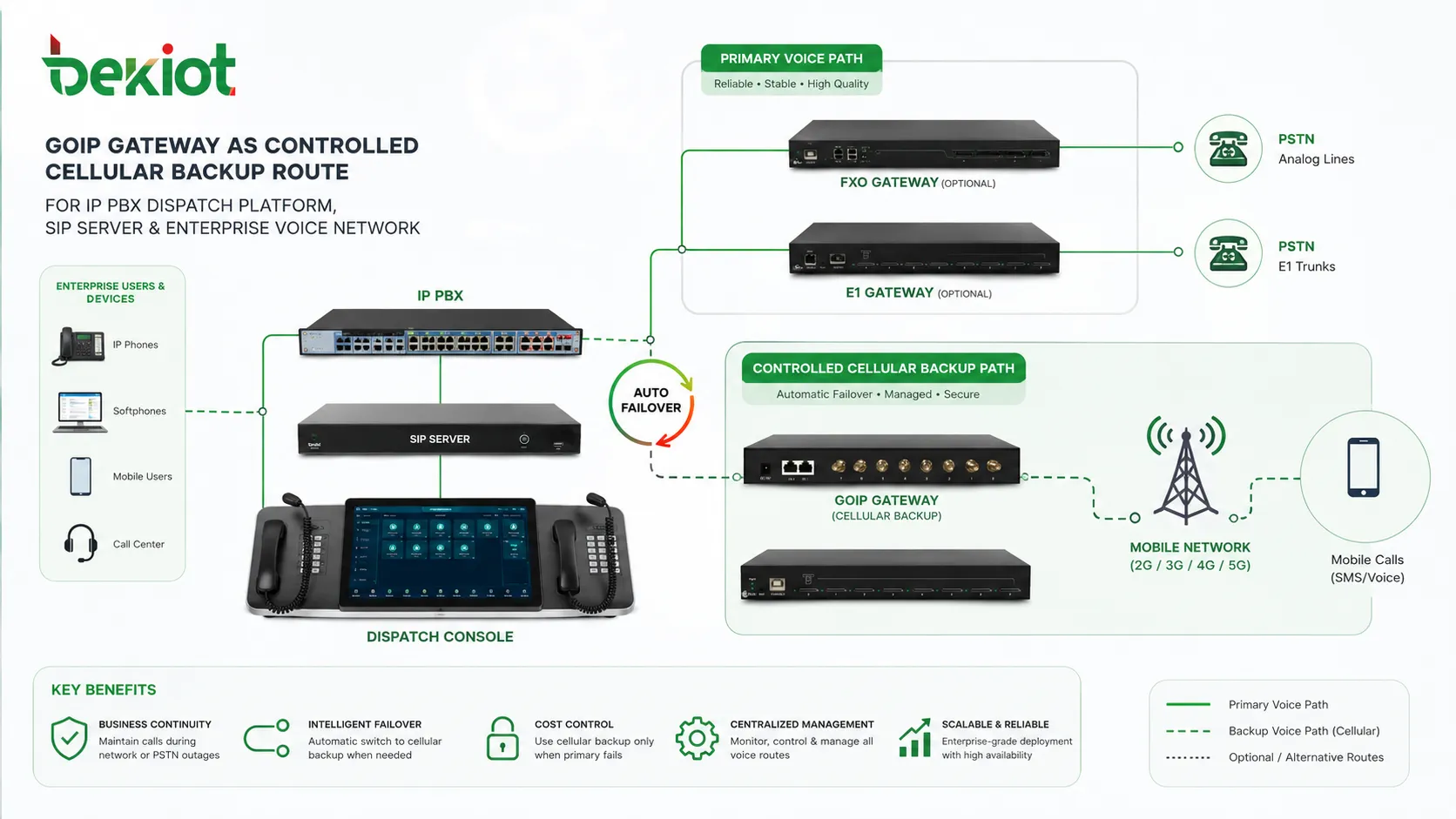
GOIP gateways are not meaningless products. In controlled and documented environments, cellular-to-SIP access can still be useful. Typical scenarios include temporary project sites, remote facilities without fixed telephone lines, backup calling paths, mobile network coverage testing, emergency communication redundancy and special integration projects where wired PSTN access is unavailable.
The key is that the deployment must be authorized and managed. The project should use approved SIM resources, clear ownership records, reasonable call volume rules, secure access control and traceable operation logs. Without these controls, the compliance risk may be higher than the technical value.
GOIP should not be used as a shortcut
For a legal enterprise project, a GOIP gateway should not be treated as a way to bypass formal telecom access. It should be treated as a controlled wireless access node inside a planned communication architecture. The project team should confirm local regulations, operator policies, SIM registration requirements, emergency calling rules, call volume limits and maintenance responsibility before deployment.
Becke Telcom GOIP gateways can be considered when a project needs cellular-to-SIP connectivity under a clear and compliant design. They are more suitable for planned integration, backup communication and controlled enterprise use than for unmanaged high-volume calling.
Selection and Deployment Notes
Start from the real business requirement
Before selecting a GOIP gateway, the project team should define the actual requirement. If the goal is simply to connect an enterprise VoIP system to the public telephone network, FXO, E1, IMS or SIP trunk access may be a better option. If the project specifically requires cellular network access, GOIP can be evaluated as one possible path.
Important planning details include channel quantity, SIM ownership, operator approval, expected call volume, inbound and outbound call rules, number display, emergency call handling, call recording, billing method and maintenance process. These items should be clarified before hardware selection.
Build control mechanisms into the system
A responsible deployment should include call logs, user permissions, routing limits, abnormal call alerts, IP access control, SIM status monitoring, device health monitoring and secure management access. These controls help the system remain manageable and reduce the chance of misuse or carrier-side restriction.
In multi-site projects, the GOIP gateway should not be deployed as an isolated box. It should be included in the overall architecture with the IP-PBX, SIP server, dispatch platform, firewall policy, numbering plan and operation management process.
Project Risk Assessment Before Deployment
Review carrier policy before choosing hardware
Before adding a GOIP gateway to an enterprise communication system, the project team should not look only at SIM slots, SIP accounts or concurrent call capacity. Carrier policy may be more important than hardware capacity. Some operators may allow ordinary SIM cards only for handset use, while gateway-based voice routing may be restricted or require a specific enterprise agreement.
The buyer should confirm whether the selected SIM resources can legally be used inside gateway equipment. The project should also check whether outbound call frequency, number presentation, cross-region calling and long-duration calls comply with local telecom rules. These checks can prevent a system that works during testing from being restricted after real operation begins.
Match the gateway role with the workflow
A GOIP gateway should have a defined role in the communication workflow. It may be used as a backup outbound route, temporary mobile network access path, remote site voice bridge or controlled cellular interface for a special project. It should not become an unmanaged shortcut around normal enterprise calling policy.
In a well-designed deployment, the IP-PBX or SIP server should define when calls can use the GOIP route, which users are allowed to access it, what numbers can be dialed and how abnormal call attempts are blocked. For dispatch or emergency communication systems, routing priority should also be planned so that critical calls are not affected by SIM balance, signal quality or carrier-side restriction.
Operation, Maintenance and Long-Term Stability
Monitor SIM status and signal quality
Unlike fixed-line trunk gateways, GOIP gateways depend on the mobile network environment. Signal strength, SIM registration status, antenna placement, carrier coverage and local radio conditions can all affect call quality. A stable installation should include proper antenna positioning, device ventilation, network redundancy and regular SIM status checks.
Administrators should monitor failed registrations, dropped calls, unusual call duration, repeated dialing, inactive SIM slots and sudden call volume changes. These indicators can help identify configuration problems, network issues or possible misuse before normal operation is affected.
Keep complete documentation
For long-term operation, every SIM slot should be documented with its phone number, carrier, registered owner, service package, renewal period, assigned SIP account, routing rule and responsible administrator. Without this documentation, troubleshooting becomes difficult when a SIM card expires, is replaced or is restricted by the carrier.
Good documentation also helps future upgrades. If the enterprise later migrates from GOIP access to SIP trunk, IMS, FXO or E1 access, the existing call routes, user groups and service requirements can be reviewed more clearly. This makes migration smoother and reduces the risk of service interruption.
A GOIP gateway is more suitable when it is planned as a controlled cellular access node within a documented enterprise voice architecture.
Decision Checklist for Enterprise Projects
Planning Item
What to Confirm
Why It Matters
Access method
GOIP, FXO, E1, IMS or SIP trunk
Chooses the safest and most suitable voice access path
SIM ownership
Registered owner, enterprise authorization and contract status
Defines responsibility and reduces compliance risk
Carrier policy
Gateway use permission, call volume rules and number display requirements
Prevents service restriction after deployment
Routing control
User permission, dialing rules, emergency routes and abnormal call blocking
Keeps system operation controlled and traceable
Operation records
Call logs, SIM slot records, administrator actions and device status
Supports maintenance, audit and responsibility tracking
Practical Conclusion
Many communication equipment vendors no longer openly provide GOIP gateways because the product category has become more sensitive. The technical function is clear: a GOIP gateway converts mobile SIM card channels into SIP-based VoIP calling resources. The same convenience, however, can create concerns around telecom compliance, fraud prevention, SIM ownership, call traceability and project responsibility.
For formal enterprise communication projects, FXO gateways, E1 trunk gateways, IMS access and SIP trunks are often preferred because they are easier to standardize and manage. GOIP gateways can still be useful in legitimate scenarios, but they should be selected carefully, deployed with authorization and operated under clear compliance controls.
The best choice depends on the project goal. If the requirement is stable enterprise telephone access, standardized carrier services are usually safer. If the requirement is controlled cellular-to-SIP connectivity, GOIP should be planned as a managed access node with clear documentation, routing rules and operational responsibility.
FAQ
Is a GOIP gateway the same as a GSM gateway?
They are closely related terms. A GSM gateway usually refers to a device that connects mobile SIM channels to a phone or VoIP system, while GOIP often emphasizes IP networking and SIP-based integration. Actual functions depend on the device model and supported cellular standards.
Can a company use corporate SIM cards in a GOIP gateway?
It depends on local carrier policy and the service contract. Some operators may allow specific enterprise SIM or IoT/M2M SIM use cases, while others may restrict voice gateway applications. The company should confirm this with the operator before deployment.
Does a GOIP gateway support inbound calls?
Many devices support inbound and outbound calling, but the actual behavior depends on SIM service permissions, routing rules, SIP registration, caller ID handling and PBX configuration. Inbound call scenarios should be tested before project acceptance.
What logs should be kept for compliant operation?
Useful records include call time, calling number, called number, SIP account, SIM slot, call duration, device status, routing rule, administrator action and abnormal event alerts. These records help with troubleshooting, auditing and responsibility tracking.
Can GOIP be used as a backup path for enterprise communication?
Yes, in some projects it can be used as a backup calling path when fixed lines or SIP trunks are unavailable. The backup design should include call limits, priority rules, SIM status checks and clear switching logic to avoid unexpected operation issues.