Explosion-Proof Call Stations for Chemical Plant Emergency Dispatch
Explosion-proof call stations help chemical plants connect field reporting, alarm confirmation, dispatch commands, paging, event records, and emergency response into a safer hazardous-area communication workflow.
Becke Telcom
Emergency dispatch in a chemical plant is not built around one telephone, one alarm device, or one control room screen. It is a working process that connects field observation, alarm triggering, voice confirmation, command delivery, personnel response, event recording, and post-incident review. In this process, an explosion-proof call station provides a fixed and recognizable communication point for hazardous areas.
In process units, tank farms, pump stations, compressor rooms, loading racks, pipe corridors, and hazardous chemical storage zones, field workers need a fast way to contact the control room when an abnormal condition appears. At the same time, the dispatch center must be able to call back to the field, confirm the situation, issue local instructions, activate area notifications, and support emergency procedures.
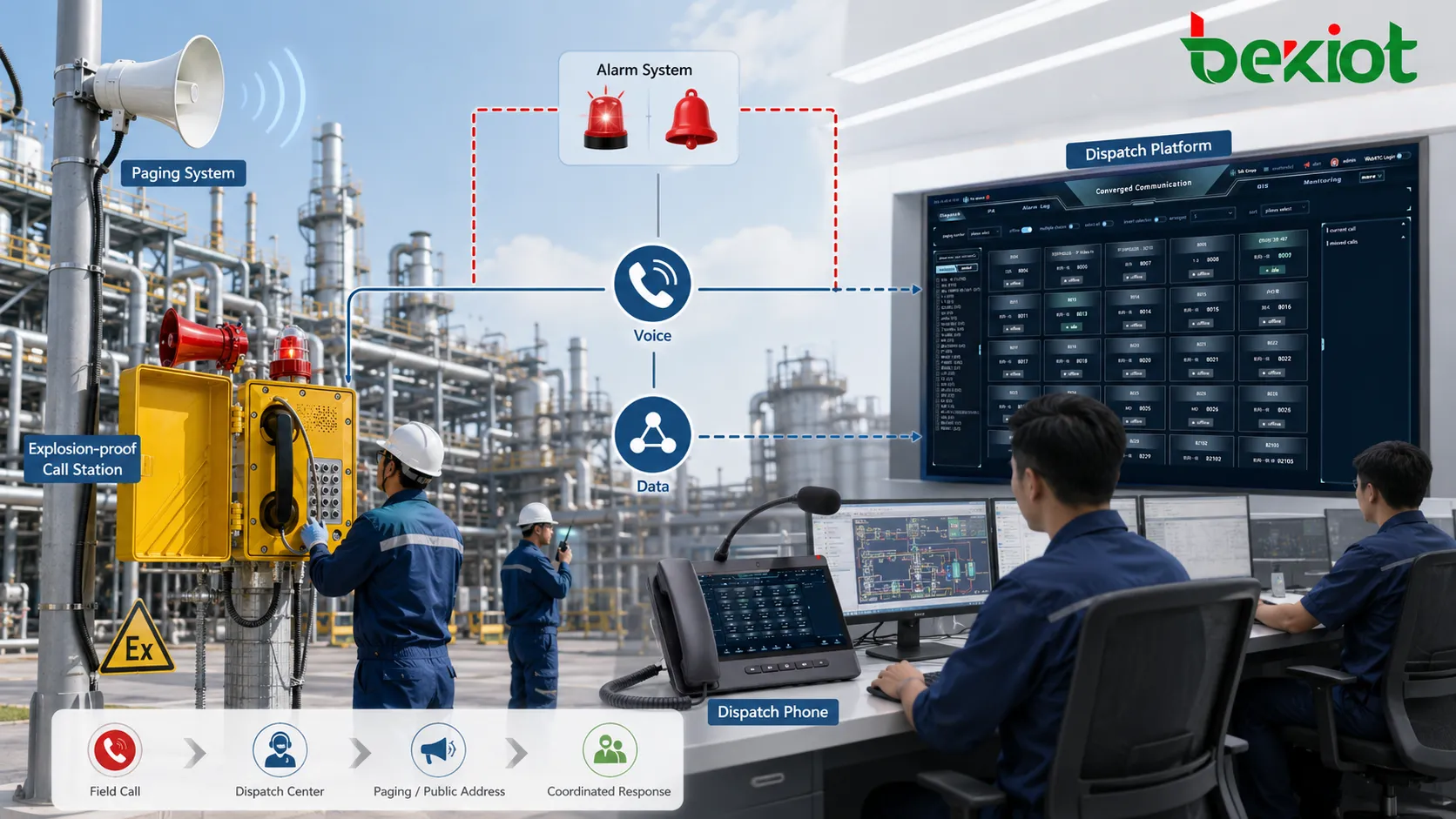
The value of an explosion-proof call station is not only voice calling. Its real value appears when it becomes part of a chemical plant emergency communication system, working together with alarms, paging, video surveillance, dispatch platforms, duty routing, and event records.
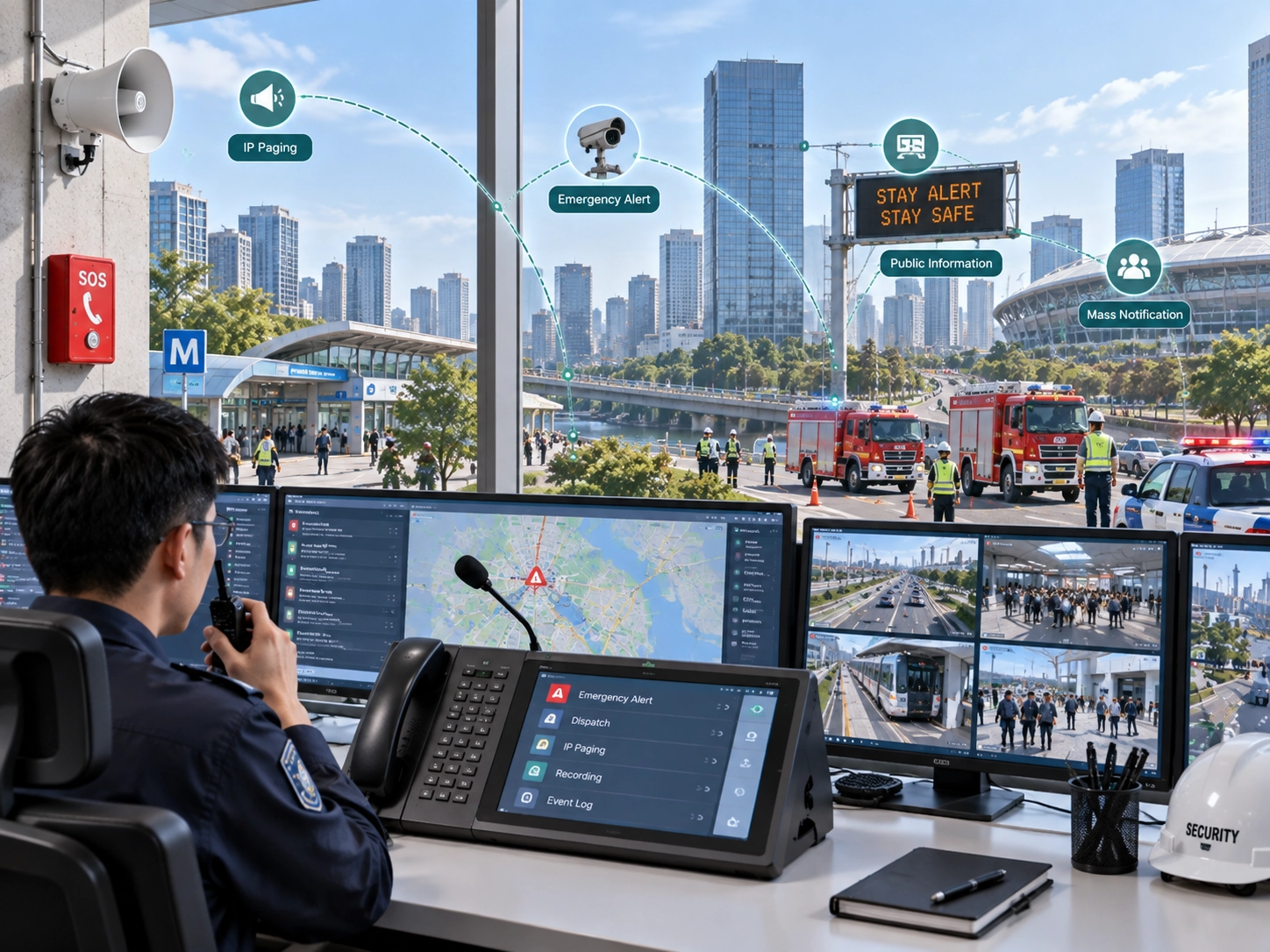
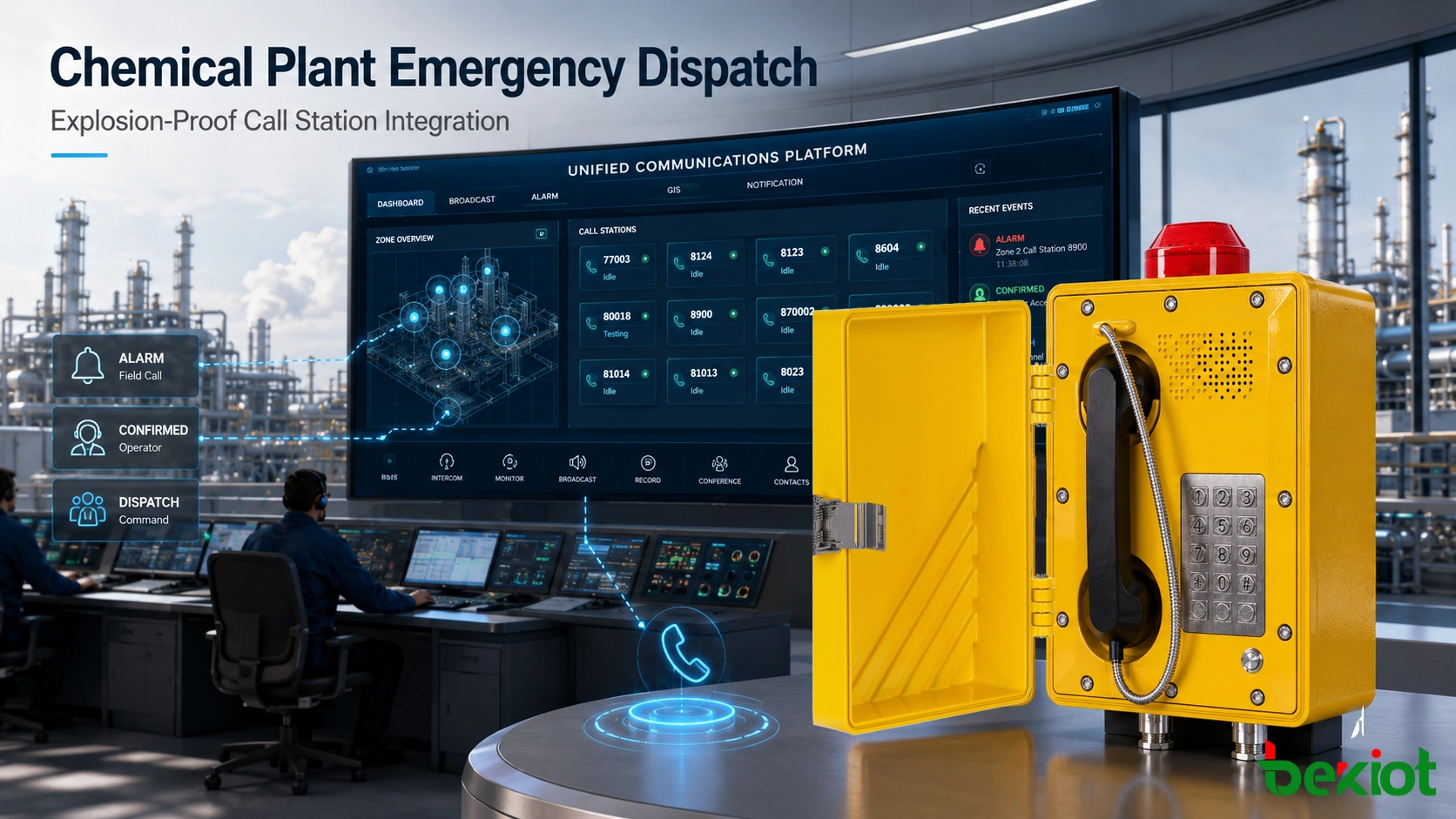
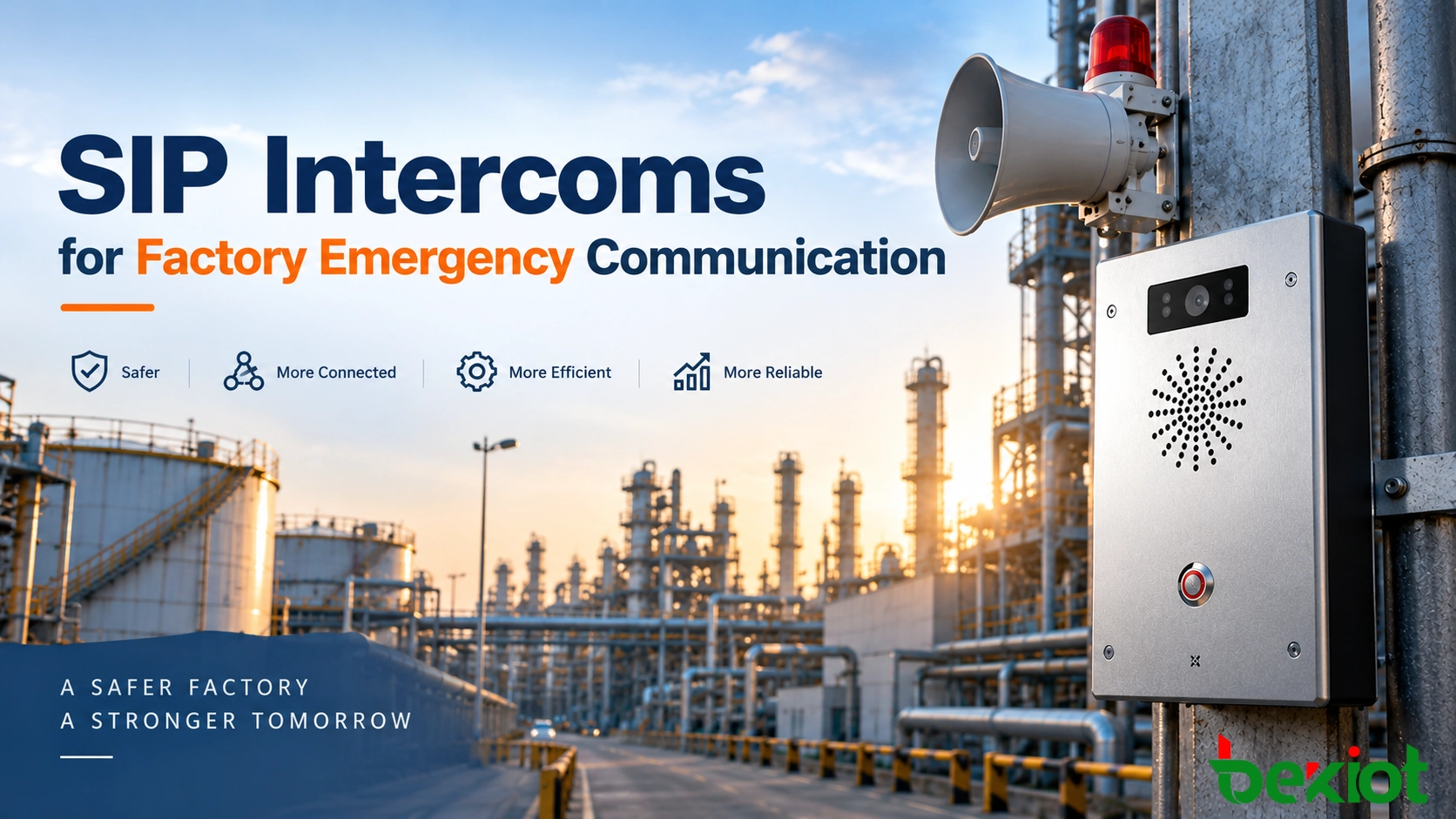
Chemical plant emergency dispatch depends on fixed field communication points, control room coordination, alarm systems, and clear response procedures.
Early field reporting shortens the response path
Many chemical plant incidents do not begin as obvious emergencies. They often start with small warning signs, such as an unusual smell, a slight leak, abnormal noise, equipment vibration, pressure fluctuation, temperature change, or unstable instrument data. When these early signs are reported quickly, the control room has more time to evaluate risk before the situation expands.
An explosion-proof call station gives workers a nearby fixed terminal for direct reporting. They do not need to return to an office, search for a mobile phone, wait for radio relay, or depend on another person to pass the message. This reduces delay and helps prevent incomplete or distorted information from entering the dispatch process.
Earlier field feedback helps operators decide whether to stop equipment, isolate a process section, evacuate personnel, notify maintenance, call safety staff, or activate a higher-level emergency plan. For this reason, the call station becomes an important entry point for abnormal information from the field.
Fixed communication points make locations clear
Chemical plants are often dense and complex. Similar-looking equipment, pipe racks, platforms, valves, tanks, and rotating machinery may be distributed across a large area. In an emergency, relying only on verbal location descriptions may lead to confusion or dispatching the wrong team to the wrong point.
A fixed explosion-proof call station can be bound to a specific physical location. One station may correspond to a pump group, pipe corridor section, tank farm entrance, loading bay, compressor room, or chemical storage area. When a call reaches the control room, the dispatcher can identify the source through the extension number, device name, zone label, or platform map.
This is different from ordinary office communication. In hazardous-area emergency dispatch, knowing where the call comes from is almost as important as the call itself. Clear location identification supports faster response, more accurate task assignment, and better area control.
Voice confirmation improves alarm judgment
Chemical plants usually deploy gas detection, fire alarm systems, DCS, SIS, video surveillance, access control, and equipment monitoring. These systems provide important data, but automatic alarms cannot replace field confirmation completely. A sensor can show abnormal values, and a camera can show an image, but smell, sound, vibration, access conditions, worker status, and现场 accessibility often require human feedback.
When an alarm appears on the dispatch platform, the operator can call the nearest explosion-proof call station to verify the real situation. The dispatcher may ask whether workers are present, whether leakage is visible, whether abnormal sound can be heard, whether the equipment can be approached safely, and whether evacuation is needed.
This voice confirmation mechanism reduces the risk of misjudgment. It helps combine automatic monitoring with field experience, avoiding unnecessary overreaction to minor abnormalities while also reducing delayed response to real hazards.
Emergency commands need to be short and direct
In chemical plant emergency response, instructions should be simple, accurate, and easy to execute. Typical commands may include stopping loading work, closing a valve, leaving a restricted area, pausing maintenance, confirming evacuation, waiting for process approval, or preventing equipment restart.
An explosion-proof call station allows the dispatch center to send direct instructions to the field. If the station supports loudspeaker output or paging integration, the same instruction can also reach nearby workers. This is useful in noisy process areas, dispersed work zones, loading platforms, and maintenance sites where several people may need to respond at the same time.
Emergency procedures should standardize common command types, such as evacuation, shutdown, isolation, warning, confirmation, maintenance suspension, and recovery. Clear wording helps dispatchers communicate under pressure and helps field workers understand the required action quickly.
In chemical plant emergency communication, the goal is not to say more. The goal is to deliver the right message to the right field area at the right moment.
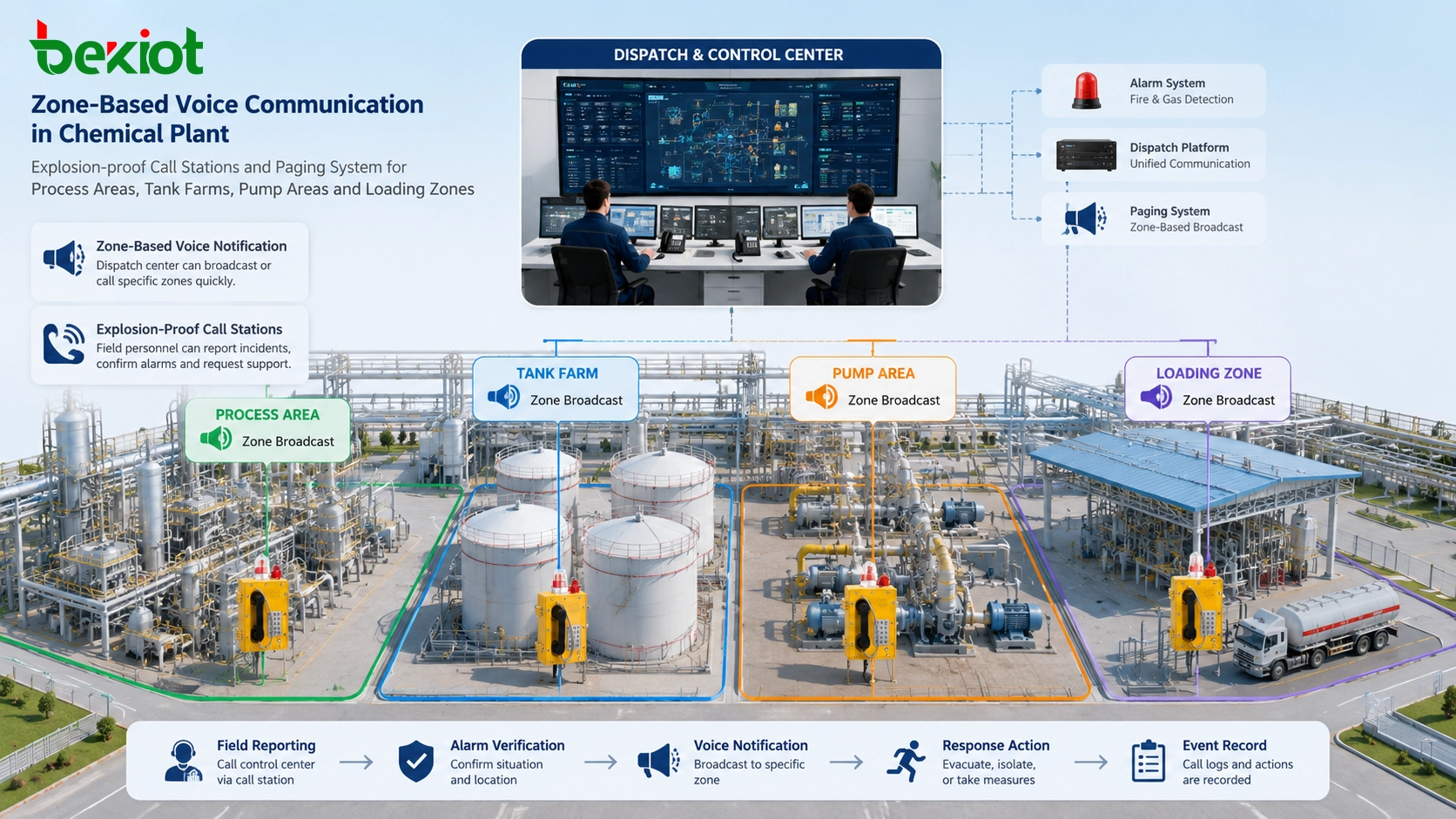
Area notification is often better than one-to-one calling
Some events do not require contacting only one worker. They require notifying everyone in a defined area. Examples include a gas alarm near a tank farm, a temporary loading suspension, a pipe corridor restriction, a process unit switching state, or a safety warning around maintenance work.
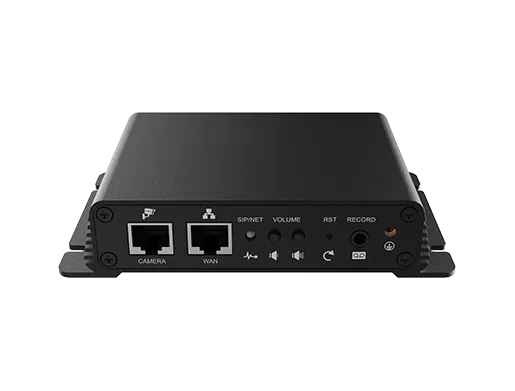
In these situations, explosion-proof call stations can work with loudspeakers, paging amplifiers, SIP paging gateways, or zone-based public address systems. The dispatch center can broadcast instructions to the affected area so that nearby personnel receive the same message at the same time.
Area notification should be planned carefully. A broadcast zone that is too large may disturb unrelated production, while a zone that is too small may miss workers near the risk area. Chemical plants should define notification zones according to process units, work areas, escape routes, fire lanes, and emergency assembly points.
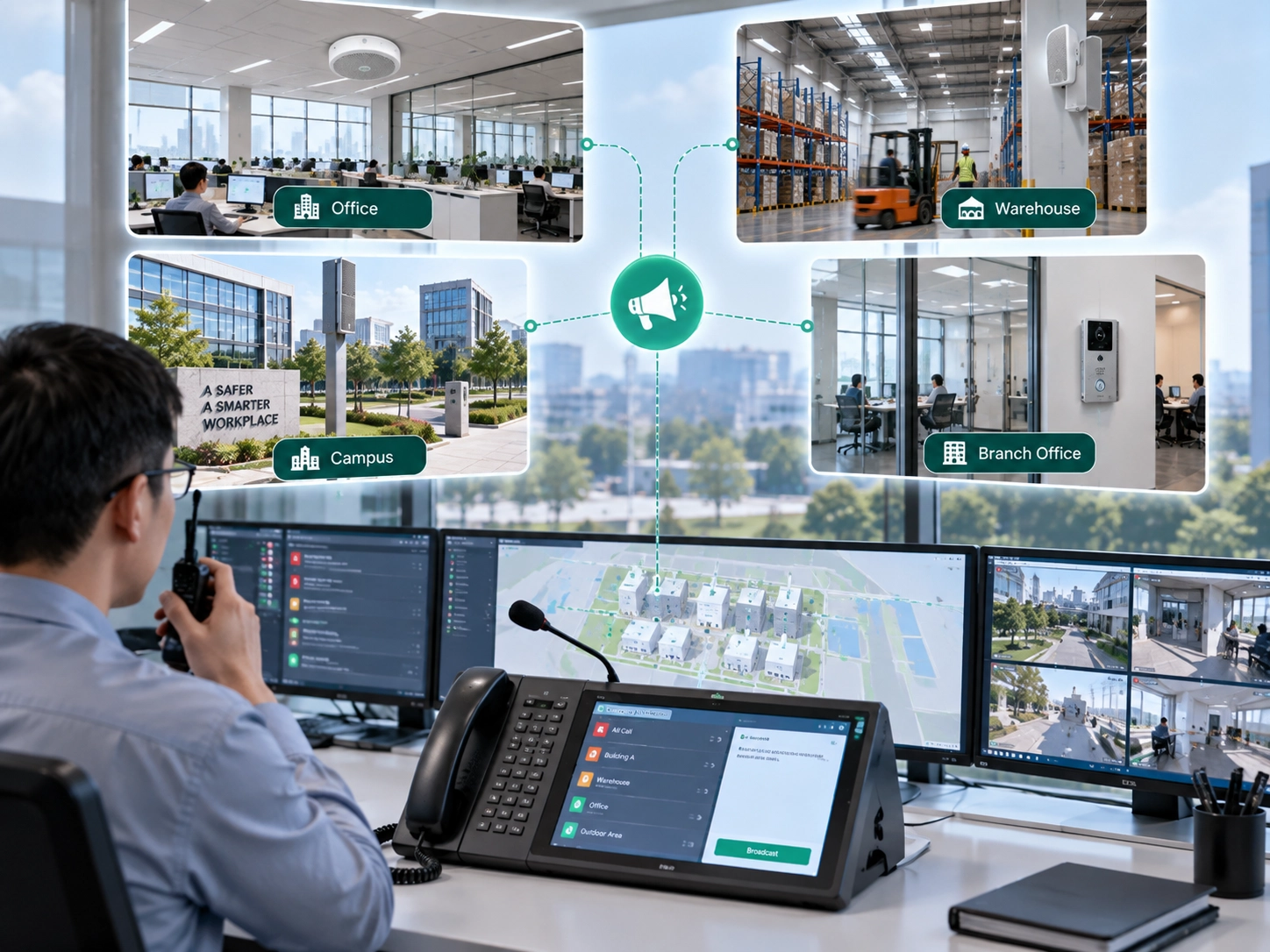
Zone-based voice notification helps dispatch centers send instructions to the correct process area without unnecessary disturbance.
Shift duty routing should match real operations
Chemical plants often operate across day shifts, night shifts, holiday duty, turnaround maintenance, temporary construction, and special production schedules. Personnel arrangements change with each duty mode, so communication routing should also match the real operating structure.
During normal daytime operation, a routine abnormal report may be routed to production or maintenance staff. During night duty, emergency calls may need to reach the duty dispatch desk directly. During shutdown or maintenance periods, certain call stations may temporarily route calls to the turnaround command group or field supervisor.
A practical emergency communication system should support flexible routing instead of forcing every call into one fixed path. The closer the call logic is to the actual duty arrangement, the more useful the system becomes during real events.
Records support review, training, and improvement
After an emergency or abnormal event, the plant often needs to review alarm time, field response, command content, handling steps, personnel actions, and recovery progress. Without communication records, many details depend only on memory, which can make the review incomplete or inconsistent.
When explosion-proof call stations are connected to a dispatch platform, IPPBX, or emergency communication system, the site can retain call logs, audio records, station locations, operator actions, paging records, and linkage events. These records support incident analysis, drill evaluation, staff training, and procedure optimization.
The purpose of recording is not only accountability. It also helps the plant improve. If one area responds slowly, the station location may need adjustment. If an instruction is often misunderstood, dispatch wording may need revision. If one station is rarely used, its position and function may need to be reviewed.
Deployment should follow emergency routes
Explosion-proof call stations should not be placed only according to equipment density. They should be arranged around emergency routes and real field actions. Important positions include inspection paths, key operating points, equipment switching areas, leakage-risk zones, loading areas, evacuation routes, assembly points, and access points near control rooms.
In tank farms, call stations may be installed near entrances, valve groups, loading connections, and fire lanes. In pump areas, they may be placed along inspection routes and maintenance sides. In pipe corridors, they should be installed at accessible nodes. In chemical storage zones, they may cover loading points, temporary storage areas, and emergency access routes.
The installation position should avoid obstruction by pipes, equipment, guardrails, or stored materials. Workers wearing gloves, helmets, and protective clothing should be able to operate the station quickly. For night operation, lighting, signage, and visibility should also be considered.
Product selection should reflect chemical site conditions
Field communication terminals in chemical plants usually require hazardous-area suitability, dust and water protection, corrosion resistance, clear audio, loudspeaker capability, SIP compatibility, platform access, and long-term reliability. Some projects may also require external speaker output, paging linkage, alarm interfaces, remote management, or connection with dispatch systems.
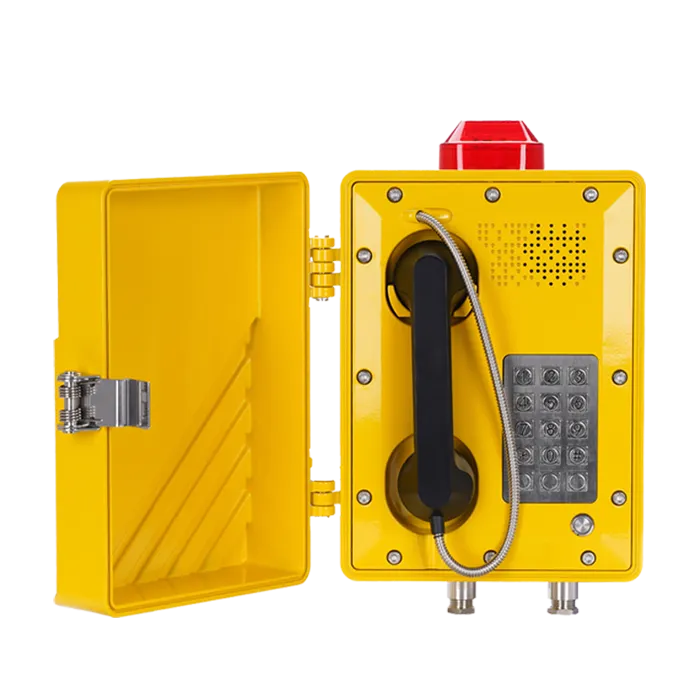
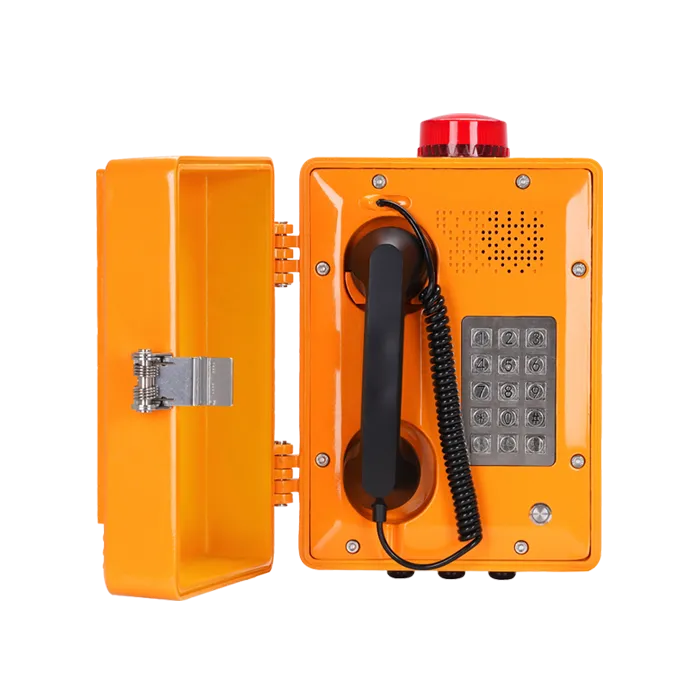
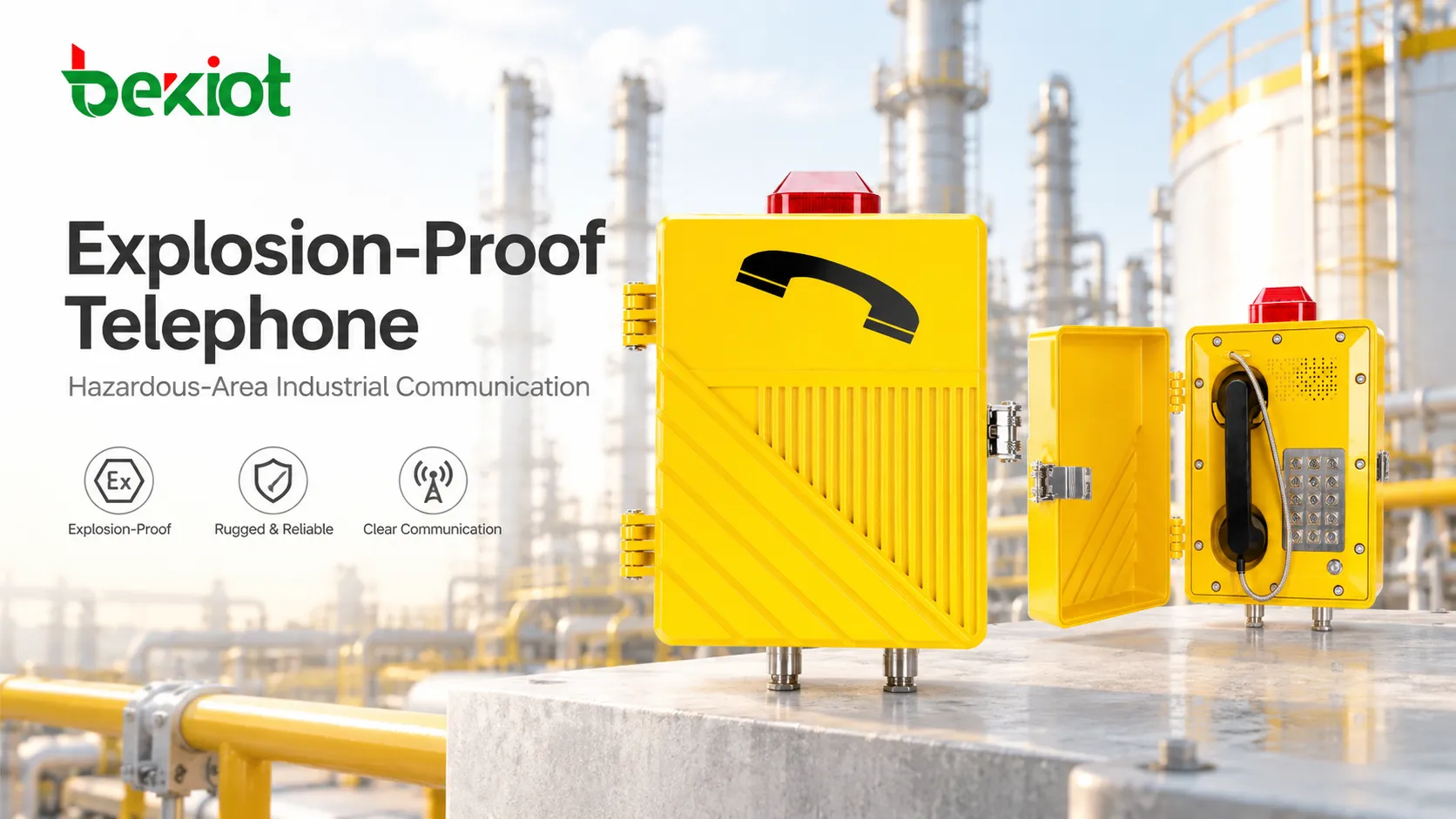
For fixed communication points in hazardous areas, Becke Telcom / 贝克通信 EX-BH621 can be considered as one suitable option. The device supports SIP 2.0 and can connect with IPPBX, network dispatch platforms, and emergency communication systems. It also provides IP66 dust and water protection and uses an industrial metal enclosure and keypad structure for demanding field environments.
The device includes a built-in amplifier, supports up to 30W speaker output, and can connect with an external speaker. It can be used for field voice communication, area paging, dispatch access, and emergency confirmation in chemical process units, gas stations, pipe corridors, tank farms, and high-noise equipment areas. Final selection should still depend on hazardous-area classification, platform requirements, installation conditions, and project acceptance standards.
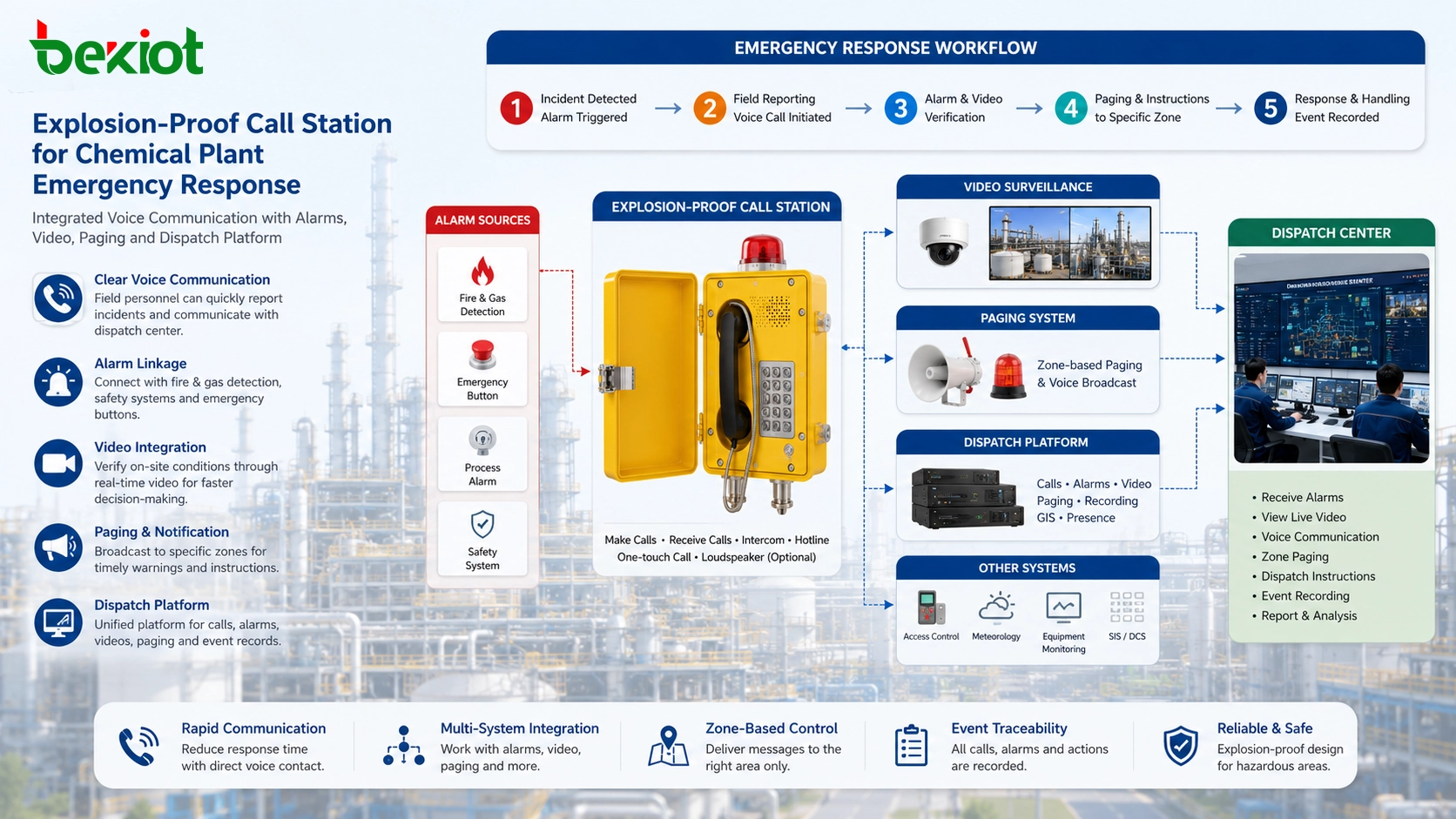
An explosion-proof call station should not be treated as an isolated field device. In a chemical plant emergency dispatch system, it should work together with gas detection, fire alarms, video surveillance, paging systems, personnel positioning, access control, DCS, SIS, and emergency procedures.
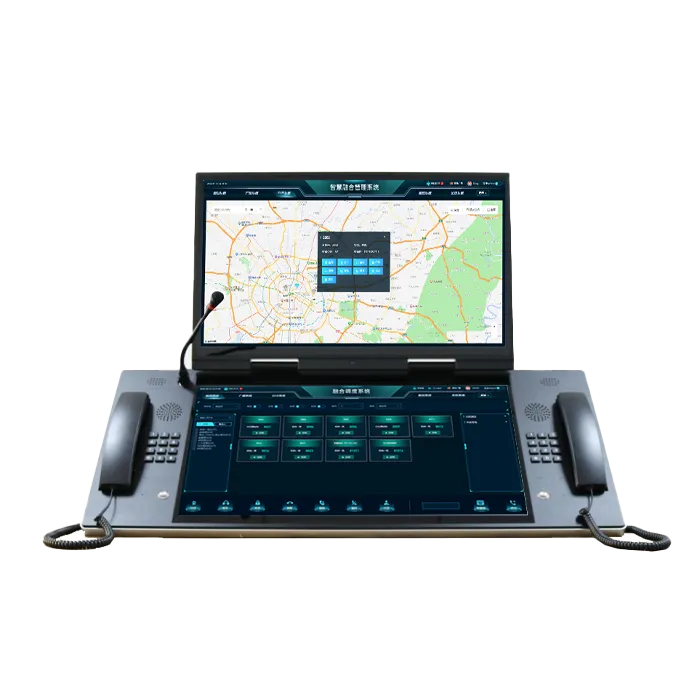
For example, when a gas detector triggers an alarm, the dispatch platform can display the alarm point, open nearby video, show the nearest field communication station, and allow the dispatcher to call the area. If evacuation is confirmed, the operator can issue a zone-based voice announcement. After the event, calls, broadcasts, alarms, and handling records can be retained for review.
This coordination changes emergency response from isolated system reactions into a continuous workflow. The call station provides the voice confirmation layer between automatic monitoring and human decision-making.
When voice communication works with alarms, video, paging, and dispatch platforms, emergency response becomes more continuous and traceable.
Drills are more useful than static acceptance tests
After the emergency communication system is installed, it should not be tested only once during project handover. A better approach is to include explosion-proof call stations in routine drills and periodic checks. Drill scenarios may include gas alarms, personnel assistance, process shutdown, tank farm warning, loading suspension, leakage confirmation, and night duty response.
Drills can verify whether field workers know where the nearest station is, whether dispatchers can identify the station location quickly, whether area notification reaches the intended zone, whether recording works correctly, and whether platform linkage follows the emergency plan.
If a drill shows that a station is difficult to find, audio is unclear, workers do not know how to operate the terminal, or the dispatch workflow is slow, the system should be adjusted. Emergency communication reliability depends not only on device specifications, but also on user familiarity and executable procedures.
Long-term management keeps the system reliable
The long-term value of explosion-proof call stations depends on availability, maintenance, procedure discipline, and traceable management. After installation, the plant should maintain a station list, extension table, zone grouping plan, inspection records, test records, and maintenance responsibility records.
Routine checks should include the enclosure, handset, keypad, loudspeaker, cable entry, sealing parts, mounting bracket, grounding, and online platform status. For stations connected to dispatch platforms, regular testing should also cover calling, paging, recording, platform display, alarm linkage, and zone broadcast behavior.
From a system design perspective, an explosion-proof call station is not an accessory to a chemical plant emergency dispatch system. It is a field-side communication node that makes hazardous areas reachable, identifiable, notifiable, and manageable. With proper deployment and management, it provides a practical foundation for safer production and faster emergency response.
Summary
Explosion-proof call stations help chemical plants connect field reporting, dispatch confirmation, command delivery, area notification, event recording, and emergency review into one practical workflow. Their value is strongest when they are installed at key hazardous-area points and integrated with alarms, video, paging, IPPBX, dispatch platforms, and emergency procedures.
For chemical plants, tank farms, loading racks, pump areas, pipe corridors, gas stations, and other hazardous sites, the goal is not simply to add more communication devices. The goal is to make every important field area easier to reach, easier to identify, easier to notify, and easier to manage during abnormal and emergency events.
FAQ
Can explosion-proof call stations work with handheld radios?
Yes. They serve different roles. Handheld radios support mobile workers, while fixed call stations provide known location-based communication points. In many chemical plants, both are used together to improve communication coverage.
Where should call stations be installed in a chemical plant?
They should be installed near key operating positions, inspection routes, pump areas, tank farm entrances, loading zones, pipe corridors, storage areas, evacuation routes, and other locations where workers may need fast contact with the control room.
Why is voice confirmation still needed if the plant already has alarms?
Automatic alarms provide data, but field workers can confirm smell, sound, vibration, leakage visibility, personnel status, and access conditions. Voice confirmation helps the dispatch center make better decisions.
What information should be included in a station management record?
A useful record should include station name, location, extension number, communication line or network information, power source, related dispatch group, inspection results, maintenance contact, and any alarm or paging linkage rules.
What should be tested before final acceptance?
The project team should test calling, paging, loudspeaker output, recording, station identification, dispatch platform display, alarm linkage, zone notification, audio clarity, network stability, and long-duration operation.