Grandstream Built-In IP PBX for Modern Business Communication
Grandstream built-in IP PBX helps businesses unify calls, extensions, meetings, remote users, and endpoint management in one controllable platform for offices, branches, and hybrid teams.
Becke Telcom
A Grandstream built-in IP PBX is designed for organizations that need more than a simple office phone system. It brings business calling, internal extensions, remote users, meeting access, endpoint registration, and system management into one communication platform. For many companies, this approach makes daily communication easier to control, easier to expand, and more consistent across offices, departments, branches, and mobile teams.
As businesses move away from isolated telephone systems, unified IP PBX platforms have become more useful. Instead of managing desk phones, SIP endpoints, soft clients, video meetings, and remote access as separate tools, companies can operate them through a more connected communication environment. In the Grandstream ecosystem, this type of platform is especially relevant for businesses that want on-premise control while still supporting flexible and hybrid work.
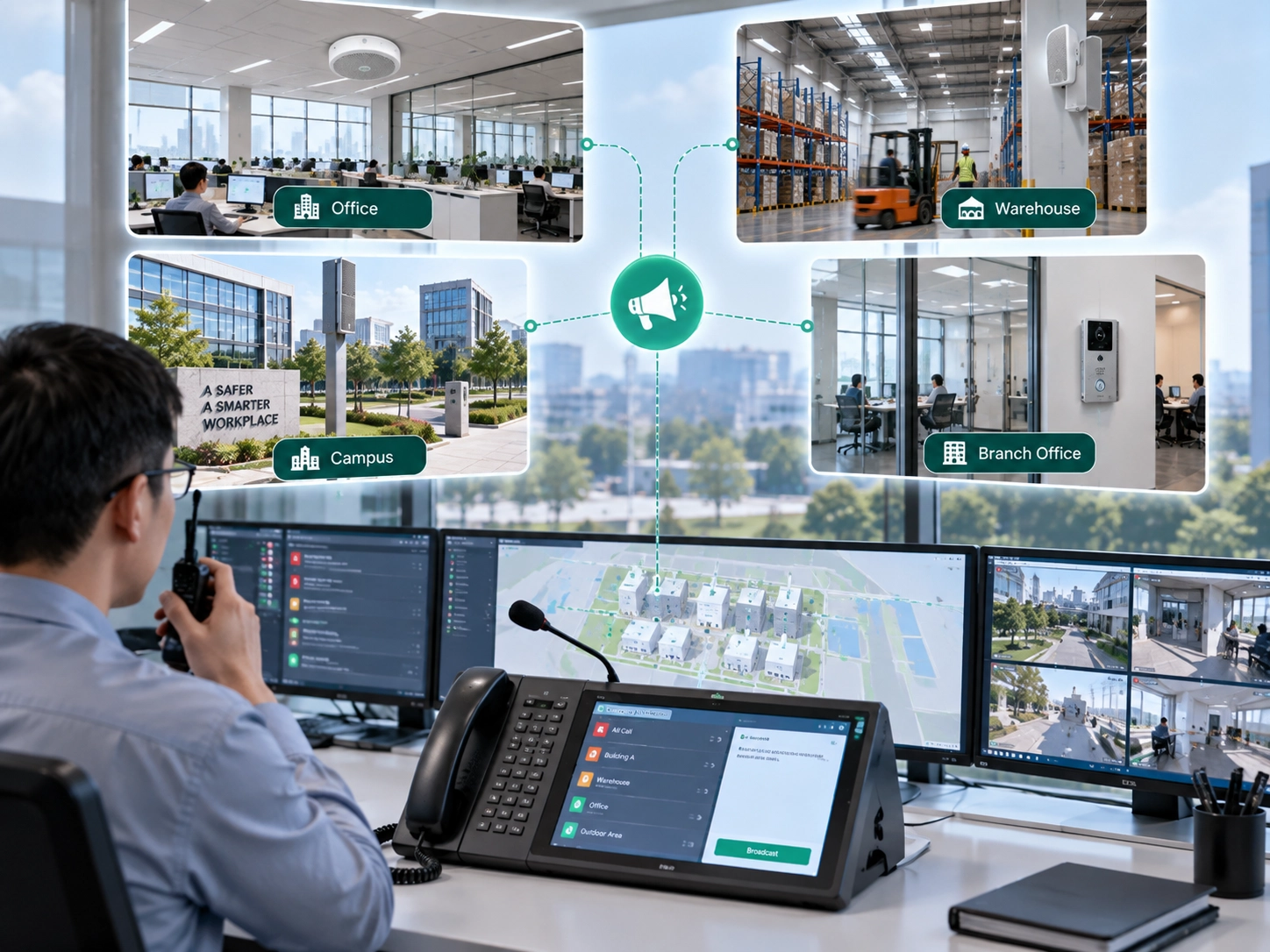
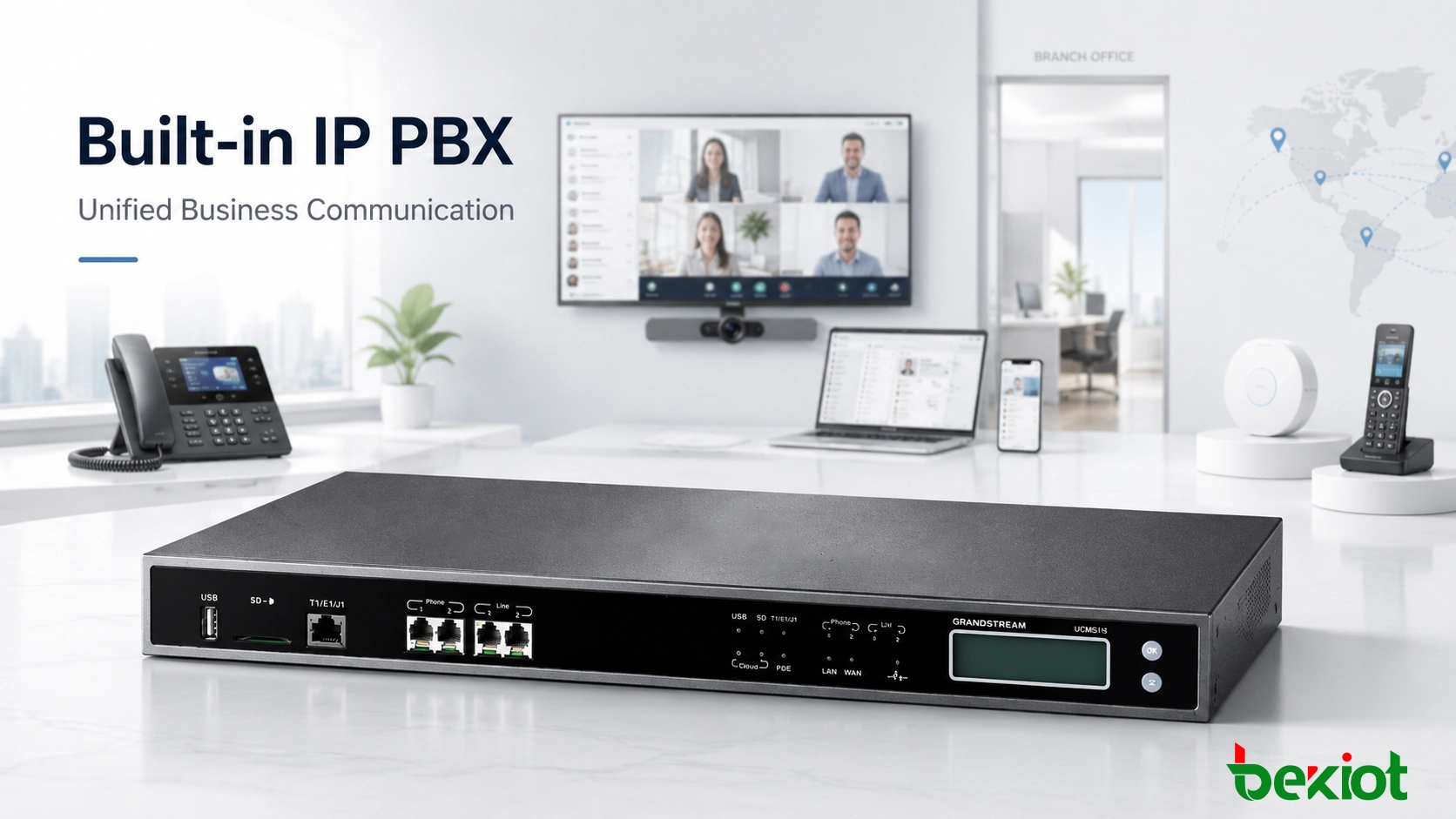
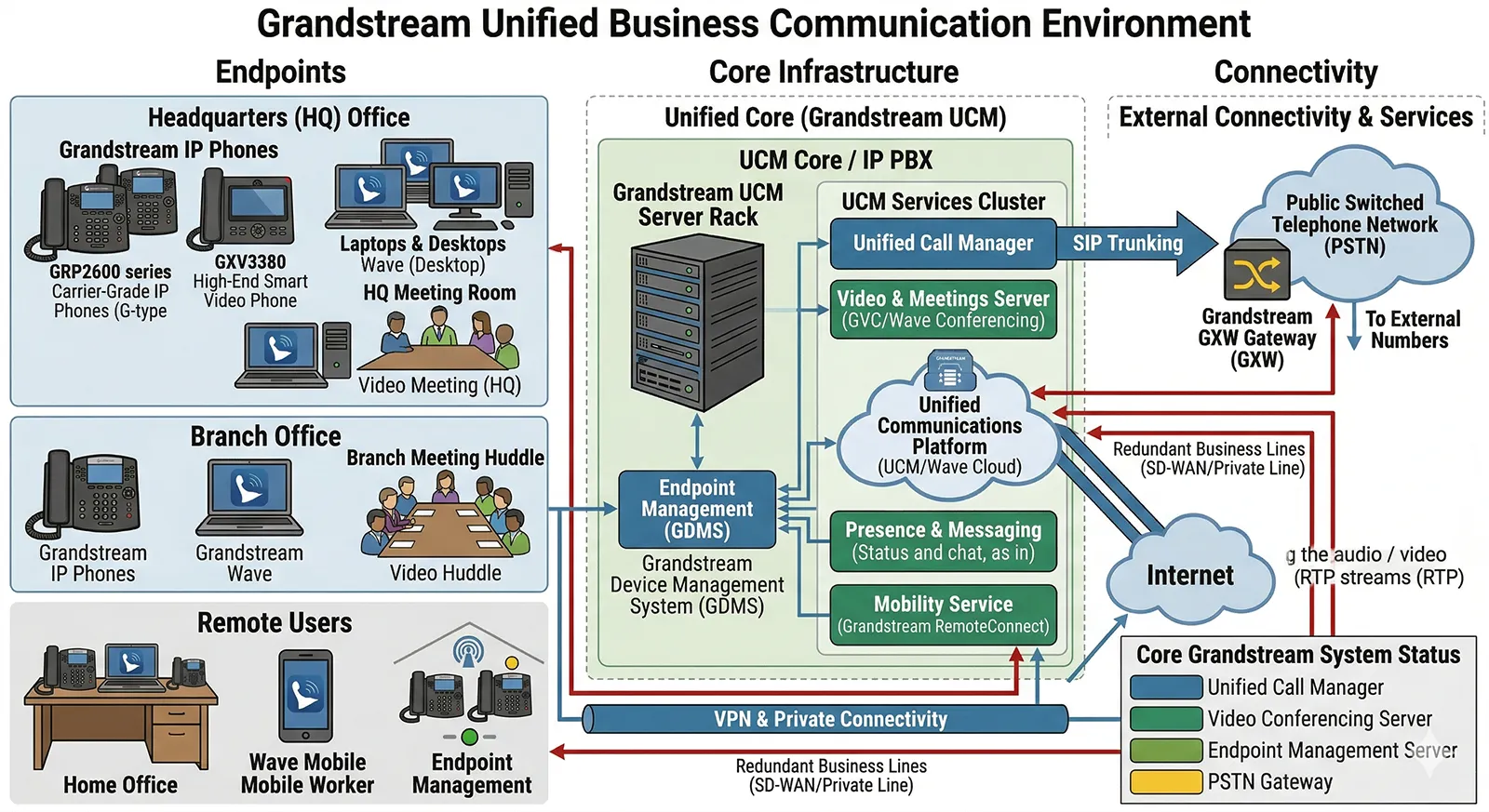
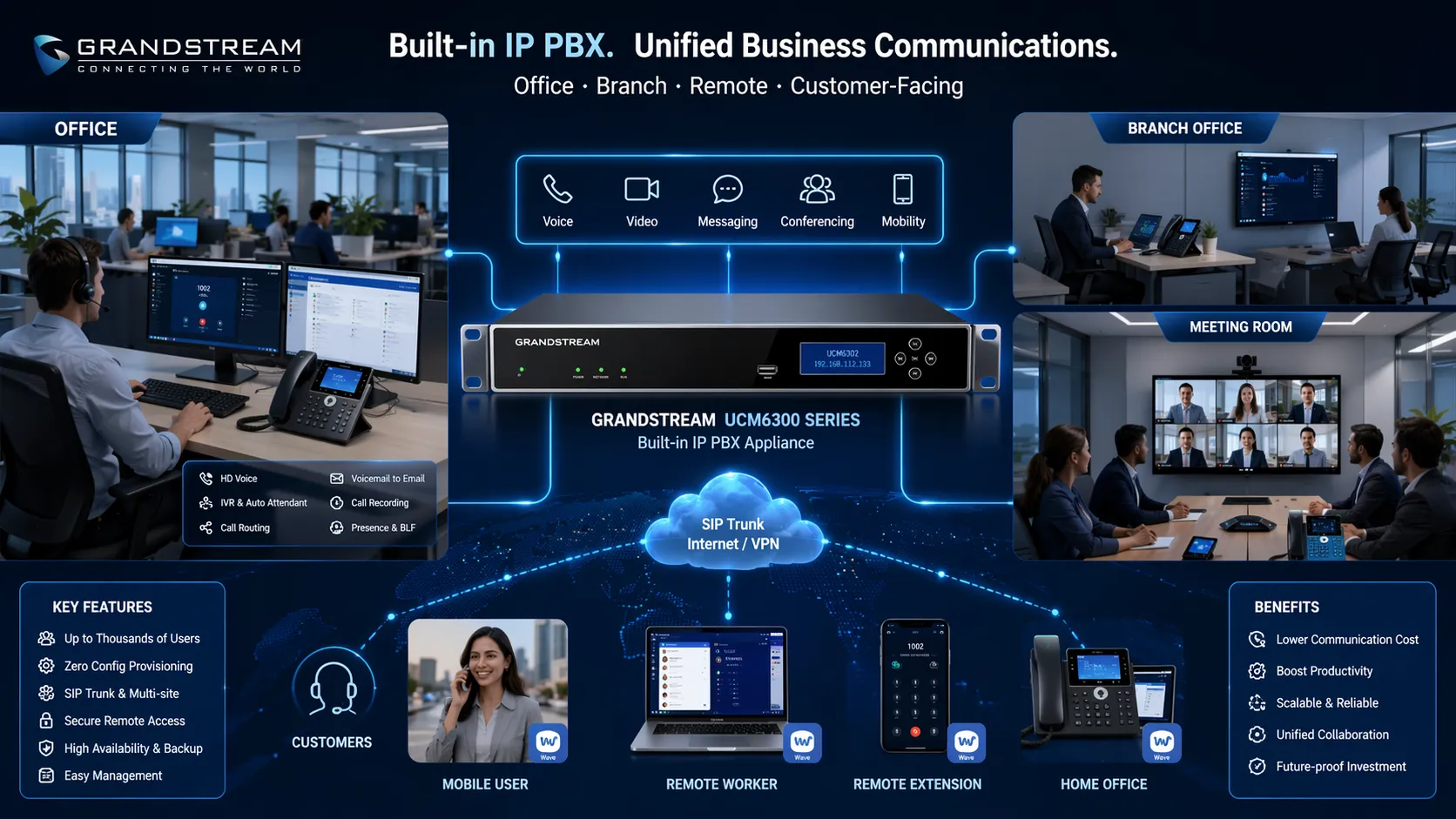
Grandstream built-in IP PBX can connect office calling, remote users, meetings, and SIP endpoints through one communication platform.
Understanding the Built-In IP PBX Model
A built-in IP PBX combines traditional PBX functions with broader unified communication capabilities. It can manage extensions, call routing, internal dialing, ring groups, call transfers, and SIP trunks, while also supporting collaboration features such as meetings, video communication, mobile access, and centralized endpoint management.
In practical business use, the IP PBX becomes the communication center of the organization. It helps connect desk phones, soft clients, remote extensions, meeting devices, and SIP-compatible endpoints. Instead of treating every communication tool as a separate system, the business can manage users, devices, call rules, and access policies from one platform.
This is one reason many companies still choose a built-in IP PBX instead of relying only on cloud calling. Cloud services are convenient, but some organizations prefer to keep direct control over call routing, extension planning, local network behavior, security policies, and deployment timing. For businesses with specific IT, privacy, cost, or operational requirements, that level of control can be important.
Why Businesses Use Grandstream Built-In IP PBX
The main value of a Grandstream built-in IP PBX is not only that it handles phone calls. Its stronger value is that it creates a structured communication environment for daily business operations. Staff can call each other by extension, transfer calls to the right department, join meetings, work from outside the office, and use different endpoint types without breaking the communication flow.
This is useful for companies that have grown beyond a basic phone setup but do not want a complicated enterprise system. A built-in IP PBX gives them a controlled foundation for internal communication, customer-facing calls, remote access, and branch connectivity. It also reduces the need to manage too many disconnected communication tools.
For organizations with front-desk teams, service departments, branch offices, field staff, or hybrid employees, a unified communication platform can make daily work more predictable. Calls can be routed more clearly, users can keep consistent extension identities, and administrators can manage devices and policies with less manual effort.
Core Communication Functions
A Grandstream built-in IP PBX can support many of the communication functions that modern businesses need. These usually include extension management, SIP trunk connection, inbound and outbound call routing, voicemail, call recording options, ring groups, IVR menus, conference features, endpoint registration, and user access control.
Beyond voice calling, the platform can also support communication between different device types. Desk phones, video phones, mobile clients, web access, and meeting endpoints can work under the same communication architecture. This gives employees more flexibility while keeping business communication organized.
The value becomes clearer when looking at real workflows. A customer call may first reach the front desk, then be transferred to sales, redirected to a mobile user, or followed by a video meeting. If these steps are handled by unrelated tools, the process becomes harder to manage. A built-in IP PBX helps keep those workflows inside one business communication environment.
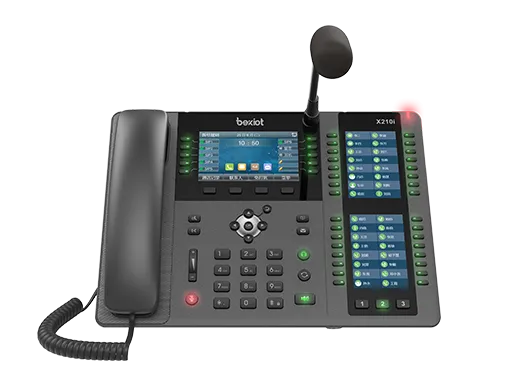
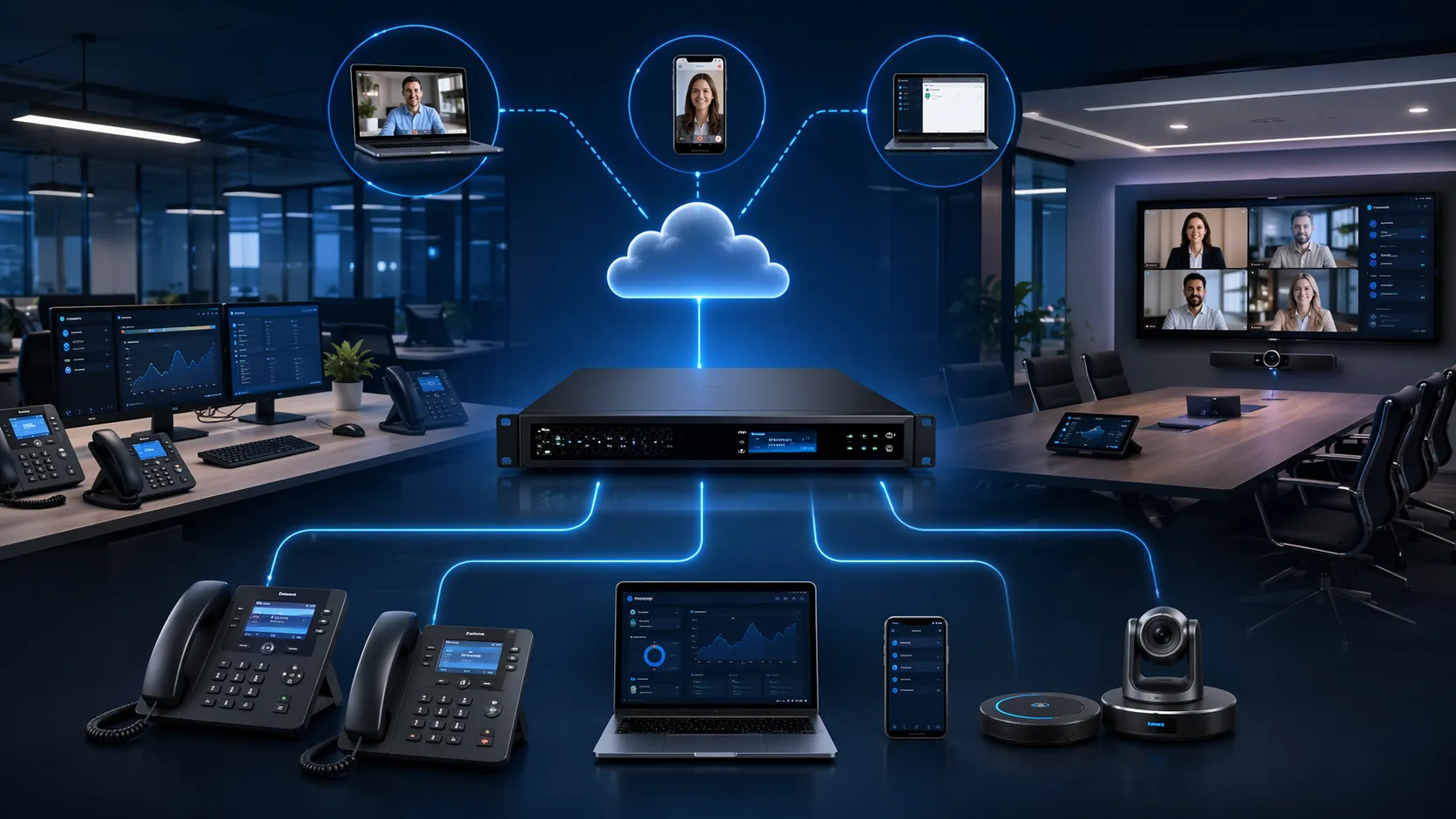
The platform can unify call control, user access, endpoint management, and collaboration features.
Remote Access and Multi-Site Communication
Many businesses now operate across more than one location. A company may have a headquarters, branch offices, home-based employees, mobile staff, and temporary project teams. In this kind of environment, a communication system must support users outside the main office without losing control over call behavior and user identity.
Grandstream built-in IP PBX can be useful in this situation because it supports a more flexible communication structure. Remote users can remain part of the same extension system, branch offices can communicate through a shared numbering plan, and mobile staff can stay connected to internal teams without depending only on personal mobile numbers.
This creates a middle ground between traditional office telephony and fully cloud-based communication. Businesses can keep local PBX control while still giving users the flexibility they need for hybrid work, distributed operations, and cross-site communication.
Endpoint Management and Administration
As the number of phones, users, and endpoints increases, manual configuration becomes difficult. A built-in IP PBX is more valuable when it helps IT teams reduce repetitive setup work. Centralized provisioning, user management, extension planning, and device monitoring can make deployment and maintenance more efficient.
This is especially important for growing companies. When new employees join, branch offices open, or departments change, administrators need a clear way to adjust extensions, permissions, routing rules, and endpoint settings. A unified IP PBX platform can reduce configuration errors and make communication management more consistent.
Integration is another important factor. Many businesses want their communication system to connect with customer service processes, hotel management systems, CRM workflows, internal directories, or operational platforms. When the PBX can participate in these workflows, it becomes part of the business operation rather than only a call-switching device.
Business Benefits in Daily Operation
One major benefit is reduced complexity. When calling, meetings, remote access, user management, and endpoint registration are handled in one environment, employees do not need to jump between too many systems. This can improve user adoption and reduce the workload on IT teams.
Another benefit is stronger control. Businesses can define how calls should enter, where they should go, which departments should answer, how extensions should be arranged, and how users should connect from different locations. This control is valuable for companies that need predictable communication behavior.
A built-in IP PBX also supports growth. A basic phone system may work for a small team, but it can become limiting when the company adds more users, more departments, more branches, or more communication channels. A structured IP PBX platform gives the business a stronger foundation for expansion without rebuilding the entire communication system each time requirements change.
A well-planned built-in IP PBX is not just a replacement for old telephony. It becomes the communication core for calling, collaboration, user access, endpoint management, and business responsiveness.
Common Application Scenarios
In office environments, Grandstream built-in IP PBX can support reception desks, internal extensions, department routing, call transfers, conference communication, and management calls. It helps create a more professional communication experience for both internal users and external callers.
In branch office environments, the system can help different locations work as part of one communication network. Employees at separate offices can use internal extension dialing, shared call rules, and consistent communication identities. This is useful for companies that want centralized communication without losing local flexibility.
In service-oriented businesses, such as hospitality, clinics, education-related operations, professional offices, and managed service teams, the PBX can support front-desk handling, staff coordination, customer inquiries, and department communication. In these cases, the PBX is not only a phone system; it helps support daily service quality.
Typical scenarios include office communication, branch connectivity, hybrid teams, and customer-facing service environments.
When This Solution Is a Good Fit
Grandstream built-in IP PBX is a strong fit for businesses that want a centralized communication platform with flexible deployment, SIP endpoint support, remote user access, and unified management. It is especially suitable when a company wants more control than a simple cloud calling service can provide, but also wants more flexibility than a traditional PBX.
It is also useful for organizations that need to support desk phones, video endpoints, mobile users, internal meetings, branch offices, and front-desk operations from one platform. If communication is closely connected to customer service, staff coordination, or daily business workflow, a built-in IP PBX can provide practical long-term value.
When Another Model May Be Better
A built-in IP PBX is not the right answer for every business. Very small teams may prefer a simple cloud phone service with minimal configuration. Large enterprises with advanced compliance, global contact center operations, or highly customized UC requirements may need a broader enterprise communications platform.
The best choice depends on business size, IT resources, security expectations, network conditions, budget planning, and communication workflow. A Grandstream built-in IP PBX is most valuable when the business needs structure, control, and flexibility without creating unnecessary system fragmentation.
Final Thoughts
Grandstream built-in IP PBX can be viewed as a practical business communication platform rather than only a telephone replacement. Its value comes from bringing calling, collaboration, remote access, endpoint management, and system administration into a unified framework.
For companies evaluating a modern IP PBX or unified communication system, the key question is not only whether the platform can make and receive calls. The more important question is whether it can support how the business actually communicates across teams, departments, locations, devices, and service workflows. From that perspective, Grandstream built-in IP PBX can provide a flexible and manageable foundation for modern business communication.
FAQ
What is a Grandstream built-in IP PBX?
It is a business communication platform that combines PBX calling functions with broader communication features such as conferencing, remote access, endpoint registration, and centralized management.
Is it only used for voice calls?
No. While voice calling is a core function, the platform can also support meetings, video communication, remote users, SIP endpoints, and collaboration workflows depending on deployment needs.
What types of businesses can use it?
It can be used by offices, branch-based companies, hybrid teams, service businesses, hospitality environments, clinics, education-related operations, and other organizations that need structured communication.
What is the biggest advantage over a basic phone system?
The biggest advantage is consolidation. It helps bring call control, extension management, remote access, endpoint connectivity, and collaboration into one organized system.
Can it support remote and hybrid work?
Yes. A built-in IP PBX can help remote users and branch employees stay connected to the same business communication environment while allowing the company to keep more control over system configuration.