Cloud Communications Platform for Industrial Voice Dispatch and Emergency Coordination
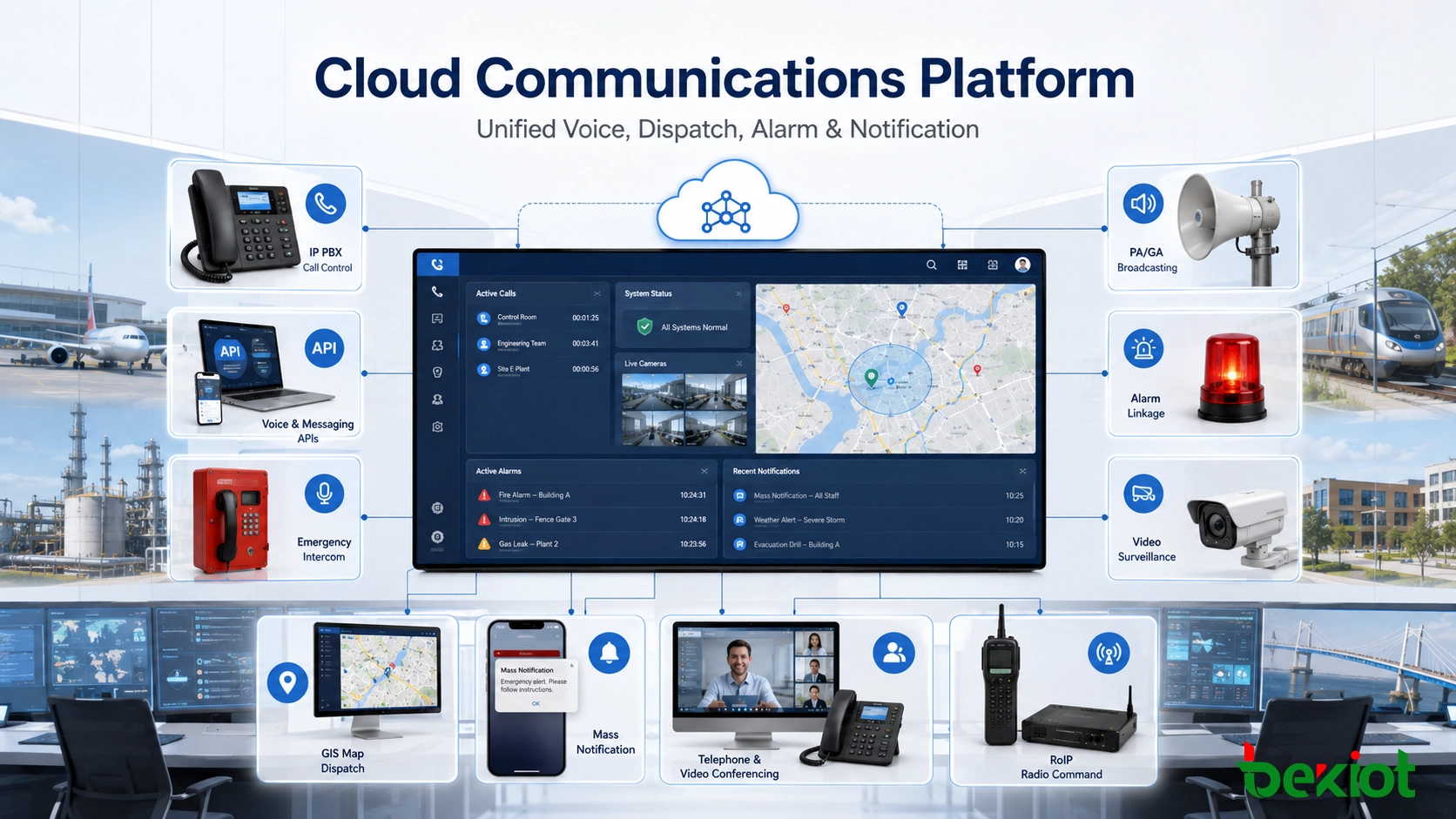
Becke Telcom Cloud Communications Platform integrates IPPBX, voice APIs, messaging, PA/GA, alarm linkage, video, GIS dispatch, mass notification, RoIP, and recording for industrial and emergency communication workflows.
Becke Telcom
For many organizations, cloud communications once meant hosted calling, SMS delivery, or a cloud business phone system. That definition is now too narrow for industrial sites, transportation networks, campuses, hospitals, public safety centers, energy facilities, utilities, and multi-site enterprises. These environments need more than voice service. They need daily calling, alarm response, public address, video verification, GIS dispatch, radio command, conference coordination, mass notification, and event recording to work as one connected workflow.
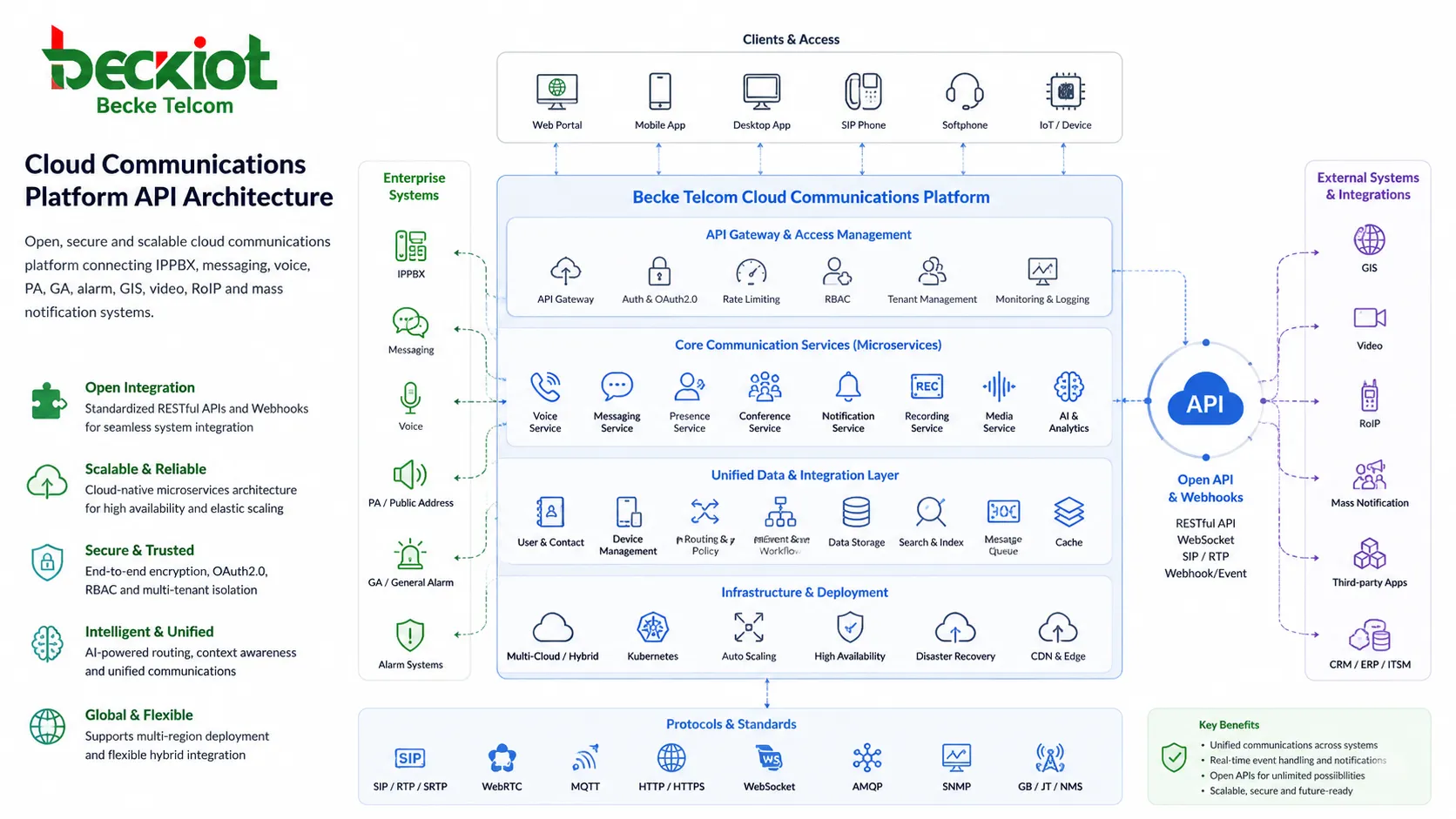
The Becke Telcom Cloud Communications Platform is designed for this type of industry communication. It brings IPPBX functions, messaging and voice APIs, PA/GA broadcasting, alarm linkage, telephone conferencing, video conferencing, recording, surveillance integration, GIS dispatch, mass notification, and RoIP command into one unified platform. Instead of deploying separate systems for calls, paging, alarms, radio, video, and emergency response, project teams can connect people, devices, software, and field resources through a common communication layer.
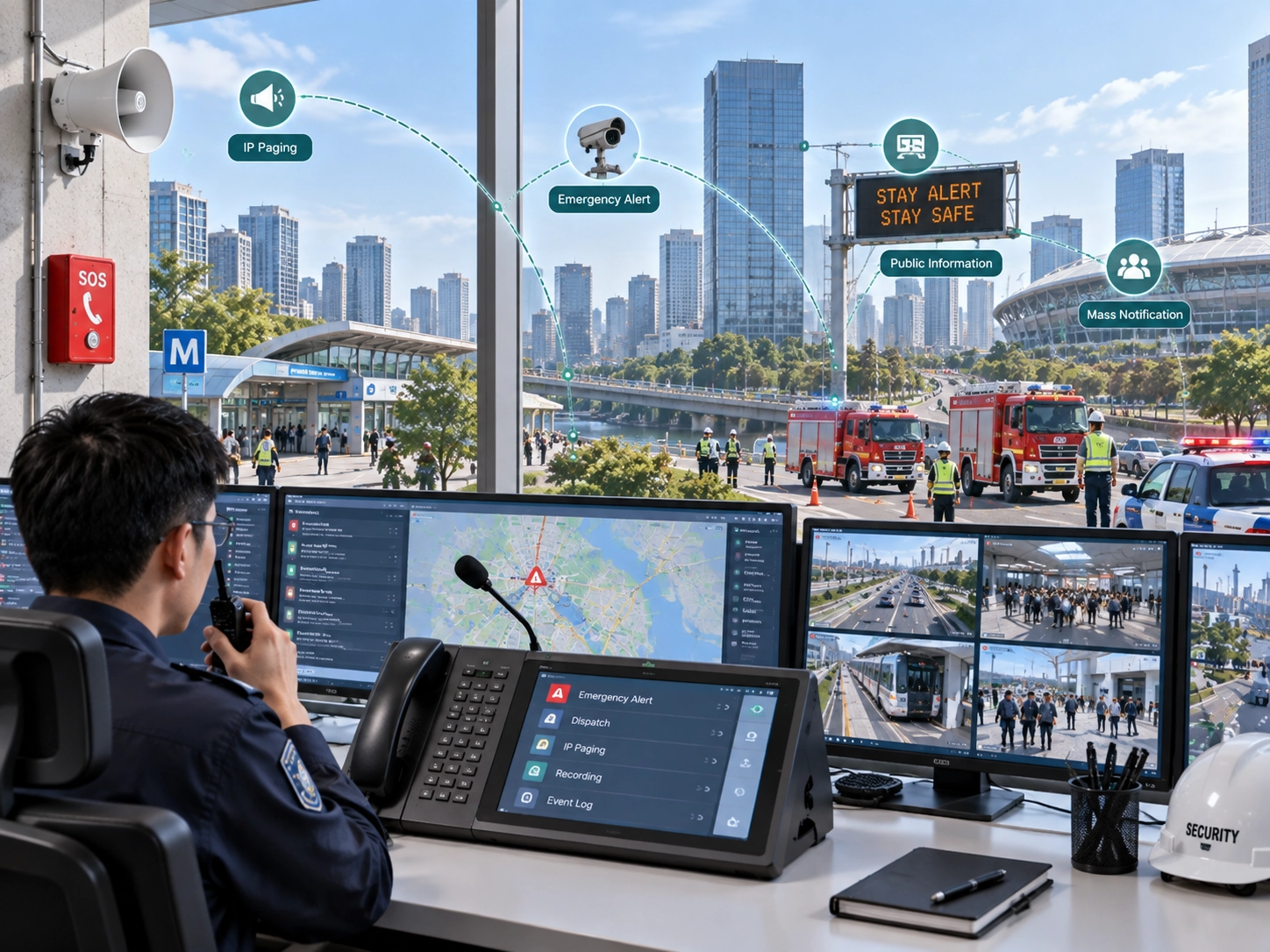
The platform is especially useful when communication must be linked to real events. An alarm should not only appear on a screen. It should help the operator locate the source, contact the right person, open the related camera, trigger a broadcast, create a record, and follow the event until it is closed.
A true cloud communications platform should not only connect users. It should connect events, locations, devices, alarms, cameras, radios, speakers, and command workflows.
Becke Telcom Cloud Communications Platform provides a unified API layer for voice, messaging, PA/GA, alarm linkage, video, GIS dispatch, RoIP, and emergency notification.
A Unified Platform for Industry Communication
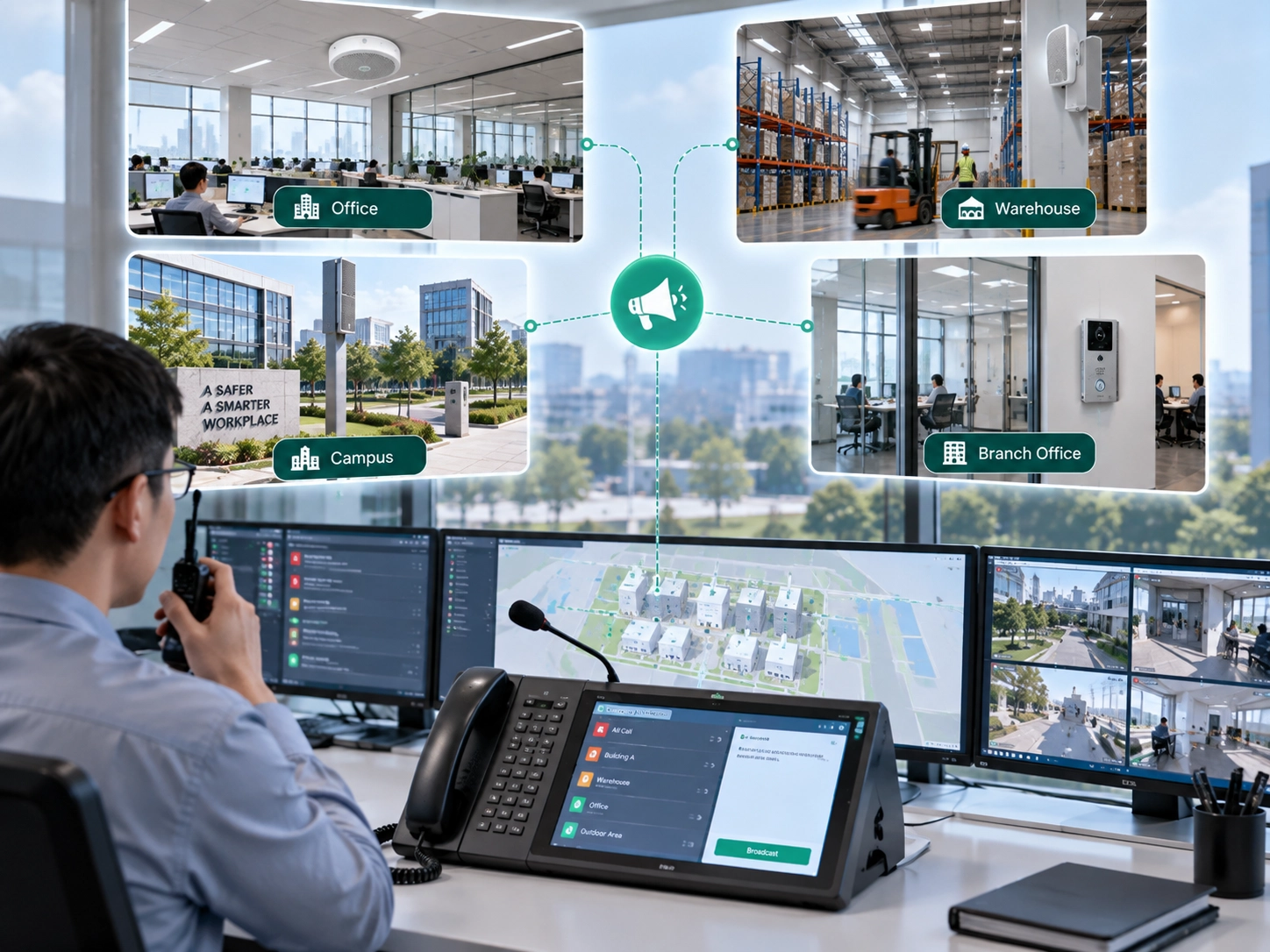
The platform is built for organizations that need more than standard office collaboration. It can serve as the communication core for control rooms, command centers, security operations, production facilities, transportation dispatch centers, healthcare environments, campuses, and distributed infrastructure projects. Its role is to make communication programmable, traceable, and connected to operational events.
Through open interfaces and API-based integration, the platform can connect with customer applications, command software, security platforms, alarm systems, business management systems, maintenance platforms, mobile applications, and third-party devices. Voice, messaging, paging, video, GIS, and notification functions can then become part of real industry workflows instead of remaining isolated tools.
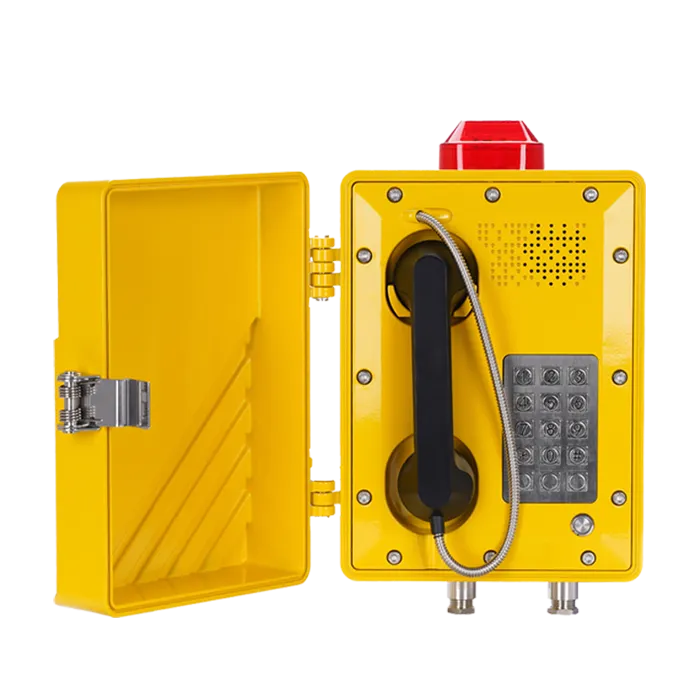
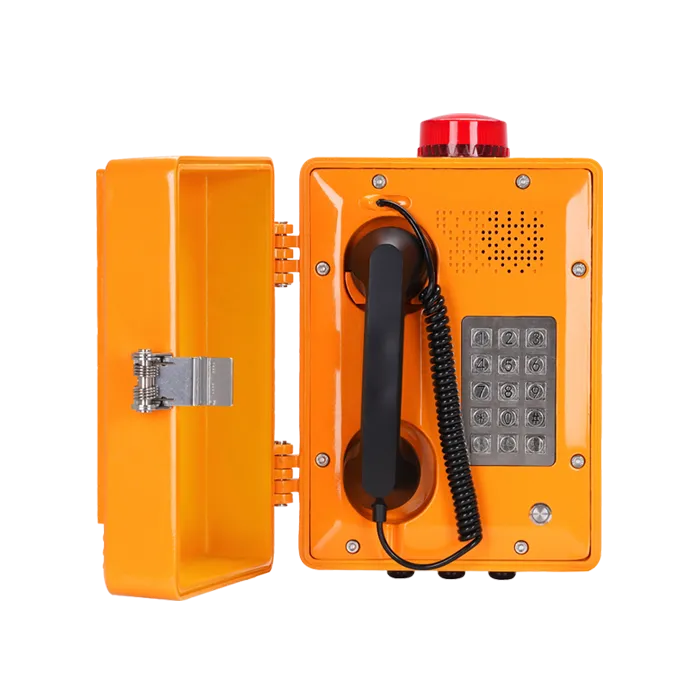
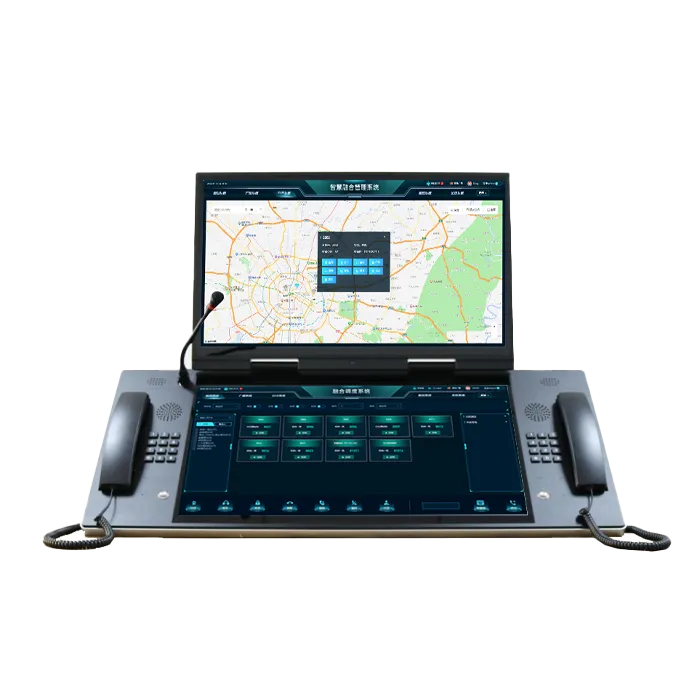
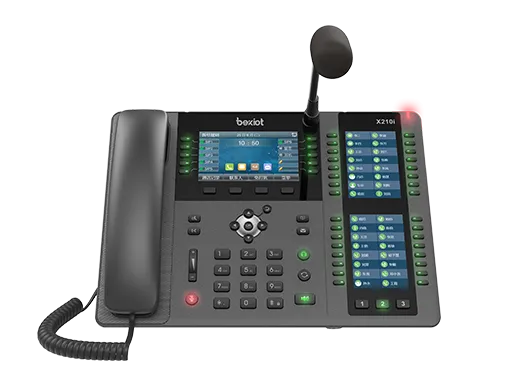
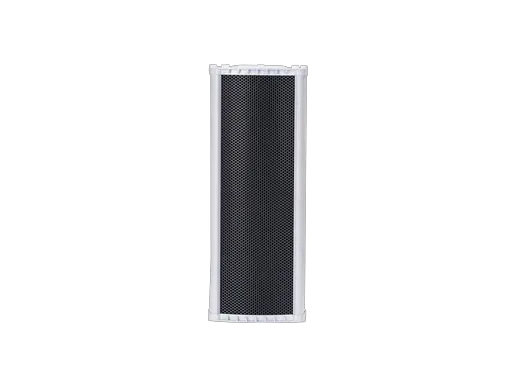
In Becke Telcom projects, the platform can also work with SIP phones, industrial telephones, emergency call stations, SIP intercoms, paging gateways, IP speakers, PA interfaces, RoIP gateways, dispatch consoles, and control room terminals. This makes it suitable for both software integration and complete communication system deployment.
IPPBX Functions as the Communication Core
A strong IPPBX engine is the foundation of the platform. It supports SIP extension registration, call routing, call transfer, call forwarding, ring groups, call queues, IVR, voicemail, SIP trunk connection, call permission control, number management, and interconnection with IP phones, gateways, operator networks, and third-party SIP endpoints.
The difference is that these functions do not operate as a standalone phone system. A call can be associated with a user, device, location, alarm, camera, dispatch task, recording file, or emergency event. This allows voice communication to become part of a larger operational process.
For example, when an emergency call comes from a tunnel phone, the platform can display its location on a GIS map, open the related camera, connect the dispatcher, start recording, and trigger a PA/GA announcement if required. The IPPBX does not only process the call. It supports the whole response workflow.
Messaging and Voice APIs for System Integration
The API layer is the bridge between the communication platform and customer applications. Becke Telcom can provide API capabilities for voice calling, call control, messaging workflows, alarm triggering, paging tasks, conference management, device status, recording query, event logs, and dispatch integration.
Voice APIs can support actions such as initiating a call, connecting two parties, creating a call group, triggering an emergency call, transferring a call, joining a conference, or linking a SIP endpoint with a software event. Messaging and notification APIs can be used for duty reminders, maintenance notices, incident alerts, dispatch instructions, escalation messages, and status confirmation.
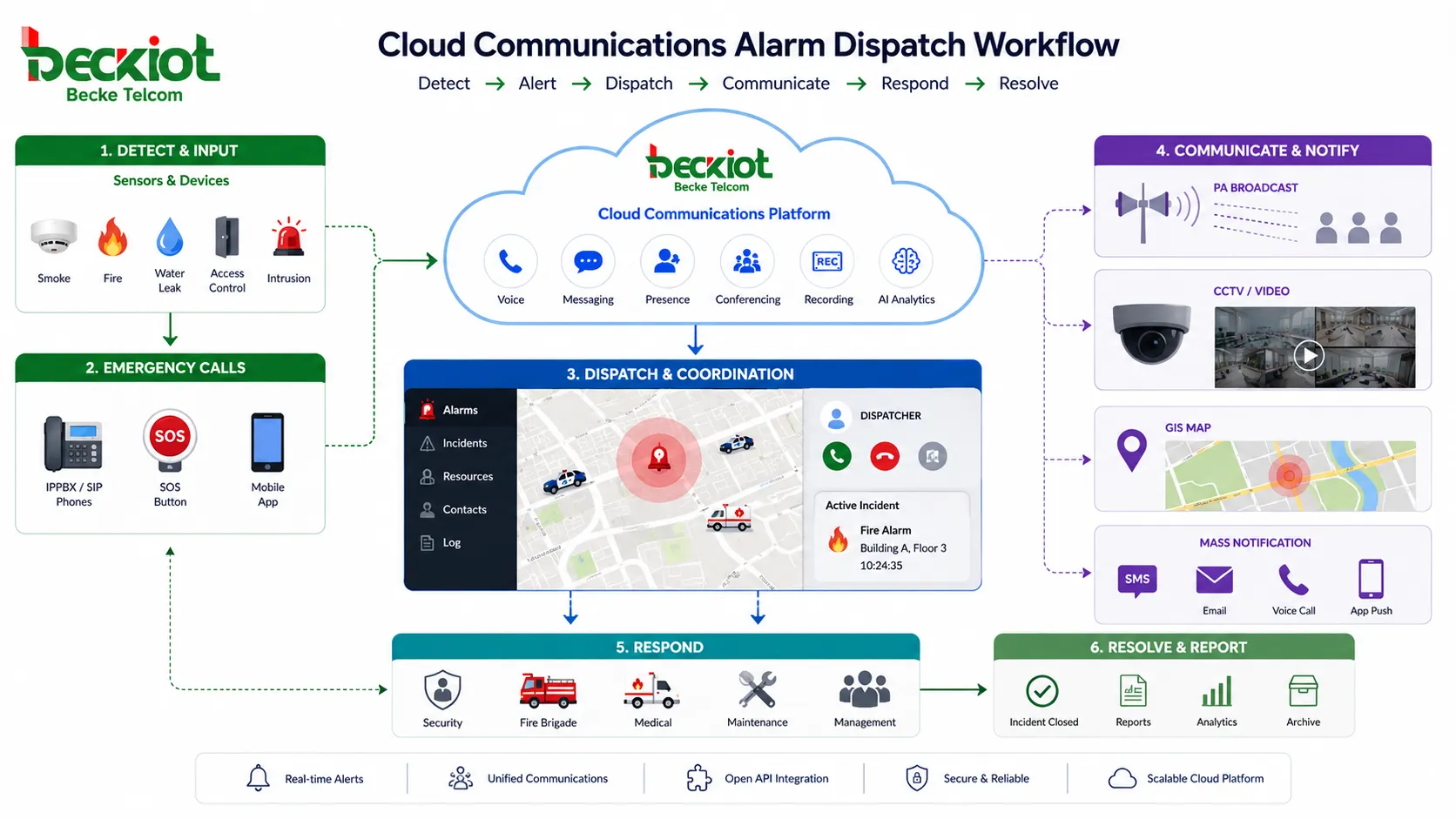
In practical applications, APIs help reduce manual switching between systems. A single alarm event can trigger a voice call, a message notification, a PA announcement, a video pop-up, a GIS location display, and a recording action according to predefined rules.
PA/GA Broadcasting for Daily and Emergency Audio
Public Address and General Alarm functions are important for industrial areas, buildings, transportation sites, campuses, warehouses, hospitals, and public facilities. The platform can support SIP-based paging, zone broadcast, live announcements, scheduled messages, emergency audio, priority broadcast, and integration with existing PA infrastructure.
Operators can broadcast from a dispatch console, IP phone, SIP microphone, authorized software client, or integrated business system. Announcements can be sent to a selected zone, a building, a production area, an outdoor speaker group, or the entire site. In emergency mode, high-priority broadcast can override lower-priority audio so that urgent instructions are delivered quickly.
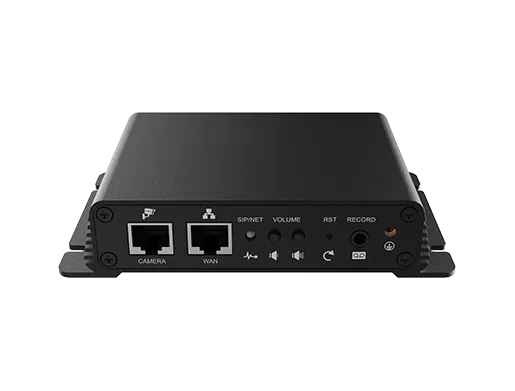
For sites with legacy PA equipment, paging gateways and interface devices can connect existing speakers or amplifiers to the SIP communication environment. This helps protect previous infrastructure investment while enabling more flexible control through IP networks and platform APIs.
Alarm Linkage and Event-Driven Response
Alarm integration is one of the key differences between a general communication platform and an industry-grade command communication platform. Becke Telcom can connect alarms from fire systems, access control, emergency buttons, environmental sensors, perimeter security, production systems, equipment monitoring platforms, CCTV analytics, and third-party software.
Once an alarm is received, the platform can classify the event, locate the source, notify the responsible team, open a dispatch workflow, start a call, activate paging, display video, trigger a mass notification template, and record the process. Escalation rules can also be configured so that unacknowledged events are forwarded to supervisors, backup teams, or another control room.
This event-driven model helps organizations move from passive alarm display to active response coordination. The platform does not only show that something happened. It helps operators decide who should be contacted, what channel should be used, where the incident is located, and what action should be recorded.
Alarm events can trigger calls, paging, camera linkage, GIS display, mass notification, and recorded response workflows.
Telephone and Video Conferencing
Telephone conferencing supports daily collaboration and emergency coordination. Dispatchers, duty officers, field teams, managers, branch sites, radio users, and external support personnel can be connected into a shared voice session when an event requires multi-party communication.
Video conferencing adds visual collaboration for command centers, remote experts, maintenance teams, healthcare departments, security offices, and distributed project sites. During an incident, a video conference can work together with IP camera feeds, GIS information, alarm records, and voice communication to improve situational awareness.
Compared with a standalone conference tool, platform-based conferencing has stronger workflow value. A conference can be created from an alarm event, a dispatch task, a GIS location, or an emergency notification process. The session can also be recorded and associated with the incident record for later review.
Recording and Evidence Management
Recording is essential for compliance, safety review, training, dispute resolution, and incident reconstruction. The platform can support voice recording, conference recording, dispatch recording, radio traffic recording, and video-related event recording according to project requirements.
Recordings can be associated with time, caller information, device, channel, dispatch operator, alarm event, location, and incident ID. This makes it easier for operators and managers to search, review, export, and analyze communication records after an event.
In public safety, transportation, industrial production, healthcare, campus security, and emergency management projects, traceable records are not only useful for management. They are part of accountability and continuous improvement.
Video Surveillance Integration
Video integration helps operators see what is happening while they are communicating. When an alarm, emergency call, access event, or security trigger occurs, the platform can link the relevant camera or video management system so that the control room can verify the situation more quickly.
A typical workflow may include alarm reception, automatic camera pop-up, voice call to the field team, PA announcement to a selected area, GIS map display, and recording of the response process. This is valuable for sites where operators need both communication and visual verification before making decisions.
GIS Dispatch and Location-Based Command
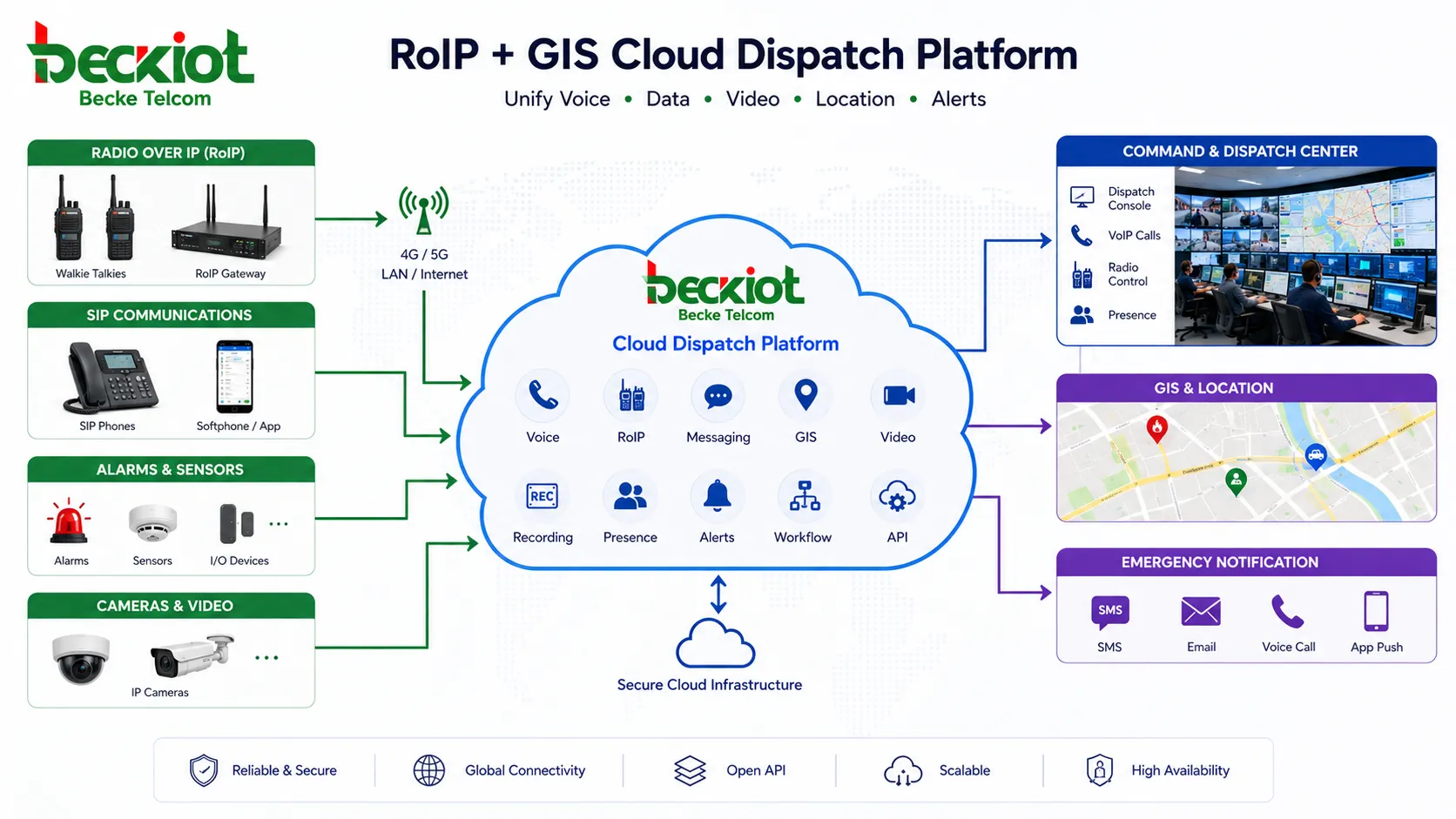
GIS dispatch gives communication a visual command layer. Emergency phones, SIP intercoms, RoIP gateways, vehicles, patrol personnel, cameras, speakers, alarm points, buildings, zones, and field resources can be displayed on a map. Operators can understand not only who is calling, but also where the event is happening and which resources are nearby.
Location-based dispatch helps control rooms assign the closest responder, contact the correct team, open nearby cameras, select the right PA zone, and coordinate field action more efficiently. For large facilities and distributed infrastructure, this map-based workflow is often more practical than a traditional list-based console.
GIS dispatch is suitable for industrial parks, mines, tunnels, highways, rail transit, airports, ports, campuses, energy sites, and public safety projects where communication and location must work together.
Mass Notification for Critical Events
A mass notification system helps organizations reach people quickly during emergencies or major operational disruptions. The Becke Telcom platform can connect voice calls, IP speakers, PA/GA zones, SIP endpoints, mobile users, control room consoles, alarm systems, and third-party notification channels into one coordinated workflow.
Notification templates can be prepared for fire evacuation, severe weather, equipment failure, security threat, medical emergency, hazardous material release, tunnel incidents, transportation disruption, or public safety warnings. When an event occurs, operators can launch the correct template instead of writing instructions from the beginning.
For more advanced projects, notification workflows can include delivery status, acknowledgment, escalation, contact groups, zone selection, and event logging. This allows the organization to know who has been notified, who has responded, and which actions still need follow-up.
RoIP Dispatch and Radio Interoperability
Many industry customers still depend on walkie-talkies and private radio systems for field communication. Radio over IP, also known as RoIP, allows radio networks to connect with IP communication systems, dispatch consoles, SIP phones, and command centers.
Through RoIP gateways and dispatch integration, the platform can support radio-to-phone bridging, radio group monitoring, dispatch console operation, remote radio access, conference connection, and radio recording. This allows field radio users, office users, mobile teams, and command center operators to communicate across different networks.
RoIP dispatch is valuable for public safety, transportation, energy, mining, ports, logistics, manufacturing, and emergency response. It helps organizations protect existing radio investment while extending radio communication into a modern IP-based command system.
RoIP dispatch connects field radio users with SIP phones, command centers, GIS maps, recording, alarms, and emergency workflows.
API-Driven Custom Applications
Different industries use communication in different ways. A public safety project may focus on CAD integration, emergency calls, GIS dispatch, and radio interoperability. An energy project may focus on SCADA alarm linkage, PA/GA broadcasting, duty notification, and incident recording. A hospital may require nurse call integration, emergency team notification, conference coordination, and traceable voice records.
By exposing communication capabilities through APIs, the platform allows customers and integrators to build custom workflows around real business needs. A maintenance system can trigger calls and messages to the responsible engineer. A security platform can launch video verification and PA broadcast. A transportation operation system can connect passenger information, emergency telephones, control room calls, and field dispatch.
This API-driven model helps Becke Telcom support different vertical applications with one communication foundation while still allowing project-specific customization.
Flexible Deployment Models
The platform can be deployed according to customer security, network, data, and operational requirements. Typical models include private cloud, local server deployment, hybrid cloud, multi-site networking, and isolated deployment for critical environments. For industrial and public safety projects, local survivability and data control are often as important as cloud flexibility.
In a hybrid model, the central platform can manage communication services while on-site gateways, SIP endpoints, PA devices, RoIP gateways, and emergency terminals maintain local communication continuity. This is useful for sites where network availability, emergency operation, and field device integration must be considered together.
Deployment planning should consider SIP network design, endpoint capacity, alarm integration, recording storage, video linkage, GIS data, user permissions, cybersecurity, redundancy, and future expansion.
Industry Scenarios
Industrial Parks and Manufacturing Sites
The platform can unify office telephony, workshop paging, emergency phones, alarm linkage, CCTV monitoring, RoIP radio dispatch, maintenance notification, and incident recording. When equipment fails or a safety event occurs, the system can notify the correct team, broadcast instructions, open related cameras, and record the handling process.
Transportation and Infrastructure
In tunnels, rail transit, airports, highways, ports, and logistics hubs, the platform can connect emergency call points, PA/GA zones, control rooms, GIS maps, field radios, cameras, and mass notification workflows. This helps operators coordinate people, locations, vehicles, and emergency resources more efficiently.
Healthcare and Campus Environments
Hospitals, schools, universities, and public facilities can use the platform for daily calls, intercom communication, security alerts, emergency broadcast, staff coordination, video verification, and multi-zone notification. The same platform can support routine operation and emergency response.
Energy Utilities and Public Safety
Energy facilities, utility networks, mines, and public safety agencies often require reliable communication across large or high-risk environments. The platform can connect alarms, radio users, field teams, control rooms, PA systems, emergency terminals, GIS maps, and recording systems into a coordinated command workflow.
Why Becke Telcom
Becke Telcom focuses on industrial communication, SIP voice systems, emergency communication, PA/GA integration, dispatch platforms, RoIP gateways, and critical communication terminals. Its cloud communications platform is suitable for customers who need a system-level solution instead of separate communication products.
For integrators and industry customers, Becke Telcom can provide a flexible platform framework together with SIP phones, industrial telephones, emergency call stations, paging gateways, IP speakers, RoIP gateways, and dispatch terminals. This helps projects move from isolated devices to connected workflows.
The platform is especially suitable for projects that require API integration, alarm-to-action workflows, GIS dispatch, emergency notification, radio interoperability, video linkage, and traceable communication records.
Conclusion
Cloud communications for industry is no longer only about hosted calls or simple messaging. A modern platform must connect voice, APIs, alarms, broadcasting, video, GIS, RoIP, conferencing, recording, and emergency notification into one practical workflow.
The Becke Telcom Cloud Communications Platform is designed to help industrial sites, transportation networks, campuses, hospitals, energy facilities, utilities, and public safety centers manage communication as part of real operations. By connecting people, devices, software, and events, it helps make response faster, coordination clearer, and critical incidents easier to manage.
FAQ
What is a cloud communications platform?
A cloud communications platform is a software-based communication system that provides voice, messaging, call control, notification, and integration capabilities through cloud, private cloud, local, or hybrid deployment. In industry applications, it can also connect PA/GA, alarms, video, GIS dispatch, RoIP, and emergency workflows.
Can the platform replace a traditional IPPBX?
Yes. It can provide IPPBX functions such as SIP extension registration, call routing, SIP trunking, IVR, voicemail, call transfer, ring groups, queues, and permission control. It can also connect calls with alarms, paging, video, maps, recording, and dispatch workflows.
How does the platform support emergency notification?
It can connect alarms, PA/GA zones, SIP endpoints, IP speakers, control room consoles, GIS maps, cameras, contact groups, and notification templates. When an emergency occurs, the system can trigger calls, broadcasts, messages, video linkage, conferences, and event recording according to predefined rules.
What does RoIP dispatch mean?
RoIP dispatch means connecting radio communication with IP networks and dispatch platforms. It allows walkie-talkie users, SIP phone users, command center operators, and field teams to communicate across different systems through RoIP gateways and dispatch software.
Which industries are suitable for this platform?
The platform is suitable for industrial parks, manufacturing sites, energy facilities, utilities, mines, tunnels, rail transit, airports, ports, logistics centers, hospitals, campuses, government facilities, public safety centers, and multi-site enterprises.