IP PA Systems for Unified Paging, Broadcasting, and Emergency Alerts
A practical overview of IP PA systems for modern facilities, explaining SIP-based paging, zone broadcasting, emergency alerts, intercom linkage, alarm integration, centralized control, and scalable deployment.
Becke Telcom
As facilities become more digital, distributed, and safety-focused, public address systems can no longer be treated as simple loudspeaker networks. Many sites still operate separate tools for paging, daily broadcasting, emergency alerts, intercom calls, alarm handling, and monitoring. That separation often creates slower response, inconsistent management, and unnecessary maintenance pressure.
An IP PA system provides a more unified way to manage live announcements, scheduled broadcasts, zone paging, and urgent voice alerts. Built on an IP network and commonly based on standard SIP architecture, it can connect paging consoles, IP speakers, SIP horns, intercom terminals, gateways, management software, and dispatch platforms into one coordinated communication environment.
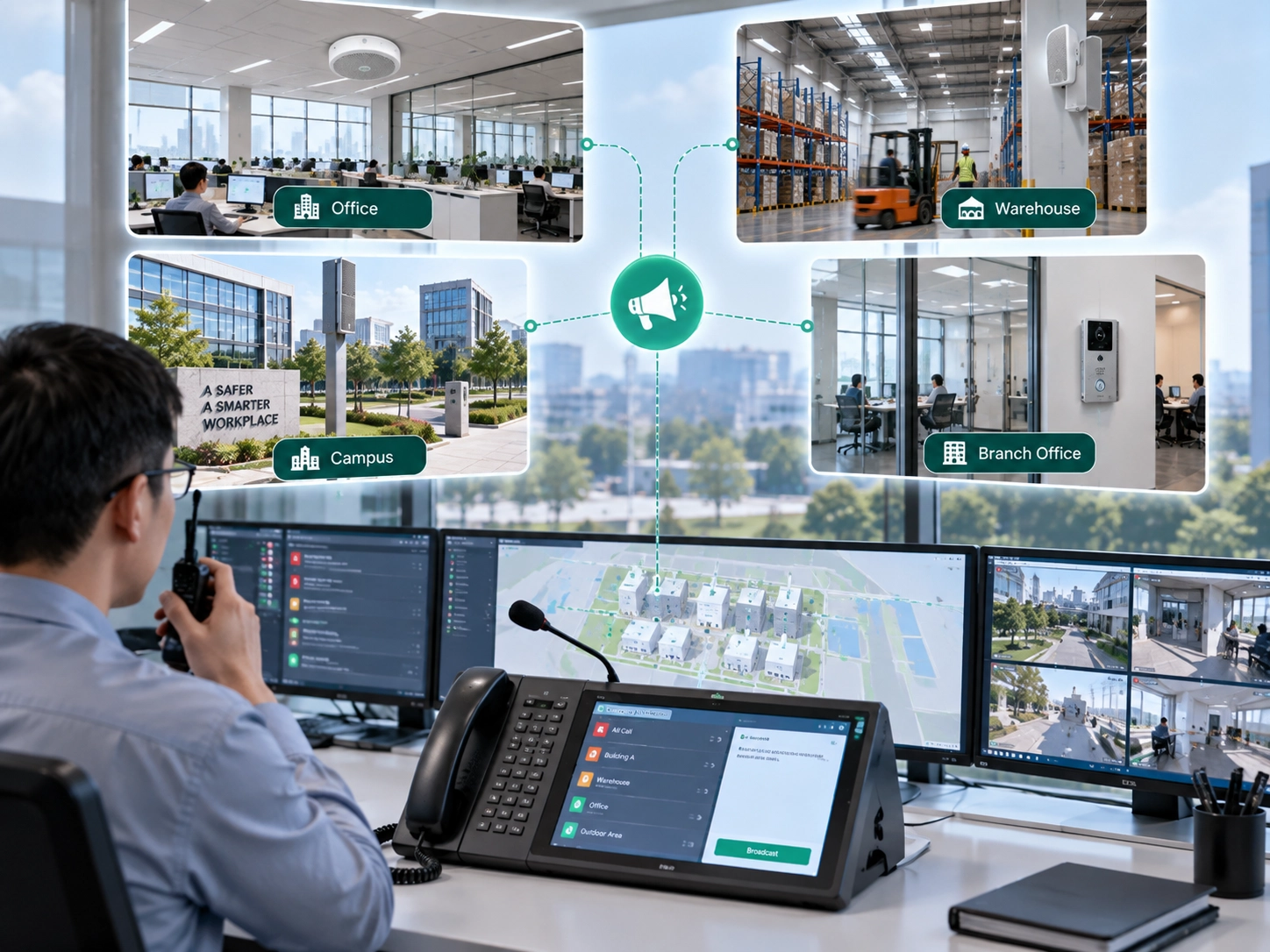
For campuses, industrial parks, highways, tunnels, scenic areas, public venues, commercial buildings, and large distributed sites, this approach improves daily communication while also strengthening emergency response. Operators can send the right message to the right area, trigger high-priority announcements, link broadcasts with alarms, and manage endpoints from a central platform.
Related Product Overview: PAGA Systems
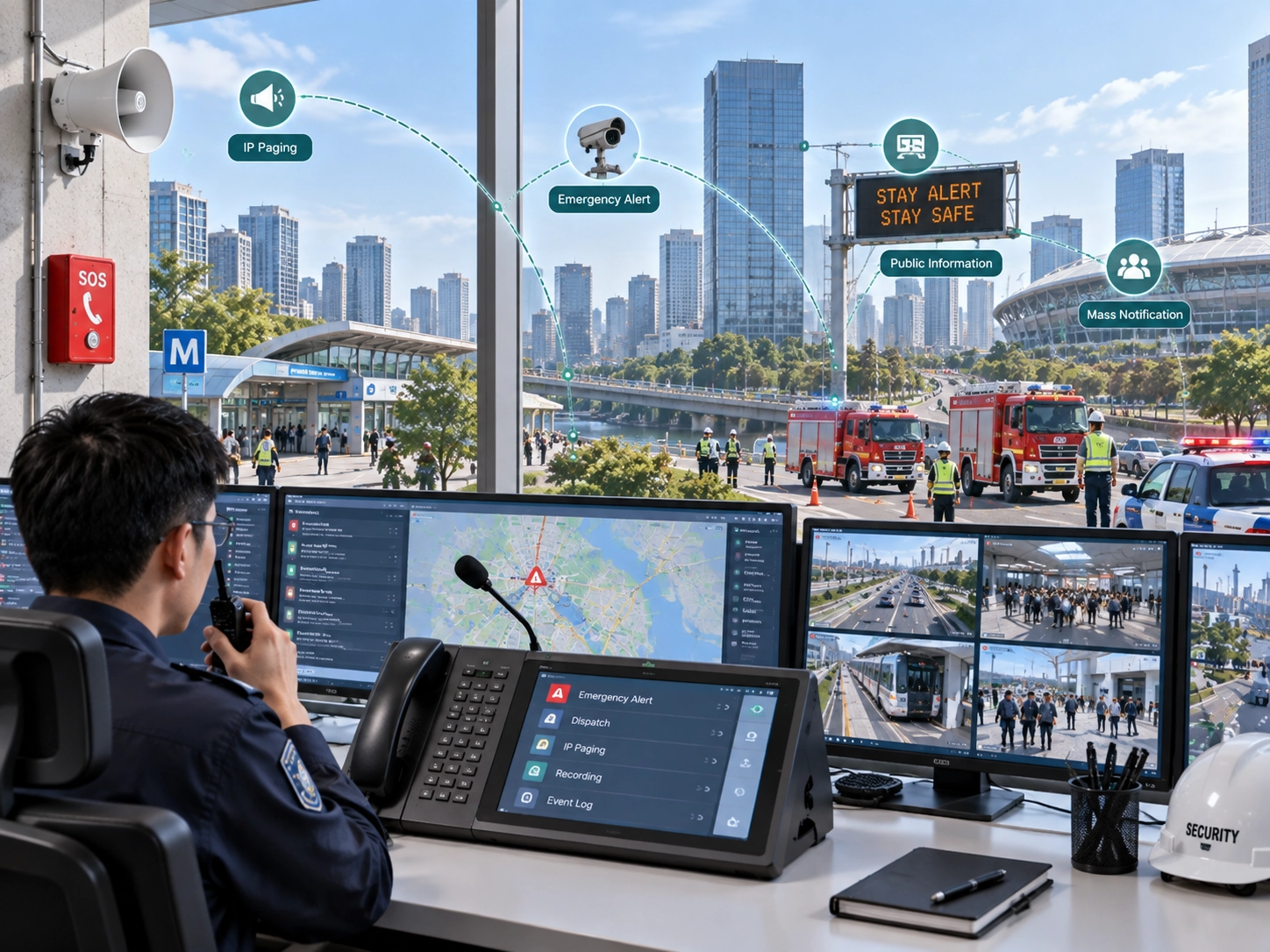
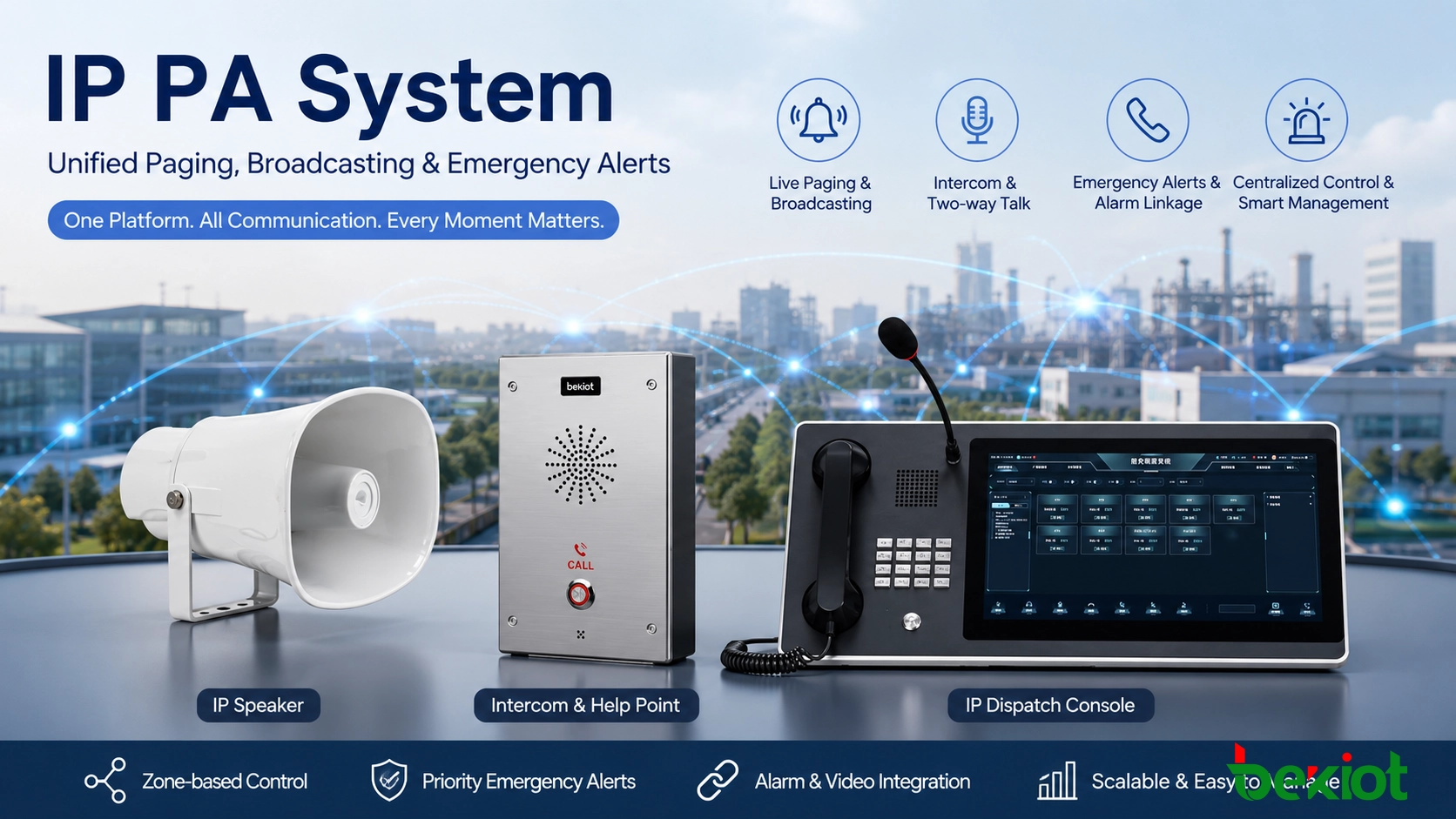
Modern IP PA systems bring live paging, scheduled broadcasting, and emergency alert handling into one networked platform.
Why Legacy PA Systems Are Becoming Limited
Separate subsystems slow down operation
In many older projects, broadcasting, intercom, telephony, alarm notification, and monitoring are deployed as independent systems. During routine work, this makes operation more complicated because staff must move between different devices or software interfaces. During an emergency, the same separation can delay decisions and reduce visibility.
An IP PA system helps solve this problem by turning public address into part of a broader communication platform. Paging can work with SIP phones, intercom terminals, recording tools, alarm inputs, dispatch consoles, and management software instead of remaining an isolated audio function.
Analog expansion can be rigid and expensive
Traditional PA systems are often built around amplifiers, hardwired speaker circuits, and fixed zones. They may work well for simple one-way announcements, but expansion becomes difficult when a site needs flexible zoning, remote management, cross-building deployment, or integration with software platforms.
IP-based architecture uses network infrastructure more efficiently. New endpoints can be added by network connection and software configuration, which makes phased upgrades easier for organizations that do not want to replace an entire legacy system in one step.
Emergency response needs more than loud audio
Modern safety workflows require more than broadcasting sound. Operators may need to verify an event, trigger priority announcements, contact field staff, view video, record the response process, and send instructions to selected areas. A one-way broadcast-only design cannot fully support that workflow.
This is why IP PA systems are increasingly designed as converged communication platforms. Paging, broadcasting, alarm linkage, intercom, and dispatch can work together as one response process.
A well-designed IP PA system is no longer just a speaker network. It becomes part of the site’s operational communication and emergency response layer.
What an IP PA System Actually Does
An IP PA system is a network-based public address platform used to distribute voice and audio across selected areas. It supports live paging, scheduled broadcasting, routine announcements, zone notifications, emergency alerts, and centralized management through IP connectivity.
In many deployments, SIP is used as the standard signaling method. This allows IP speakers, SIP horns, intercom terminals, paging consoles, IP PBX platforms, and other communication endpoints to work within the same architecture. Instead of depending only on fixed analog circuits, administrators can define paging zones, permissions, priorities, and workflows through software.
The purpose is simple: deliver the right voice message to the right location at the right time. In real projects, that may include daily notices, shift reminders, visitor guidance, public safety announcements, evacuation instructions, security alerts, traffic guidance, and event-based emergency notifications.
Core Functions in Modern Deployments
Live paging and public announcements
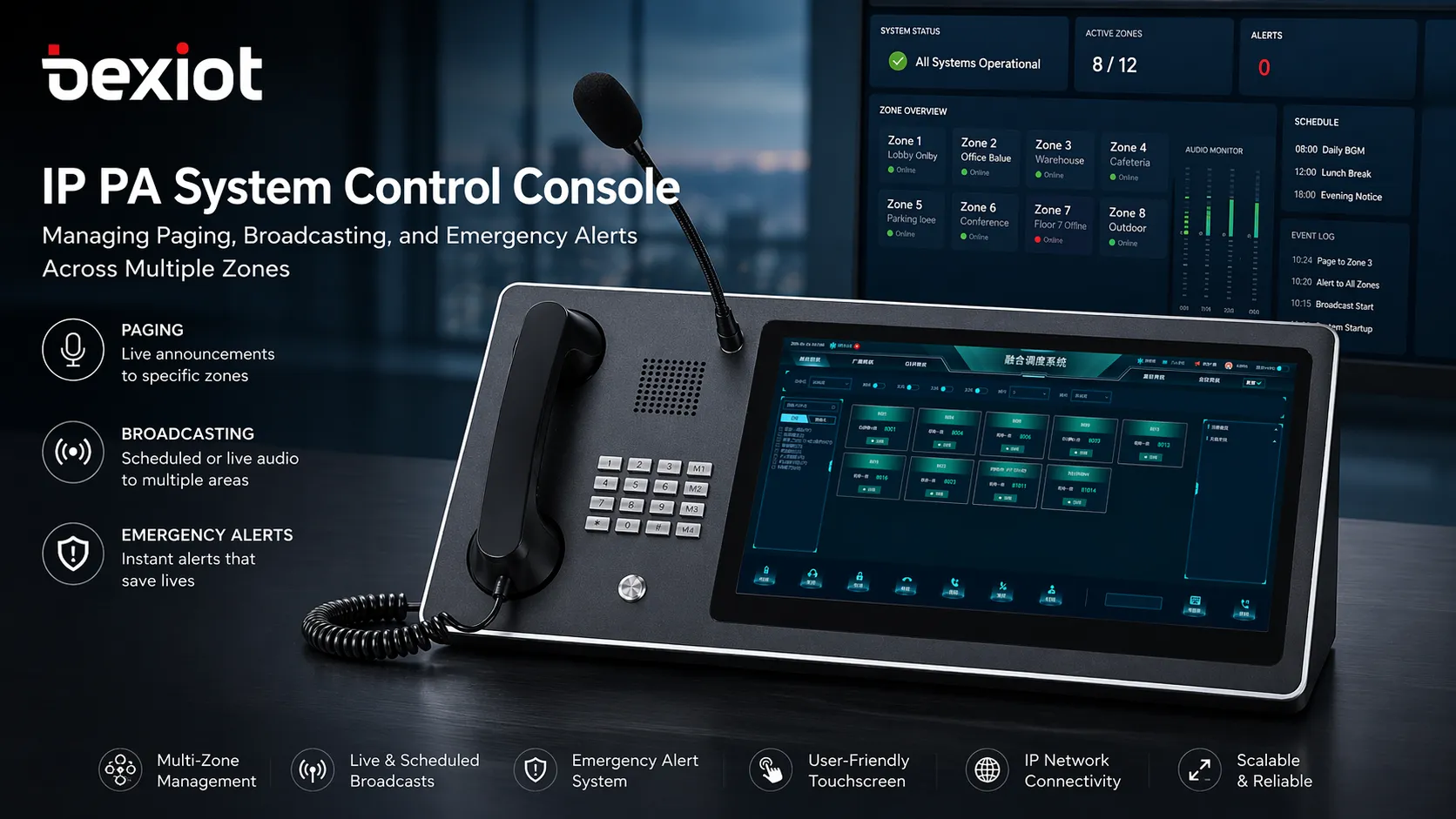
Live paging is the basic function of an IP PA system. An operator can speak from a paging console, desk phone, dispatch client, software terminal, or authorized microphone and send the message to one speaker, one group, one zone, or the entire site.
This is useful for visitor guidance, operational notices, safety reminders, shift coordination, traffic instructions, and incident response. Compared with hardwired legacy systems, IP PA platforms give users more flexible control over who can page, where the message goes, and which priority level applies.
Scheduled broadcasting and routine audio
Many sites also need scheduled broadcasts. Schools may need bell tones or campus notices. Factories may need shift reminders and safety messages. Scenic areas may need visitor guidance. Commercial sites may need opening messages, background music, or closing announcements.
With an IP PA system, these tasks can be scheduled and assigned to specific zones. Different areas can receive different content without disturbing unrelated parts of the site.
Zone-based control
Zone control is one of the most important advantages of IP public address. A site may divide coverage by building, floor, corridor, outdoor area, tunnel section, parking zone, production line, dormitory, station platform, or visitor area.
Operators can send messages only to the affected zone when the situation is local, while still keeping the ability to broadcast to multiple zones or the entire site during emergencies.
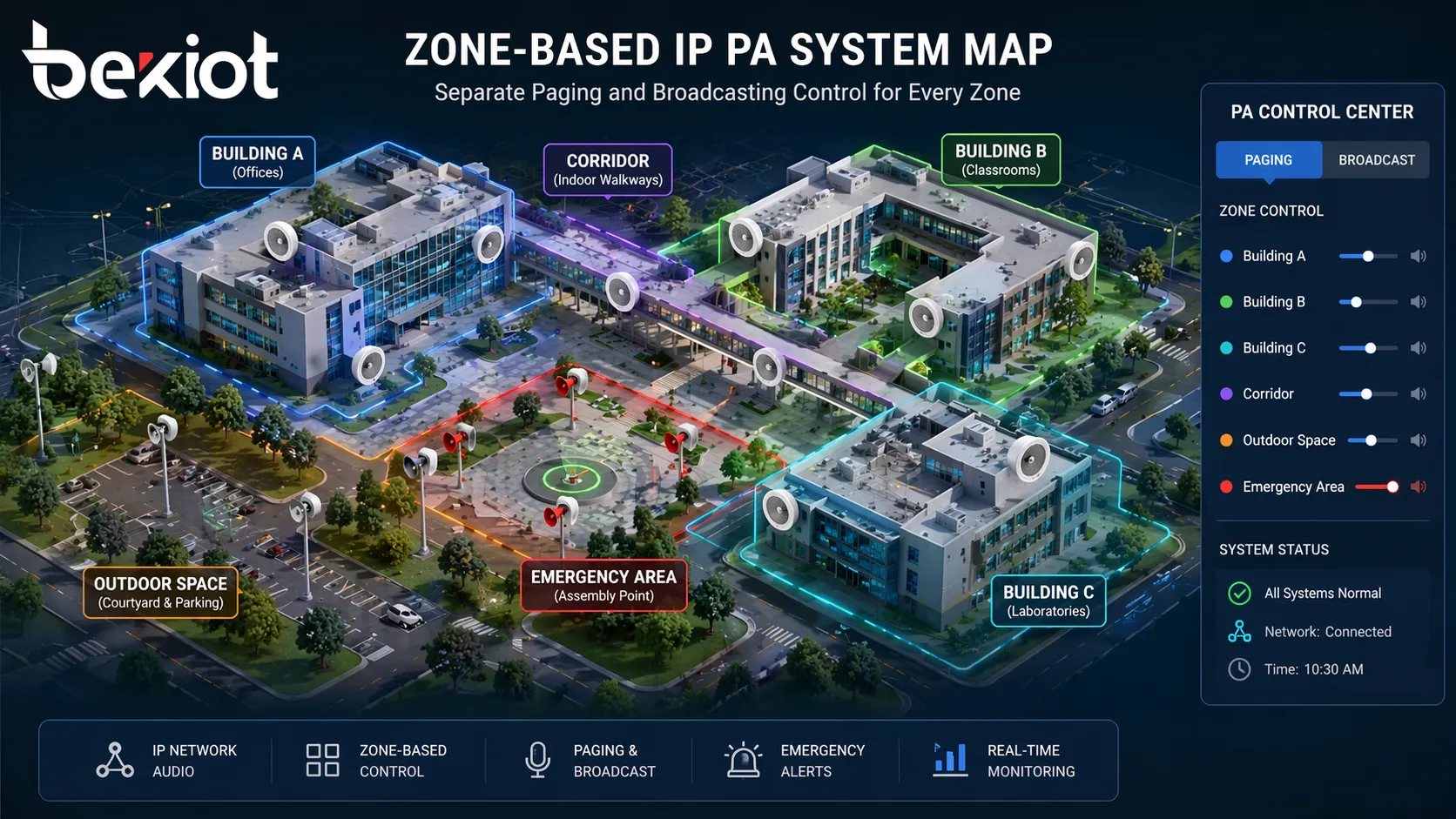
Zone-based broadcasting helps operators send accurate messages without disturbing the whole site.
Emergency alerts and priority broadcasting
Emergency notification is a major reason organizations upgrade to IP PA systems. When an abnormal event occurs, the platform can send high-priority messages to selected zones or the full site. These messages may include fire evacuation instructions, security warnings, severe weather alerts, traffic incidents, equipment hazards, or public safety guidance.
Priority control ensures that urgent messages can interrupt routine tasks such as background music, scheduled announcements, or lower-priority paging. After the event is handled, normal services can resume according to the system rules.
Intercom and two-way communication
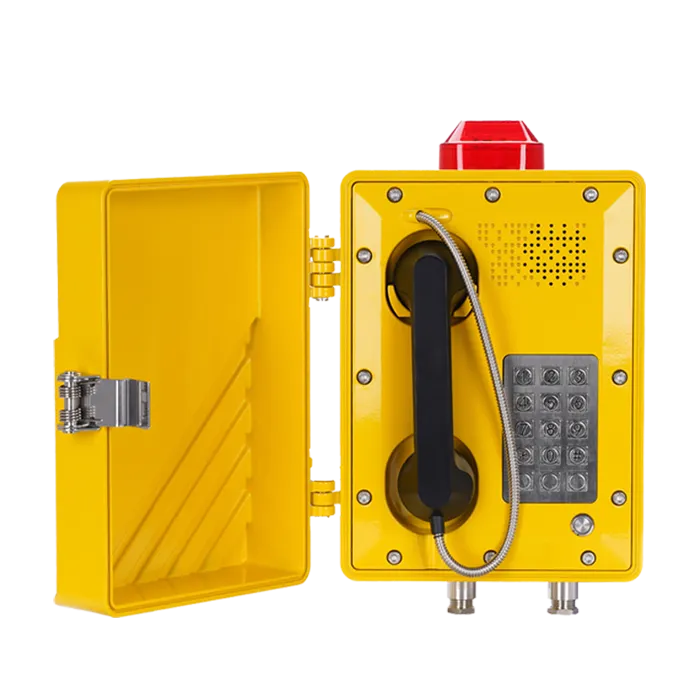
In many projects, the PA platform works with SIP intercom terminals, emergency help points, call boxes, and field communication devices. This creates a two-way communication path. A person in the field can call the control room, and the operator can respond directly or trigger a public announcement to nearby zones.
This is valuable in tunnels, parking facilities, public spaces, industrial areas, campuses, scenic areas, and unattended sites where one-way broadcasting alone is not enough.
Alarm and video linkage
Advanced IP PA systems can link with alarms, sensors, CCTV, access control, and emergency management tools. When an event is triggered, the system may automatically open a related camera feed, notify the operator, play a pre-recorded warning, start a live broadcast, or record the response process.
This linkage reduces the gap between detection and action. Operators can verify the situation and respond through one platform instead of manually switching between separate systems.
Logs, recording, and remote maintenance
For daily management and post-event review, many IP PA systems support broadcast logs, event records, device status monitoring, configuration management, and remote troubleshooting. Administrators can update settings, check endpoints, assign zones, and maintain devices without visiting every location manually.
This is especially useful in distributed projects where speakers, horns, intercoms, and paging terminals are installed across large campuses, outdoor areas, highways, industrial parks, or public facilities.
How the Architecture Works
Built on IP networking and SIP
An IP PA system uses network infrastructure to transmit audio and control signals. SIP is often used for device signaling and interoperability, making it easier to integrate the PA layer with IP PBX systems, SIP phones, intercom devices, and dispatch platforms.
Because the system is network-based, endpoints can be deployed across local networks, routed networks, remote buildings, or geographically separated sites, as long as the project has suitable IP connectivity and network planning.
Typical system components
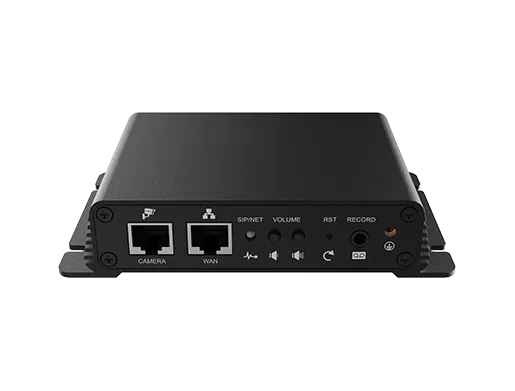
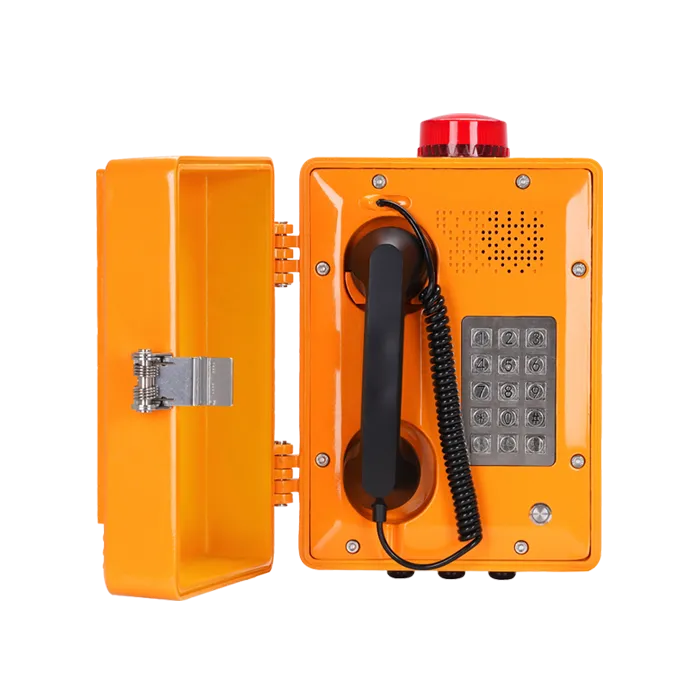
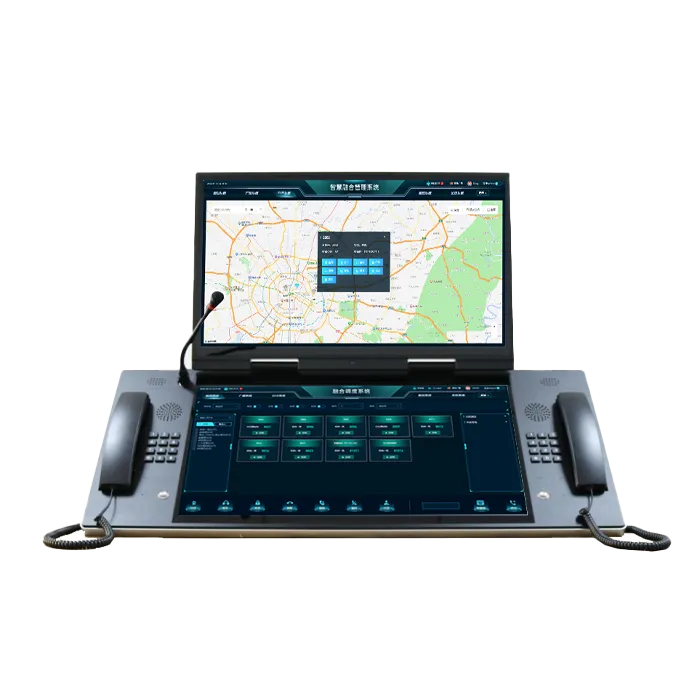
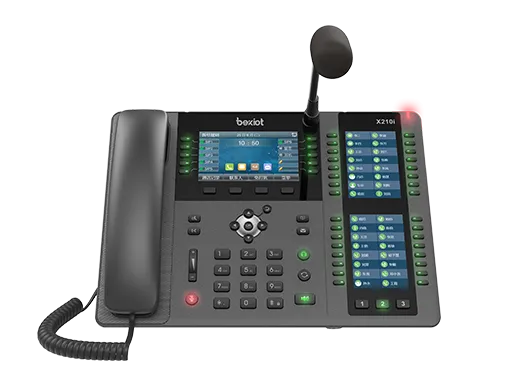
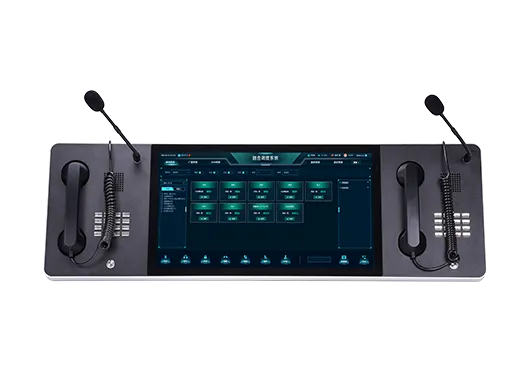
A complete solution may include a communication server, paging console, SIP microphone, IP speakers, SIP horn speakers, intercom terminals, alarm input interfaces, management software, dispatch clients, recording modules, and gateways for connecting legacy analog audio equipment.
In larger projects, the same platform may also support meetings, monitoring, remote control, wireless communication, and emergency coordination. This allows organizations to build a broader communication workflow instead of maintaining a single-purpose PA system.
Routine and incident workflows
During daily operation, authorized users can launch live announcements, scheduled broadcasts, or zone messages from the console or assigned terminals. During incidents, alarms or field devices can trigger predefined actions, such as emergency audio playback, operator notification, video pop-up, or live paging to a selected area.
This structured process helps staff respond more consistently. Instead of improvising under pressure, operators can follow defined communication workflows.
When paging, broadcasting, alarms, and intercom are designed together, the system supports both operational efficiency and incident readiness.
Main Benefits for Facility Communication
Unified control
A major benefit of IP PA is centralized management. Paging, scheduled broadcasts, emergency alerts, device status, and related voice functions can be handled from one platform. This reduces operator workload and improves consistency across the site.
Flexible expansion
IP-based deployment makes it easier to add new speakers, new zones, new buildings, and new communication endpoints. This is useful for campuses, parks, industrial sites, and transport projects that grow in phases.
Clearer audio in demanding spaces
Voice clarity is critical for both routine announcements and emergency instructions. Modern systems may support HD voice, echo cancellation, noise control, and better endpoint selection for noisy or acoustically difficult areas.
Stronger emergency readiness
Emergency response depends on speed, reach, and message clarity. An IP PA system helps operators send rapid zone-based alerts, interrupt lower-priority audio, coordinate with intercom calls, and keep event records for later review.
Application Scenarios
Campuses and education facilities
Schools and campuses can use IP PA systems for daily announcements, class schedules, bell tones, emergency instructions, public area broadcasting, and security coordination. Zone control is useful because different buildings, dormitories, sports areas, and outdoor spaces often need different messages.
Industrial parks and enterprise sites
Industrial and enterprise facilities use IP PA platforms for production notices, safety reminders, evacuation instructions, perimeter communication, and distributed area management. Integration with alarms, intercom, and monitoring helps operators respond more effectively to abnormal events.
Highways, tunnels, and transport environments
Transport applications need reliable voice notification across long distances and segmented areas. IP PA systems can work with SIP horns, tunnel intercoms, roadside help points, video monitoring, and dispatch tools to support both routine guidance and urgent incident response.
Scenic areas, parks, and public venues
Public open environments often require visitor guidance, background broadcasting, emergency alerting, and help-point communication. A unified IP PA platform allows operators to manage public information and emergency communication from the same interface.
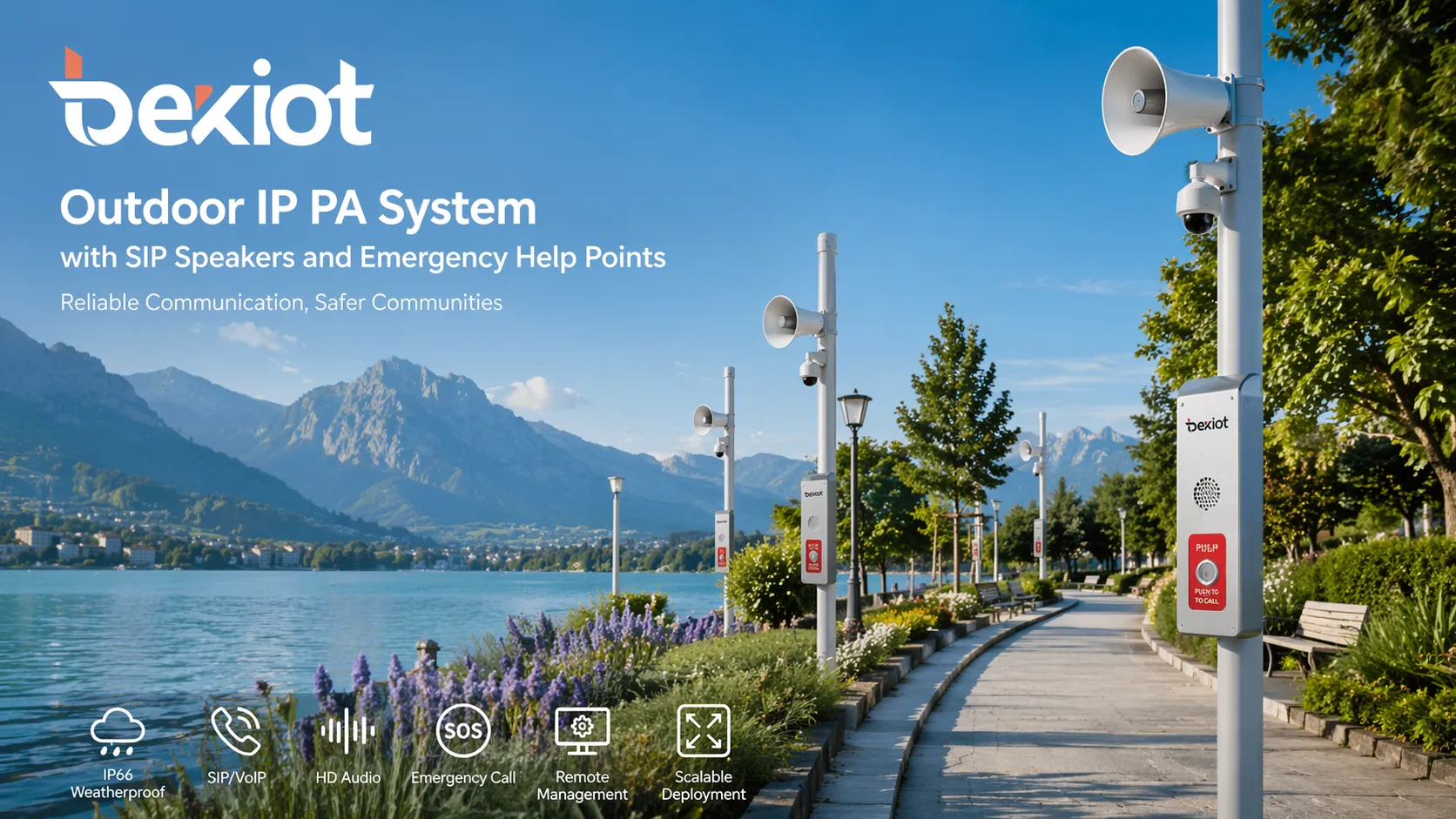
Outdoor deployments benefit from centralized paging, zone announcements, and emergency communication across distributed areas.
What to Check Before Choosing a System
Protocol compatibility
A practical IP PA system should support standard SIP and open architecture whenever possible. This improves compatibility with IP phones, IP PBX platforms, SIP intercoms, third-party endpoints, and future expansion requirements.
Zone and priority design
The platform should support flexible grouping, zone control, all-call broadcasting, and clear priority rules. Routine broadcasts should not interfere with emergency messages, and urgent announcements should be able to override lower-priority audio.
Alarm, intercom, and video integration
Modern projects often require more than speaker control. The PA system should be able to work with alarm inputs, emergency help points, CCTV, dispatch consoles, and control interfaces so operators can verify and handle events more efficiently.
Audio quality and endpoint selection
Different spaces need different audio endpoints. Indoor corridors may use ceiling speakers. Outdoor public areas may need weatherproof horns. Industrial zones may require high-output SIP horns. The system should support suitable endpoint selection for each acoustic environment.
Remote management and lifecycle maintenance
For large or distributed deployments, centralized configuration, status monitoring, batch management, firmware updates, and logs can reduce long-term maintenance effort. These functions are important when the system includes many endpoints across wide areas.
Selection Point
What to Confirm
System Architecture
SIP support, IP network compatibility, server deployment, and integration with existing communication platforms
Paging Control
Live paging, scheduled broadcasts, zone groups, all-call paging, and user permission control
Emergency Function
Priority broadcast, pre-recorded alerts, alarm-triggered workflows, and response logging
Endpoint Type
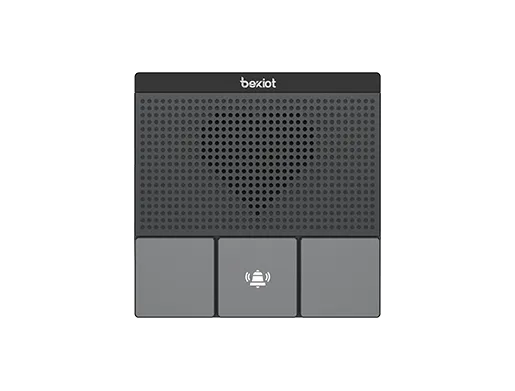
IP speakers, SIP horns, intercom terminals, paging consoles, gateways, and outdoor audio devices
Integration
Intercom, IP PBX, alarms, CCTV, access control, dispatch, and centralized monitoring
Maintenance
Remote configuration, status monitoring, event logs, batch deployment, and firmware management
Becke Telcom Solution Planning
Becke Telcom provides IP-based public address and emergency communication solutions for campuses, industrial parks, transport corridors, scenic areas, public venues, enterprise facilities, and critical infrastructure projects.
Depending on the site, the solution can include IP PA servers, SIP paging consoles, IP speakers, SIP horns, emergency intercoms, broadcast gateways, dispatch platforms, and centralized management tools. The system can be planned around daily announcements, zone-based broadcasting, emergency notification, alarm linkage, and long-term expansion.
The goal is to help organizations build a communication platform that is easy to operate during normal conditions and reliable when urgent instructions must be delivered quickly.
Conclusion
An IP PA system is no longer just a tool for making announcements. It is a networked communication platform for live paging, scheduled broadcasting, zone control, emergency alerts, intercom linkage, and centralized management.
By using SIP-based architecture and IP networking, organizations can connect speakers, consoles, intercoms, gateways, alarms, and software platforms into one coordinated environment. This makes communication faster, clearer, easier to expand, and more suitable for modern safety workflows.
For digital campuses, industrial sites, highways, tunnels, scenic areas, and public environments, the real value of an IP PA system lies in convergence. When paging, broadcasting, emergency notification, and event linkage work together, operators can manage both routine communication and critical response more effectively.
A strong IP PA solution helps organizations speak clearly during routine operations and respond decisively when emergencies happen.
FAQ
What is an IP PA system?
An IP PA system is a network-based public address platform used for live paging, scheduled broadcasting, zone announcements, and emergency alerts. It distributes voice and audio through IP networks instead of relying only on traditional analog speaker wiring.
How is an IP PA system different from a traditional PA system?
A traditional PA system is usually more hardware-bound and focused on one-way audio. An IP PA system supports network deployment, SIP integration, software-defined zones, remote management, priority alerts, and integration with intercom, alarm, video, and dispatch systems.
Can an IP PA system support emergency alerts?
Yes. A properly designed IP PA system can deliver priority emergency messages to selected zones or the whole site. It can also work with alarms, emergency intercoms, video linkage, and predefined response workflows.
Does an IP PA system work outdoors?
Yes. IP PA systems can be used in outdoor and distributed environments such as campuses, industrial parks, highways, tunnels, scenic areas, parking facilities, and public infrastructure projects, as long as suitable weatherproof endpoints and network design are used.
Why is SIP important in an IP PA system?
SIP improves interoperability. It allows the PA system to work more easily with IP phones, IP PBX platforms, SIP intercoms, paging consoles, and other communication endpoints, which supports future expansion and system convergence.
What should I check before choosing an IP PA system?
Key points include SIP compatibility, zone control, priority management, endpoint types, audio coverage, alarm and video integration, centralized management, remote maintenance, and the system’s ability to expand as the site grows.