Extending Enterprise IPPBX with Public Network PTT and Radio Gateway Integration
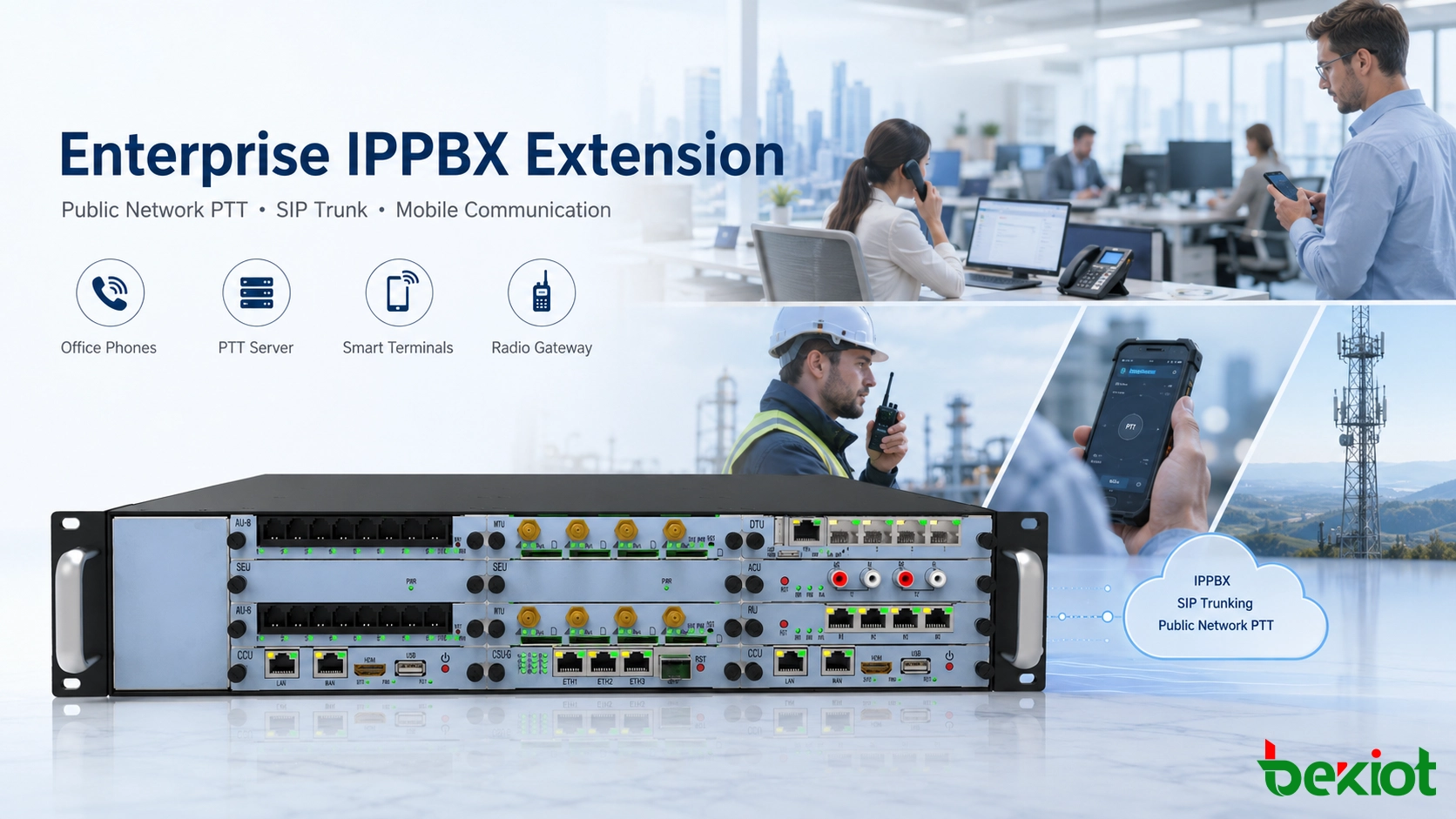
Extending an enterprise IPPBX with public network PTT, SIP trunking, smart terminals, and radio gateways helps connect office phones, mobile teams, wireless intercom, video calls, and legacy radio systems.
Becke Telcom
Many enterprises still use IPPBX or softswitch systems as the foundation of internal communication. A telephone gateway connects the organization to the public telephone network, while desktop IP phones support office calling, internal extension dialing, reception service, department communication, and lower daily communication costs. This model has been used from the analog telephone era to today’s VoIP environment because it is stable, familiar, and easy to manage.
The problem is that enterprise communication has changed. Office users are no longer the only people who need to communicate. Industrial workers, field teams, maintenance crews, logistics staff, security guards, mobile supervisors, and emergency support teams often need wireless intercom, group push-to-talk, mobile voice calls, video communication, and connection with existing office extensions. A traditional telephone system alone cannot fully support these mobile and wireless work scenarios.
A more practical direction is to extend the existing telephone system instead of replacing it. By adding a public network PTT server, SIP trunking, smart mobile terminals, and radio gateway integration, enterprises can keep their IPPBX while adding wireless intercom, mobile office communication, internal extension calling, video calls, and interoperability with analog or digital radio systems.
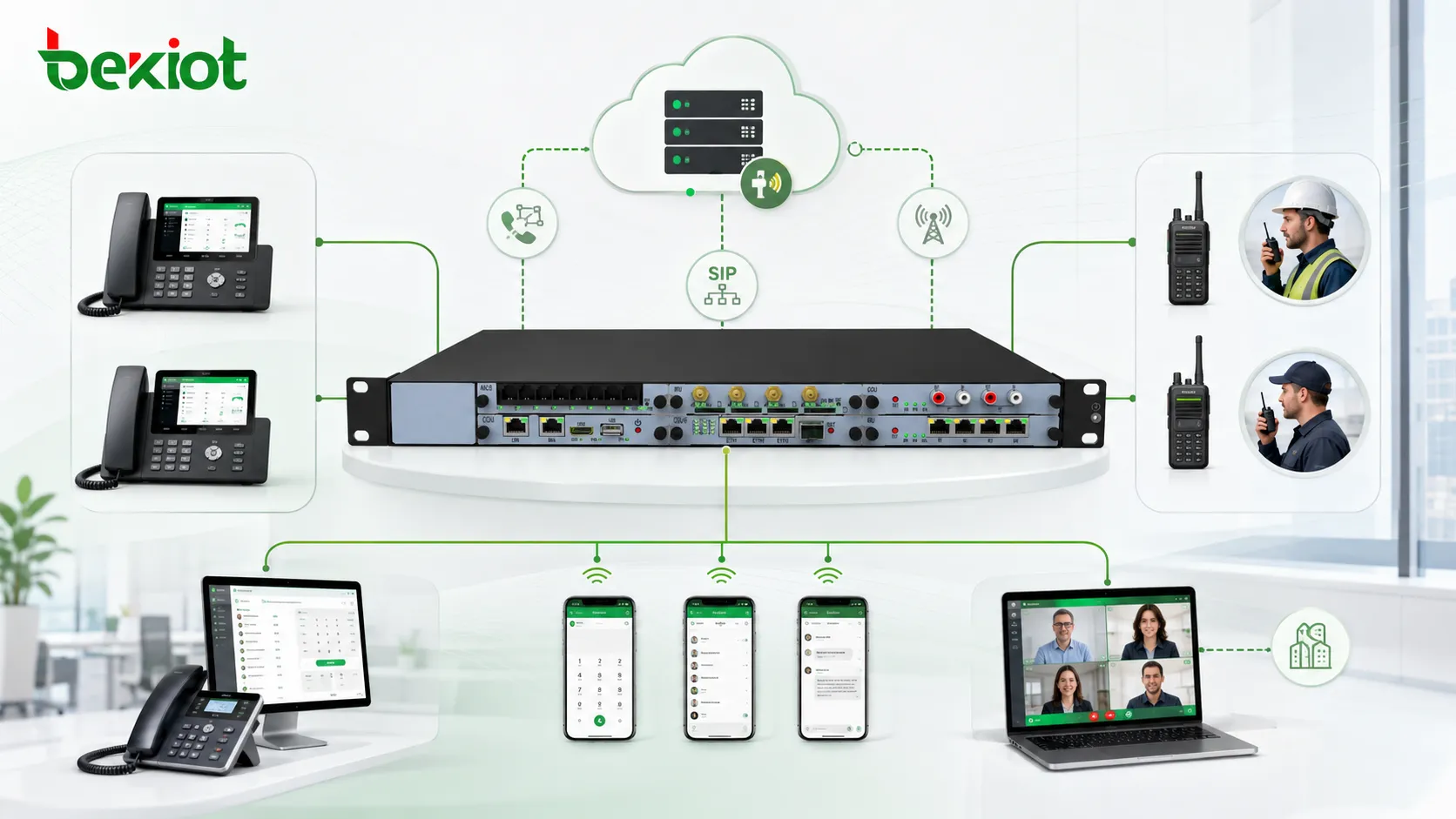
A telephone system can be extended through SIP trunking and a public network PTT server to support wireless intercom, smart terminals, and mobile office communication.
Why traditional office communication needs extension
An IPPBX system is still a reliable communication foundation. It supports internal extension numbers, call routing, external line access, call management, centralized configuration, and lower-cost VoIP calling. For office users, IP phones and softphones can meet most daily communication needs.
The limitation appears when communication moves away from the fixed desk. Workers in mines, factories, warehouses, industrial parks, construction areas, patrol routes, utility sites, and emergency response locations may not be able to use desktop IP phones. They need portable terminals that can communicate instantly, join groups, receive dispatch instructions, and remain reachable from the enterprise telephone system.
Earlier wireless office systems such as DECT and PHS once played a role in mobile communication, but in many markets they are no longer easy to deploy or maintain. Product availability, ecosystem support, and long-term maintenance can become difficult. For many enterprises, these older systems are no longer the best path for new mobile communication projects.
Dedicated radio networks are powerful but not always economical
Private radio systems such as DMR, TETRA, and analog trunking systems are designed for group communication. They are useful when teams need fast push-to-talk, stable coverage, command control, and reliable operation in industrial, transportation, public safety, or large-site environments.
However, dedicated radio networks are mainly designed around intercom-style communication. Some systems can support full-duplex phone calls, but radio channel resources are limited. If users occupy radio channels for long phone conversations, it may affect group communication availability. This makes it unrealistic to treat a private radio system as both a long-duration mobile phone network and a professional push-to-talk system at the same time.
Cost and deployment complexity also matter. A private trunking system may require base stations, repeaters, frequency planning, dedicated terminals, engineering deployment, professional maintenance, and ongoing system management. For many enterprises, the goal is not to build a complete private radio network. They simply need a flexible way to connect mobile workers, office phones, and intercom groups.
Public network PTT as the middle communication layer
A public network push-to-talk server can work as the bridge between smart terminals and the enterprise IPPBX. The enterprise deploys a PTT server, configures users and smart terminals according to project size, and connects the PTT server with the existing IPPBX through SIP trunking.
After SIP trunking is configured, the enterprise can assign an extension number range to smart terminals and define routing rules. A mobile terminal is no longer an isolated intercom device. It becomes part of the enterprise communication system and can be called through an internal extension number.
This design is easier than building a complete private radio network. The public network PTT server can use a public IP address or cloud access method, while smart terminals use mobile data cards, enterprise mobile network access, or wireless broadband. The server centrally manages users, groups, permissions, call behavior, and terminal registration.
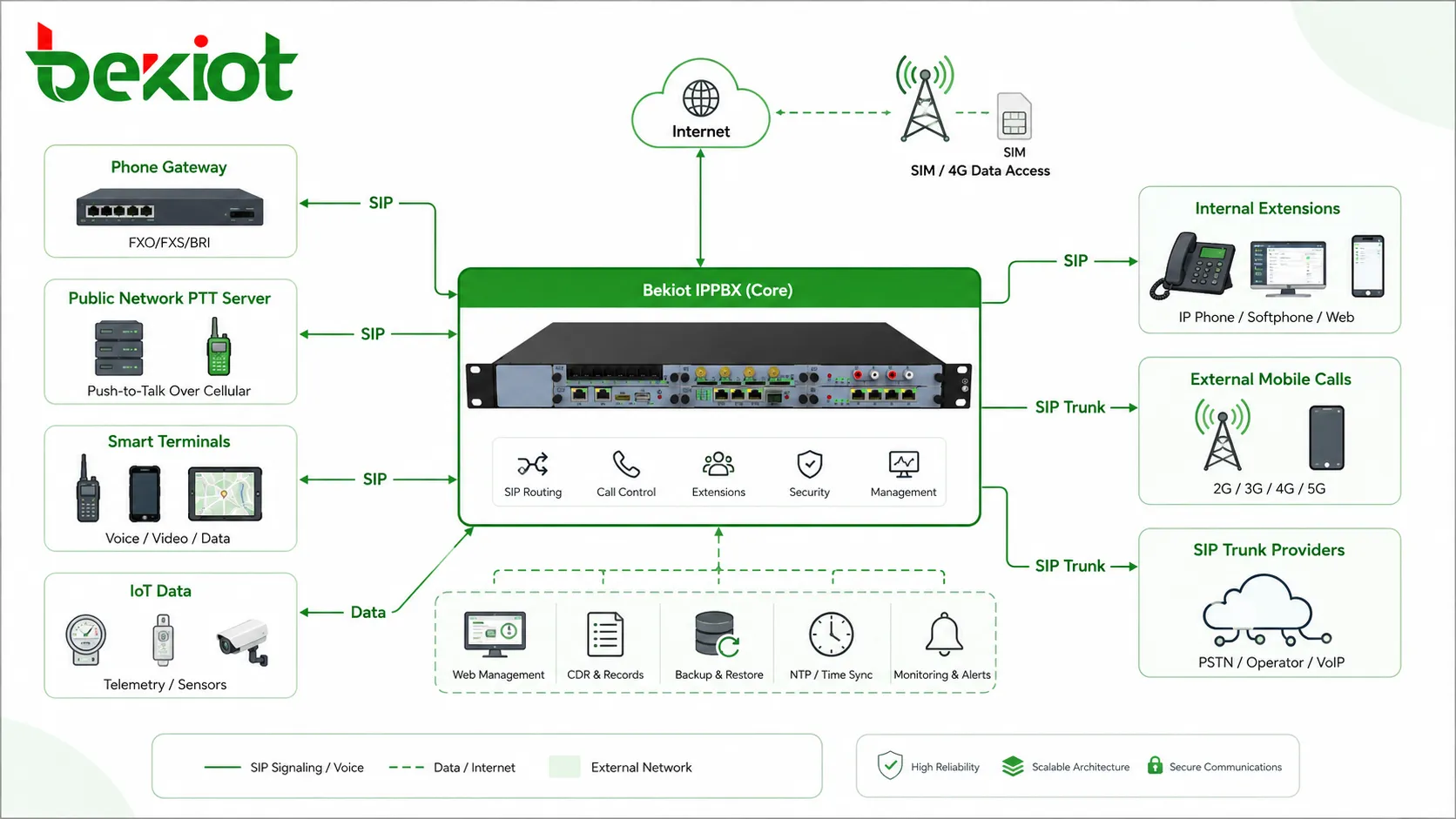
SIP trunking allows the IPPBX, public network PTT server, smart terminals, internal extensions, and external phone calls to work within one routing architecture.
How smart terminals extend mobile office capability
Smart terminals bring mobile communication into the enterprise telephone environment. Once users are assigned to groups, they can use push-to-talk for fast coordination in workshops, mines, warehouses, patrol routes, logistics areas, construction sites, and industrial parks. This keeps the working habit close to traditional radio communication while gaining wider mobile network coverage.
Each smart terminal can also be assigned an internal number. Office users can dial the smart terminal directly from an IP phone, and mobile users can call office extensions. This creates a practical bridge between fixed office communication and mobile field communication.
Depending on the platform and terminal capability, the same device can support push-to-talk, voice calling, video calling, external mobile calls, and dispatch communication. For field users, one terminal can handle intercom, enterprise extension calling, visual communication, and external contact. For managers, mobile users become easier to reach and easier to manage.
Video calling adds more context to field work
In many enterprise scenarios, voice alone is not enough. A field worker may need to show equipment status, confirm a fault point, report a safety condition, or support remote inspection. Smart terminals with video capability can provide more direct communication between field staff, office users, technical experts, and dispatchers.
For example, a maintenance worker can call an office extension and show the condition of a machine. A security guard can report an abnormal entrance event with live video. A mobile supervisor can join a video call from a remote site. When mobile video is integrated with the telephone system, communication becomes more useful for troubleshooting, emergency response, site inspection, and remote supervision.
Existing radio systems do not need to be abandoned
Some enterprises already have analog radios, DMR systems, TETRA systems, or other private radio networks. These systems may still be valuable for local coverage, industrial operations, security patrols, or emergency teams. A new public network PTT system does not have to replace them immediately.
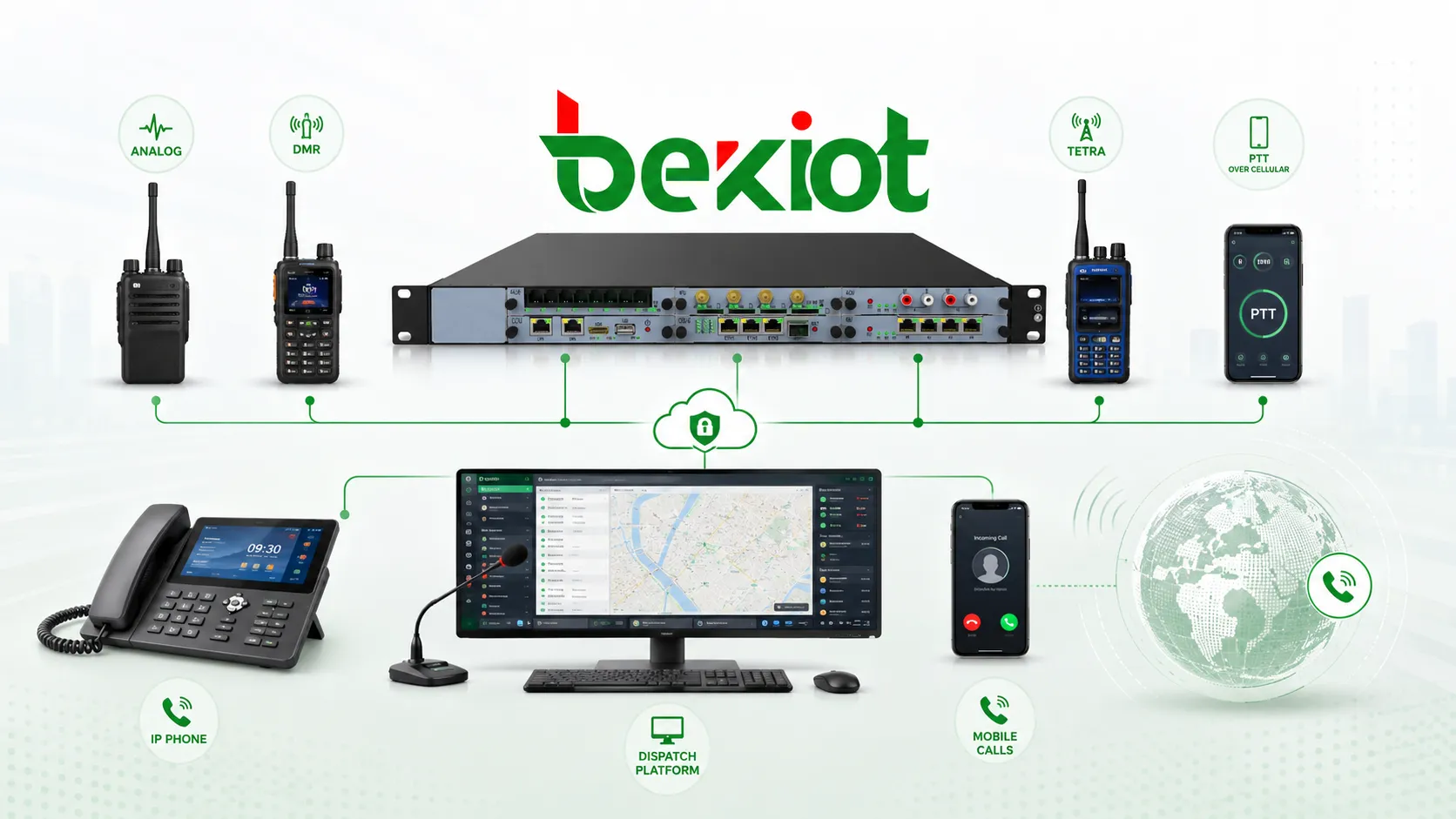
Through radio gateways or trunking gateways, the public network PTT server and telephone system can be connected with existing radio systems. This allows public network PTT users, private radio users, and office phone users to communicate across different systems.
This hybrid model is especially useful for organizations that are upgrading gradually. Private radio can continue to serve local high-reliability areas. Public network PTT can support wide-area mobile users. IPPBX can continue to serve office phones and external calls. With proper routing and gateway configuration, the whole communication system becomes more flexible.
Hybrid interconnection allows analog radio, DMR, TETRA, public network PTT, IP phones, smart terminals, and external mobile calls to communicate across systems.
System architecture for enterprise deployment
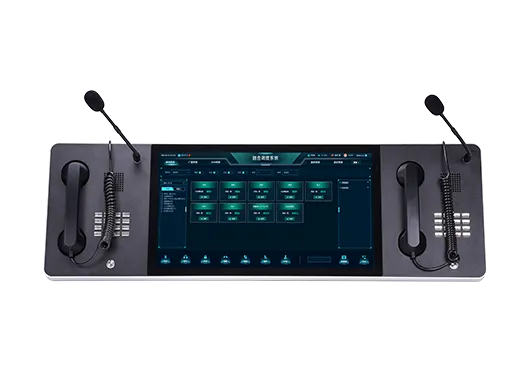
A typical deployment includes the existing IPPBX or softswitch, telephone gateway, desktop IP phones, public network PTT server, smart terminals, SIP trunk configuration, user number plan, call routing rules, and optional radio gateway. If the enterprise needs visual dispatch, recording, positioning, or centralized command, a dispatch platform can also be added.
The IPPBX continues to handle office extensions and external telephone access. The PTT server manages smart terminals and intercom groups. SIP trunking connects the phone system with the PTT server. Radio gateways connect legacy radio networks. The result is a layered architecture that protects existing investment while adding mobile communication capability.
System Layer
Main Role
Typical Devices or Functions
Office telephony layer
Handles internal and external voice calls
IPPBX, softswitch, telephone gateway, IP phones
Public network PTT layer
Manages mobile users and intercom groups
PTT server, smart terminals, user groups, permissions
SIP trunk layer
Connects phone system and PTT server
Extension routing, number plan, call direction rules
Radio interconnection layer
Links existing radio systems
Analog radio gateway, DMR gateway, TETRA integration
Dispatch and management layer
Supports command, monitoring, and coordination
Dispatch seats, recording, positioning, video calling, group control
Number planning determines daily usability
A good number plan makes the system easy to use. Smart terminals should be assigned clear internal extension numbers. Office users should be able to dial mobile users directly, and mobile users should know how to call office extensions, dispatch seats, group numbers, external numbers, or radio gateway channels.
If the number plan is confusing, users may avoid the system or return to personal mobile phones. A clear extension structure reduces training difficulty and improves communication efficiency. It also makes future expansion easier when new departments, terminals, sites, or intercom groups are added.
Call routing shapes the user experience
SIP routing should be planned according to real work scenarios. Some calls may stay inside the enterprise network. Some calls may be routed to the public telephone network. Some calls may go to the public network PTT server, while others may reach radio users through a gateway.
Clear routing rules help avoid confusion. They also allow office users, mobile users, and radio users to keep their familiar working habits. A warehouse worker may use push-to-talk. An office user may dial an extension. A dispatcher may select a group or channel. The system should connect these methods behind the scenes without making operation complicated.
Practical benefits for enterprise users
The first benefit is lower deployment cost compared with building a complete private trunking network. Enterprises can use public mobile networks and existing IPPBX resources while adding smart terminals and group intercom service.
The second benefit is better mobility. Mobile workers can use smart terminals for push-to-talk, internal extension calling, video communication, and external calls. This supports field coordination, mobile office, emergency notification, and cross-department communication.
The third benefit is flexible integration. The system can connect internal LAN resources, Internet access, mobile data networks, public telephone networks, and private radio networks. This makes the architecture suitable for different sites, departments, and project phases.
The fourth benefit is easier management and expansion. Administrators can centrally configure users, groups, permissions, numbers, and call routing. When new terminals or teams are added, the enterprise does not need to rebuild the entire communication system.
Where this solution fits best
Factories and industrial parks often need communication between control rooms, workshops, warehouses, gates, maintenance teams, logistics areas, and security staff. A hybrid telephone and PTT system can connect fixed IP phones with mobile workers and intercom groups.
Mines and energy sites often have wide areas, moving teams, and strong wireless communication needs. Smart terminals and radio integration can help connect mobile personnel with dispatch centers and office communication systems.
Logistics centers, property management teams, municipal service teams, and service organizations need fast coordination across mobile staff. Public network PTT provides a lower-cost way to support wide-area communication without building a full private radio network.
Emergency and maintenance teams need quick group communication, individual calling, and sometimes video confirmation. Integrating smart terminals with the telephone system makes it easier to connect field users with office experts, supervisors, and dispatchers.
Implementation notes for integrators
Before deployment, the project team should confirm whether the existing IPPBX supports SIP trunking, number routing, external line access, codec compatibility, and user capacity. These details affect how smoothly the public network PTT server can be connected.
Mobile network access should also be evaluated. Smart terminals depend on mobile data or wireless network access, so coverage, signal quality, data plans, network stability, and user density should be checked before large-scale deployment.
Push-to-talk groups should match the organization’s real working structure. Groups may be designed by department, site, work area, emergency role, patrol route, project team, or duty schedule. Poor group design can reduce communication efficiency even if the technical system works correctly.
Cross-system calling should be tested early. The project should test office phone to smart terminal calling, smart terminal to office phone calling, group intercom, external mobile calls, radio gateway calls, video calling, and emergency call scenarios before final acceptance.
Test Item
Purpose
IPPBX to smart terminal call
Confirms extension routing from office phones to mobile users
Smart terminal to IP phone call
Confirms mobile users can reach office extensions
PTT group communication
Checks group membership, permissions, and voice quality
External mobile call
Verifies public telephone routing and gateway access
Radio gateway interconnection
Checks analog, DMR, or TETRA interoperability where required
Emergency communication workflow
Confirms priority calls, dispatch groups, and response procedures
Security and management should be planned early
A public network PTT and SIP integration project should not ignore security. Account control, SIP trunk authentication, terminal permission management, SIM card management, firewall rules, encrypted access where available, and regular review of user groups should be included in the system design.
Administrators should also define who can create groups, who can call external numbers, who can reach radio channels, who can access video calls, and who can use emergency priority functions. Good management rules help the system remain reliable after expansion.
A more flexible direction for enterprise communication
Enterprise communication is moving from fixed office calling toward mobile, wireless, and multi-network collaboration. Traditional IPPBX systems still provide a strong foundation, but they need extension when users require field communication, group intercom, mobile office, video communication, and integration with radio systems.
By deploying a public network PTT server, connecting it with the IPPBX through SIP trunking, assigning internal numbers to smart terminals, and integrating existing radio systems through gateways, enterprises can build a flexible communication architecture with lower cost and easier deployment.
For projects that need SIP telephony, mobile push-to-talk, radio interoperability, video calls, dispatch seats, and emergency communication in one architecture, Becke Telcom / 贝克通信 can be considered as a practical integration partner for building a more connected enterprise communication system.
Summary
Public network PTT and SIP trunk integration does not replace the existing telephone system. It expands it. Office phones, smart terminals, public network PTT, private radios, video calls, external mobile communication, and dispatch platforms can work together in one practical communication architecture.
For factories, industrial parks, mines, energy sites, logistics centers, property teams, and emergency maintenance organizations, this model provides a flexible path toward unified communication. It helps enterprises keep the stability of IPPBX while adding mobility, group intercom, radio gateway interoperability, and visual communication for modern work scenarios.
FAQ
Can public network PTT replace all private radio systems?
Not always. Public network PTT is useful for wide-area mobile communication and lower-cost deployment, but private radio systems may still be better for sites that require dedicated coverage, local survivability, high reliability, or special industry compliance.
Does a smart terminal need an internal extension number?
It is strongly recommended. Assigning internal numbers makes the terminal easier to call from office phones and helps users understand the communication workflow. It also simplifies routing, management, and future expansion.
Can this architecture support video communication?
Yes, if the selected smart terminals, server platform, network bandwidth, and communication system support the required video capability. Video calling should be tested under real mobile network conditions before large-scale use.
What should be considered when connecting analog radios?
The project should confirm radio frequency, channel plan, audio interface, PTT control method, gateway compatibility, group mapping, and operating rules. Analog radio integration often requires careful field testing.
How can enterprises keep the system secure?
Security planning should include account control, SIP trunk authentication, network firewall rules, terminal permission management, encrypted access where available, SIM card management, and regular review of user groups and routing rules.