Bridging SIP Voice and Two-Way Radio with RoIP Gateway Integration
RoIP gateways bridge full-duplex SIP phones and half-duplex radio networks by managing audio conversion, VAD, VOX, PTT timing and dispatch workflows for industrial and emergency voice interoperability.
Becke Telcom
Voice communication systems do not always follow the same operating logic. In office calls, IP phones, softphones, video meetings and SIP-based dispatch platforms, users are used to speaking and listening naturally at the same time. This is the full-duplex communication model. In two-way radio systems, the user normally presses the push-to-talk button, speaks, releases it and then waits for another person to reply. This is the half-duplex model.
Both modes are valuable. Full-duplex communication feels natural for office users, operators and command centers. Half-duplex radio communication remains practical for field teams because it is fast, simple, reliable and suitable for group coordination. The challenge appears when a project needs SIP phones, dispatch consoles, IP-PBX systems and two-way radios to communicate with each other.
A RoIP gateway solves this problem by acting as the bridge between the IP voice side and the radio side. It converts audio, signaling and control logic so phone users can communicate with radio users without forcing either side to change its normal working habit.
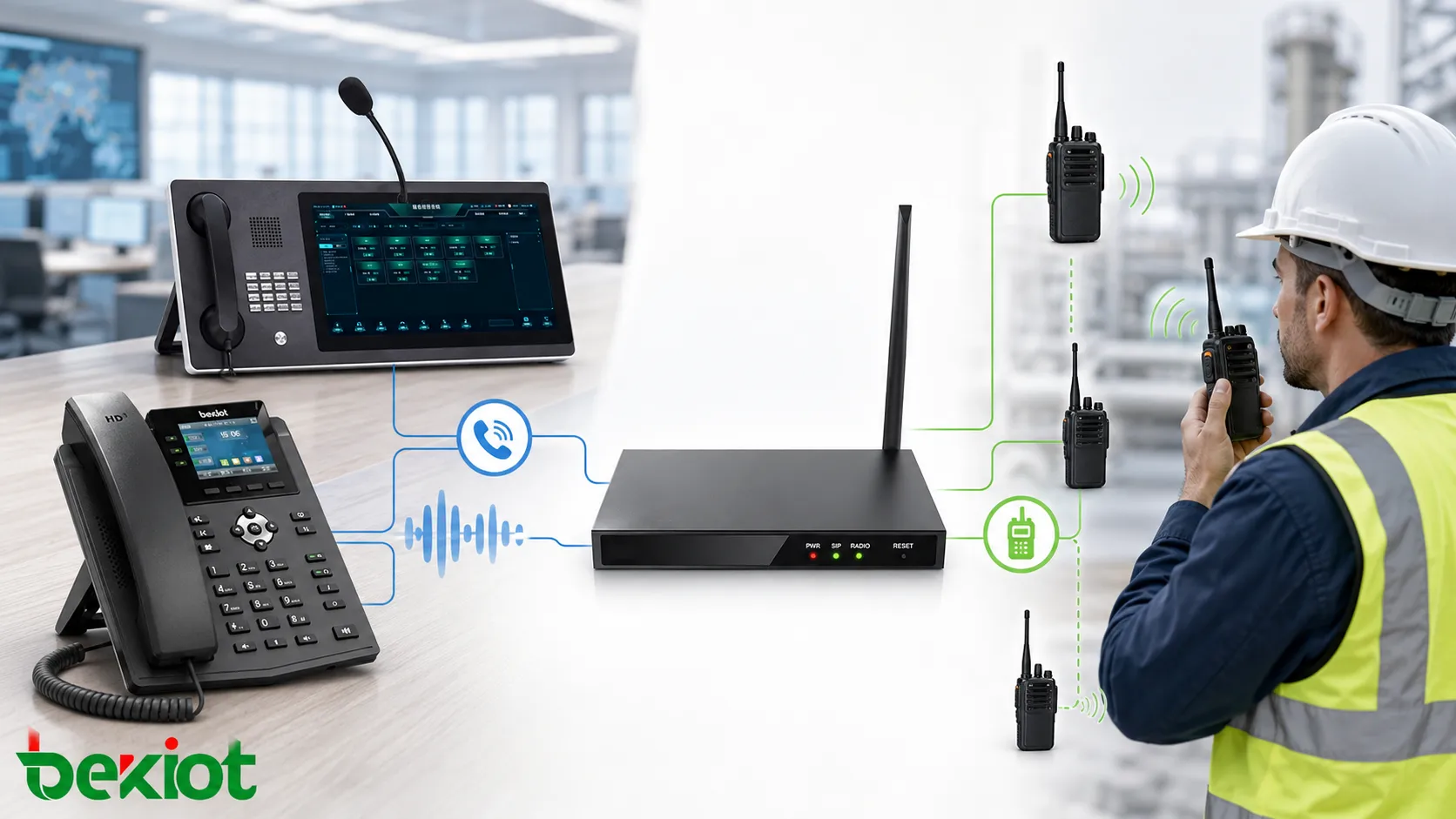
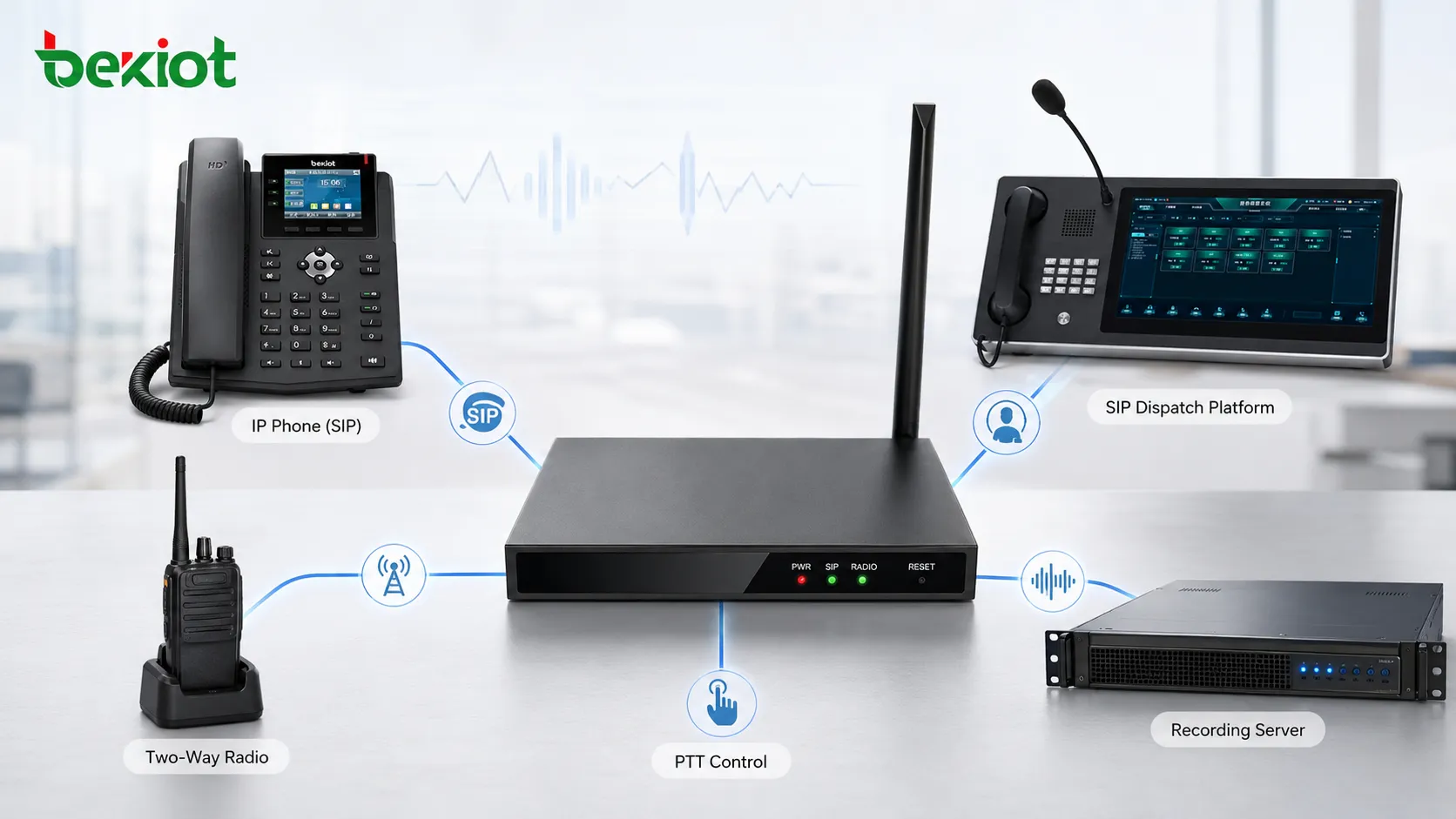
A RoIP gateway can connect full-duplex SIP voice systems with half-duplex two-way radio networks for cross-system voice communication.
Understanding the Two Voice Modes
Full-duplex voice communication
Full-duplex communication means users can speak and listen at the same time. Traditional telephones, IP phones, mobile calls, video conferencing systems and many SIP voice platforms work in this way. The channel stays open, so users can interrupt, confirm, respond and continue the conversation without pressing a talk button.
This mode is suitable for offices, control rooms, service centers and command desks where conversation needs to feel natural. Operators expect to pick up a handset, use a headset or speak through a dispatch console just as they would in a normal phone call.
Half-duplex radio communication
Half-duplex communication works differently. Only one side can transmit at a time. The most common example is a two-way radio. A user presses the PTT button, speaks to the group and releases the button so other users can answer.
This mode is widely used in field operations because it supports fast group communication with simple operation. Security patrols, emergency responders, transportation teams, construction crews, factory operators, logistics teams and outdoor workers often rely on this radio-style workflow.
The real project question is not whether full-duplex or half-duplex is better. The real question is how to make both systems work together while keeping each side easy to use.
Why Voice Interconnection Is Needed
Modern communication projects often combine SIP telephony, dispatch platforms, public-network intercom, radio networks, recording systems, monitoring tools and emergency command platforms. In these projects, a control room may use IP phones or a dispatch console, while field workers continue using handheld radios or vehicle radios.
If these systems remain separate, communication becomes slower and less reliable. Dispatchers may need to repeat the same message manually. Field users may miss important instructions. Managers may not have a complete communication record. During emergencies, this kind of separation can increase risk.
The goal is not always to replace radios with phones or replace phones with radios. Radios are still useful in harsh field environments. SIP phones and dispatch platforms remain useful in offices, command centers and control rooms. A better design lets each system keep its own strengths while the gateway handles the difference between them.
What a RoIP Gateway Does in a Mixed Voice System
Bridge between SIP systems and radio channels
A RoIP gateway connects radio communication to IP-based voice systems. On one side, it can communicate with a SIP server, IP-PBX, dispatch platform, softswitch or VoIP endpoint. On the other side, it connects to radio equipment, radio channels, base stations, repeaters or other radio access devices.
Through this bridge, a dispatcher can use a SIP phone or command platform to talk to a radio group. Radio users can also communicate back to the dispatch side. The gateway manages the conversion so both sides can participate in the same operational voice workflow.
Keep user behavior familiar
A good integration design should not make phone users behave like radio users, and it should not make radio users behave like phone users. Phone users should still be able to speak naturally. Radio users should still be able to use PTT as usual.
The RoIP gateway sits between the two environments and manages audio conversion, SIP signaling, radio interfacing, PTT control, talk timing and sometimes recording or dispatch integration. This is why the gateway layer is so important in emergency command, industrial dispatch, transportation control, security operations and remote site communication.
A RoIP gateway can connect SIP dispatch, IP phones, radio channels, PTT control and recording systems into one voice communication architecture.
How Voice Detection Supports Radio Interoperability
VAD identifies real speech
Voice Activity Detection, usually called VAD, is a speech processing technology used to detect whether real voice exists in an audio stream. In VoIP systems, VAD can help avoid sending silence, reduce unnecessary packets and lower network or processing load.
In RoIP integration, VAD has another important role. It can help the gateway determine when a phone-side user is actually speaking. This detection result may then be used to control the radio-side transmission process.
Detection quality affects communication experience
VAD algorithms can differ in sensitivity, accuracy, delay and noise handling. If detection is too slow, the first part of a sentence may be lost before the radio channel opens. If detection is too sensitive, background noise may accidentally trigger radio transmission.
A stable system needs a balanced detection strategy. It should recognize real speech quickly, ignore unnecessary background noise and work reliably under the actual noise conditions of the project site.
From Voice Detection to PTT Control
VOX turns speech into a transmit action
Voice-operated exchange, often called VOX, is a familiar concept in radio communication. It allows a device to start transmission when speech is detected. This can be useful when users cannot easily press a PTT button, such as during driving, rescue work, maintenance tasks or hands-busy field operations.
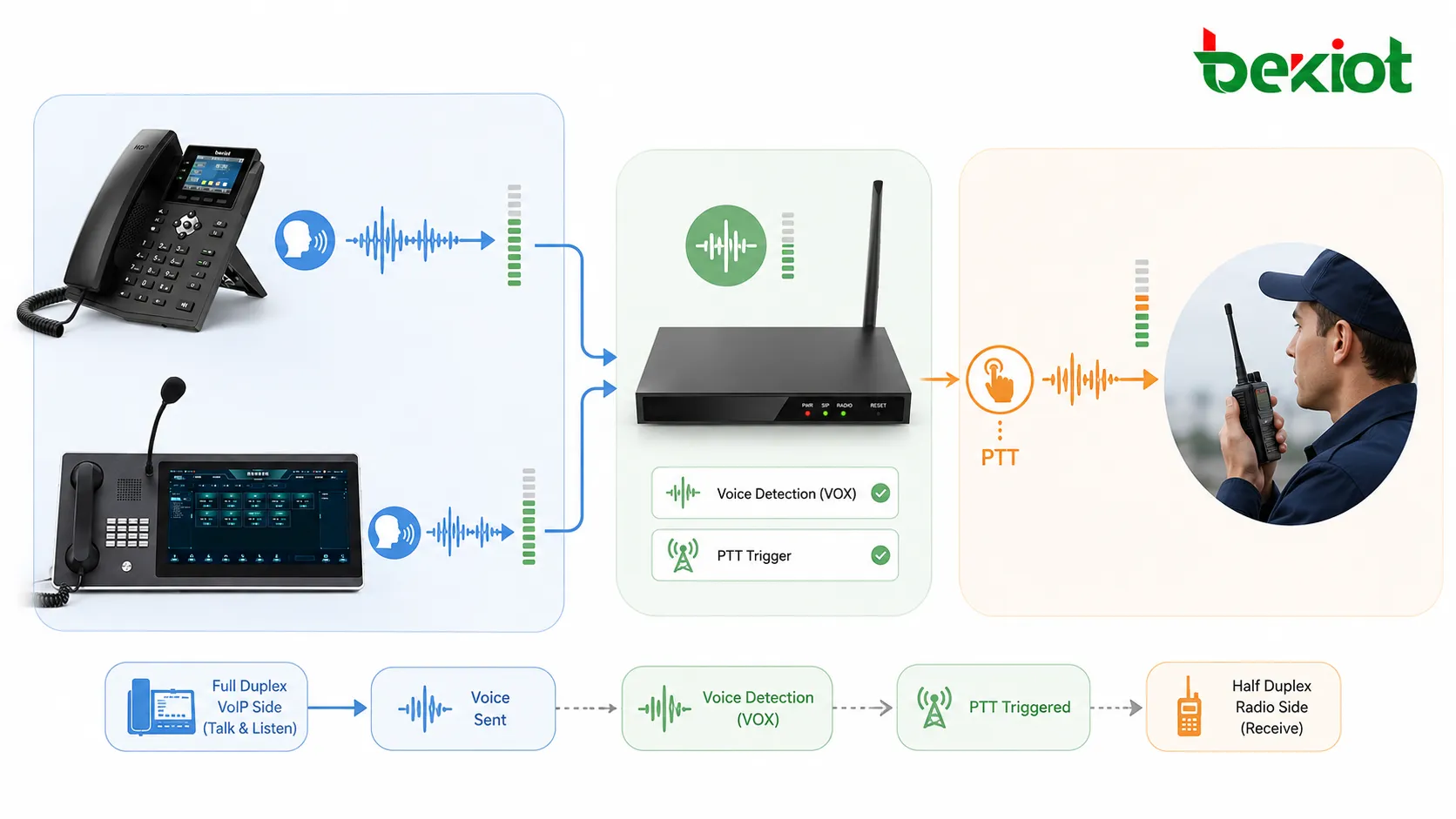
In a gateway-based integration, the same idea can be used between a full-duplex SIP system and a half-duplex radio channel. When the phone-side user speaks, the gateway detects voice activity and automatically triggers the radio-side PTT logic.
Automatic PTT makes the bridge easier to use
When a dispatcher speaks through an IP phone or dispatch console, the gateway can activate PTT on the connected radio channel. After the talk path is opened, the dispatcher’s voice is sent to the radio group. When the speech stops, the gateway releases PTT so radio users can reply.
This automatic process helps the integration feel more natural. In some applications, computer-based detection and control can be faster and more consistent than manual PTT operation. The key is careful configuration of detection threshold, transmit delay, release delay and priority rules.
Practical System Architecture
SIP phone and dispatch side
The IP voice side may include SIP phones, softphones, dispatch consoles, IP-PBX systems, SIP servers, recording platforms and command center applications. Users on this side usually expect a full-duplex conversation experience.
In a control room, an operator may need to call a radio group, monitor a field channel, join a conference, record a conversation or coordinate multiple teams. The system should support these actions without making the operator manage radio control details manually.
Radio and field side
The field side may include handheld radios, vehicle radios, base stations, repeaters, radio groups, public-network intercom terminals and other half-duplex voice devices. These users normally work with PTT and group-based communication.
The integration must respect the half-duplex nature of the radio channel. Only one transmission should be active at a time. Talk control must be handled carefully to reduce collisions, clipped audio and missed instructions.
Gateway control layer
The gateway layer is responsible for the most important conversion tasks. It handles audio input and output, SIP registration or trunk access, radio interface connection, voice detection, VOX triggering, PTT control, delay adjustment and sometimes dispatch or recording integration.
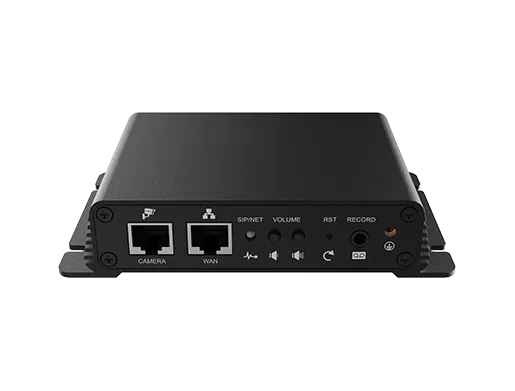
For single-channel integration or compact communication projects, Becke Telcom’s BK-ROIP1 ROIP Gateway can be considered as a lightweight option for connecting radio communication with SIP-based voice systems. It is suitable for projects that need a simple RoIP bridge between field radio users and IP dispatch or telephony platforms.
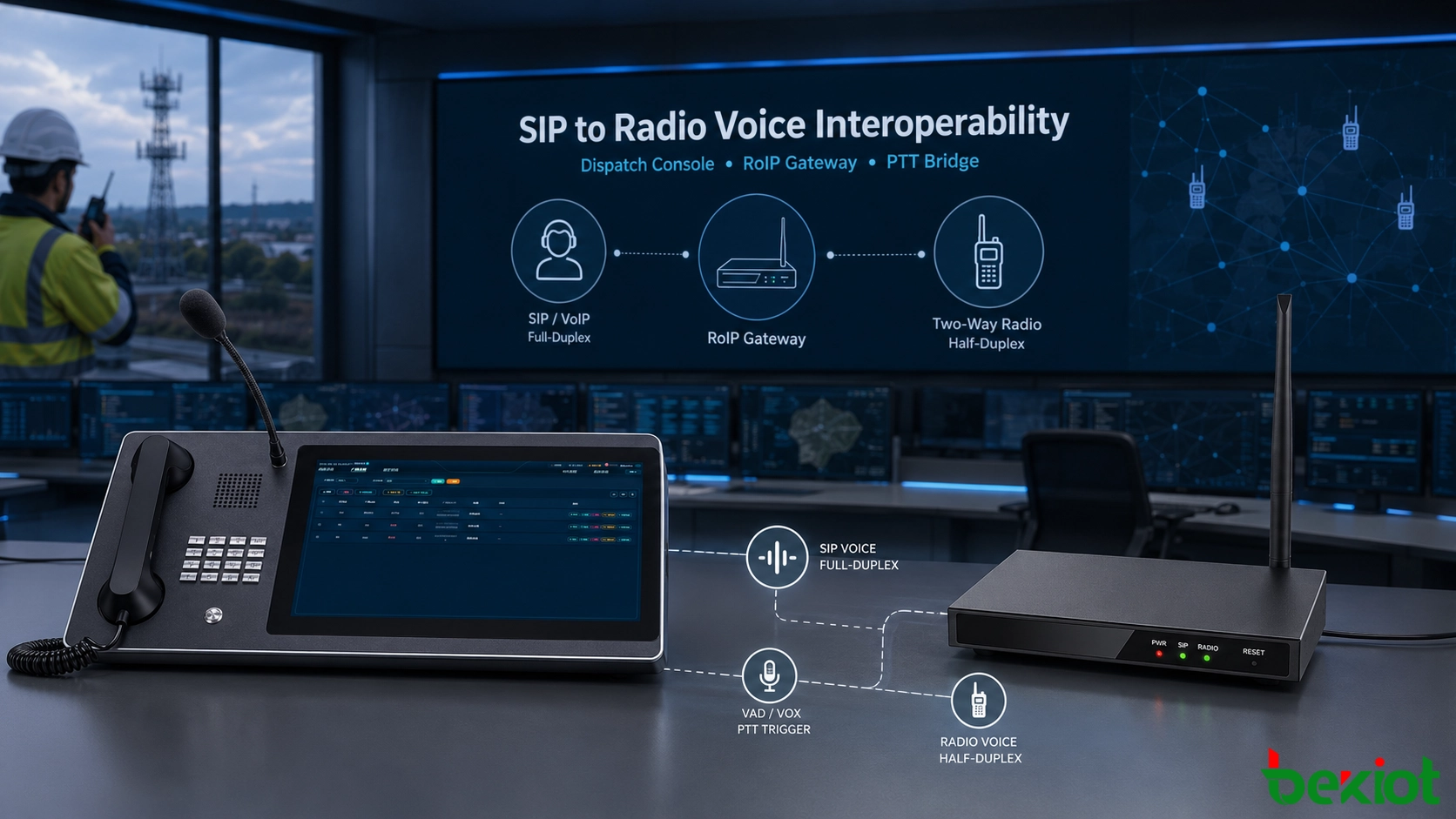
VAD and VOX can detect phone-side speech and trigger radio-side PTT control to support smoother voice interoperability.
Where RoIP Interoperability Is Useful
Emergency command and dispatch
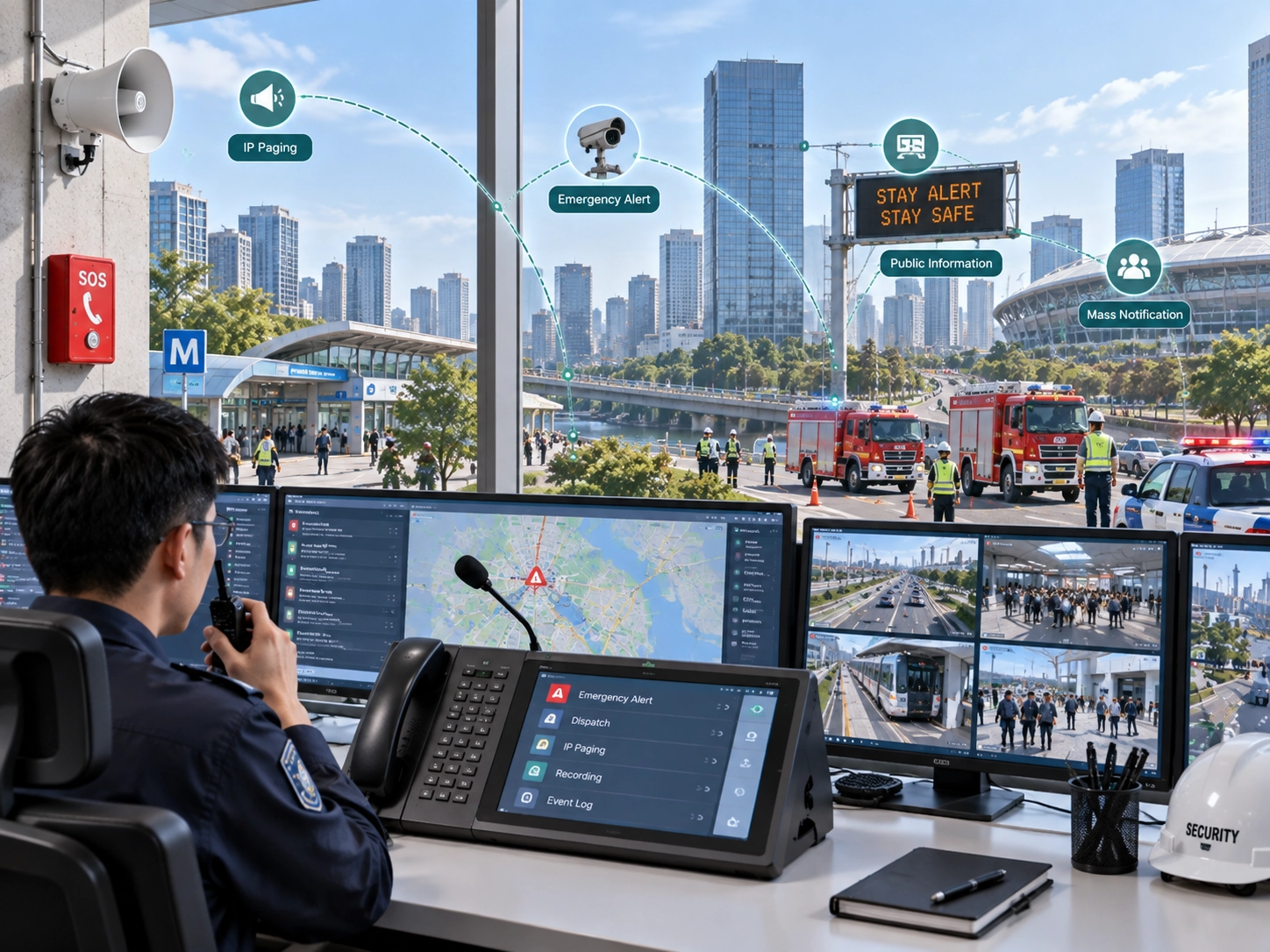
Emergency command centers often need to coordinate office staff, field responders, radio users, mobile teams and remote support units. RoIP interconnection allows dispatchers to reach field radio users from a SIP platform or command console without switching between disconnected tools.
This can improve response speed in rescue operations, public safety incidents, industrial emergencies, disaster response and temporary field command deployments.
Industrial and utility operations
Factories, mines, ports, power plants, oil and gas facilities and water utilities often use radios for field teams while control rooms use IP phones or dispatch systems. A RoIP gateway allows these environments to share voice communication across different device types.
This is useful for equipment maintenance, patrol coordination, safety reporting, production scheduling, emergency notification and multi-team operation.
Transportation and large-site security
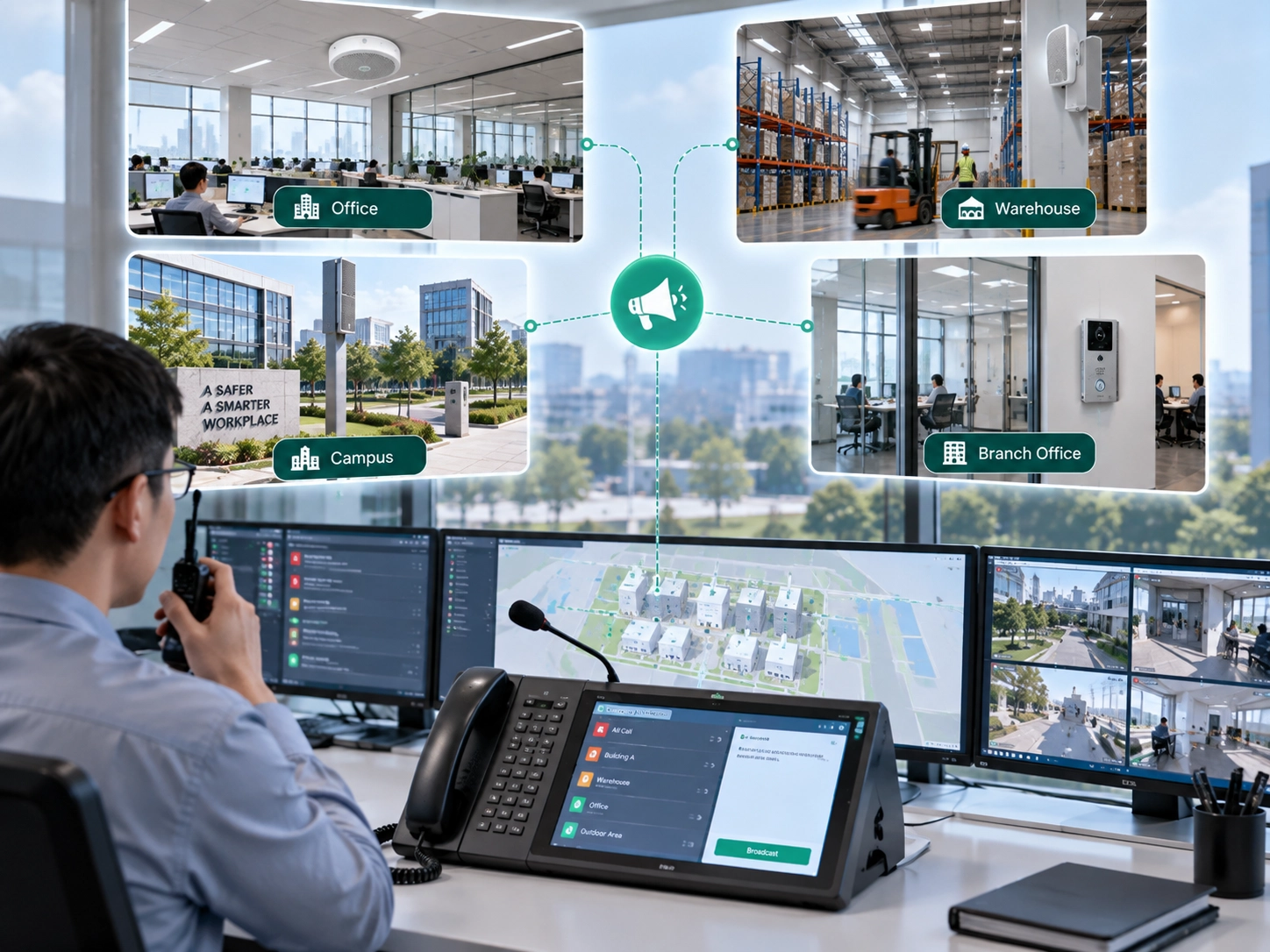
Railway stations, highways, tunnels, airports, logistics parks, campuses and large commercial facilities may use a mixture of radio systems, IP networks and command platforms. Interconnection helps security teams, control centers, maintenance staff and external responders communicate more efficiently.
Instead of creating separate communication islands, the project can build a shared voice coordination layer across radio, SIP and dispatch resources.
Design Points Before Deployment
Check the radio interface first
Before choosing a gateway, the project team should confirm the radio brand and model, audio interface, PTT control method, signal level, connector type and integration method. The project should also confirm whether the gateway will connect directly to a radio, a base station, a repeater or another radio access device.
These details affect compatibility and voice quality. A small mismatch in wiring, electrical level or control logic can cause unstable transmission, low volume, distorted audio or failed PTT control.
Control delay and clipped speech
One common issue in voice-triggered PTT systems is first-syllable loss. If speech is detected too late or the radio takes too long to enter transmit mode, the beginning of the sentence may be clipped.
Proper configuration should reduce this risk through suitable detection sensitivity, pre-buffering, transmit delay, release delay and PTT timing adjustment. The system should also avoid false triggering from background noise, especially in factories, roadsides, construction sites, engine rooms and emergency scenes.
Define talk group and priority rules
When VoIP users and radio users are connected, the project should define who can call which radio group, how priority is handled, whether conversations are recorded, whether dispatchers can monitor channels and how emergency calls are routed.
These rules make the system easier to operate. Without clear rules, the integration may become only a basic audio bridge instead of a real dispatch workflow.
Implementation Checklist
Checklist Item
What to Confirm
Design Purpose
Use scenario
Dispatch-to-radio calling, radio-to-phone calling, emergency access, recording or multi-site communication
Defines gateway configuration and platform design
Radio interface
Connector, audio level, PTT method, cable wiring and radio model
Ensures compatibility and stable transmission
VAD and VOX settings
Detection threshold, transmit delay, release delay and background noise behavior
Reduces clipped audio and false triggering
SIP integration
SIP server, IP-PBX, dispatch platform, numbering and call routing
Connects radio channels with the IP voice system
Operation rules
Group access, priority, recording, monitoring and emergency routing
Supports real dispatch workflow
Testing Under Real Conditions
Testing should not only be done in a quiet office. The system should be tested with the actual radios, real background noise, normal speaking distance, different user volumes and expected operating scenarios. This helps tune VAD, VOX, audio gain and PTT timing more accurately.
The test should also include SIP registration, radio transmit and receive behavior, first-syllable loss, background noise triggering, delay, recording, emergency routing and network recovery. A system that works in a quiet room may behave differently in a factory, roadside, tunnel, emergency scene or dispatch center.
Final Notes
Full-duplex and half-duplex communication serve different needs. Full-duplex systems are natural for phone calls, dispatch consoles and conferences. Half-duplex radio systems are reliable for field group communication. In modern industrial, transportation, security and emergency projects, these two modes often need to work together.
A RoIP gateway bridges this gap by connecting SIP-based voice systems with radio networks. With VAD, VOX and automatic PTT control, the gateway can detect phone-side speech, trigger radio transmission and allow both sides to communicate without changing their normal operating habits.
The result is more than a technical conversion. It is a practical voice interoperability architecture that connects control rooms, dispatch platforms, office users, field teams and radio groups into one coordinated communication workflow.
FAQ
Can a RoIP gateway connect different radio brands?
In many cases, yes. Compatibility depends on the radio audio interface, PTT control method, connector wiring and electrical levels. The radio model and interface should be verified before deployment.
Will voice-triggered PTT work well in a noisy factory?
It can work, but it must be tuned carefully. If sensitivity is too high, background noise may cause false triggering. Proper microphone placement, gain control, threshold settings and field testing are important.
Does RoIP integration require replacing the existing IP-PBX?
Usually no. If the current IP-PBX or SIP server supports standard SIP access, a RoIP gateway can often be registered or connected as part of the existing voice network.
Can radio conversations be recorded after RoIP integration?
Yes, depending on the dispatch platform, SIP recording system or gateway architecture. The project should define which channels are recorded, how files are stored and who can access them.
What is the main risk in this kind of integration?
The main risk is poor talk control. If detection, PTT timing, audio gain or group rules are not configured correctly, users may experience clipped speech, false triggers, overlapping talk attempts or unclear communication.