Portable Emergency Command Box for Field Rescue and Mobile Command Communication
Portable emergency command boxes help rescue teams build a fast field communication hub with voice dispatch, radio access, video backhaul, multi-network links and rear command center coordination.
Becke Telcom
At a disaster site, the first difficulty is often not only the incident itself. Rescue teams may arrive to find damaged roads, unstable power, weak public network coverage, scattered radio traffic and video information coming from different sources. If these resources cannot be connected quickly, commanders may hear only part of the situation and make decisions with incomplete information.
A portable emergency command box is designed for this kind of field environment. It brings voice, video, data, radio access, satellite communication and dispatch control into a compact mobile command unit. Instead of waiting for a fixed command center or a large command vehicle, frontline teams can build a temporary communication hub close to the incident scene.
The real value of a command box is not only portability. Its value is the ability to collect field signals, connect different teams, support local command and keep the rear command center informed when normal infrastructure is limited or unavailable.
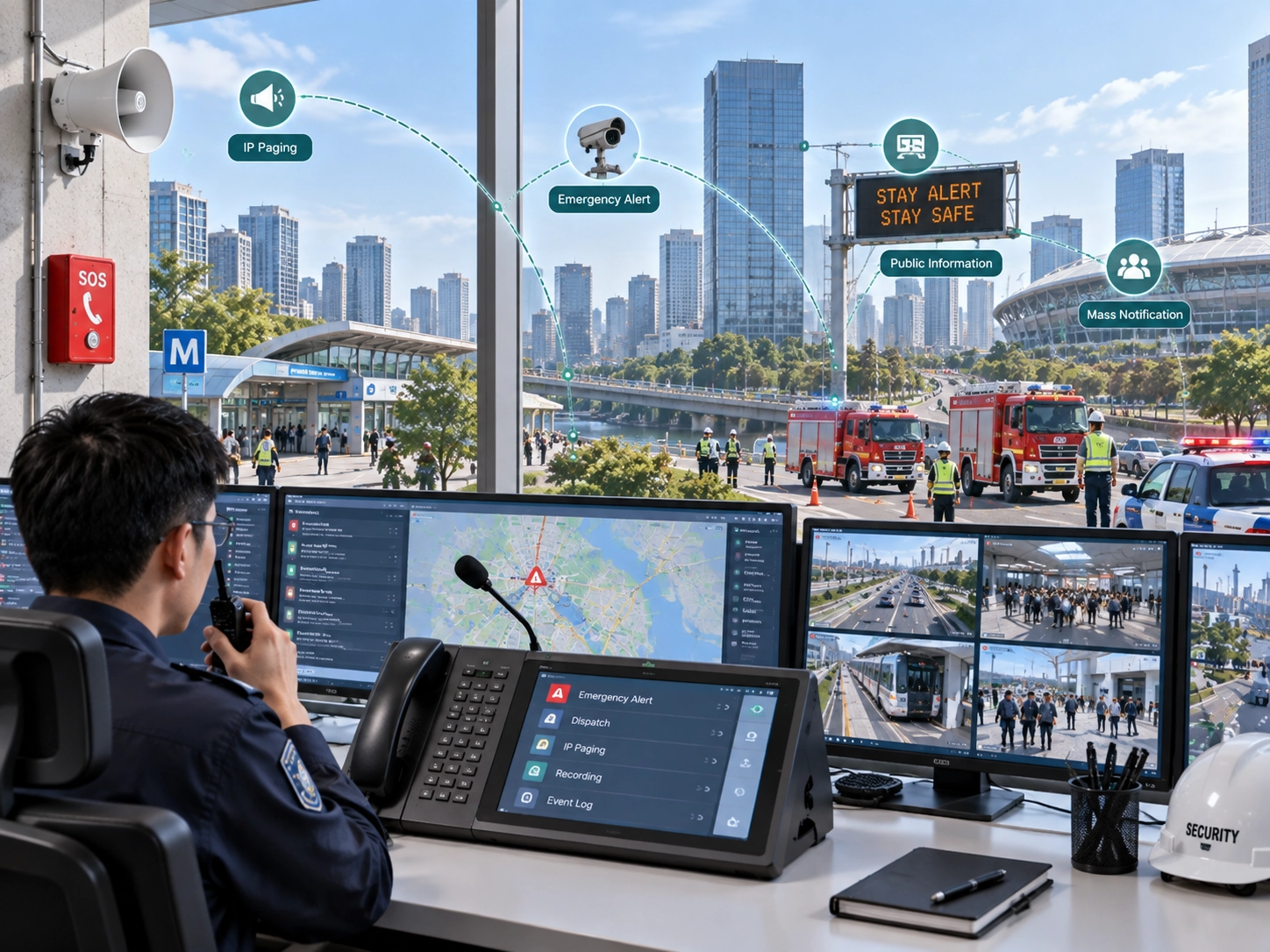
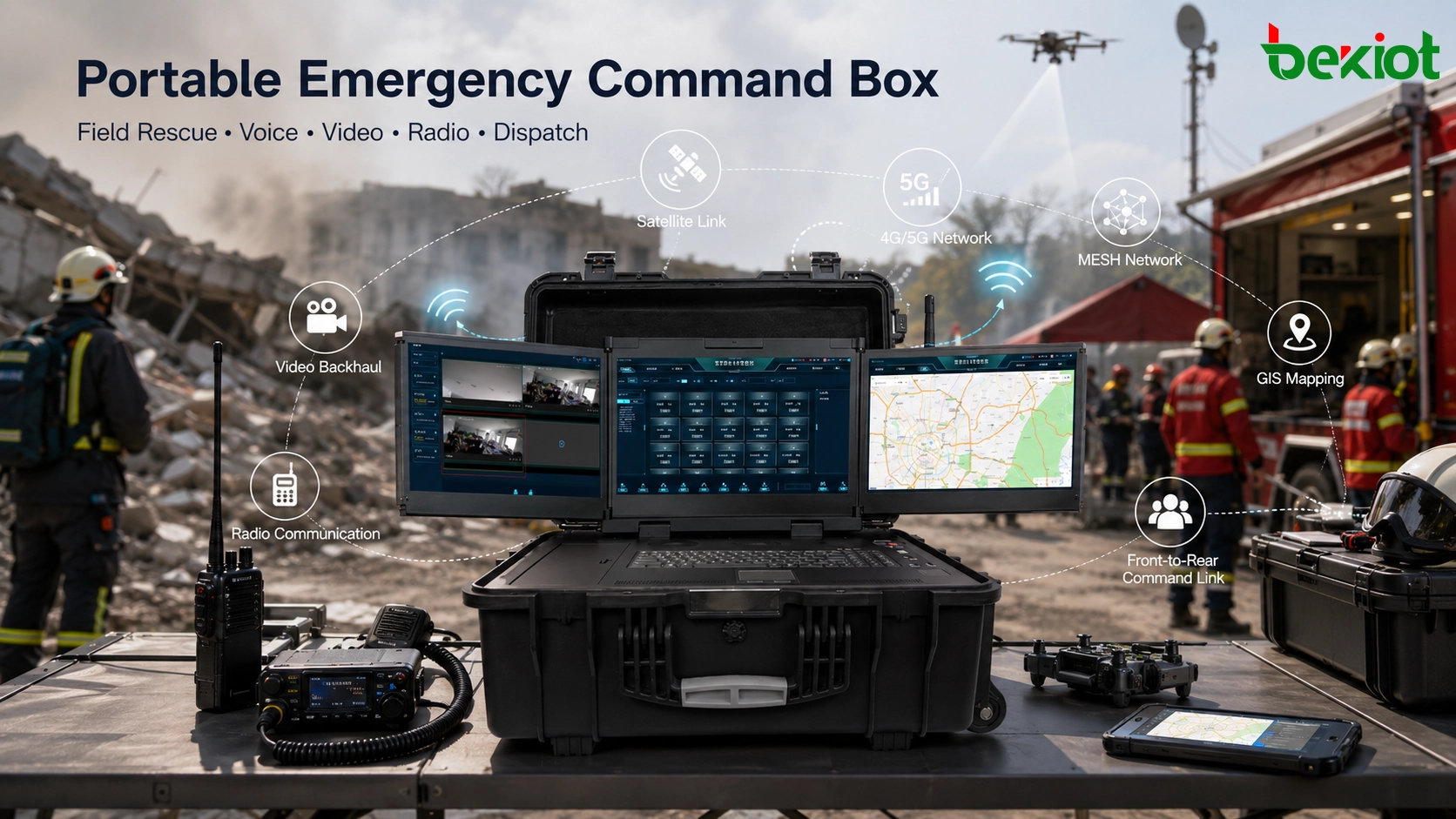
A portable emergency command box can bridge field teams, wireless links, radio systems, video sources and rear command centers during rescue operations.
Why Rescue Sites Need a Mobile Communication Hub
Field communication is often fragmented
In fires, floods, earthquakes, tunnel accidents, forest emergencies, underground incidents and large public safety operations, communication resources often belong to different teams. Firefighters may use one radio system, medical teams may use another channel, drones may send video through a separate link, and the rear command center may rely on IP networks or satellite communication.
When these systems remain isolated, information must be repeated manually. This causes delay, missing details and unclear task assignment. For frontline rescue teams, communication fragmentation can increase risk because instructions may not reach the right people at the right time.
The command box becomes a temporary field command post
A portable command box works as a small but capable on-site command post. It can gather radio, video, data and network resources into one field unit, allowing commanders to dispatch teams, monitor field information and maintain communication with the rear center before larger infrastructure arrives.
For rescue work, speed matters. A good command box should be easy to carry, quick to start and simple to connect. It should help teams form a working communication environment within minutes, not add more complexity to an already urgent situation.
In field rescue, a command box is not just a device. It is a fast-deployable communication node that turns scattered field signals into coordinated action.
Core Capabilities for Real Field Operations
Multi-network access for unstable environments
Emergency scenes rarely provide ideal network conditions. Some areas may have 4G or 5G coverage, some may rely on private radio, some may need satellite communication, and some may require a temporary MESH self-organizing network. A practical command box should support multiple access paths so the team can choose the best available link.
Typical options may include 4G/5G, Wi-Fi, MESH networking, satellite communication, Ethernet, optical fiber extension and private radio interfaces. This multi-network design is useful in remote mountains, underground spaces, large industrial sites, transport corridors and damaged urban areas where public infrastructure may not be reliable.
Radio interoperability between different teams
Rescue operations often involve public safety, fire rescue, medical teams, utility repair crews, transportation departments and local emergency units. These teams may use different radios, frequencies, dispatch platforms or communication habits. A command box can help bridge narrowband radio, public-network intercom, analog radio, digital trunking and SIP-based communication systems.
In some field communication configurations, the system may support multiple radio access channels, flexible talk groups and local monitoring. This allows commanders to separate teams by task while still enabling cross-team coordination when the incident requires it.
Local voice dispatch and public address
Voice remains the fastest tool for field coordination. A command box may include a hand microphone, speaker output, local audio interfaces, radio ports, SIP access and dispatch controls. Commanders can call one team, monitor a channel, create a conference or broadcast urgent instructions directly from the field unit.
This is especially useful when rescue workers are wearing gloves, operating tools, moving through smoke or working in environments where text messages are too slow. A clear voice instruction can often be more practical than a complicated screen operation.
From Voice Dispatch to Audio-Video Command
Video improves situational awareness
Modern field command is no longer limited to voice. A complete emergency command box can receive and process video from drones, body-worn cameras, vehicle cameras, portable video terminals, fixed surveillance cameras, mobile phones and video conference systems.
When commanders can see the site directly, they can judge fire direction, flood level, road blockage, trapped-person location, dangerous zones and rescue team movement more accurately. Video reduces dependence on verbal descriptions and helps the rear command center understand the situation with stronger evidence.
Protocol adaptation and video forwarding
Emergency video sources may use different transmission formats. A field command box may need to support protocols such as RTMP, RTSP, GB/T 28181, SIP, WebRTC, SRT, FLV and HLS. Depending on the system design, it may also process codecs such as H.264, H.265, AV1, VP8 and VP9.
This allows video streams to be previewed locally, transcoded, combined into multi-view layouts, watermarked, recorded and forwarded to an upper-level command center. In a real incident, drone footage, body camera video and vehicle camera streams can be viewed together and shared upward for remote decision-making.
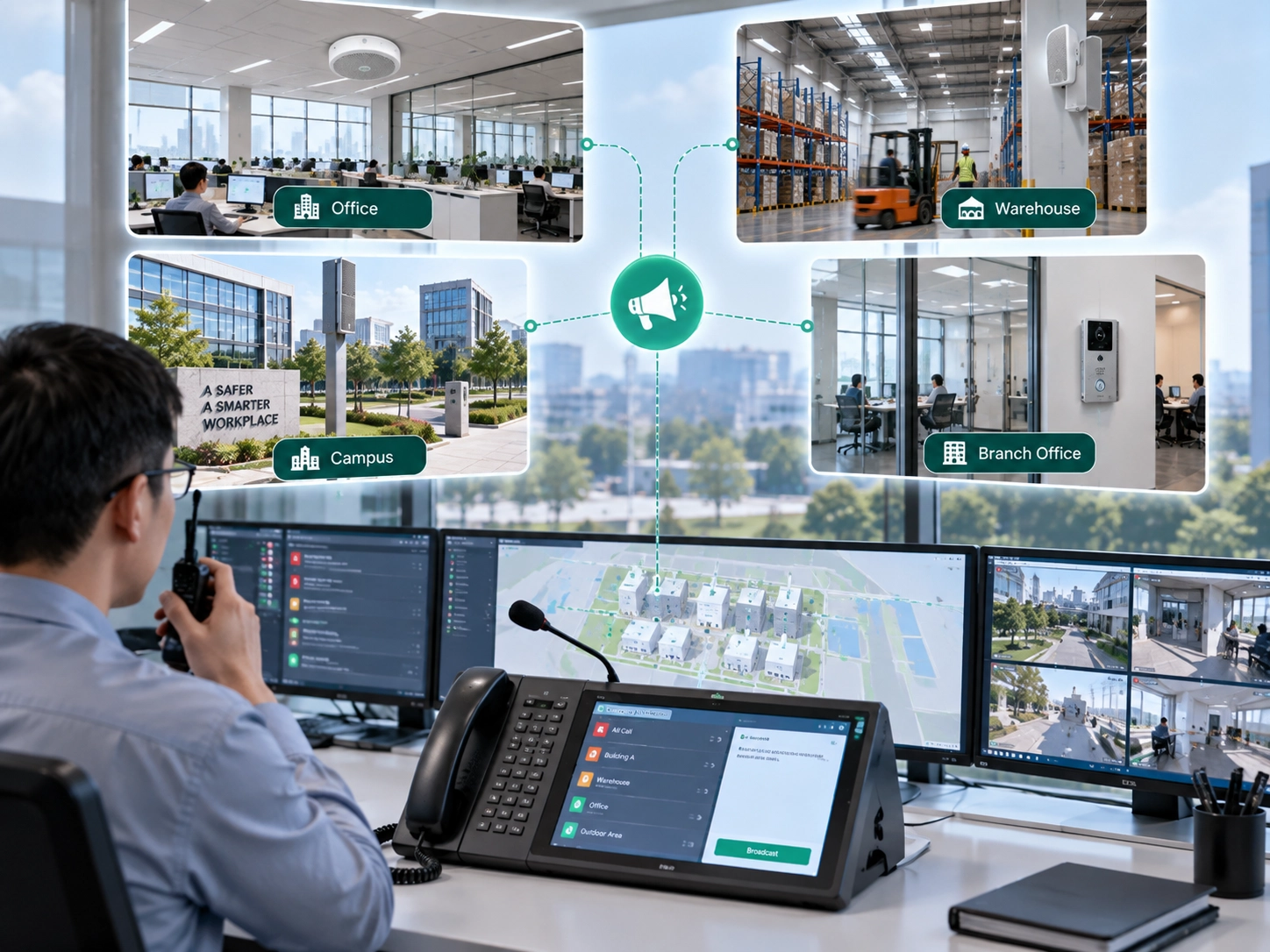
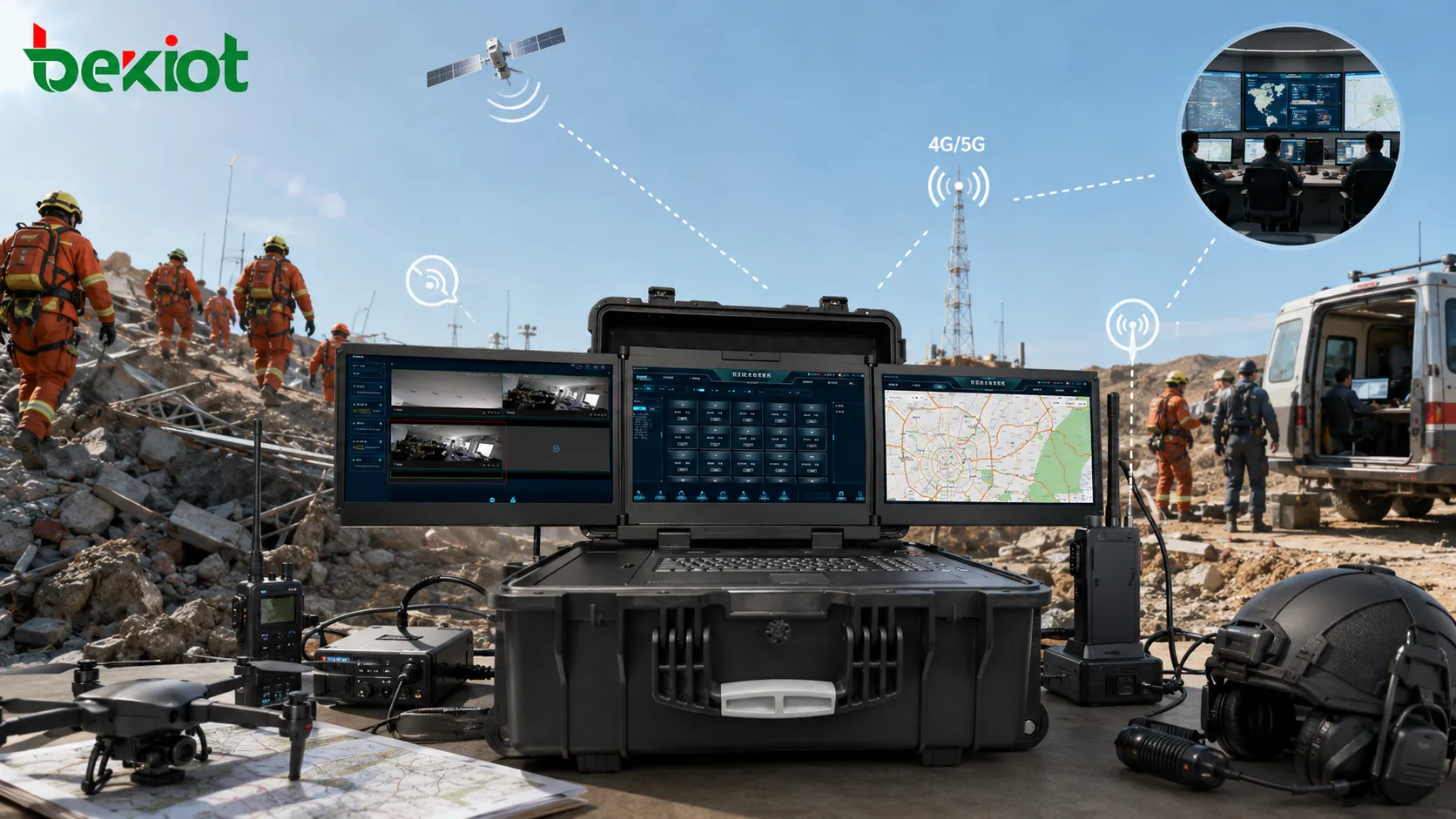
Audio-video fusion helps field commanders combine radio dispatch, drone video, mobile cameras, GIS maps and rear command center collaboration.
Hardware Design for Harsh Rescue Conditions
Rugged enclosure and fast deployment
Field rescue equipment must handle transportation, vibration, rain, dust and frequent movement between sites. Many portable command boxes use rugged protective cases with waterproof, dustproof and shock-resistant structures. In outdoor rescue applications, an IP65-class protection level may be used depending on the product design.
The goal is simple: when the team arrives, the system should be ready. A well-designed command box reduces loose wiring, protects key modules and allows fast startup without complicated field configuration.
Battery power and independent operation
Power failure is common in disaster areas. A command box should support built-in battery power, external backup power or vehicle power input so it can operate when grid power is unavailable. Some video-intensive configurations may work for around 8 hours, while voice-focused or lower-power configurations may support up to 12 hours.
Battery life depends on screen size, radio modules, video processing load, network modules, temperature and usage mode. For mission-critical projects, spare batteries, charging plans, vehicle charging, battery health checks and backup power procedures should be planned before deployment.
Field interfaces that match real equipment
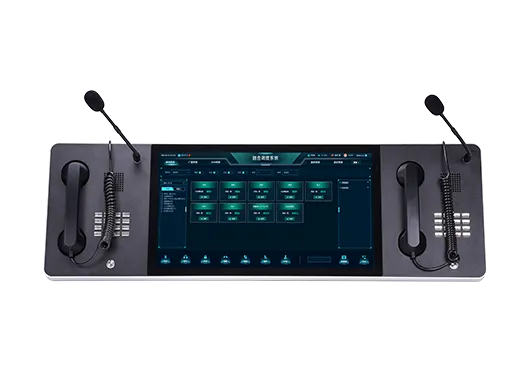
A practical command box may include Ethernet, radio access ports, audio input and output, telephone interfaces, fiber ports, HDMI or SDI video input, USB, Wi-Fi, Bluetooth, 4G/5G modules, satellite access and local control buttons. Some systems also include high-resolution touch screens, multi-screen displays or integrated keyboards.
Optical fiber extension can be useful when the command post must be kept away from dangerous areas. In some configurations, fiber links can extend communication distance up to 20 km, allowing operators to stay in a safer position while still connecting to field devices.
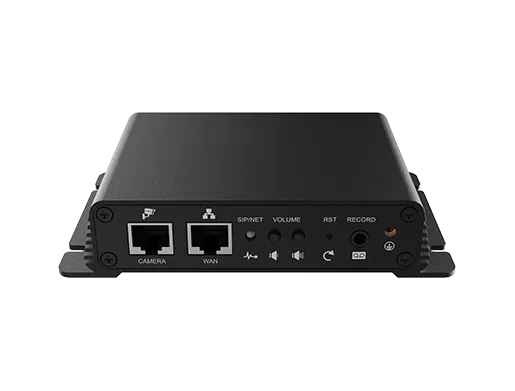
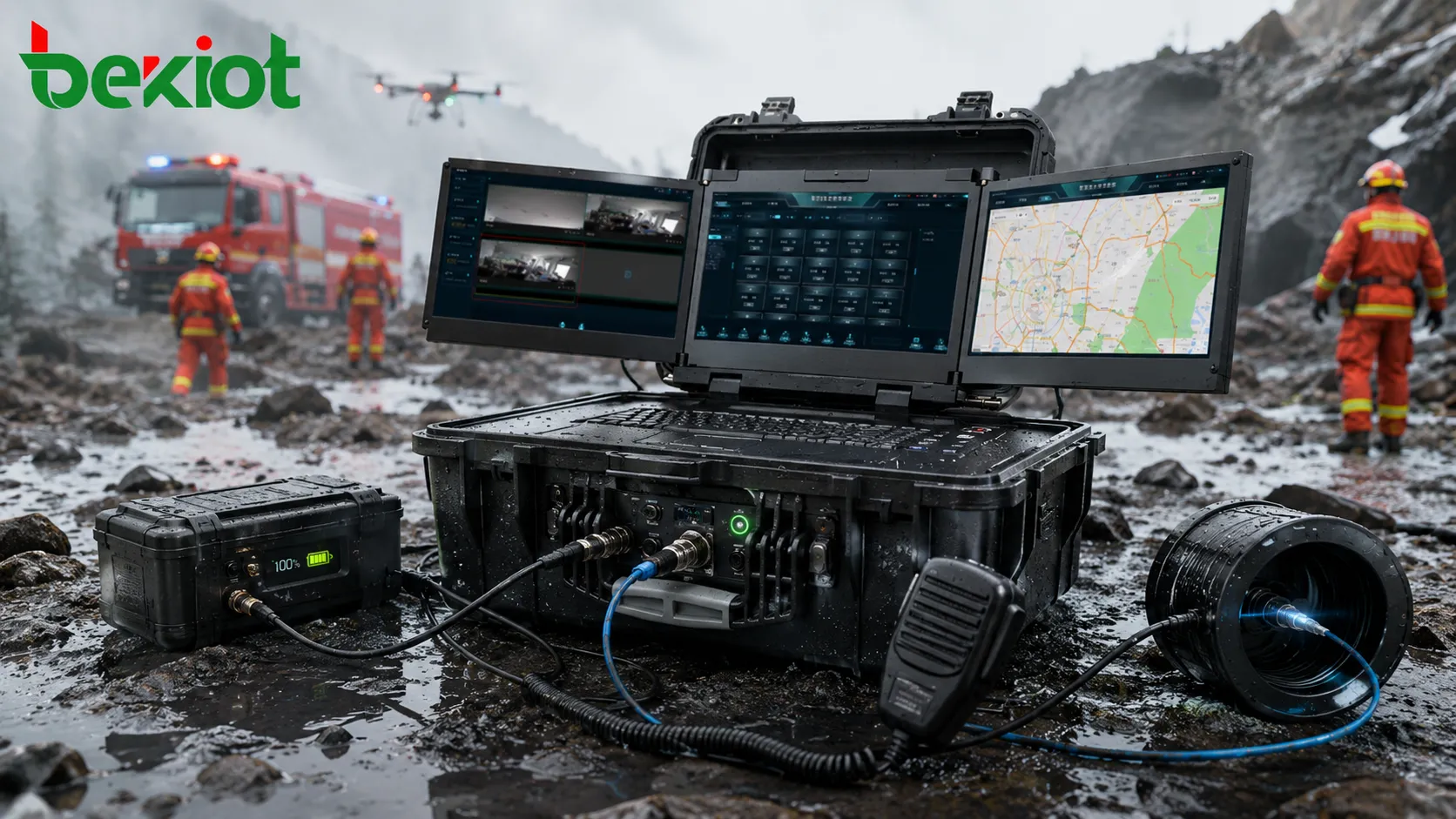
A rugged command case should combine protection, battery power, field interfaces, radio access and quick-start operation for demanding rescue environments.
Typical Emergency Communication Architecture
Field layer
The field layer includes two-way radios, public-network intercom terminals, body cameras, drones, portable cameras, satellite phones, mobile phones, emergency telephones, vehicle-mounted systems and temporary MESH nodes. These devices collect voice, video, positioning and status information from the rescue site.
This is where information first appears. If the field layer is disconnected, commanders lose visibility and rescue teams may work with incomplete instructions.
Command box layer
The command box receives and processes field information. It provides local voice dispatch, group communication, video preview, recording, protocol adaptation, local control and network backhaul. It can also bridge narrowband voice, broadband video, public networks, satellite links and IP-based dispatch systems.
In smaller incidents, the command box may serve as the main command terminal. In larger operations, it works as a forward node that connects the field scene with a city, county, enterprise or provincial command center.
Rear command layer
The rear command center may include GIS maps, video walls, emergency dispatch platforms, recording systems, conference systems, resource databases and multi-agency coordination tools. The command box sends selected voice, video and data streams back to this layer so remote leaders and experts can participate in decision-making.
Application Scenarios
Public safety and fire rescue
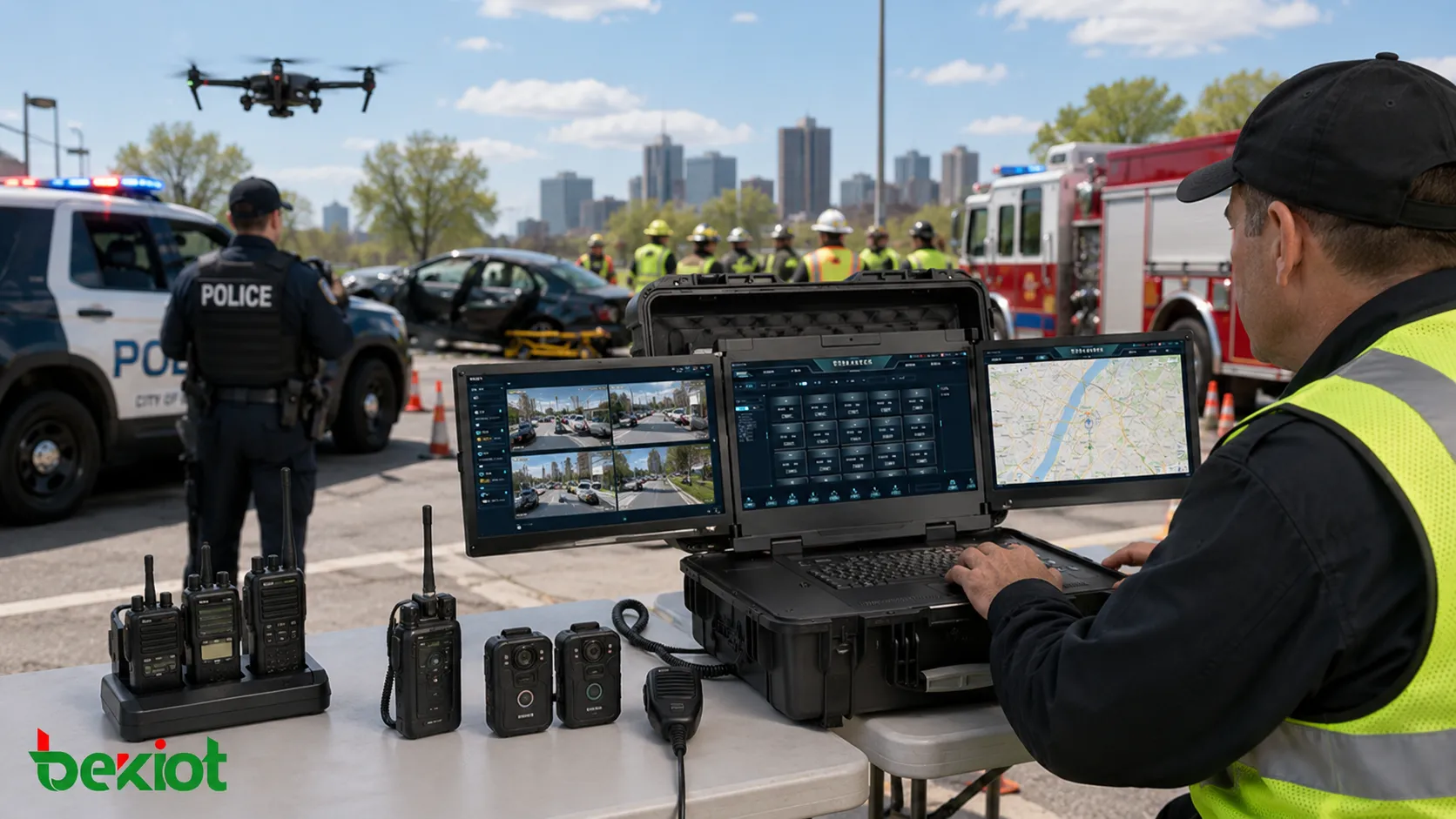
In fire rescue, explosion response, urban search and rescue and hazardous incident management, a portable command box can support team communication, radio grouping, video backhaul and remote command collaboration. When connected with drones and body cameras, it helps commanders understand dangerous zones and rescue routes more clearly.
Transportation, tunnels and underground spaces
Tunnels, mines, underground pipe galleries, subways and basements often have weak or unstable public network coverage. A command box can connect radio systems, MESH networks, fiber extension, satellite and 4G/5G links to build a temporary communication path for accident handling, inspection support and emergency evacuation.
Energy, forestry and industrial sites
Oil and gas fields, power facilities, chemical plants, forests, reservoirs, ports and construction areas often require mobile command during incidents or emergency drills. The command box can integrate radio communication, video monitoring, emergency phones, dispatch platforms and field teams into one working response environment.
For industrial and energy users, the system can also connect with alarms, surveillance, access control and public address systems to support a wider emergency workflow.
Deployment Considerations
Start from the emergency workflow
The first step is not choosing the largest screen or the most ports. The first step is defining the rescue workflow. The project team should identify who uses the system, which teams must communicate, what networks are available, what video sources must be connected and how information should be sent to the rear command center.
This prevents overbuilding and helps ensure the command box fits real operations instead of becoming a complicated device that is difficult to use under pressure.
Plan network redundancy
A reliable emergency communication system should not depend on one network path. Public 4G/5G, private radio, MESH, satellite, optical fiber and Ethernet each have strengths and limits. A practical deployment should define primary links, backup links and emergency fallback routes.
When public networks are congested, MESH or satellite may be needed. When satellite bandwidth is limited, voice and low-bitrate video should receive priority. When the command post must stay away from danger, fiber extension or relay nodes may be more suitable.
Keep field operation simple
Emergency equipment must be easy to use when time is limited. One-key startup, preset communication groups, clear interface labels, simple dispatch controls and preconfigured network profiles can reduce training difficulty and response time.
The best system is not the one with the most functions on paper. It is the one that rescue teams can operate correctly when the weather is poor, the situation is changing and pressure is high.
Integration Options for Emergency Communication Projects
For projects that require SIP dispatch, Radio over IP integration, emergency telephones, industrial endpoints, voice gateways or field-to-center communication platform connectivity, Becke Telcom can be considered as a supporting integration option. These components can help connect on-site communication resources with dispatch centers, SIP systems, radio gateways and emergency response workflows.
Users, command levels, team grouping and field operation process
Avoids unnecessary complexity
Network access
4G/5G, MESH, satellite, private radio, fiber and Ethernet availability
Improves communication reliability
Video sources
Drone video, body cameras, vehicle cameras, fixed cameras and conference systems
Improves situational awareness
Power strategy
Battery runtime, spare battery, vehicle power and charging process
Supports independent field operation
Rear command linkage
Voice, video, data, GIS and dispatch platform connection
Enables front-rear coordination
Final Notes
A portable emergency command box brings the key functions of a command center to the rescue site. It can integrate multi-network access, radio communication, voice dispatch, video backhaul, battery power, rugged protection and front-rear command collaboration in one mobile system.
Its value is clearest in difficult environments such as public network failure, power interruption, remote locations, underground spaces, damaged infrastructure and multi-agency rescue operations. By connecting field teams, video sources, radio systems and the rear command center, the command box helps emergency work become faster, clearer and more coordinated.
For modern emergency response, the question is no longer whether field teams need communication equipment. The real question is whether that equipment can connect different systems quickly enough to support real-time command decisions.
FAQ
How often should a portable emergency command box be tested?
It should be tested before emergency drills, seasonal risk periods, major public events and important duty periods. Battery health, radio ports, SIM cards, satellite access, software login, video input and dispatch groups should all be checked regularly.
Is a multi-screen command box always better?
Not always. Multi-screen systems are useful when operators need to view maps, video and dispatch controls at the same time. A single-screen system may be better for lightweight teams that need faster transport, lower power consumption and simpler operation.
What should be prioritized when bandwidth is limited?
Voice command, emergency alerts, location data and key video streams should be prioritized. Non-essential high-resolution previews, large file transfers or secondary video sources can be reduced or delayed.
Can a command box work without public network coverage?
Yes, if it is equipped with alternatives such as private radio, satellite communication, MESH self-organizing network, local standalone dispatch or fiber-connected relay equipment. The exact capability depends on the selected configuration.
What training do operators need?
Operators should understand startup steps, group calling, radio bridging, video source selection, battery replacement, network switching, emergency fallback modes and how to send information to the rear command center. Scenario-based drills are usually more useful than classroom explanation alone.