SIP Column Speaker Solutions for IP Paging and Public Audio Systems
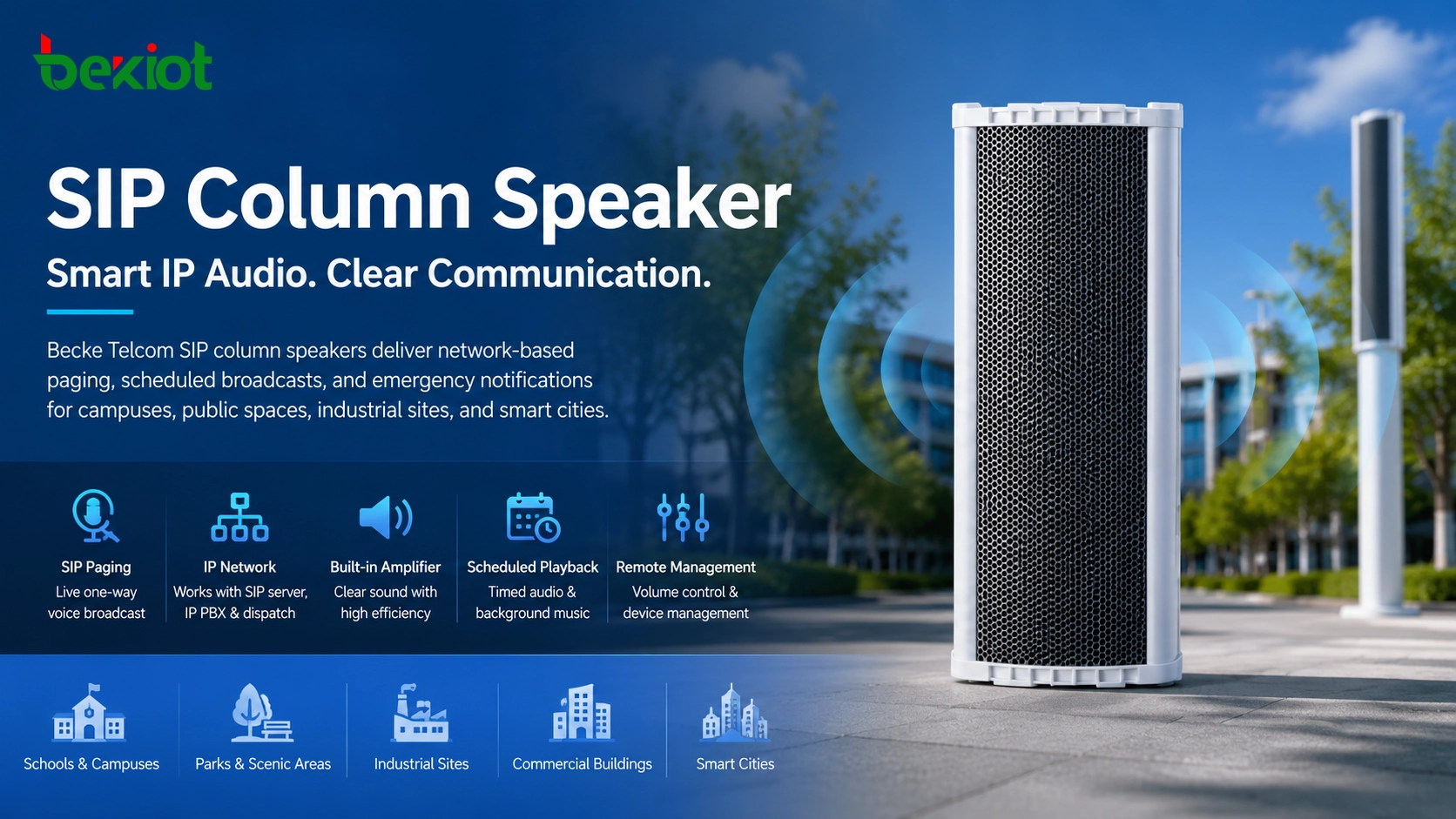
SIP column speakers bring network-based paging, scheduled broadcasts, public announcements, and emergency audio into one manageable IP communication system for campuses, parks, buildings, and industrial sites.
Becke Telcom
Public audio is no longer limited to simple analog broadcasting. In modern campuses, office parks, scenic areas, industrial sites, commercial buildings, and smart public spaces, audio systems are expected to do more than play background music or one-way announcements. They need to support live paging, scheduled playback, zone control, emergency messages, remote management, and integration with wider communication platforms.
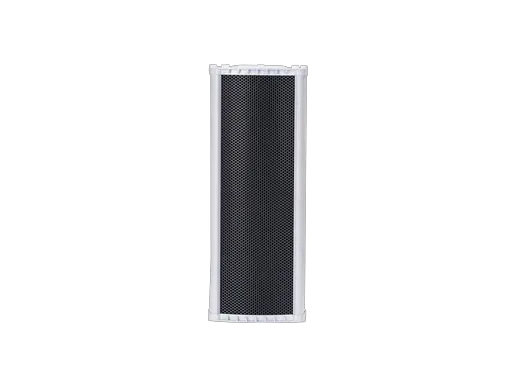
A SIP column speaker is designed for this type of connected audio environment. It works as an IP-based speaker endpoint that can receive audio through the network and deliver clear amplified sound to a specific area. Because it uses SIP and IP architecture, it can be integrated with SIP servers, IP PBX systems, paging consoles, dispatch platforms, intercom devices, and other IP audio terminals.
Becke Telcom positions the SIP column speaker as more than a speaker device. It is part of a practical communication infrastructure that helps organizations manage daily announcements, public service audio, operational notices, and emergency broadcasts in a more flexible and scalable way.
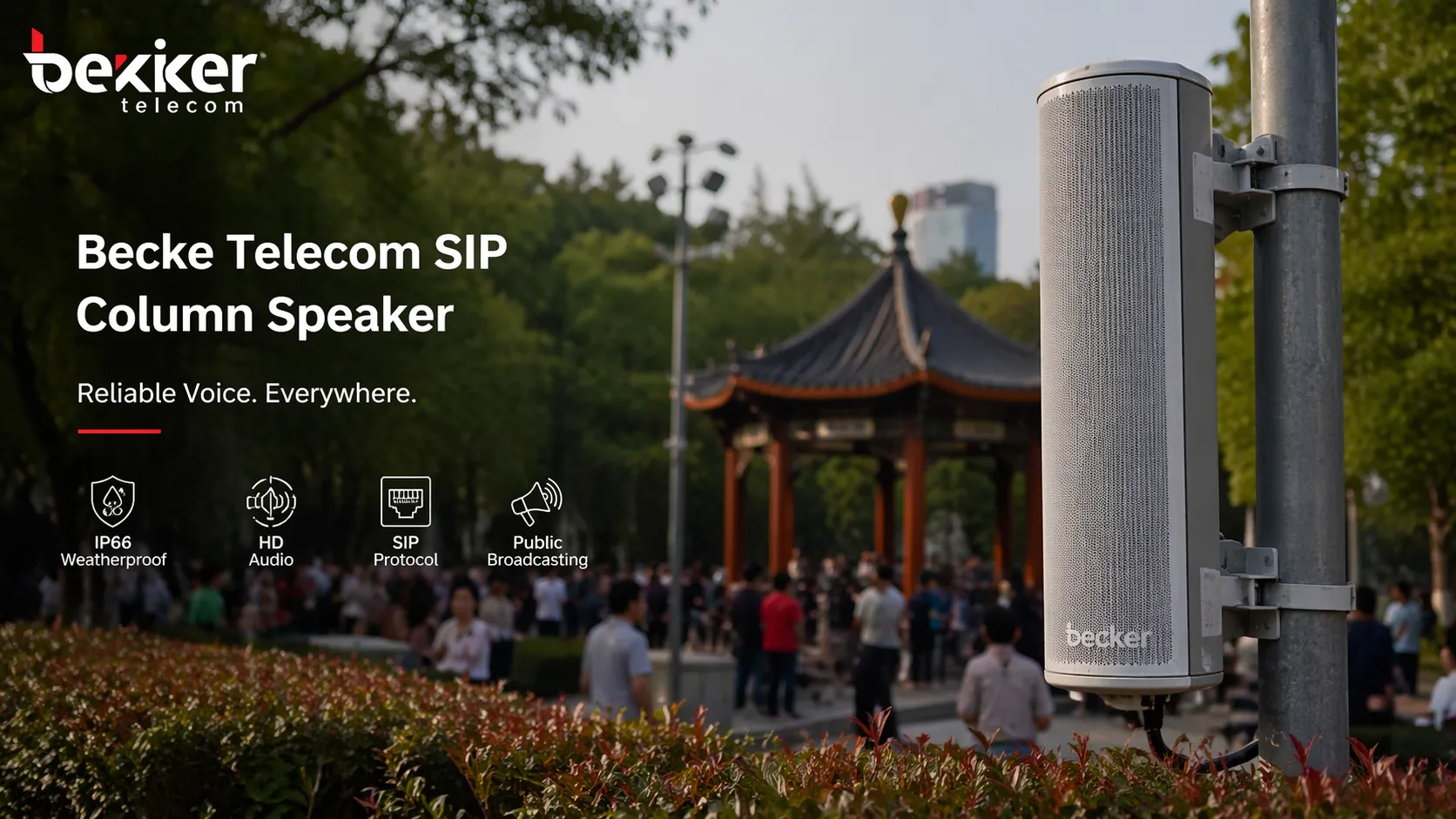
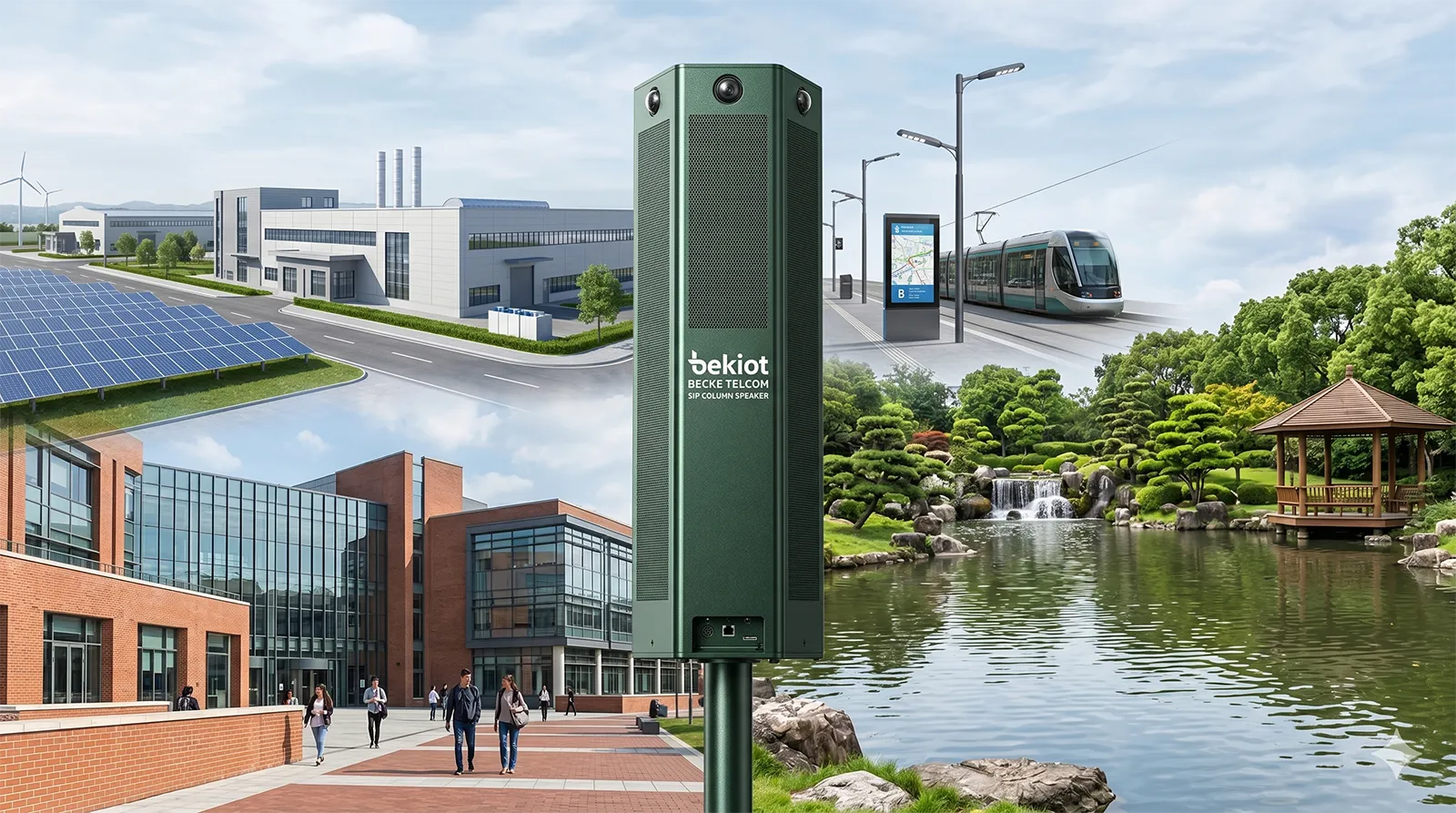
Becke Telcom SIP column speakers help extend centrally managed IP audio to outdoor and distributed environments.
What a SIP Column Speaker Is
A SIP column speaker is a network audio endpoint that registers to a SIP-based communication platform and plays audio through its built-in amplifier and speaker unit. Unlike a traditional analog loudspeaker that depends on fixed audio lines and centralized amplifiers, a SIP column speaker can receive voice or media streams over an IP network.
In real projects, this makes the speaker suitable for live announcements, background music, timed broadcasts, class bells, safety reminders, emergency messages, and zone-based paging. It can be installed in public spaces, building corridors, outdoor walkways, factory zones, parks, schools, visitor areas, and other locations where clear audio coverage is needed.
The value of this device comes from its connection to a broader system. Once it becomes part of a SIP or IP audio platform, the speaker can be grouped, scheduled, controlled, monitored, and integrated with other communication resources. This moves public audio away from isolated playback and toward a more manageable communication workflow.
A SIP column speaker turns public audio into a controllable part of the communication system, not just a sound output device.
How It Works in an IP Audio System
In a typical deployment, the SIP column speaker is connected to the network through Ethernet or another supported access method. After network configuration, it registers to a SIP server, IP PBX, broadcast management platform, or paging system. Operators can then send live voice, scheduled content, multicast audio, or event-triggered messages to the speaker.
The system may send audio to one speaker, one group, one building, one outdoor area, or all speakers across the project. This depends on how the devices are grouped and how paging permissions are configured. For example, a school may divide speakers by teaching building, playground, dormitory, and gate area. A scenic area may divide speakers by entrance, path, viewing platform, service center, and parking lot.
Because the speaker is IP-based, expansion is more flexible than in many traditional analog systems. New zones can often be added by connecting more endpoints to the network and assigning them to the correct groups. This is especially useful for projects that grow in stages.
Main Functions That Matter in Projects
Network audio playback
The basic function of a SIP column speaker is to receive audio over the network and play it clearly in the target area. Audio may come from a SIP paging terminal, IP PBX, dispatch console, broadcast server, scheduled playback system, or management platform.
This function supports daily announcements, operational notices, public information, background music, and routine broadcast tasks. Compared with analog public address systems, network audio allows more flexible placement and easier long-term expansion.
SIP paging and live announcements
SIP paging allows authorized users to make live announcements through SIP phones, paging microphones, dispatch consoles, or software platforms. A manager can page one area, several zones, or the whole site depending on the operational need.
This is useful in campuses, office parks, shopping areas, factories, and public buildings where staff need to deliver fast voice messages without walking to a dedicated broadcast room.
Multicast broadcasting
In large systems, multicast can help distribute the same audio stream to multiple speakers more efficiently. This is valuable when many endpoints need to play the same announcement or emergency message at the same time.
For large outdoor spaces, smart parks, school campuses, industrial yards, and public infrastructure projects, multicast support can reduce network pressure and improve synchronized message delivery.
Built-in amplification
A SIP column speaker usually includes built-in amplification, which allows the device to receive network audio and output sound directly. In many standard deployments, this reduces the need for separate local amplifiers and simplifies wiring.
For distributed projects, this integrated design can improve installation efficiency. It also makes maintenance easier because each speaker endpoint can be managed as a network device rather than as part of a complicated analog chain.
Remote volume control
Volume control is important in real audio projects. A speaker used for background music may need a lower level during normal hours, while emergency notices may require stronger output. A SIP-based system can support remote volume adjustment through the platform or device settings.
This allows operators to adapt audio output to different times, locations, and event types. It also helps reduce unnecessary disturbance while still keeping emergency communication effective.
Flexible connectivity
Some projects may require more than wired Ethernet. Outdoor attractions, temporary sites, roadside areas, or remote public spaces may have limited cabling conditions. In these cases, flexible network access such as 4G-supported deployment can be considered depending on the system design.
Becke Telcom focuses on practical deployment planning. The best network method should be selected according to site distance, stability requirements, maintenance access, installation cost, and long-term operation needs.
Device identification and maintenance support
In large systems with many endpoints, maintenance efficiency matters. Clear device naming, IP address voice prompts, remote configuration, and status checking can help technicians identify each speaker quickly during installation and troubleshooting.
These details may look small, but they reduce commissioning errors and make daily management much easier, especially in multi-building or outdoor distributed projects.
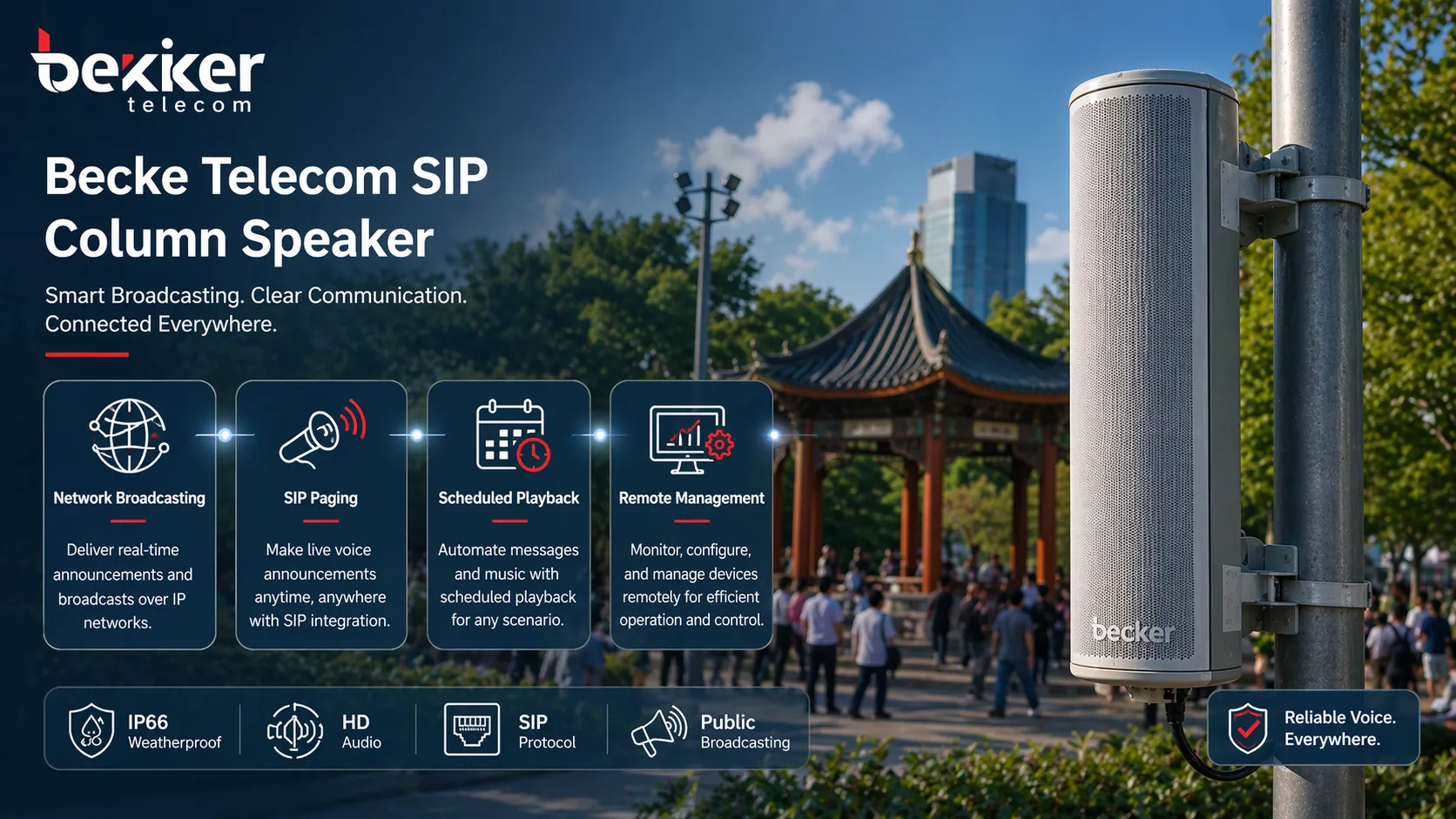
SIP column speaker systems combine network playback, SIP paging, zone control, scheduled audio, and centralized management.
Where SIP Column Speakers Are Used
Commercial buildings, malls, and hotels
In commercial buildings and hospitality environments, SIP column speakers can be used for background music, floor announcements, service notices, promotional messages, and emergency instructions. They help property managers create a more organized audio environment while maintaining control from a central platform.
When connected with SIP phones or paging terminals, staff can make live announcements to selected areas without relying on a separate legacy broadcast system.
Schools and education campuses
Schools need both routine and urgent audio functions. SIP column speakers can support class bells, exam listening content, campus announcements, activity notices, safety reminders, and emergency broadcasts.
Devices can be grouped by classroom building, playground, dormitory, canteen, gate area, or administrative zone. This helps campus staff send the right message to the right area instead of broadcasting every message to the entire school.
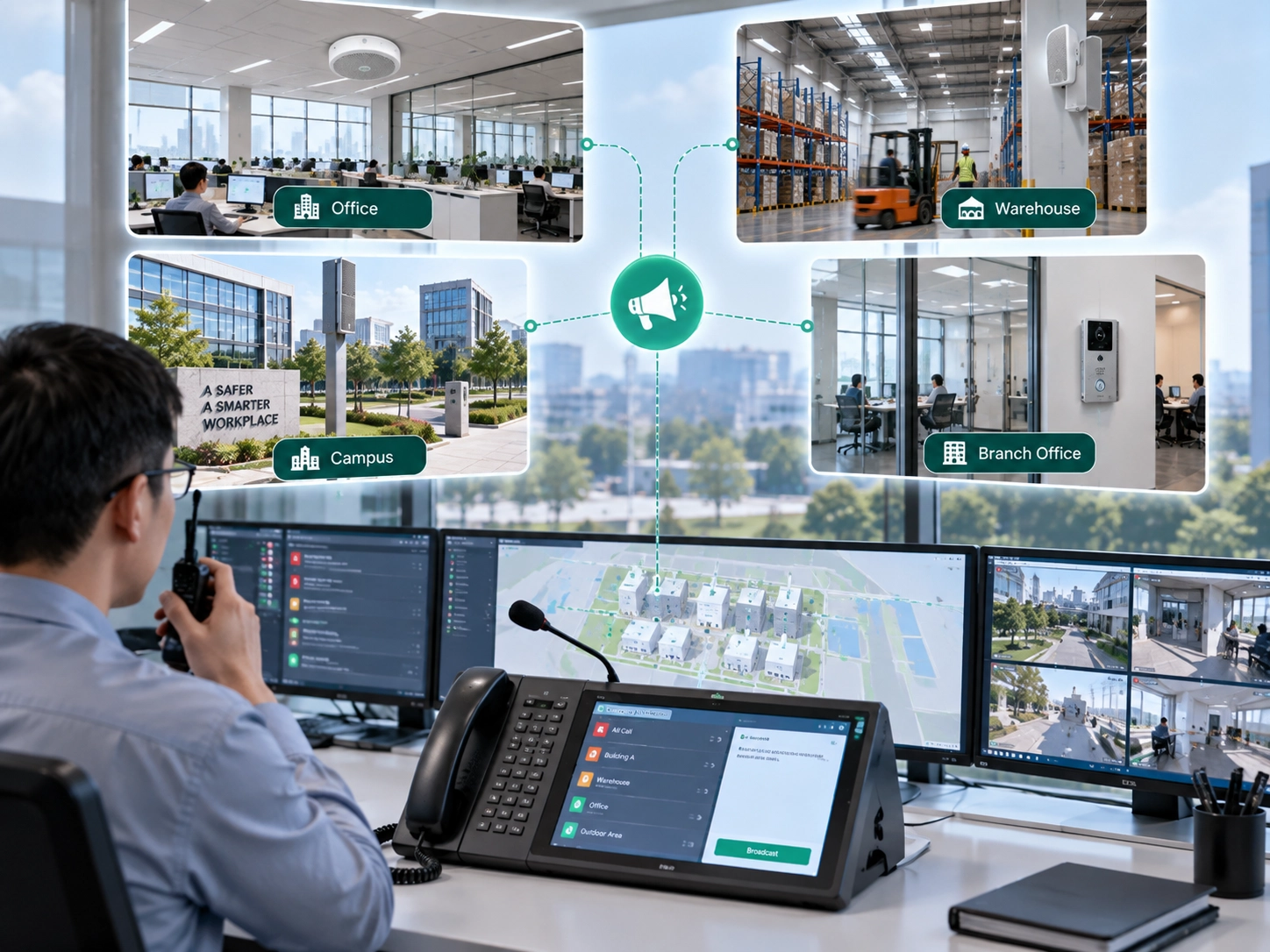
Office parks and enterprise campuses
In office parks and enterprise campuses, SIP column speakers can support visitor guidance, staff notices, safety communication, vehicle area announcements, and daily operational messages. They also fit naturally into a wider SIP communication environment that may include IP phones, intercoms, paging consoles, and dispatch platforms.
This makes the speaker a useful extension of the organization’s communication system rather than a separate audio tool.
Parks, scenic areas, and outdoor attractions
Scenic areas and parks often need clear outdoor audio across entrances, paths, open squares, visitor centers, parking areas, and service points. SIP column speakers can be used for background music, scenic introductions, route guidance, safety notices, lost-person announcements, and emergency alerts.
In smart scenic area projects, IP speakers can also connect with visitor service systems, security monitoring, help points, and control center platforms. This creates a more complete public service and safety communication network.
Factories, warehouses, and industrial facilities
Industrial sites need reliable audio for shift notices, safety reminders, production coordination, emergency warnings, and evacuation instructions. SIP column speakers can be deployed in workshops, warehouses, loading zones, outdoor yards, and service areas.
For industrial communication projects, audio should not work alone. It may need to integrate with SIP intercom, IP PBX, dispatch systems, emergency call points, and incident response workflows. This is one of the areas where Becke Telcom’s communication system experience is especially useful.
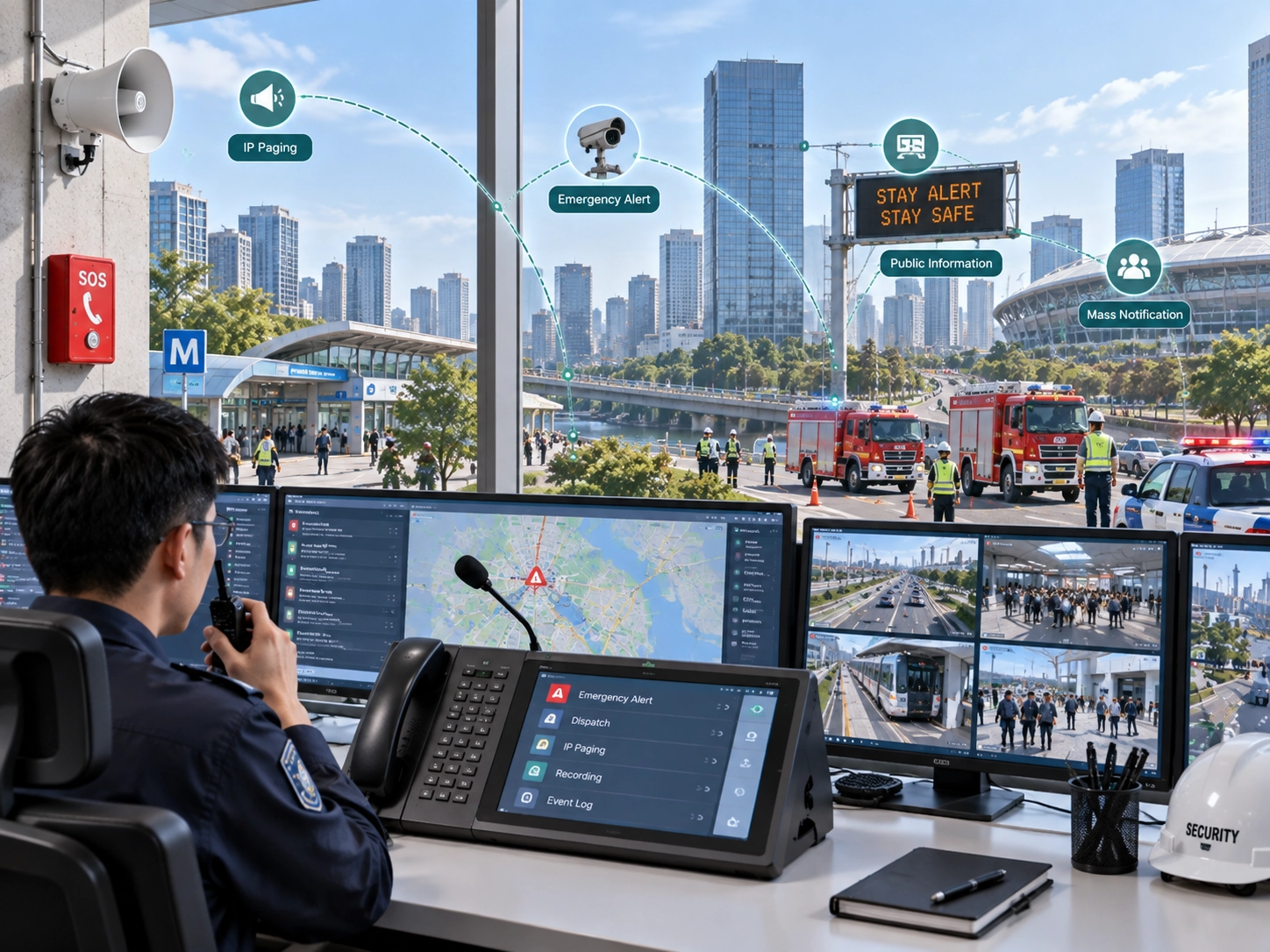
Smart city and public infrastructure
Public infrastructure projects often need distributed audio for public information, area guidance, emergency notices, and service announcements. SIP column speakers can support this need through centralized IP management and flexible network deployment.
When connected with monitoring, dispatch, help points, and communication platforms, audio becomes part of the smart city service framework rather than an isolated broadcast subsystem.
Configuration and Management Process
Network setup
The first step is to configure the speaker’s network parameters, such as IP address, subnet mask, gateway, and related access settings. In many professional projects, static IP addressing is preferred because it makes device identification and maintenance more predictable.
Once connected, the speaker becomes part of the customer’s IP audio network and can be discovered, grouped, tested, and managed through the platform.
SIP registration
SIP registration usually includes server address, SIP account, authentication password, port settings, and related communication parameters. After registration, the speaker can receive SIP paging calls, platform-controlled audio, and other supported broadcast tasks.
This is the step that turns the speaker from a passive audio device into a managed SIP communication endpoint.
Grouping and permissions
Good grouping is essential for practical operation. Speakers can be organized by building, floor, outdoor zone, functional area, department, or project stage. This makes it easier for operators to send different messages to different areas.
Access control is also important. Not every user should be able to broadcast to every zone or change device settings. Password protection and permission management help keep the system secure and orderly.
Daily operation
After deployment, SIP column speakers can support scheduled playback, routine announcements, live paging, emergency audio, and event-triggered messages. In schools, this may include bells and notices. In scenic areas, it may include visitor guidance. In factories, it may include safety reminders and operational alerts.
The value of Becke Telcom’s approach is that these tasks can be planned as part of a complete communication workflow instead of being treated as separate audio functions.
Becke Telcom SIP column speakers are suitable for campuses, scenic areas, industrial sites, commercial buildings, and smart public environments.
Advantages Over Traditional Broadcast Systems
Traditional public address systems are often based on analog wiring, centralized amplifiers, and fixed broadcast zones. This structure can work well in simple buildings, but it becomes less flexible when a project needs remote management, phased expansion, SIP integration, smart scheduling, or multi-site control.
SIP column speakers move audio delivery onto the IP network. This makes deployment more flexible because speakers can be placed wherever the network reaches. It also makes the system easier to expand because new endpoints can be added as the project grows.
Another major advantage is integration. A SIP speaker can work with IP PBX systems, SIP phones, visual paging consoles, dispatch platforms, intercom devices, and broadcast management software. This allows voice communication and public audio to share the same communication foundation.
Long-term management is also improved. Administrators can adjust volume, manage groups, schedule playback, check endpoint status, and maintain devices remotely. For campuses, public spaces, scenic areas, and industrial projects, this reduces maintenance pressure and improves daily efficiency.
Traditional broadcast systems mainly play sound. SIP column speaker solutions help organizations manage audio as part of a connected communication platform.
Remote Control and Centralized Operation
Remote management is one of the most practical advantages of a SIP column speaker system. Operators can manage distributed speakers from a software platform, web interface, paging console, or centralized control system. They can launch live announcements, schedule content, change groups, adjust volume, check device status, and perform maintenance tasks without visiting each endpoint.
In large projects, this may also include batch configuration, remote restart, task scheduling, endpoint monitoring, and system-level maintenance records. For organizations managing many buildings or outdoor areas, centralized operation can save time and reduce long-term service cost.
Becke Telcom emphasizes maintainable system design because a communication system should not only work at installation. It should remain easy to manage throughout its lifecycle.
Future Direction of IP Audio
SIP column speakers are part of a broader shift toward converged communication. Public audio is becoming more connected with telephony, intercom, video, alarms, dispatch, and smart management systems. Instead of treating broadcasting as a separate system, organizations increasingly want audio to support operational coordination and emergency response.
Future IP audio systems are likely to become more intelligent, more integrated, and easier to manage remotely. They may support better automation, stronger platform compatibility, richer status monitoring, and closer connection with event-based workflows.
For Becke Telcom, this direction is clear. SIP-based audio endpoints are an important part of building modern communication systems for smart campuses, public service areas, industrial sites, and connected infrastructure.
Why Choose Becke Telcom
Becke Telcom focuses on practical IP communication and broadcast solutions for real project environments. Customers are not only buying speakers. They are building systems for public communication, safety notification, visitor service, operational efficiency, and long-term centralized control.
Becke Telcom’s solution thinking covers SIP column speakers, SIP intercom, IP PBX, paging terminals, visual paging, zone broadcasting, mobile response, and platform-based management. This helps customers build a more connected audio and communication architecture instead of relying on isolated devices.
Whether the project involves a school, scenic area, industrial site, commercial building, office park, or smart city application, Becke Telcom can support system planning around network conditions, audio coverage, zone logic, operation workflow, and future expansion.
Final Notes
A SIP column speaker is more than a network-connected loudspeaker. It is an IP audio endpoint that can support live paging, scheduled playback, public announcements, emergency broadcasting, remote management, and integration with wider communication platforms.
For modern projects, its value comes from flexibility and control. It allows audio to be managed by zone, connected with SIP systems, expanded through the network, and maintained remotely. This makes it a practical choice for campuses, parks, scenic areas, commercial buildings, industrial facilities, and smart public infrastructure.
Becke Telcom provides SIP audio solutions that help organizations build clearer, smarter, and more manageable public communication systems.
FAQ
What does a SIP column speaker do?
A SIP column speaker receives audio over an IP network and plays it through its built-in amplifier and speaker system. It is commonly used for live paging, scheduled announcements, background music, public notices, and emergency broadcasting.
Can a SIP column speaker work with an IP PBX?
Yes. A SIP column speaker can register to a compatible SIP server or IP PBX system, allowing it to receive SIP paging calls and work with SIP phones, paging terminals, and communication platforms.
Is a SIP column speaker suitable for outdoor applications?
Yes. Many SIP column speaker deployments are used in outdoor environments such as parks, scenic areas, school campuses, public squares, industrial yards, and road-adjacent areas. The final selection should match the required durability and installation environment.
Can multiple SIP column speakers be managed together?
Yes. Devices can be grouped by building, floor, zone, or function area. This allows operators to manage zone paging, scheduled playback, emergency messages, and remote maintenance across many speakers from one platform.
Why choose SIP column speakers instead of traditional analog speakers?
SIP column speakers support IP networking, SIP integration, centralized management, remote configuration, flexible expansion, and better connection with modern communication platforms. This makes them more suitable for smart campuses, public spaces, industrial sites, and distributed infrastructure projects.