Integrated and Standalone Telephone Gateways for VoIP Access Design
Telephone gateway selection should consider interface type, access location, wiring distance, signal environment, expansion demand, and maintenance model, not only port count or hardware price.
Becke Telcom
A telephone gateway is a key access device in VoIP, softswitch, IP PBX, and unified communication projects. It connects IP-based communication platforms with traditional telephone lines, analog extensions, E1 trunks, conference audio systems, radio terminals, and other legacy or field-side communication resources.
In many projects, gateway selection is made too quickly. Some teams only compare the number of ports, device size, or hardware price. These factors matter, but they do not fully decide whether the gateway will work well after installation. A better design should also consider where the access resource is located, what interface is required, how the cable will be routed, how the signal environment behaves, and whether the system needs centralized or distributed deployment.
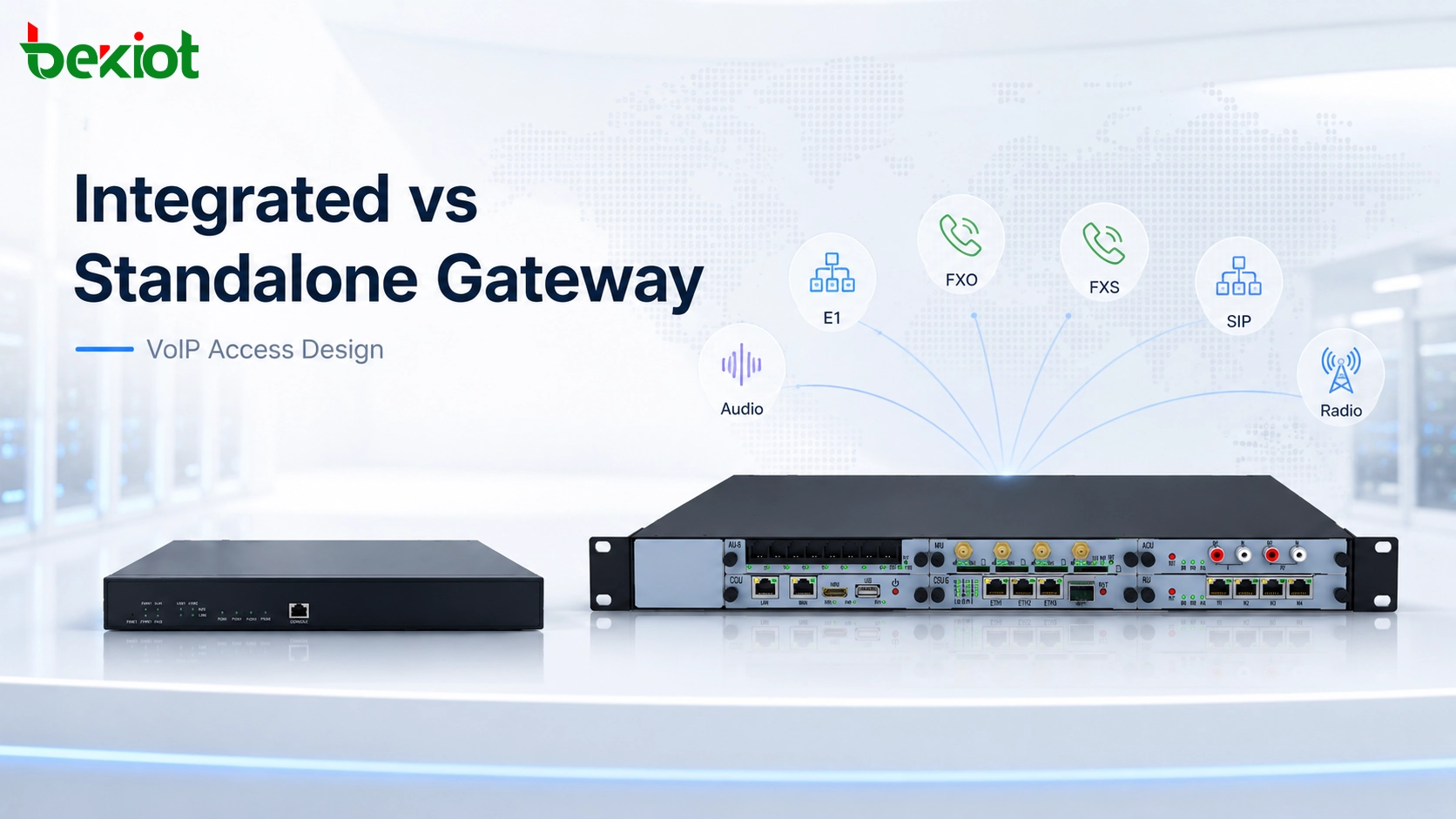
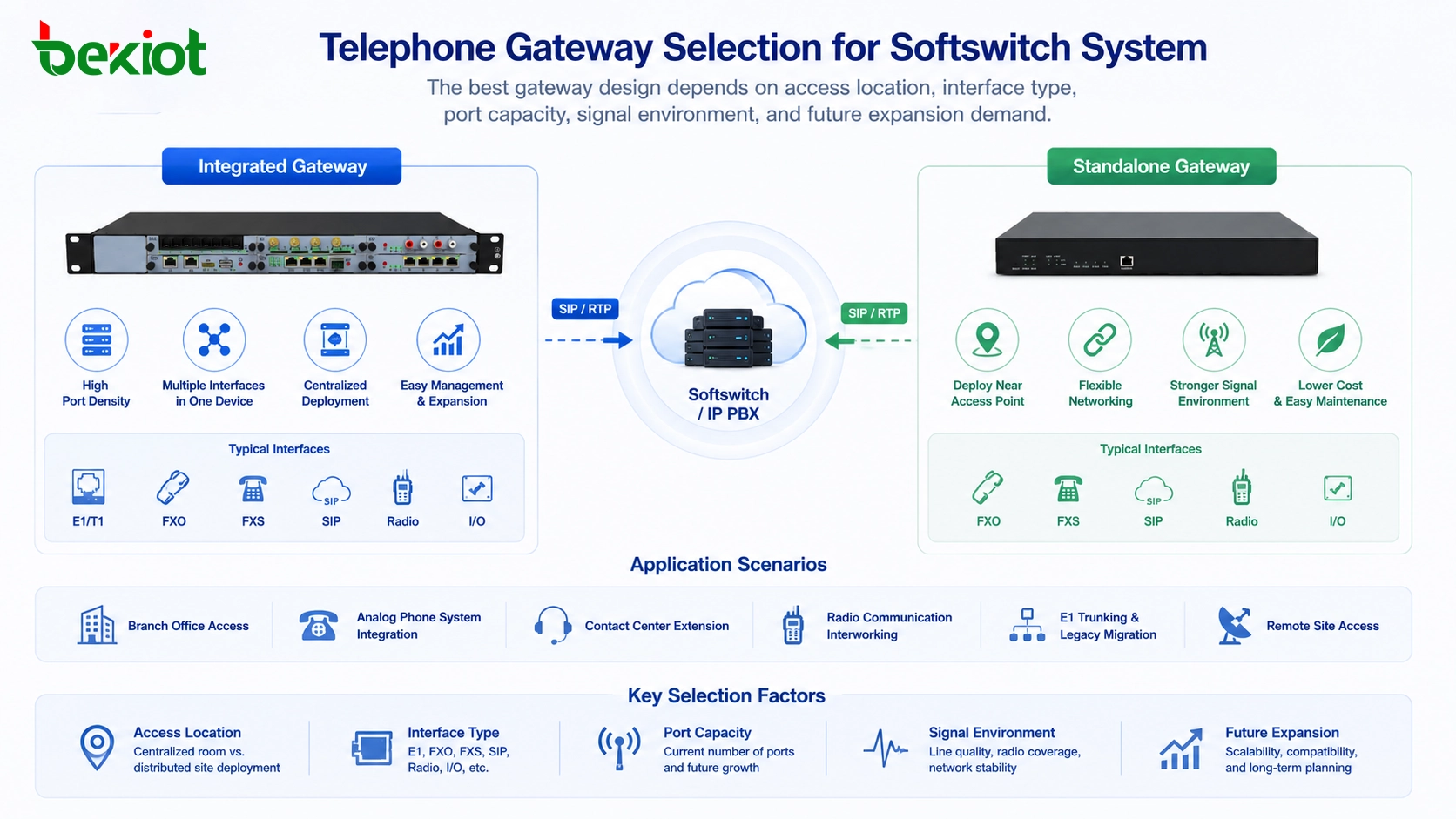
This is why telephone gateways are often discussed in two practical forms: integrated gateways and standalone gateways. An integrated gateway is usually built around a chassis or modular frame. A standalone gateway is usually a smaller independent device focused on one access function or a limited number of ports. Neither structure is always better. The right choice depends on the real project layout.
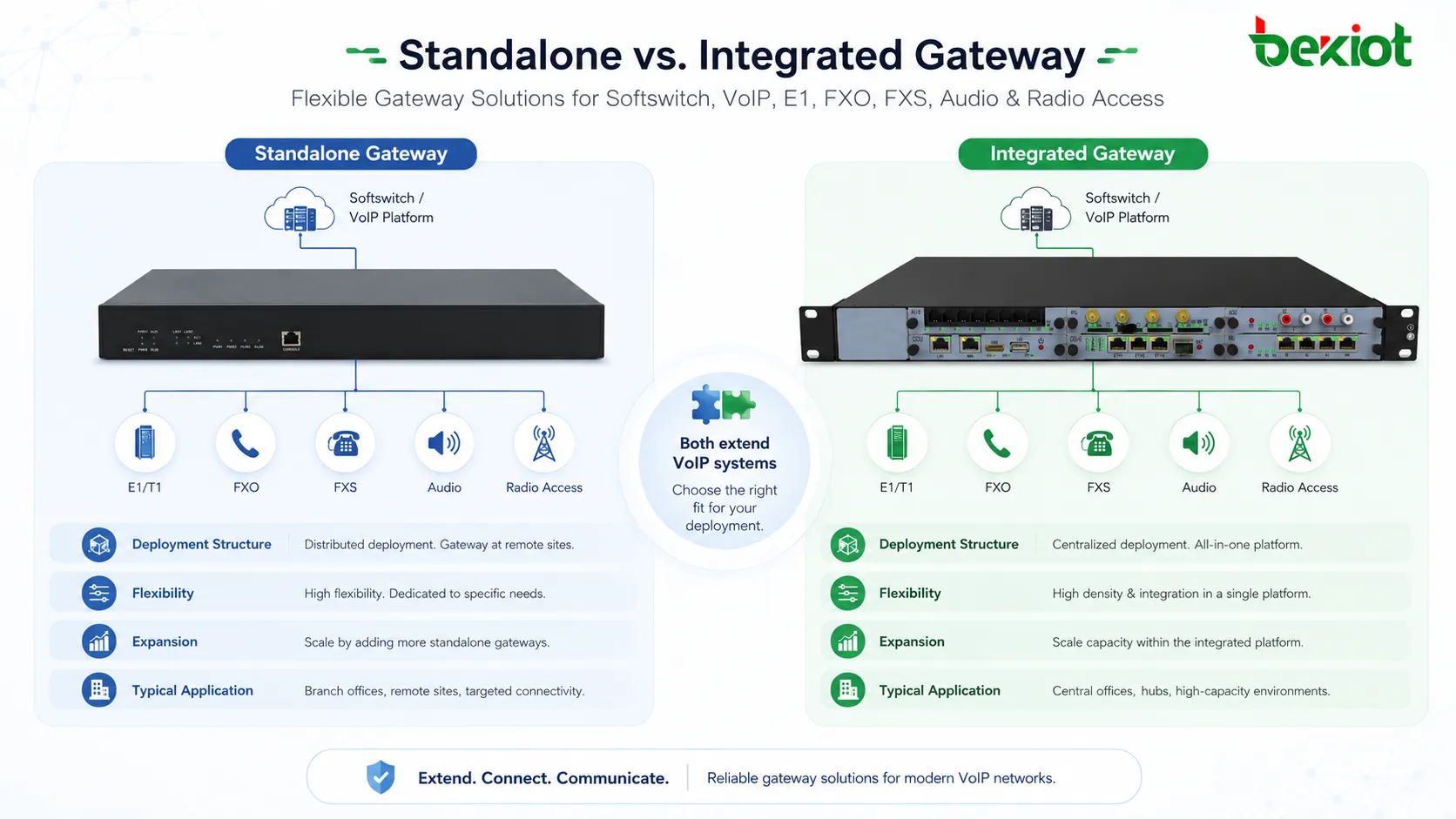
Integrated and standalone gateways both extend VoIP systems, but they fit different deployment structures and access locations.
Two gateway forms used in voice access projects
An integrated gateway usually adopts a chassis, frame, or modular board design. Different access functions are added through interface boards or service cards. For example, an E1 board can be used for digital trunk access, an FXO board can connect analog outside lines, and an FXS board can connect analog phones, fax machines, elevator phones, or old extensions.
This structure is similar to traditional large telephone exchange equipment. It is useful when many lines and interfaces are concentrated in one equipment room. Engineers can install the required boards in the same chassis, plan cabinet space and power supply together, and manage a large number of ports from one central location.
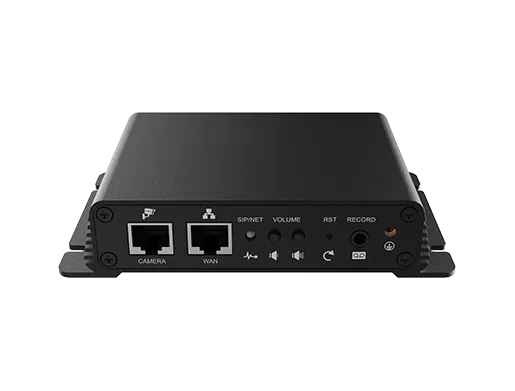
A standalone gateway is different. It is usually a compact independent device designed for a specific access task. An E1 gateway connects digital trunks. An FXO gateway connects PSTN analog lines or legacy PBX trunk ports. An FXS gateway connects analog endpoints. Some small office gateways may combine FXO and FXS ports for simple migration projects.
Where an integrated gateway is more efficient
An integrated gateway is suitable for centralized and high-density telephone access. If a project has many E1 trunks, analog outside lines, or analog extensions in the same communication room, a chassis-based design can reduce the number of separate devices installed in the cabinet.
For headquarters communication rooms, campus communication centers, large enterprise PBX migration projects, and carrier trunk access projects, this can make the system cleaner. The equipment room has one main gateway frame, unified power planning, centralized wiring, and a clearer maintenance area.
Expansion is another advantage. If the chassis still has available slots, power capacity, and system resources, new boards can be added later when more ports are required. This is useful when an organization is gradually migrating from traditional telephony to IP communication while still keeping some PSTN lines, E1 trunks, or analog endpoints.
When centralization becomes a problem
Centralized equipment is not always convenient. The disadvantage appears when the access resource is not located near the main equipment room. For example, a branch building may only need two analog outside lines. If the gateway is centralized in another building, the project may require long analog cable runs, line extension equipment, or additional transmission devices.
Conference audio integration has similar problems. An audio gateway often needs to be placed close to the mixer, audio processor, or conference system. If the gateway is locked inside a central chassis far away from the meeting room, wiring becomes longer and signal adaptation becomes more difficult.
Radio integration is even more sensitive to location. A radio gateway may need to be installed where the radio signal is better, where the antenna can be placed correctly, or where interference is lower. If the radio gateway is forced into a central cabinet only for neatness, the actual communication quality may not meet the project expectation.
Why standalone gateways fit distributed sites
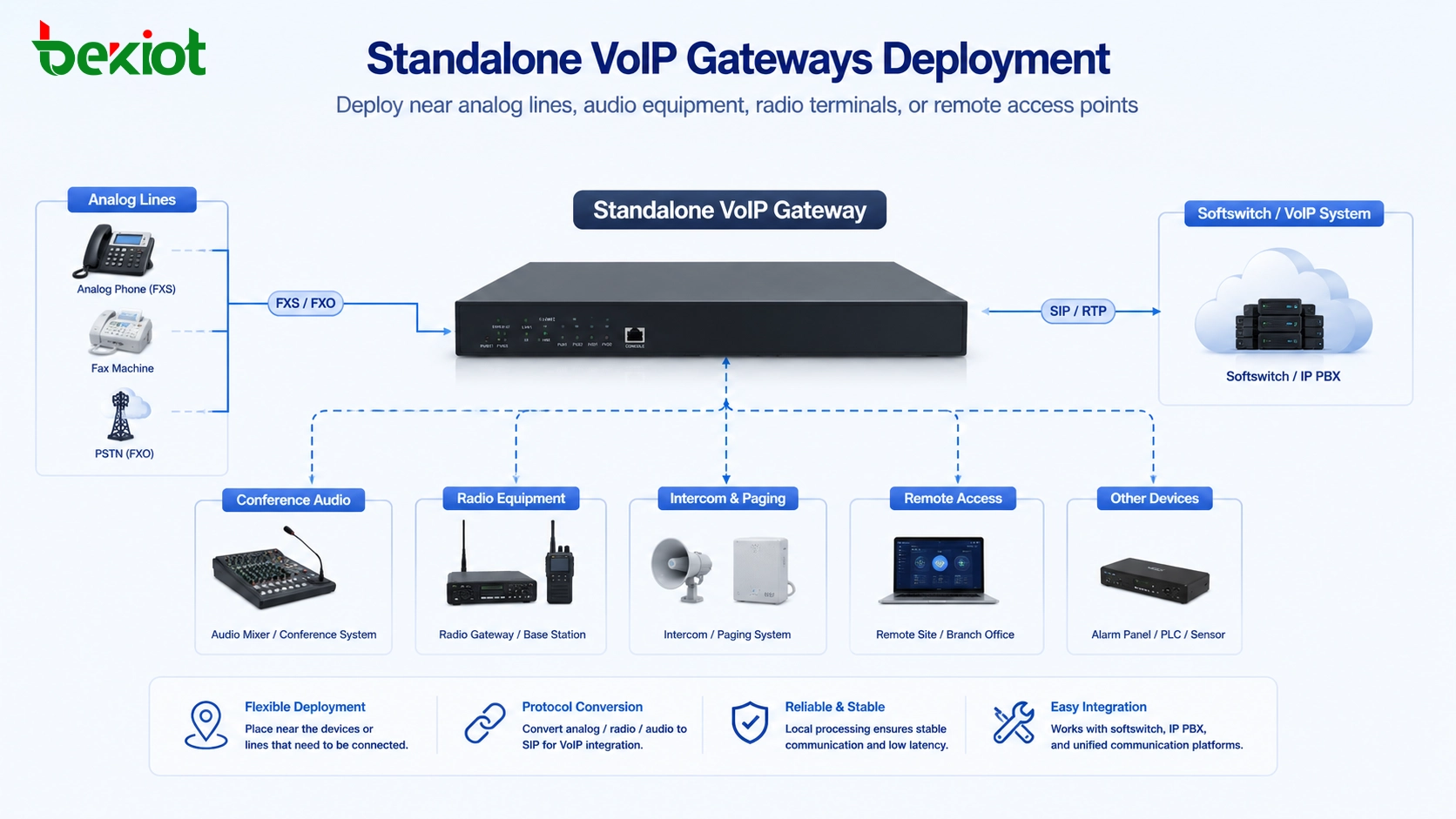
Standalone gateways are more flexible because they can be installed near the real access point. If analog PSTN lines are located in a branch office, an FXO gateway can be placed there. If analog phones are used in a workshop, an FXS gateway can be installed closer to the phones. If a radio terminal needs IP dispatch access, the radio gateway can be installed near the radio equipment and antenna system.
This distributed structure is practical for branch offices, temporary command rooms, industrial sites, factory areas, remote stations, meeting rooms, security posts, and radio access points. As long as the gateway can reach the SIP server, IP PBX, or softswitch through the network, it does not need to be physically close to the main platform.
Standalone gateways also make fault location clearer. If an analog trunk fails, engineers can check the FXO gateway at that site. If an analog extension does not register, they can check the local FXS gateway. If radio voice is unstable, they can check radio signal, antenna placement, audio cable, PTT control, and gateway registration separately.
Standalone gateways can be placed near analog lines, meeting room audio equipment, radio terminals, or remote access points.
Interface planning should come before product selection
Before deciding between an integrated gateway and a standalone gateway, the project team should first identify the required interface types. E1 gateways are commonly used for digital trunk connection. FXO gateways are used for analog outside lines or legacy PBX trunk ports. FXS gateways are used for analog phones, fax machines, emergency phones, elevator phones, and old analog extensions.
Audio gateways may be used to connect conference mixers, public address systems, analog audio equipment, or command room audio processors. Radio gateways may connect handheld radios, vehicle radios, base station radios, or trunked radio terminals, converting radio voice into SIP-based communication resources.
After the interface type is clear, the next step is to check the physical location of each access resource. If trunks, lines, and extensions are all in one equipment room, a centralized integrated gateway may be reasonable. If resources are distributed across buildings, rooms, branches, or field areas, standalone gateways usually provide a more practical path.
Gateway cost should not be calculated only by the purchase price of the device. A real project also needs to consider cabinet space, cable distance, power supply, installation labor, spare parts, maintenance access, and future expansion.
A chassis gateway may look more expensive at the beginning, but it can be cost-effective when many ports are centralized. One frame can replace several scattered devices, simplify cabinet planning, and make high-density access easier to manage.
On the other hand, a small standalone gateway may be more economical when only a few ports are needed at a remote point. It can avoid long analog cable routes and use the existing IP network for transmission. In distributed sites, this can reduce construction complexity and improve maintenance efficiency.
Long-term operation should also be considered. If a project uses many independent gateways, the system should support centralized monitoring, configuration backup, firmware management, and log checking. If a project uses an integrated chassis, spare board availability, power redundancy, and chassis capacity should be reviewed early.
A mixed design is often the practical answer
Many real projects do not use only one gateway form. A softswitch or unified communication platform may use an integrated gateway for centralized E1 trunks and high-density analog access, while using standalone gateways for branch offices, conference audio, remote analog lines, radio systems, and temporary command points.
This hybrid structure combines the strengths of both models. Centralized resources stay in the main communication room. Distributed access points use smaller gateways placed closer to the actual signal source. The SIP platform or softswitch then manages all gateways as part of the same communication network.
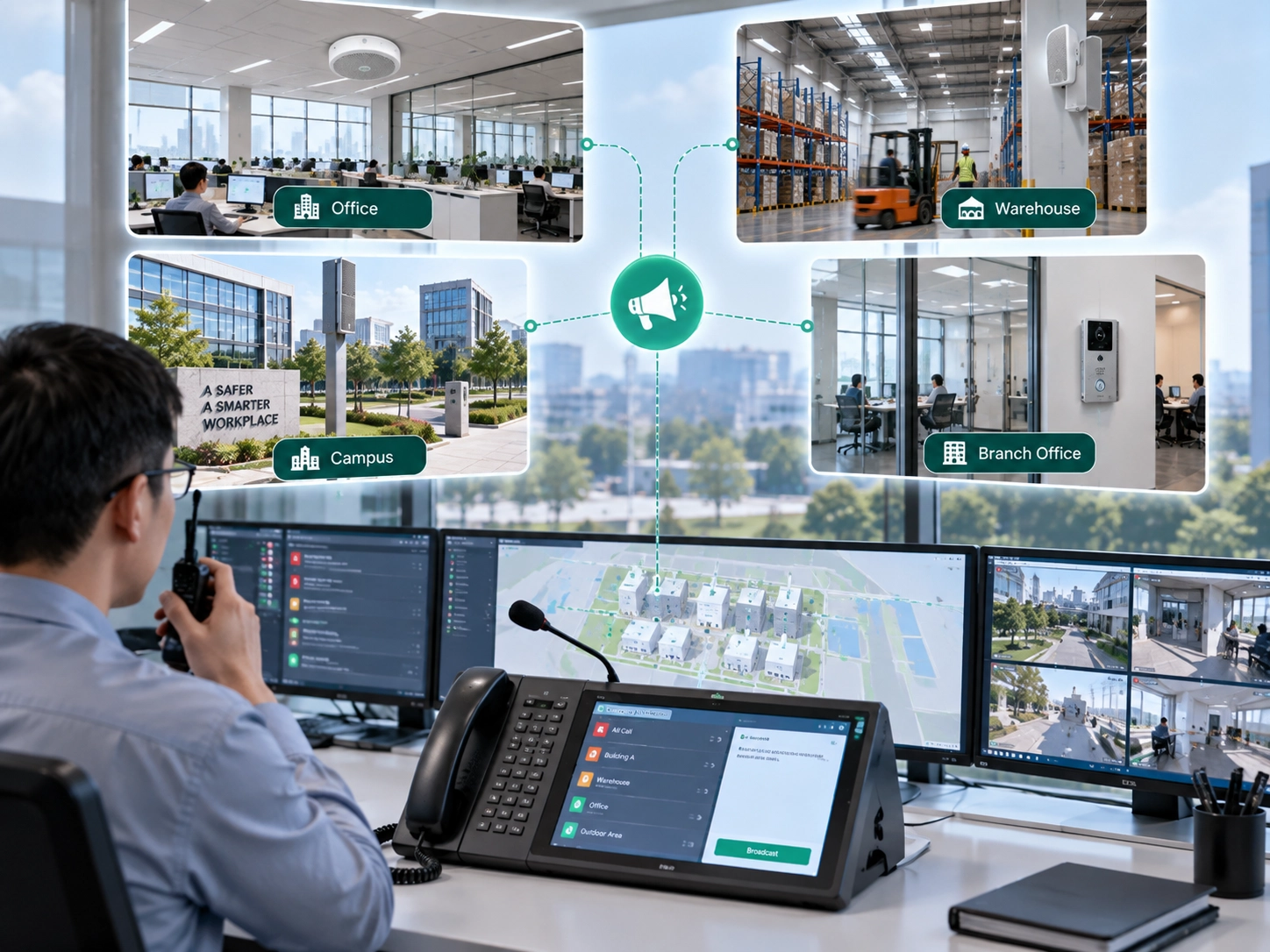
For example, a campus communication system may use an integrated gateway in the central equipment room for main trunk access. At the same time, standalone FXO or FXS gateways can be installed in security rooms, workshops, utility buildings, or duty rooms. A radio gateway can be deployed near the radio base station, while an audio gateway can be installed in a meeting room or command hall.
Becke Telcom / 贝克通信 can be lightly considered in projects that need VoIP gateway access, SIP interconnection, legacy telephone migration, and practical integration with dispatch or unified communication platforms.
The best gateway design depends on access location, interface type, port capacity, signal environment, and future expansion demand.
Selection guide for common scenarios
Project Requirement
Recommended Choice
Reason
Many telephone trunks in one equipment room
Integrated gateway
Higher port density and cleaner centralized deployment
Small number of analog lines at branch sites
Standalone gateway
The gateway can be installed close to the actual line access point
Meeting room or command hall audio integration
Standalone audio gateway
The device can be placed near the mixer or audio processor
Radio or trunked radio interconnection
Standalone radio gateway
Placement can follow radio signal, antenna, and interference conditions
Future high-capacity centralized expansion
Integrated gateway
Board-based expansion is more suitable for large-scale port growth
Temporary command or mobile deployment
Standalone gateway
Small devices are easier to move, install, and replace
Technical details that affect stability
Gateway stability depends on more than successful SIP registration. For E1 trunks, the project must confirm signaling type, clock synchronization, framing, line coding, operator-side parameters, and number allocation. If these settings do not match the carrier side, calls may fail even when the physical cable is connected correctly.
For FXO ports, engineers should check line voltage, caller ID format, disconnect detection, impedance, echo control, ringing behavior, and whether the line comes directly from a telecom carrier or from an old PBX system. These details affect call setup, hang-up detection, audio quality, and long-term reliability.
For FXS ports, the project should verify ringing voltage, analog phone compatibility, fax requirements, emergency phone behavior, and line distance. Old analog endpoints may still work well, but they need the correct electrical and signaling conditions.
For SIP integration, dial plan design is also important. The gateway should match the numbering plan of the softswitch or IP PBX. Outbound route, inbound route, prefix rules, caller ID rules, codec selection, DTMF mode, and failover routes should be tested before final acceptance.
Reliability and operation planning
In enterprise and industrial communication projects, gateways often carry important voice channels. Backup and recovery should therefore be included in the design. For centralized gateways, redundant power supply, spare boards, backup trunks, and equipment room reliability are important. For distributed gateways, network stability, remote access, local power protection, and device health monitoring are more important.
The maintenance team should also prepare configuration backups. If a gateway fails, engineers should be able to replace it and restore configuration quickly. Log export, call status display, port status monitoring, packet capture, and remote upgrade functions can reduce troubleshooting time.
A practical acceptance test should include inbound calls, outbound calls, internal extension calls, emergency call routing, caller ID display, call transfer, DTMF transmission, fax if required, trunk failover, power recovery, network reconnection, and long-duration call stability.
A telephone gateway is not only an interface converter. It is part of the access architecture, routing plan, maintenance model, and long-term expansion strategy of a VoIP system.
Summary
Integrated gateways and standalone gateways serve different needs. Integrated gateways are better for centralized, high-density, and cabinet-based access. Standalone gateways are better for distributed, flexible, and scenario-based access where the gateway should be close to the actual line, audio device, or radio equipment.
A good VoIP or softswitch project should not select a gateway only by appearance, port count, or initial price. It should evaluate interface type, access location, wiring distance, signal environment, expansion demand, maintenance method, and acceptance requirements. In many cases, a mixed design provides the best balance between centralized management and flexible deployment.
FAQ
Can a standalone gateway be managed by the same softswitch as an integrated gateway?
Yes. As long as both devices support compatible SIP registration or trunk connection, they can usually work under the same softswitch, IP PBX, or unified communication platform.
Does an integrated gateway reduce all maintenance work?
Not completely. It can simplify centralized cabinet management, but the project still needs port labeling, spare board planning, configuration backup, power protection, and clear troubleshooting procedures.
Should analog phones always be replaced during VoIP migration?
Not always. If existing analog phones are still reliable and meet user needs, FXS gateways can keep them connected to the new VoIP system during a phased migration.
Why should DTMF mode be tested during gateway acceptance?
DTMF is often used for IVR menus, door access, conference control, and dispatch operations. If the DTMF mode does not match the platform, keypad commands may not be recognized correctly.
What is a common mistake when selecting gateway capacity?
A common mistake is only calculating current port demand. Projects should also consider spare capacity for future trunks, temporary lines, emergency phones, branch expansion, and maintenance replacement.