Weatherproof Telephone Solutions for Outdoor and Industrial Communication
Weatherproof telephones provide reliable outdoor voice communication for tunnels, highways, industrial plants, ports, utilities, and harsh environments where safety and response speed matter.
Becke Telcom
Outdoor communication is often more difficult than it looks. Rain, dust, humidity, high noise, temperature changes, vibration, and remote installation points can all affect the performance of ordinary telephones. In many industrial and public infrastructure projects, a phone is not only used for routine conversation. It may be the first device someone reaches for when reporting a fault, requesting help, contacting a control room, or responding to an emergency.
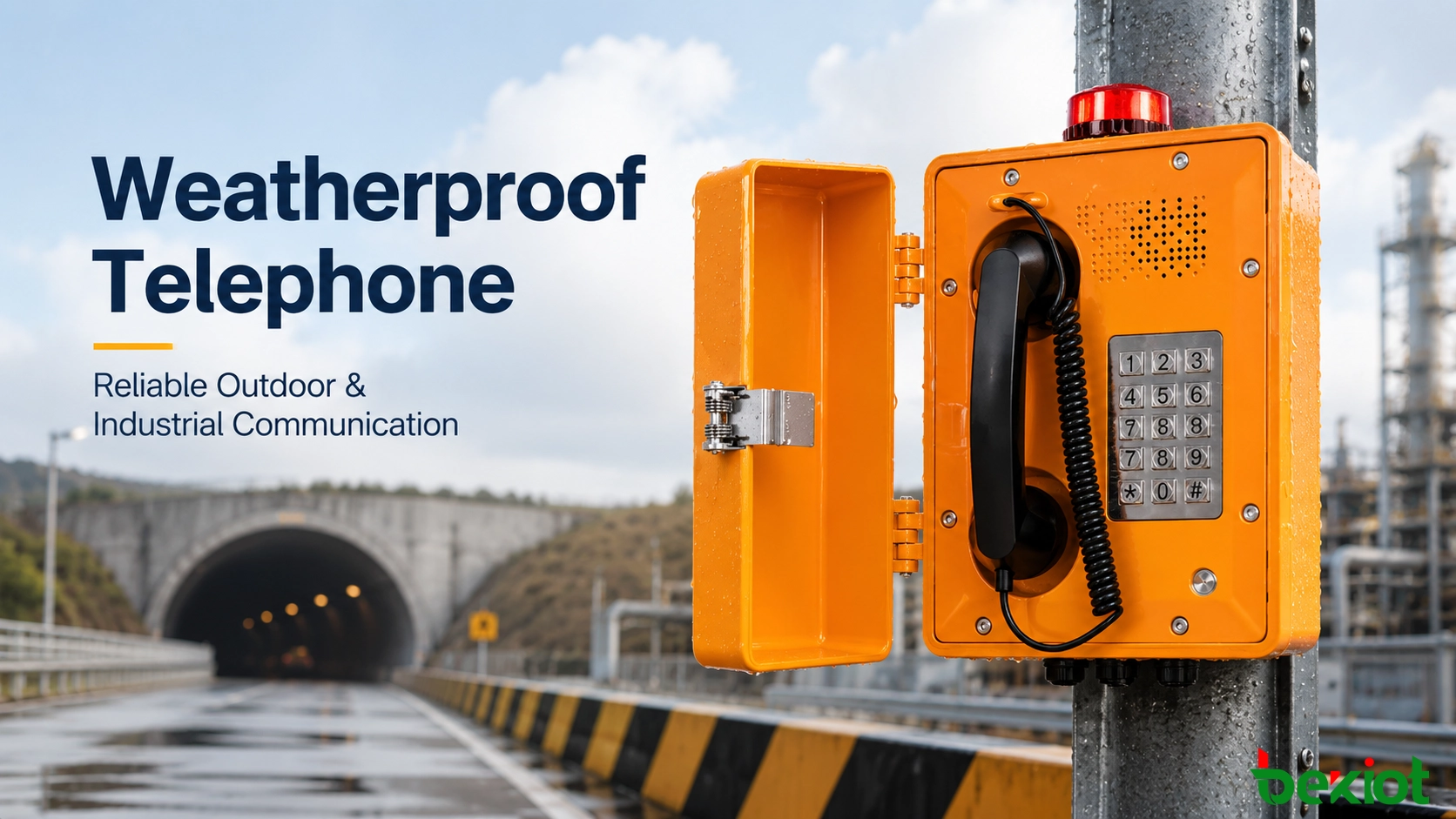
A weatherproof telephone is designed for these conditions. It provides a fixed and dependable voice communication point in exposed or semi-exposed locations where standard office phones are not suitable. For highways, tunnels, factories, ports, utility sites, energy projects, campuses, and other demanding environments, this kind of rugged telephone helps keep communication available when the surrounding environment is working against the equipment.
What Is a Weatherproof Telephone?
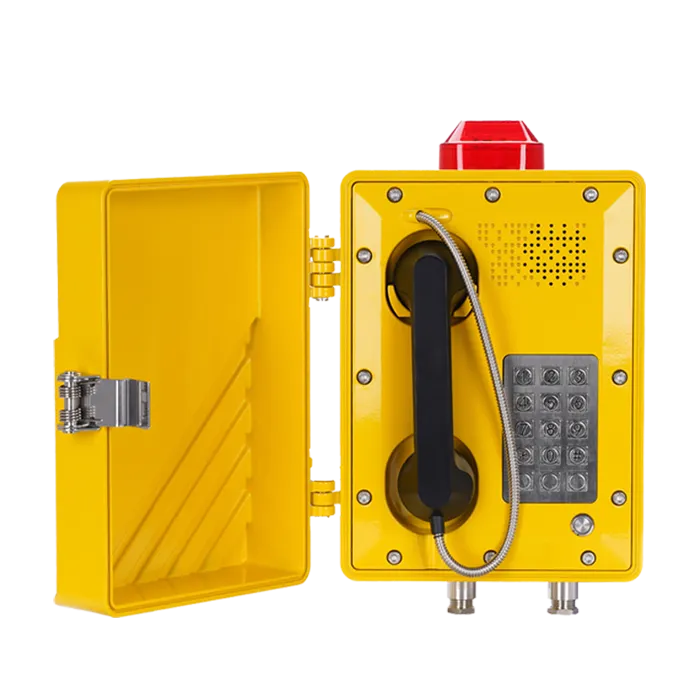
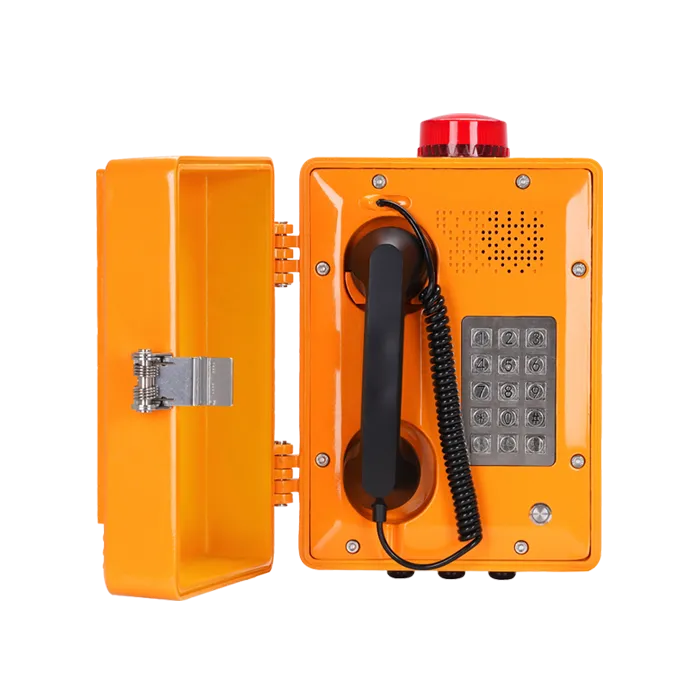
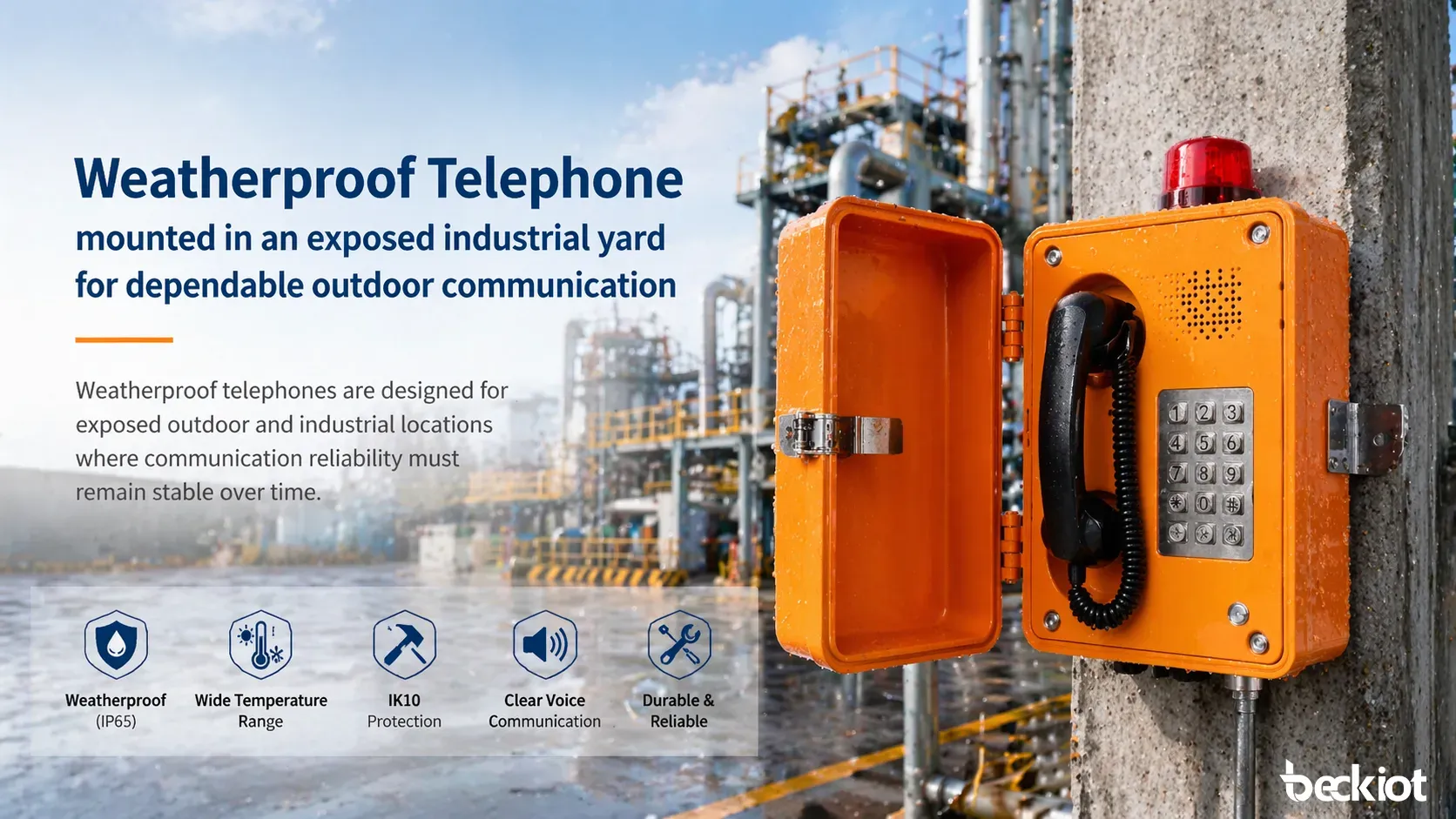
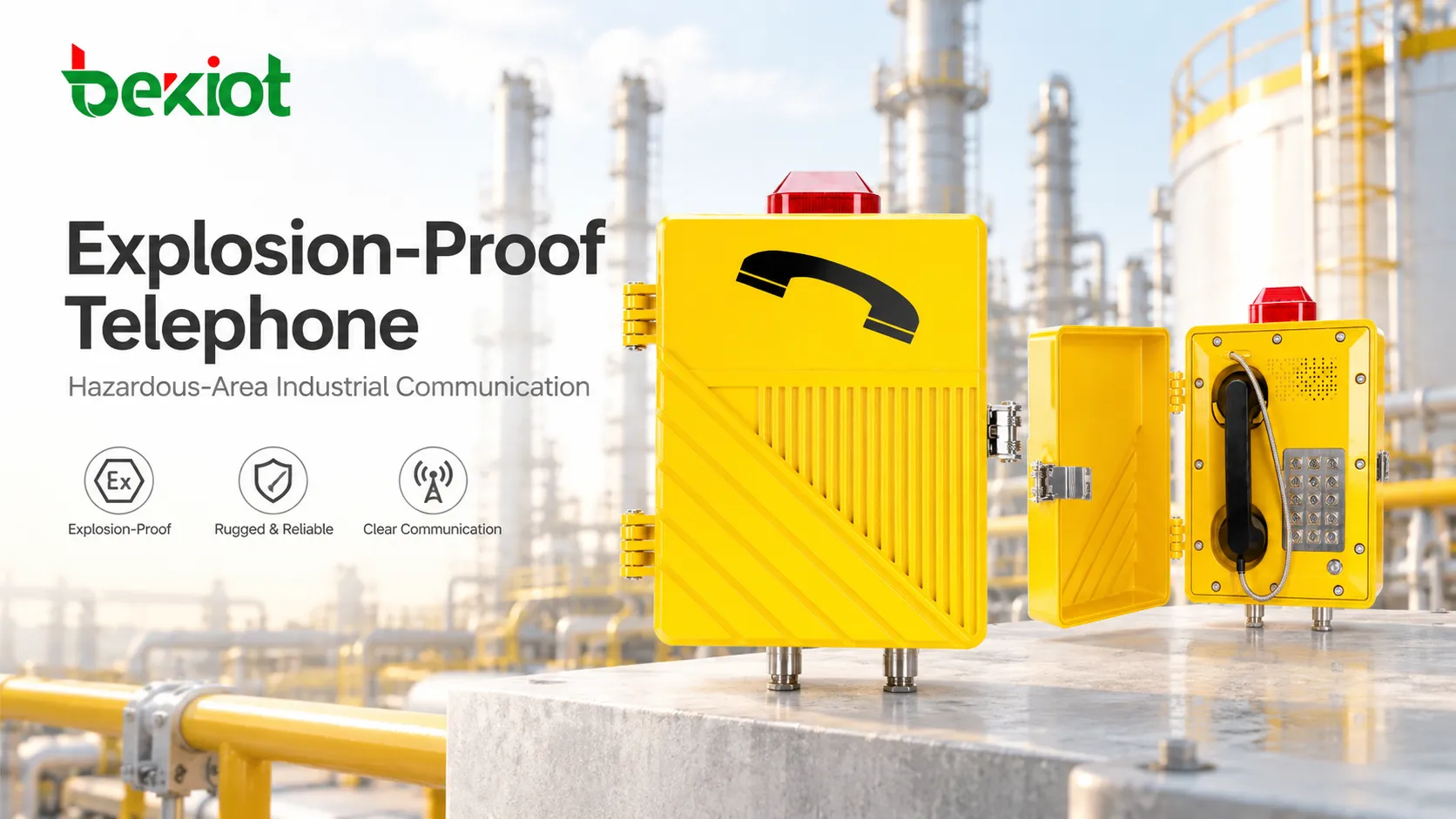
A weatherproof telephone is a rugged field communication device built to operate in outdoor or harsh environments. Its enclosure, handset, keypad or call button, cable entry, and internal components are designed to resist weather exposure and support long-term use in locations where moisture, dust, corrosion, and physical impact may be present.
Unlike an office phone, a weatherproof telephone is usually installed as a permanent site communication point. It may be mounted on a wall, column, emergency station, roadside cabinet, tunnel wall, plant perimeter, loading area, or utility facility. The goal is simple: make voice communication available at the exact place where people may need it.
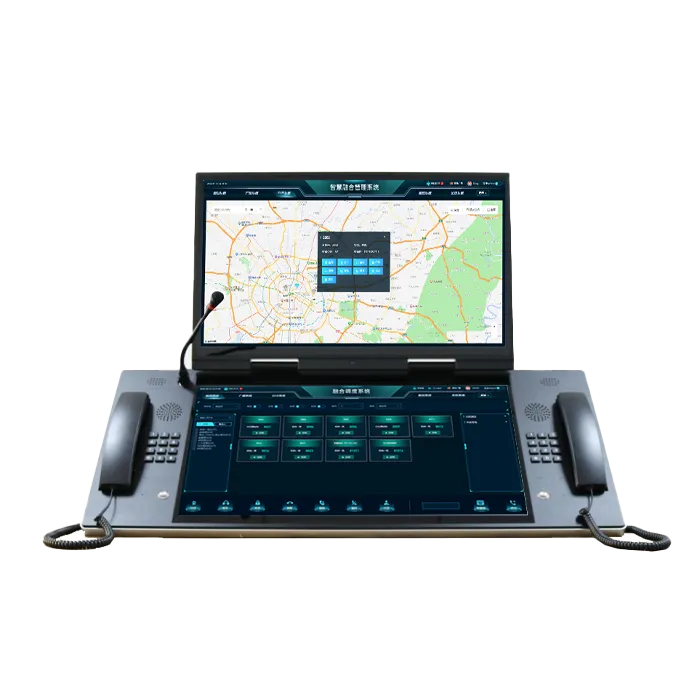
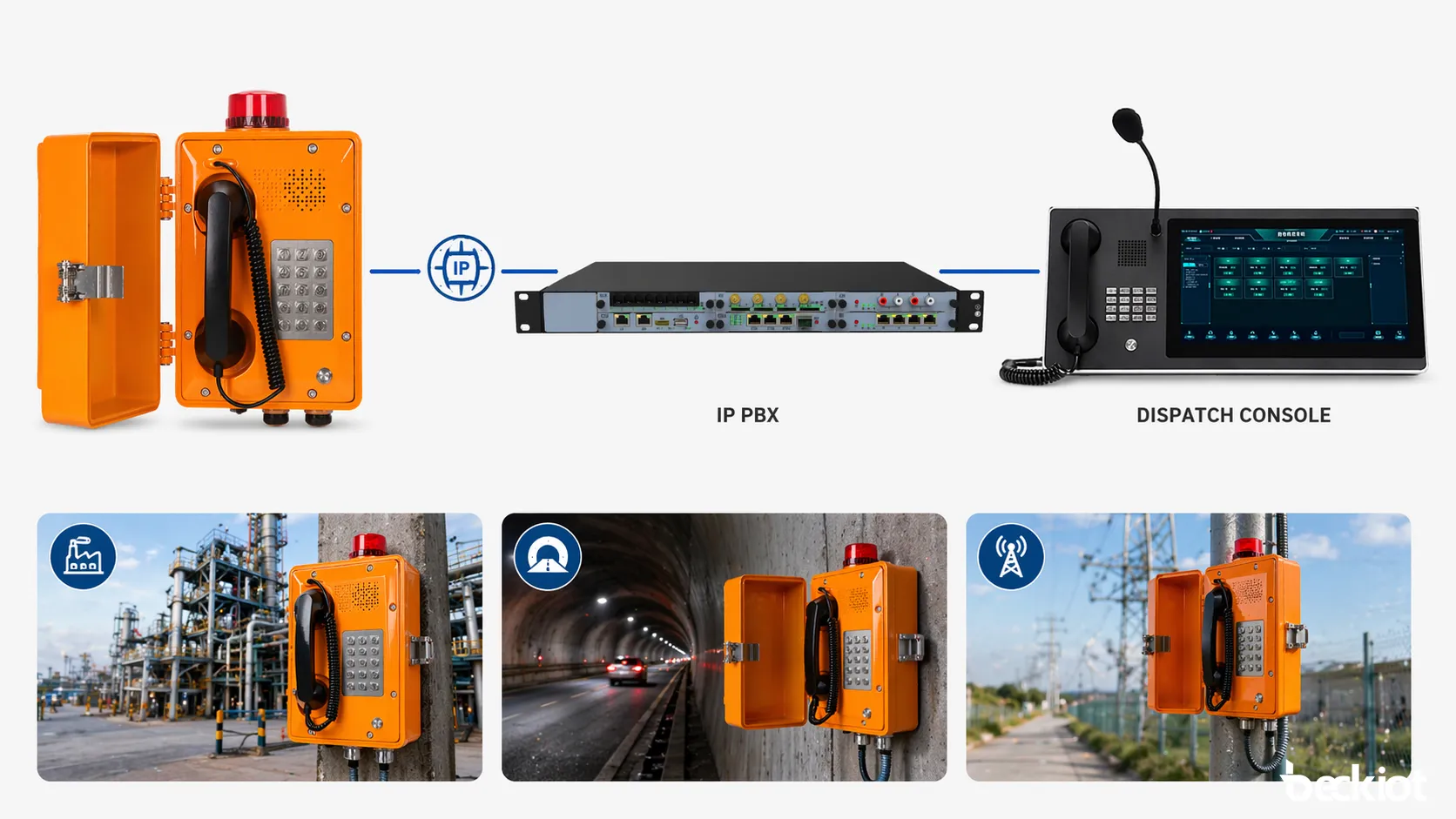
For Becke Telcom, a weatherproof telephone is not just a protected phone housing. It is part of a larger industrial communication system. In real projects, the device may connect to an IP PBX, SIP server, dispatch platform, paging system, security control room, or emergency response workflow. This gives the telephone a practical role in both daily operations and incident handling.
Why Fixed Outdoor Phones Still Have Value
Many organizations already use mobile phones, radios, CCTV systems, apps, and wireless networks. Even so, a fixed outdoor telephone still has a clear purpose. It gives workers, visitors, contractors, drivers, and maintenance teams a known communication point that does not depend on personal phone batteries, mobile signal coverage, or remembering the correct contact number.
This is especially important in locations where people may be unfamiliar with the site. A driver at a roadside help point, a technician in a remote plant area, or a visitor near a gate does not need to search for a number. The device itself becomes the communication path. One call button, one handset, or one direct line can connect them to the right team faster.
In industrial and infrastructure environments, a delay in communication can quickly become a safety or operational problem. If a fault is not reported in time, maintenance may be delayed. If an emergency call cannot be made clearly, response time may suffer. If communication devices fail after long exposure to rain, dust, or corrosion, the site loses a critical layer of readiness. A weatherproof telephone helps reduce these risks by providing a more reliable endpoint for exposed locations.
In outdoor and industrial environments, communication reliability is not a small technical detail. It is part of safety planning, response speed, and operational control.
Main Features That Matter in Real Projects
Rugged Housing for Outdoor Exposure
The most visible feature of a weatherproof telephone is its durable enclosure. A proper outdoor telephone should be designed to protect internal electronics from rain, dust, humidity, and long-term environmental exposure. In many projects, the housing also needs to handle impact, frequent use, vibration, and rough field conditions.
This rugged design supports more than basic protection. It reduces the chance of premature failure and helps lower maintenance pressure over the lifecycle of the system. For remote or hard-to-access sites, this can be a major advantage because every service visit costs time, labor, and operational coordination.
Clear Audio in High-Noise Areas
Outdoor and industrial sites are often noisy. Tunnels, highways, factories, ports, utility yards, pump stations, energy facilities, and production areas may all have strong background noise. In these environments, a telephone that connects successfully but delivers weak or unclear audio does not solve the real problem.
A useful weatherproof telephone should support clear and intelligible voice communication. Loud audio output, stable microphone pickup, practical handset design, and reliable call quality all affect whether the caller and operator can understand each other. During a fault report or emergency request, speech clarity can directly influence the quality of the response.
Fast Access to Control Rooms or Response Teams
Many weatherproof telephones are installed because speed matters. A device can be configured for direct dialing, one-touch calling, hotline connection, emergency assistance, or quick contact with a control room. This reduces the number of steps between a person at the site and the team responsible for handling the situation.
This is useful for emergency points, access gates, tunnel service areas, roadside locations, loading zones, maintenance stations, and remote facilities. A clearly placed telephone gives people a visible way to report problems, request help, or contact operators without delay.
Compatibility with SIP and IP Communication Systems
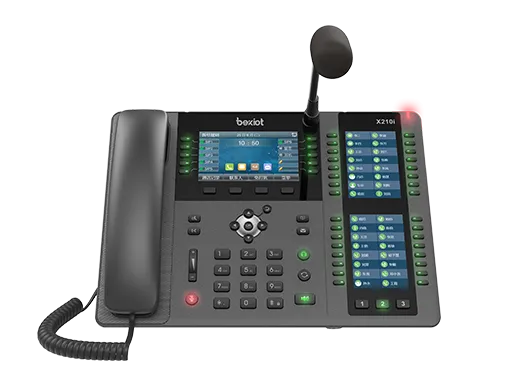
Modern weatherproof telephones are increasingly used in IP-based communication networks. A SIP weatherproof telephone can connect with an IP PBX, SIP server, intercom platform, dispatch console, or paging system. This allows the outdoor endpoint to become part of a wider communication architecture instead of operating as a separate device.
System integration creates more possibilities. Calls can be routed to a control room, forwarded to different departments, recorded when required, linked with paging announcements, or escalated through dispatch procedures. For multi-site projects, IP networking also makes centralized management and remote configuration easier.
Flexible Deployment for Different Site Conditions
No two outdoor communication projects are exactly the same. Some locations are exposed to rain and wind. Some face dust, vibration, or extreme temperature changes. Coastal and marine sites may require better corrosion resistance. Tunnels and factories may require stronger audio. Public areas may need more robust protection against misuse or accidental damage.
This is why a weatherproof telephone should be selected according to the real environment, not only by product appearance. Mounting method, power supply, network access, call mode, audio level, enclosure material, and integration requirements should all be considered before choosing a model.
Weatherproof telephones provide fixed communication points for outdoor and industrial locations where ordinary phones may fail under long-term exposure.
Benefits of Using a Weatherproof Telephone
Improved Site Safety
A fixed outdoor telephone improves safety by giving people a clear way to request assistance. Workers can report abnormal conditions. Contractors can contact supervisors. Visitors can ask for help. Drivers can reach a control center. Maintenance teams can communicate from the field without relying only on personal devices.
This also supports early reporting. Small faults, blocked access points, suspicious activity, equipment problems, or environmental hazards can be communicated before they develop into larger incidents. In this way, a weatherproof telephone supports both emergency response and preventive site management.
Faster Operational Response
When a telephone is installed at the right location and connected to the right team, communication becomes more direct. Control rooms can receive reports faster. Maintenance teams can understand the situation sooner. Security staff can coordinate access more efficiently. Dispatchers can make decisions based on direct voice information from the field.
This value is not limited to emergencies. Weatherproof telephones are also useful for daily operations, such as inspection support, gate communication, equipment checks, shift coordination, visitor assistance, and maintenance reporting.
Lower Lifecycle Risk
Using ordinary indoor phones in outdoor or harsh areas often leads to repeated failures. Moisture, dust, corrosion, and impact can damage the device, increase maintenance visits, and create communication gaps. A properly designed weatherproof telephone may cost more than a basic office phone, but it can deliver better value over time by reducing replacement frequency and improving system reliability.
For site owners, contractors, and system integrators, this lifecycle value is important. A communication device should not only work on the first day of installation. It should remain dependable after months and years of real environmental exposure.
Where Weatherproof Telephones Are Commonly Used
Highways, Roads, and Tunnels
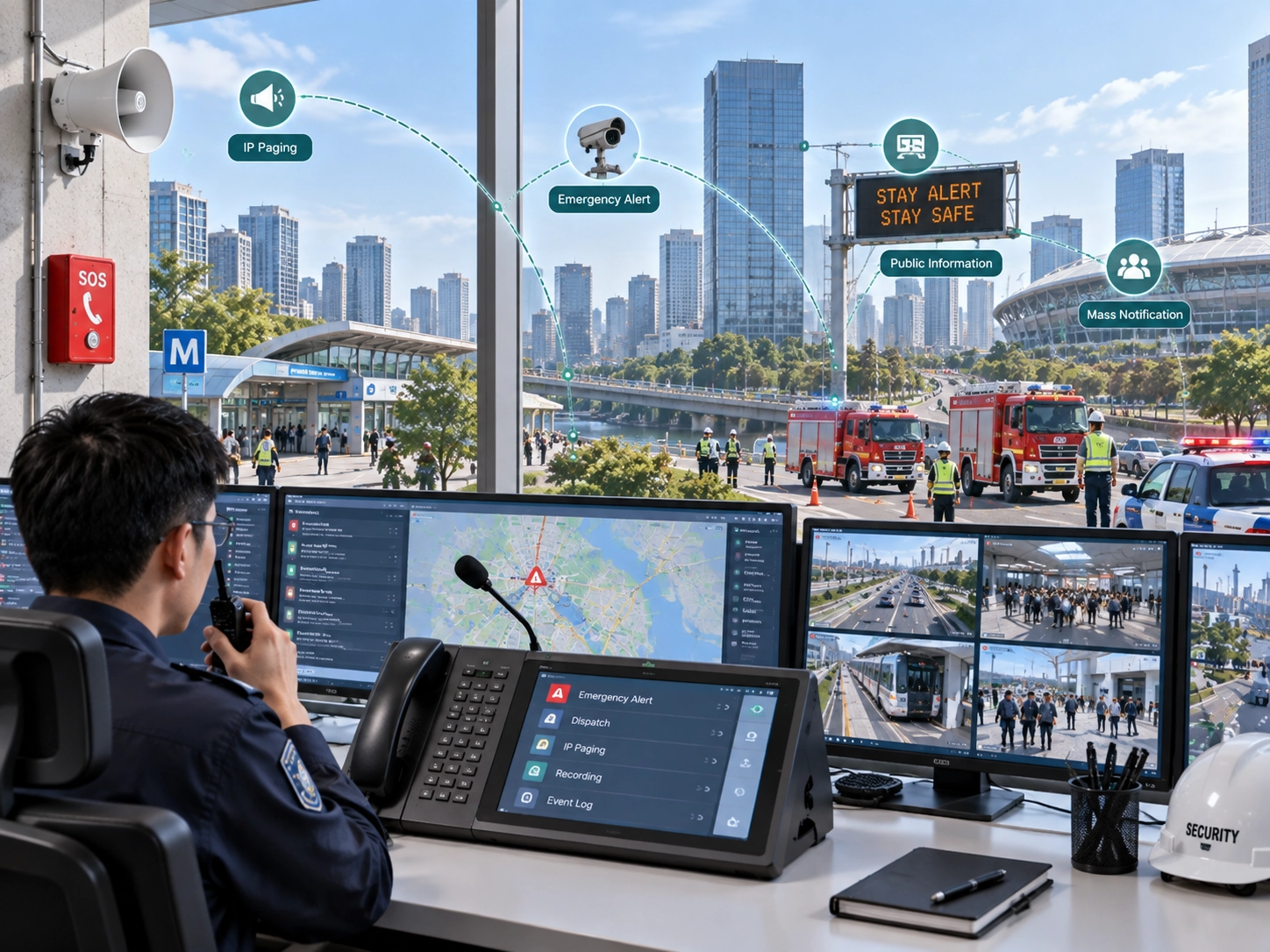
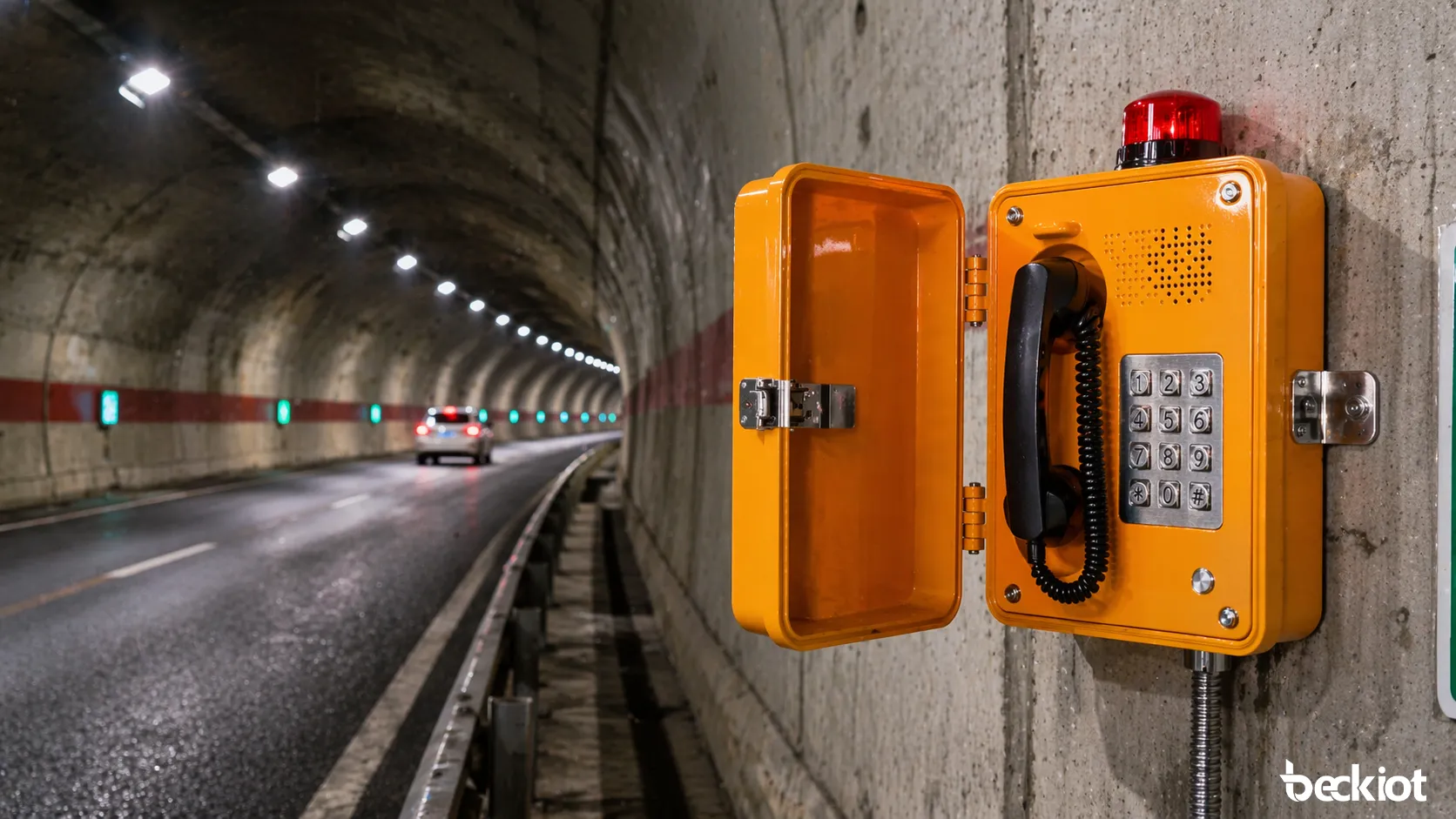
Transportation infrastructure is one of the most common application areas. Weatherproof telephones can be installed at roadside help points, tunnel emergency stations, service areas, toll points, maintenance access zones, and traffic operation sites. They support incident reporting, driver assistance, operator communication, and emergency response.
These environments often combine several challenges at the same time: weather exposure, vehicle noise, limited mobile coverage, and urgent response needs. A rugged and easy-to-use communication point can make response procedures more dependable.
Factories, Plants, and Utility Facilities
Industrial facilities often include outdoor yards, production areas, substations, pump stations, warehouses, treatment plants, and perimeter zones where normal telephones are not suitable. A weatherproof telephone gives operators, technicians, and contractors a direct way to reach control rooms or maintenance teams.
In these locations, the telephone may be used for routine maintenance coordination, fault reporting, equipment inspection, emergency escalation, or shift communication. When connected with an IP PBX or dispatch platform, it can also become part of the plant’s wider voice communication system.
Ports, Marine Areas, and Energy Sites
Ports, terminals, coastal facilities, offshore support areas, wind farms, solar plants, and other energy projects often require communication equipment that can handle exposure and distance. Staff may be spread across large areas, and mobile coverage may not always be stable. A fixed weatherproof telephone provides a known contact point for field communication.
In these projects, durability, audio performance, and integration capability are especially important. The telephone should be able to support real operational use, not only meet a basic product description.
Campuses, Parks, Public Areas, and Remote Sites
Weatherproof telephones are also suitable for campuses, parks, parking areas, public service points, industrial parks, logistics centers, and remote infrastructure. In public or semi-public areas, a visible communication point can improve assistance access and support better security coordination.
For remote infrastructure, the value is even clearer. If staff need to contact a central team from a fixed location, a rugged telephone can provide a reliable communication path without depending entirely on mobile devices.
Transportation and infrastructure sites rely on rugged communication endpoints because speed, visibility, and voice clarity are critical during incidents.
How to Choose the Right Weatherproof Telephone
Evaluate the Installation Environment First
The correct model depends on the actual site. Before choosing a weatherproof telephone, project teams should review rain exposure, dust level, humidity, temperature range, corrosion risk, vibration, noise, mounting position, cable entry, and maintenance access. A sheltered outdoor wall does not have the same requirements as a tunnel, coastal area, chemical plant, or remote utility station.
Understanding the environment helps avoid two common mistakes. The first is under-specifying the product and facing failures later. The second is choosing unnecessary features that increase cost without improving the real deployment.
Match the Device to the Communication Workflow
The telephone should match how people will use it. Some sites need a handset for normal conversation. Some need one-touch emergency calling. Some require hands-free operation. Some need direct connection to a control room. Others need SIP registration with an IP PBX, call recording, paging linkage, or dispatch integration.
A good selection process starts with practical questions. Who will use the phone? What will they need to report? Who should answer the call? Should the call go to one number or several teams? Should it connect to a paging system or emergency platform? The answers help determine the best device type and system design.
Consider Integration with Existing Systems
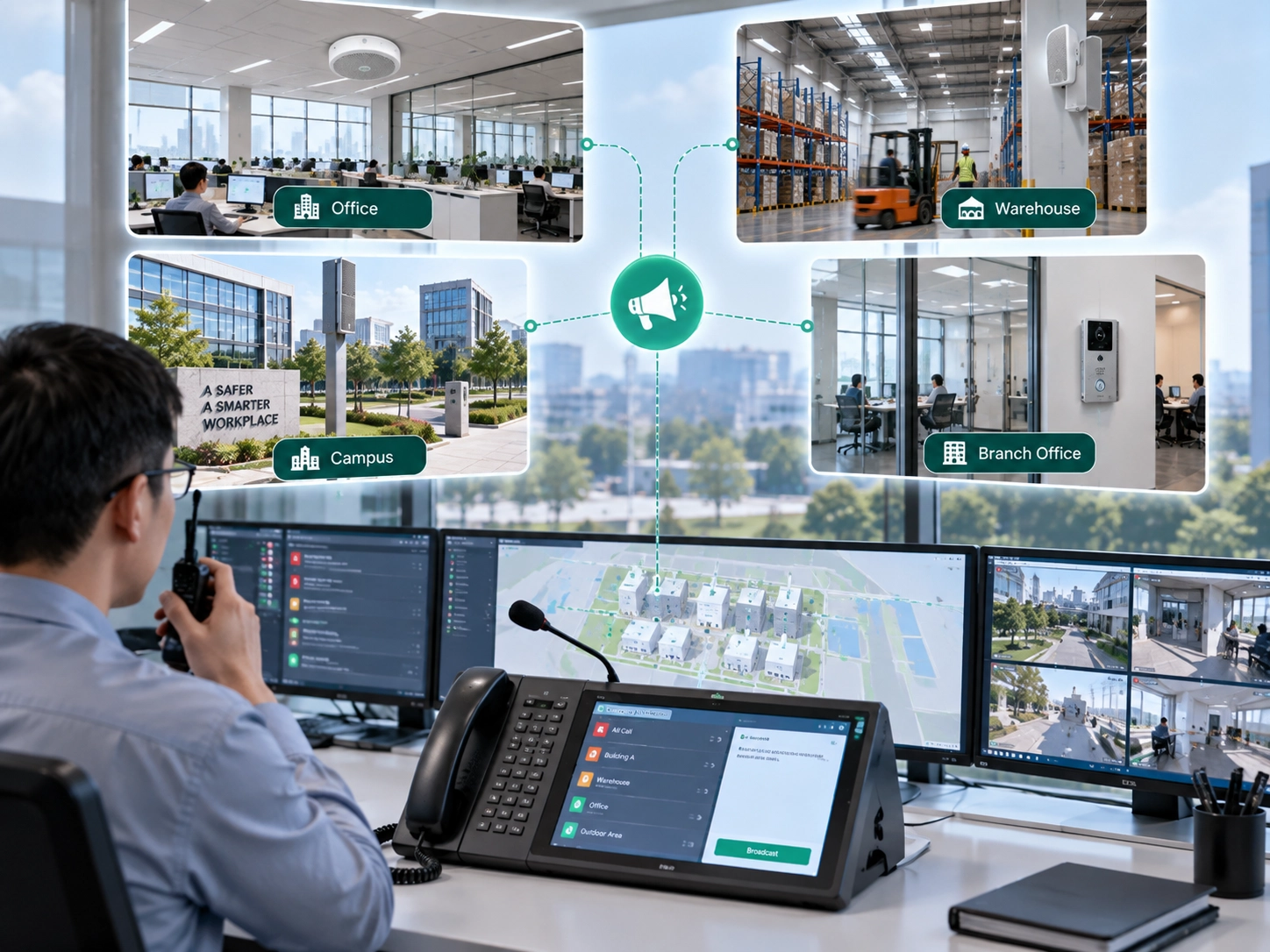
In many projects, the telephone is only one part of the communication system. If the site already uses SIP telephony, IP PBX equipment, paging speakers, intercom terminals, CCTV, alarms, or dispatch software, integration capability becomes important. A well-integrated weatherproof telephone can support faster routing, better management, and more coordinated response.
This is especially valuable for multi-building and multi-site environments. Centralized communication management allows administrators to configure extensions, call rules, and response workflows more efficiently.
Look Beyond the Initial Purchase Price
Outdoor communication devices should be evaluated by lifecycle value, not only by unit price. A cheaper device that fails frequently can create higher maintenance costs and greater operational risk. A more suitable weatherproof telephone can reduce service pressure and keep communication more stable over time.
For harsh environments, durability, audio clarity, SIP compatibility, installation method, serviceability, and long-term reliability should be considered together. The best choice is the model that fits both the site conditions and the communication workflow.
The right weatherproof telephone should fit the environment, the user behavior, the system architecture, and the long-term maintenance plan.
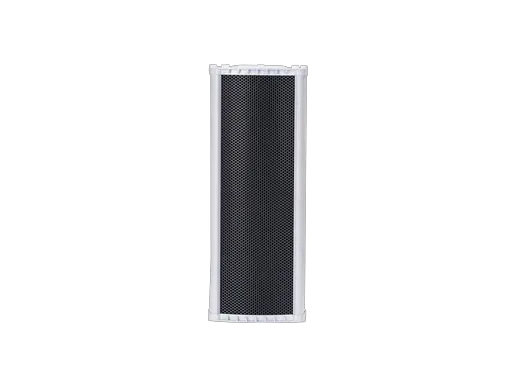
When connected to an IP PBX, paging system, or dispatch platform, a weatherproof telephone becomes a practical endpoint in a wider communication network.
Why Work with Becke Telcom
Becke Telcom provides industrial and emergency communication solutions for demanding environments. The company focuses on rugged telephones, SIP communication terminals, paging and public address systems, dispatch solutions, IP PBX integration, and field communication endpoints for infrastructure and industrial projects.
For weatherproof telephone projects, Becke Telcom can support product selection based on installation conditions, communication workflow, system compatibility, and long-term operation needs. Whether the project involves a tunnel, highway, plant, port, utility site, campus, or remote infrastructure, the goal is to build a communication point that remains dependable when it is needed most.
Final Notes
A weatherproof telephone is a practical communication tool for outdoor and harsh environments. It helps provide fixed voice access where ordinary phones may not survive, where mobile coverage may not be reliable, and where fast communication can affect safety or response time.
For organizations planning communication systems in highways, tunnels, industrial plants, utility facilities, ports, energy sites, campuses, and public infrastructure, choosing the right weatherproof telephone can improve safety, response efficiency, and long-term reliability. When combined with SIP, IP PBX, paging, and dispatch platforms, it becomes more than a standalone phone. It becomes part of a complete field communication system.
FAQ
What is a weatherproof telephone used for?
A weatherproof telephone is used to provide reliable voice communication in outdoor or harsh environments. It is commonly installed for emergency calling, maintenance reporting, roadside assistance, tunnel communication, plant operations, public help points, and field coordination.
Can a weatherproof telephone connect to an IP PBX?
Yes. Many modern weatherproof telephones support SIP and can connect to an IP PBX, SIP server, paging platform, intercom system, or dispatch console. This allows outdoor phones to work as part of a centralized communication system.
Where should weatherproof telephones be installed?
They are suitable for highways, tunnels, factories, substations, ports, utility corridors, parking areas, campuses, remote facilities, and other outdoor or semi-exposed locations where ordinary phones may fail because of weather, dust, noise, or environmental stress.
What should buyers consider before choosing a weatherproof telephone?
Buyers should consider the installation environment, enclosure strength, audio performance, call workflow, mounting method, network connection, SIP compatibility, maintenance access, and whether the device needs to integrate with IP PBX, paging, alarm, or dispatch systems.
Why choose Becke Telcom for weatherproof telephone projects?
Becke Telcom focuses on rugged communication solutions for industrial, infrastructure, and emergency environments. The company can provide weatherproof telephones and integrated communication design support for projects that require durable field endpoints and reliable system operation.