What Is a PA System? Components, Types, Functions and Common Uses
Learn what a PA (public address) system is, how it works step by step, its main components, analog vs IP/SIP types, key functions, common use cases, and how to choose the right architecture for your site.
Becke Telcom
A PA (public address) system takes speech, alerts, instructions, or background audio and pushes it through connected loudspeakers to people in one or more defined areas. The idea sounds simple, but in busy buildings and large facilities it is often the fastest and most reliable way to reach a group of people at once.
Modern PA systems go well beyond a microphone, an amplifier, and a few ceiling speakers. They support multi-zone paging, scheduled announcements, emergency override, remote management, and integration with other communication platforms. That is why PA technology is still a core part of schools, hospitals, factories, warehouses, transport hubs, campuses, and public venues where information has to land quickly and be understood the first time.
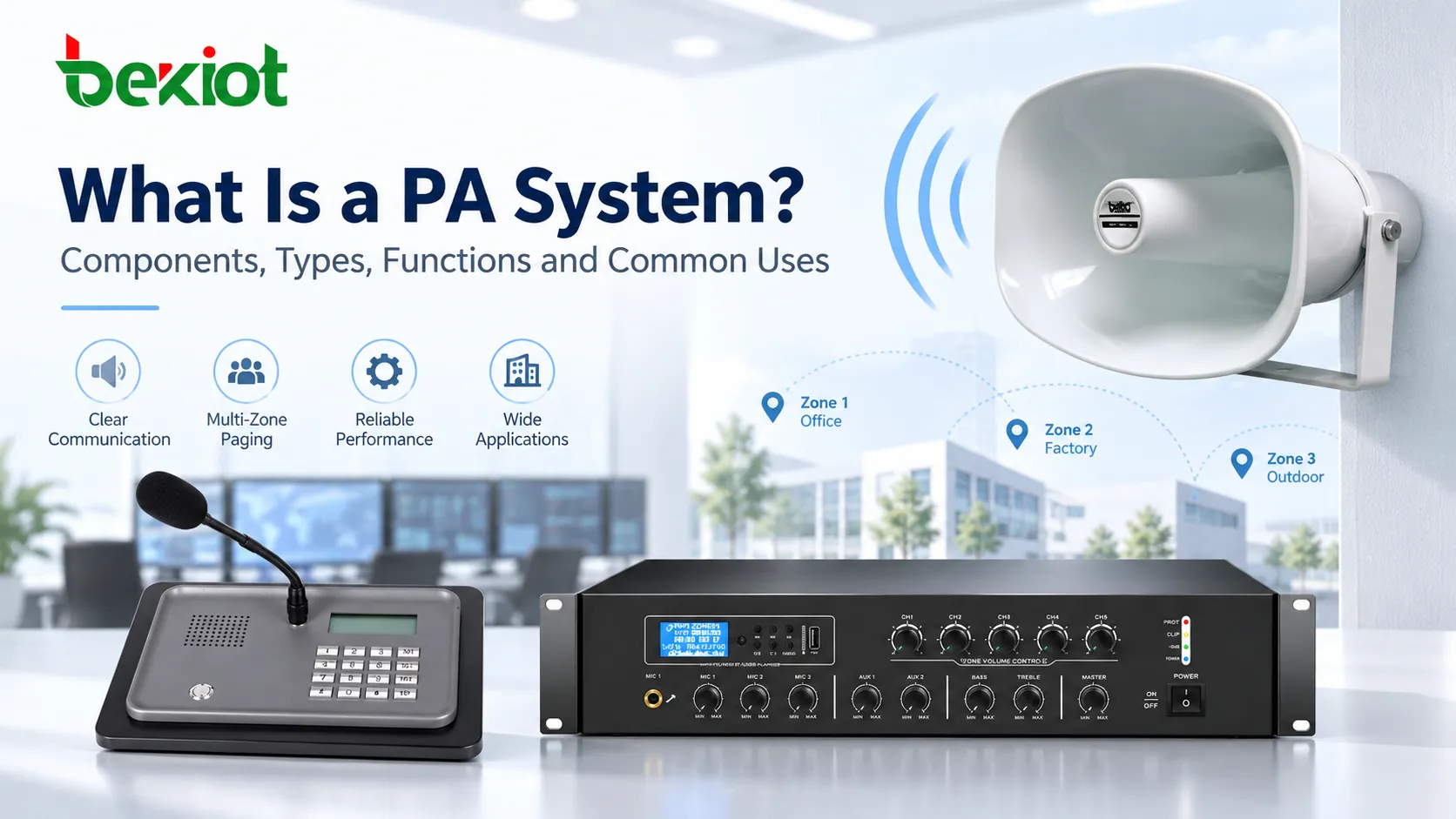
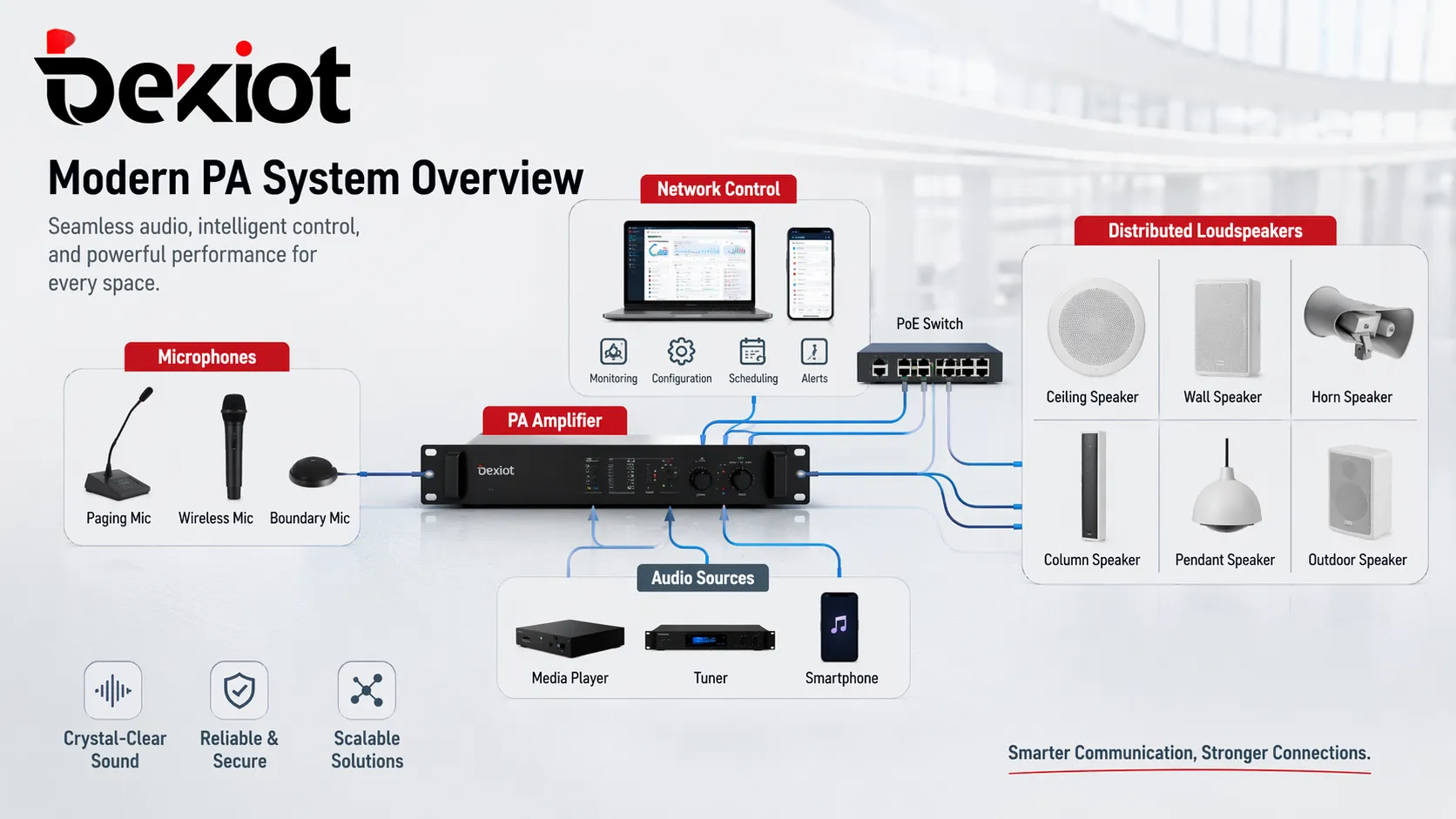
A modern PA system combines audio input, signal control, amplification, and loudspeaker distribution for clear site-wide communication.
What Is a PA System?
Definition of a Public Address System
A PA system is an audio distribution system that projects live or recorded sound to listeners in a targeted area. PA stands for Public Address, which captures its main job: addressing people in a public, shared, or managed space. Depending on the design, it may cover a single room, an entire building, several floors, an industrial site, or multiple locations linked across an IP network.
At its most basic, a PA system takes an audio source, processes it, boosts it to a usable output level, and sends it to speakers. In more advanced deployments, the same infrastructure also controls who hears what, when they hear it, and which rules take priority. A routine announcement in one zone can run alongside an emergency evacuation message in another, while the system keeps monitoring faults and stays online.
Main Purpose in Daily Operations and Emergencies
Day to day, a PA system exists to spread understandable voice messages quickly. A school uses it for class change bells, a hospital for staff notifications, a warehouse for shift coordination, a transport terminal for passenger guidance. In every case the goal is not just to make sound louder, but to get the right information to the right people at the right time.
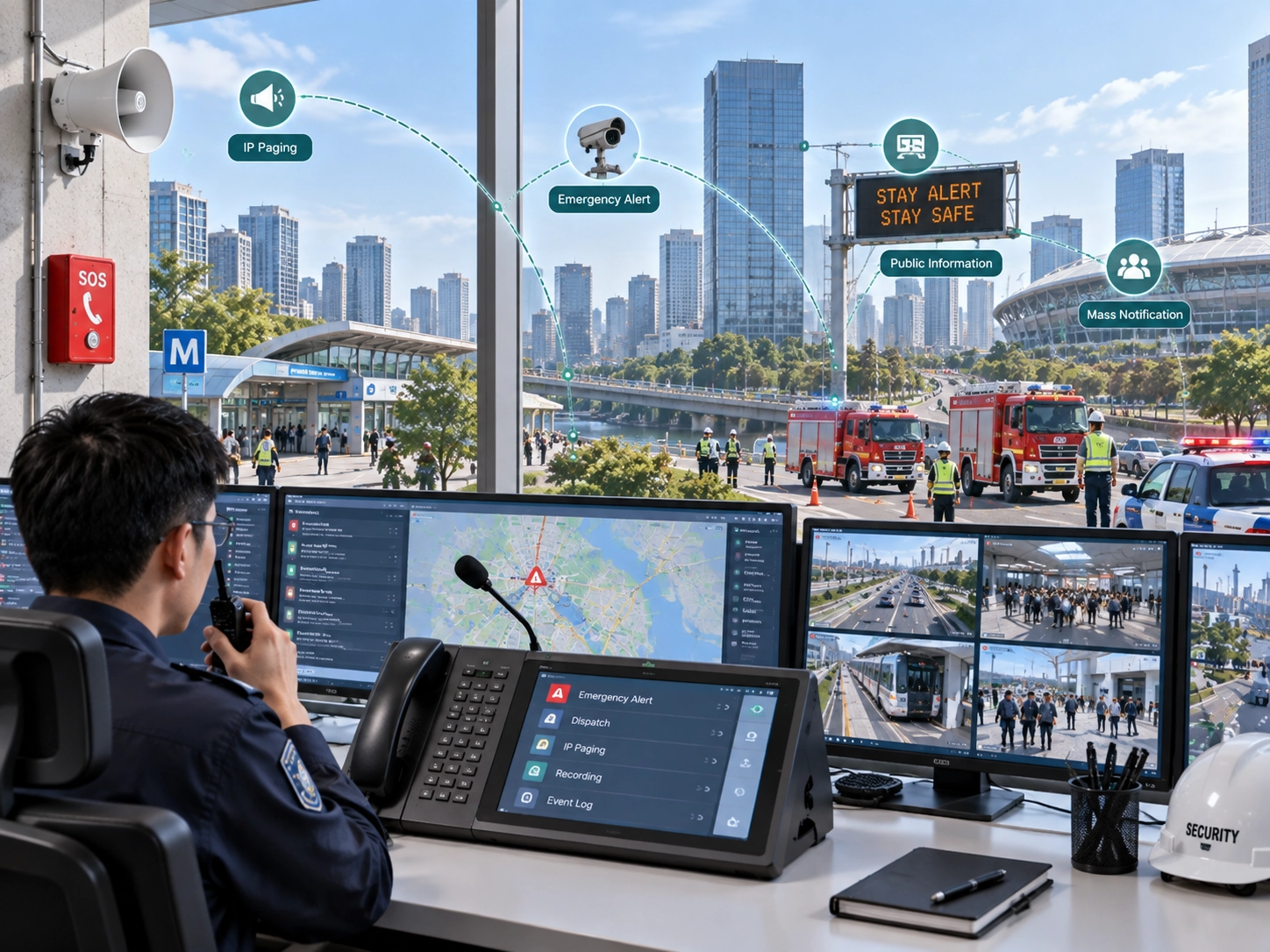
Its value jumps during emergencies. When an alarm fires, a properly designed PA system can broadcast clear spoken instructions that cut through confusion and speed up response. Unlike a siren or a tone alone, voice guidance tells people what to do, where to go, and which routes to avoid. This is why PA systems are usually built into wider safety, evacuation, and operational continuity plans.
A well-designed PA system is not about raw volume. Its real value is message intelligibility, controlled coverage, priority handling, and dependable operation when communication matters most.
Main Components and How a PA System Works
Input Devices, DSP, Amplifiers, and Zones
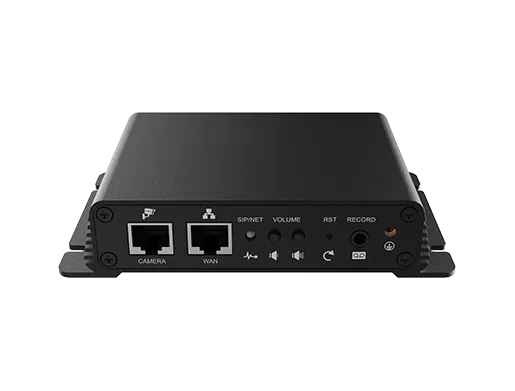
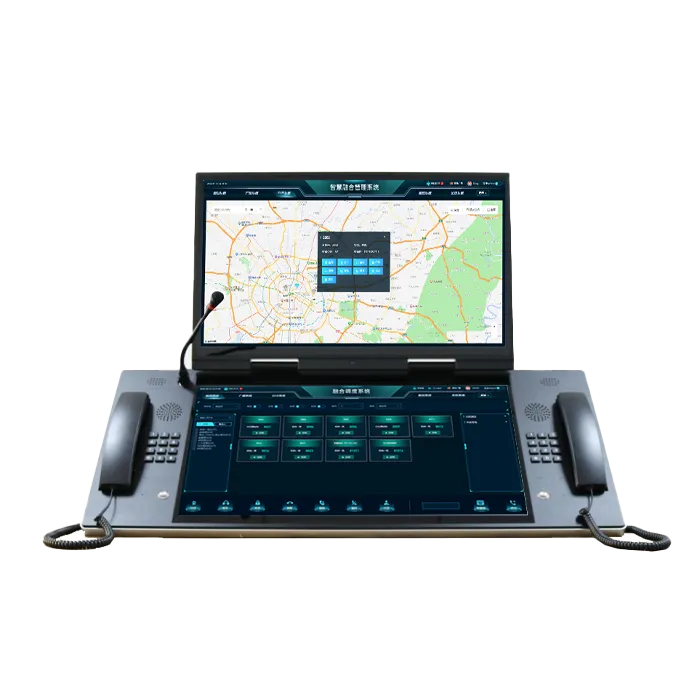
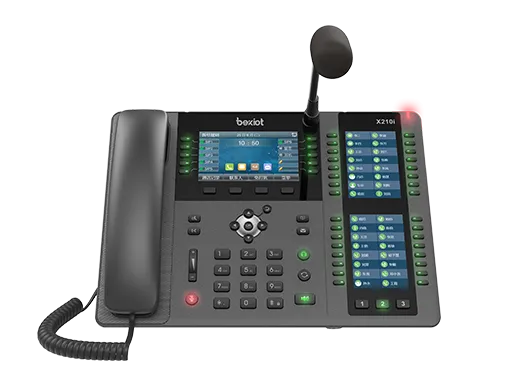
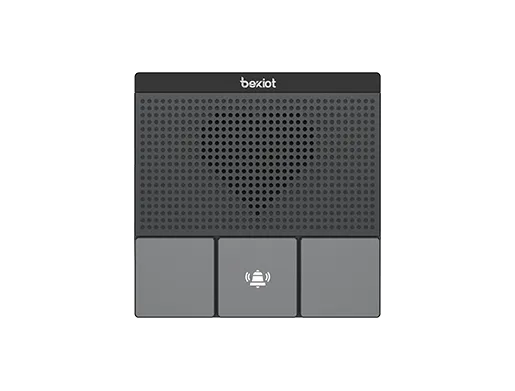
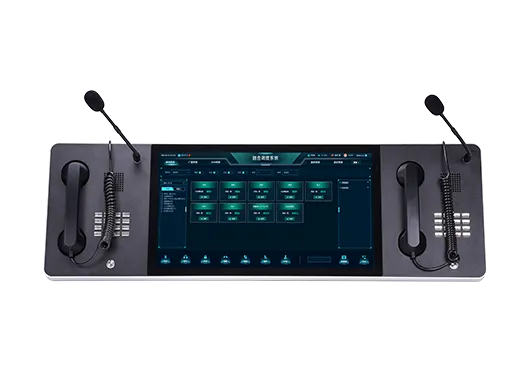
Every PA system starts with one or more audio sources: handheld microphones, desktop paging consoles, wall-mounted help points, media players, intercom stations, or software-based control interfaces. Some are triggered by an operator in real time; others are scheduled automatically or fired by alarm panels, building management platforms, or command software. Control devices also set broadcast rights by role, so different users have different levels of authority and emergency priority is protected.
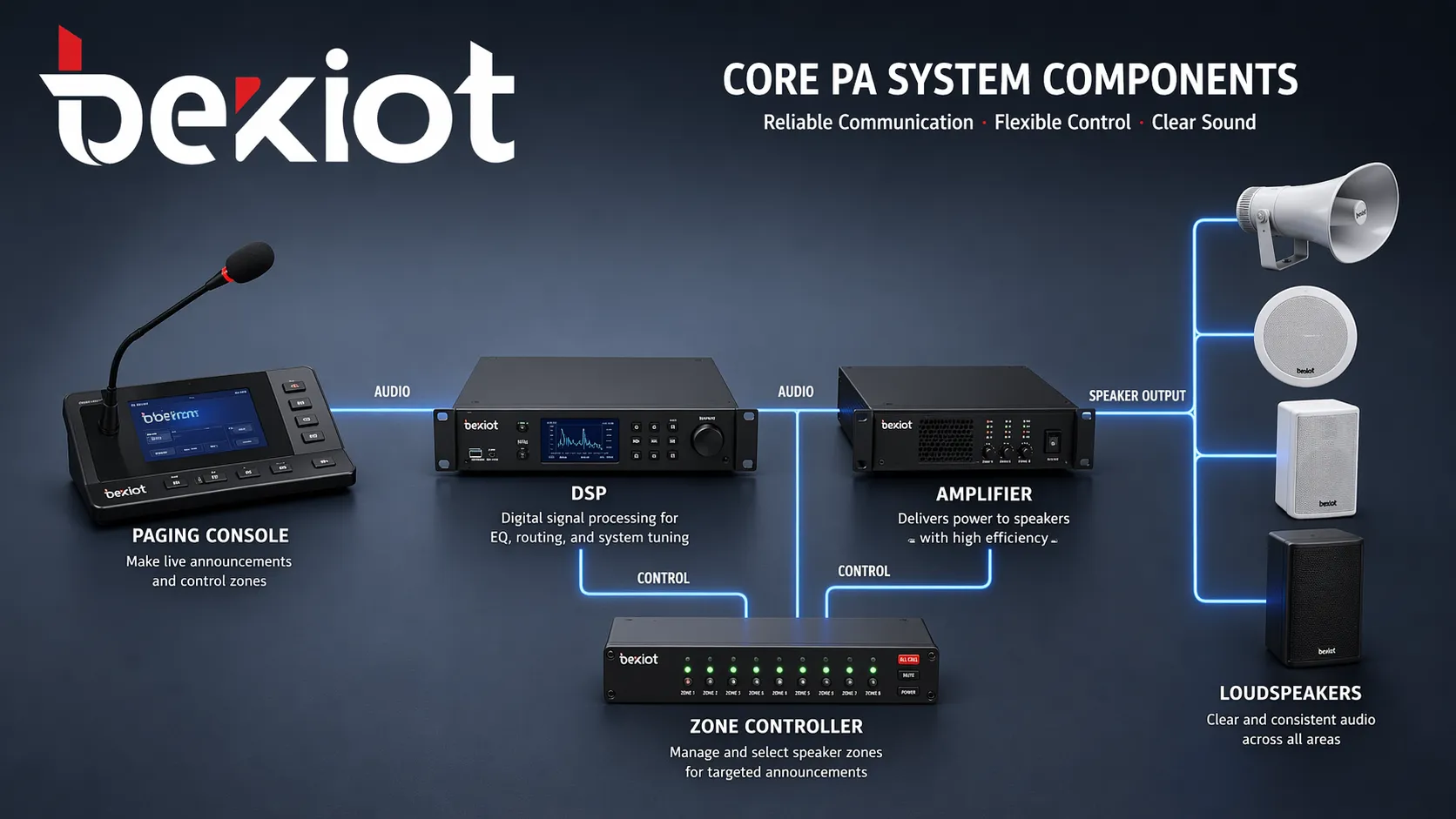
Once audio enters the system, digital signal processing (DSP) shapes it before it reaches the speakers: equalization, filtering, gain, feedback control, dynamic range, and sometimes delay for larger spaces. Amplifiers supply the power to drive loudspeakers across the site, while zone controllers split the building or campus into separate broadcast areas — offices, corridors, workshops, waiting rooms, outdoor perimeters, loading bays — so noise stays where it belongs.
Typical PA architecture includes input devices, processing modules, amplifiers, zone control, and loudspeaker endpoints.
Loudspeakers, Cabling, and Power Backup
Loudspeakers are the final output point, and picking the right type directly affects intelligibility. Ceiling speakers fit offices and corridors, wall-mounted units suit general indoor paging, horn speakers handle noisy industrial areas, and column speakers are often chosen for reverberant halls or open public spaces. The speaker has to match the acoustic environment, not the visual layout. Behind the hardware, a PA system may run on analog lines, structured IP networks, fiber, or hybrid cabling, with backup batteries and redundancy built in for emergency use.
Signal Flow: From Input to Monitored Output
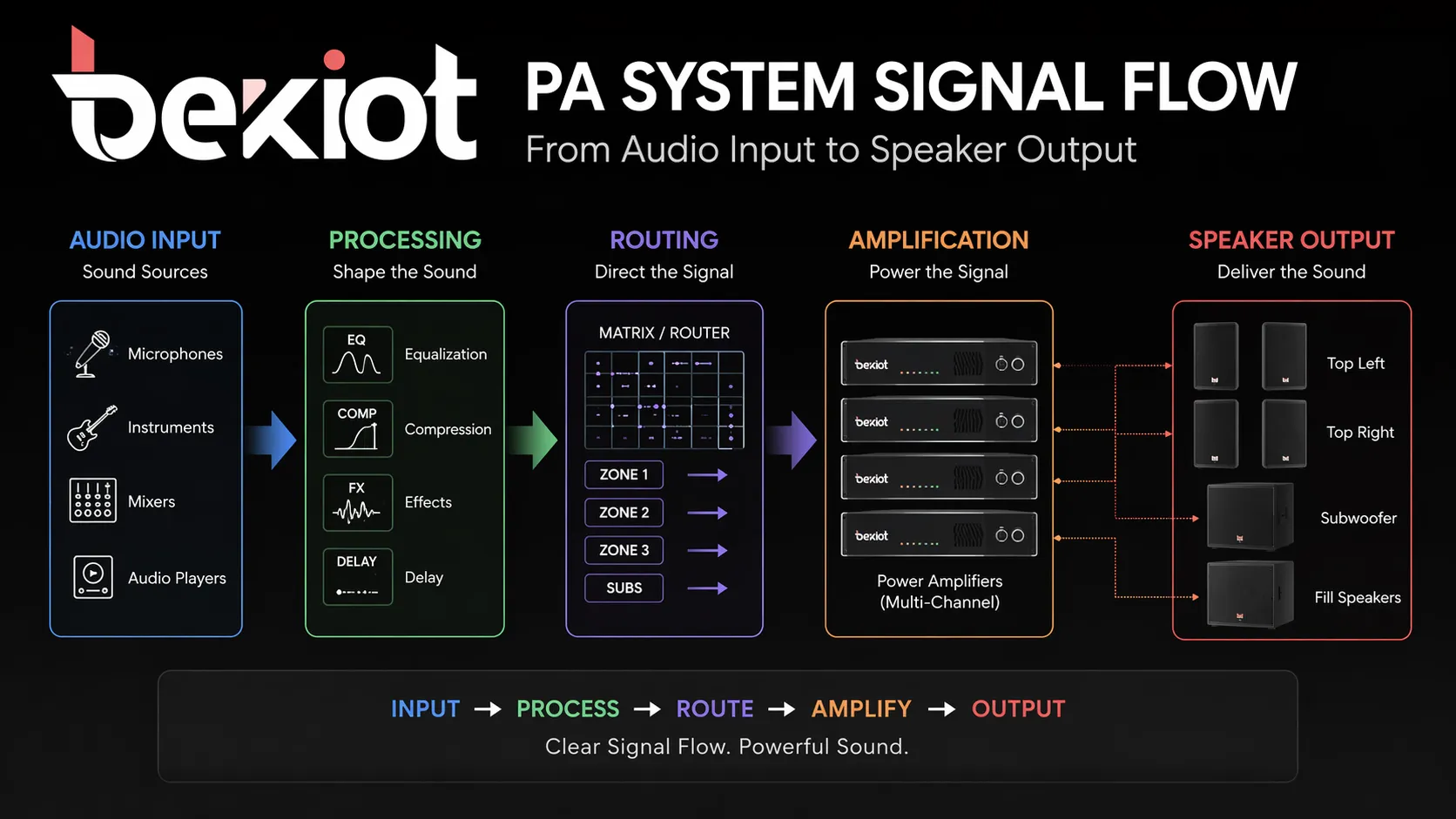
The working path is straightforward: a source is captured as an electrical or digital signal, authenticated and assigned a priority level, then routed to the correct amplifier path or network audio channel. A scheduled school bell, for example, is low priority; a fire evacuation announcement immediately overrides background music or routine pages in every relevant zone. Once routed, the amplifier boosts the signal to drive speakers across short or long cable runs, and the loudspeakers reproduce the message acoustically.
The signal flow of a PA system moves from input to processing, zone routing, amplification, and final loudspeaker output.
Operation does not end once a message plays. Modern systems keep monitoring speaker lines, amplifier health, control paths, and network status, with event logs, remote diagnostics, automatic switchover, and backup amplifiers to spot faults early. In mission-critical environments, that supervision layer is what prevents a hidden failure from leaving part of the site without audio coverage right when it is needed.
Types of PA Systems
Conventional Analog PA
Analog PA systems are built around traditional audio wiring and centralized amplification. They still fit many small and medium-sized sites where the layout is stable and requirements are straightforward: familiar installation, simple local operation, and predictable signal paths. As the site grows or control needs get more advanced, analog starts to show its limits — adding zones, linking buildings, or integrating with digital platforms often means extra interfaces or redesign.
IP-Based and Networked PA
IP PA systems carry audio and control signals over data networks. That architecture makes it easier to connect multiple buildings, distribute endpoints across wide areas, and manage the system from a central software platform. New endpoints or zones can usually be added without rebuilding the signal backbone. Networked PA is especially useful on campuses, industrial sites, transport infrastructure, and multi-building environments where remote management and cross-site coordination matter.
SIP-Enabled and Emergency-Capable PA
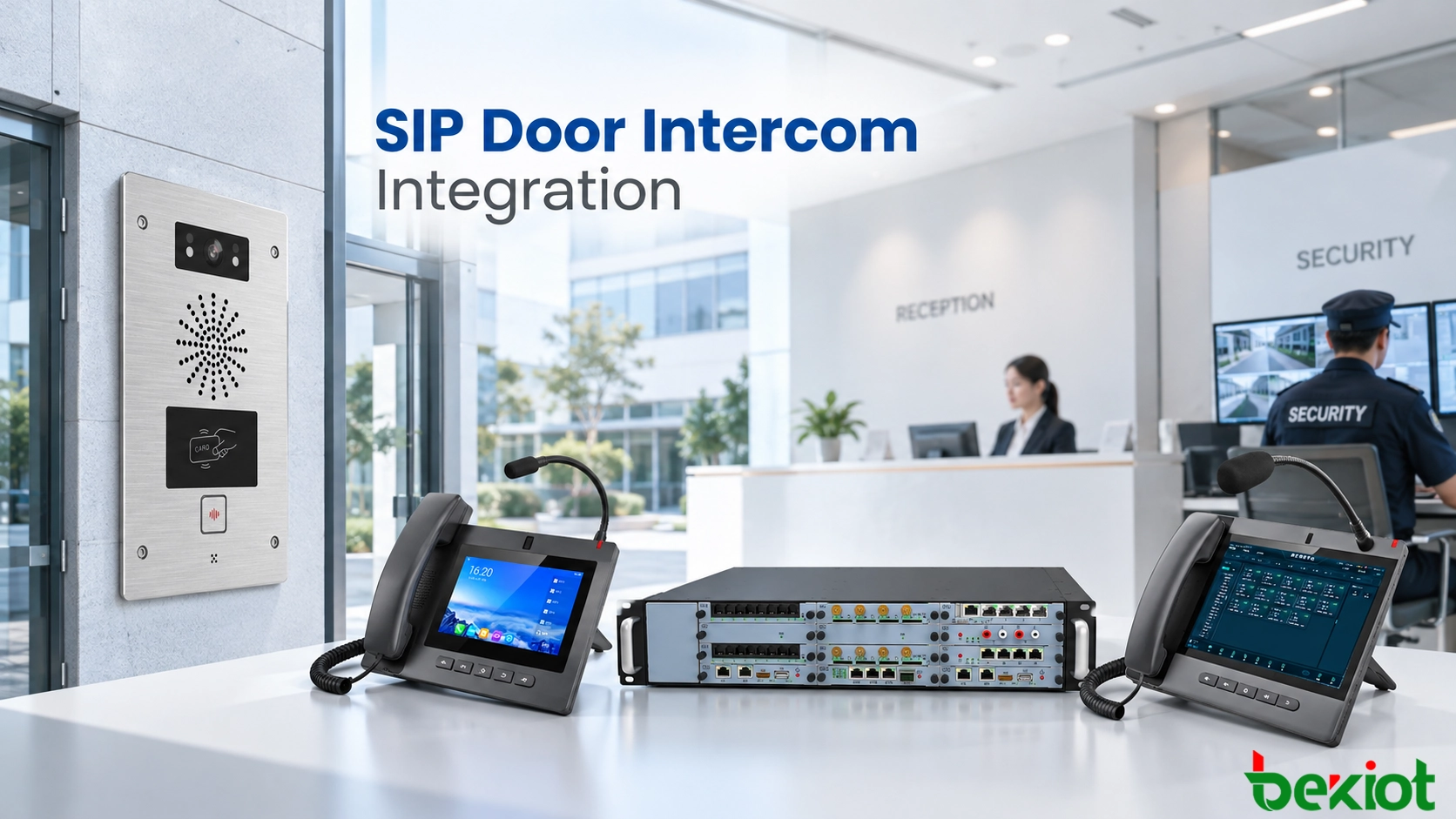
Some modern PA platforms speak SIP, which lets them integrate with IP PBX systems, intercom devices, and wider unified communication environments. Paging can then be launched from telephones, dispatch consoles, software clients, or integrated control platforms, collapsing what used to be separate voice systems into one workflow. Emergency-capable PA systems add emphasis to priority logic, redundancy, monitored paths, and reliable message delivery, tying into fire alarm systems and evacuation workflows so that emergency voice communication overrides all non-essential audio.
Key Functions and Common Use Cases
Live Paging, Scheduled Broadcasting, and Emergency Override
Live paging is the core function: a user speaks into a microphone or console and pushes a real-time message to a specific area or the whole site. Scheduled broadcasting handles bells, shift reminders, and routine notices at set times. Zoning sends different audio to different spaces so each area gets the information relevant to its function. On top of that, priority override automatically interrupts lower-priority content — background music, routine pages — so emergency announcements are heard first and without delay.
Integration and Centralized Management
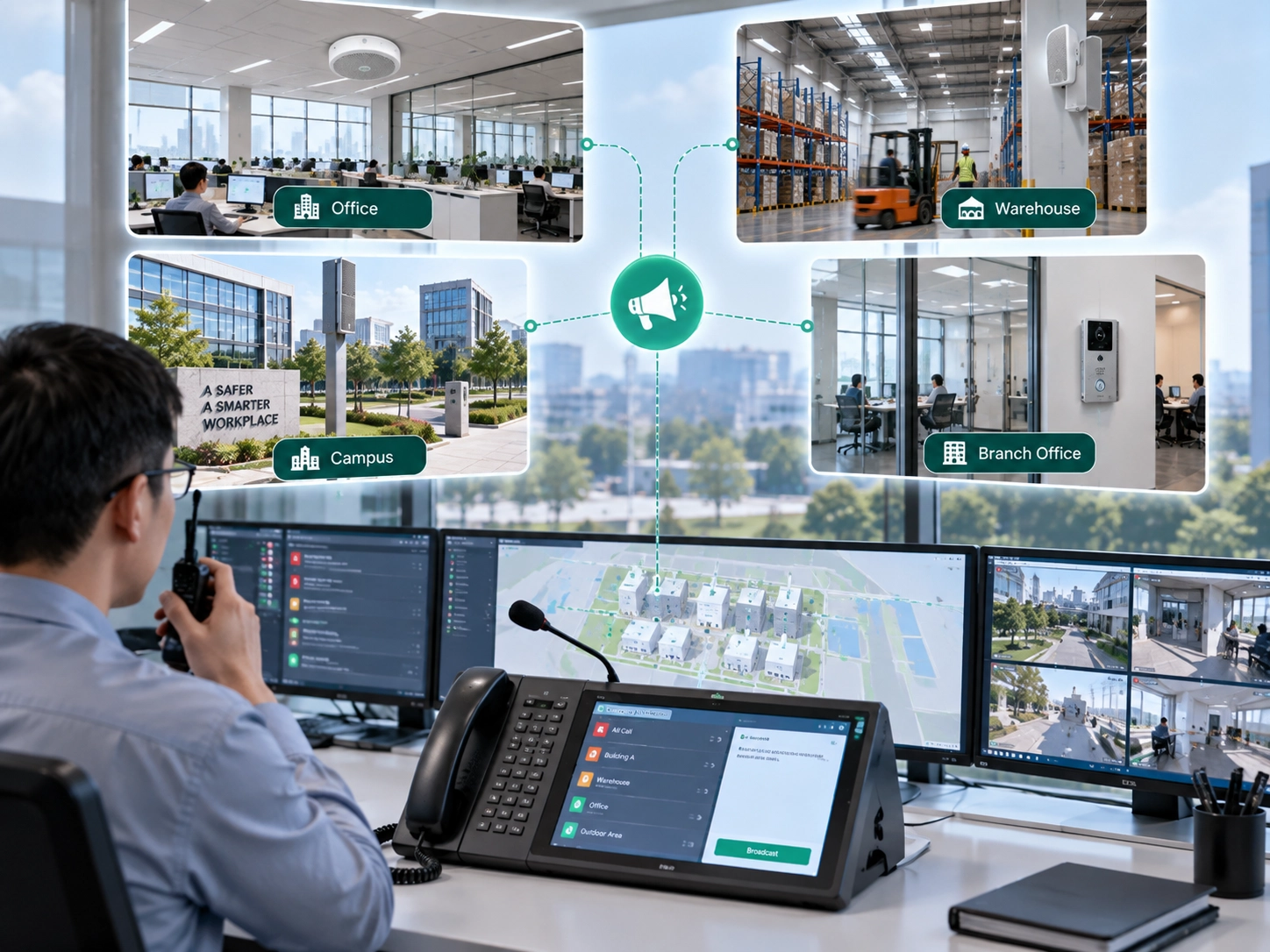
A PA platform may connect to intercom systems, SIP telephony, alarm interfaces, building management tools, dispatch software, or event control systems, so announcements can be triggered manually or automatically. Centralized management lets operators monitor zones, launch announcements, check status, and review events from one interface instead of juggling separate audio islands.
Broadcast live speech to single or multiple zones
Play scheduled tones, notices, or pre-recorded messages
Prioritize emergency announcements over routine audio
Support centralized monitoring and fault supervision
Integrate with telephony, intercom, and alarm systems
Where PA Systems Are Commonly Used
In commercial and public facilities — office buildings, schools, universities, hospitals, retail centers, municipal sites — PA is used for visitor notices, bells, staff paging, and controlled announcements in shared areas. These environments need speech clarity, flexible zoning, and a balance between audibility and comfort. A hospital may need one page in a service corridor and another in a waiting area; a campus may separate academic buildings, sports facilities, and outdoor gathering spaces.
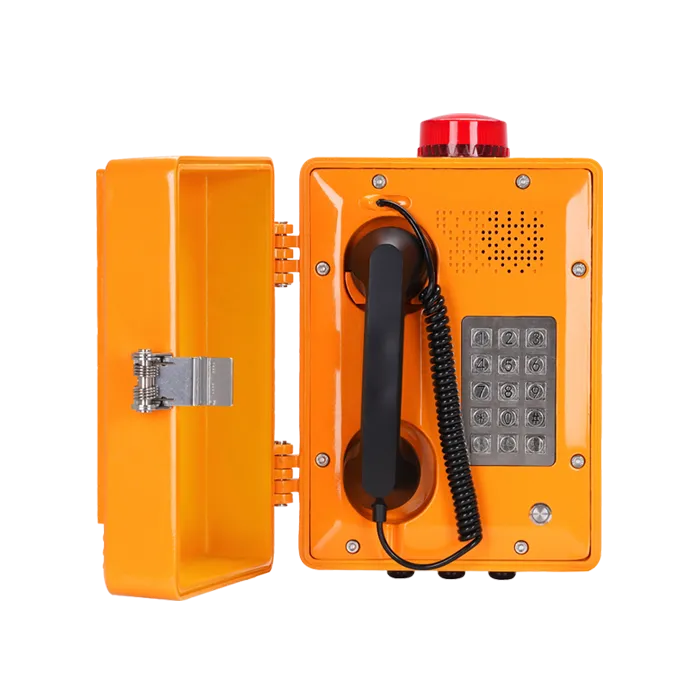
Industrial and transport sites — factories, warehouses, ports, tunnels, rail stations, airports, utility yards, outdoor public areas — place different demands. High background noise, long distances, weather exposure, and operational risk all shape the design. Speaker type, placement, redundancy, and enclosure rating become especially important, and messages are often triggered by dispatch software, a safety platform, a help point, or a central operator console.
PA System vs Related Communication Systems
PA vs Intercom and Paging
A PA system is built mainly for one-to-many audio distribution: one source sends a message to a group of listeners. An intercom system is built mainly for two-way communication between endpoints — conversations, verification, direct assistance. Both may include speakers and microphones, but their roles are not the same. The term paging system is closely related; paging is usually one of the core functions inside a PA system, while the PA label covers the wider infrastructure for zoning, scheduling, emergency override, music distribution, monitoring, and platform integration.
PA vs General Broadcasting
Broadcasting system is a broader phrase that can cover entertainment, media, public information, or site-wide announcements. A PA system is more specific: it is built around intelligible voice communication, controlled audio routing, and location-based sound distribution for operational or safety purposes. A venue may run one audio system for performances and another for safety announcements; even when some infrastructure overlaps, performance systems focus on musical quality and dynamic range, while PA systems prioritize speech clarity, zone management, reliability, and emergency readiness.
How to Choose the Right PA System
Coverage, Intelligibility, and Environment
Start with the site itself. How large is the coverage area? Indoors, outdoors, or mixed? What are the background noise levels, acoustic reflections, and listener distances? A quiet office corridor and a noisy loading yard do not need the same speakers, amplifier strategy, or spacing. Speech intelligibility should be a primary criterion — if people can hear the sound but cannot understand the message, the system has failed in its core mission. Environmental conditions also drive enclosure rating, material durability, and protection against dust, moisture, temperature swing, or vibration.
Integration, Scalability, and Reliability
Look beyond today's needs. A PA system may eventually have to integrate with IP telephony, intercom, alarm platforms, dispatch software, or building control. If growth, remote control, or multi-site coordination is likely, an expandable architecture usually delivers better long-term value than a rigid standalone design. Reliability planning matters just as much: backup power, fault monitoring, amplifier redundancy, network resilience, and maintenance visibility. In mission-critical sites these are not optional extras — they are part of what makes the system trustworthy.
Define coverage zones based on real operational areas
Match speaker types to the acoustic and environmental conditions
Check whether emergency override and priority logic are required
Consider IP, SIP, or hybrid integration needs from the beginning
Plan for backup power, monitoring, and future expansion
At the end of the day, a PA system is more than a stack of speakers. It is a structured communication platform that captures audio, processes it, routes it intelligently, amplifies it, and delivers it where it is needed. Whether the requirement is a simple building announcement system or a networked, multi-zone, IP-based platform, the core principle stays the same: the right message has to reach the right people with dependable intelligibility. That is what turns sound distribution into effective communication.
FAQ
What does PA stand for in a PA system?
PA stands for Public Address. The term describes a system used to address groups of people in shared spaces through loudspeakers, with the goal of distributing spoken information or other audio clearly across a defined coverage area. In professional environments, it usually refers to site communication infrastructure rather than entertainment sound alone, which is why PA systems are commonly linked to paging, zoning, alerts, and operational announcements.
How does a PA system work in a building?
In a building, a PA system takes audio from a microphone, console, media source, or automated trigger, then processes and routes that signal to the correct loudspeakers. Depending on configuration, it may broadcast to one room, one floor, several zones, or the entire building. More advanced systems also manage priority levels, scheduled announcements, emergency override, and fault monitoring, so the same infrastructure supports both daily communication and emergency response.
What is the difference between a PA system and an intercom system?
A PA system is mainly one-way communication from one source to many listeners, built to broadcast efficiently across a wider area. An intercom system is mainly two-way communication between specific endpoints. In modern deployments the two are often integrated, especially in IP and SIP environments, but their primary purposes remain different: one emphasizes broad announcements, the other emphasizes direct interaction.
Can a PA system work over an IP network?
Yes. Many modern PA systems use IP networks to carry audio and control traffic, which makes it easier to connect multiple buildings, manage zones remotely, scale the system, and integrate with telephony, intercom, and software platforms. IP-based architecture is especially useful in distributed sites or organizations planning future growth, because it offers more flexibility than conventional architectures when centralized management is required.
Where are PA systems most commonly used?
PA systems are widely used in schools, hospitals, office buildings, shopping centers, factories, warehouses, transport hubs, campuses, industrial plants, and outdoor public areas. Any site that needs clear communication to groups of people can benefit from a suitable PA design. A campus may prioritize zoning and schedules, while an industrial site puts more weight on rugged speakers, high intelligibility, alarm integration, and reliable operation under demanding conditions.