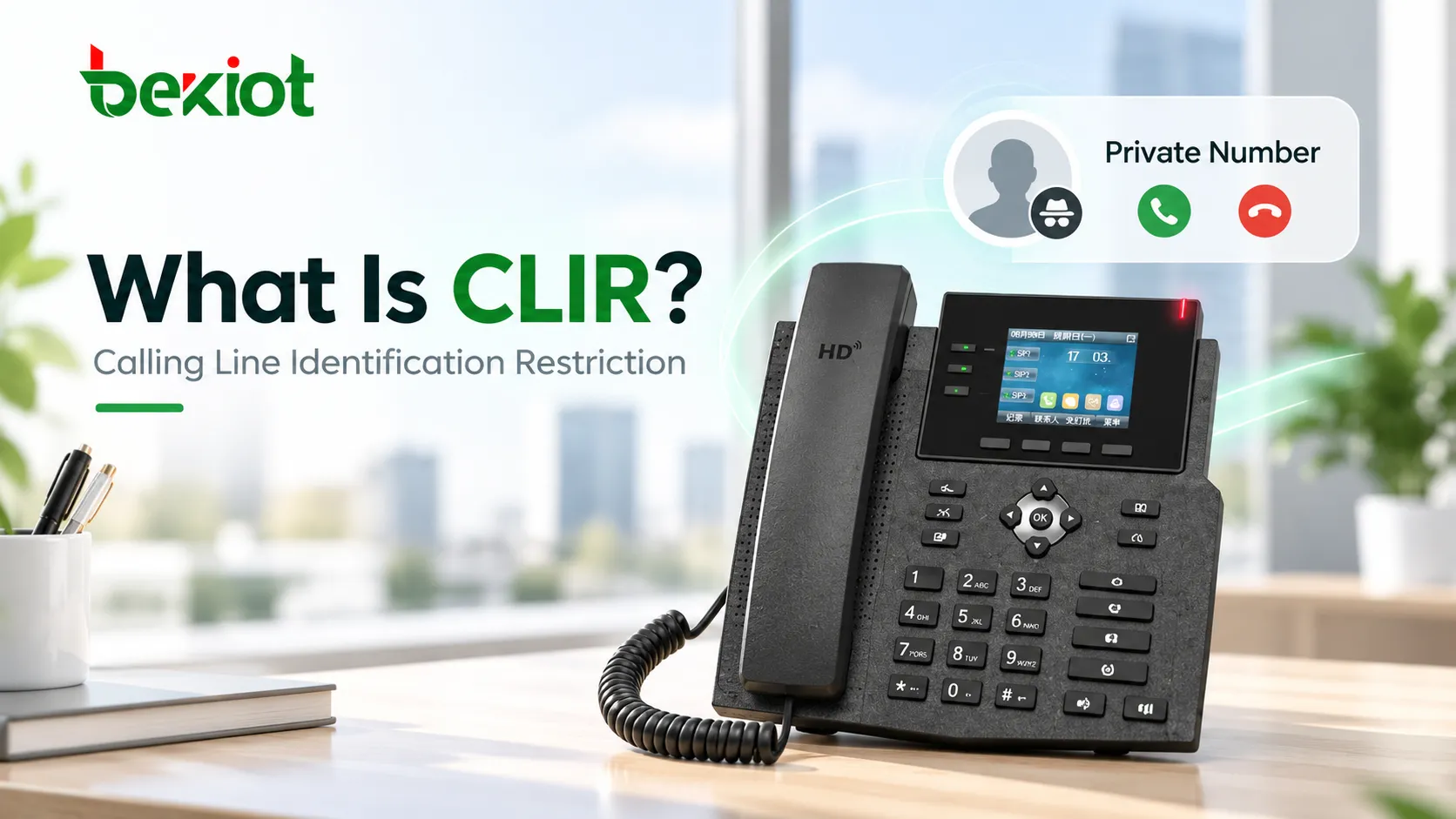
Consider a common situation in business communications: an employee calls a customer from a mobile phone, SIP desk phone, or softphone, but the number displayed to the recipient is not one the organization wants to make public. In certain situations, an employee's personal number or direct-dial extension needs to remain private without preventing the call from connecting. Calling Line Identification Restriction (CLIR) is the supplementary telephony service that controls whether the caller's number is presented to the called party.
CLIR does not remove the telephone number from the communications network, nor does it replace that number with a company's main switchboard number. Whether the restriction works depends on subscriber permissions, PBX outbound routing policies, SIP signaling, and carrier interworking. A deployment therefore needs to verify both caller ID privacy and successful call completion.
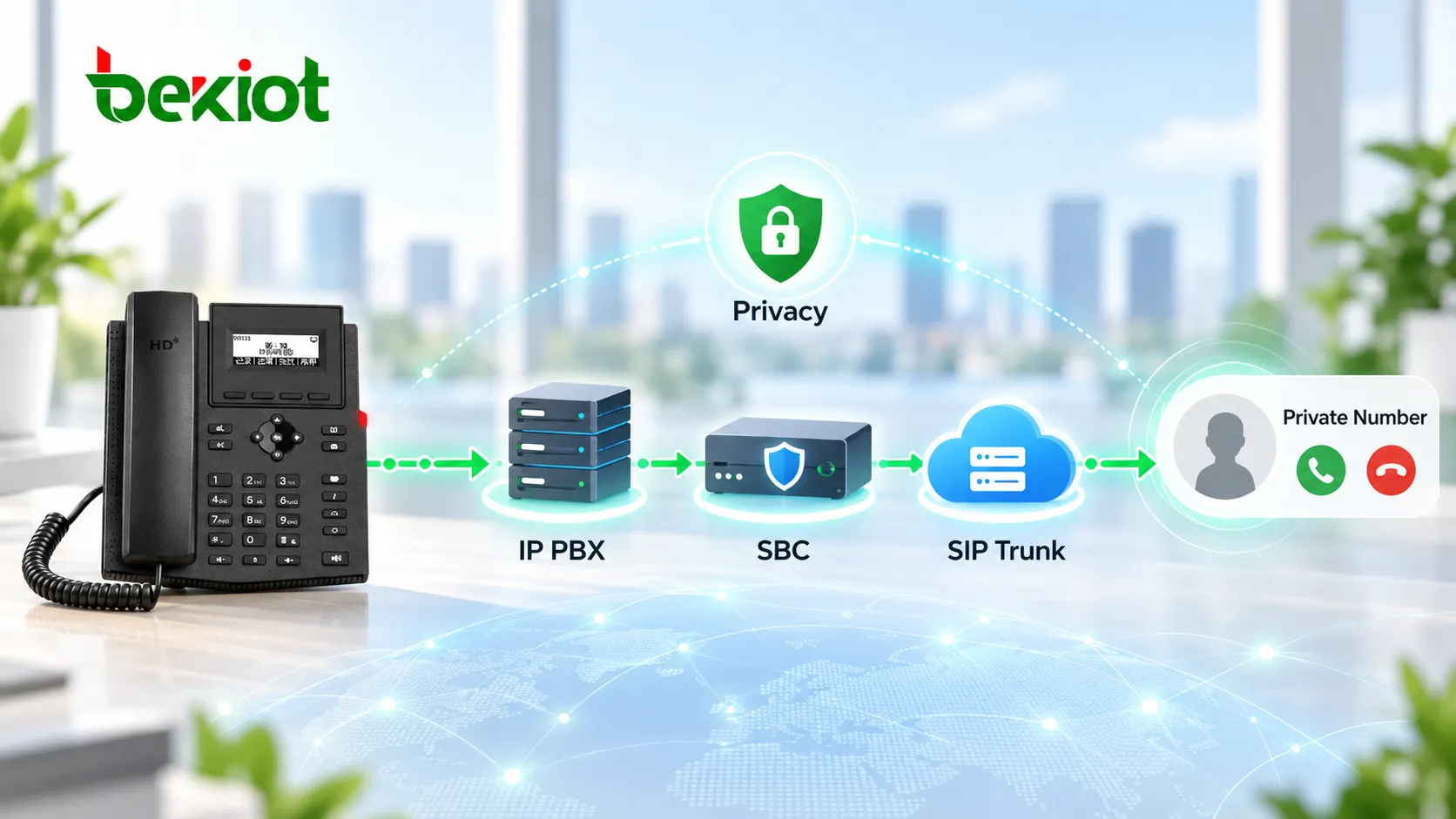
CLIR instructs the originating network to restrict presentation of the caller's identity to the called party.
1. CLIR vs. CLIP: Purpose and Key Differences
CLIR controls whether the called party can see the calling number. When restriction is applied, the recipient's mobile phone or desk phone may display "Private Number," "Anonymous," "Withheld," or "Unavailable." The exact wording depends on the network and receiving device. The originating identity may still be retained by trusted network elements for billing, routing, fraud prevention, and regulatory compliance.
| Function | Primary purpose | Typical display for the recipient |
|---|
| CLIP (Calling Line Identification Presentation) | Makes the calling number available for presentation, subject to network permissions. | An authorized calling number may be shown. |
| CLIR (Calling Line Identification Restriction) | Restricts presentation of the calling number to the recipient. | A privacy indicator such as Private or Anonymous. |
| Outbound caller ID substitution | Uses an authorized business number as the presented outbound identity. | A main switchboard number or published service number. |
Organizations must distinguish between withholding a number and presenting a shared callback number when defining outbound calling policies. Presenting a company number requires appropriate caller ID configuration and carrier authorization; CLIR alone does not provide that function.
2. How Caller ID Restriction Works Across Networks
Privacy Indicators Along the Call Path
A CLIR-enabled outbound call typically passes through an endpoint, a PBX or mobile core network, carrier interconnects, and the terminating network. The originating side requests that the calling number not be displayed. Downstream network elements then distinguish trusted identity information from information that may be presented to the end user. Whether the number is ultimately hidden, and what the recipient sees instead, depends on end-to-end interworking.
In SIP deployments, privacy handling may involve the Privacy header, anonymization of the From header, and identity information carried in trusted domains through headers such as P-Asserted-Identity. The presence of these headers alone does not prove that caller ID restriction has succeeded. An SBC may rewrite signaling, and a carrier may normalize calling numbers according to its own rules.
Permanent CLIR and Per-Call CLIR
Permanent CLIR applies caller ID restriction by default to a user, service group, or line. It suits roles whose direct numbers are not intended for public disclosure. Per-call CLIR applies restriction only to selected calls and is useful for occasional privacy-sensitive contact. Depending on the service, it may be activated with a carrier feature code, a handset setting, or a PBX function key. There is no universal dialing code supported by every network.
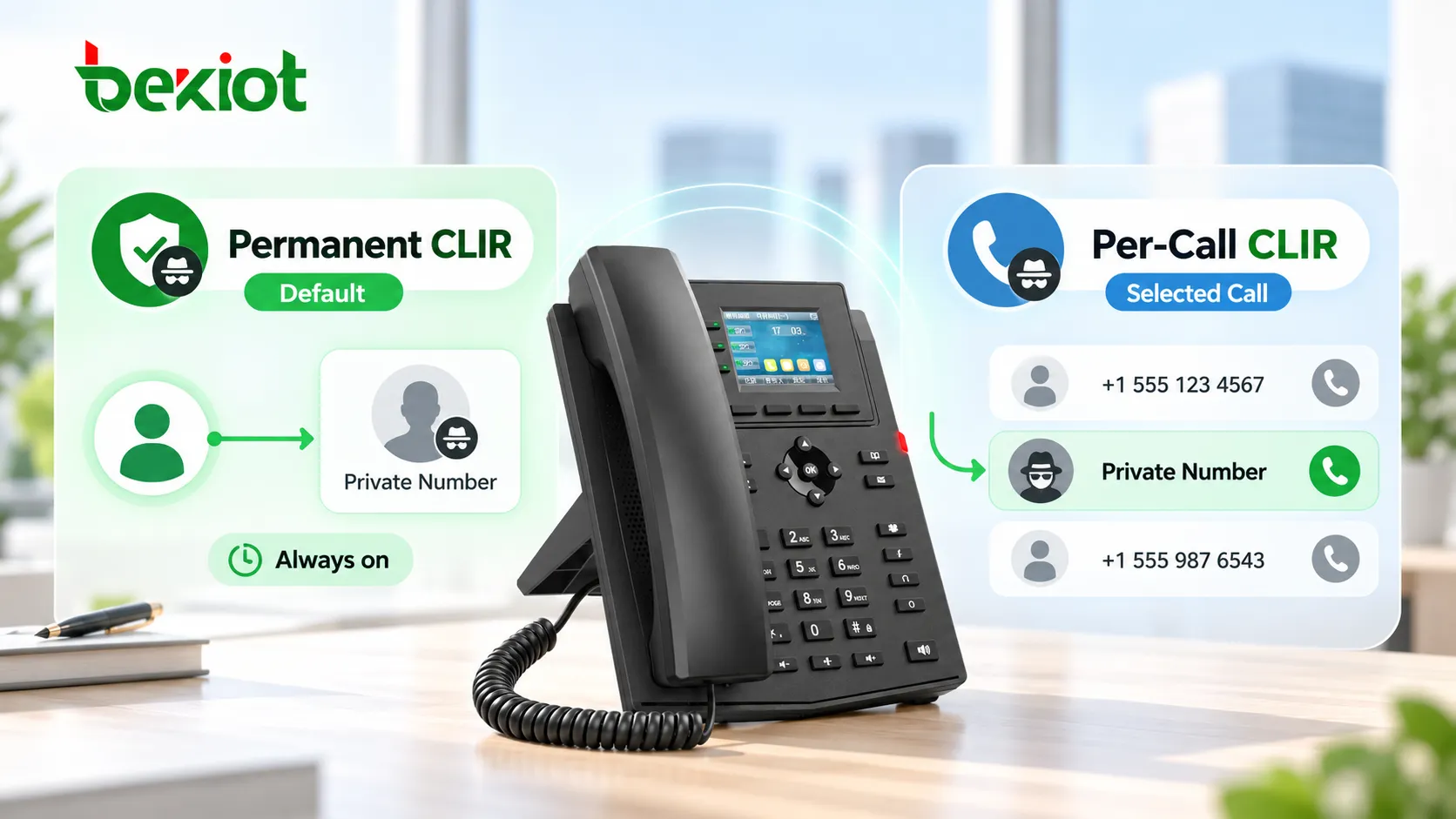
CLIR can be applied as a default outbound policy or activated for individual calls.
3. Implementing CLIR on Mobile Networks, IP PBXs, and SIP Trunks
The control point differs by network type. Mobile users may need their carrier to provision CLIR before a handset setting becomes effective. Enterprise IP PBXs can apply policies to extensions, user groups, outbound routes, or trunks. SIP interconnects also require verification of how the SBC processes identity and privacy information.
| Deployment layer | Main configuration items | What to verify |
|---|
| Mobile network and handset | Carrier provisioning, default restriction, or per-call restriction. | Behavior across receiving networks, international calls, and handset options. |
| IP PBX or UC platform | Extension permissions, user groups, outbound routes, and caller ID policies. | Which users and destination numbers actually trigger restriction. |
| SIP trunk and SBC | Privacy indicators, calling identity headers, and carrier interconnect requirements. | Consistent presentation over primary, backup, and inter-carrier routes. |
A saved PBX setting only confirms that the local policy has been configured. It does not mean every external carrier will display the call as anonymous. Multiple outbound routes, gateway failover, and calls to different destinations can produce different results even when the same extension originates each call.
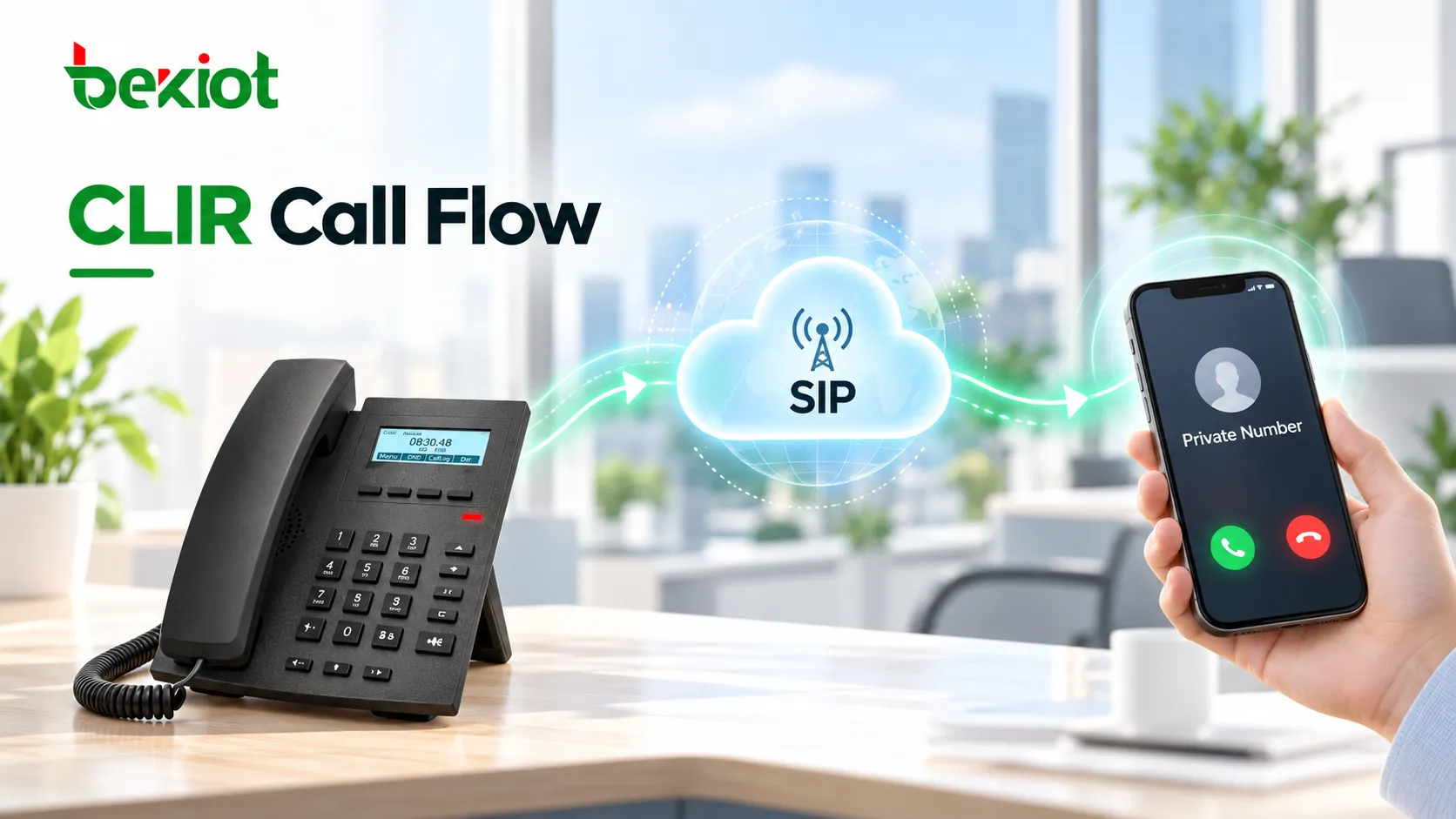
In SIP deployments, CLIR relies on signaling, trunk policies, and interworking across trusted network elements.
4. Enterprise CLIR Configuration and Verification Workflow
Confirm service support: Check CLIR permissions, eligible trunks, number types, domestic outbound restrictions, and special call handling with the carrier. The presence of a "Hide Caller ID" option on a handset is not sufficient evidence of service availability.
Define the scope: Choose permanent restriction, per-call restriction, or presentation of an authorized business number according to job role, user group, and destination. Avoid enabling anonymous calling for everyone by default.
Apply outbound policies: Configure the relevant PBX extension, route, or trunk rules. If an SBC is used, check privacy-header handling and apply consistent policies to backup paths.
Test across networks: Call mobile and fixed-line numbers on different carriers. Record whether the call connects, what appears on the recipient's screen, callback behavior, and call detail record (CDR) status. Test international routes where the business requires them.
Review exceptions: Check anonymous-call rejection, failover to backup trunks, redialing, transfers, and the applicable emergency-calling rules. Confirm emergency-service behavior through the carrier's approved procedures rather than placing unapproved test calls.
For SIP systems, troubleshooting should also compare the actual outbound signaling with carrier feedback. Look for SBCs removing privacy indicators, routing rules rewriting calling numbers, or trunks rejecting anonymous identities. Illustrative SIP messages are not a substitute for packet captures from the deployed environment.
5. Business Use Cases and Callback Number Strategies
Field service and remote work: Service engineers or temporary on-call staff may use mobile devices to contact customers. CLIR can reduce the exposure of personal numbers. Healthcare and sensitive case communications: Authorized roles may restrict direct-number presentation in line with relevant privacy requirements, reducing direct callbacks to individual staff extensions. Short-term project coordination: Employees working rotating assignments may use per-call restriction when contacting external parties from temporary outbound lines.
Anonymous calls may, however, receive fewer answers. For sales, routine customer service, and after-sales follow-up, presenting an authorized company switchboard or service-queue number may make calls easier to recognize and return. Businesses can establish separate policies for withheld numbers and approved company caller ID, while providing a clear callback channel wherever a return call is expected.
6. Limitations, Risks, and Common CLIR Problems
CLIR restricts the number shown in an ordinary recipient interface; it does not prevent carriers from identifying the originator. Nor does it guarantee that every destination will accept an anonymous call. Some handsets, spam-screening services, and enterprise telephone systems reject calls with withheld caller ID. Special services and regulated call categories may also use different identity-handling rules.
| Observed issue | What to investigate |
|---|
| CLIR is enabled, but the recipient still sees the original number. | Outbound routes, SBC rewriting, carrier CLIR provisioning, and terminating-network support. |
| Some carriers show Anonymous, while others do not. | Inter-carrier handling and privacy policies on different trunks. |
| Anonymous outbound calls are rejected or fail to connect. | Recipient screening rules, carrier restrictions, and calling-number validation requirements. |
| The original number becomes visible after failover to a backup trunk. | Consistency of caller ID presentation rules and privacy indicators across primary and backup routes. |
Before going live, log the time, outbound trunk, destination network, expected caller ID display, and actual result of each test call. Access to SIP traces and call records containing identity information should be controlled. The objective is a caller ID policy that can be verified without compromising normal call delivery or applicable business obligations.
Frequently Asked Questions
Is CLIR the same as blocking a phone number?
No. CLIR restricts presentation of the calling number to the recipient; it does not block the call itself. Number blocking or blacklisting prevents or filters specified calls and is a separate function.
Can I hide my caller ID for just one outbound call?
Yes, if the carrier and phone platform support per-call restriction. The activation method depends on service provisioning, the handset, and the PBX configuration. There is no universal code.
Can customers call back a company service line when CLIR is enabled?
CLIR does not automatically present a company hotline number. To provide a callable return number, use an authorized outbound business caller ID arrangement and configure it separately from the number-withholding policy.
Why is the caller's number still visible when the SIP message has a privacy indicator?
An SBC, outbound trunk, or inter-carrier network may rewrite or ignore the indicator. Check actual outbound SIP messages, carrier policies, and the presentation observed on the recipient's device before determining the cause.
Does CLIR prevent emergency services from identifying the caller?
Emergency calls may be subject to special network and regulatory rules for identity and location. The behavior cannot be inferred from ordinary caller ID restriction tests. Configure and verify emergency calling according to the applicable carrier and local authority requirements.