Why Are SIP Intercoms Replacing Traditional Entry and Help Point Systems?
SIP intercoms connect entrances, gates, and help points to IP PBX, video, and access control systems over standard networks. This guide explains how they work, what they replace, key integration benefits, and selection factors for real-world projects.
Becke Telcom
Walk through a modern office lobby, a hospital entrance, or a gated logistics yard, and the call point on the wall is increasingly likely to be a SIP intercom rather than a legacy analog station. The reason is not just that IP networks are everywhere. It is that SIP intercoms remove the old boundaries between voice calling, access control, and centralized management. A single device can now ring a reception phone, stream video to a guard client, unlock a door through a relay, and log the entire interaction in the same platform that runs the rest of the site's communications.
This shift matters because entry and help point communication has always been about speed and clarity. A visitor presses a button and expects a quick answer. A worker at a remote gate needs to reach the right control room without confusion. A person at an emergency point needs the call to go somewhere immediately. SIP intercoms deliver that by registering to the same IP PBX or communication server that already handles desk phones and dispatch consoles. The intercom stops being an isolated box and becomes part of a managed network workflow.
How a SIP Intercom Actually Functions
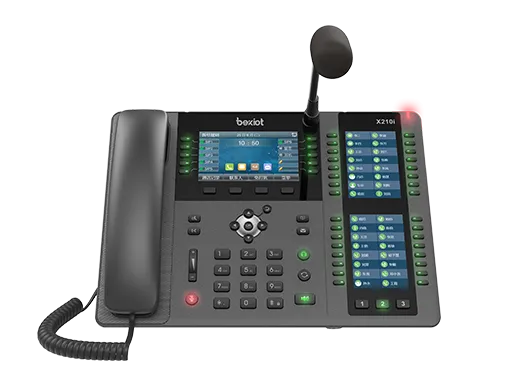
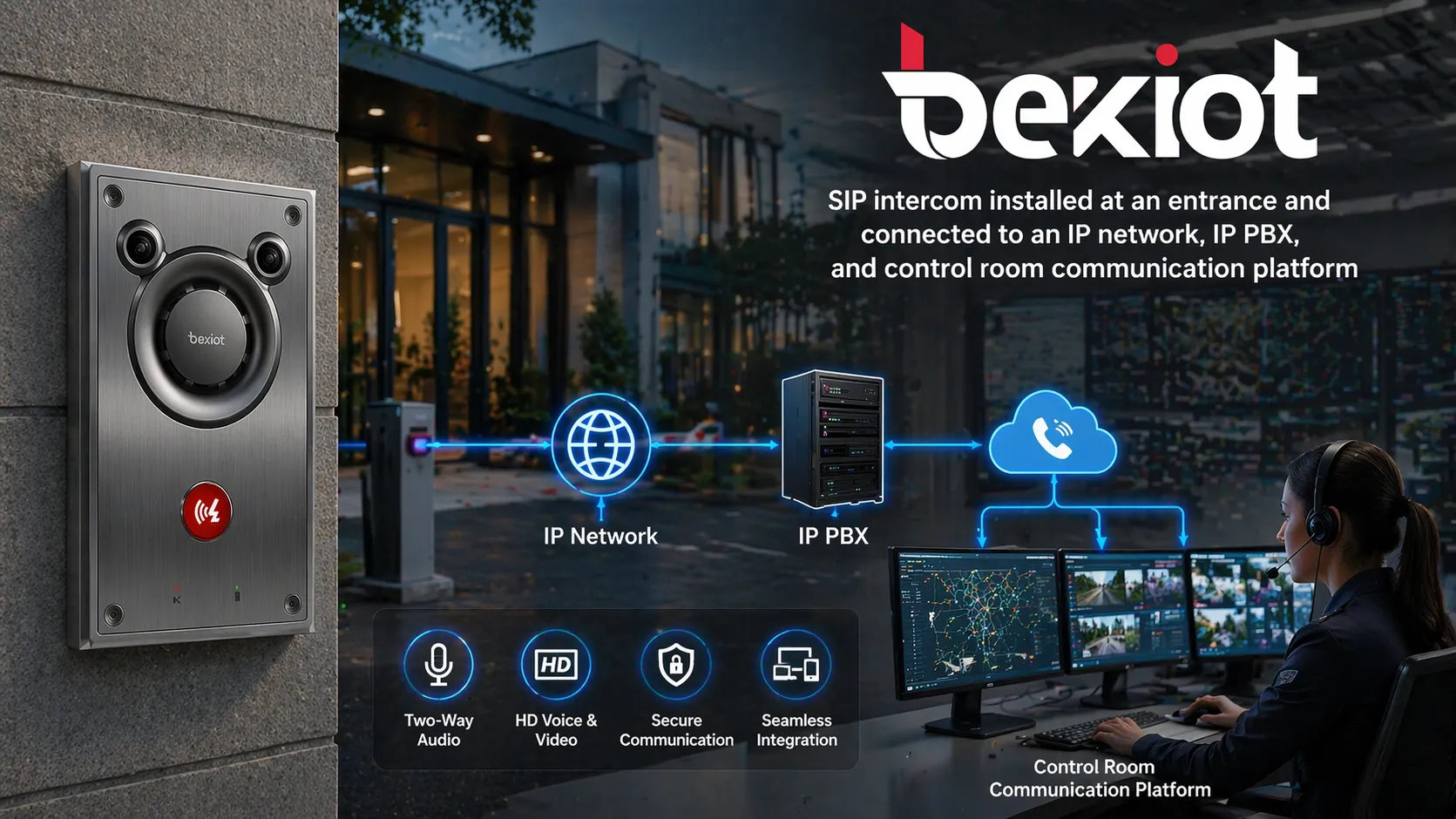
On the surface, the operation is simple. A person presses a button, the device places a call, and the receiving party answers on a desk phone, soft client, or control room console. Behind that action, the intercom is behaving like a standard SIP endpoint. It connects to the local IP network, registers with a SIP server or IP PBX, and uses the same signaling rules as any other voice device. The difference is that the hardware is built for fixed installation at an entrance, corridor, gate, or help point rather than a desk.
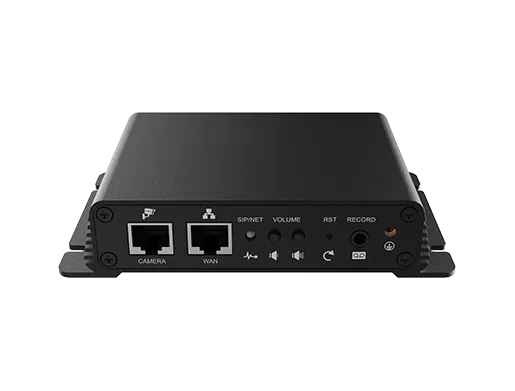
Once the call is established, two-way audio flows over the network. If the model includes a camera, live video travels alongside the voice stream so the operator can see who is calling. Many units also include relay outputs, digital inputs, or integration APIs that allow the answering party to unlock a door, trigger an alarm workflow, or link the call to a CCTV recording. This combination of voice, video, and control is what makes SIP intercoms more useful than a simple intercom phone.
Because everything runs over IP, the device can participate in broader communication logic. A call from a loading dock can ring a specific ring group. A help point can escalate to a second destination if no one answers. A forced door condition can generate a priority alert. The intercom becomes an input to the site's response process, not just a standalone speaker.
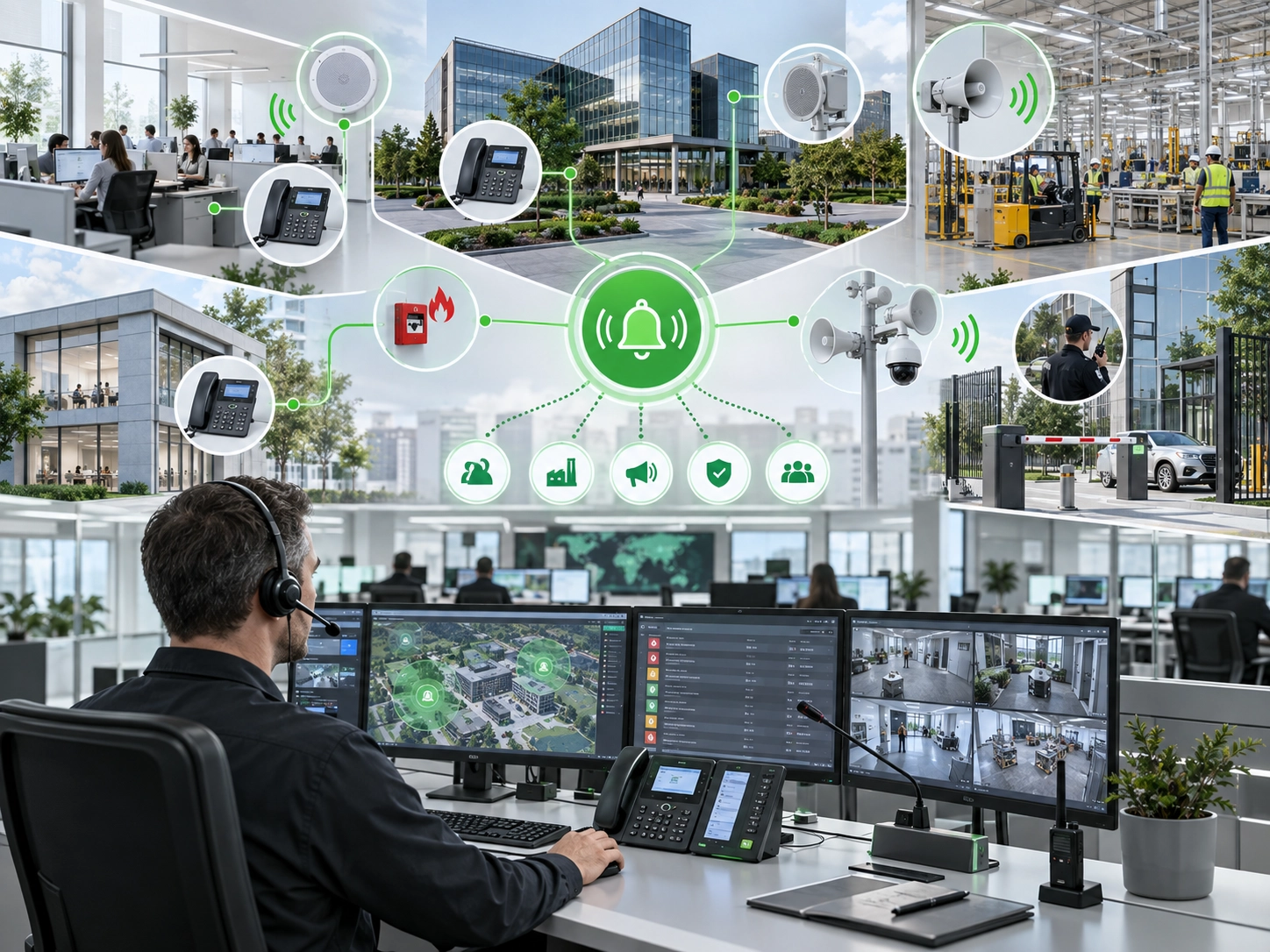
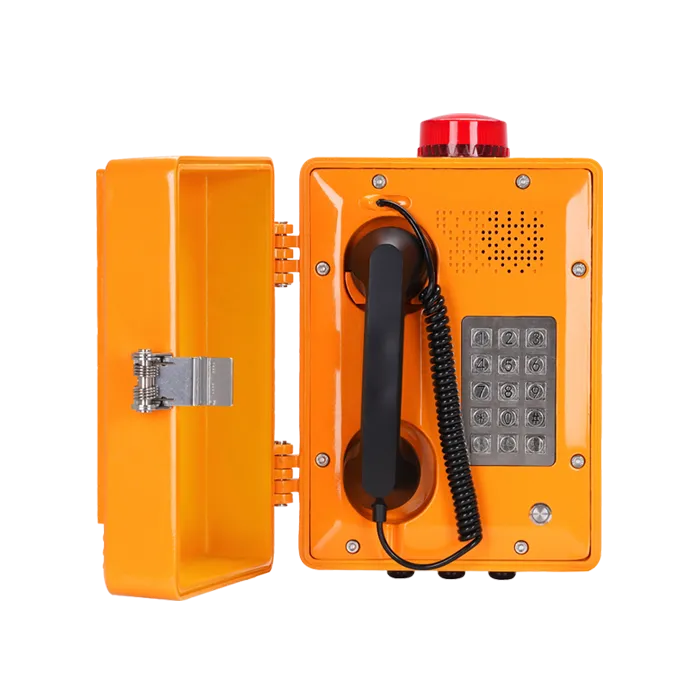
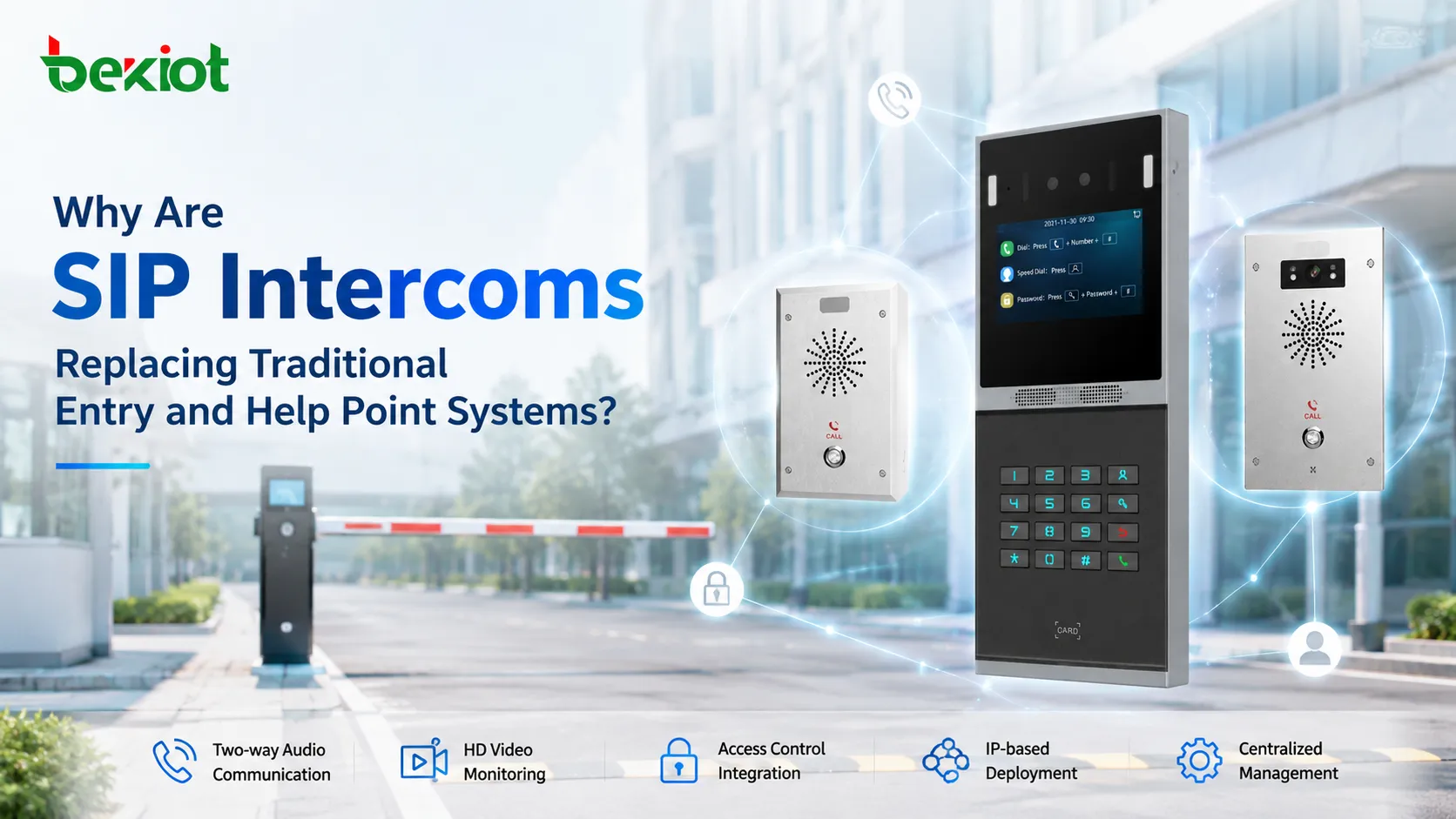
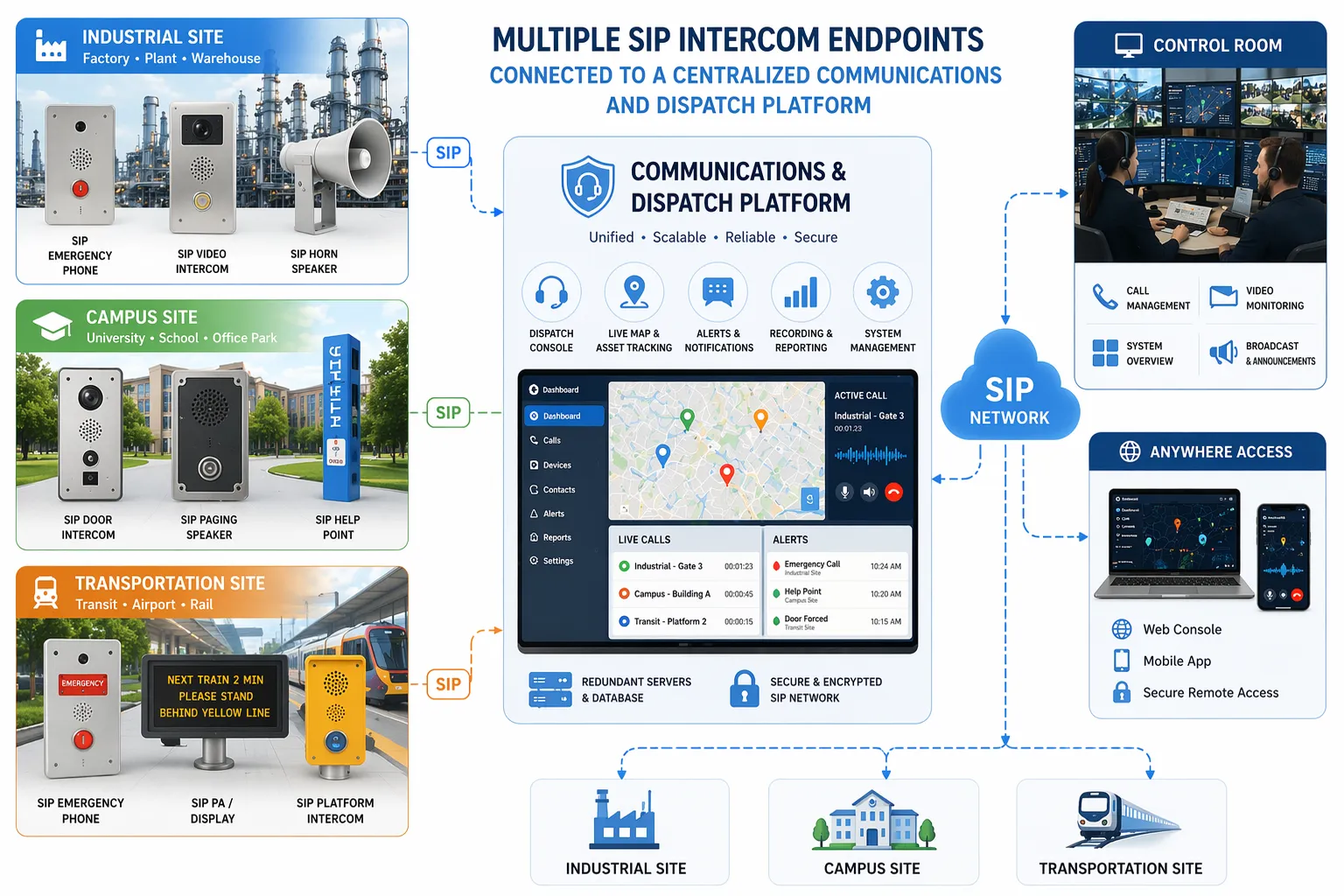
SIP intercoms are commonly deployed at entrances, industrial areas, and public help points, where they connect directly to an IP communication platform.
What Problems Do SIP Intercoms Solve?
Legacy intercom systems often live in their own world. They may use dedicated wiring, proprietary door stations, and a separate answering device that cannot reach other phones in the building. That isolation creates friction. A guard at the front desk may be the only person who can answer the side gate. A call to an empty office goes unanswered. A campus with multiple entry points needs separate monitoring interfaces.
SIP intercoms change that pattern. When the intercom registers to an IP PBX, it can be treated like any other extension. Calls can route by time schedule, ring multiple destinations, forward to mobile clients, or follow escalation rules. A visitor call at the back door can reach the same reception team as a call to the main desk. A help point can ring a security group that spans multiple buildings. This flexibility reduces missed calls and makes response more consistent.
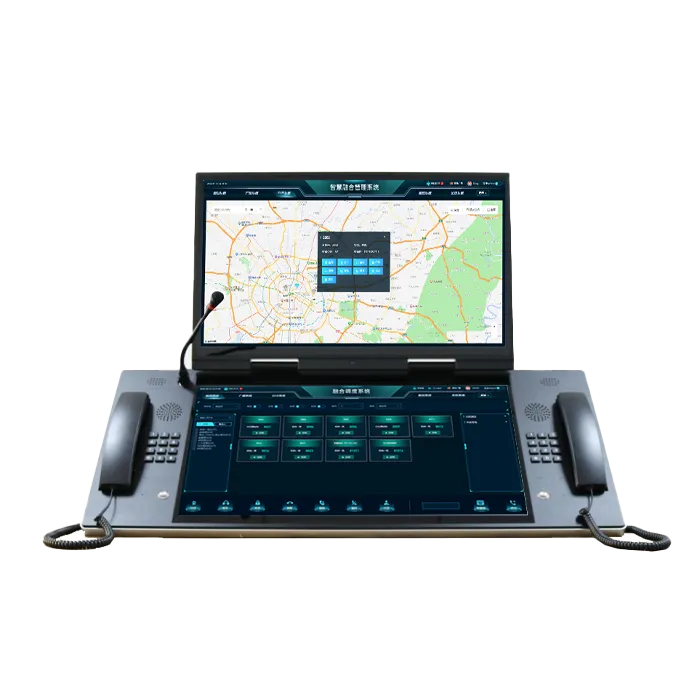
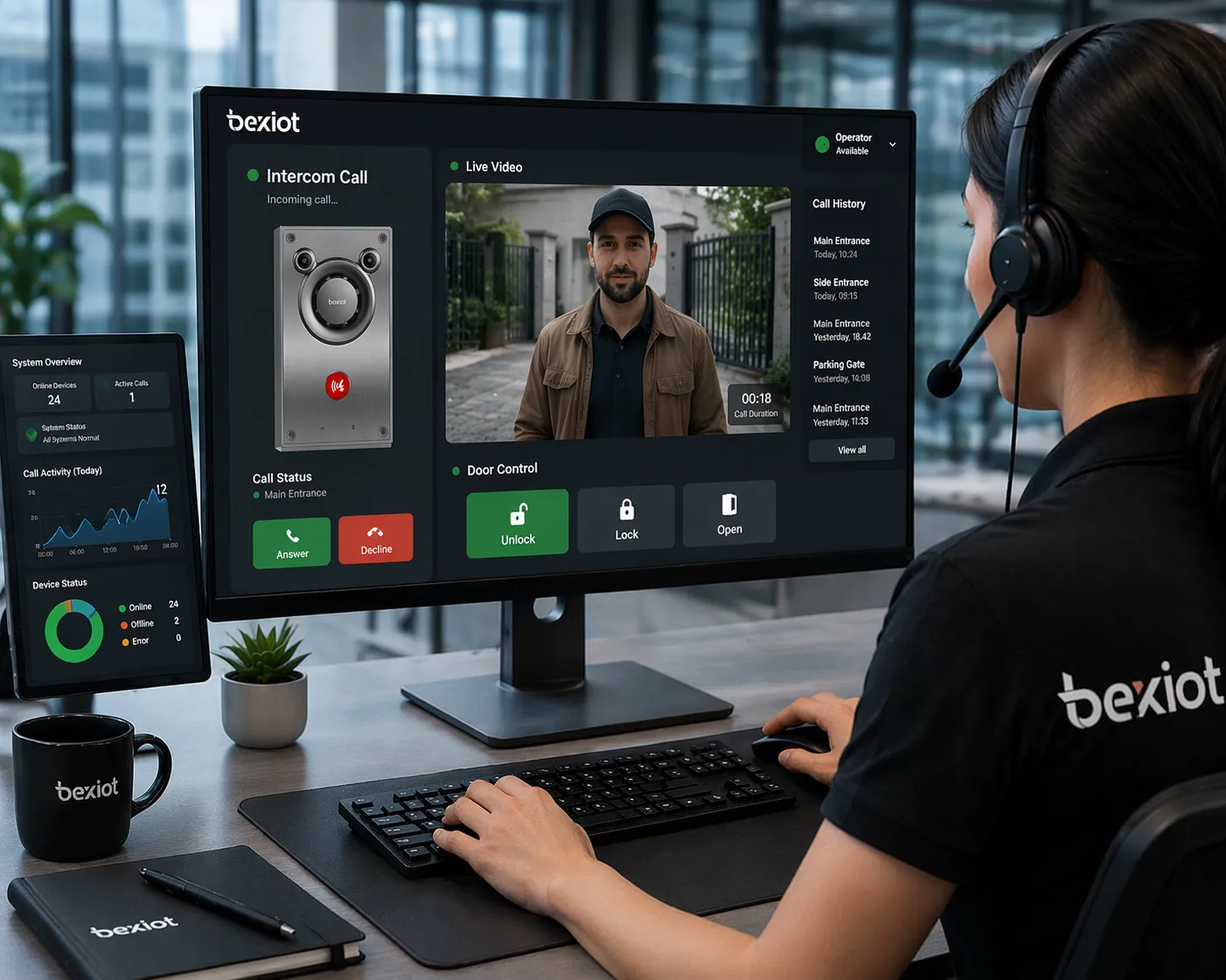
The integration value is even greater when video and access control enter the picture. Instead of checking a separate camera feed, the operator sees the caller directly in the communication client. Instead of walking to the door, they can release the lock from the same screen. This convergence removes steps from the workflow. It also creates a more complete event record because the call, the video, and the access action can be logged together.
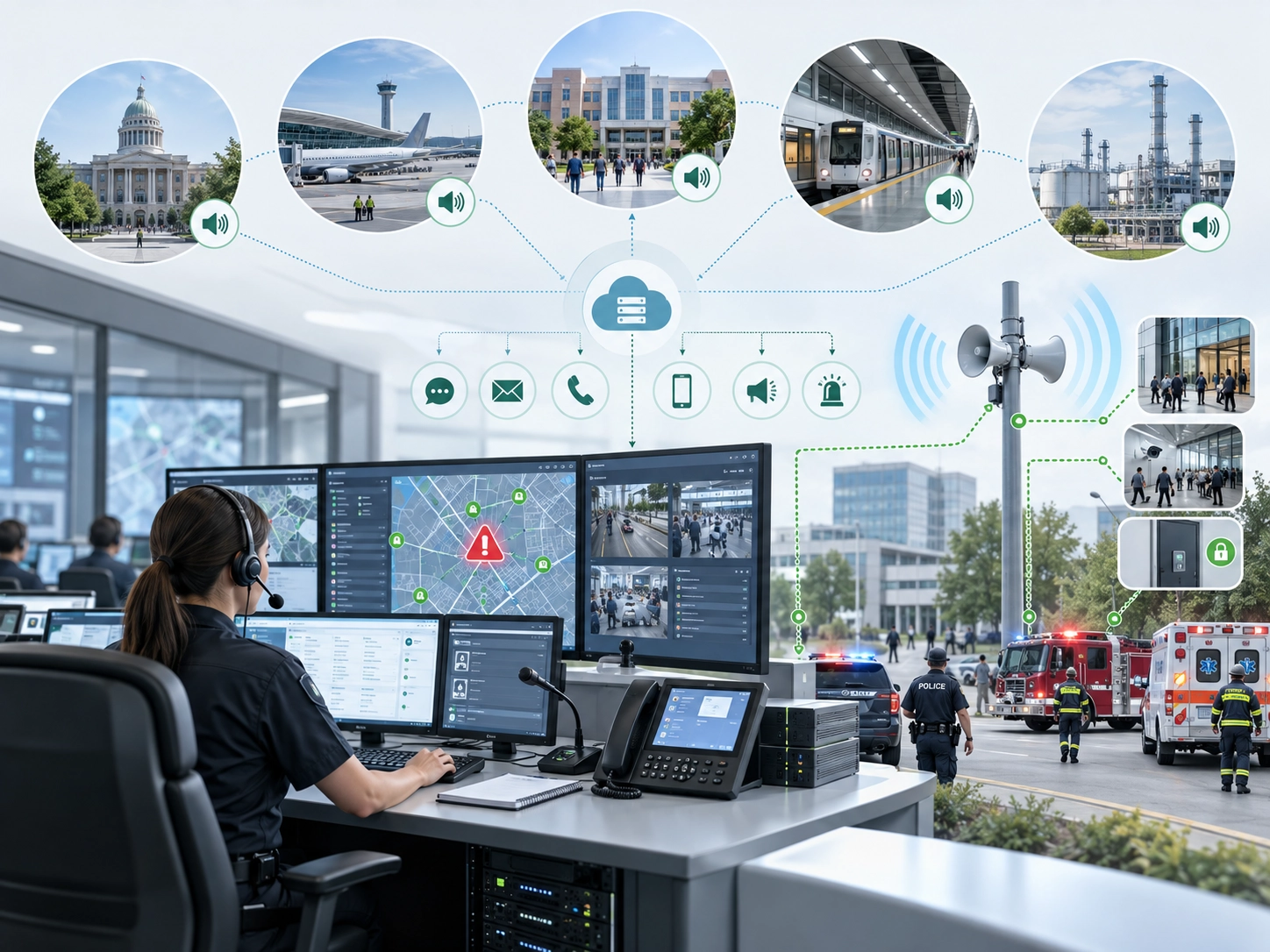
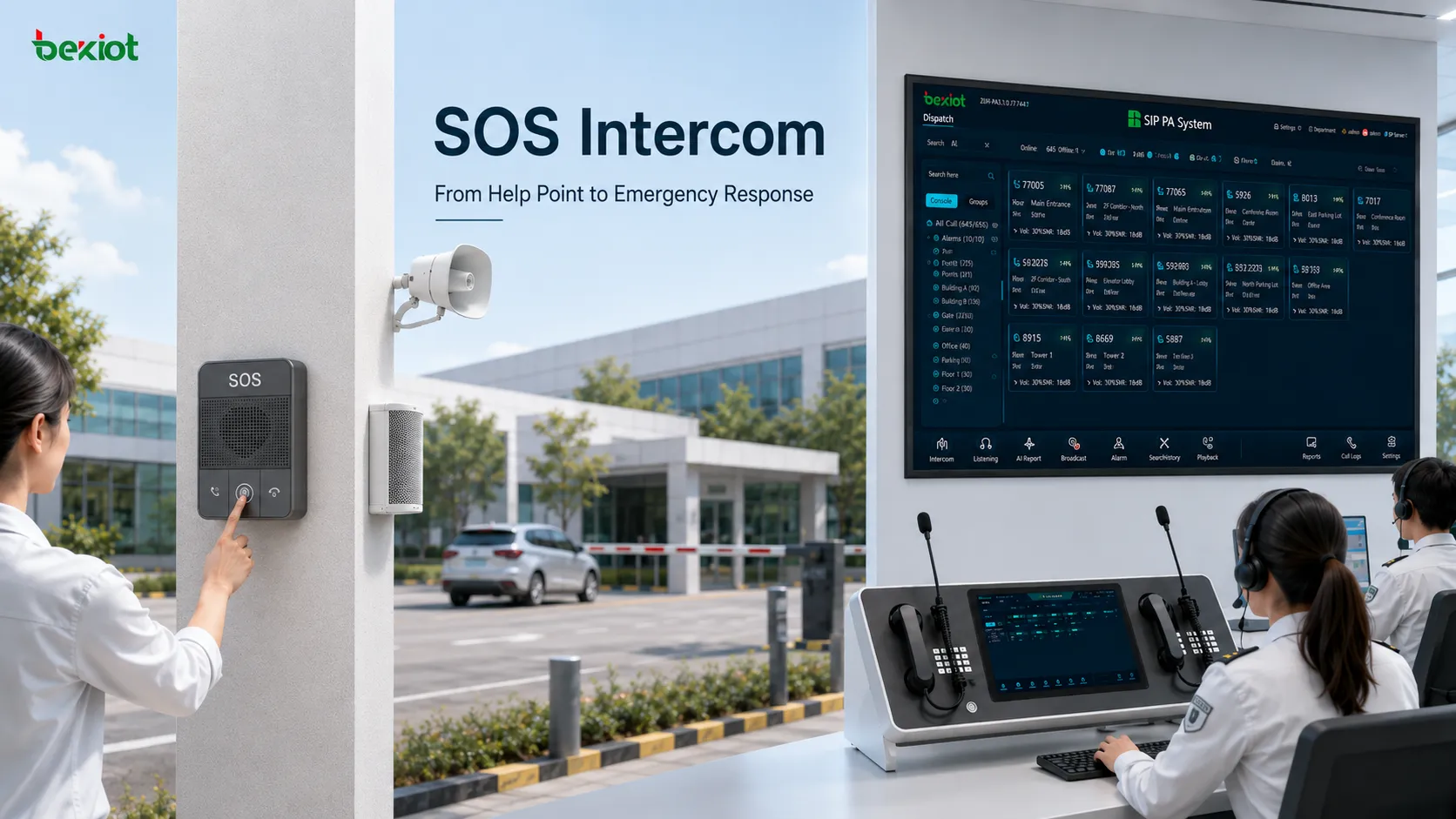
In industrial and public environments, the same principles apply. A fixed SIP intercom at a tunnel cross passage or a platform help point gives people a dependable way to reach assistance without needing a mobile device. The location is known, the power is permanent, and the call path is structured. That is why the technology continues to spread beyond commercial buildings into transport, utilities, and heavy industry.
Where the Technology Fits Best
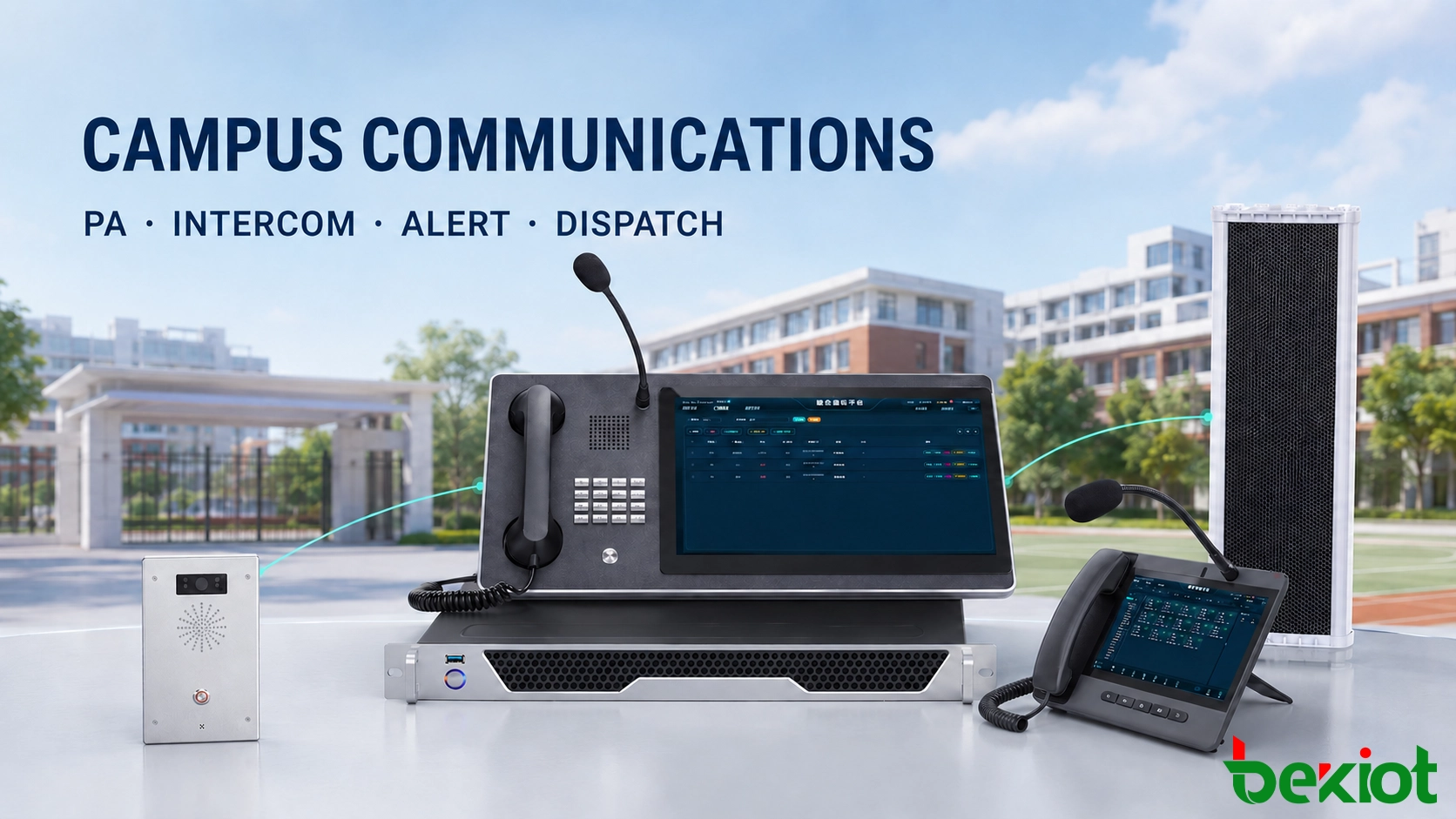
Commercial buildings and campuses are the most visible application. Lobbies, parking entrances, delivery docks, and perimeter gates all need controlled communication with reception, security, or property management. SIP intercoms fit naturally because these sites already have structured cabling, managed networks, and IP-based voice systems. Adding an intercom to the existing PBX is often simpler than maintaining a separate door phone network.
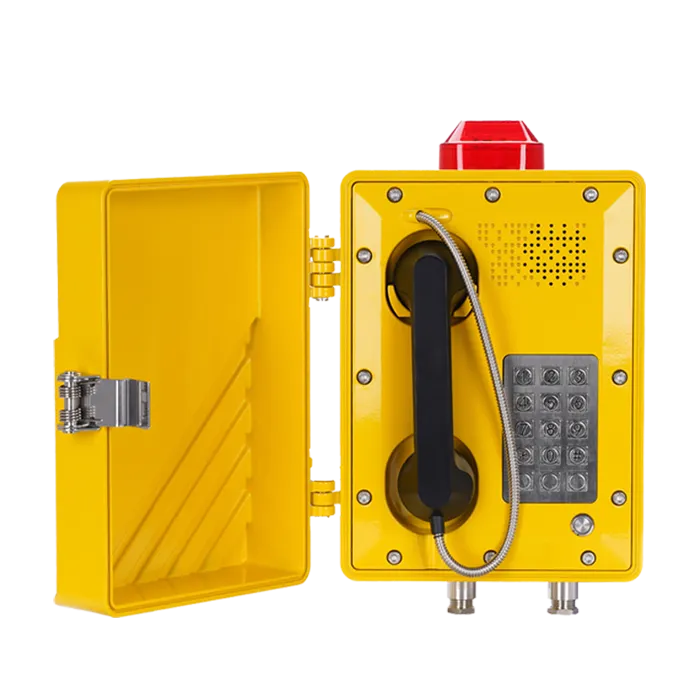
Industrial and utility environments present a different set of requirements. Noise, dust, moisture, and rough handling mean the intercom must be built for durability. But the underlying communication logic remains the same. A worker at a plant gate can press a button and reach the control room. A maintenance tech at a remote pump station can report a fault. The SIP layer ensures that these field endpoints stay connected to the same management and dispatch framework used by the rest of the operation.
Transportation and public assistance points also benefit from the technology. Stations, platforms, parking structures, and roadside cabinets often need fixed call points that are visible, easy to use, and reliable over long periods. When connected to a centralized control room, the intercom supports faster incident handling and better coordination with CCTV or announcement systems.
With audio, video, and relay control in one workflow, a SIP intercom can support both communication and managed entry decisions.
What to Look for Before Choosing a Model
The first question is not about features but about environment. A compact indoor intercom will fail quickly on a washdown-prone loading dock or a coastal gate. The speaker must be loud enough for the background noise. The enclosure must survive the weather. The microphone must handle wind, echo, and acoustic interference. Choosing the right hardware means matching the physical design to the actual site conditions.
The second question is about integration. Does the site use an IP PBX, a SIP server, or a unified communications platform? Will the intercom need to ring desk phones, soft clients, or a dedicated console? Does the project require video verification, relay outputs for door release, alarm inputs, or API integration with a security or dispatch system? These requirements define whether a basic audio-only model is sufficient or whether a more advanced unit is needed.
The third question is about scale. A single entrance may only need a straightforward configuration. A multi-building campus, a port, or a network of highway help points needs centralized management, consistent provisioning, and a repeatable deployment model. In those cases, the intercom should be viewed as part of a broader communication strategy, not as a one-off hardware purchase. The right choice is the one that can grow with the organization without requiring a complete redesign later.
What Changes When the Intercom Joins the IP Ecosystem
The most significant shift is operational visibility. When an intercom exists inside the SIP environment, it can be monitored, configured, and routed like any other voice endpoint. Administrators can see registration status, troubleshoot call failures, and apply consistent policies. That is much harder to achieve with isolated analog or proprietary systems.
Another change is flexibility in response design. The same SIP intercom can serve different purposes at different times. During business hours, it rings reception. After hours, it routes to a security desk or mobile guard. During an emergency, it may trigger a priority call and lock release or alarm workflow. This behavior is controlled by the platform logic, not by fixed wiring. As operational needs change, the response can change without replacing the hardware.
Finally, the convergence of voice, video, and access action reduces the number of separate systems that operators must watch. Instead of a door phone, a camera, and a lock controller, the user sees one workflow: the call comes in, the video appears, the access decision is made, and the event is recorded. That simplicity has real value in fast-moving situations where every extra step costs time.
The strongest deployments treat the SIP intercom as an edge device in a connected response system, not as a standalone call box.
SIP intercom architecture can scale from a single entry point to a multi-site communication and response network.
Frequently Asked Questions
Can a SIP intercom call a mobile phone or soft client?
Yes. Because the intercom registers to a SIP server or IP PBX, it can be routed to any SIP-compatible endpoint, including desk phones, softphones, mobile clients, and dispatch consoles. The exact behavior depends on the routing rules configured in the communication platform.
What happens if the IP network goes down?
SIP intercoms depend on network availability for call setup and media transport. Some deployments include redundant network paths or local backup power, but the device itself does not operate independently of the IP infrastructure. For critical sites, network resilience and failover planning are part of the system design.
Is video necessary for a SIP intercom, or is audio enough?
Audio-only intercoms are sufficient for many simple communication points. Video becomes valuable when the answering party needs to verify identity, assess a visitor request, or make an access decision remotely. The right choice depends on the operational workflow at each specific location.
How do SIP intercoms handle outdoor installations?
Outdoor-rated SIP intercoms typically include weather-resistant enclosures, sealed cable entries, and audio components designed for open-air conditions. It is important to check the environmental rating and mounting requirements, because not every SIP intercom is intended for outdoor use.
Can multiple SIP intercoms be managed from one location?
Yes. When deployed as part of a centralized IP communication system, multiple intercoms across different buildings or sites can be provisioned, monitored, and updated from a single management interface. This is one of the main advantages over traditional analog intercom networks.