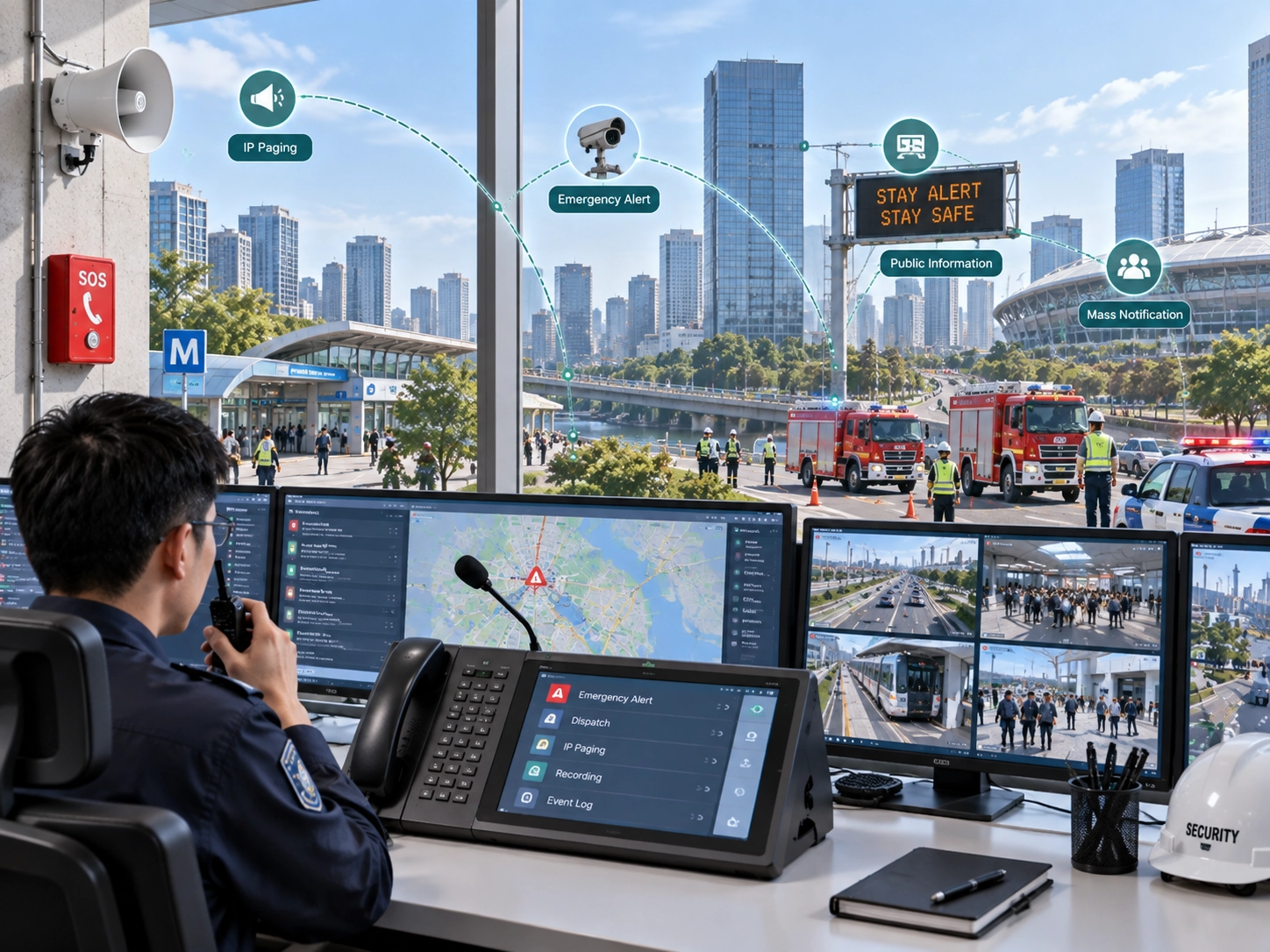
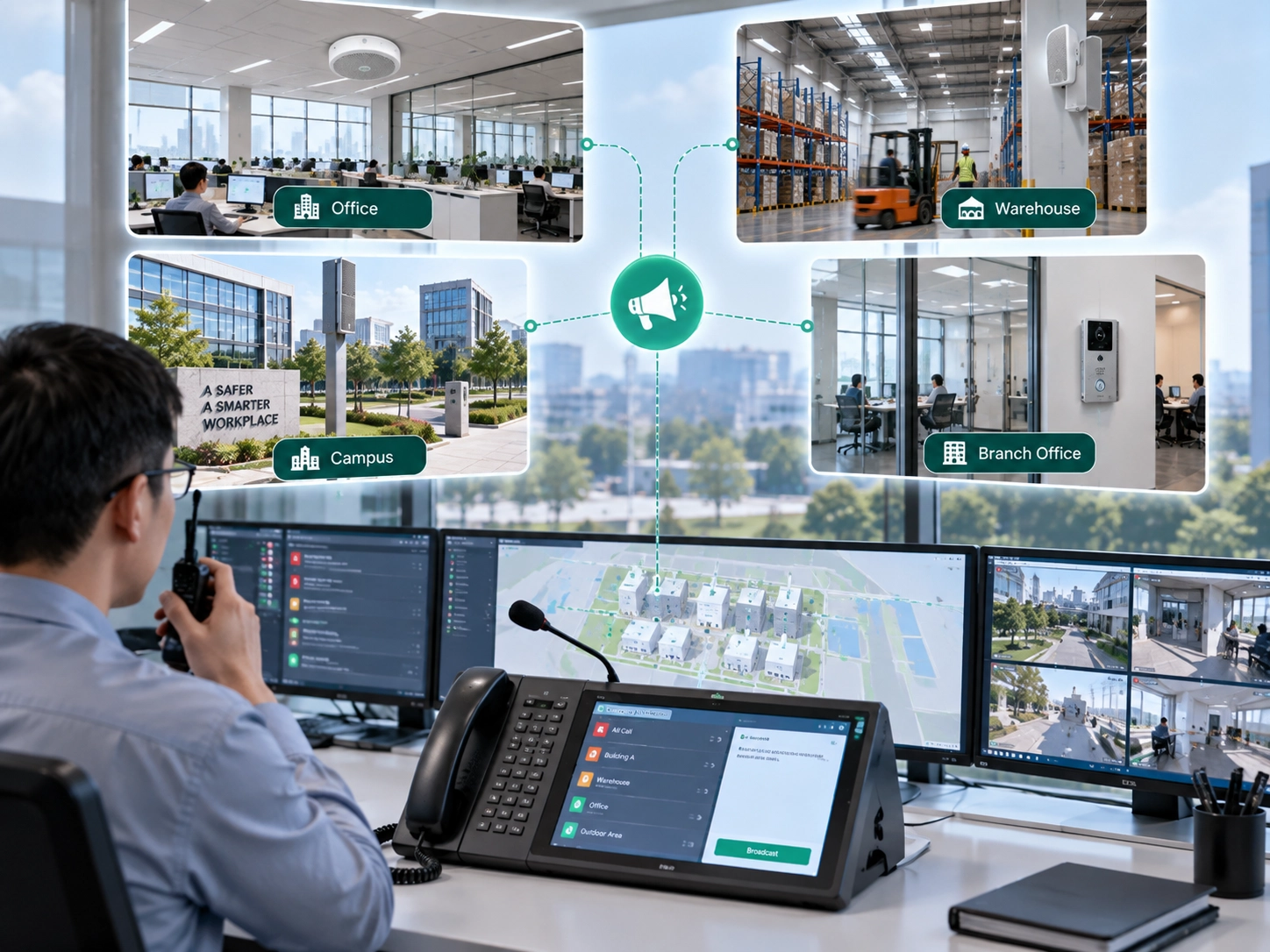
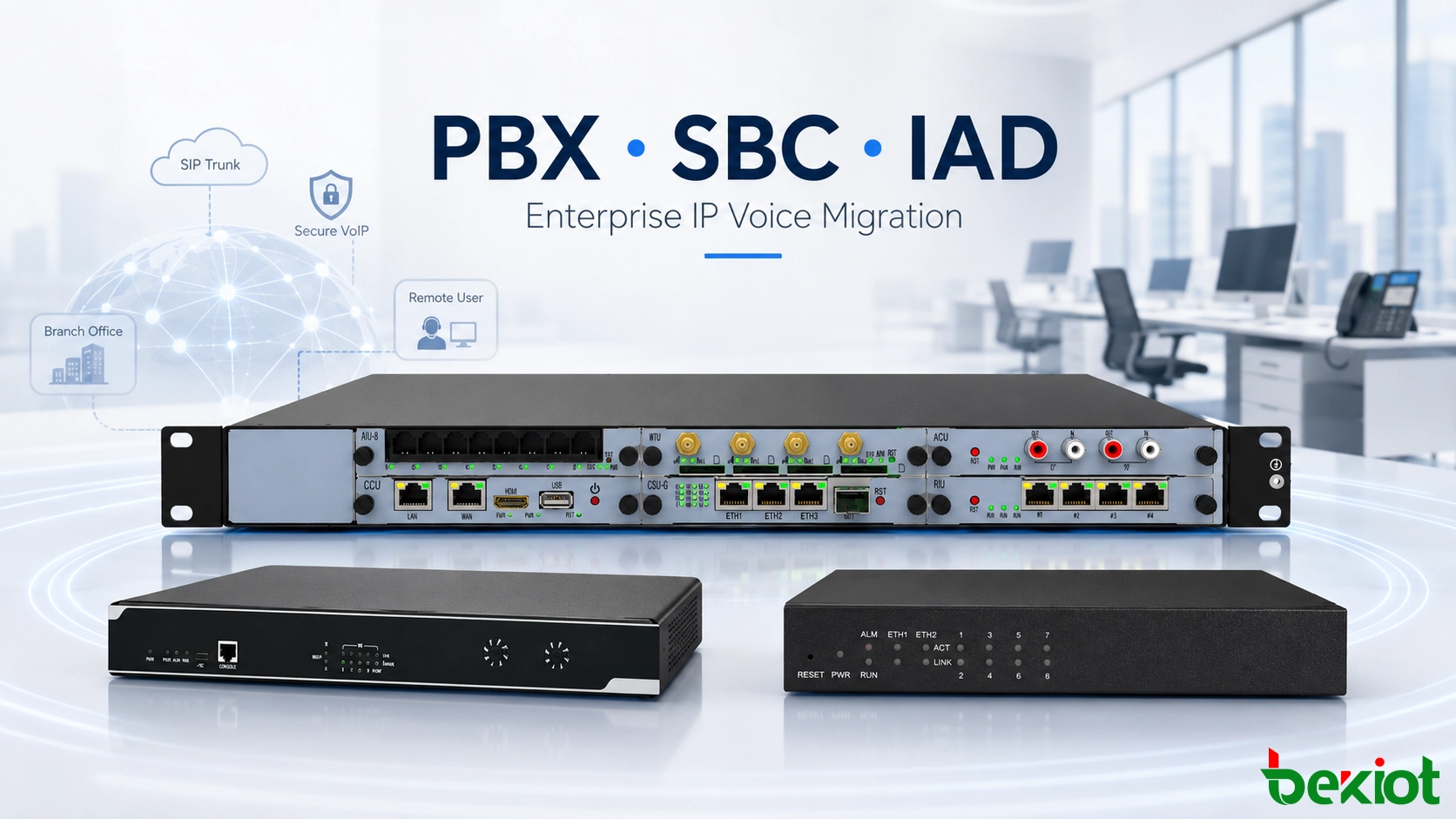
PBX, SBC and IAD work together in enterprise voice migration by centralizing call control, securing VoIP access and connecting legacy analog phones to modern IP communication systems.
Becke Telcom
As enterprise communication moves from traditional telephone lines to IP-based networks, many organizations face a practical question: how can existing phones, branch offices, remote users, SIP trunks and service workflows be connected without interrupting daily business? A successful migration is rarely completed by replacing every device at once. It is usually built through a planned architecture that protects existing investment while moving the organization toward a more flexible IP voice system.
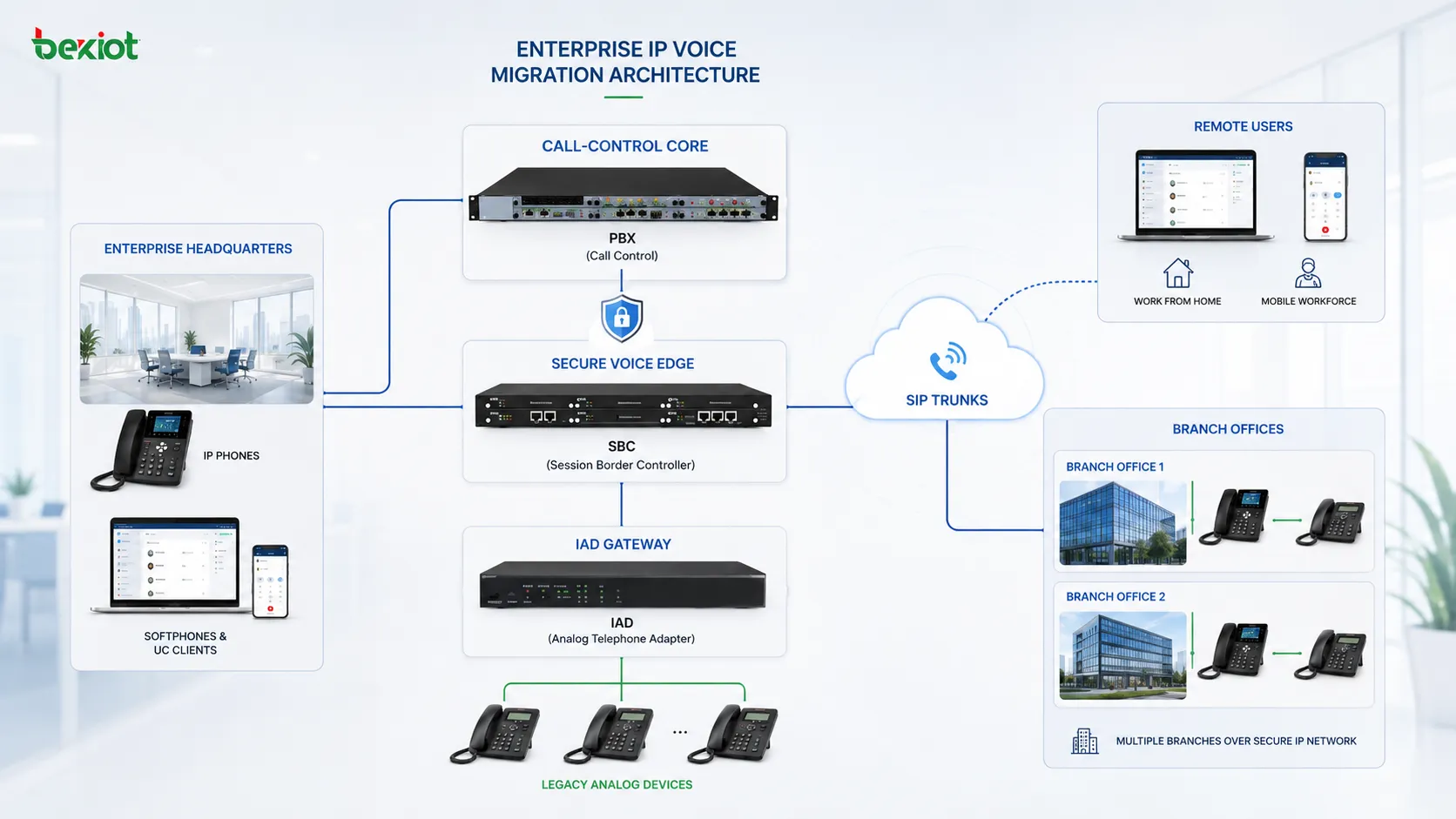
In this architecture, three components are especially important. The PBX manages call control and internal routing. The SBC protects and stabilizes VoIP communication at the network edge. The IAD connects legacy analog phones and special telephone devices to the IP network. When these components are planned together, the enterprise can modernize voice communication step by step instead of treating old and new systems as disconnected islands.
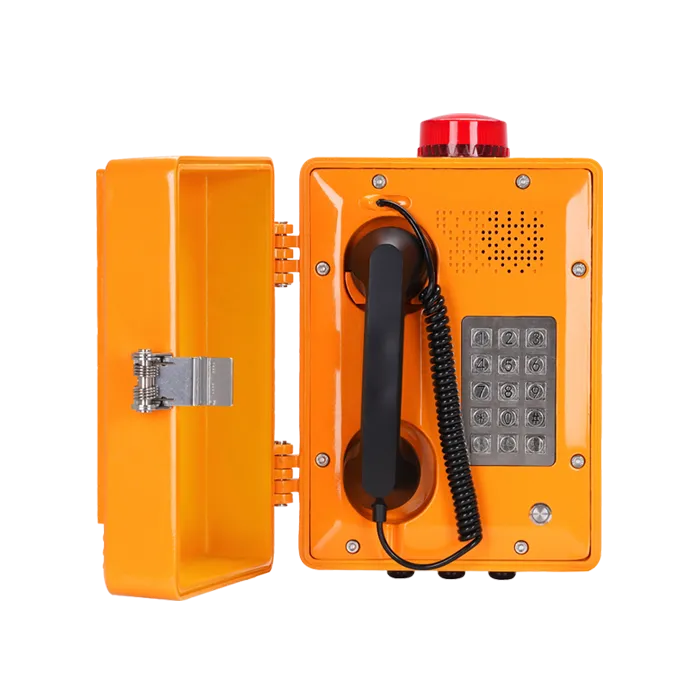
Enterprise voice migration architecture connecting call control, secure VoIP edge access, analog endpoints, remote users and branch offices.
From Legacy Phone Lines to a Unified IP Voice System
Many companies still operate a mixed communication environment. One office may use SIP phones, another branch may still depend on analog phones, the customer service team may need queues and recording, while remote employees may need softphone access through the internet. Replacing everything at the same time can create unnecessary cost, training pressure and service risk.
A phased IP voice migration gives the organization more control. Existing analog phones can remain in use where they are still practical. New SIP phones can be added where IP networking is already available. SIP trunks can be introduced when external calling needs to move away from traditional lines. Remote users and branch offices can be connected gradually according to security and bandwidth conditions.
The goal is not simply to change the device type. The goal is to create one manageable communication structure where internal extensions, external calls, remote access, analog endpoints and branch users can follow a consistent numbering and routing plan.
PBX as the Call Control Center
The PBX is the operational center of an enterprise telephone system. It decides how calls move inside and outside the organization. It manages extension registration, internal dialing, inbound routing, outbound routes, voicemail, call forwarding, IVR menus, conference features, ring groups and service queues.
In a small office, the PBX may allow fifty employees to call each other through extension numbers and route external calls to the right department. In a larger organization, a 500-user IP PBX can manage headquarters, branch offices, service teams, reception desks and remote users from one central platform.
For chain stores, hotels, logistics offices, healthcare facilities, industrial sites and customer service teams, PBX routing is more than simple voice switching. It can direct calls by department, business hours, caller purpose, branch location, extension status or service group. This reduces manual transfers and helps callers reach the right person faster.
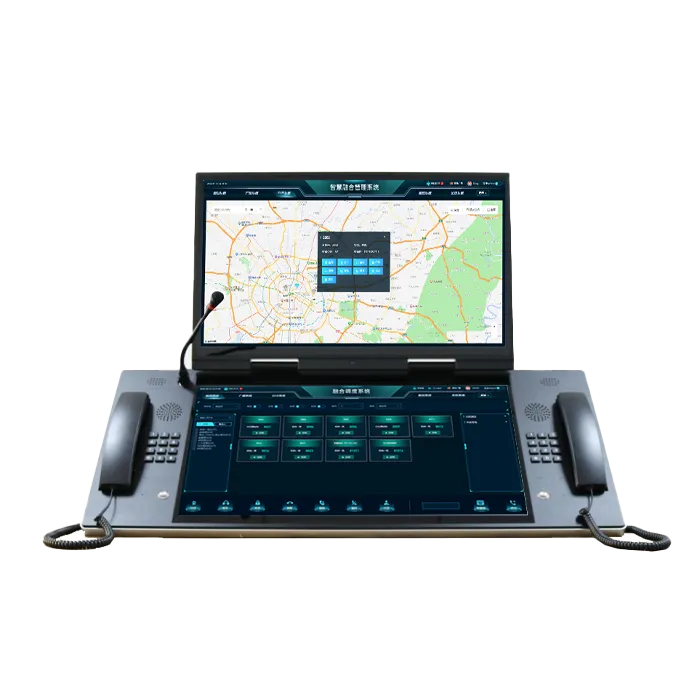
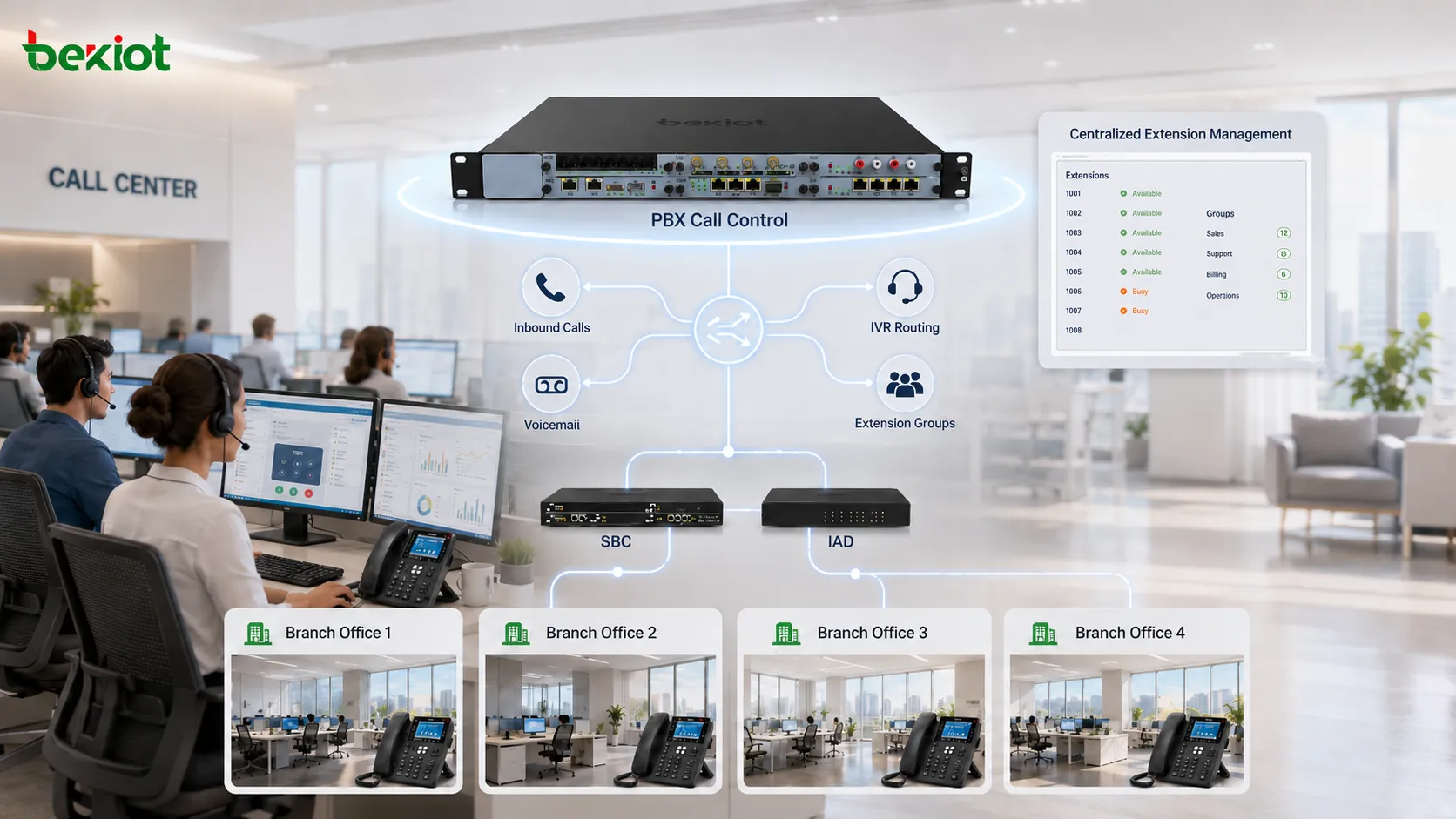
PBX call control helps companies manage extensions, inbound routing, voicemail, IVR and branch office communication from a unified platform.
SBC Protection at the VoIP Network Edge
When voice traffic stays inside a private LAN, security requirements may be easier to control. The situation changes when SIP trunks, remote users, cloud voice platforms, branch interconnection or public network access are introduced. At that point, enterprise voice communication crosses network boundaries, and the SBC becomes an important protection layer.
An SBC, or Session Border Controller, works at the VoIP edge. It helps protect SIP communication from unauthorized access, abnormal traffic, protocol conflicts, NAT traversal problems and unstable network behavior. Common functions may include topology hiding, SIP normalization, access control, encryption support, DDoS protection, media handling and quality-of-service support.
For remote workers using mobile phones or softphones, the SBC helps keep communication more secure and predictable. For companies using SIP trunks, the SBC creates a controlled boundary between the internal PBX and the carrier or external voice platform. For multi-site organizations, it helps manage voice traffic across different network environments.
IAD for Analog Endpoint Migration
Not every site can replace all legacy telephone devices immediately. Hotels may still have analog room phones. Factories may have fixed analog phones in workshops or security rooms. Clinics, warehouses, elevators, reception counters and service points may use devices that staff already understand. Removing them all at once may increase cost without improving the actual workflow.
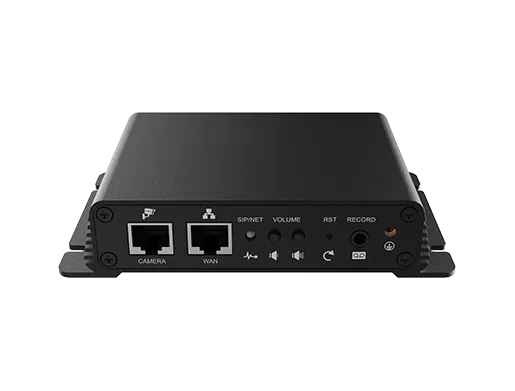
An IAD, or Integrated Access Device, solves this problem by converting analog telephone interfaces into IP network access. A 4-port IAD can connect four analog telephones to the new voice system, allowing the existing devices to join the IP communication platform through gateway access.
This approach is useful during phased migration. Staff can keep familiar dialing habits while the organization benefits from centralized PBX routing, IP-based management and future expansion. In some hotel or service facility upgrades, IAD access can reduce the cost and disruption of endpoint replacement while still moving the backend system toward IP voice.
How PBX, SBC and IAD Work Together
Component
Main Role
Typical Location
Problem It Solves
PBX
Call control and internal routing
Enterprise core voice network
Manages extensions, inbound routing, voicemail, IVR and internal calls
SBC
VoIP security and network border control
Network edge or SIP trunk boundary
Protects voice traffic, supports NAT traversal and improves cross-network stability
IAD
Analog phone access to IP networks
Office, branch, hotel, factory or service point
Connects existing analog phones to the new IP voice system
These three components are not competing choices. They solve different parts of the same migration challenge. The PBX manages the call logic, the SBC secures and stabilizes communication across network boundaries, and the IAD protects legacy investment by allowing analog endpoints to remain useful.
A technology company, for example, may use IAD devices to connect older office phones, deploy a PBX to manage internal extensions, and place an SBC at the network edge to protect SIP trunks and remote users. This combined structure allows the company to modernize communication without forcing every site and department to change at the same time.
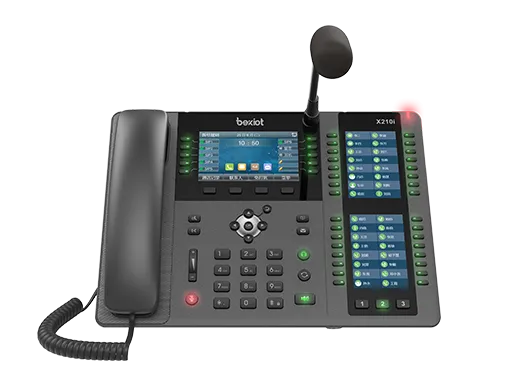
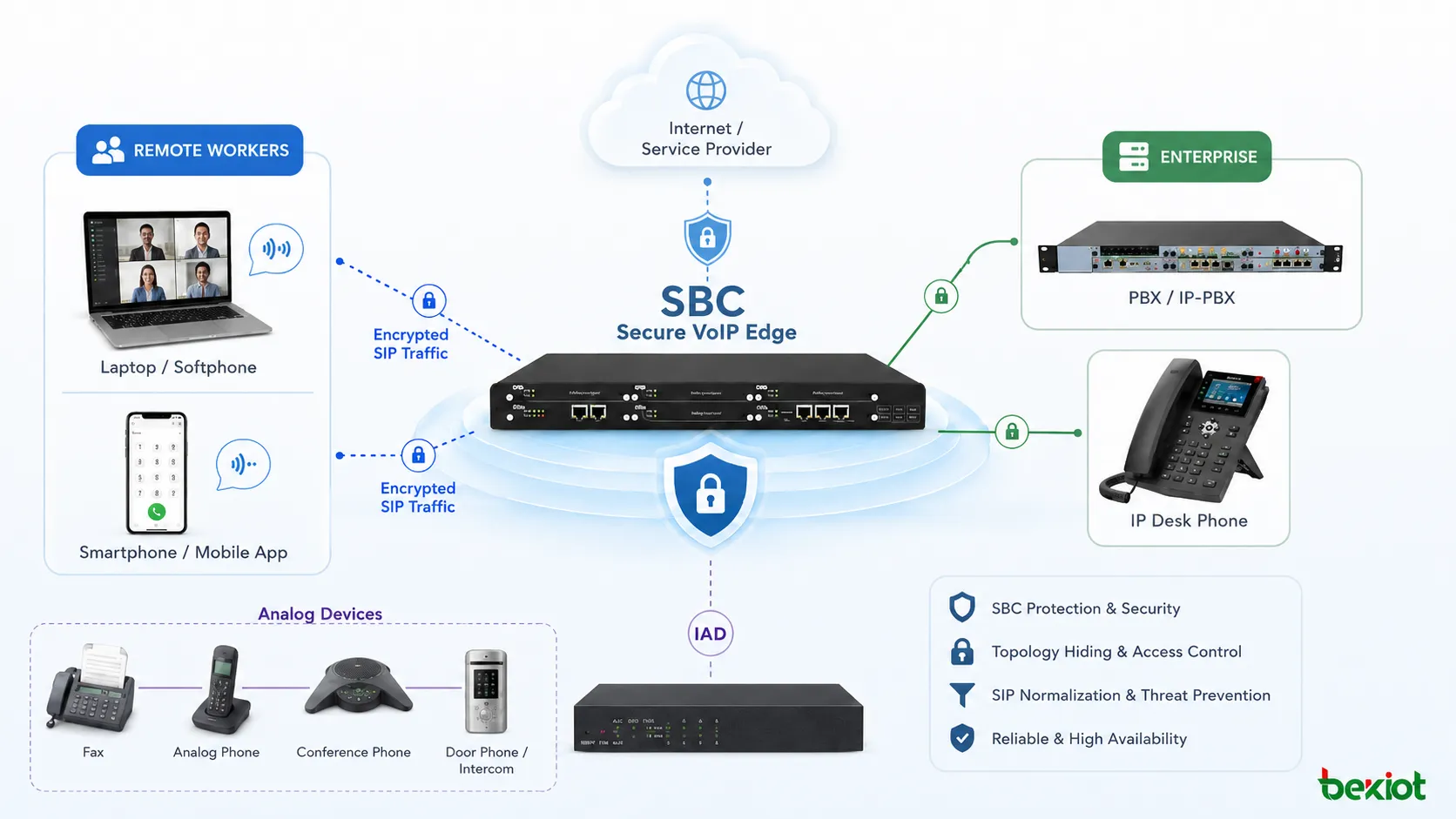
SBC, PBX and IAD can work together to support secure remote access, SIP trunking, analog endpoint migration and centralized voice management.
Recommended Deployment Path
Start with the existing voice environment
The first step is to map the current communication environment. The project team should list analog phones, SIP phones, branch numbers, customer service lines, operator seats, fax devices, door phones, emergency phones and existing trunks. This helps identify which devices should remain, which should be upgraded and which systems need integration.
The same assessment should also define user count, concurrent calls, branch sites, remote access needs and security exposure. A small office may only need a PBX and limited analog access. A large enterprise may require SBC protection, encrypted remote access, multi-site routing and stronger session capacity.
Use PBX to centralize calling rules
After the environment is reviewed, the PBX should become the central call control layer. Extension numbers, department groups, IVR menus, voicemail, call forwarding rules, inbound routes and outbound permissions should be standardized before users go live.
For customer service or call center use, PBX routing should also consider peak-hour traffic, missed-call handling, overflow paths, call queues and integration with recording or CRM systems. Good routing design reduces manual transfers and improves response speed.
Add SBC where voice leaves the private network
Any connection to SIP trunks, public internet users, remote branches, cloud platforms or partner networks should be evaluated for SBC deployment. The SBC helps prevent unauthorized SIP registration, hides internal network details, manages NAT traversal and controls abnormal call traffic.
For organizations with remote work, cross-region offices, public-facing SIP services or strict security requirements, SBC deployment is usually a critical layer. It keeps enterprise voice communication more secure, stable and easier to manage under real network conditions.
Connect legacy devices through IAD
Where analog phones are still useful, IAD deployment can reduce migration cost and shorten implementation time. This is especially valuable in hotels, factories, warehouses, healthcare sites, campuses and branch offices where analog phones are already installed in fixed positions.
By using IAD access, companies can keep existing user habits while still gaining centralized PBX routing and IP network management. This approach is often more practical than a complete endpoint replacement project.
Industry Scenarios That Benefit from This Architecture
Chain stores and distributed offices
Branch-based companies need consistent call routing, simplified extension management and fast communication between stores, offices and service teams. A centralized PBX can manage numbers across locations, while SBC protection supports secure interconnection over public or private networks.
Hotels and service facilities
Hotels often have front-desk phones, guest service phones, back-office extensions, analog room phones and customer service workflows. IAD access allows older analog endpoints to remain in use while the communication platform moves toward IP-based management.
Financial enterprises and remote work
Organizations with remote employees, cross-region meetings and strict security requirements need stronger voice-edge protection. SBC functions such as encrypted transmission, access control, SIP normalization and traffic inspection help reduce unauthorized access and improve session stability.
Industrial and campus environments
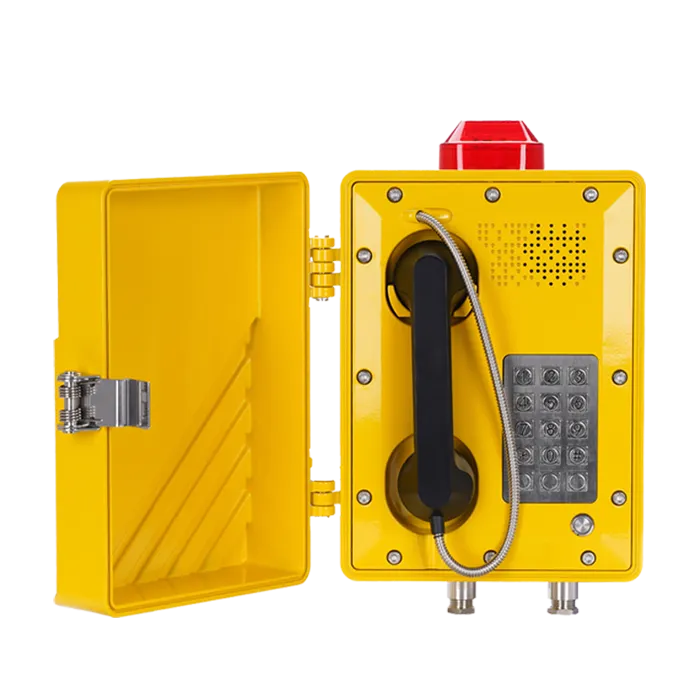
Factories, logistics parks, hospitals, schools and industrial campuses may operate a mixture of analog phones, SIP phones, emergency points, paging systems and dispatch centers. A PBX, SBC and IAD design supports gradual modernization without forcing all departments to change devices at the same time.
Practical Value for Communication Modernization
The main value of this solution is balance. It balances modern IP voice capability with existing device investment. It improves security without making the voice network harder to operate. It supports centralized call control while allowing branches and legacy endpoints to continue working.
For small and medium-sized businesses, the value is usually lower migration cost and faster deployment. For large enterprises, the value is stronger security, better multi-site control and more stable VoIP operation. For service-oriented organizations, the value is faster call handling, fewer missed calls and a better customer experience.
Becke Telcom can be considered for projects that require industrial communication endpoints, VoIP gateway integration, SIP-based dispatch or unified voice system adaptation. For migration projects involving PBX, SBC, IAD, SIP phones and field communication devices, the solution should be planned around actual site topology, user scale and security requirements.
Project Planning Checklist
Planning Item
What to Confirm
Why It Matters
Current voice assets
Analog phones, SIP phones, fax devices, emergency phones, trunks and branch lines
Defines what should be retained, replaced or integrated
PBX capacity
Users, concurrent calls, IVR, queues, recording, branches and operator seats
Ensures the call control layer matches real demand
SBC requirement
SIP trunks, remote users, cloud voice platforms, public internet access and branch links
Protects VoIP traffic and improves network-edge stability
IAD access
Analog phone quantity, port type, fax needs, door phone compatibility and site locations
Supports phased migration without replacing every endpoint
Security policy
Registration control, encryption, call permissions, firewall rules, logs and failover
Reduces unauthorized access and operational risk
Final Notes
PBX, SBC and IAD are best understood as parts of one enterprise voice migration architecture. The PBX centralizes call control. The SBC protects and stabilizes SIP communication at the network edge. The IAD allows analog phones and legacy devices to join the IP voice environment without forcing immediate replacement.
A good migration plan starts with the current communication environment and moves forward in phases. By combining call routing, security protection and analog access, enterprises can build a voice system that supports daily operation, remote users, branch offices and future IP communication expansion.
FAQ
Can voice migration be completed without stopping daily business calls?
Yes. In most projects, migration can be completed in phases. Existing analog phones can remain active through IAD access, while new SIP users and PBX routing rules are added step by step. Testing should be completed before switching main numbers or SIP trunks.
How should an enterprise estimate concurrent sessions?
The estimate should be based on peak call volume, remote user access, branch-to-branch calls, SIP trunk capacity, conference usage and call center traffic. User count alone is not enough because not every registered extension will be active at the same time.
Does every company need an SBC?
If the voice system only runs inside a closed private LAN, the requirement may be limited. However, once SIP trunks, remote users, cloud platforms, public internet access or multi-site interconnection are involved, SBC protection is strongly recommended.
Can analog fax machines, door phones or emergency phones be connected through IAD?
In many cases, yes, but compatibility should be tested before deployment. Fax transmission, DTMF signaling, emergency call priority and line voltage requirements may vary by device type and site environment.
What should be checked after deployment?
Important checks include call quality, routing accuracy, emergency number behavior, extension registration, SIP trunk stability, firewall policy, failover rules, voicemail access, recording integration and user training.