DSS keys explained for business IP phones, covering direct station selection, BLF status, speed dial, transfer, pickup, intercom, call park, role-based layouts, PBX support, configuration checks and deployment mistakes.
Becke Telcom
A DSS key is a programmable key on a business IP phone, attendant console, or expansion module. In most telephony contexts, DSS stands for Direct Station Selection. The original idea is simple: press one key to reach a specific extension instead of dialing the number manually.
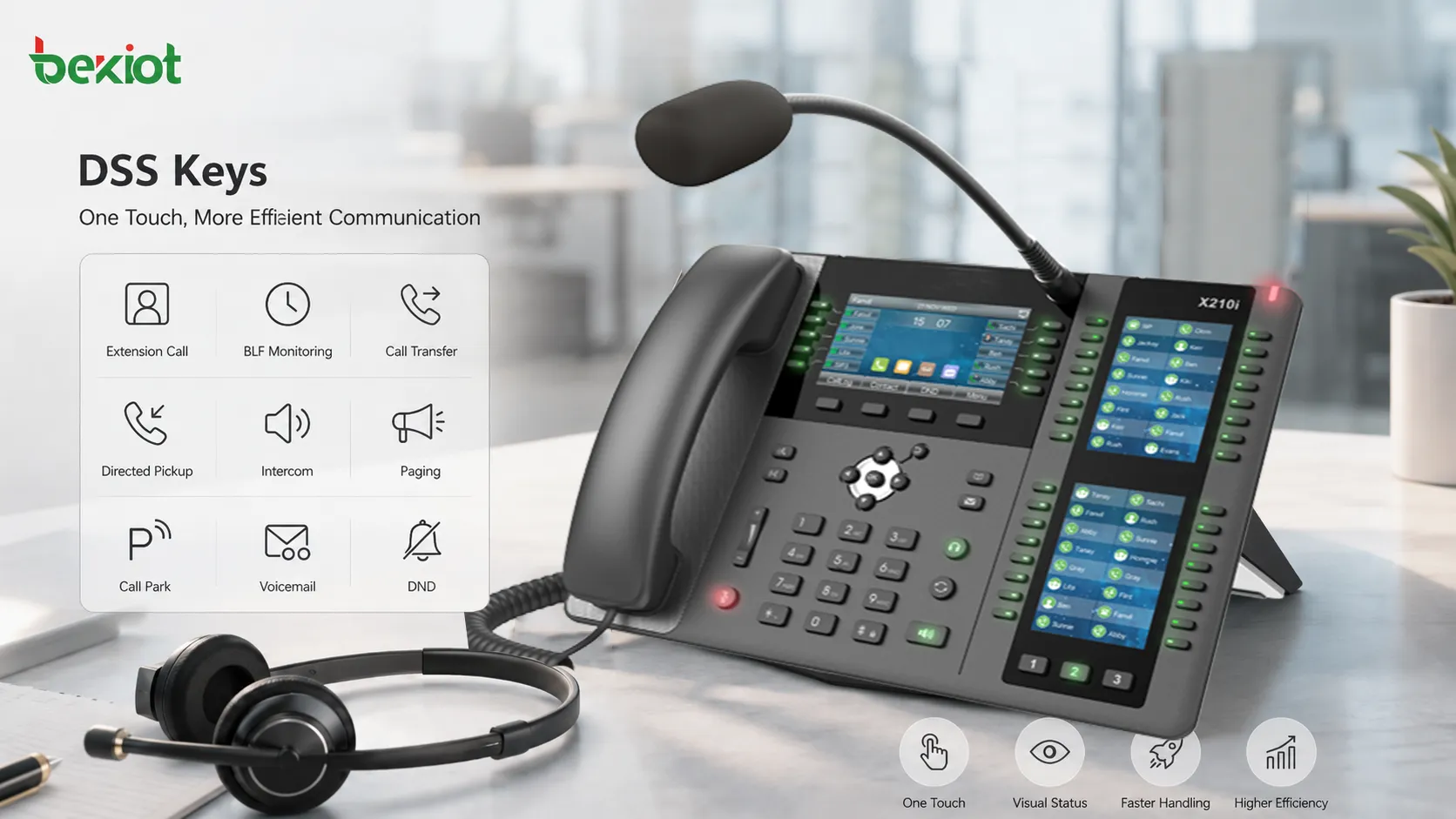
In modern VoIP systems, the same key area can do much more. It may be configured for extension calling, BLF status monitoring, speed dial, call transfer, directed pickup, intercom, paging, call park, voicemail, DND, or custom PBX feature codes. The exact behavior depends on the phone model, firmware, SIP account settings, and PBX platform.
The real value is not the button itself. The value is the way it turns common call-handling tasks into one-touch actions. A receptionist can see whether a manager is busy before transferring a call. A dispatcher can reach a station or team without searching menus. A front desk can move callers to the right person faster and with fewer mistakes.
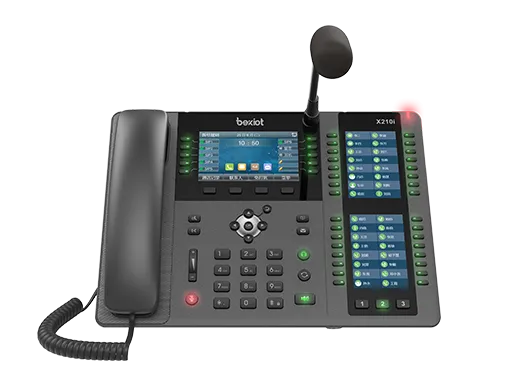
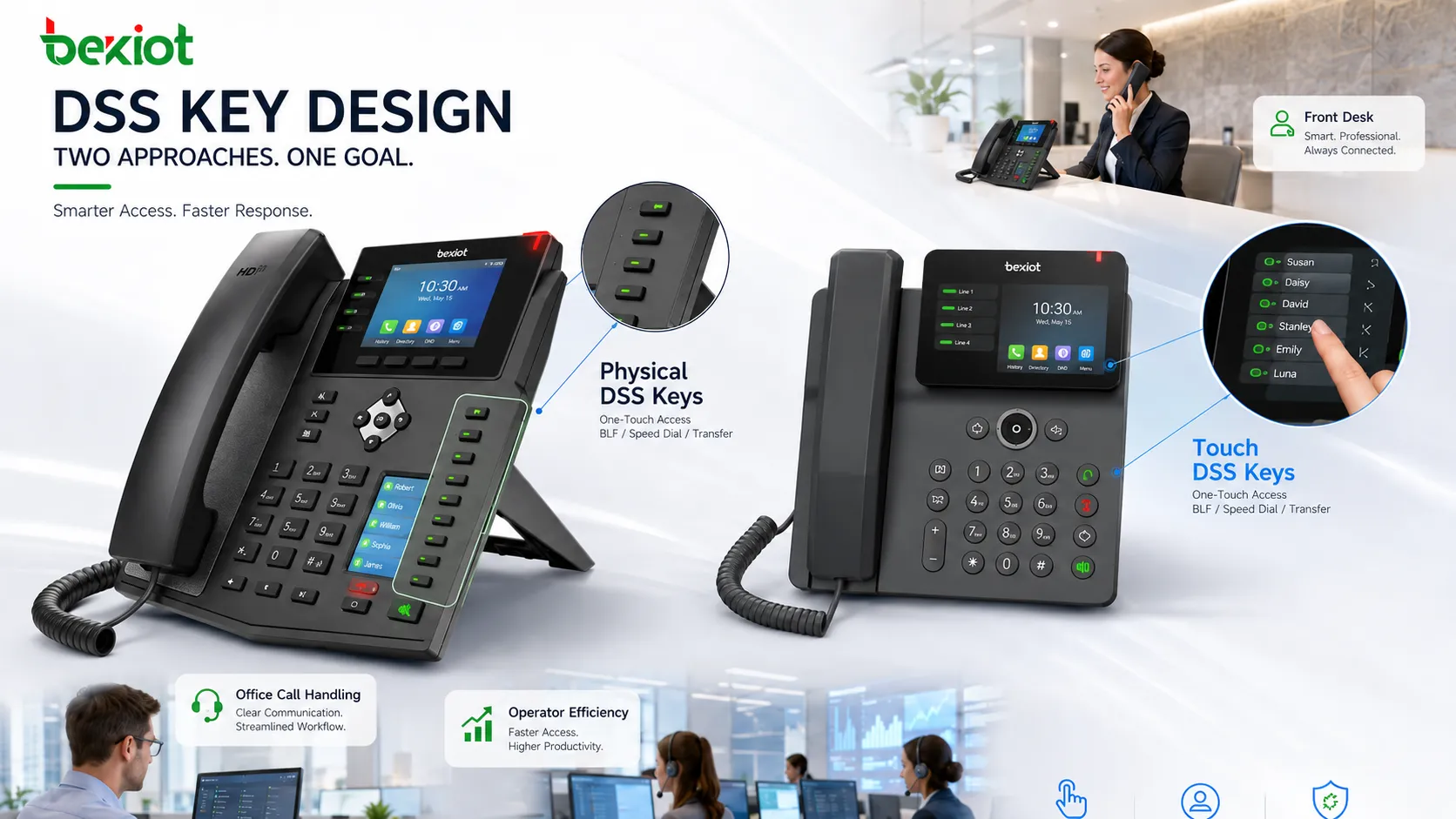
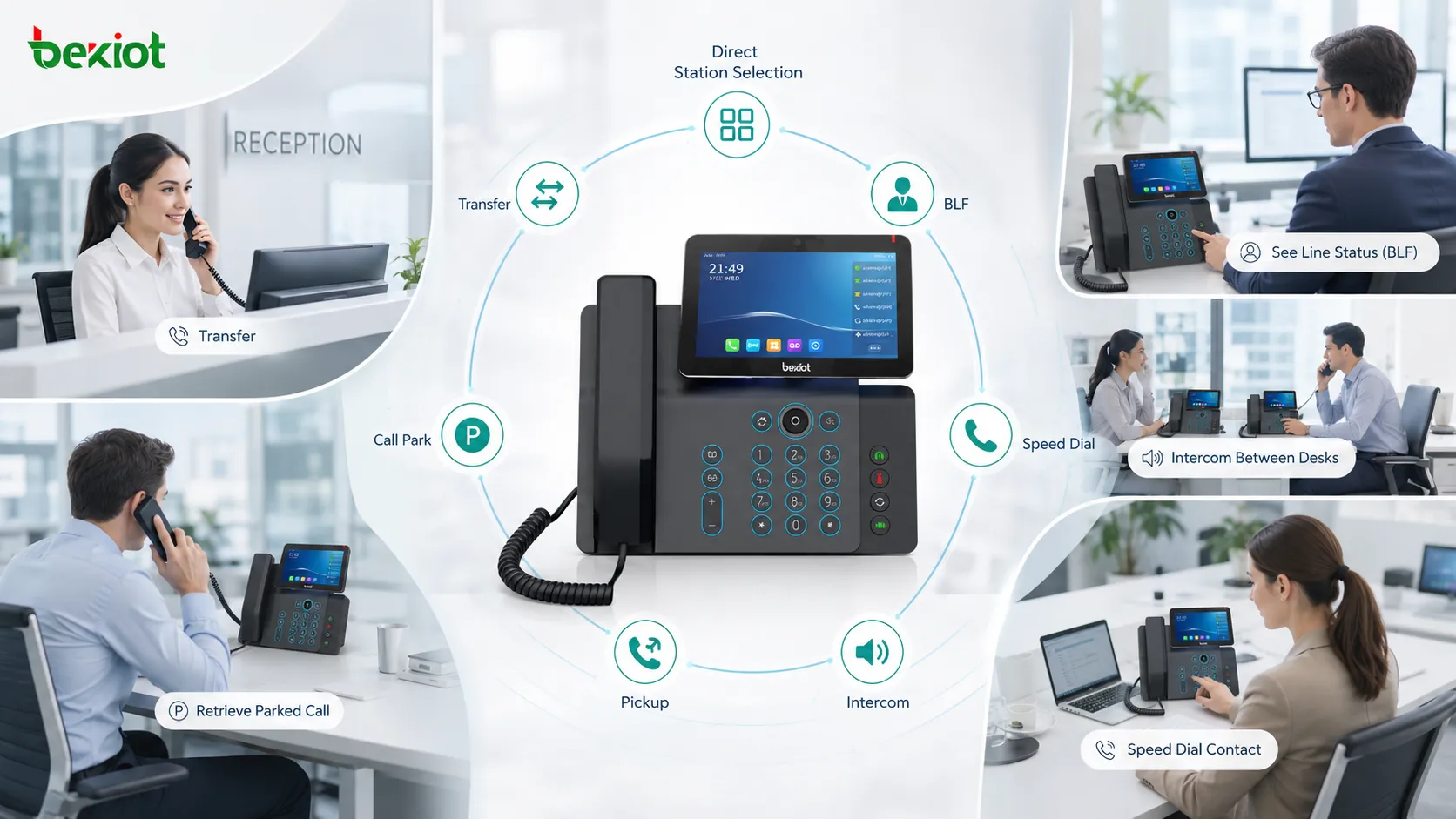
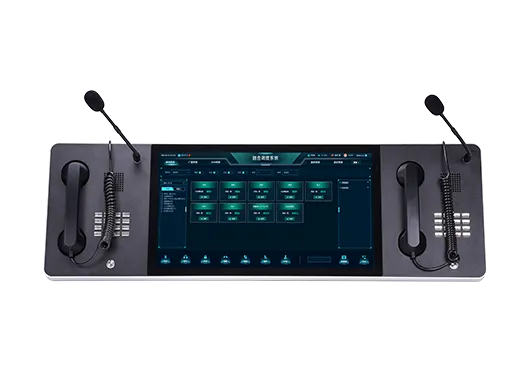
Programmable phone keys give users one-touch access to extensions, monitored lines, and common call-control actions.
Why these programmable keys matter
In small offices, users may remember the extensions they call every day. In larger businesses, hotels, hospitals, schools, warehouses, service counters, and dispatch rooms, that quickly becomes inefficient. Staff may need to reach many people, departments, zones, or service groups while handling live calls.
A well-planned key layout reduces that burden. Instead of remembering numbers or looking up a directory, users press a labeled key. If status monitoring is enabled, they can also see whether the target is idle, ringing, busy, or unavailable before deciding what to do next.
This is why the feature is especially useful for roles with frequent call routing. Receptionists, executive assistants, front-desk operators, customer service staff, dispatch users, warehouse clerks, and nurse stations all benefit when routine actions become faster and more visible.
Basic working logic
The key works by linking a physical or virtual button to a programmed target. That target may be an extension, SIP identity, external number, feature code, parking slot, paging group, intercom destination, or phone function.
When the user presses the key, the phone sends the configured request to the PBX, SIP server, or call control platform. The result depends on the selected key type. It may place a call, start a transfer, pick up a ringing phone, park a call, open an intercom path, or activate a feature such as voicemail or DND.
If BLF is configured, the phone also monitors another extension’s status. In many SIP systems, this involves a subscription mechanism between the phone and the PBX. The phone then shows the result through an LED, screen label, icon, or color indicator, depending on the device design.
Phone State
Typical Key Behavior
Practical Value
Idle
Pressing the key calls the configured extension, number, or feature code.
Reduces manual dialing and directory lookup.
Ringing
The key may allow directed pickup if the PBX permits it.
Helps teams answer calls when a colleague is away.
Busy
The LED or screen may show that the monitored user is already on a call.
Prevents unnecessary transfers to unavailable users.
During a call
The key may support blind transfer, attended transfer, conference, or call park.
Speeds up live call handling.
Feature mode
The key may trigger paging, intercom, voicemail, DND, or forwarding.
Makes common PBX functions easier to access.
Where BLF and speed dial fit
DSS, BLF, and speed dial are often discussed together, but they are not identical. Understanding the difference helps avoid configuration mistakes.
DSS describes the programmable key concept. BLF, or Busy Lamp Field, is a status-monitoring function that can be assigned to such a key. Speed dial is another possible function that stores a number for fast calling without showing line status.
Term
Meaning
Main Use
DSS
A programmable key used for direct access to an extension or phone function.
One-touch calling, transfer, pickup, intercom, call park, paging, and other call-control actions.
BLF
A status-monitoring mode that shows another extension’s call state.
Seeing whether a user is idle, ringing, busy, offline, or unavailable.
Speed dial
A key mode that stores an internal or external number for fast dialing.
Calling a saved number without entering digits manually.
The distinction matters in daily use. If a key is configured only as speed dial, it may place calls correctly but will not show busy status. If it is configured for BLF but the SIP server does not support subscriptions, the LED may not update. If the PBX does not allow directed pickup, the key may show a ringing extension but still fail to answer it.
Common functions in daily call handling
A programmable key area can support many options, but most business deployments rely on a smaller group of practical functions. The best choice depends on what the user does every day.
Direct extension access
This is the classic use. A key is assigned to a specific extension, person, department, or service group. One press calls the target directly. It is useful for reception desks, assistants, supervisors, and teams that contact the same internal users repeatedly.
Status monitoring
BLF monitoring helps users see whether another extension is available before taking action. A receptionist can check a manager’s status before transferring a caller. A service desk can see which team member is already on a call. In many systems, the same monitored key can also be used to call, transfer, or pick up.
Fast dialing
Speed dial is useful when line status is not required. The key can store an internal extension, mobile number, emergency contact, supplier number, security desk, maintenance line, or service number. This reduces dialing errors and saves time for repeat calls.
Transfer and pickup
These keys are often used to simplify transfer workflows. Instead of pressing transfer and entering a number manually, the user presses a labeled key for the destination person or department. If pickup is enabled, a ringing monitored extension can often be answered from another phone.
Intercom and paging
Some systems allow a key to start an intercom call or paging announcement. This is common in service counters, nurse stations, warehouse offices, small control rooms, schools, and operational teams that need quick internal voice coordination.
Call park and retrieval
In offices where calls move between desks or departments, keys may be assigned to parking slots. A user can park a call, announce the parking location, and let another team member retrieve it from a different phone.
One programmable key area can support different functions depending on the phone model, PBX platform, and administrator configuration.
Role-based layout planning
A useful layout should be designed around the user’s role, not copied across every phone. A receptionist, dispatcher, warehouse clerk, nurse station, and executive assistant do not handle calls in the same way.
Reception desks usually need monitored extensions, department transfer keys, parking slots, and common service numbers. Executive assistants may need BLF monitoring for managers, assistants, meeting rooms, and support staff. Dispatch rooms may need one-touch access to stations, teams, zones, emergency contacts, or group paging.
Hotels may use keys for front desk, room service, housekeeping, engineering, security, and management. Healthcare desks may need nurse stations, wards, pharmacy, laboratory, emergency contacts, and paging. Warehouses and industrial offices may use keys for gates, maintenance, dispatch, security, loading areas, and service teams.
User Role
Useful Key Types
Layout Focus
Reception desk
BLF, transfer, pickup, call park, department speed dial
Fast internal coordination and priority communication
Dispatch room
Station access, group call, paging, transfer, monitored lines
One-touch response during live operations
Configuration workflow
Most IP phones allow key configuration through the phone screen, a web administration page, or a centralized provisioning system. For larger deployments, centralized templates are usually better because they keep layouts consistent and easier to maintain.
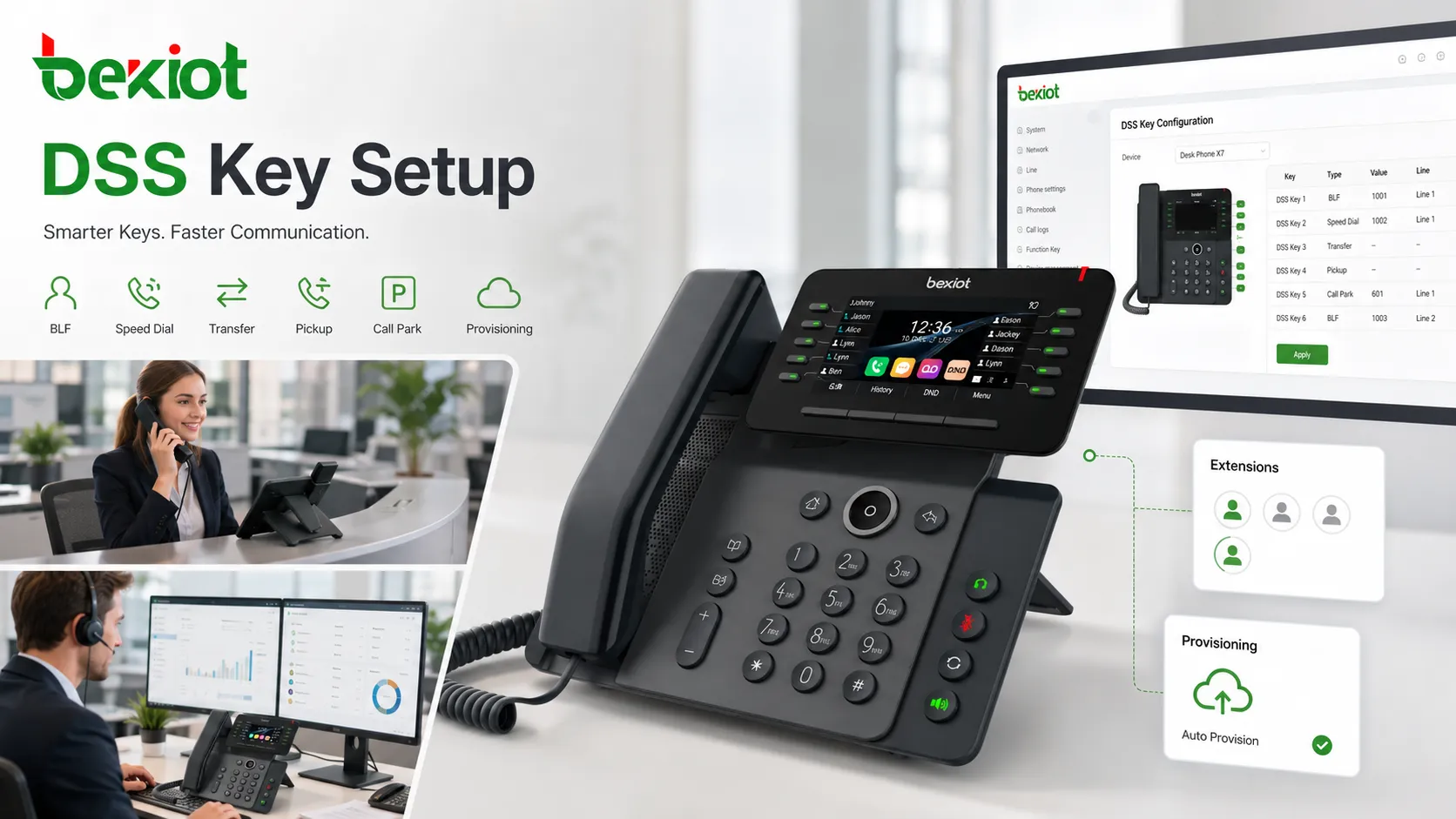
The basic process is straightforward. The administrator selects a key position, chooses the key type, enters the target, selects the SIP account if the phone has multiple lines, adds a clear label, saves the configuration, and tests the result.
Select the physical or virtual key position.
Choose the function type, such as BLF, speed dial, intercom, call park, line, paging, or feature code.
Enter the target extension, external number, monitored identity, parking slot, or service code.
Bind the key to the correct SIP account if the phone has multiple registered accounts.
Add a clear label such as Reception, Sales, Warehouse, Security, or Manager Office.
Save, reboot, resync, or reprovision the phone if required.
Test calling, LED status, pickup, transfer, intercom, and park behavior before daily use.
Configuration should be tested end to end because phone-side settings and PBX-side permissions must match.
Server-side dependencies
The phone provides the button, but the PBX decides how much the button can actually do. This is one of the most important points in deployment. A key may look correctly configured on the phone, but still fail if the server does not support the required feature.
BLF requires presence or subscription support. Pickup requires the correct permission, feature code, or pickup group. Transfer behavior may depend on whether the system uses blind transfer, attended transfer, or transfer-on-key-press logic. Intercom and paging may require auto-answer rules, multicast settings, or PBX-side paging groups.
Before deploying many phones, administrators should test the full workflow with the actual PBX, phone model, firmware version, SIP account settings, and user permissions. This avoids large-scale rollout problems where the keys dial correctly but do not show status, transfer properly, or pick up ringing calls.
Deployment best practices
A good layout should feel obvious to the user. Labels should use real names, departments, work zones, or service functions instead of unclear abbreviations. Similar keys should be grouped together. BLF-monitored extensions should not be mixed randomly with voicemail, DND, paging, and call park keys.
Administrators should also avoid overloading the screen. Too many small labels can slow users down. When a role requires many monitored lines, an expansion module or attendant console may be more practical than forcing every function onto a small phone display.
The layout should be reviewed after real use. If users ignore certain keys, the design may not match the workflow. If staff still dial manually, labels may be unclear or the wrong contacts may have been assigned. The best layouts are often refined after observing daily call behavior.
Common problems and better fixes
Problem
Likely Cause
Better Fix
No busy status is shown
The key may be configured as speed dial, or BLF subscription may be disabled.
Set the correct BLF mode and confirm PBX presence support.
Pickup does not work
The PBX may not allow directed pickup for that extension or group.
Check pickup permissions, feature codes, and group settings.
LED colors confuse users
Indicator behavior varies by phone model and firmware.
Document the LED meaning and standardize firmware where possible.
Transfer behavior is inconsistent
The system may use different rules for blind, attended, or one-touch transfer.
Test transfer workflows and align phone settings with PBX policy.
Users ignore the keys
The layout may not match real call handling needs.
Redesign by role and use clearer labels.
Too many keys slow users down
The screen or sidecar is overloaded with rarely used targets.
Prioritize frequent actions and move secondary functions to menus or expansion modules.
How to judge whether the layout is effective
An effective key layout should reduce call-handling steps, not simply fill every available button. The first check is whether users can find the right person, department, or function quickly without reading a long list of unclear labels.
The second check is whether status information is reliable. If BLF indicators are delayed, inaccurate, or unsupported by the PBX, users may lose trust in the layout and return to manual calling.
The third check is whether live workflows actually improve. Receptionists should transfer faster. Service counters should reduce dialing mistakes. Dispatch users should reach the right station or group with fewer steps. If the keys look configured but do not improve daily behavior, the design needs adjustment.
Final view
A DSS key is more than an extra button on a phone. It is a shortcut between the user’s daily workflow and the PBX features behind it. When planned well, it can make call handling faster, reduce transfer mistakes, improve extension visibility, and make business VoIP phones easier to use.
The best results come from role-based planning, clear labels, correct key modes, reliable PBX support, and end-to-end testing. A simple speed-dial layout may be enough for some users, while receptionists, assistants, dispatch rooms, and service desks often need BLF, pickup, transfer, park, paging, and intercom functions working together.
FAQ
What does DSS stand for on a phone?
DSS usually stands for Direct Station Selection. It refers to a programmable phone key that gives users one-touch access to an extension or related call-control function.
Is it the same as a BLF key?
Not exactly. DSS describes the programmable key concept, while BLF is one function that can be assigned to it. BLF adds line-status monitoring, while a basic speed-dial key may only place a call.
Can it be used for speed dial?
Yes. Many IP phones allow programmable keys to be configured as speed-dial keys for internal extensions, external numbers, emergency contacts, or service numbers.
Do all VoIP phones support this feature?
No. Support depends on the phone model, firmware, SIP account settings, and PBX platform. Entry-level phones may support only a few keys, while operator phones and expansion modules may support many more.
Why is busy status not showing?
The key may be set as speed dial instead of BLF, or the PBX may not have the required subscription and presence settings enabled. The phone can still dial the extension, but it cannot show reliable status without server support.
Who benefits most from this feature?
Receptionists, executive assistants, dispatch operators, front-desk staff, customer service teams, nurse stations, and users who frequently transfer or monitor calls benefit the most.