How Does a GOIP Gateway Connect Mobile Networks to a VoIP System?
GOIP gateway explained for connecting SIM-based mobile voice and SMS channels with SIP or IP PBX systems, covering call routing, GSM/LTE support, PBX integration, backup calling, carrier policy and deployment checks.
Becke Telcom
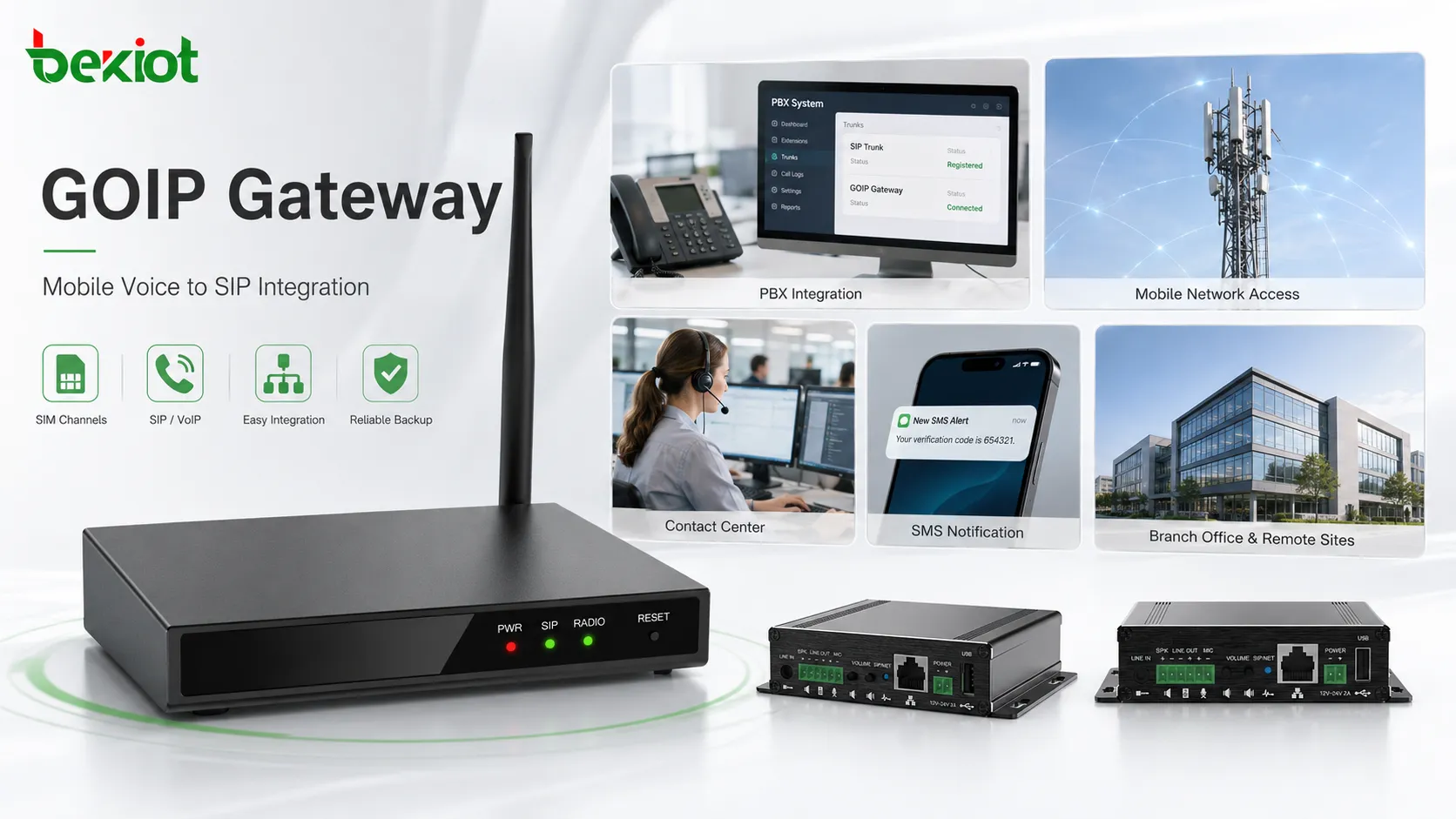
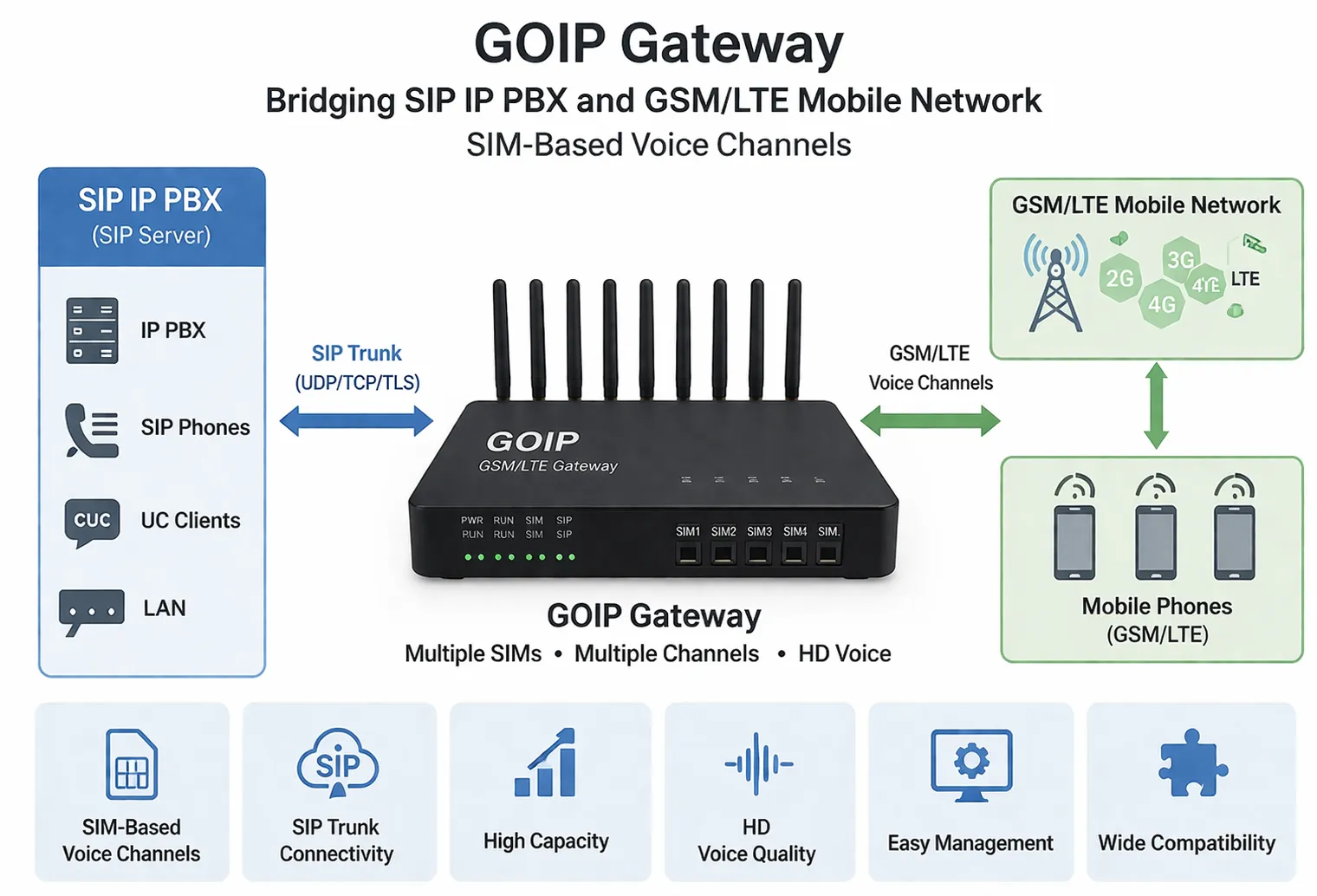
A GOIP gateway connects SIM-based mobile voice channels with a SIP or VoIP phone system. It allows mobile numbers, GSM or LTE routes, SMS functions, and backup calling to work inside an IP PBX, softswitch, contact center platform, hosted PBX, or other SIP-based communication environment.
In many businesses, mobile phones and office voice systems are managed separately. Calls to mobile numbers stay on individual handsets, while internal extensions, queues, IVR menus, recordings, and routing rules stay inside the PBX. A GOIP gateway brings these two worlds together by turning mobile network channels into controllable SIP routes.
Its value is not only lower call cost or SIM access. The real value is management. Mobile channels can be assigned to departments, used as backup routes, connected to call queues, included in dispatch workflows, or used for SMS notifications and service messages where the device and carrier support those functions.
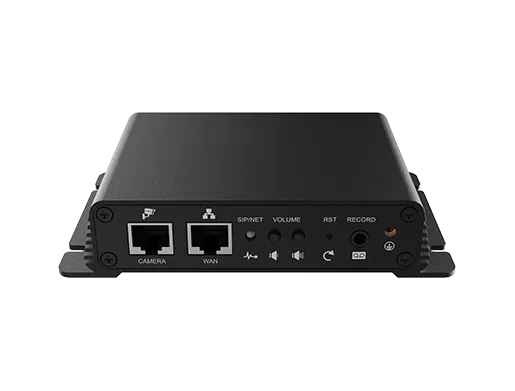
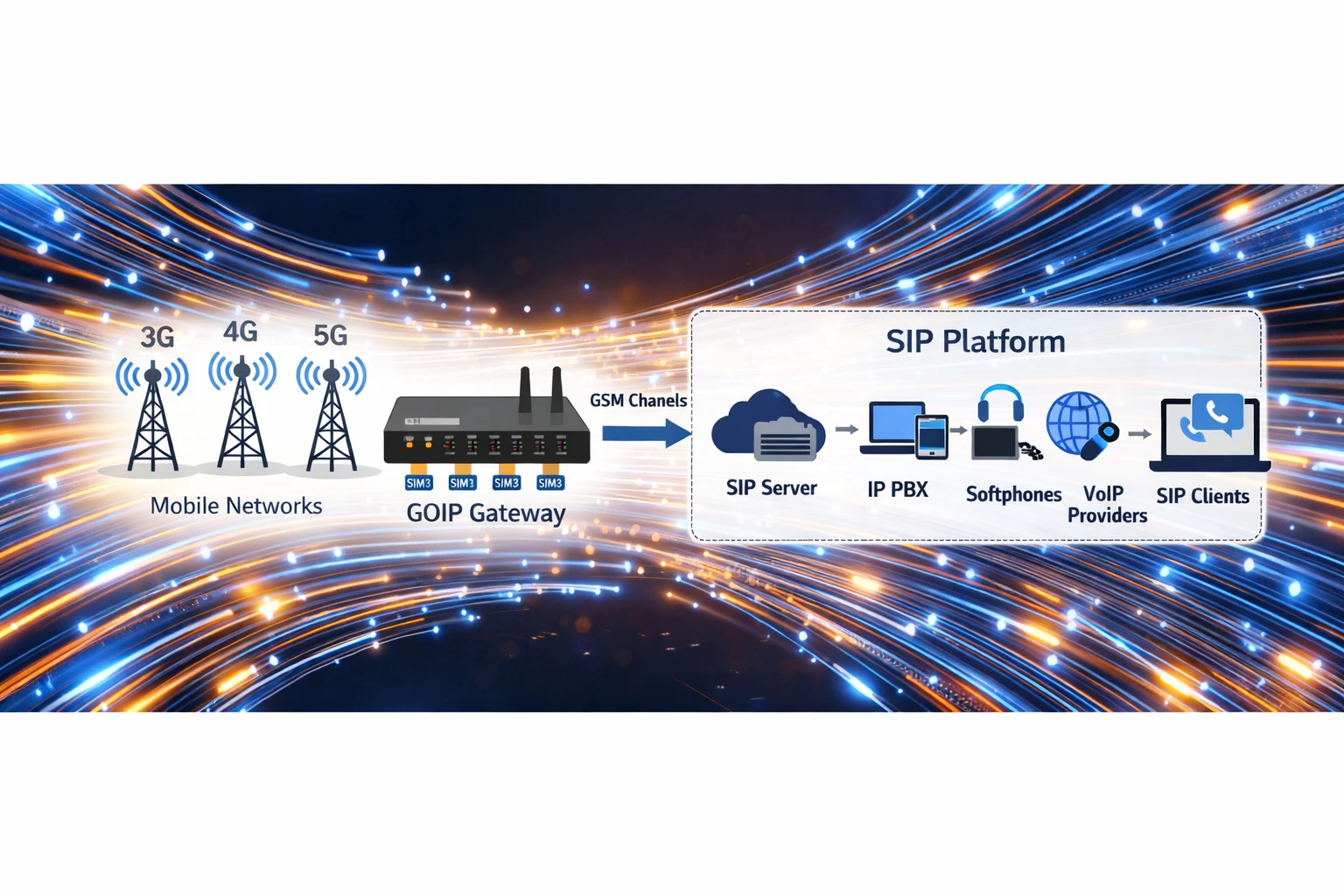
A mobile-to-SIP gateway works as a bridge between a SIP platform and one or more mobile network channels.
Why mobile routes are added to VoIP
Fixed SIP trunks, analog lines, and cloud voice services are common in modern communication systems, but they do not cover every situation. Some sites depend on mobile coverage because fixed-line service is unavailable, installation takes too long, or the project is temporary. Other organizations keep mobile numbers because customers, service teams, or field staff already recognize them.
Mobile routes are also useful for business continuity. If the main SIP trunk, broadband link, fixed line, or hosted PBX route fails, calls can be sent through the cellular network. This does not replace a full redundancy design, but it gives branches, remote sites, service points, and temporary offices another voice path when the primary route is unavailable.
In contact center, dispatch, field service, and support environments, mobile access can also become part of a structured workflow. Instead of asking staff to use personal phones, the PBX can manage mobile channels with routing rules, permissions, recording policy, and call statistics.
Basic working logic
A GOIP gateway has two sides. On the mobile side, it uses SIM cards and cellular modules to access GSM, WCDMA, LTE, VoLTE, or other supported mobile voice services, depending on the model and local carrier network. On the IP side, it connects to a SIP server, IP PBX, softswitch, or hosted VoIP platform.
When a call enters or leaves the system, the gateway applies route rules, selects an available SIM channel, negotiates SIP signaling with the VoIP platform, and carries voice media over RTP on the IP side. The mobile network handles the radio side through the installed SIM and supported frequency bands.
This is different from an analog gateway. A GOIP gateway does not provide FXS ports for analog telephones, and it does not connect to analog PSTN lines like an FXO gateway. Its main role is to make mobile network resources available to an IP-based voice system.
Inbound and outbound call paths
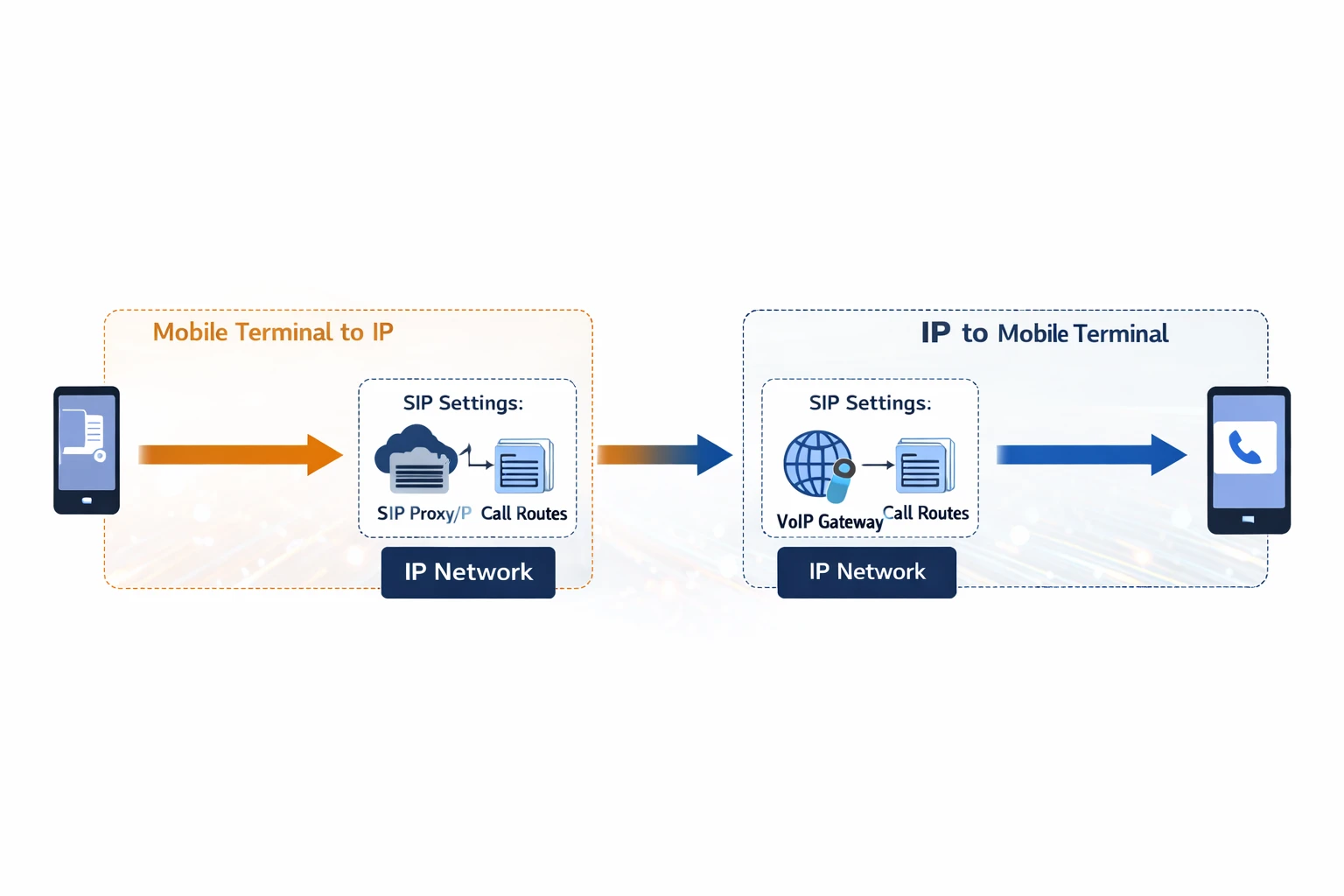
The device normally supports two directions: mobile-to-IP and IP-to-mobile. Both are simple in concept, but stable deployment depends on SIP configuration, route matching, caller ID handling, codec settings, DTMF mode, NAT traversal, antenna placement, and mobile signal quality.
Mobile-to-IP routing
When someone calls a SIM number installed in the gateway, the mobile network delivers the call to that SIM channel. The gateway detects the incoming call and forwards it to a SIP destination. That destination may be a PBX extension, ring group, IVR, call queue, operator console, contact center route, or SIP trunk.
This allows a mobile number to behave like part of the company phone system. A call to a SIM can ring a reception desk, reach a support queue, enter an IVR menu, or be recorded according to the PBX policy, instead of being limited to one mobile handset.
IP-to-mobile routing
When a user places a call from an IP phone, softphone, or PBX extension, the PBX can send the call to the gateway as an outbound route. The gateway then chooses an available SIM channel and dials the number through the mobile network.
This is useful for local mobile breakout, remote offices, field sites, backup calling, and locations where fixed voice trunks are unavailable or expensive to install. Route rules can decide which users, prefixes, departments, or service types are allowed to use mobile channels.
Mobile-to-IP and IP-to-mobile call paths are controlled by SIP settings, SIM channel selection, and route policies.
Functions worth checking
Different products may look similar from the outside, but their practical value depends on the supported mobile technology, number of channels, SIP behavior, routing control, SMS functions, management tools, and security features.
SIP integration
Most devices connect to an IP PBX or SIP server through SIP account registration, SIP trunk mode, or peer-to-peer SIP mode. The correct choice depends on the PBX platform, hosted service, softswitch, security policy, and routing design.
Multiple SIM channels
Small models may support only one or a few SIM channels, while higher-density models can support larger call volumes and more detailed route planning. Multiple channels make it easier to separate traffic by department, region, service type, backup route, or caller group.
SMS and USSD support
Many gateways support SMS sending, SMS receiving, inbox management, outbox management, USSD commands, or API-based messaging. These functions are useful for alerts, service notifications, verification messages, balance checks, ticket reminders, and simple application-to-mobile workflows.
Routing control
Administrators may define which SIM channels handle certain calls, which SIP users can use mobile routes, how numbers are rewritten, and how traffic is grouped. Some models also support blocklists, channel limits, prefix rules, route priority, SIM rotation, or usage restrictions.
Codec and media handling
Common VoIP codecs such as G.711 are usually supported, and some models may support additional codecs such as G.729 depending on hardware, firmware, or licensing. Codec choice should match the PBX, network bandwidth, expected voice quality, and carrier-side behavior.
Management and security
A gateway sits between the mobile network and the IP voice network, so management should not be treated as a minor feature. Web configuration, logs, diagnostics, authentication controls, remote access limits, API support, backup configuration, firmware updates, and secure access policy should all be reviewed.
Useful features include SIP integration, multi-channel mobile access, SMS support, route control, diagnostics, and remote management.
Where this type of gateway fits
The best use cases are not limited to simple call conversion. A well-planned deployment can help organizations manage mobile numbers, connect remote sites, support backup routes, and bring mobile communication into a central PBX or dispatch workflow.
Mobile trunking for IP PBX
A gateway can add SIM-based mobile trunks to an IP PBX. The PBX can then send and receive calls through mobile numbers while still using extension dialing, IVR, ring groups, call recording, call queues, and call permission rules.
Backup calling and continuity
If the primary SIP trunk, fixed line, or internet voice route fails, the gateway can provide an alternate path through the mobile network. This is useful for branches, service offices, temporary sites, small facilities, and business locations that cannot afford complete voice downtime.
Remote sites without fixed trunks
Some remote locations do not have reliable landlines or fixed voice trunks. A mobile-to-SIP device can connect available cellular coverage with a SIP phone system so users still work with extensions, call routing, and centralized communication rules.
SMS alerts and service messages
Where supported by the hardware and carrier, SMS functions can be used for reminders, ticket updates, verification messages, service notifications, alarm messages, and simple application workflows. For projects that require both voice and messaging, SMS capability should be confirmed early.
Dispatch and operational communication
Some organizations use mobile channels inside dispatch systems, support centers, field service workflows, or operational platforms. The benefit is that mobile access becomes part of a managed communication system rather than a separate set of personal phones.
Compared with analog gateways
GOIP, FXO, and FXS gateways are all used to connect different voice environments, but they are not interchangeable. The right type depends on what the project needs to connect: a mobile network, an analog line, or an analog endpoint.
Gateway Type
Connects To
Main Use
GOIP gateway
GSM, LTE, or other mobile voice networks through SIM cards.
Adds mobile voice channels and sometimes SMS functions to a SIP or VoIP system.
FXO gateway
Analog PSTN lines or analog PBX trunk ports.
Connects fixed analog telephone lines to an IP PBX or VoIP platform.
FXS gateway
Analog phones, fax machines, intercoms, or analog endpoints.
Allows analog devices to work inside an IP-based voice system.
A simple selection rule is useful: choose GOIP for mobile-network interconnection, FXO for analog outside lines, and FXS for analog endpoint devices.
Selection checklist
The best model is not simply the one with the most SIM slots. A suitable device should match the mobile network, PBX platform, routing plan, SMS requirement, security policy, installation environment, and daily operating workflow.
Selection Point
What to Check
Why It Matters
Mobile technology
GSM, WCDMA, LTE, VoLTE, frequency bands, SIM type, and carrier support.
A model that works in one country or network may not work correctly in another.
Channel capacity
Number of simultaneous mobile calls and required SIM channels.
Prevents blocked calls and under-sized deployment.
SIP compatibility
Registration, trunk mode, peer mode, codecs, DTMF, NAT traversal, and caller ID rules.
Ensures stable integration with IP PBX, softswitch, or hosted VoIP platform.
Routing plan
Inbound rules, outbound prefixes, user permissions, channel groups, and failover routes.
Controls how mobile channels are used and prevents routing confusion.
Messaging
SMS, USSD, API access, inbox/outbox handling, and carrier limitations.
Important when the project includes alerts, reminders, or application messages.
Management
Logs, diagnostics, remote access, firmware updates, backup, and user permissions.
Helps long-term operation, troubleshooting, and security control.
Carrier policy and local compliance
Mobile gateway deployment is not only a technical question. SIM usage rules, numbering policy, telecom regulations, anti-fraud controls, call-volume limits, and operator terms vary by country and carrier. A setup may work technically but still violate carrier policy if it is not planned correctly.
This is especially important for high-volume outbound calling, automated calling, bulk SMS, remote SIM use, call center integration, or cross-border service routing. Before purchasing hardware or installing SIM cards, the project team should confirm the legal and operator-side requirements for the target market.
A responsible deployment should also protect against misuse. Account passwords, SIP routing permissions, SIM access, outbound prefix rules, call limits, and remote management interfaces should be controlled carefully. A poorly secured gateway can create toll fraud, unauthorized calling, or service abuse.
Antenna and installation factors
Mobile voice quality depends heavily on radio conditions. A gateway can be correctly configured on the SIP side and still perform poorly if the cellular signal is weak or unstable.
Antenna placement, cable loss, building materials, cabinet location, interference, carrier coverage, and SIM network priority can all affect call quality. In industrial sites, equipment rooms, basements, metal cabinets, remote facilities, and temporary containers, signal testing should be done before production use.
Environmental conditions also matter. The installation should consider power stability, ventilation, surge protection, SIM access control, Ethernet reliability, grounding, rack space, and maintenance access. If the gateway is part of a backup calling plan, the power supply and network path should also be protected.
Common mistakes and better fixes
Mistake
Typical Problem
Better Fix
Choosing only by SIM slot count
The gateway may not match the local mobile network, PBX, SMS needs, or management requirements.
Calls may fail because of codec, DTMF, NAT, caller ID, or route mismatch.
Test the SIP side, mobile side, and full call flow before rollout.
Poor antenna placement
Calls may drop, sound delayed, or show unstable registration.
Measure signal quality and install antennas where coverage is stable.
Leaving outbound routes too open
Unauthorized users may place expensive or improper calls.
Use permissions, prefix rules, call limits, strong passwords, and monitoring.
Assuming all models support LTE or VoLTE
The device may not work on the required carrier network.
Confirm LTE, VoLTE, bands, SIM type, and operator compatibility before buying.
How to judge whether the design is suitable
A suitable design starts with the communication goal. If the goal is mobile backup, failover rules and power protection matter most. If the goal is mobile trunking, channel capacity and routing control become more important. If the goal is SMS workflow integration, messaging support and API behavior should be tested first.
The second check is network compatibility. The selected model should support the required carrier technology, frequency bands, voice service, SIM format, and local operator policy. This should be verified in the actual deployment country and not assumed from a general product datasheet.
The third check is SIP integration. Registration mode, trunk mode, codec policy, DTMF transport, caller ID, NAT traversal, routing rules, and PBX permissions should be validated with real inbound and outbound calls.
The final check is operation. The system should provide logs, diagnostics, access control, call monitoring, SIM status, channel status, route visibility, and configuration backup. Without these tools, mobile channel problems can become difficult to locate and manage.
Final view
A GOIP gateway is useful when mobile voice channels need to become part of a managed VoIP system. It can support mobile trunking, backup calling, remote-site communication, SMS workflows, and flexible routing between mobile networks and SIP platforms.
The best choice is not simply the model with the most SIM slots. The right device should fit the PBX, carrier network, mobile bands, SIM policy, routing plan, SMS requirement, antenna environment, security rules, and daily operation. For projects involving industrial sites, branch offices, support centers, dispatch systems, or mobile backup routes, careful planning is what turns the gateway from a simple converter into a reliable communication bridge.
FAQ
Is a GOIP gateway the same as a GSM gateway?
In many cases, yes. People often use GOIP gateway and GSM VoIP gateway to describe the same product category. However, some newer models may support LTE, VoLTE, or other mobile technologies, so exact network support should always be checked.
Can it work with an IP PBX?
Yes. Connecting mobile voice channels to an IP PBX is one of its main uses. It can usually connect through SIP registration, SIP trunk mode, or peer mode, depending on the gateway and PBX.
Can it send and receive SMS?
Many models can send and receive SMS, but support depends on hardware, firmware, SIM card, carrier environment, and software interface. If SMS is part of the project, it should be confirmed before deployment.
Is it better than an FXO gateway?
They solve different problems. Use a GOIP gateway when mobile-network interconnection through SIM cards is required. Use an FXO gateway when analog PSTN lines need to connect to a VoIP system.
Do all models support LTE or VoLTE?
No. LTE, VoLTE, supported bands, SIM type, and carrier compatibility depend on the specific hardware and local network. These details should be verified with the supplier and carrier before purchasing.
What is the most common deployment mistake?
The most common mistake is treating the gateway as a plug-and-play converter. Reliable deployment needs SIP configuration, route planning, mobile network checking, SIM policy review, antenna placement, security control, and real call testing.