What Makes Zone 2 Hazardous Area Equipment Selection Different?
El equipo de comunicación integrado se considera bueno cuando combina una instalación confiable, sonido claro, estructura duradera, acceso estable a la red, funcionamiento seguro, compatibilidad con protocolos, mantenimiento sencillo y adaptabilidad a largo plazo para entornos de comunicación industriales, de instalaciones públicas, de emergencia, de transporte, sanitaria, universitarios y de edificios.
Becke Telcom
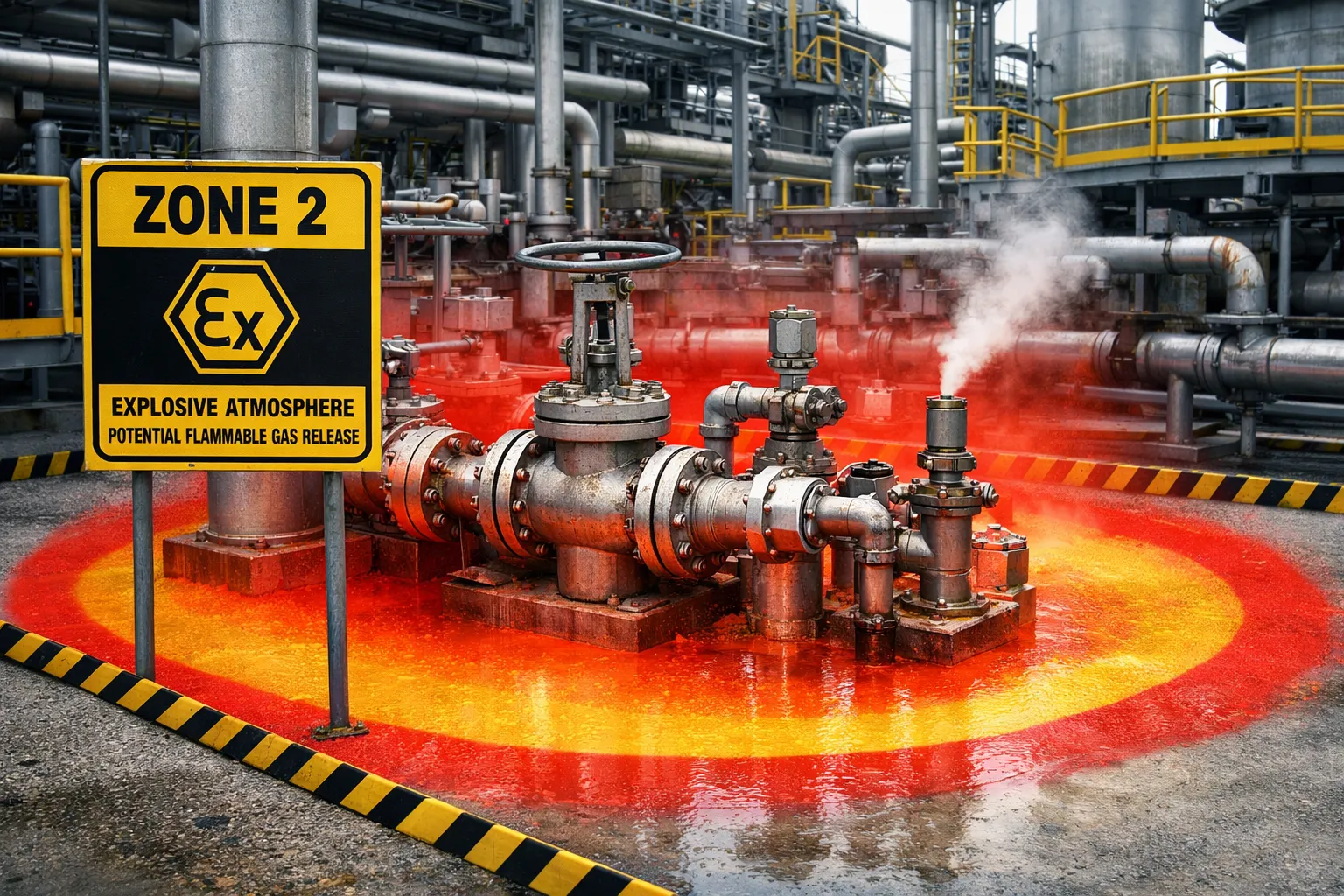
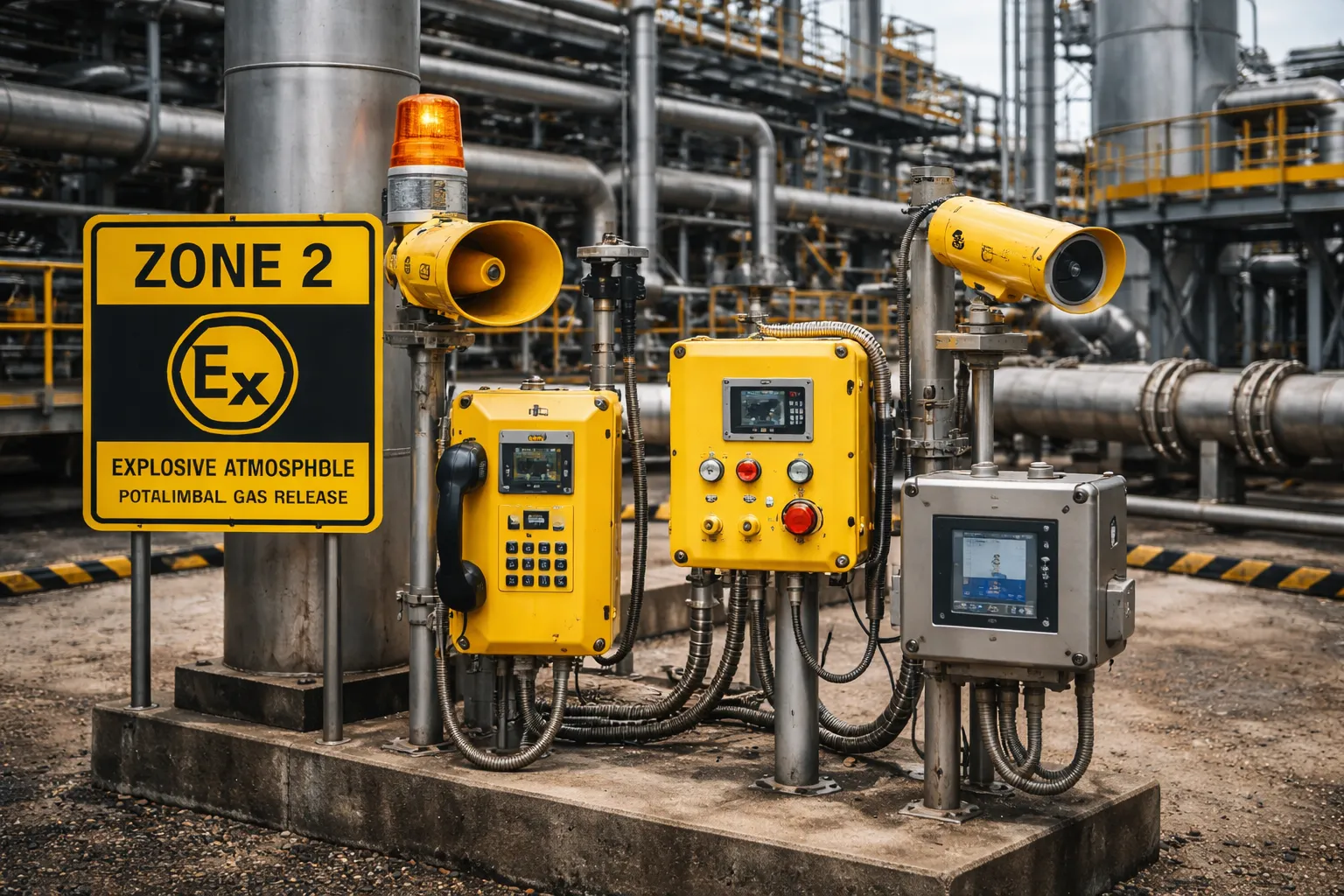
Zone 2 is a hazardous area classification used for places where an explosive atmosphere made up of flammable gas, vapour, or mist is not likely to occur during normal operation and, if it does occur, is expected to exist only for a short period. It is the lowest-risk classification among the gas zones, but it is still a regulated hazardous area.
This point is often misunderstood in real projects. Because the probability of a gas release is lower than in Zone 0 or Zone 1, some people treat Zone 2 as if ordinary industrial equipment is acceptable. That is not the intent of hazardous area classification. Equipment still needs suitable Ex protection, correct marking, proper installation, and planned inspection.
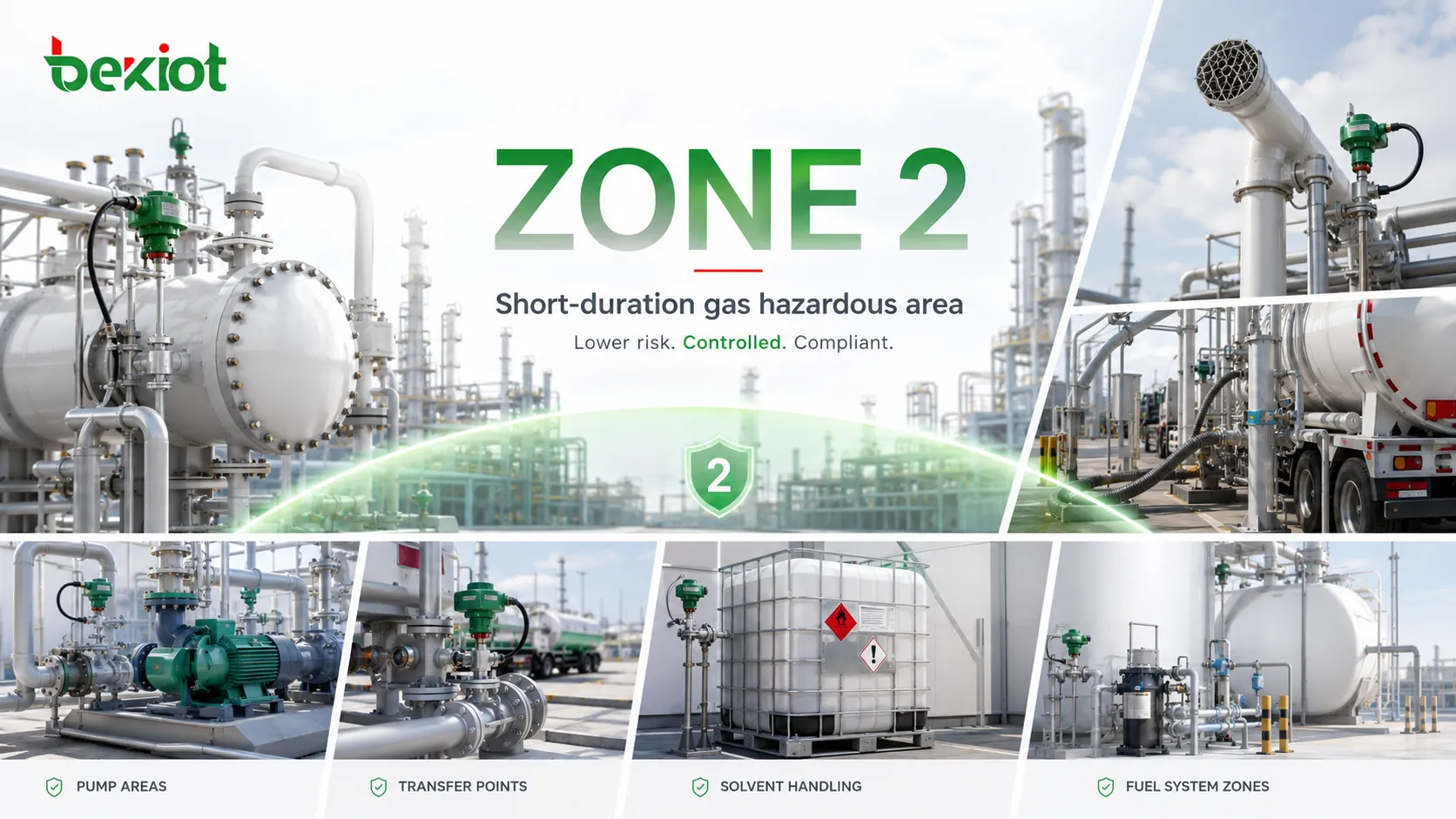
In practical engineering, Zone 2 appears around process equipment, transfer points, vents, pumps, fuel systems, solvent handling spaces, analyzer shelters, skids, and other places where a release is not expected in normal operation but may happen under abnormal or infrequent conditions. The right equipment choice depends on the actual gas, release source, ventilation, temperature class, gas group, enclosure needs, and certificate conditions.
A lower-probability gas hazardous area still requires certified equipment, correct installation, and disciplined maintenance.
Why this classification exists
Hazardous area classification is not based only on whether flammable substances are present on a site. It is based on whether those substances can form an ignitable atmosphere in air, how often that atmosphere may appear, how long it may remain, and what kind of equipment can be safely installed in that location.
Zone 0 is used where an explosive gas atmosphere is present continuously, for long periods, or frequently. Zone 1 is used where such an atmosphere is likely to occur occasionally during normal operation. Zone 2 is different because the explosive atmosphere is not likely during normal operation and, if present, should be brief.
This lower probability changes the protection level required, but it does not remove the hazard. A valve leak, seal failure, abnormal vent release, maintenance disturbance, blocked ventilation path, or process upset can still create a flammable mixture. The equipment installed in that area must not become an ignition source during those foreseeable conditions.
Gas area, not dust area
Zone 2 applies to flammable gas, vapour, or mist atmospheres. It should not be confused with combustible dust classifications. Dust hazards are classified separately as Zones 20, 21, and 22, with different equipment markings and protection concepts.
This distinction matters during procurement. A device suitable for Zone 22 dust service is not automatically suitable for Zone 2 gas service. Likewise, a product marked for a gas atmosphere may not be acceptable in a combustible dust area unless it also carries the correct dust-related marking.
The first selection question should therefore be simple: is the classified atmosphere gas/vapour/mist, combustible dust, or a mixed hazard? Only after that should the project team review equipment category, EPL, gas group, temperature class, and protection concept.
How engineers identify the area
A classified extent should come from a hazardous area assessment, not from guesswork or a copied drawing from another facility. Engineers review the flammable substance, release source, release grade, pressure, temperature, ventilation, congestion, site layout, and dispersion behavior.
In many cases, this classification appears near the edge of a higher-risk zone or around equipment where release is possible but not expected as a normal event. Examples include solvent transfer pumps, breathing vents, loading skids, gas analyzer shelters, LPG or LNG auxiliary equipment, compressor packages, sample points, and fuel handling equipment.
There is no universal fixed distance that applies to every plant. Two sites handling the same gas may still have different hazardous extents because ventilation, enclosure layout, operating pressure, equipment spacing, and release direction are different. This is why formal assessment is more reliable than using generic distance assumptions.
Assessment Factor
What Engineers Review
Why It Matters
Release source
Valves, flanges, vents, seals, pumps, skids, transfer points, or process openings.
Defines where a flammable atmosphere may start.
Release probability
Normal operation, abnormal operation, maintenance condition, or infrequent upset.
Helps decide whether the area is Zone 0, Zone 1, Zone 2, or non-hazardous.
Ventilation
Natural airflow, forced ventilation, enclosed spaces, congestion, and obstruction.
Affects how quickly gas or vapour can disperse.
Substance data
Gas group, ignition temperature, volatility, density, and flammability limits.
Determines the required equipment marking and temperature class.
Influences the classified boundary and installation method.
Standards behind the decision
Zone classification and equipment selection are usually shaped by a combination of area classification standards, equipment construction rules, installation requirements, inspection practices, and local law. The IEC 60079 series is widely referenced internationally, while ATEX requirements apply in the European framework.
IEC 60079-10-1
IEC 60079-10-1 is a central standard for classifying places where explosive gas atmospheres may be present. It provides the basis for identifying Zone 0, Zone 1, and Zone 2 areas by considering release characteristics and ventilation conditions.
IEC 60079-0
IEC 60079-0 provides general requirements for equipment used in explosive atmospheres. It covers marking principles, construction requirements, testing fundamentals, and rules that support multiple protection concepts.
IEC 60079-14 and IEC 60079-17
Selection and installation are covered by IEC 60079-14, while inspection and maintenance are addressed by IEC 60079-17. These standards are important because a certified product can still be compromised by poor cable entries, damaged seals, wrong accessories, weak earthing, or unsuitable maintenance.
European ATEX framework
In Europe, Directive 1999/92/EC addresses workplace risk, hazardous area classification, and worker protection. Directive 2014/34/EU covers equipment and protective systems intended for use in potentially explosive atmospheres. In practical terms, the site operator must classify the area correctly, and the equipment manufacturer must provide products suitable for the intended hazardous environment.
The full equipment marking should be checked against the classified area, gas group, temperature class, ambient limits, and installation conditions.
Markings that must match the hazard
When people discuss protection ratings for a lower-risk gas zone, they may mean several different things: equipment category, EPL, gas group, temperature class, protection concept, and sometimes IP rating. These elements should be reviewed together rather than treated as separate checkboxes.
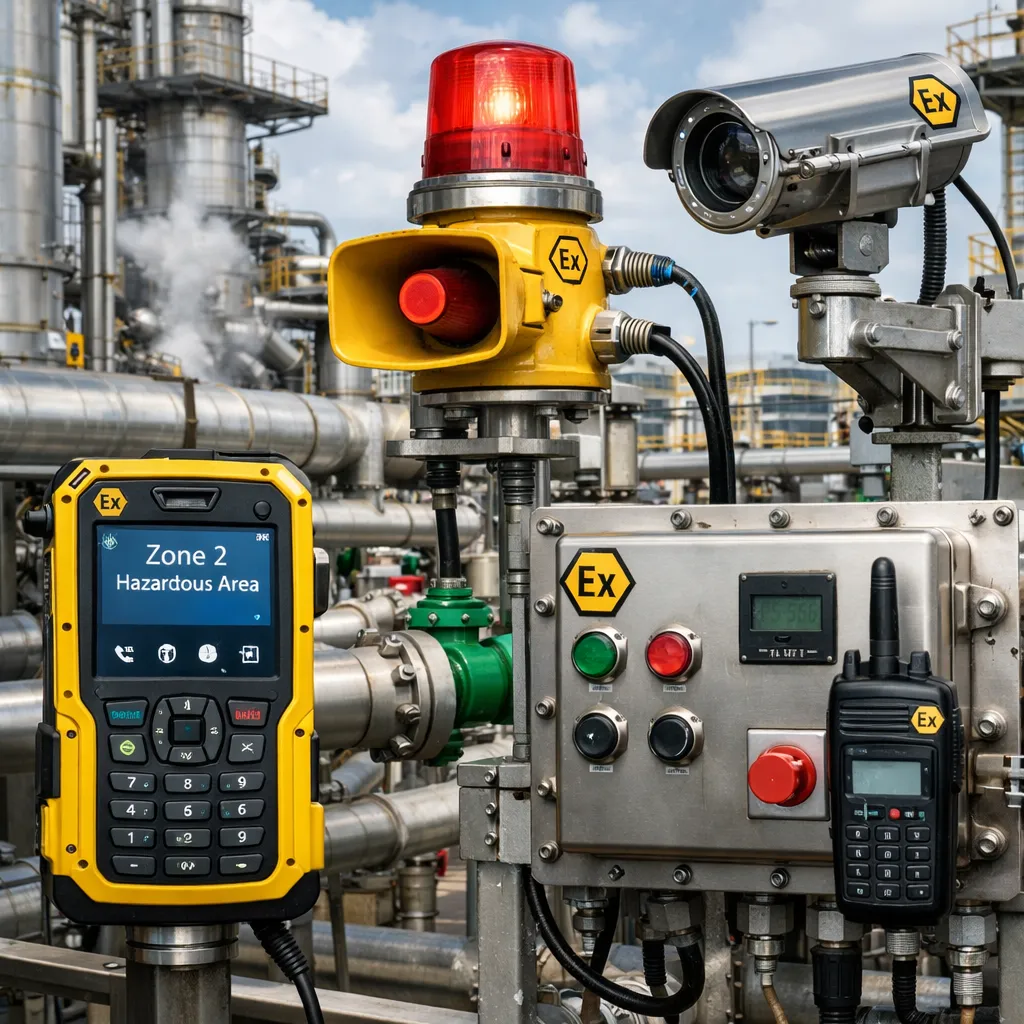
Under ATEX practice, equipment intended for this gas classification is commonly associated with Group II Category 3G. In IECEx-style marking, the corresponding Equipment Protection Level is usually Gc. This indicates a protection level intended for an explosive gas atmosphere that is not likely in normal operation and, if it occurs, exists only briefly.
A marking such as II 3G or Gc is not enough by itself. The device must also match the actual gas group, temperature class, ambient temperature range, installation accessories, and certificate conditions.
Gas group and temperature checks
Gas group identifies how demanding the gas atmosphere is from an ignition-risk perspective. For Group II surface industries, equipment may be marked IIA, IIB, or IIC. IIC is generally the most demanding of these groups. Equipment suitable for IIC can often cover IIB and IIA services, but the reverse should not be assumed.
Temperature class limits the maximum surface temperature that equipment may reach. Common gas temperature classes range from T1 to T6. The required class depends on the ignition temperature of the gas or vapour. If the equipment surface can become hotter than the atmosphere allows, the device may become an ignition source even when other parts of the marking look correct.
This is why site gas data should be available before procurement. A purchase decision based only on “Zone 2 suitable” wording can still be wrong if the gas group or temperature class is not suitable for the actual substance.
Marking Element
What It Means
Selection Risk If Ignored
II 3G
ATEX Group II, Category 3 for gas atmospheres.
The equipment category may not match the classified area.
Gc
Equipment Protection Level commonly associated with lower-probability gas areas.
The product may not provide the required protection level.
IIA / IIB / IIC
Gas group suitability.
The equipment may be unsuitable for the gas present on site.
T1–T6
Maximum surface temperature class.
The surface temperature may exceed the gas ignition limit.
Ambient range
Certified operating temperature range.
Outdoor, desert, offshore, or cold-site use may exceed certificate limits.
Certificate conditions
Special installation or use restrictions.
A technically certified product may be installed outside its permitted conditions.
Protection concepts and enclosure integrity
Many devices for lower-probability gas atmospheres use protection concepts designed for that risk level. Depending on the equipment and certification basis, markings may include methods such as Ex ec, Ex ic, or legacy Ex n-type concepts. Other protection methods may also appear depending on the equipment design and applicable standard.
The shorthand is not enough. Engineers should read the full marking string, certificate, manual, ambient range, cable entry rules, and any special conditions of use. Two products may both be described as suitable for the same zone but differ in gas group, temperature rating, enclosure requirements, or termination method.
IP rating is also important, but it answers a different question. Ratings such as IP65, IP66, or IP67 describe resistance to solids and water. They are useful for outdoor, washdown, dusty, or corrosive environments, but IP rating alone does not prove explosion protection.
A rugged weatherproof enclosure may still be unsuitable for a gas hazardous area if it does not carry the required Ex marking. At the same time, certified hazardous-area equipment still needs the right environmental protection level for rain, salt spray, UV exposure, washdown, corrosion, or dust accumulation.
Where this classification appears
This classification is common across industries that handle flammable gases, vapours, and volatile liquids but do not maintain a continuously explosive atmosphere in the classified space. The exact boundary depends on the real process and ventilation conditions.
Oil and gas facilities
Upstream, midstream, and downstream sites may include classified areas around skids, manifolds, loading points, sample stations, valve assemblies, compressor auxiliaries, and utility spaces adjacent to process equipment.
Chemical and petrochemical plants
Solvent handling areas, blending systems, drum filling stations, reactor support zones, transfer pump areas, and vent discharge surroundings may require suitable motors, junction boxes, signaling devices, telephones, cameras, lighting, and control interfaces.
Fuel handling and storage
Tank farms, fueling systems, loading gantries, dispensing skids, and enclosed spaces near volatile liquid equipment may include lower-probability gas hazardous areas. Venting behavior, product volatility, layout, and ventilation all affect the classified extent.
Utilities and special process rooms
Battery rooms with hydrogen release potential, gas analyzer shelters, biogas systems, wastewater treatment installations, and certain pharmaceutical or food-process solvent areas may also require appropriately marked equipment.
Typical applications include process plants, fuel systems, utility rooms, analyzer shelters, outdoor skids, and sites where brief abnormal gas releases are possible.
Equipment selection checklist
Good selection starts with the area classification dossier, gas data, site environment, and installation method. The goal is not simply to find a label that says “Zone 2,” but to confirm that the full equipment specification matches the real hazard.
Confirm the hazard type: gas, vapour, or mist classification should not be confused with combustible dust zoning.
Check the required gas group: verify whether the site needs IIA, IIB, or IIC suitability.
Match the temperature class: compare the equipment temperature rating with the ignition temperature of the substance.
Verify category or EPL: confirm the intended ATEX category or IECEx EPL, commonly II 3G or Gc for this type of gas area.
Review ambient limits: outdoor, offshore, desert, cold-region, or enclosed installations may exceed normal temperature assumptions.
Check cable entries: glands, stopping plugs, adapters, and seals should match the certificate and installation standard.
Select suitable enclosure protection: IP rating, housing material, corrosion resistance, UV exposure, and impact resistance should match the site.
Plan inspection: maintenance access, labeling, seal condition, and periodic checks should be considered before installation.
Installation and maintenance details
Choosing a certified device is only part of the work. The installation must preserve the protection concept. Cable glands, unused entries, earthing, bonding, mechanical protection, wiring method, enclosure closure, and accessory compatibility can all affect safety.
Field conditions also matter. Outdoor skids, offshore decks, chemical plants, and washdown areas may expose equipment to rain, salt spray, vibration, UV, chemical vapours, and physical impact. The selected device should be suitable not only for the hazardous area marking but also for the environmental stress.
Maintenance should not be treated as a paperwork exercise. Damaged seals, loose glands, missing plugs, unreadable nameplates, corroded enclosures, modified cable entries, and poor repair practices can undermine a compliant design. Regular inspection keeps the equipment aligned with its certified condition.
Common mistakes and better fixes
Mistake
Typical Problem
Better Fix
Treating a lower-risk gas area as non-hazardous
Ordinary equipment may become an ignition source during abnormal gas release.
Use equipment with suitable Ex marking and install it according to the applicable standard.
Relying only on IP66 or IP67
Ingress protection does not prove explosion protection.
Check Ex certification, category, EPL, gas group, and temperature class separately.
Ignoring gas group
A product suitable for one gas group may not be suitable for a more demanding atmosphere.
Compare IIA, IIB, or IIC marking with the actual gas data.
Overlooking temperature class
The equipment surface may become too hot for the gas or vapour present.
Match T-class to the ignition temperature of the hazardous substance.
Using wrong cable glands or plugs
The protection concept may be compromised at the enclosure entry.
Use accessories permitted by the certificate and installation requirements.
Copying area boundaries from another site
The release source, ventilation, and process conditions may be different.
Base classification on site-specific assessment and process data.
How to judge whether the choice is suitable
A suitable decision starts with the classified area drawing and hazardous area assessment. The project team should know why the area was classified, what substance is involved, where the release source is located, and what environmental conditions the equipment will face.
The second check is the full marking. Category or EPL, gas group, temperature class, ambient range, and protection concept should all align with the site requirement. If any one of these elements is wrong, the device should not be accepted simply because it appears rugged or carries an Ex symbol.
The third check is installation reality. A product may be correctly certified but still installed incorrectly through unsuitable cable entries, poor sealing, damaged threads, wrong accessories, inadequate mechanical protection, or lack of inspection access.
The final check is lifecycle maintenance. Equipment installed in a hazardous area should remain readable, sealed, mechanically sound, and consistent with the certificate conditions throughout its service life.
Final view
Zone 2 hazardous areas are lower-probability gas hazardous locations, but they still require disciplined engineering. The classification applies where explosive gas atmospheres are not likely in normal operation and, if they do occur, exist only briefly.
The safest approach is to connect the classification to the real site assessment: identify the gas hazard correctly, verify the full Ex marking, match gas group and temperature class, select suitable environmental protection, install the equipment according to the relevant standards, and maintain it in its certified condition.
FAQ
Is Zone 2 the same as Zone 22?
No. Zone 2 is used for flammable gas, vapour, or mist atmospheres. Zone 22 is used for combustible dust atmospheres. They require different classification logic and equipment markings.
Can ordinary industrial equipment be used?
Not as a general rule. This is still a hazardous area, so equipment should be specifically suitable for the classified environment and installed according to applicable standards and local regulations.
What marking is commonly seen on suitable equipment?
Many applications are associated with ATEX Group II Category 3G and IECEx EPL Gc, together with the correct gas group, temperature class, ambient range, and protection concept. The full marking must always be checked.
Does a higher IP rating mean better explosion protection?
No. IP rating describes protection against solids and water. It does not replace Ex certification, gas group suitability, temperature class, or protection concept.
Who should determine the classification?
Classification should be determined through a formal hazardous area assessment by competent professionals using applicable standards, process data, substance properties, ventilation conditions, and site-specific information.