Network teams often inherit a voice deployment that works reasonably well until someone launches a large file transfer or triggers a cloud backup. Then calls become choppy, speech breaks up, and the same infrastructure that felt fine an hour earlier suddenly seems undersized. The underlying issue is rarely a total lack of bandwidth. More often, the network simply cannot tell the difference between a voice packet and a bulk data packet, so both end up competing for the same queue under the same rules.
That is why priority marking remains so relevant in enterprise voice networks. By labeling real-time media and call-control traffic with recognizable values, the network can make better forwarding decisions during congestion. Marking is not a magic fix for insufficient capacity, but it provides the information that switches, routers, and WAN edges need to treat delay-sensitive audio more predictably.

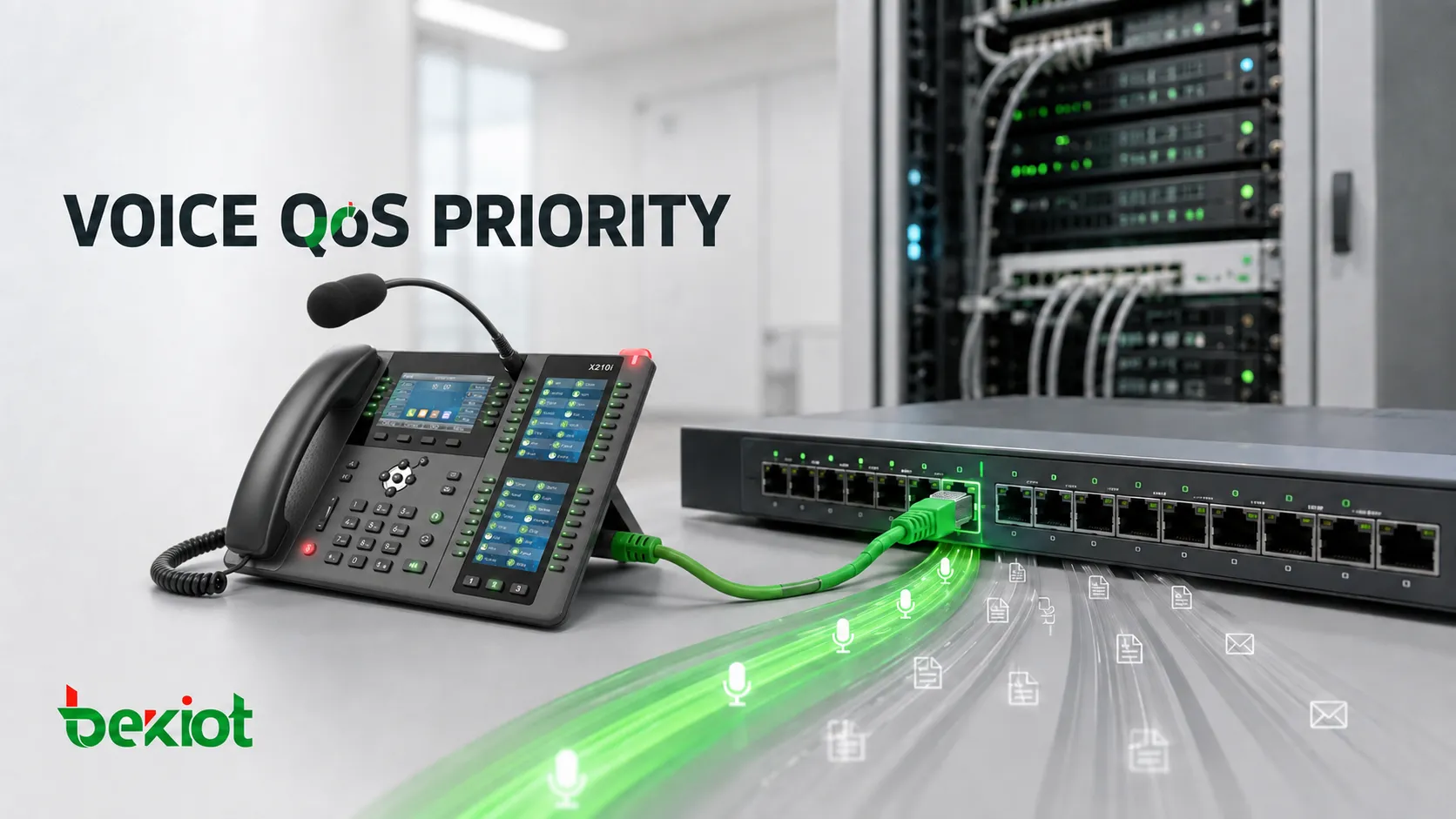
QoS priority marking helps network devices recognize voice traffic early so real-time packets can be handled with lower delay and more predictable forwarding behavior.
What Priority Marking Actually Does for Voice Quality
Many people describe QoS as if it were a single feature, but in practice it is a chain of related actions. Classification identifies what a packet is. Marking attaches a label that describes how that packet should be treated. Downstream devices then use that label to choose the right queue, scheduling behavior, or drop policy. If any step in that chain is missing, the overall result weakens.
For voice traffic, the timing of packet delivery matters more than total throughput. A call does not need enormous bandwidth, but it falls apart quickly when latency rises or jitter becomes unstable. If voice packets are placed behind large file transfers or software updates, they can arrive too late to be useful. Even a small increase in delay can produce clipped speech, robotic audio, or conversational gaps that users immediately notice.
Because of this sensitivity, voice media is commonly separated from ordinary application traffic in the QoS design. The actual speech stream carried over RTP is usually assigned a high-priority treatment class, while call signaling receives a slightly different but still protected class. That approach keeps conversations moving while also preserving the reliability of call setup and teardown.
How Marking Works Across Layers and Trust Boundaries
In most IP networks, voice marking relies on two main mechanisms. At Layer 3, packets are marked using DSCP values inside the Differentiated Services field. The best-known recommendation for telephony media is EF, which corresponds to DSCP 46. This value signals that the traffic belongs to a low-delay, low-jitter treatment class. At Layer 2, traffic may also carry a Class of Service value inside an 802.1Q tag. Voice traffic is frequently associated with CoS 5 on switched Ethernet segments.
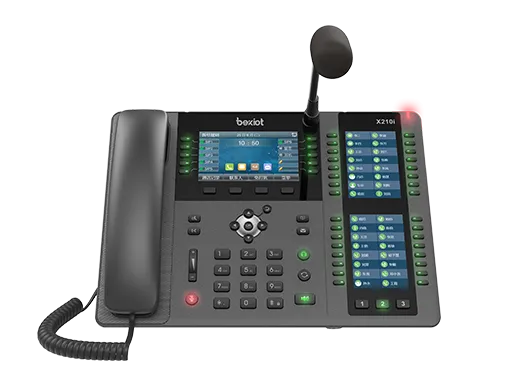
The combination of Layer 2 and Layer 3 marking is especially useful between an IP phone and its first switch. The phone can mark both CoS and DSCP so that the access switch has an immediate indication of which packets need priority handling. From there, the switch can preserve the marking, translate it, or apply a campus-wide policy depending on how the trust boundary is configured.
A trust boundary is the point where the network decides whether to accept an incoming marking or overwrite it. This matters because not every device should be allowed to label its own traffic as mission-critical. A laptop could easily mark file-sharing uploads as EF if the switch trusted everything. In a typical voice deployment, the switch trusts markings from a known IP phone but applies stricter rules to traffic coming from the workstation behind that phone. This selective trust keeps the voice queue meaningful without giving every endpoint unlimited priority access.
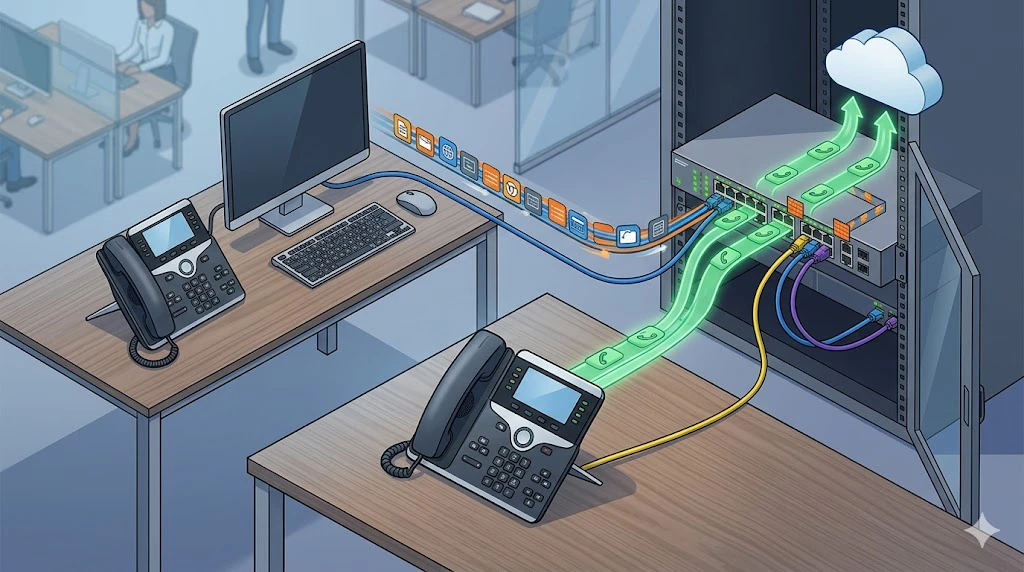
The access-layer trust boundary is one of the most important decisions in voice QoS design because it determines which markings are preserved and which are rewritten.
Practical Marking Values and the Danger of Over-Marking
Voice bearer traffic, which is the actual RTP audio stream, is usually assigned the highest forwarding priority among enterprise user applications. In many standards-based designs, that means DSCP EF at Layer 3 and CoS 5 at Layer 2. These values are widely supported and give a consistent signal to both switches and routers. The goal is not to let voice consume unlimited bandwidth, but to protect a relatively small stream of highly delay-sensitive packets from being delayed behind background traffic.
Call signaling traffic such as SIP messages, registration events, and call-control exchanges is also important, but it does not require the same treatment as the audio stream itself. Many network designs place signaling in a separate class such as CS3. That keeps signaling protected without allowing it to compete directly with the low-latency voice media queue. During busy periods, this separation helps maintain both call audio quality and control-plane reliability.
One common mistake is marking too many services as high priority. If voice, video, management traffic, backups, and application syncs are all labeled as EF, the priority queue loses its meaning. Strong QoS policy is deliberately selective. It reserves high-priority treatment for the traffic that truly depends on low delay and low jitter, and assigns everything else to a suitable class based on business value and technical sensitivity. Over-marking is often worse than no marking because it creates a false sense of protection while doing little to improve real-time performance.
Where Voice Marking Delivers the Strongest Results
The value of voice priority marking becomes most visible on constrained links. Branch offices, WAN connections, VPN tunnels, and shared uplinks often carry a mix of voice, video, cloud traffic, and routine business applications over limited capacity. When voice traffic is correctly identified and marked, routers and switches can queue it ahead of more tolerant flows. That can make the difference between a call that remains intelligible during a heavy sync window and one that users complain about for the rest of the day.
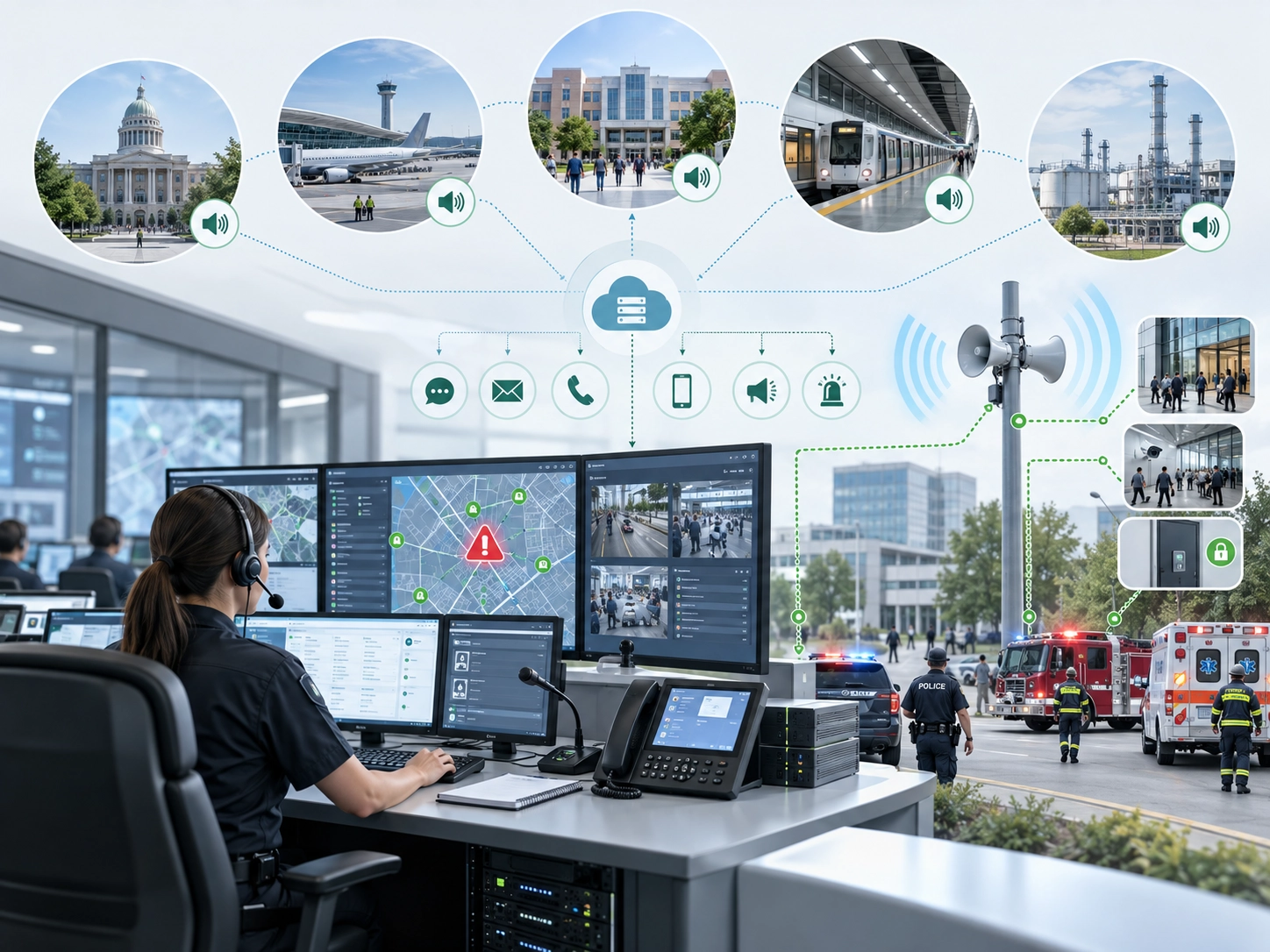
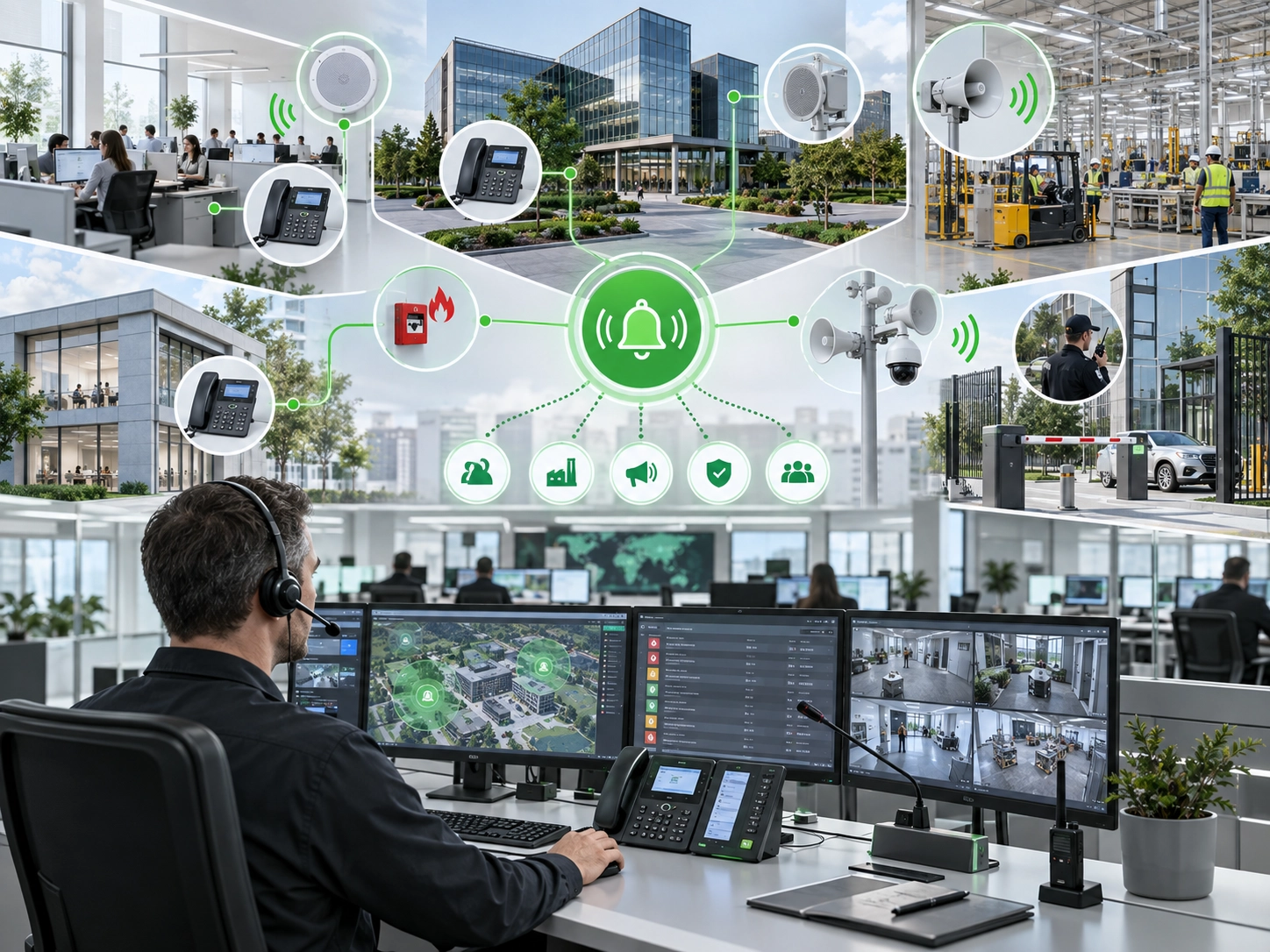
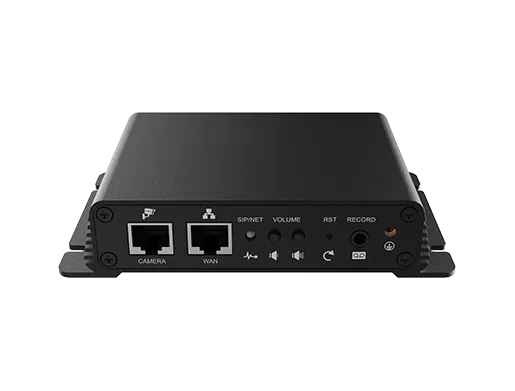
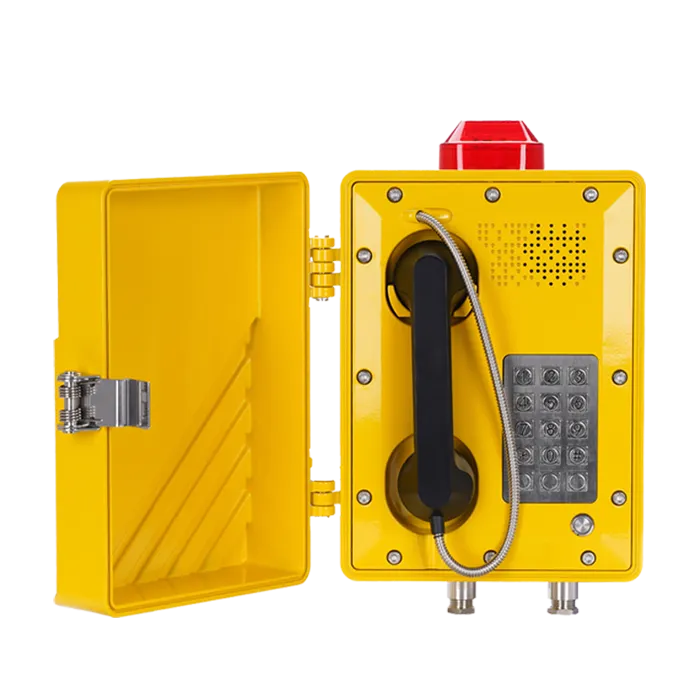
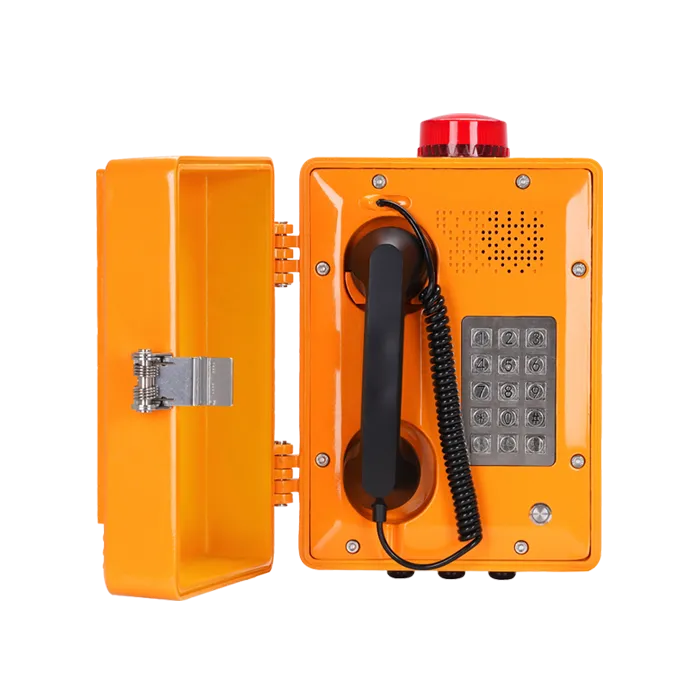
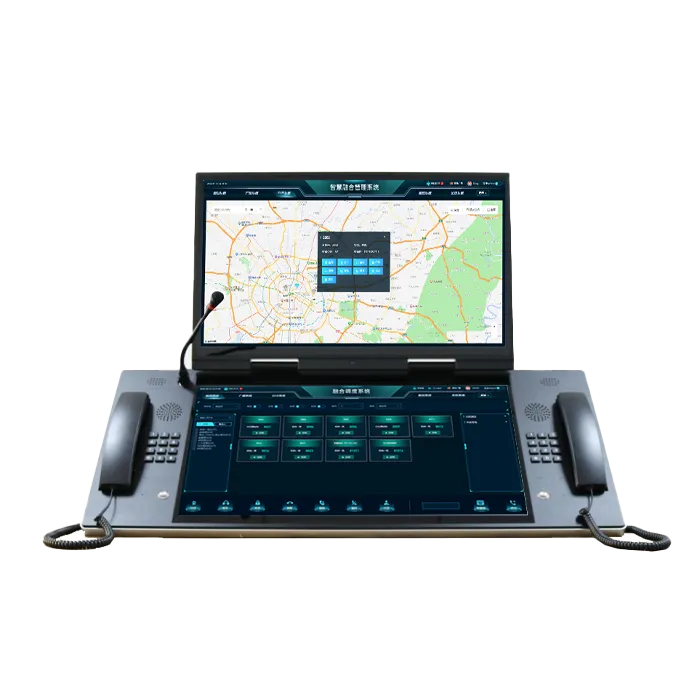
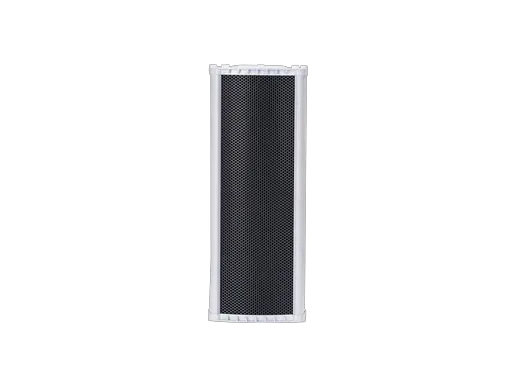
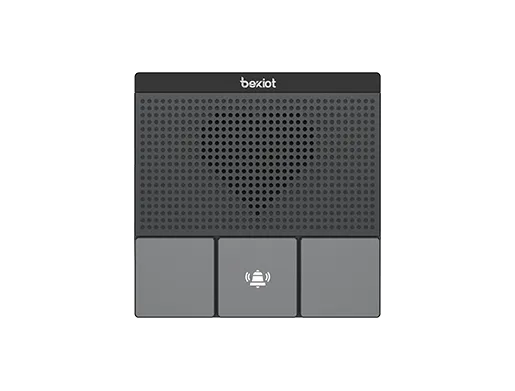
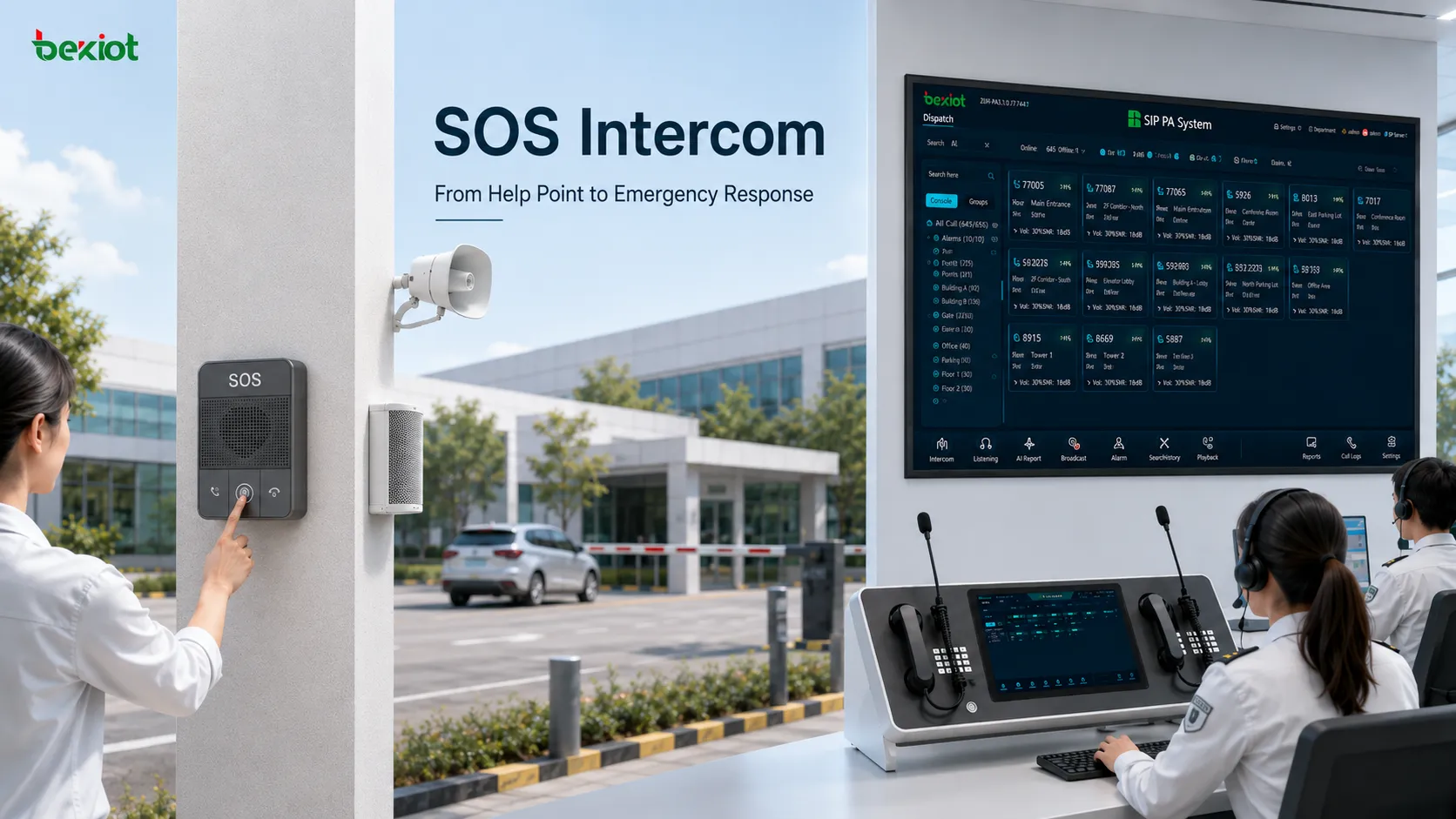
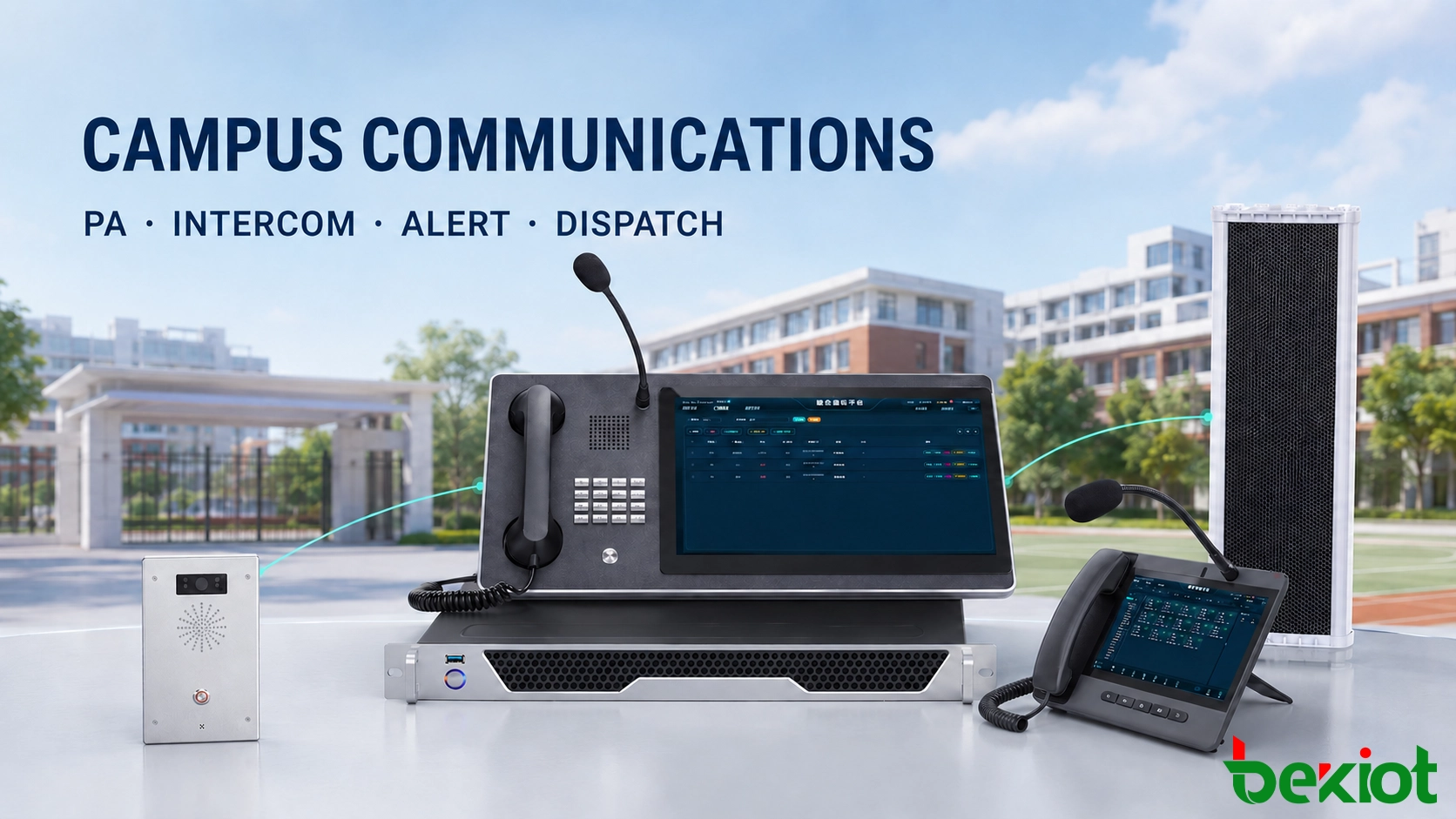
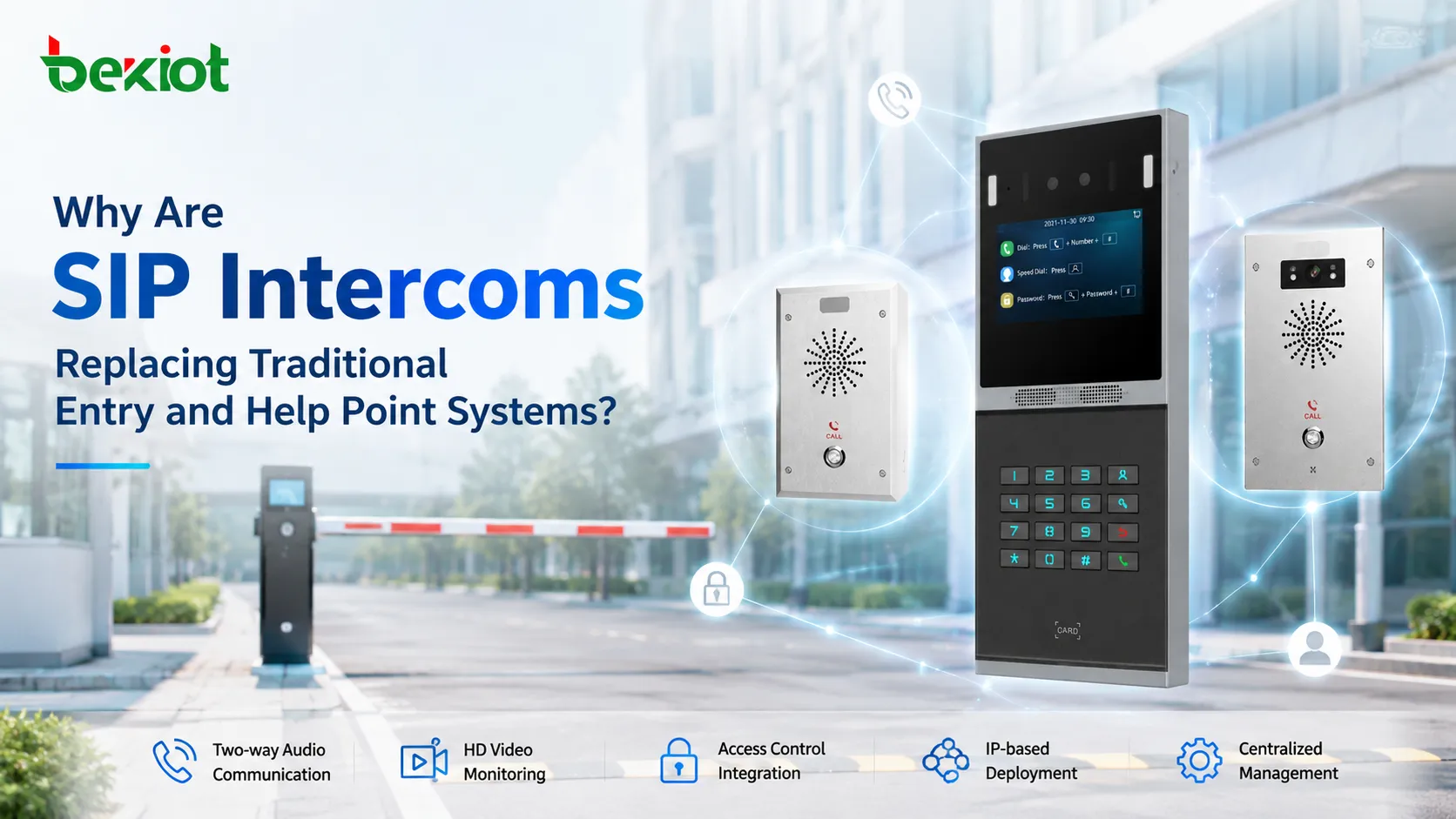
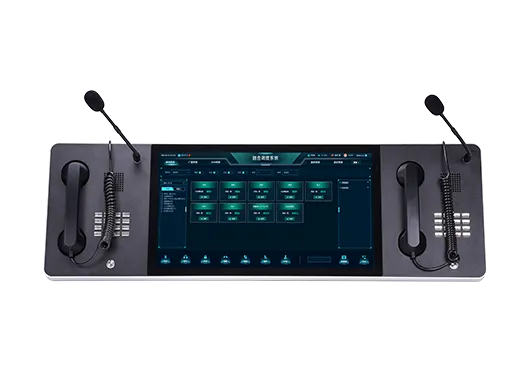
IP phones and enterprise PBX platforms are the most familiar use case, but the same principles apply to SIP trunks, hosted voice services, and remote site deployments. Marking also supports less obvious voice endpoints, including paging systems, IP intercoms, emergency help points, and industrial telephones. These services may not generate constant traffic, but when they are used, the audio path often needs immediate delivery. In transportation hubs, schools, healthcare facilities, and industrial sites, a delayed announcement or distorted emergency call can affect coordination and response time.
Consistency is what holds the design together. A phone can mark packets correctly, but the network still needs to honor those markings through every hop. That means access switches must trust the right endpoints, uplinks must preserve DSCP values, and WAN edges must map marked traffic into the correct queues. When all of these pieces align, voice behavior becomes much easier to monitor and troubleshoot because administrators can trace how traffic was marked, queued, and forwarded at each stage.
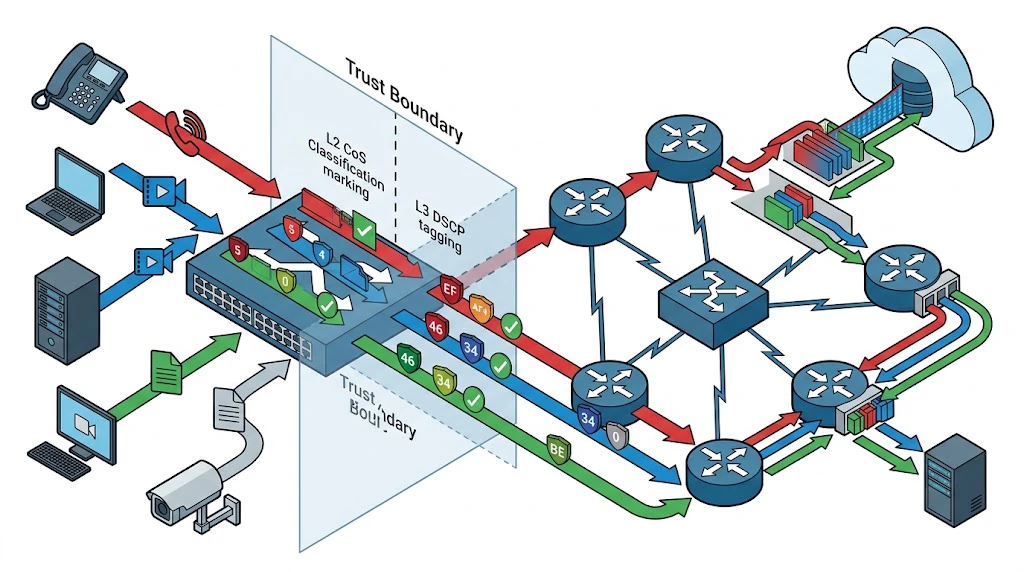
Consistent priority marking makes voice performance easier to monitor because administrators can correlate packet markings, queue behavior, and user experience more directly.
Frequently Asked Questions
Do softphones need the same QoS marking as desk phones?
Softphones can benefit from similar marking, but they are often harder to trust because they run on general-purpose computers. Many organizations apply stricter marking rules to softphone traffic or use endpoint posture tools to verify that a device is managed before allowing premium QoS treatment.
Can QoS marking still work over an internet connection?
Marking works best inside a controlled network because service providers and public internet paths often ignore or rewrite DSCP values. For internet-based voice, organizations typically combine local marking with other techniques such as SD-WAN policy, tunnel prioritization, or managed provider services that honor business traffic classes.
What is the difference between trusting a phone and trusting a PC for QoS purposes?
A switch usually trusts voice markings from a known IP phone because the phone marks only its own media and signaling traffic. A PC, on the other hand, may run arbitrary applications that try to mark bulk data as high priority. That is why access switches often trust the phone port but reclassify or limit workstation traffic behind the same port.
How does Wi-Fi affect voice QoS marking?
Wi-Fi introduces additional challenges because radio contention and roaming can affect voice quality even when packets are marked correctly. Many wireless systems support their own prioritization mechanisms, such as WMM, but enterprise designs still need to map voice traffic into the proper wired QoS classes when it leaves the access point and enters the campus network.
Can a network work without voice QoS marking if there is enough bandwidth?
In a lightly loaded network with abundant capacity, voice may work acceptably without explicit marking. However, most real enterprise networks experience occasional congestion, and marking provides predictable behavior during those periods. It also helps with troubleshooting, policy consistency, and multi-vendor interoperability even when congestion is rare.