What Is G.722 Codec? Audio Benefits, Technical Features, and Applications
Learn what the G.722 codec is, how it works, its audio benefits, core technical features, and where it is used in VoIP, IP phones, conference systems, PBX platforms, and business voice networks.
Becke Telcom
G.722 is a wideband voice codec widely used in business VoIP systems, IP phones, conference devices, DECT handsets, SIP platforms, and PBX environments. It is not a new codec, but it remains useful because it gives calls a clearer and more natural sound than traditional narrowband telephony, while still being simple enough for many enterprise communication systems to support reliably.
What Is G.722 Codec?
G.722 is an ITU-T wideband audio codec designed for higher-quality speech transmission. Compared with older narrowband codecs, it carries more of the human voice spectrum, so speech sounds less muffled and more natural. In business communication, this is why G.722 is often linked with HD voice, especially on compatible IP phones, conference phones, and unified communications platforms.
In practical terms, G.722 is often selected when an organization wants better call clarity without adding unnecessary complexity to the voice network. It is commonly used for internal calls, office voice systems, meeting rooms, and managed VoIP environments where both endpoints can support wideband audio.
G.722 is not usually chosen as a bandwidth-saving codec. Its main value is voice quality, interoperability, and predictable behavior in enterprise SIP and PBX deployments.
G.722 improves voice clarity in enterprise VoIP systems where compatible endpoints and stable network conditions are available.
How Does G.722 Work?
G.722 uses sub-band ADPCM, which stands for sub-band adaptive differential pulse code modulation. Instead of encoding the whole audio signal as one single stream, the codec separates the signal into frequency bands and processes them in a way that preserves more useful speech detail.
The codec is commonly associated with 16 kHz audio sampling, which allows it to carry a wider speech range than traditional narrowband telephony. This wider voice range is what makes conversations sound more open, clearer, and easier to follow, especially during long calls or group discussions.
One important detail often causes confusion in SIP troubleshooting. In RTP signaling, G.722 is usually shown with an 8,000 Hz clock rate for historical compatibility reasons. This does not mean the call is narrowband. A G.722 call can still deliver wideband audio even when the RTP payload clock appears as 8 kHz in SDP or packet analysis.
Main Benefits and Technical Features of G.722
The main reason people notice G.722 is simple: voices sound clearer. On a good handset or speakerphone, speech has more detail than a standard narrowband call. Names, numbers, product terms, and fast conversations are easier to understand, which can reduce repetition and listening fatigue in business communication.
Wideband speech quality: G.722 carries more voice detail than traditional narrowband codecs, making calls sound more natural.
Common 48, 56, and 64 kb/s modes: The codec supports these operating rates, with 64 kb/s commonly seen in enterprise VoIP discussions.
Low implementation complexity: G.722 is easier to support than many newer and more dynamic codecs.
Mature device support: Many IP phones, PBX platforms, conference phones, DECT systems, and SIP endpoints support G.722.
Predictable enterprise behavior: Engineers can usually configure, prioritize, and troubleshoot G.722 more easily than highly adaptive codec options.
G.722 still depends on the full call path. A poor microphone, bad speaker, echo problems, packet loss, jitter, or forced codec downgrade can all reduce the final audio quality. The codec helps, but it cannot repair a weak endpoint or an unstable network by itself.
G.722 is especially useful in meeting rooms and speakerphone calls, where clearer speech can make group conversations easier to follow.
G.722 vs G.711: What Is the Difference?
G.711 is a narrowband voice codec and remains one of the safest fallback choices in telephony because it is widely supported. It works well with legacy trunks, gateways, and many SIP platforms, but its voice range is limited compared with wideband audio.
G.722 takes a different role. It keeps the practical stability that enterprise voice systems need, but it delivers a clearer and more natural call experience when both sides of the call support it. This makes it a strong option for internal VoIP calls, conference phones, and office communication systems.
Choose G.711 when compatibility with legacy trunks, PSTN gateways, or older devices is the top priority.
Choose G.722 when both endpoints support wideband audio and better voice quality is important.
Use both in codec policy when internal calls can benefit from HD voice but external connections still need broad compatibility.
In many real deployments, an IP PBX may prefer G.722 for on-net calls and keep G.711 available for SIP trunks, gateways, or older endpoints. This balanced approach often works better than trying to force one codec everywhere.
Where Is G.722 Used in VoIP Networks?
G.722 is most useful in environments where voice quality matters and the network has enough capacity to handle wideband calls. Office LANs, managed WANs, headquarters networks, private PBX systems, and enterprise unified communications platforms are common examples.
It is also a good fit for extension-to-extension calling. Even if a company still uses G.711 for PSTN access or some external SIP trunks, internal calls between compatible desk phones, softphones, conference devices, and SIP endpoints can still use G.722.
Many VoIP networks use G.722 for internal HD voice while keeping other codecs available for trunks, gateways, and legacy interoperability.
Enterprise IP Phones
Many business desk phones support G.722 because it improves everyday internal calling. It is especially useful for reception teams, sales departments, managers, support teams, and users who spend a lot of time on voice calls.
Conference Phones and Meeting Rooms
Meeting rooms benefit from wideband audio because multiple voices, room acoustics, and speakerphone distance can make speech harder to understand. G.722 helps conversations sound clearer and more comfortable.
DECT and Cordless Business Telephony
In office mobility scenarios, G.722 can support wideband voice on compatible cordless handsets and base stations. This gives internal wireless calls better clarity than legacy narrowband audio.
IP PBX and Unified Communications Platforms
PBX and unified communications platforms often include G.722 in codec negotiation lists because it provides a practical improvement in voice quality without requiring a complex media strategy.
SIP Intercom and Specialized Communication Endpoints
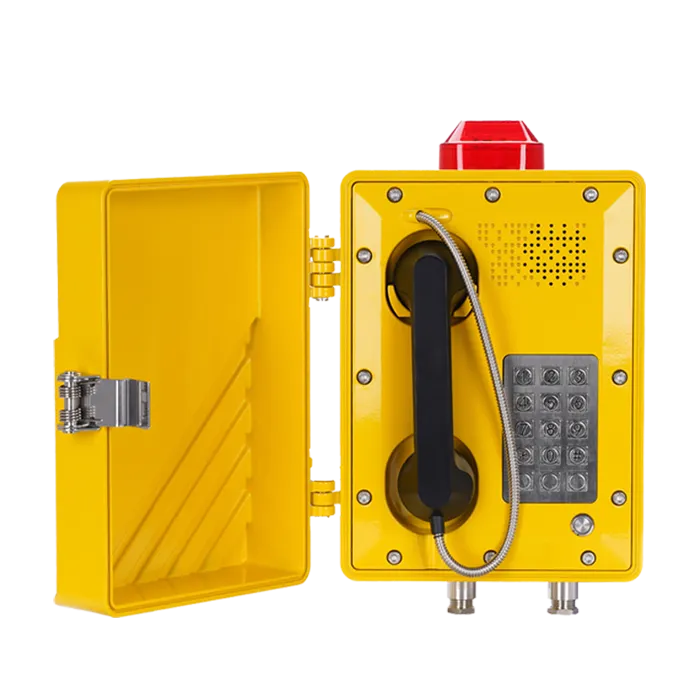
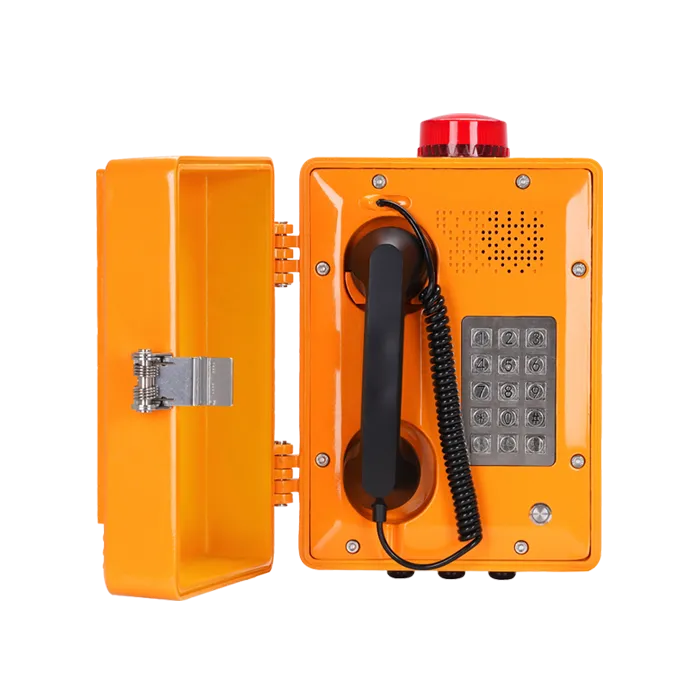
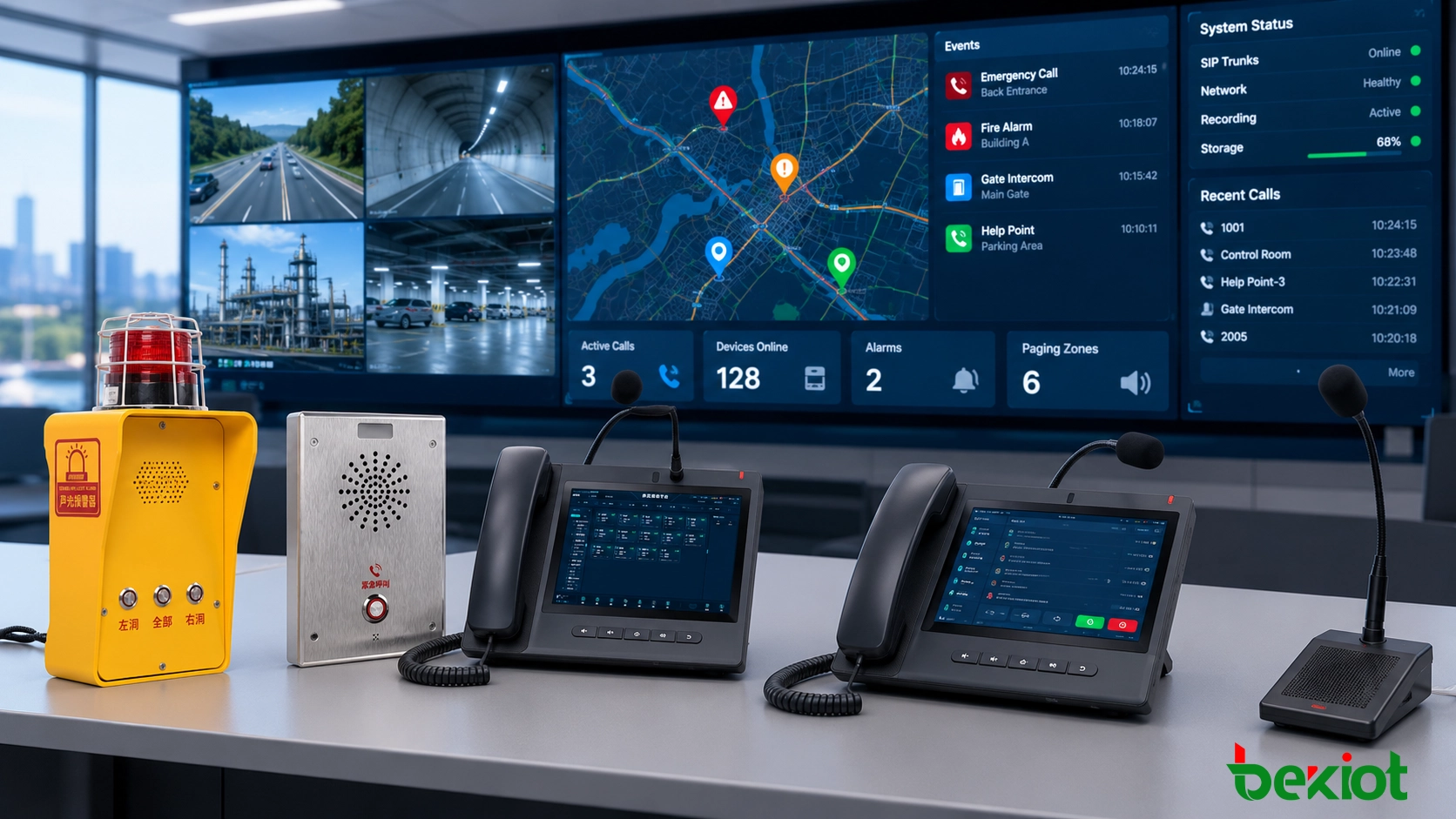
In industrial, campus, healthcare, and operational communication projects, G.722 may improve clarity for intercom, paging, help point, or voice response use cases, as long as the endpoint hardware and acoustic environment are suitable.
Deployment Considerations and Common Mistakes
Enabling G.722 on a phone does not automatically mean every call will become HD voice. Codec negotiation, PBX policy, SBC configuration, recording systems, media relays, gateways, and endpoint support all affect the final result.
Check endpoint support: Both sides of the call must support G.722 for wideband audio to work.
Review PBX and SBC codec policies: A system may silently downgrade calls to G.711 if codec priorities or media profiles are configured that way.
Do not ignore endpoint quality: A good codec cannot fix a poor microphone, weak speaker, bad echo control, or poor acoustic design.
Protect network quality: Packet loss, jitter, and delay can damage call quality even when the selected codec is suitable.
Understand the 8 kHz RTP clock detail: G.722 may show an 8,000 Hz RTP clock in signaling while still delivering wideband audio.
Another mistake is assuming G.722 is the best choice for every situation. In controlled enterprise networks, it is often a very good option. In bandwidth-limited or unstable internet conditions, a more adaptive codec may perform better. Codec strategy should match the actual call path, endpoint mix, trunk requirements, and network conditions.
FAQ
Is G.722 better than G.711?
For voice quality, G.722 is usually better because it supports wideband speech and sounds more natural. For maximum legacy compatibility, G.711 is still the safer baseline. The better choice depends on whether the priority is clearer audio or wider interoperability.
Is G.722 the same as HD voice?
Not exactly. HD voice is a broader term used to describe a clearer wideband calling experience. G.722 is one of the common codecs used to deliver that experience in enterprise telephony.
Does G.722 use more bandwidth than G.711?
In many VoIP discussions, both G.722 and G.711 are treated as 64 kb/s class codecs. Total network bandwidth also depends on packetization, RTP, UDP, IP headers, VLAN tags, and other transport factors. G.722 is mainly chosen for clarity, not bandwidth savings.
Why does G.722 show an 8 kHz RTP clock?
This is a historical RTP payload-format detail kept for compatibility. It does not mean the codec is working as narrowband audio. G.722 can still provide wideband speech even when the RTP clock is shown as 8,000 Hz.
Where is G.722 commonly used?
G.722 is commonly used in enterprise IP phones, conference phones, DECT office systems, SIP PBX platforms, unified communications systems, and other business voice environments where better speech clarity is required.
Should every business voice system prefer G.722?
Not always. G.722 is a strong choice for many internal and managed VoIP networks, but codec selection should still consider SIP trunk support, recording systems, WAN quality, conferencing needs, endpoint compatibility, and interoperability with older devices.
G.722 remains a practical wideband codec for business communications because it improves speech clarity without making voice system design overly complicated. For organizations building or upgrading IP telephony, conference audio, SIP endpoints, or unified communications platforms, it is still worth understanding and keeping in the codec policy where the network and endpoints can support it properly.