What Is G.711 Codec? Audio Benefits, Technical Features, and Applications
G.711 is a classic voice codec widely used in PSTN and VoIP. Learn how A-law and μ-law work, its audio benefits, bandwidth trade-offs, technical features, and common applications in modern phone systems.
Becke Telcom
G.711 is a narrowband PCM voice codec widely used in VoIP, IP PBX, SIP trunk, media gateway, WebRTC, and industrial voice communication systems. It runs at 64 kb/s, uses either PCMA or PCMU, and remains popular because it is simple, stable, and widely supported across telecom equipment. When different vendors, gateways, and carrier networks need to interoperate reliably, G.711 is still one of the safest codec choices.
What Is G.711?
G.711 is an ITU-T standard voice codec for narrowband telephone audio. It converts analog speech into digital voice by sampling the audio signal 8,000 times per second and encoding each sample into an 8-bit value. This process is based on pulse code modulation with logarithmic companding, which helps preserve speech clarity while keeping the bit rate fixed at 64 kb/s.
In practical terms, G.711 delivers traditional telephone-grade voice quality. Its audio bandwidth is narrowband, usually associated with the classic 300–3,400 Hz voice range. It does not provide HD voice, but it offers clear, predictable speech quality for standard business calling, public telephony, gateways, emergency intercoms, and dispatch communication systems.
How G.711 Works in VoIP
In a VoIP network, G.711 voice is carried as RTP media. A common configuration uses 20 ms of audio per RTP packet, which equals 160 bytes of voice payload. Although the codec itself runs at 64 kb/s, the actual network consumption is higher after RTP, UDP, IP, and Ethernet headers are added.
For capacity planning, a single G.711 call with 20 ms packetization typically consumes about 87 kb/s on a LAN in one direction. This is why engineers should not size WAN links, VPN tunnels, or branch-office uplinks based only on the nominal 64 kb/s codec rate. Packet overhead, packetization interval, VLAN tags, VPN encapsulation, and link-layer framing can all increase the real bandwidth requirement.
G.711 is commonly used as a shared voice format across IP phones, PBX platforms, SIP trunks, media gateways, and carrier networks.
PCMA and PCMU: A-law vs μ-law
G.711 has two main companding variants: PCMU and PCMA. PCMU uses μ-law companding and is commonly used in North America and Japan. PCMA uses A-law companding and is widely used in Europe and many other regions. The difference is mainly about regional compatibility, not a major difference in perceived voice quality for normal users.
This distinction matters when a call crosses between systems, carriers, or countries. For example, a SIP trunk may prefer PCMA while an IP PBX is configured to offer PCMU first. If both sides do not negotiate a common codec correctly, the result may be transcoding, failed calls, one-way audio, or silence. In multi-vendor VoIP deployments, codec preference should be configured clearly on phones, PBXs, SBCs, SIP trunks, and gateways.
Key Technical Details of G.711
Codec type: Narrowband PCM voice codec with logarithmic companding.
Nominal bit rate: 64 kb/s per audio stream.
Sampling rate: 8,000 Hz.
Sample size: 8 bits per sample after companding.
Common RTP payload types: PCMU = 0, PCMA = 8.
Typical packetization: 20 ms per RTP packet, equal to 160 bytes of voice payload.
Typical LAN bandwidth: About 87 kb/s per direction with 20 ms packetization and Ethernet overhead.
Algorithmic delay: Very low compared with many compressed voice codecs.
G.711 voice is sampled, encoded with A-law or μ-law companding, packetized into RTP, and transmitted across the IP network.
Why G.711 Is Still Widely Used
The main advantage of G.711 is interoperability. Most IP phones, IP PBX systems, SIP servers, analog telephone adapters, SBCs, media gateways, carrier trunks, and WebRTC-related voice systems support PCMA and PCMU by default. This broad support reduces negotiation problems and makes G.711 a practical baseline codec for business voice networks.
G.711 also adds very little codec processing delay. In real deployments, call latency is usually affected more by network delay, jitter buffers, routing, VPN tunnels, or overloaded links than by the codec itself. For dispatch centers, operator consoles, emergency phones, help points, and industrial intercom systems, this low-delay behavior is valuable because voice interaction needs to feel immediate.
Another benefit is easier troubleshooting. When a packet capture shows a call using PCMU or PCMA and RTP packets are flowing correctly, engineers can quickly focus on network loss, jitter, NAT traversal, firewall rules, SIP negotiation, or endpoint configuration. Compared with complex transcoding chains, a simple G.711 media path is easier to understand and maintain.
Common G.711 Deployment Problems
The most common mistake is underestimating bandwidth. A team may calculate call capacity using only 64 kb/s per call and then discover that real traffic is much higher after packet overhead is included. This becomes especially important on WAN links, VPN tunnels, wireless backhaul, and low-speed branch-office connections.
Network quality is another important factor. G.711 is simple, but it cannot hide packet loss, jitter, congestion, or bufferbloat. If voice packets are not prioritized correctly, calls can still sound choppy even when the codec is configured properly. QoS, traffic shaping, stable routing, and sufficient uplink capacity are often more important than changing the codec.
PCMA and PCMU mismatches can also cause problems. Some carriers prefer A-law, while some PBX systems or phones may offer μ-law first. To avoid unexpected transcoding or media failures, codec order should be checked on both sides of the SIP trunk, gateway, PBX, SBC, and endpoint configuration.
Where G.711 Is Commonly Used
IP PBX systems: G.711 is often enabled by default for enterprise SIP extensions and internal voice calls.
SIP trunks: Many carriers support PCMA or PCMU as a stable baseline codec for voice interconnection.
Media gateways: G.711 is frequently used when connecting analog lines, T1/E1 PRI circuits, legacy PBXs, or PSTN interfaces to VoIP systems.
Analog telephone adapters: ATAs commonly use G.711 to connect analog phones, emergency phones, elevator phones, or legacy terminals to SIP networks.
Fax pass-through: When T.38 is unavailable or unreliable, G.711 pass-through may be used as a fallback for fax tones.
WebRTC interconnection: PCMA and PCMU help browser-based voice applications communicate with traditional SIP infrastructure.
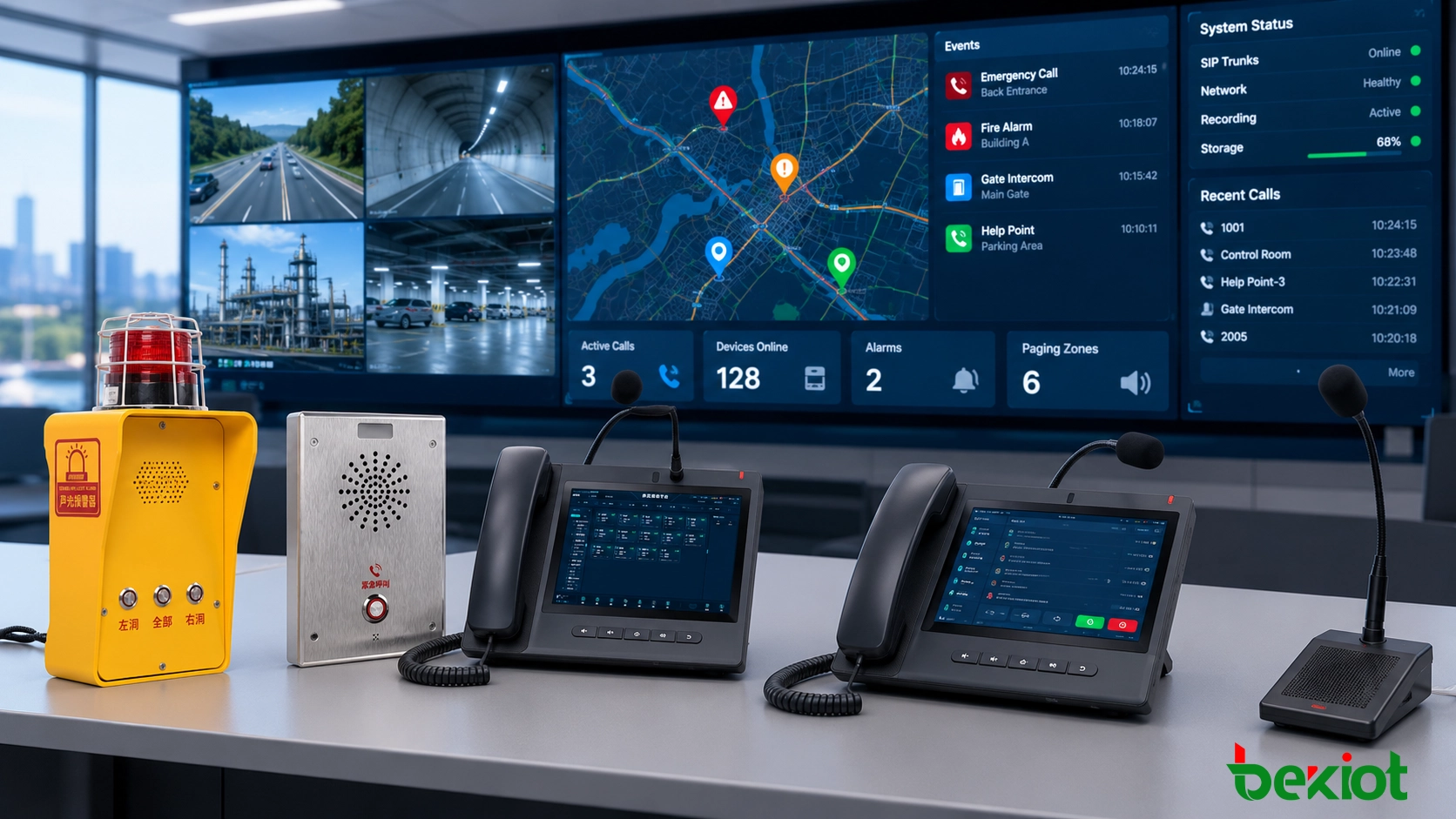
Industrial communication: Help points, tunnel phones, emergency intercoms, dispatch consoles, and public safety voice systems often use G.711 because the network is controlled and compatibility is important.
G.711 is widely used in PBX, SIP trunk, gateway, WebRTC, fax pass-through, and industrial voice communication deployments.
G.711 vs Other Voice Codecs
G.711 is a good choice when the network has enough bandwidth and compatibility is the main priority. It is especially suitable for LAN environments, controlled enterprise networks, SIP trunk interconnection, media gateway deployments, emergency voice systems, and industrial communication networks where predictable operation is more important than bandwidth savings.
Compressed codecs such as G.729 may be useful when bandwidth is limited, but they introduce additional complexity and may require licensing, DSP resources, or transcoding support depending on the platform. Wideband codecs such as G.722 or Opus can provide better voice quality, but they require both endpoints and the full call path to support them correctly.
The best codec choice depends on the network and the service goal. If the full voice path can use G.711 end to end without transcoding, it is often the simplest and most reliable option. If bandwidth is constrained or HD voice is required, another codec may be more suitable.
FAQ
Is G.711 compressed?
G.711 uses logarithmic companding, but it is not a low-bit-rate compressed codec like G.729. In most VoIP planning discussions, it is treated as an uncompressed narrowband PCM codec running at 64 kb/s.
What is the difference between PCMA and PCMU?
PCMA uses A-law companding, while PCMU uses μ-law companding. PCMU is common in North America and Japan, while PCMA is common in Europe and many other regions. The choice mainly affects interoperability between systems and carriers.
Does G.711 support HD voice?
No. G.711 is a narrowband codec for traditional telephone voice. For HD voice or wideband audio, codecs such as G.722 or Opus are more suitable.
How much bandwidth does a G.711 call use?
The codec itself runs at 64 kb/s, but the actual network bandwidth is higher after packet overhead is included. With 20 ms packetization on Ethernet, a G.711 call commonly uses about 87 kb/s per direction.
Can G.711 be used over the public internet?
Yes, but the connection must have enough bandwidth, low packet loss, and stable jitter performance. On congested public internet links, compressed codecs may sometimes perform better because they consume less bandwidth.
When should I choose G.711?
Choose G.711 when compatibility, low codec delay, and simple troubleshooting are more important than bandwidth savings. It is especially useful for IP PBX systems, SIP trunks, media gateways, emergency phones, help points, and industrial voice networks.
Conclusion
G.711 is not the most bandwidth-efficient voice codec, but it remains one of the most practical codecs for business and industrial VoIP systems. Its fixed 64 kb/s rate, low delay, broad device support, and predictable behavior make it a reliable choice for IP PBX, SIP trunk, gateway, WebRTC interconnection, emergency communication, and dispatch voice applications. When the network can support the bandwidth and the goal is stable interoperability, G.711 is still a strong default codec.