What Makes Outdoor Communication Devices Reliable?
Outdoor communication devices explained for industrial, transport, utility and emergency sites, covering waterproof design, rugged housing, audio clarity, power, network stability, installation and maintenance.
Becke Telcom
Outdoor communication devices work in conditions that are much less predictable than offices, control rooms, or indoor service desks. Rain, dust, sunlight, wind, vibration, salt mist, temperature change, background noise, unstable power, and long cable routes can all affect whether the device remains usable when people need it.
For field workers, security staff, maintenance teams, drivers, operators, and emergency responders, the device is not only a calling tool. It must be reachable, recognizable, easy to operate, and dependable in the real operating environment. This is why outdoor communication equipment is usually designed with stronger protection, clearer audio, simpler controls, safer installation, and better system adaptability.
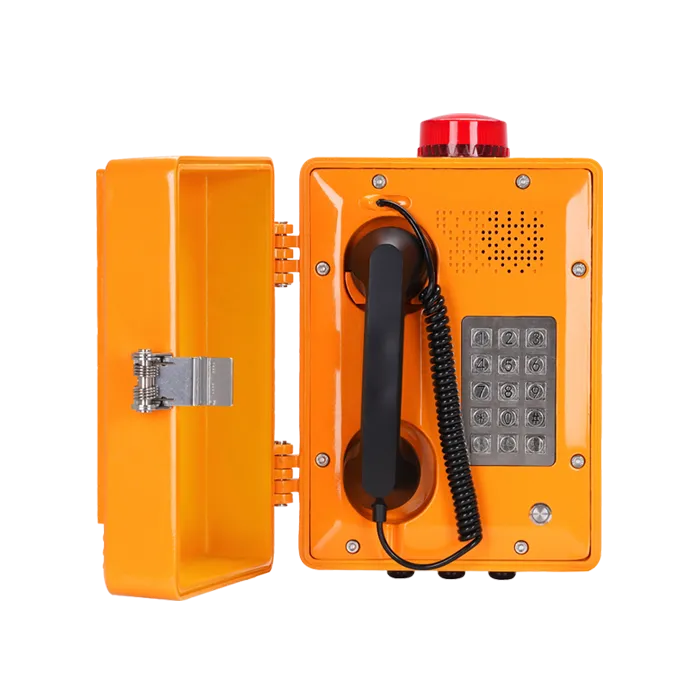
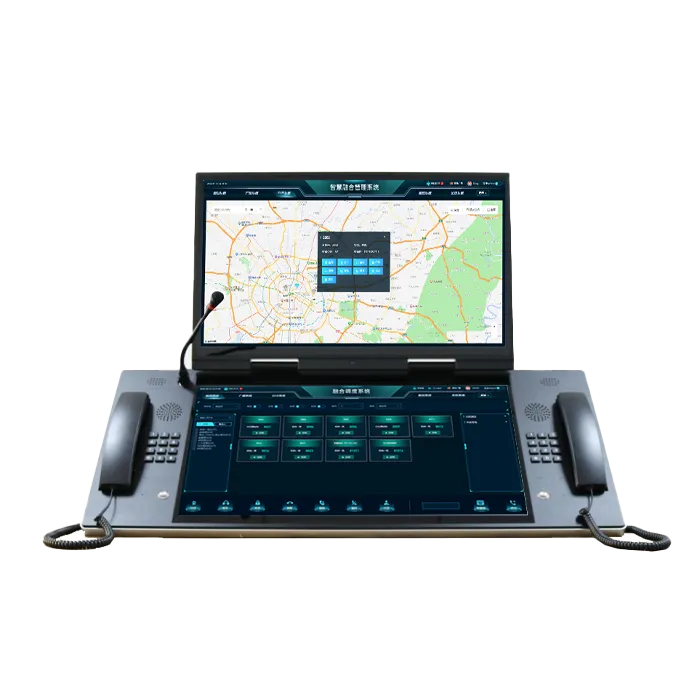
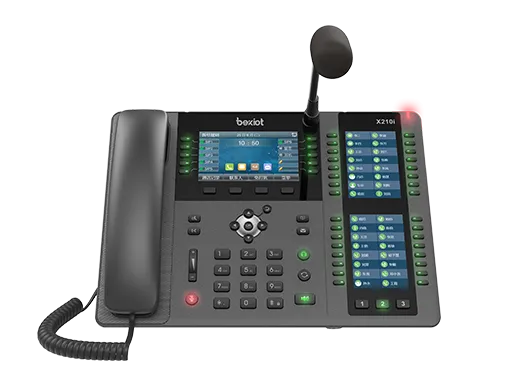
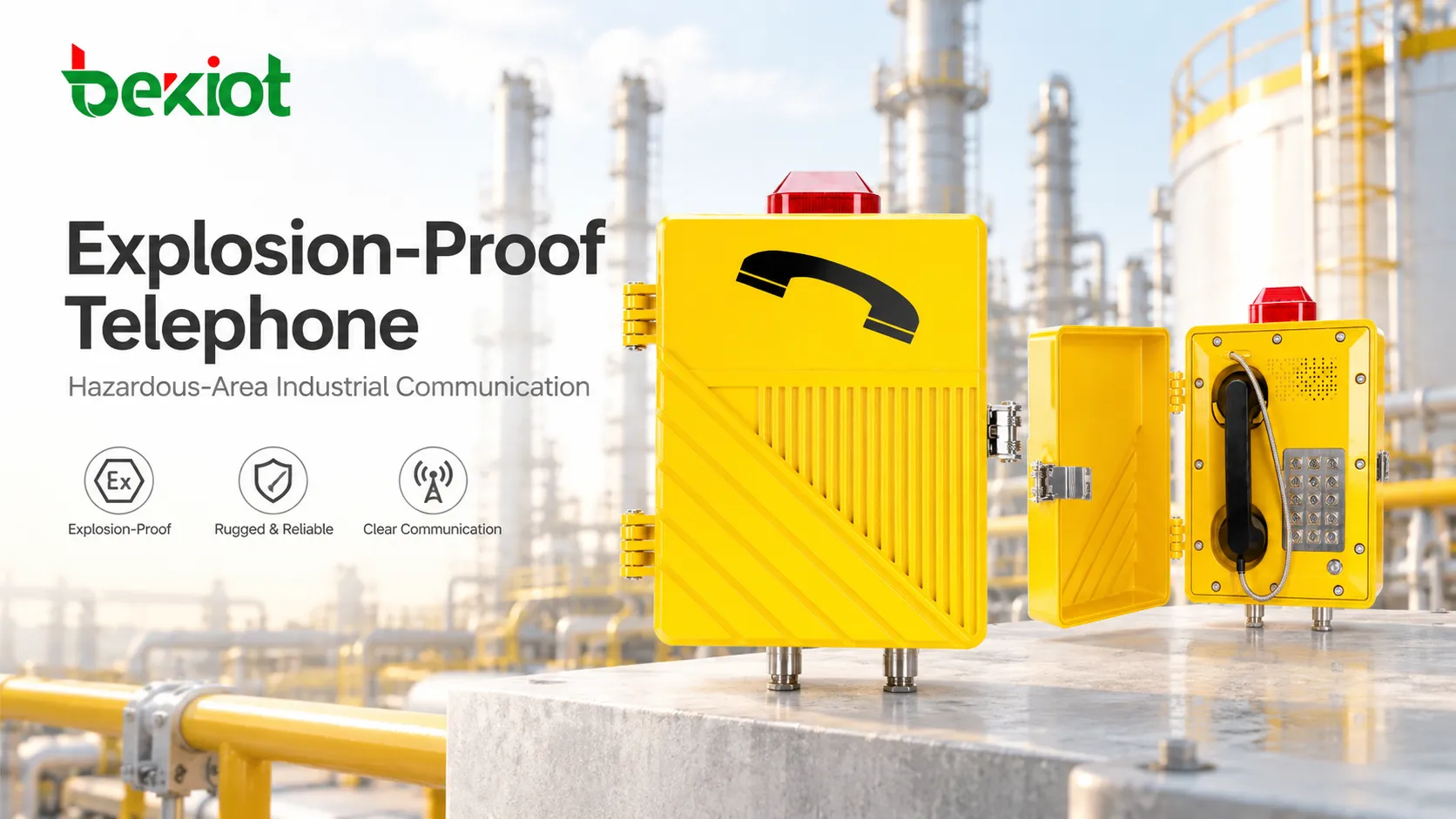
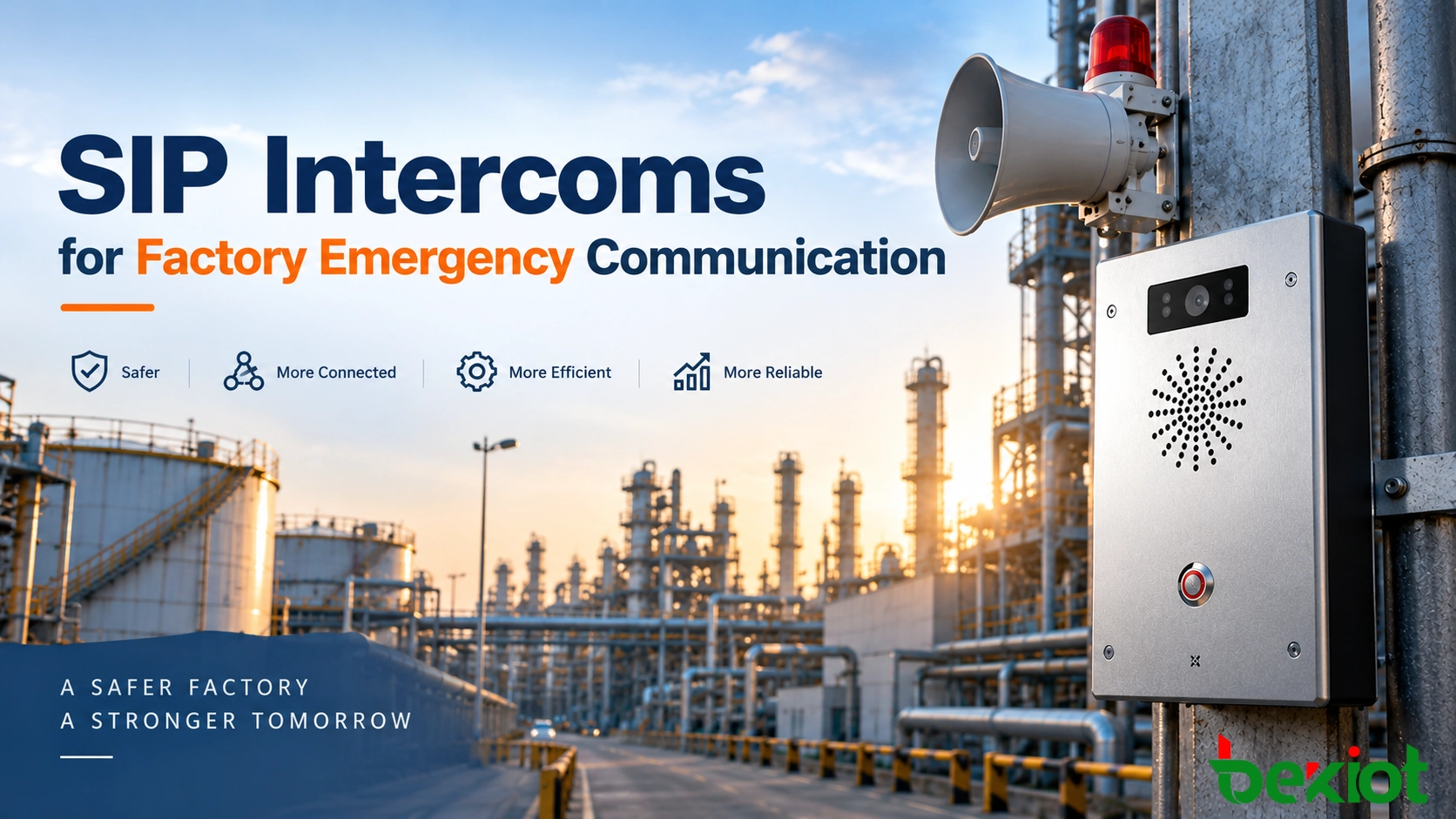
Typical products include industrial waterproof telephones, outdoor intercom terminals, emergency call stations, rugged IP phones, gate communication devices, tunnel help points, public assistance panels, field dispatch terminals, and fixed voice points for remote or semi-outdoor sites.
Environmental resistance comes first
The first requirement is environmental resistance. A device installed outdoors may face rainwater, wind-blown dust, direct sunlight, condensation, cleaning water, industrial particles, and seasonal temperature shifts. If the enclosure, cable entry, buttons, speaker grille, handset, and mounting structure are not designed for this exposure, the device may fail long before its internal electronics reach their expected life.
Water resistance should be judged by real exposure. Rain does not always fall vertically. Wind can push water toward seams, buttons, cable glands, microphone openings, speaker holes, and wall joints. Outdoor devices need sealed enclosures, protected cable entry, suitable gaskets, drainage consideration, and materials that remain stable after temperature cycles.
Dust resistance is equally important in construction sites, mines, ports, warehouses, cement plants, factories, road projects, and transport yards. Dust can block microphones, reduce speaker clarity, enter buttons, damage connectors, and accumulate inside poorly sealed housings.
Waterproof structure and sealed installation
Outdoor communication devices cannot be fully sealed like a solid block because they need microphones, speakers, buttons, handsets, displays, indicator lights, cable entry, and maintenance access. Each opening must be protected carefully.
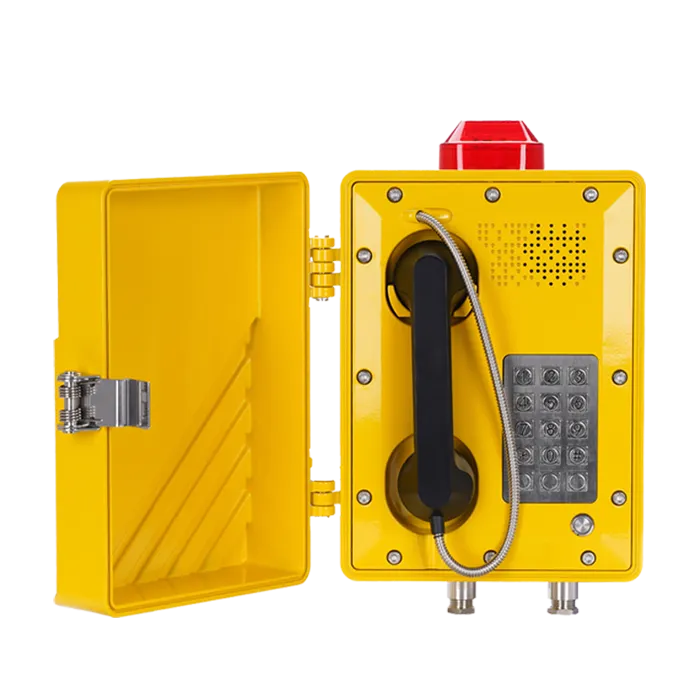
For an industrial waterproof telephone such as the Becke Telcom BT27, the practical value is providing a fixed voice communication point for outdoor or semi-outdoor work areas where ordinary office phones are not suitable. In this type of deployment, waterproof design, stable housing, clear operation, and rugged installation matter more than decorative appearance.
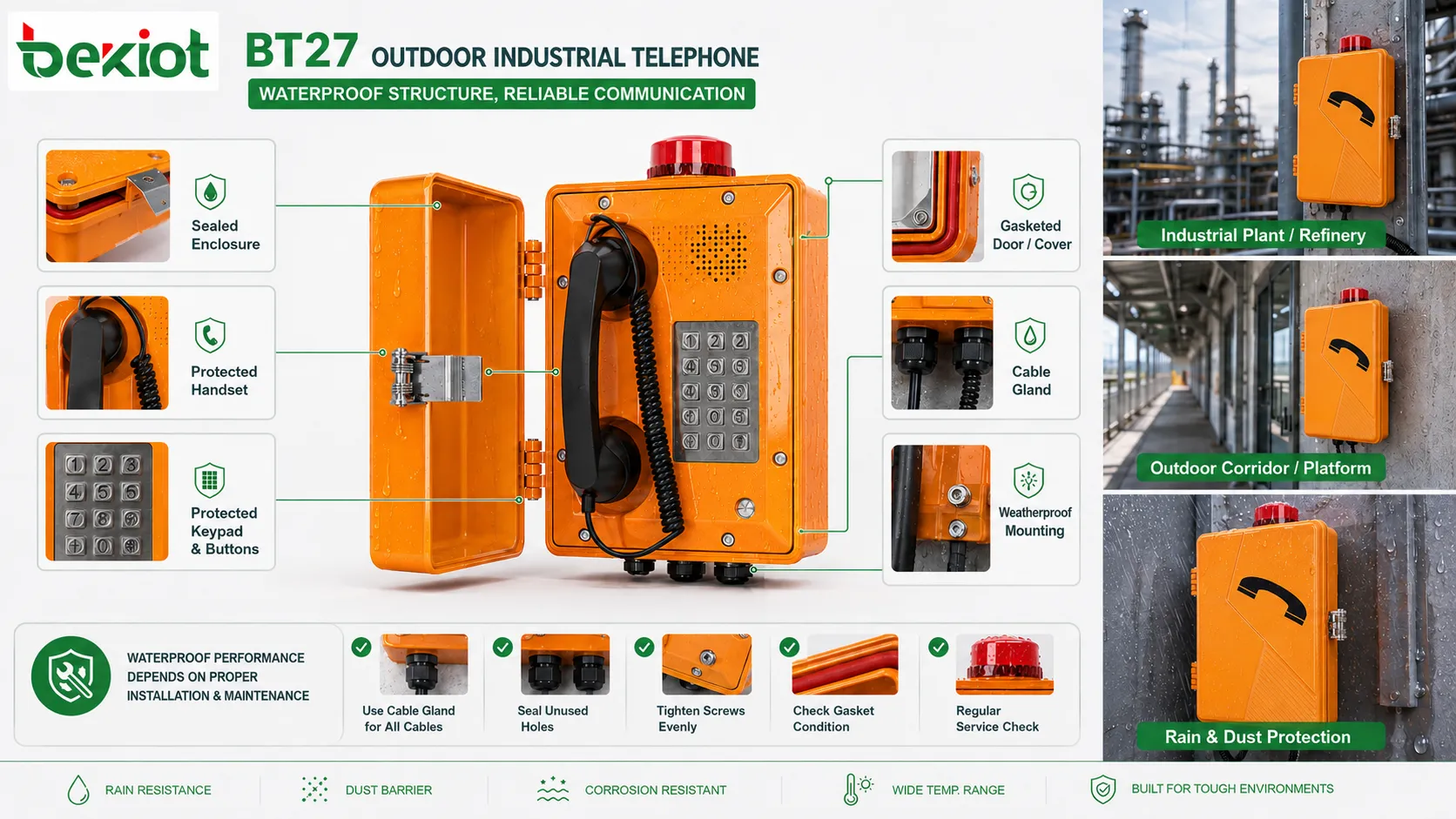
Waterproof performance also depends on installation. Even if the front housing is protected, water may enter through a rear cable route, conduit connection, wall opening, or loose cable gland. Installers should seal unused holes, avoid upward-facing cable entry where possible, use suitable glands, and check the gasket after maintenance.
Outdoor communication devices need sealed housings, protected cable entry, durable buttons, and weather-resistant mounting.
Rugged housing and impact protection
Outdoor sites often involve physical contact. Tools, carts, cleaning equipment, forklifts, ladders, construction materials, or public misuse may hit the device. A rugged housing reduces the risk of damage from everyday impact and keeps the communication point available.
Rugged design may include stronger enclosure material, reinforced mounting points, protected buttons, robust handset support, metal or high-strength front panels, tamper-resistant screws, and cable protection. If the device is installed in a public or semi-public area, anti-vandal design may also be required.
Mounting strength is part of reliability. A strong device can still fail if fixed to a weak wall, thin panel, loose pole, or unsuitable bracket. Outdoor installation should consider wind load, vibration, pulling force, accidental impact, and long-term loosening.
Temperature, sunlight, and corrosion resistance
Outdoor devices may operate under hot sunlight, cold nights, seasonal change, and sudden temperature shifts. High temperature can accelerate component aging, soften materials, reduce display readability, and increase internal heat. Low temperature can make materials brittle, affect LCD displays, stiffen cables, and change button feel.
Condensation should also be considered. When day and night temperatures change, moisture may collect inside poorly designed enclosures. A waterproof device can still suffer if internal moisture is trapped and unmanaged.
Sunlight and corrosion are long-term risks. Ultraviolet exposure can fade labels, weaken plastics, and harden rubber. Coastal areas, chemical plants, wastewater facilities, marine terminals, tunnels, and humid industrial yards may require corrosion-resistant materials, treated surfaces, sealed connectors, and suitable fasteners.
Outdoor labels and instructions must remain readable after years of use. If the emergency mark fades or the call instruction disappears, users may hesitate during an incident. Durable marking is part of communication reliability.
Clear audio in noisy environments
Outdoor communication often happens near vehicles, machines, wind, rain, cranes, pumps, fans, engines, construction tools, alarms, conveyors, or crowds. The device must support intelligible voice under real noise conditions, not only in a quiet test room.
Speaker output should be strong enough, but loudness alone is not enough. If the speaker distorts, reflects from hard surfaces, or points away from the listener, speech may still be unclear. The device should provide suitable volume and stable audio output.
Microphone design is equally important. Wind, rain, dust, and dirt may affect voice pickup. In some outdoor industrial telephone deployments, a handset can improve clarity because the microphone stays close to the user’s mouth and the receiver stays close to the ear.
Audio testing should happen at the installation site. A device that sounds clear indoors may perform differently beside a gate barrier, generator, loading dock, tunnel fan, busy road, or production yard.
Simple operation under pressure
Outdoor devices are often used when the user is under pressure. A worker may need to report equipment failure, a driver may need gate assistance, a guard may need the control room, or a person may need emergency help. The interface should not require complex steps.
Simple operation usually means clear call buttons, easy-to-grip handsets, visible labels, large keys, understandable indicators, and predictable call behavior. In many applications, one-button calling or hotline dialing is more practical than keypad dialing.
Glove operation and visibility should also be considered. Workers in cold, industrial, or construction environments may wear gloves. Outdoor spaces may include low light, rain, fog, dust, or visual clutter. High-contrast labels, indicator lamps, reflective marks, and clear mounting positions help users locate and operate the device quickly.
Reliable power and communication path
Outdoor communication devices may use PoE, local DC power, AC adapters, solar-supported power, battery backup, or dedicated emergency power circuits. The power design should match the importance of the communication point and the difficulty of maintenance.
Long cable runs can cause voltage drop. Outdoor conduits may be damaged. Power supplies may face heat or moisture. Lightning and switching surges may affect circuits. A device may appear unreliable when the real cause is poor power quality.
The communication path is just as important. Outdoor devices may connect through analog lines, VoIP networks, fiber, copper Ethernet, wireless links, radio gateways, cellular networks, or private communication systems. Packet loss, delay, jitter, water-damaged connectors, weak wireless signal, or poor cable termination can all affect call quality.
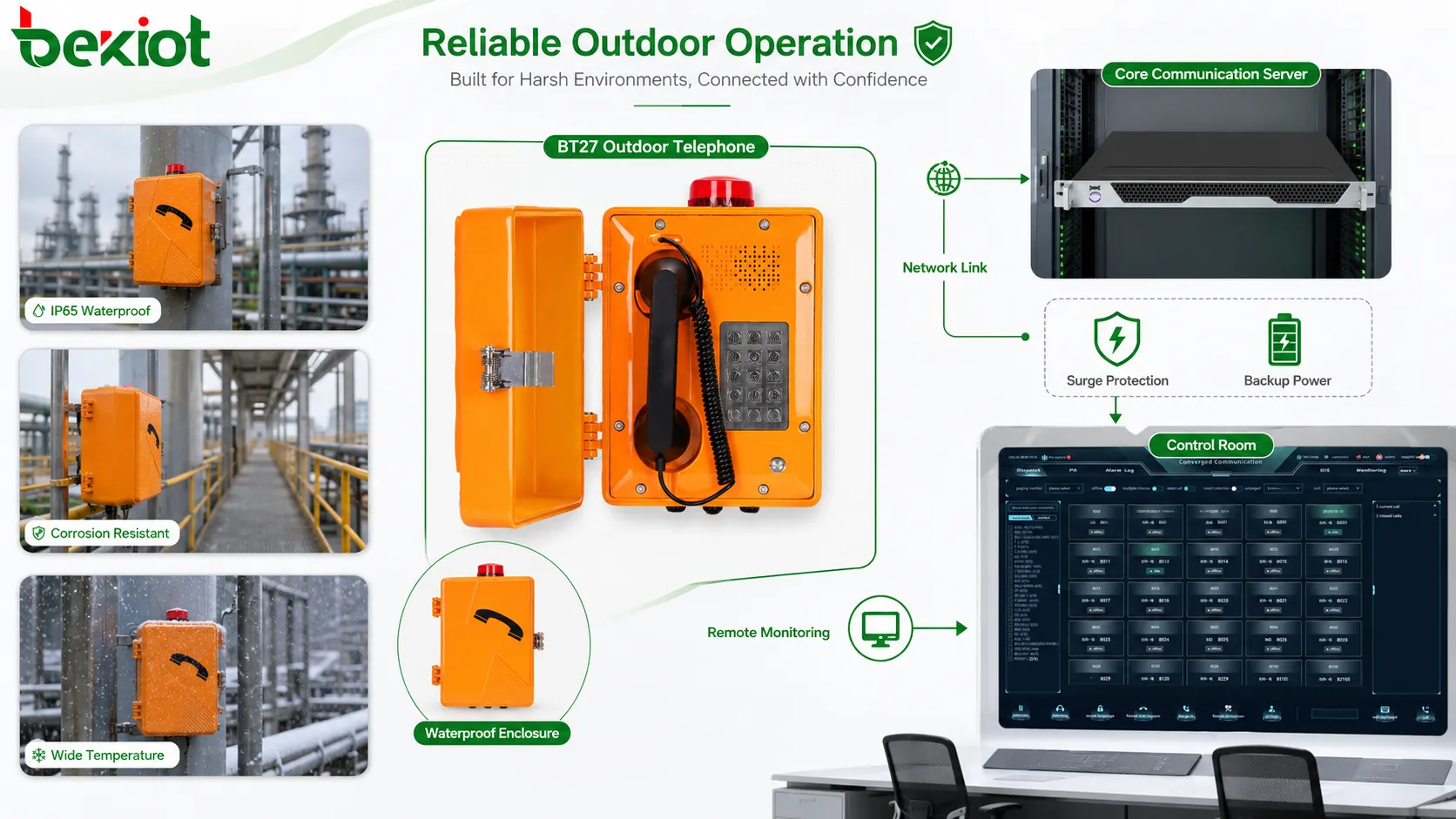
For critical points such as emergency phones, tunnel help points, gate intercoms, and remote site phones, backup power, surge protection, grounding, monitored status, and protected cable routing should be considered.
Reliable outdoor communication depends on protected power, stable network paths, surge protection, and device status monitoring.
Secure installation and anti-tamper design
Outdoor devices may be installed in open or semi-public areas where many people can touch them. Some users are authorized workers, while others may be visitors, contractors, passengers, drivers, or members of the public. Misuse, vandalism, and unauthorized access should be considered.
Anti-tamper design may include protected screws, strong enclosures, hidden cable routes, lockable covers, reinforced mounting, secure cable glands, and limited access to internal settings. The goal is to keep the device available for legitimate use while reducing the chance of damage or manipulation.
Installation position affects both usability and security. A device placed too low may be kicked or hit. A device placed too high may be hard to use. Public emergency points should be visible, but protected through rugged design, monitored location, camera coverage where appropriate, and controlled access to internal parts.
Status feedback and system compatibility
Users need to know whether the device is powered, calling, connected, busy, failed, or waiting for response. Status feedback may include indicator lights, tones, display messages, voice prompts, flashing signals, or platform-side confirmation.
For emergency call points, simple feedback such as call initiated, call connected, or help requested can reassure the user. In noisy or bright outdoor environments, visual indicators and clear markings may be as important as audio prompts.
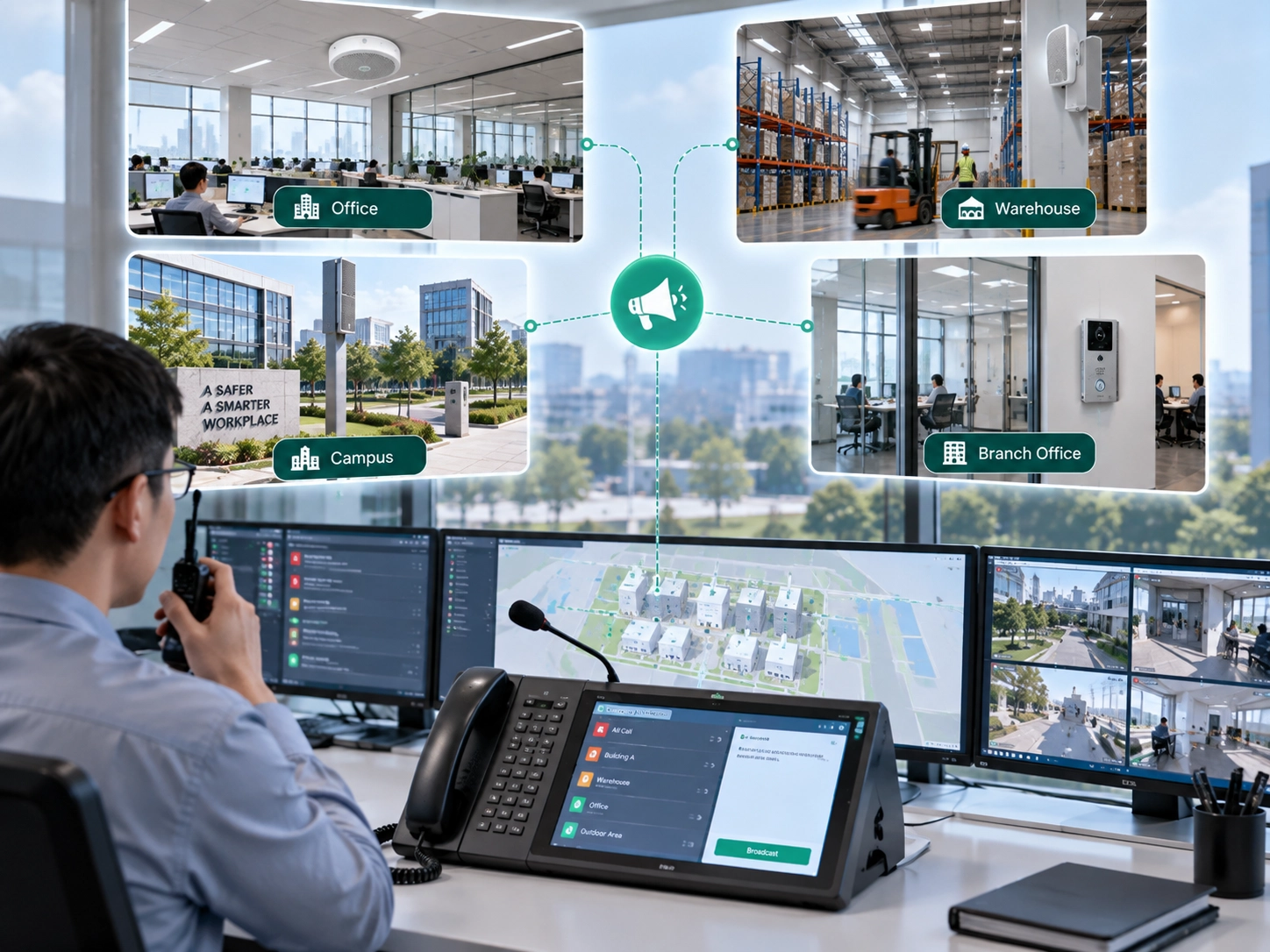
Outdoor communication devices are often part of a larger system. They may connect to a PBX, dispatch console, emergency communication platform, intercom server, public address system, CCTV system, access control system, or maintenance platform. Compatibility determines whether the device can do more than make a basic call.
In IP projects, SIP compatibility, call routing, codec support, NAT behavior, failover, registration, and remote management should be tested with the actual platform. In hybrid systems, gateways may be needed. Emergency calls may require priority ringing, recording, location display, and escalation if unanswered.
Maintainability in field conditions
Outdoor devices must be maintainable. Dust may collect, labels may fade, cables may loosen, gaskets may age, insects may enter external cavities, and users may damage buttons or handsets. Strong equipment still needs inspection, cleaning, testing, and occasional repair.
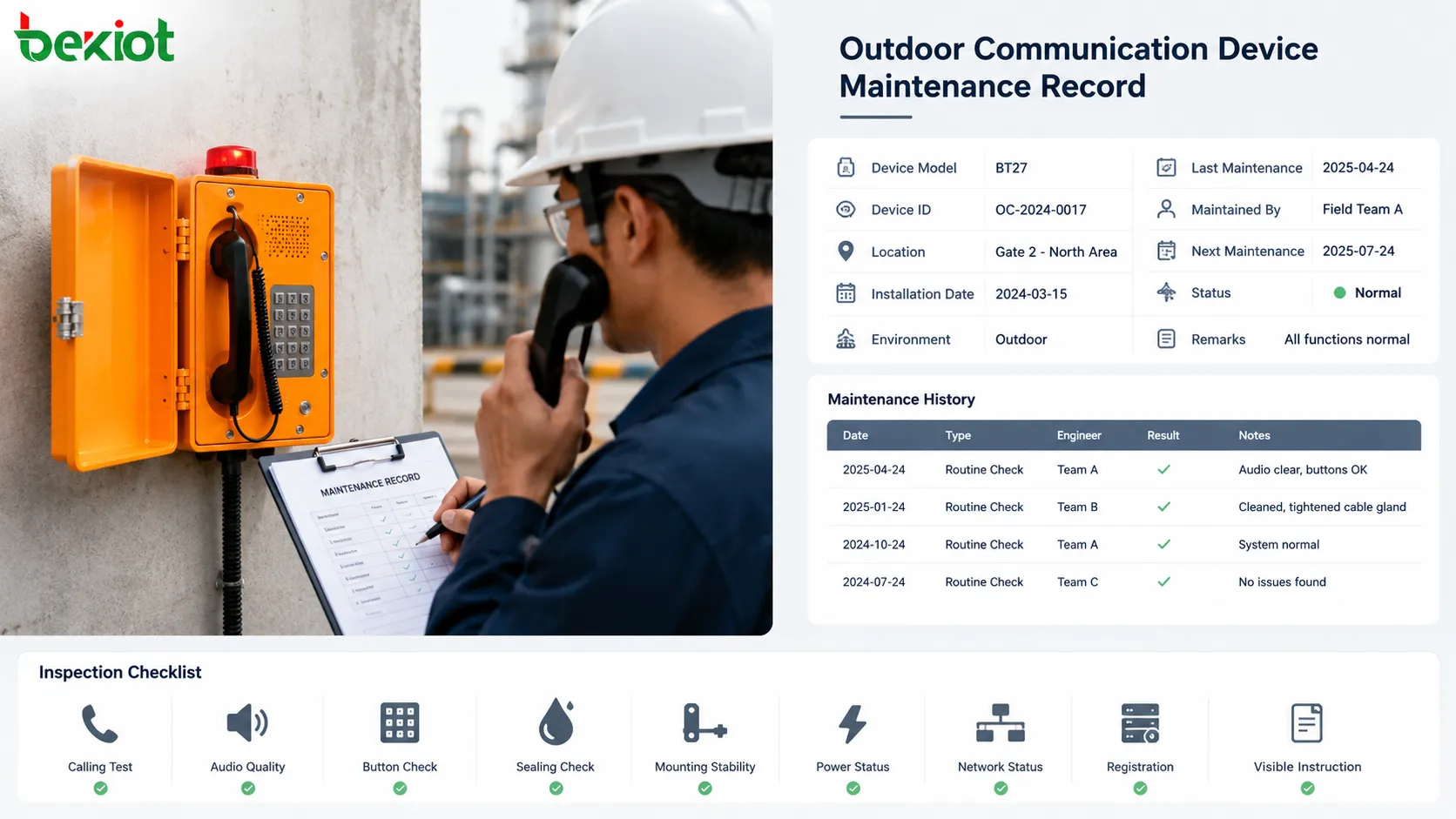
Routine checks should include calling, ringing, audio clarity, button operation, handset condition, microphone and speaker performance, cable sealing, mounting stability, power status, network status, and platform registration. Emergency devices should be tested according to site procedures.
Maintenance records are useful. If several devices fail in one area, the cause may be environmental, such as water exposure, surge, vandalism, dust, or corrosion. Records help improve future placement, protection, and product selection.
Field maintenance should verify calls, audio clarity, sealing, mounting, power, network status, and operating instructions.
Where outdoor communication devices are used
Industrial plants and production yards
Industrial plants use outdoor communication devices around workshops, loading areas, storage yards, utility stations, gates, tank areas, power rooms, and maintenance routes. Workers may need to contact control rooms, security desks, supervisors, or maintenance teams without returning indoors.
These environments usually require resistance to dust, water, vibration, impact, and noise. Some areas need hotline calling. Others need keypad dialing, intercom auto-answer, public address linkage, or emergency priority.
Transport and roadside facilities
Tunnels, railway stations, metro areas, parking lots, bus terminals, toll stations, airport service zones, ports, bridges, and highways use outdoor communication points for assistance and emergency contact. Users may not know who to call, and mobile signal may not always be reliable.
Roadside and tunnel devices should be visible, easy to use, and able to identify their location to the control center. Weather resistance, impact protection, clear audio, and routine testing are essential.
Utilities and remote stations
Power substations, water treatment sites, pumping stations, pipelines, renewable energy sites, district heating facilities, and unmanned equipment rooms often need fixed communication points for field personnel.
Remote sites require careful power and network planning. Backup power, surge protection, fiber connection, cellular backup, and remote status monitoring may be needed because repair may require long travel time.
Construction, ports, and logistics areas
Construction sites, ports, and logistics yards are dynamic outdoor environments with moving vehicles, changing layouts, high noise, and frequent loading. Communication devices support gate control, crane coordination, loading dock support, safety reporting, visitor access, and emergency contact.
Rugged structure, simple operation, visible labels, and protected mounting are important. In high-risk areas, protective posts, barriers, or recessed installation may reduce impact damage.
Public safety and emergency assistance
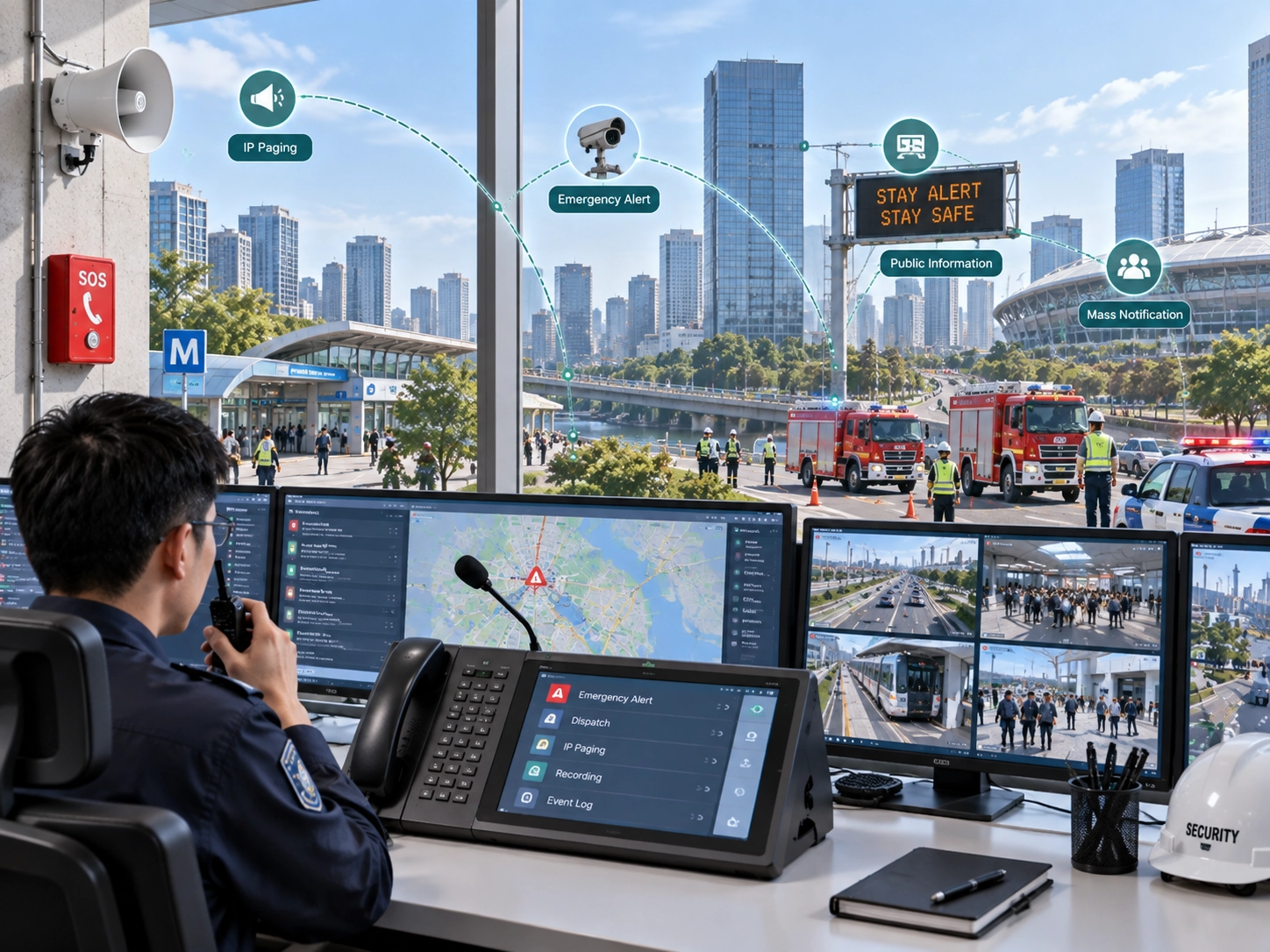
Campuses, parks, parking areas, stations, tunnels, industrial roads, tourist areas, and large public facilities may use outdoor emergency assistance points. The device must be visible, reliable, and easy to operate under stress.
The call should route to the correct security desk, control room, emergency center, or duty team. If the system supports video, alarm linkage, location display, or recording, the call can become part of a broader emergency response workflow.
Selection and deployment checklist
Choosing outdoor communication equipment should begin with the environment. The project team should identify rain, dust, salt, chemical exposure, sunlight, impact, vibration, public use, remote installation, power instability, noise, and emergency requirements.
The second step is defining call behavior. The device may need hotline dialing, keypad dialing, speed dial, auto-answer, SIP registration, dispatch routing, recording, emergency priority, or multiple call destinations.
The third step is checking installation. Mounting height, user reach, visibility, cable route, drainage, sunlight exposure, protection from vehicle impact, maintenance access, and nearby noise should all be reviewed.
The fourth step is verifying system integration. Calls should route correctly, audio should be clear, status should be monitored where possible, emergency calls should be logged, and power or network backup should be tested if required.
Finally, maintenance responsibility should be defined. Someone should be responsible for testing, cleaning, checking seals, updating labels, reviewing logs, and replacing damaged parts. Reliability is maintained over time, not only purchased at the beginning.
Common mistakes and better fixes
Mistake
Typical Result
Better Fix
Using indoor phones outdoors
Water, dust, sunlight, or temperature changes cause early failure
Select devices designed for outdoor exposure and field operation
Ignoring cable entry
Water enters through conduits, glands, or rear openings
Plan cable sealing, route direction, grounding, and surge protection
No field audio test
The device works indoors but is unclear near traffic or machinery
Test voice quality at the actual installation point under normal noise
Installing where wiring is easy, not where users need it
People cannot reach the device during real work or emergencies
Place devices according to user movement, risk points, and response procedures
No periodic inspection
Weather, aging, corrosion, or vandalism creates hidden failure
Schedule call tests, sealing checks, cable review, mounting inspection, and status monitoring
How to judge suitability
A suitable outdoor communication device should remain usable under expected environmental conditions. It should resist water, dust, temperature change, sunlight, impact, and corrosion according to the site requirement.
It should also be easy for the intended user to operate. Field workers, drivers, visitors, guards, maintenance staff, and emergency users may have different levels of training. The interface should be simple enough for the least experienced expected user.
The device must fit the system. It is not useful if calls route to the wrong destination, if the control room cannot identify the location, if audio is unclear, or if faults remain hidden. Suitability includes platform compatibility and response workflow.
Maintenance should be practical. If the device cannot be inspected safely, if spare parts are unavailable, or if seals are difficult to restore after service, long-term reliability will suffer.
For fixed outdoor voice communication, an industrial waterproof telephone such as the BT27 can be considered for exposed or semi-exposed operating environments. The final decision should still depend on site exposure, installation method, system compatibility, and maintenance planning.
Final view
Outdoor communication devices need more than basic voice connection. They require environmental resistance, waterproof structure, dust protection, rugged housing, impact resistance, temperature adaptability, corrosion resistance, clear audio, simple operation, reliable power, stable network connection, secure installation, status feedback, system compatibility, and maintainability.
Their applications include industrial plants, production yards, transport facilities, tunnels, roadsides, utilities, remote stations, construction sites, ports, logistics areas, public safety points, and emergency assistance locations.
A reliable outdoor communication design combines the right device, correct installation, protected power and cabling, clear audio planning, dispatch or PBX integration, routine testing, and maintenance responsibility. When these factors are handled together, outdoor communication equipment becomes a dependable field communication point rather than a vulnerable exposed accessory.
FAQ
Can ordinary office phones be used outdoors?
They are generally not suitable unless protected by a proper enclosure and installation design. Outdoor devices need resistance to water, dust, temperature change, sunlight, impact, and cable exposure.
Why is waterproof design not enough by itself?
Waterproof housing is important, but outdoor reliability also depends on cable entry, mounting method, gasket condition, power protection, corrosion resistance, audio clarity, surge protection, and maintenance.
What communication method is best for outdoor devices?
It depends on the site. Some projects use IP networks, some use analog lines, some use fiber, some use wireless links, and some use hybrid systems. The best method depends on distance, reliability, power, network availability, and emergency requirements.
Why is audio testing important outdoors?
Outdoor environments may include wind, traffic, machinery, rain, fans, or public noise. A device that sounds clear indoors may not be clear in the field. Testing should be done at the actual installation location.
How often should outdoor communication devices be maintained?
The interval depends on site risk, weather exposure, safety importance, and usage frequency. Critical emergency points should be tested more regularly with call tests, audio checks, sealing inspection, cable review, mounting inspection, and status monitoring.