What are the protection level requirements for ATEX Explosion-Proof certification?
ATEX-certified equipment selection explained for hazardous areas, covering EU directives, Ex markings, gas and dust zones, equipment categories, EPL codes, protection concepts, IP limits, documentation review and installation checks.
Becke Telcom
ATEX certification is the European compliance framework for equipment and protective systems used in potentially explosive atmospheres. It applies to workplaces where flammable gas, vapour, mist, or combustible dust may create an ignition risk. In practical engineering, the key question is not whether a product is simply described as “ATEX certified.” The real question is whether its marking, certificate, protection concept, temperature rating, accessories, and instructions match the actual site conditions.
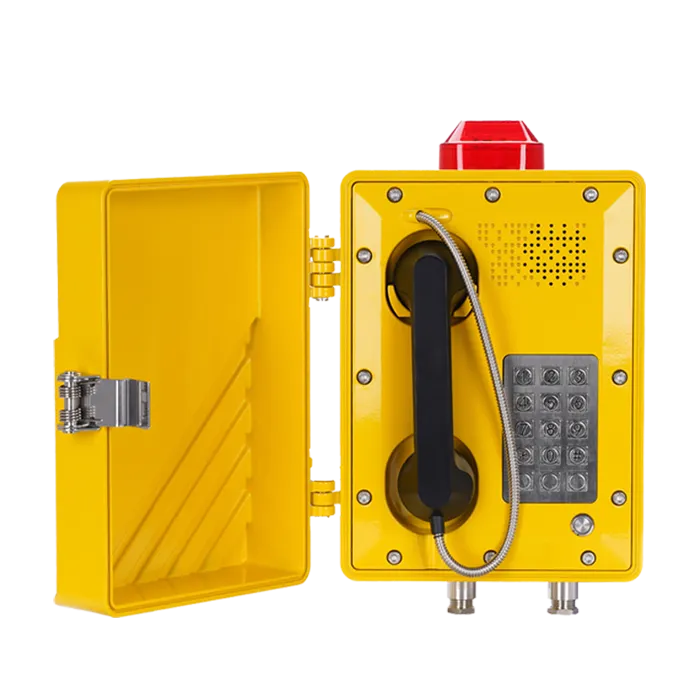
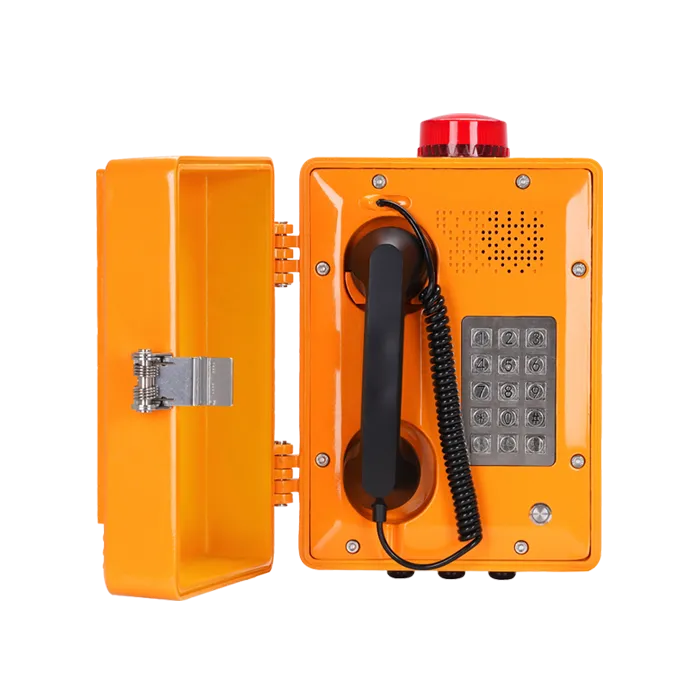
This distinction matters because hazardous-area equipment is never selected by name alone. A certified industrial telephone, junction box, camera, beacon, motor, sensor, or control station may be suitable for one classified area and unsuitable for another. The same product family may have different versions for gas zones, dust zones, high-temperature sites, offshore environments, or applications requiring special cable entries.
A good selection process starts with the site classification, then checks the equipment category, Ex marking, gas or dust group, temperature limit, ambient range, documentation, and installation method. When these details are reviewed together, ATEX becomes a practical safety and compliance tool rather than a vague product claim.
Explosion protection depends on the connection between area classification, product marking, certification documents, and correct installation.
Why the framework matters
ATEX comes from the French expression Atmosphères Explosibles, meaning explosive atmospheres. In industrial use, it refers to European requirements for products and workplaces where explosive atmospheres may occur. These requirements help control ignition risk from electrical equipment, mechanical equipment, protective systems, and related components.
The term “explosion-proof” is often used in marketing, but it is too broad for engineering selection. A product may be flameproof, intrinsically safe, increased safety, pressurized, encapsulated, or protected by enclosure for dust. These protection concepts work in different ways and are not interchangeable.
For example, a field telephone marked for a Zone 1 gas area and a junction box marked for a Zone 21 dust area may both be compliant products, but they are designed for different hazards. The protection method, marking, gas or dust group, temperature limit, and installation conditions must be checked before the product is accepted for the project.
Product rules and workplace duties
The European ATEX system is commonly discussed through two directives. One focuses on products before they are placed on the market. The other focuses on workplace risk assessment and safe use. In real projects, both sides are important.
Directive 2014/34/EU
Directive 2014/34/EU applies to equipment and protective systems intended for use in potentially explosive atmospheres. It covers essential health and safety requirements, conformity assessment, technical documentation, CE marking, Ex marking, and manufacturer responsibilities.
This directive can apply to electrical equipment and to relevant non-electrical equipment where ignition sources such as hot surfaces, static electricity, friction, impact, or mechanical sparks need to be controlled.
Directive 1999/92/EC
Directive 1999/92/EC applies to the workplace side. It requires employers and site operators to assess explosion risks, classify hazardous areas into zones, coordinate safety measures, and use suitable equipment in those locations.
This is why certification alone is not enough. A product still needs to be matched to the site’s area classification, substance type, temperature requirement, ambient conditions, installation method, and inspection practice.
Technical standards used in projects
The directives provide the legal framework, while harmonized EN standards and IEC-based standards provide much of the technical detail for design, testing, marking, installation, inspection, and maintenance.
EN IEC 60079-0: general requirements for Ex equipment.
EN IEC 60079-1: flameproof enclosure “d”.
EN IEC 60079-7: increased safety “e”.
EN IEC 60079-11: intrinsic safety “i”.
EN IEC 60079-14: selection and installation of electrical equipment in explosive atmospheres.
EN IEC 60079-17: inspection and maintenance of electrical installations in hazardous areas.
EN IEC 60079-31: protection by enclosure “t” for explosive dust atmospheres.
EN ISO 80079-36 / EN ISO 80079-37: non-electrical equipment for explosive atmospheres.
IEC 60529: enclosure ingress protection, commonly known as IP rating.
Zones, categories, and EPL codes
Hazardous zones describe how often an explosive atmosphere is expected to occur. Equipment categories and Equipment Protection Levels describe the protection integrity required from the product. These three elements should be read together.
ATEX equipment is divided into two main equipment groups. Equipment-group I is for mines susceptible to firedamp or combustible dust. Equipment-group II is for other hazardous areas, such as chemical plants, fuel depots, offshore platforms, grain handling sites, paint areas, and powder processing facilities.
Detailed markings may also include gas groups such as IIA, IIB, and IIC, or dust groups such as IIIA, IIIB, and IIIC. These codes help identify the type and severity of the explosive atmosphere.
Hazardous Area
Typical Atmosphere
Common Equipment Category
Common EPL
Zone 0
Gas, vapour, or mist present continuously, frequently, or for long periods
Category 1G
Ga
Zone 1
Gas, vapour, or mist likely to occur occasionally during normal operation
Category 2G or higher
Gb or higher
Zone 2
Gas, vapour, or mist unlikely during normal operation, or only briefly present
Category 3G or higher
Gc or higher
Zone 20
Combustible dust present continuously, frequently, or for long periods
Category 1D
Da
Zone 21
Combustible dust likely to occur occasionally during normal operation
Category 2D or higher
Db or higher
Zone 22
Combustible dust unlikely during normal operation, or only briefly present
Category 3D or higher
Dc or higher
Higher-category equipment may often be used in lower-risk zones when all other marking details match, but lower-category equipment should not be used in a higher-risk zone.
How to read the marking
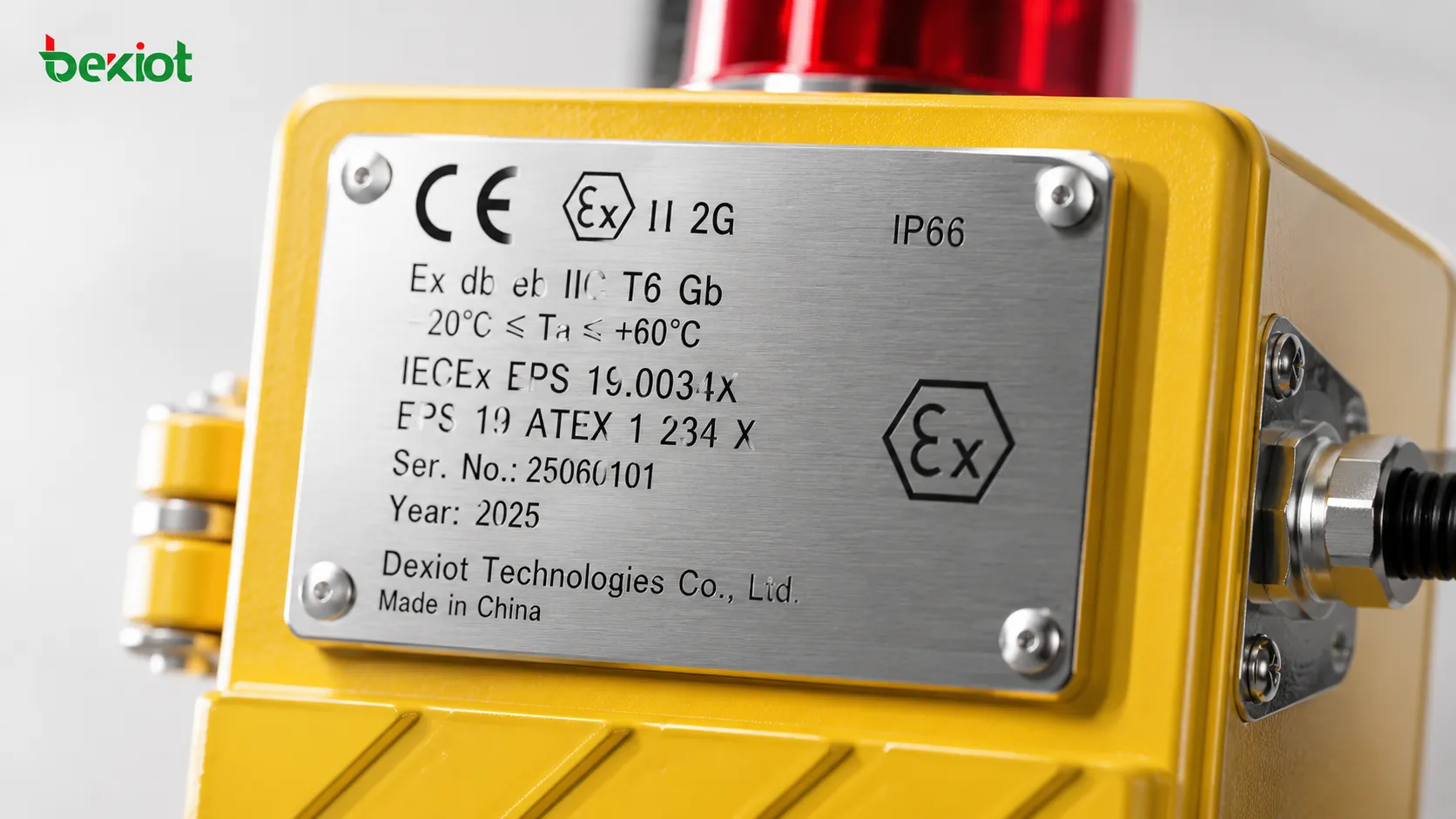
The product nameplate is one of the most important sources of information for hazardous-area selection. It should not be checked only for the Ex symbol or CE mark. Engineers need to read the full marking and compare it with the area classification dossier, project specification, and certificate.
The nameplate should be checked together with the certificate, declaration, manual, accessories, and installation conditions.
Gas-area example
A common gas-area marking may look like this:
II 2G Ex db eb IIC T6 Gb
Marking Part
Meaning
II
Equipment-group II, for non-mining hazardous areas.
2G
Category 2 for gas atmospheres, commonly associated with Zone 1 applications.
Ex
The equipment is designed according to recognized explosion protection principles.
db eb
Combined protection methods, such as flameproof enclosure and increased safety.
IIC
Gas group for more demanding gas atmospheres, including hydrogen and acetylene.
T6
Temperature class indicating a low maximum surface temperature limit.
Gb
Equipment Protection Level for gas atmospheres, often linked with Zone 1 use.
Dust-area example
A dust-area marking may look like this:
II 2D Ex tb IIIC T85°C Db
In this example, 2D indicates Category 2 for dust atmospheres, Ex tb means protection by enclosure for dust, IIIC identifies the dust group, T85°C gives the maximum surface temperature, and Db shows the dust Equipment Protection Level.
A product may look strong and industrial, but appearance does not prove suitability. The marking must fit the zone, gas or dust group, temperature requirement, ambient range, accessories, and installation method.
Protection methods and temperature limits
Certified equipment may use one protection concept or combine several methods in one product. The right design depends on the function of the equipment and the hazard at the installation location.
Protection Type
Plain Meaning
Typical Applications
Ex d
Flameproof enclosure designed to contain an internal explosion and prevent flame transmission.
Industrial telephones, control stations, motors, field devices.
Ex e
Increased safety design that reduces arcs, sparks, and excessive temperatures.
Pressurization that prevents the explosive atmosphere from entering an enclosure.
Analyzer cabinets, control panels, large electrical enclosures.
Ex m
Encapsulation that isolates ignition-capable components inside a protective compound.
Electronic modules, coils, compact components.
Ex t
Dust protection by enclosure with controlled dust ingress and surface temperature.
Dust-area junction boxes, sensors, motors, communication devices.
Substance characteristics must be checked together with the protection type. Gas atmospheres may require IIA, IIB, or IIC suitability and a temperature class from T1 to T6. Dust atmospheres may require IIIA, IIIB, or IIIC suitability and a maximum surface temperature such as T85°C.
This is especially important in sites with solvents, hydrogen, grain dust, sugar dust, pharmaceutical powder, battery materials, or other substances with specific ignition characteristics. If the gas group, dust group, or temperature rating does not match the substance, the product may not be suitable even if it carries a recognized Ex marking.
Why IP rating is not enough
IP rating describes how well an enclosure resists solid particles and water. It is useful for outdoor devices, washdown areas, offshore decks, dusty plants, corrosive environments, and general durability assessment. However, IP rating is not a replacement for hazardous-area certification.
IP66 or IP67 may indicate strong ingress protection, but it does not prove that the device has been assessed for ignition risk in a gas or dust explosive atmosphere. Ex certification addresses ignition prevention, surface temperature, fault behavior, materials, marking, certificate conditions, and safe use instructions.
In many projects, both are needed. A field device may require Ex certification for the classified area and a high IP rating for rain, dust, washdown, or offshore exposure. The two requirements support different parts of the design and should not be confused.
Selection and documentation review
Before selecting an industrial telephone, junction box, camera, sensor, motor, luminaire, beacon, speaker, or control station for a classified area, the project team should compare the product documentation with the actual site requirement.
Confirm the classified zone: Zone 0, 1, 2, 20, 21, or 22.
Identify the hazard type: gas, vapour, mist, combustible dust, or mixed hazard.
Check the required gas group or dust group.
Verify the required temperature class or maximum surface temperature.
Review the ambient temperature range at the installation site.
Check exposure to corrosion, salt spray, UV, vibration, impact, washdown, or heavy dust.
Confirm certification requirements for cable glands, stopping plugs, conduit entries, and mounting accessories.
Review special conditions of use listed on the certificate or instruction manual.
Check installation, inspection, and maintenance rules that apply to the project.
A practical verification package usually includes the certificate, declaration of conformity, product nameplate, instruction manual, ambient temperature range, accessory requirements, and special conditions of use. These items should be checked before procurement and again before installation.
Where certified products are used
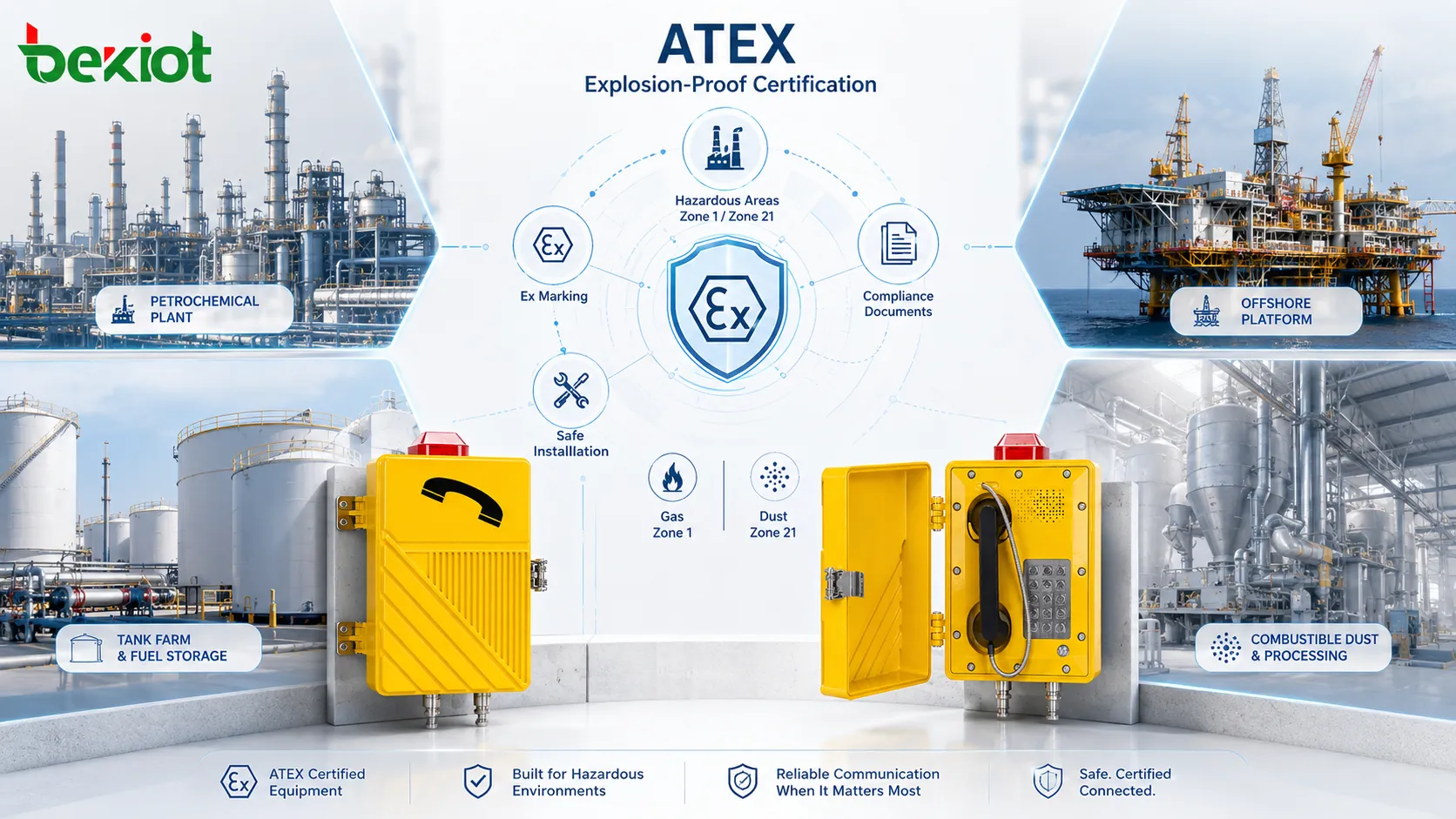
Explosion-protected products are commonly used in oil and gas facilities, refineries, chemical plants, petrochemical units, paint and solvent handling areas, fuel depots, wastewater treatment plants, grain and feed processing sites, sugar mills, pharmaceutical powder lines, hydrogen systems, biogas plants, offshore platforms, and battery material facilities.
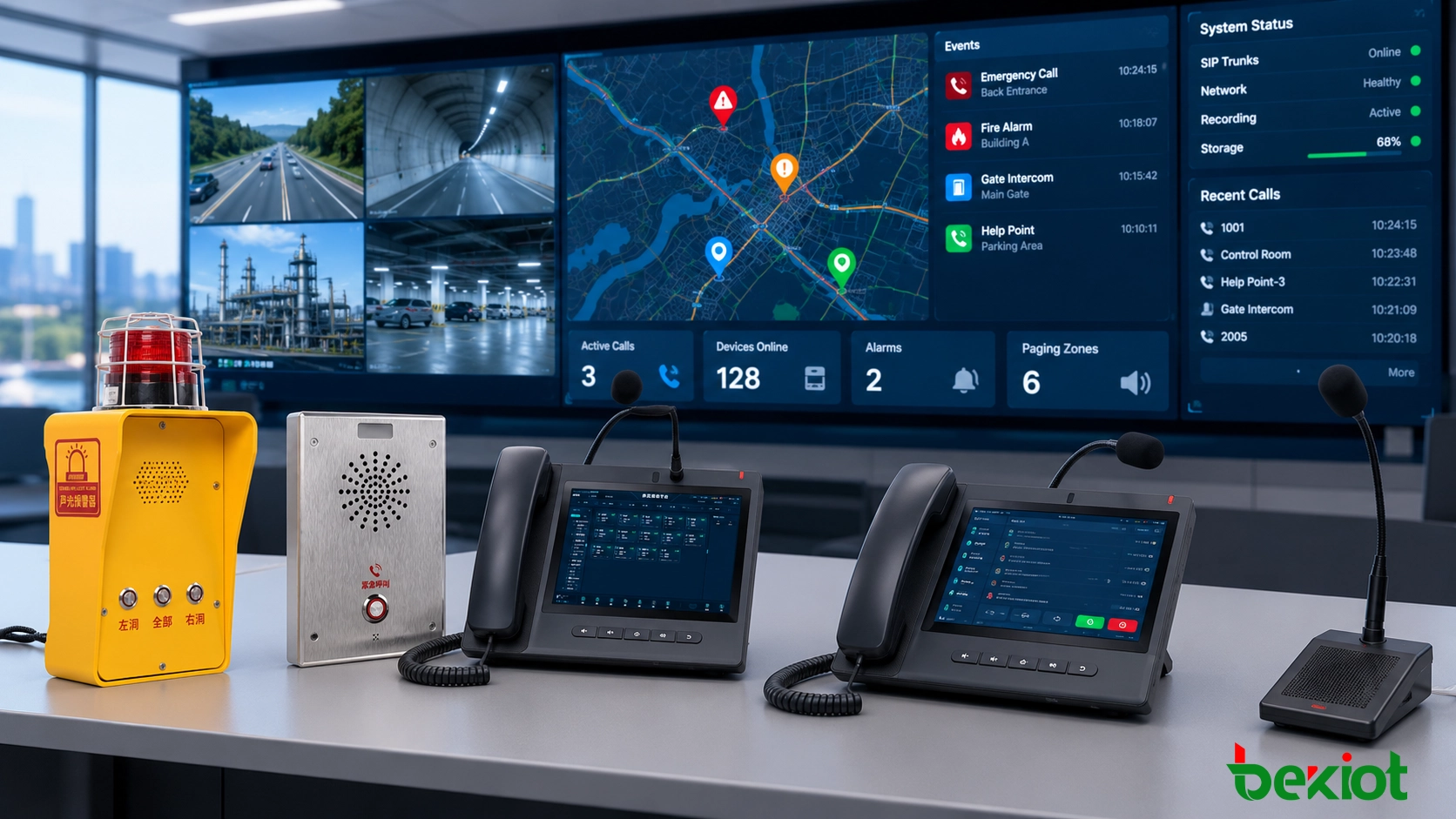
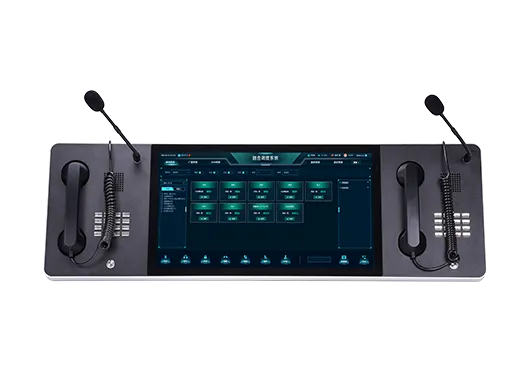
In industrial communication systems, typical products may include explosion-proof telephones, emergency call stations, intercom devices, paging stations, loudspeakers, beacons, cameras, network enclosures, and control panels. Each product should be selected according to the zone, substance, environmental exposure, and system function.
Certified equipment is widely used in gas-hazard and dust-hazard industries where ignition risk must be controlled.
Installation and lifecycle checks
Correct product selection does not guarantee a safe installation by itself. Cable glands, stopping plugs, conduit entries, seals, mounting accessories, earthing, bonding, enclosure integrity, circuit separation, and inspection access can all affect whether the certified protection concept remains valid.
Installation teams should follow the product manual and the project’s hazardous-area installation standard. If a certified enclosure is fitted with incompatible accessories, opened incorrectly, modified without approval, or installed outside its ambient temperature range, compliance may be compromised.
Inspection and maintenance are equally important. Labels must remain readable, enclosures must remain intact, cable entries must stay secure, and any replacement parts should be suitable for the certificate conditions. In dust areas, housekeeping and dust layer control should also be included in the maintenance plan.
Common mistakes and better fixes
Mistake
Typical Risk
Better Fix
Using “explosion-proof” as a general selection term
The protection concept, zone suitability, and marking may not match the site.
Read the full Ex marking and compare it with the area classification.
Assuming CE marking alone is enough
The product may not be suitable for the hazardous area.
Check the ATEX marking, certificate, declaration, and instructions.
Ignoring dust hazards
Gas-area suitability does not automatically cover dust applications.
Verify the dust category, group, surface temperature, and enclosure protection.
Forgetting cable glands and accessories
Incorrect entries can break the certified protection concept.
Use accessories approved or accepted for the equipment and installation method.
Overlooking special conditions of use
The installation may violate certificate limitations.
Review the certificate and manual before procurement and installation.
Treating IP rating as Ex approval
Ingress protection does not prove ignition protection.
Use IP rating as an environmental factor, not as a substitute for Ex certification.
How to judge whether the choice is suitable
A suitable selection begins with the hazardous area classification. The product should match the zone, gas or dust atmosphere, equipment group, equipment category, EPL, gas or dust group, and temperature rating. If any of these details conflict with the site requirement, the product should not be accepted without engineering review.
The second check is documentation. The certificate, declaration of conformity, nameplate, instruction manual, accessory list, and special conditions of use should tell the same story. If the nameplate looks suitable but the manual limits the installation environment, the limitation must be respected.
The third check is installation reality. Ambient temperature, corrosion, vibration, washdown, cable routing, enclosure access, dust accumulation, and maintenance procedures can all affect long-term suitability. Good hazardous-area selection is therefore a full process, not a one-line certificate check.
Final view
ATEX certification only delivers value when the certified product is correctly matched to the hazardous area. The safest approach is to start with site classification, read the complete Ex marking, review the certificate and instructions, verify accessories, and confirm that the installation method fits the real operating environment.
For industrial communication devices, alarms, control stations, cameras, motors, lights, and instrumentation, the goal is not just to buy a certified product. The goal is to maintain explosion protection through correct selection, installation, inspection, and lifecycle maintenance.
FAQ
What is ATEX certification?
ATEX certification is the European compliance framework for equipment and protective systems intended for use in potentially explosive atmospheres.
What does ATEX stand for?
ATEX comes from Atmosphères Explosibles, meaning explosive atmospheres.
Is ATEX the same as flameproof?
No. Flameproof enclosure is one protection method. ATEX is a broader compliance framework that can include several protection concepts, including flameproof, intrinsic safety, increased safety, pressurization, encapsulation, and dust protection by enclosure.
What is the difference between the two main directives?
Directive 2014/34/EU applies to products and manufacturer responsibilities. Directive 1999/92/EC applies to workplace risk assessment, area classification, and worker protection.
Can one certified product be used in every hazardous zone?
No. The product must match the classified zone, equipment category, EPL, gas or dust group, temperature limit, ambient range, accessories, and installation conditions.
What should buyers check before purchasing?
Buyers should check the Ex marking, certificate, equipment category, EPL, protection type, gas or dust group, temperature rating, ambient range, accessories, special conditions of use, and installation instructions.