What Are the Standards, Protection Ratings, and Applications for Zone 22?
Zone 22 dust hazardous areas explained for combustible dust processes, covering classification, Ex tc markings, dust groups, surface temperature, IP limits, equipment selection, installation quality, housekeeping and common mistakes.
Becke Telcom
Zone 22 is a dust hazardous area classification for locations where an explosive atmosphere in the form of a combustible dust cloud is not expected during normal operation, but could appear briefly if a credible release occurs. It is the lowest-frequency classification among Zone 20, Zone 21, and Zone 22, but it is still a hazardous area that requires proper equipment selection, installation, inspection, and housekeeping.
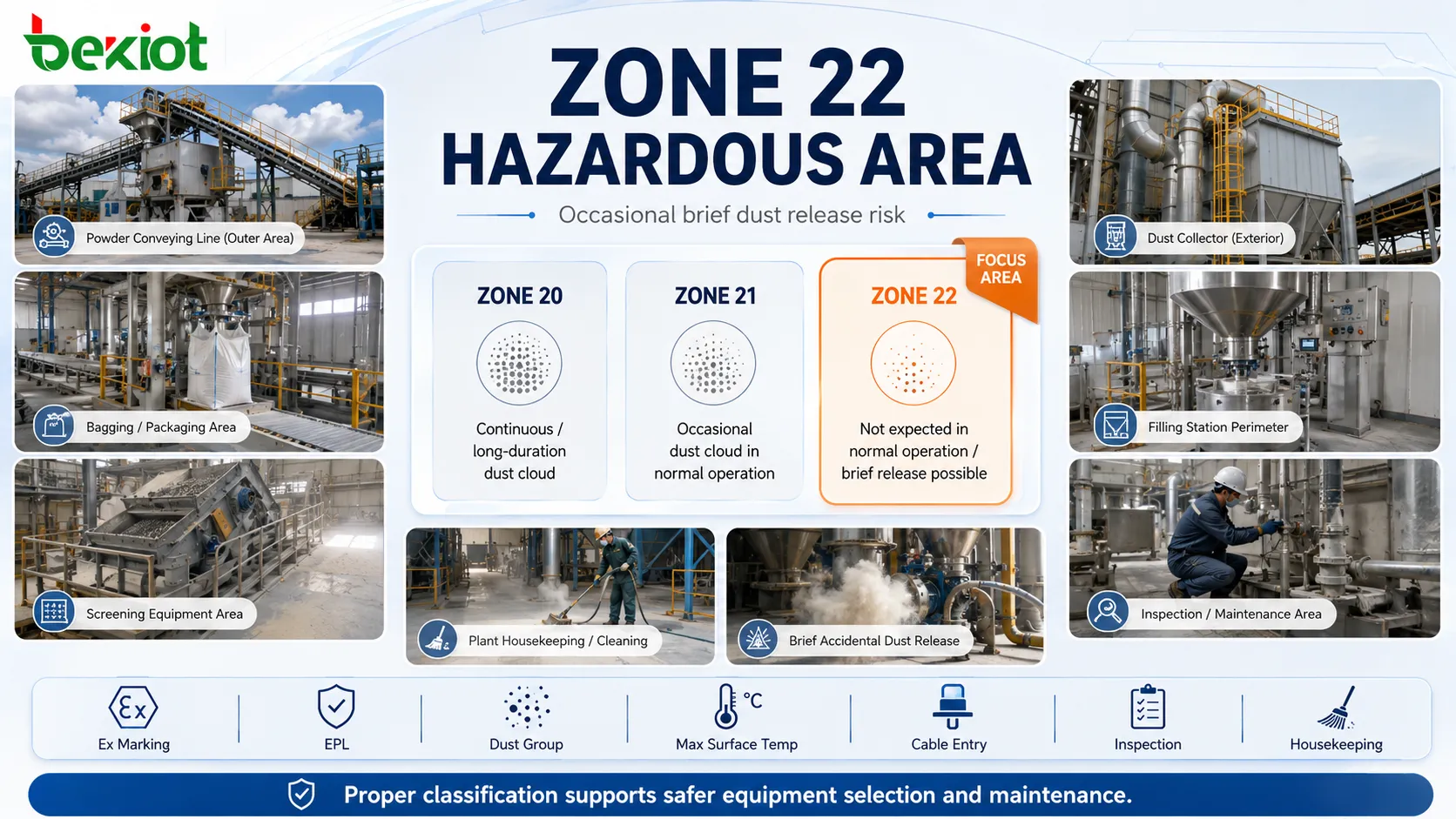
In many plants, Zone 22 appears around the outer areas of powder handling, conveying, filling, screening, packaging, or dust collection processes. Dust clouds may not be present during normal running, but a damaged seal, a short release, poor cleaning, or a temporary process disturbance can still create an ignitable dust atmosphere.
This is why Zone 22 should not be treated as an ordinary dusty environment. A weatherproof enclosure, a high IP rating, or a rugged industrial appearance does not automatically prove suitability for combustible dust atmospheres. Engineers still need to check the Ex marking, equipment protection level, dust group, maximum surface temperature, certificate conditions, cable entries, and installation method.
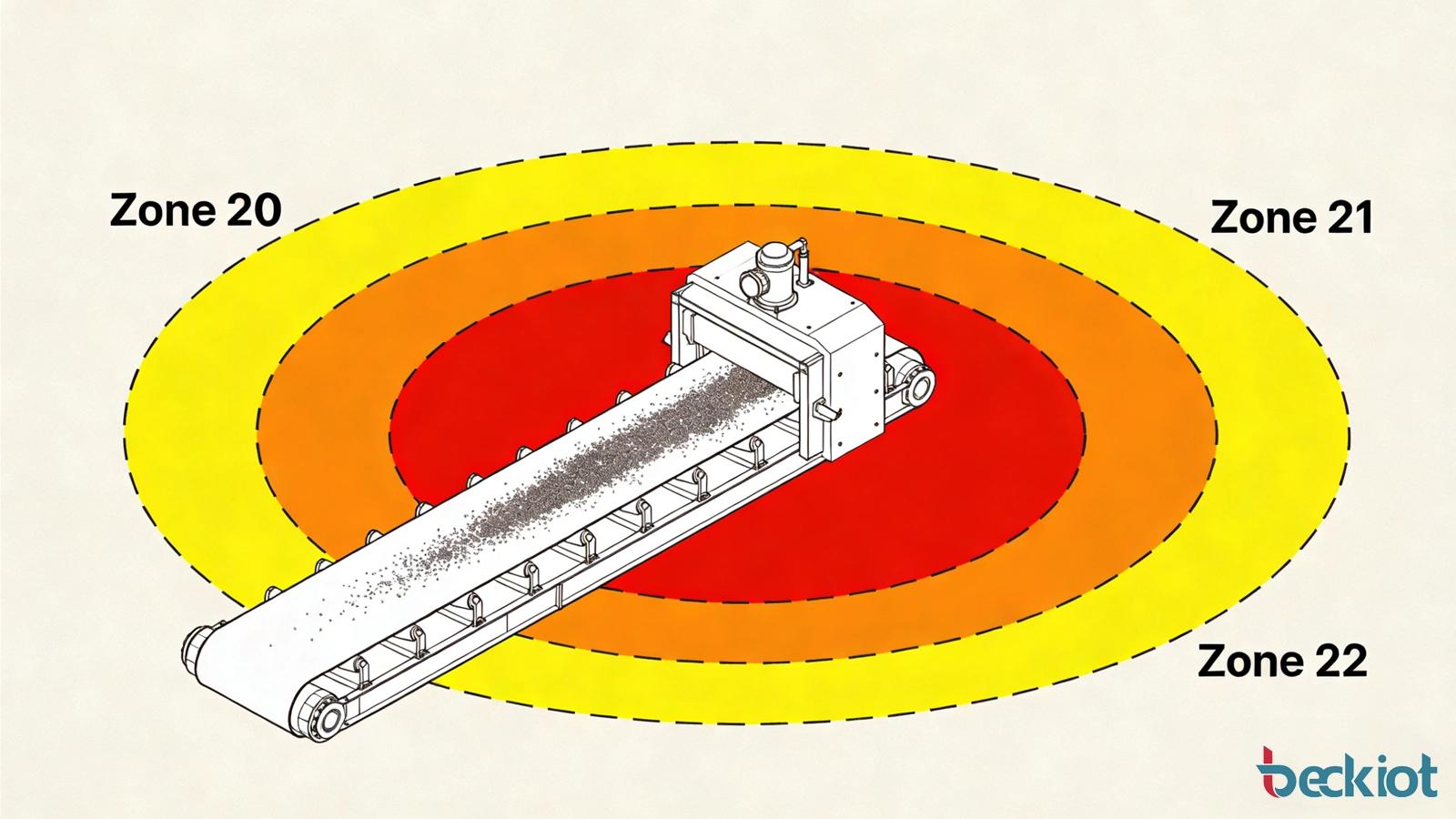
Zone 22 usually appears around the outer extent of dust-handling processes where combustible dust clouds are not expected in normal operation, but could occur briefly if a release happens.
What Zone 22 Means
A Zone 22 dust hazardous area is a location where a combustible dust cloud is not likely to occur in normal operation and, if it does occur, will remain only for a short time. The classification is based on the probability and duration of an explosive dust atmosphere, not simply on whether dust is visible in the workplace.
The dust must be combustible, capable of becoming airborne, and able to form an explosive atmosphere under realistic site conditions. For example, powder on a closed production line may not create a hazardous cloud during normal operation, but dust escaping from a poorly sealed transfer point or inspection door may justify a classified surrounding area.
Zone 22 is often located outside the main dust release point. The inside of a dust collector may be Zone 20, a nearby discharge or filling point may be Zone 21, and the surrounding working area may be Zone 22 if dust release is infrequent and short-lived. Similar logic can apply around bagging machines, screw conveyors, silo discharge areas, transfer chutes, and normally closed access doors.
The key point is that Zone 22 is still part of the explosion protection strategy. It does not mean ordinary industrial equipment can be used without checking the dust-related Ex rating, surface temperature limit, installation accessories, and maintenance requirements.
How Zone 22 Differs from Zone 20 and Zone 21
The difference between the three dust zones is mainly the likelihood and duration of the explosive dust atmosphere. Zone 20 applies where a combustible dust cloud is present continuously, for long periods, or frequently. Zone 21 applies where a dust cloud is likely to occur occasionally during normal operation. Zone 22 applies where a dust cloud is not likely during normal operation, but if it does occur, it should last only briefly.
A single production line may contain all three classifications. Enclosed process equipment, filters, and silos may create Zone 20 conditions. Filling points, open transfer areas, or routine release points may be Zone 21. Outer spaces around those processes may fall into Zone 22 when dust release is possible but not expected as part of normal operation.
The lower frequency of Zone 22 does not remove the need for certified equipment. Dust deposits, damaged seals, poor housekeeping, overheated surfaces, unsuitable cable entries, or temporary process disturbances can still create an ignition scenario.
Dust Zone
Basic Meaning
Typical Exposure Level
Equipment Selection Direction
Zone 20
Explosive dust atmosphere is present continuously, frequently, or for long periods
Highest dust cloud exposure
Very high protection level for continuous or frequent dust risk
Zone 21
Explosive dust atmosphere is likely to occur occasionally during normal operation
Occasional dust cloud exposure
High protection level for expected dust release points
Zone 22
Explosive dust atmosphere is not likely during normal operation and, if present, lasts briefly
Lower-frequency dust cloud exposure
Enhanced dust protection for brief and infrequent release conditions
How Zone 22 Is Evaluated
Zone 22 is normally determined through a hazardous area classification study. Engineers review the dust material, process layout, release sources, release frequency, likely release duration, ventilation, extraction, containment, housekeeping, and the possibility of dust layers being disturbed and dispersed into air.
Ventilation and containment often have a strong influence on Zone 22 boundaries. A well-enclosed conveyor with effective local extraction may create only a limited surrounding hazardous area. A poorly sealed transfer point or a plant with heavy dust accumulation may require a larger classified area. The assessment should reflect real operating behavior, not only the intended design condition.
Housekeeping is especially relevant in dust hazardous areas. Dust deposits on floors, beams, cable trays, motor housings, lighting fixtures, and equipment tops can become a secondary hazard source if they are disturbed by vibration, airflow, maintenance work, or cleaning. Dust layers can also insulate hot surfaces and increase ignition risk.
For this reason, Zone 22 classification should be connected with practical cleaning, inspection, and maintenance routines. A location that looks low-risk on a drawing may become more hazardous if dust build-up is not controlled in daily operation.
Standards and Certification Frameworks
Zone 22 classification is commonly based on the IEC 60079 series. IEC 60079-10-2 is used for classifying areas where explosive dust atmospheres may occur and helps determine whether a location should be Zone 20, Zone 21, or Zone 22.
Equipment design and marking are supported by IEC 60079-0, which gives general requirements for Ex equipment. IEC 60079-31 covers dust ignition protection by enclosure “t”, a common protection method for dust hazardous areas. IEC 60079-14 is used for equipment selection and installation, while IEC 60079-17 covers inspection and maintenance.
In Europe, ATEX is also a major reference. Directive 1999/92/EC defines hazardous places from the workplace safety side, including Zone 22 for combustible dust atmospheres. Directive 2014/34/EU covers equipment and protective systems intended for use in potentially explosive atmospheres.
Under ATEX practice, Zone 22 is commonly associated with Category 3D equipment, although higher-rated equipment may also be used where site rules, spare-part standardization, or mixed-zone plant layouts require it. The final selection should follow the project specification, certificate, and area classification study.
How to Read Zone 22 Ex Markings
Selecting equipment for Zone 22 is not the same as choosing a product that looks dustproof. The product must be suitable for use in a combustible dust explosive atmosphere. Engineers need to check the Ex marking, equipment protection level, dust group, maximum surface temperature, certificate conditions, enclosure design, cable entries, and installation instructions.
Equipment protection level and ATEX category
Zone 22 commonly aligns with Equipment Protection Level Dc in the IEC system and is often associated with Category 3D equipment under ATEX. This means the equipment is intended for locations where an explosive dust atmosphere is not likely in normal operation, but may occur briefly.
Protection by enclosure
A common protection concept for dust hazardous areas is Ex t. For Zone 22 applications, equipment is often marked Ex tc. This method relies on enclosure integrity and surface temperature control so that combustible dust outside the equipment is not ignited.
Dust groups
Dust atmospheres are divided into Group III categories. IIIA covers combustible flyings, IIIB covers non-conductive dust, and IIIC covers conductive dust. Conductive dust usually requires more demanding protection.
Equipment marked for Group IIIC can normally cover IIIA and IIIB applications as well, provided the rest of the marking and temperature limits are suitable. However, equipment marked only for less demanding dust groups should not be assumed suitable for conductive dust.
Maximum surface temperature
Surface temperature is one of the most important checks in dust hazardous areas. Zone 22 equipment may be marked with a maximum surface temperature such as T85°C, T100°C, or T120°C. The selected temperature limit must be safely below the ignition characteristics of the actual dust.
Dust layers make this check more important. A layer of dust on an enclosure or motor housing can reduce heat dissipation and increase the surface temperature risk. The equipment temperature marking should therefore be considered together with cleaning practice and expected dust layer thickness.
IP rating and enclosure integrity
IP protection is useful because dust ingress can affect enclosure performance. However, a high IP rating does not prove that equipment is suitable for Zone 22. IP ratings describe protection against solid particles and water ingress. Ex ratings address ignition risk in an explosive atmosphere. A Zone 22 product may need both, but one does not replace the other.
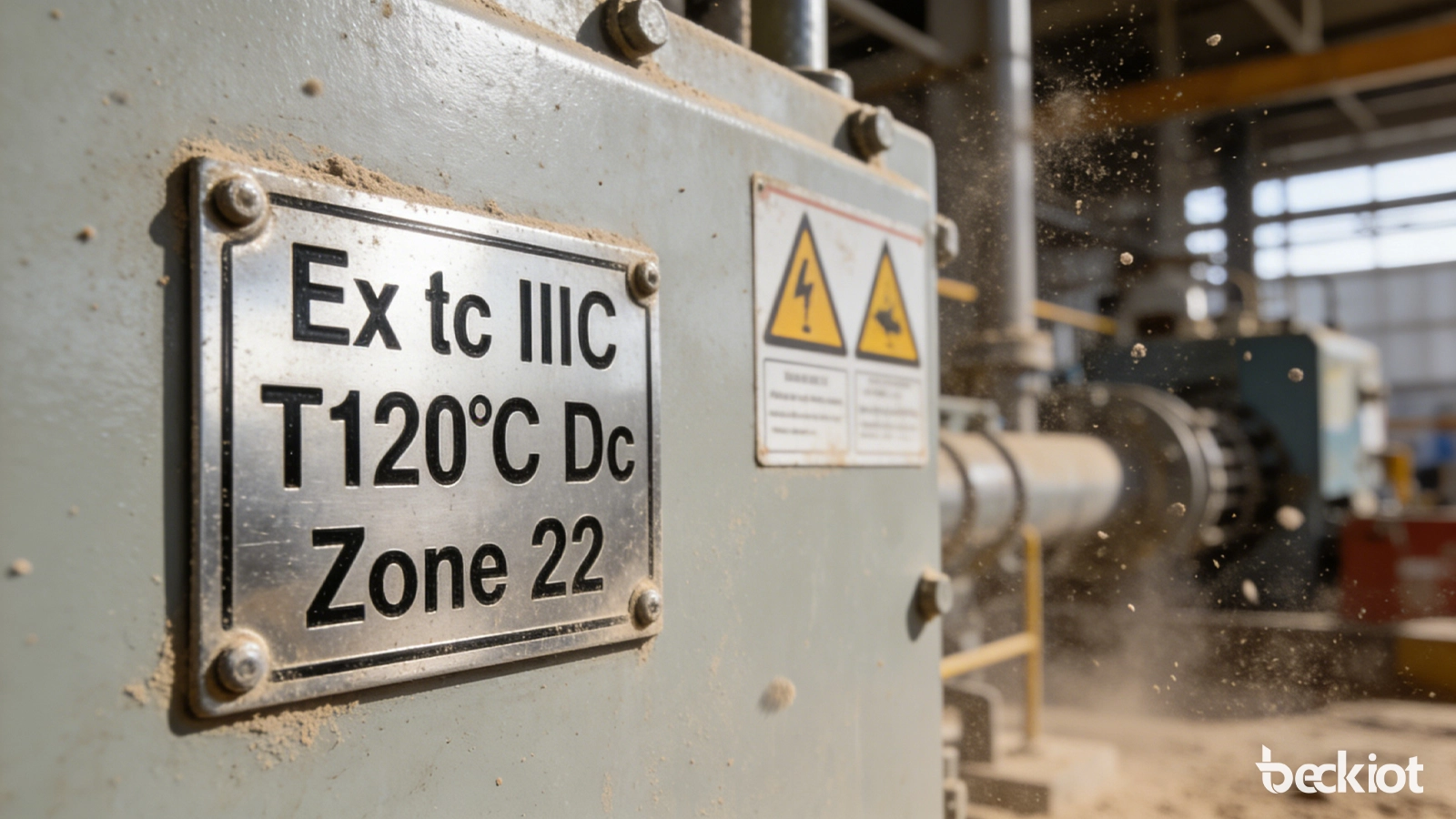
Zone 22 equipment is often identified by markings such as Ex tc with the appropriate dust group, maximum surface temperature, and equipment protection level.
What a Typical Zone 22 Marking Shows
A typical marking for Zone 22 dust equipment may look like this:
Ex tc IIIC T120°C Dc
Ex identifies explosion-protected equipment.
tc indicates enclosure-based dust protection for Zone 22 use.
IIIC identifies suitability for conductive dust, the most demanding Group III dust category.
T120°C states the maximum permitted surface temperature.
Dc identifies the equipment protection level commonly associated with Zone 22.
This marking should still be checked against the certificate and installation instructions. The certificate may define the approved ambient temperature range, cable entry requirements, special conditions of use, enclosure limitations, and inspection requirements.
Typical Applications of Zone 22 Equipment
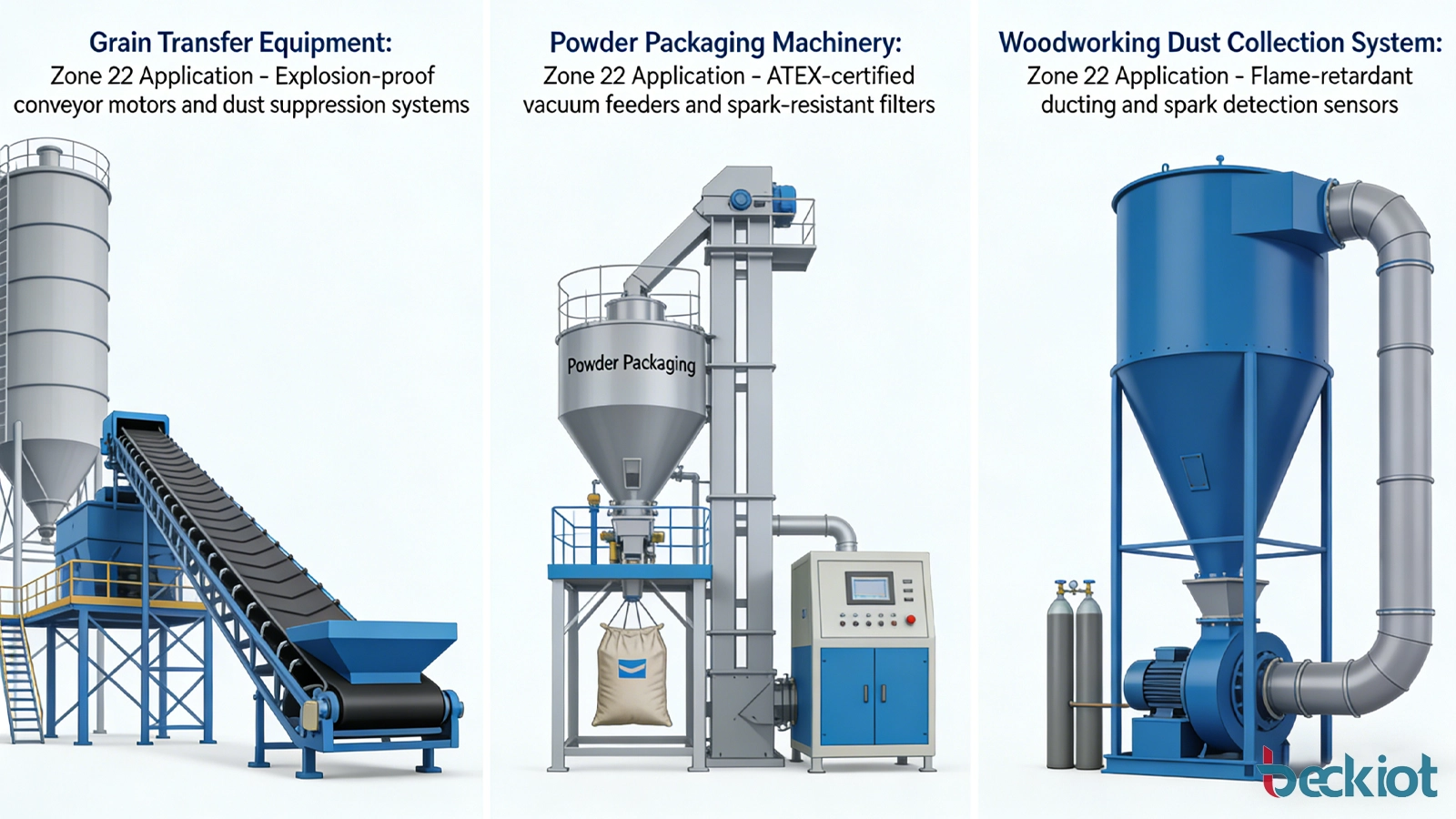
Zone 22 equipment is used in surrounding areas near combustible dust processes where dust clouds are not expected during normal operation but can still occur briefly. The exact boundary should always come from the hazardous area classification study, but several industries commonly include Zone 22 areas.
Food and grain plants
Areas around flour handling, sugar transfer, feed production, cereal dosing, starch processing, and powder packaging lines may require Zone 22 equipment when dust release is possible but not normally expected. Devices near these areas may include communication terminals, alarm devices, junction boxes, and local control stations.
Woodworking and panel plants
Spaces near sanding lines, sawdust conveying equipment, extraction interfaces, pellet handling systems, and wood dust collection points can require Zone 22 review. Dust layers are especially important because they may accumulate on beams, equipment tops, motors, and cable trays.
Chemical and pharmaceutical production
Powder transfer points, mixers, filling machines, and packaging cells may create localized or surrounding classified areas. In these plants, equipment selection may also need to consider cleaning method, corrosion resistance, washdown requirements, and process continuity.
Bulk materials and recycling
Outer areas near separators, bins, dosing equipment, shredding lines, and enclosed conveyors handling fine combustible solids may fall into Zone 22 when releases are brief and infrequent but still credible.
Plant service and communication areas
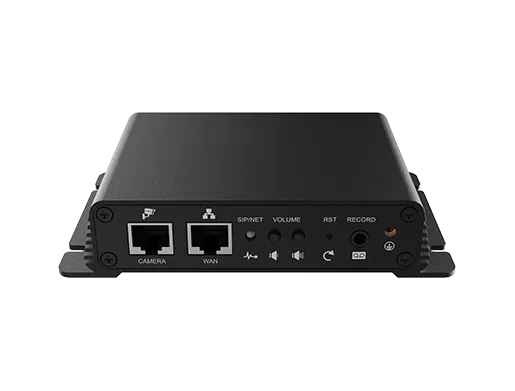
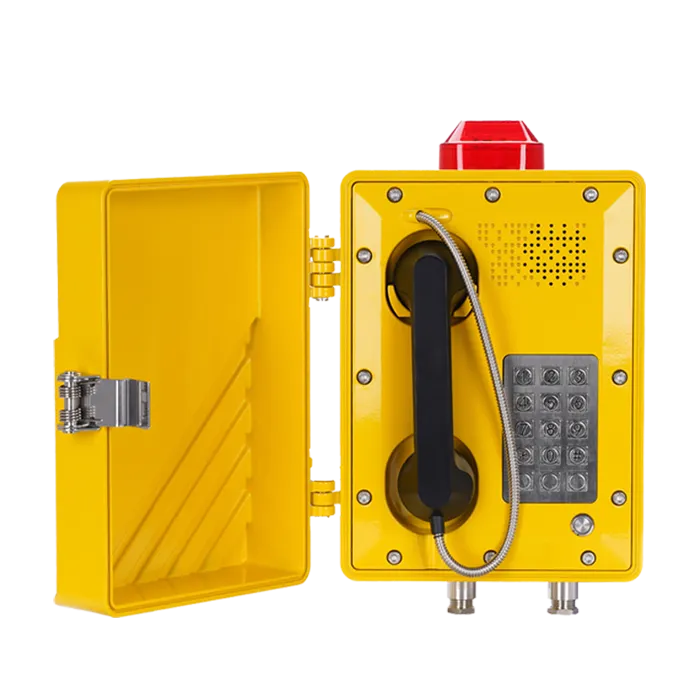
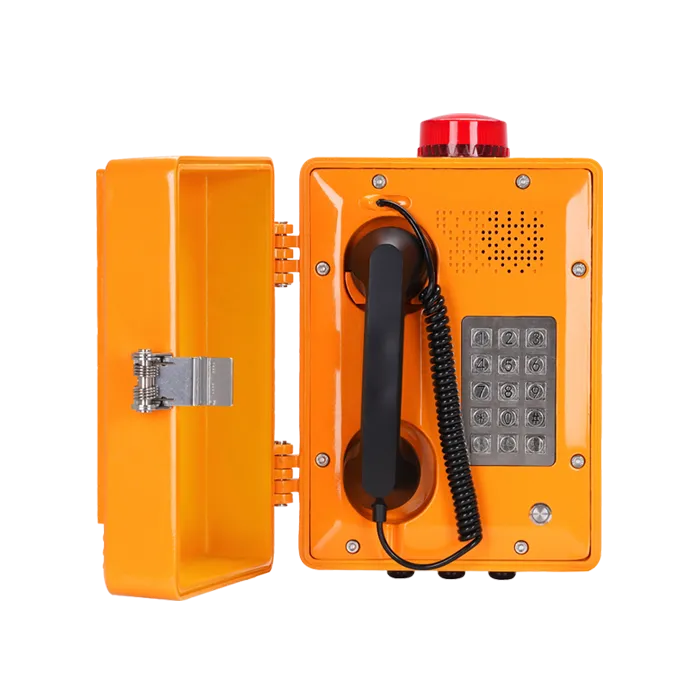
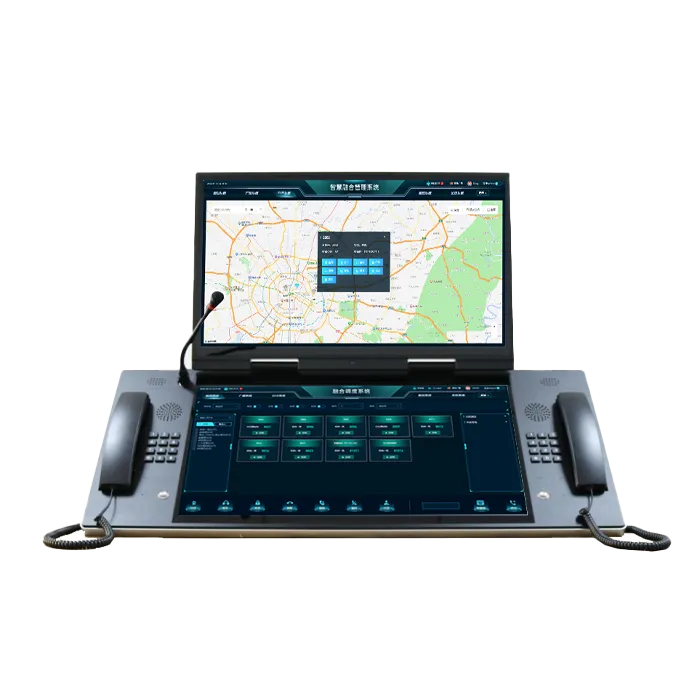
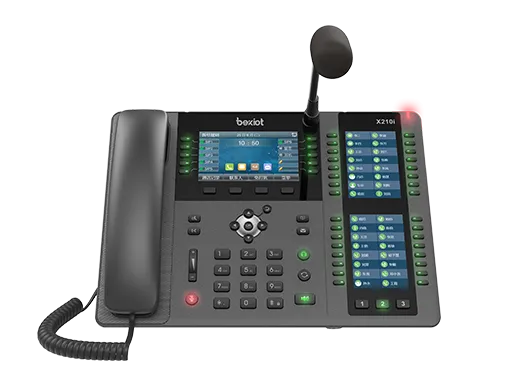
Local alarm devices, intercoms, call stations, loudspeakers, industrial telephones, camera enclosures, and field control products installed near dust-classified process areas should be selected according to the actual dust zone and marking requirements.
Zone 22 is common in surrounding areas near combustible dust processes where dust clouds are not expected during normal operation but may occur briefly under credible release conditions.
Common Zone 22 Locations in Plant Layouts
In plant layouts, Zone 22 usually appears outside the main dust source. Examples include the area around a bagging machine with effective extraction, the floor space near a screw conveyor inspection point, the surroundings of a silo discharge interface, or a corridor beside an enclosed powder processing line.
It may also appear near dust collector outlets, transfer chutes, access doors, or normally closed equipment interfaces where a short dust escape is possible. The final classification depends on dust type, process behavior, containment, airflow, cleaning discipline, and the likely duration of any dust cloud.
Typical Location
Why Zone 22 May Apply
Equipment Examples
Outer area of bagging machines
Dust release is not expected continuously, but brief escape may occur
Intercom stations, beacons, local panels, lighting
Near enclosed conveyors
Normally contained dust may escape at inspection points or seals
Fine dust may escape during handling, cleaning, or short disturbances
Operator stations, cameras, loudspeakers, local controls
Selection and Installation Considerations
Even in Zone 22, installation quality matters. Certified equipment can lose its protection value if it is installed with unsuitable cable glands, missing seals, incorrect entries, damaged enclosures, unauthorized modifications, or accessories that do not match the certificate.
Engineers should confirm the actual combustible dust properties before selecting equipment. Conductive dust, low ignition temperature dust, or heavy dust layer formation can change what equipment is suitable. Nameplate markings, certificates, and user instructions should always be checked against the hazardous area classification study.
Outdoor locations, washdown areas, and corrosive environments may require additional environmental protection, but those requirements should not compromise the Ex protection concept. For example, an enclosure may need both Ex dust certification and suitable resistance to water, cleaning chemicals, UV exposure, or mechanical impact.
Maintenance access should also be reviewed before installation. If a device must be opened, cleaned, inspected, or replaced, technicians need enough space and clear procedures to preserve the certified condition. A product that is correctly selected but difficult to maintain may become a long-term reliability problem.
Housekeeping and Dust Layer Control
Housekeeping is not separate from dust explosion protection. In Zone 22 areas, dust clouds may be unlikely during normal operation, but settled dust can still create a secondary hazard. Vibration, airflow, compressed-air cleaning, equipment movement, or maintenance work can re-disperse dust into the air.
Dust layers can also change thermal behavior. If dust accumulates on motors, lighting, loudspeakers, junction boxes, telephones, or control enclosures, heat may not dissipate as expected. This can make surface temperature control more difficult and increase ignition risk.
A practical Zone 22 management plan should therefore include cleaning frequency, inspection routes, dust layer control, enclosure condition checks, cable entry checks, and records of corrective actions. The goal is to keep the installed equipment in the condition assumed by its certification and installation design.
Common Mistakes and Better Fixes
Mistake
Typical Risk
Better Fix
Assuming Zone 22 is too low-risk for hazardous-area equipment
Ordinary equipment may become an ignition source during brief dust cloud formation
Select equipment with the correct Ex marking, EPL, dust group, and temperature limit
Choosing equipment by IP rating alone
Dust and water ingress protection does not prove explosion protection
Use IP rating as an enclosure factor, not a substitute for Ex certification
Ignoring dust layers
Settled dust can be re-dispersed or insulate hot surfaces
Include housekeeping, inspection, and surface temperature review in the safety plan
Failing to verify the dust group
Equipment may be unsuitable for conductive dust or more demanding dust conditions
Confirm whether the application requires IIIA, IIIB, or IIIC suitability
Using incompatible entries or accessories
The certified enclosure protection concept may be compromised
Use cable glands, plugs, seals, and accessories that match the certificate
Treating classification as paperwork only
The real release behavior of the process may be missed
Base classification on actual process operation, release probability, and dust accumulation
How to Judge Whether the Selection Is Correct
A correct Zone 22 equipment selection should begin with the hazardous area classification study. Engineers should confirm that the location is truly Zone 22 and that the dust is combustible, dispersible, and credible as a short-duration release source.
The second check is the product marking. The equipment should carry a dust-suitable Ex protection concept, the correct Equipment Protection Level, the correct dust group, and an appropriate maximum surface temperature. These details must match the dust properties and the classified area.
The third check is installation compatibility. Cable glands, blanking plugs, seals, mounting methods, accessories, and cable entries should preserve the certified protection concept. A correctly marked device can still become non-compliant if installed with unsuitable accessories or modified in the field.
The final check is lifecycle management. Zone 22 protection depends on inspection, cleaning, maintenance, and continued control of dust layers. If the equipment is not kept in the condition assumed by its certification and installation instructions, the original selection may no longer provide reliable protection.
Final View
Zone 22 applies to areas where a combustible dust cloud is not likely during normal operation, but could appear briefly under credible release conditions. It is less severe than Zone 20 and Zone 21, but it is still a hazardous area classification that affects equipment selection, installation, inspection, and maintenance.
Correct equipment selection should be based on the full Ex marking, equipment protection level, dust group, maximum surface temperature, IP performance, certificate conditions, installation accessories, housekeeping practice, and the actual dust behavior at the site.
When these factors are evaluated together, Zone 22 protection becomes a clear engineering process rather than a guess based on appearance, generic dustproof claims, or a high IP rating alone.
FAQ
Is Zone 22 the same as an ordinary dusty area?
No. A dusty area is not automatically Zone 22. Zone 22 specifically means a place where an explosive atmosphere in the form of a combustible dust cloud is not likely during normal operation, but may occur briefly if a credible release happens.
Is Zone 22 less severe than Zone 21?
Yes. Zone 21 applies where an explosive dust cloud is likely to occur occasionally during normal operation. Zone 22 applies where it is not likely during normal operation and, if it occurs, should remain only for a short time.
Can ordinary IP-rated equipment be used in Zone 22?
Not automatically. A high IP rating may help with dust and water ingress protection, but it does not prove suitability for a combustible dust explosive atmosphere. The equipment still needs the correct Ex marking and certification.
What marking is commonly seen on Zone 22 products?
A common example is Ex tc IIIC T120°C Dc. The exact marking depends on the protection method, dust group, maximum surface temperature, ambient range, and product design.
Can higher-rated equipment be installed in Zone 22?
Yes. Higher-rated equipment may be used in Zone 22 if it is suitable for the dust group, temperature requirement, and installation conditions. Some sites also use higher-rated products for standardization across different hazardous zones.
Why are dust layers important if Zone 22 is about dust clouds?
Dust layers can later be disturbed and dispersed into air, creating a combustible dust cloud. They can also insulate hot surfaces and increase ignition risk. This is why cleaning, inspection, and surface temperature control remain important in Zone 22 areas.